The Pillars of
Progress: The
Importance of
Civil
Engineering
The Pillars of
Progress: The
Importance of
Civil
Engineering
Introduction
Introduction
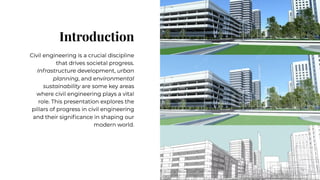
Civil engineering is a crucial discipline
that drives societal progress.
Infrastructure development, urban
planning, and environmental
sustainability are some key areas
where civil engineering plays a vital
role. This presentation explores the
pillars of progress in civil engineering
and their significance in shaping our
modern world.
Civil engineering is a crucial discipline
that drives societal progress.
Infrastructure development, urban
planning, and environmental
sustainability are some key areas
where civil engineering plays a vital
role. This presentation explores the
pillars of progress in civil engineering
and their significance in shaping our
modern world.
Structural Integrity
Ensuring structural integrity is
paramount in civil engineering. It
involves designing and constructing
buildings, bridges, and other
structures that can withstand loads,
forces, and environmental conditions.
By employing advanced materials,
construction techniques, and rigorous
testing, civil engineers ensure the
safety and longevity of infrastructure.
Ensuring structural integrity is
paramount in civil engineering. It
involves designing and constructing
buildings, bridges, and other
structures that can withstand loads,
forces, and environmental conditions.
By employing advanced materials,
construction techniques, and rigorous
testing, civil engineers ensure the
safety and longevity of infrastructure.
Transportation Systems
Efficient transportation systems
are vital for economic growth and
societal mobility. Civil engineers
design and develop roads,
highways, railways, and airports to
enhance connectivity and facilitate
seamless movement of goods and
people. These systems promote
regional development, improve
accessibility, and reduce
congestion.
Efficient transportation systems
are vital for economic growth and
societal mobility. Civil engineers
design and develop roads,
highways, railways, and airports to
enhance connectivity and facilitate
seamless movement of goods and
people. These systems promote
regional development, improve
accessibility, and reduce
congestion.
Water Management
Water Management
Effective water management is
crucial for sustainable
development. Civil engineers
design dams, reservoirs, and water
distribution systems to ensure a
reliable water supply for domestic,
agricultural, and industrial needs.
Additionally, they develop
strategies to mitigate flood risks
and protect coastal areas from
erosion.
Effective water management is
crucial for sustainable
development. Civil engineers
design dams, reservoirs, and water
distribution systems to ensure a
reliable water supply for domestic,
agricultural, and industrial needs.
Additionally, they develop
strategies to mitigate flood risks
and protect coastal areas from
erosion.
Environmental Sustainability
Civil engineering plays a vital role in
promoting environmental
sustainability. Engineers incorporate
green building practices, renewable
energy systems, and waste
management solutions into their
designs to minimize environmental
impact. By integrating sustainable
practices, civil engineering contributes
to a cleaner and healthier future.
Civil engineering plays a vital role in
promoting environmental
sustainability. Engineers incorporate
green building practices, renewable
energy systems, and waste
management solutions into their
designs to minimize environmental
impact. By integrating sustainable
practices, civil engineering contributes
to a cleaner and healthier future.
Innovation and Technology
Innovation and technology are driving
forces in civil engineering. Digital
modeling, automation, and advanced
materials revolutionize the way
infrastructure is designed, constructed,
and maintained. Civil engineers
embrace these advancements to
improve efficiency, reduce costs, and
enhance the overall quality of projects.
Innovation and technology are driving
forces in civil engineering. Digital
modeling, automation, and advanced
materials revolutionize the way
infrastructure is designed, constructed,
and maintained. Civil engineers
embrace these advancements to
improve efficiency, reduce costs, and
enhance the overall quality of projects.
Conclusion
Conclusion
Civil engineering is the backbone of societal progress, with its
pillars supporting infrastructure development, transportation
systems, water management, environmental sustainability,
and technological innovation. By upholding safety, efficiency,
and sustainability, civil engineers shape a better future for
communities worldwide.

Civil engineering is the backbone of societal progress, with its
pillars supporting infrastructure development, transportation
systems, water management, environmental sustainability,
and technological innovation. By upholding safety, efficiency,
and sustainability, civil engineers shape a better future for
communities worldwide.

Thanks!
Thanks!
Do you have any questions?
addyouremail@freepik.com
+91 620 421 838
yourcompany.com
Do you have any questions?
addyouremail@freepik.com
+91 620 421 838
yourcompany.com

civil engineering application and importance

  • 1.
    The Pillars of Progress:The Importance of Civil Engineering The Pillars of Progress: The Importance of Civil Engineering
  • 2.
    Introduction Introduction Civil engineering isa crucial discipline that drives societal progress. Infrastructure development, urban planning, and environmental sustainability are some key areas where civil engineering plays a vital role. This presentation explores the pillars of progress in civil engineering and their significance in shaping our modern world. Civil engineering is a crucial discipline that drives societal progress. Infrastructure development, urban planning, and environmental sustainability are some key areas where civil engineering plays a vital role. This presentation explores the pillars of progress in civil engineering and their significance in shaping our modern world.
  • 3.
    Structural Integrity Structural Integrity Ensuringstructural integrity is paramount in civil engineering. It involves designing and constructing buildings, bridges, and other structures that can withstand loads, forces, and environmental conditions. By employing advanced materials, construction techniques, and rigorous testing, civil engineers ensure the safety and longevity of infrastructure. Ensuring structural integrity is paramount in civil engineering. It involves designing and constructing buildings, bridges, and other structures that can withstand loads, forces, and environmental conditions. By employing advanced materials, construction techniques, and rigorous testing, civil engineers ensure the safety and longevity of infrastructure.
  • 4.
    Transportation Systems Transportation Systems Efficienttransportation systems are vital for economic growth and societal mobility. Civil engineers design and develop roads, highways, railways, and airports to enhance connectivity and facilitate seamless movement of goods and people. These systems promote regional development, improve accessibility, and reduce congestion. Efficient transportation systems are vital for economic growth and societal mobility. Civil engineers design and develop roads, highways, railways, and airports to enhance connectivity and facilitate seamless movement of goods and people. These systems promote regional development, improve accessibility, and reduce congestion.
  • 5.
    Water Management Water Management Effectivewater management is crucial for sustainable development. Civil engineers design dams, reservoirs, and water distribution systems to ensure a reliable water supply for domestic, agricultural, and industrial needs. Additionally, they develop strategies to mitigate flood risks and protect coastal areas from erosion. Effective water management is crucial for sustainable development. Civil engineers design dams, reservoirs, and water distribution systems to ensure a reliable water supply for domestic, agricultural, and industrial needs. Additionally, they develop strategies to mitigate flood risks and protect coastal areas from erosion.
  • 6.
    Environmental Sustainability Environmental Sustainability Civilengineering plays a vital role in promoting environmental sustainability. Engineers incorporate green building practices, renewable energy systems, and waste management solutions into their designs to minimize environmental impact. By integrating sustainable practices, civil engineering contributes to a cleaner and healthier future. Civil engineering plays a vital role in promoting environmental sustainability. Engineers incorporate green building practices, renewable energy systems, and waste management solutions into their designs to minimize environmental impact. By integrating sustainable practices, civil engineering contributes to a cleaner and healthier future.
  • 7.
    Innovation and Technology Innovationand Technology Innovation and technology are driving forces in civil engineering. Digital modeling, automation, and advanced materials revolutionize the way infrastructure is designed, constructed, and maintained. Civil engineers embrace these advancements to improve efficiency, reduce costs, and enhance the overall quality of projects. Innovation and technology are driving forces in civil engineering. Digital modeling, automation, and advanced materials revolutionize the way infrastructure is designed, constructed, and maintained. Civil engineers embrace these advancements to improve efficiency, reduce costs, and enhance the overall quality of projects.
  • 8.
    Conclusion Conclusion Civil engineering isthe backbone of societal progress, with its pillars supporting infrastructure development, transportation systems, water management, environmental sustainability, and technological innovation. By upholding safety, efficiency, and sustainability, civil engineers shape a better future for communities worldwide. Civil engineering is the backbone of societal progress, with its pillars supporting infrastructure development, transportation systems, water management, environmental sustainability, and technological innovation. By upholding safety, efficiency, and sustainability, civil engineers shape a better future for communities worldwide.

  • 9.
    Thanks! Thanks! Do you haveany questions? addyouremail@freepik.com +91 620 421 838 yourcompany.com Do you have any questions? addyouremail@freepik.com +91 620 421 838 yourcompany.com