
Early Support and the Solihull Way
Fiona Holmes
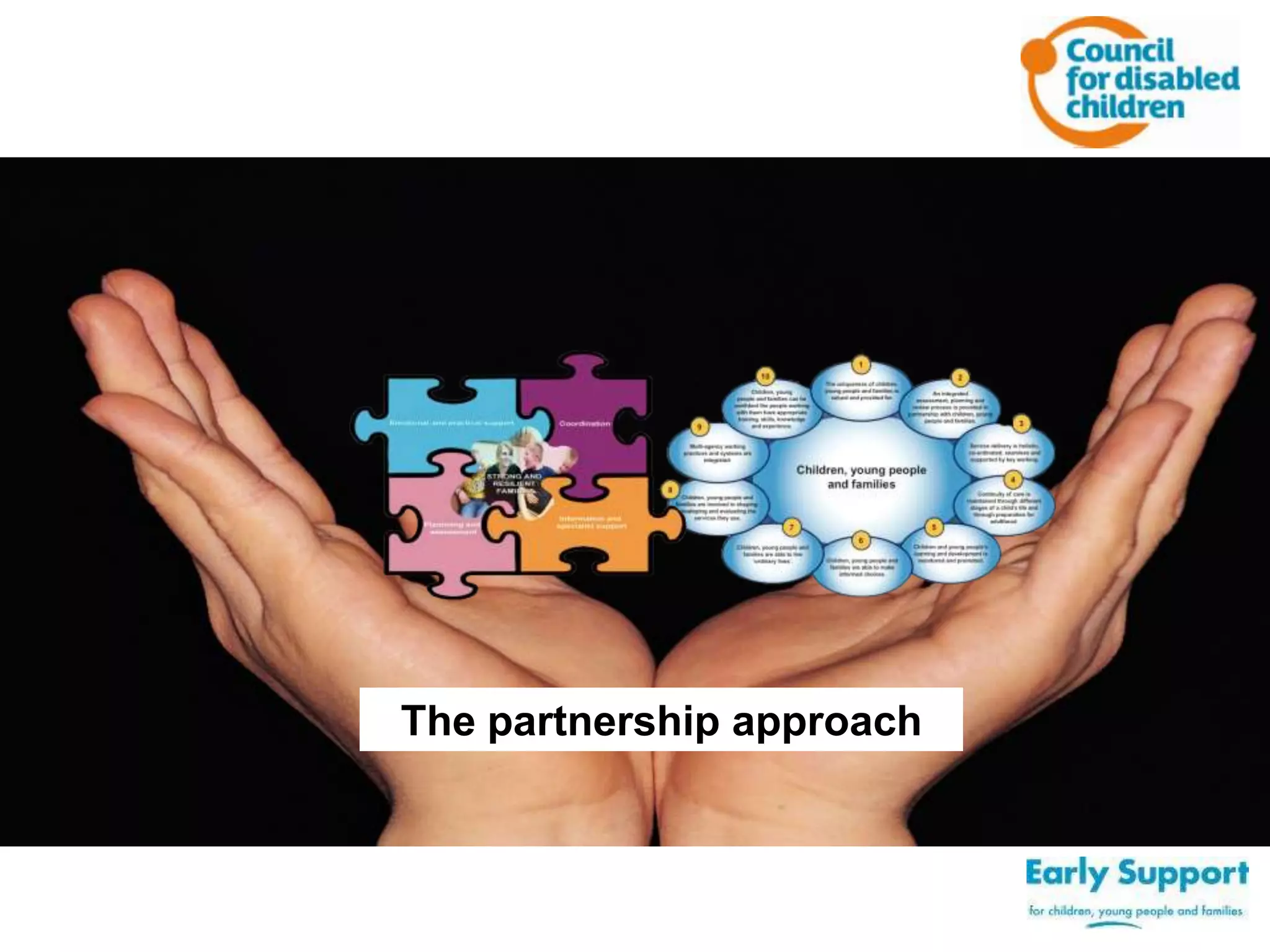
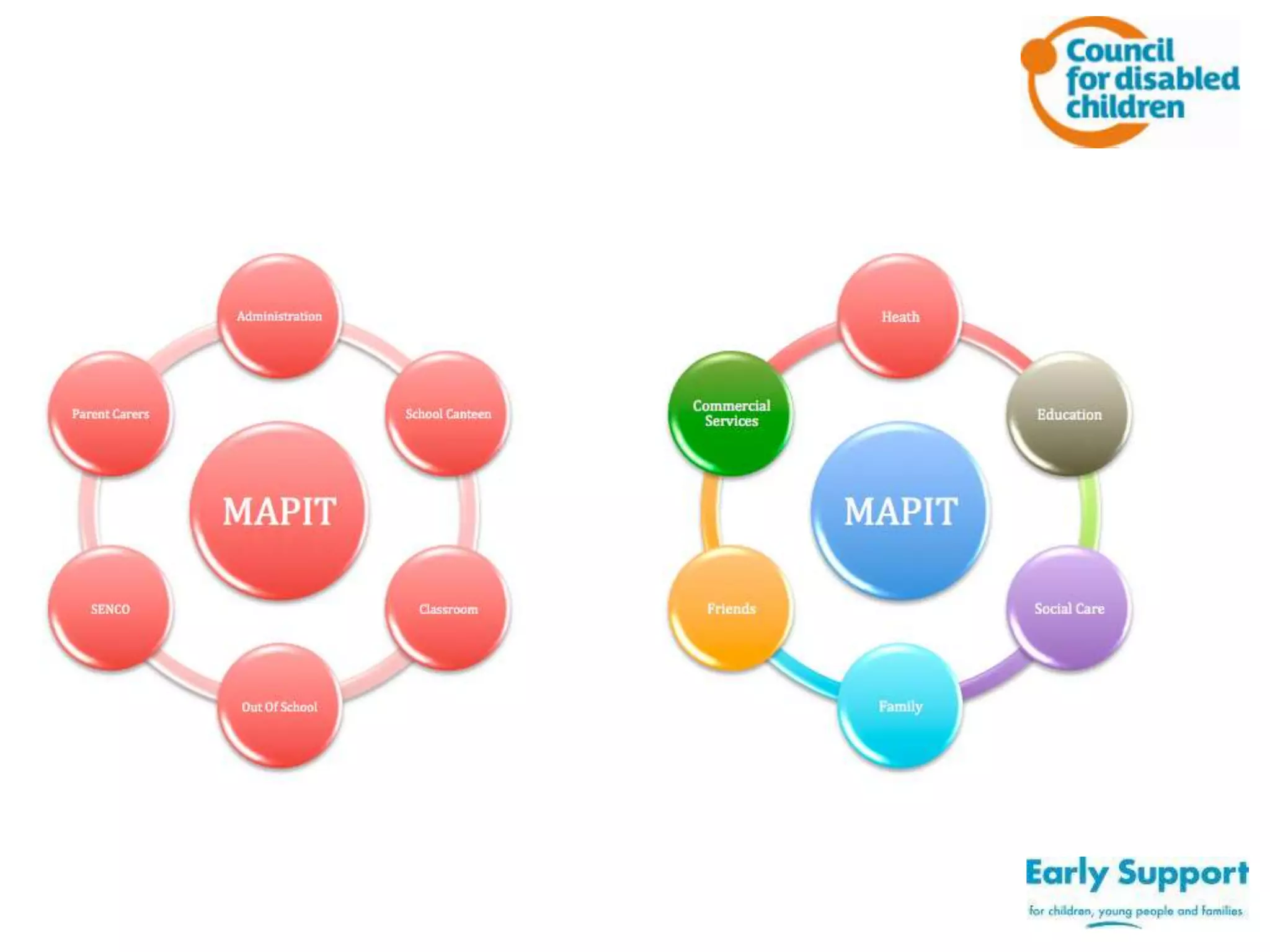
The partnership approach
Structure change, easy –
Culture change, hard!
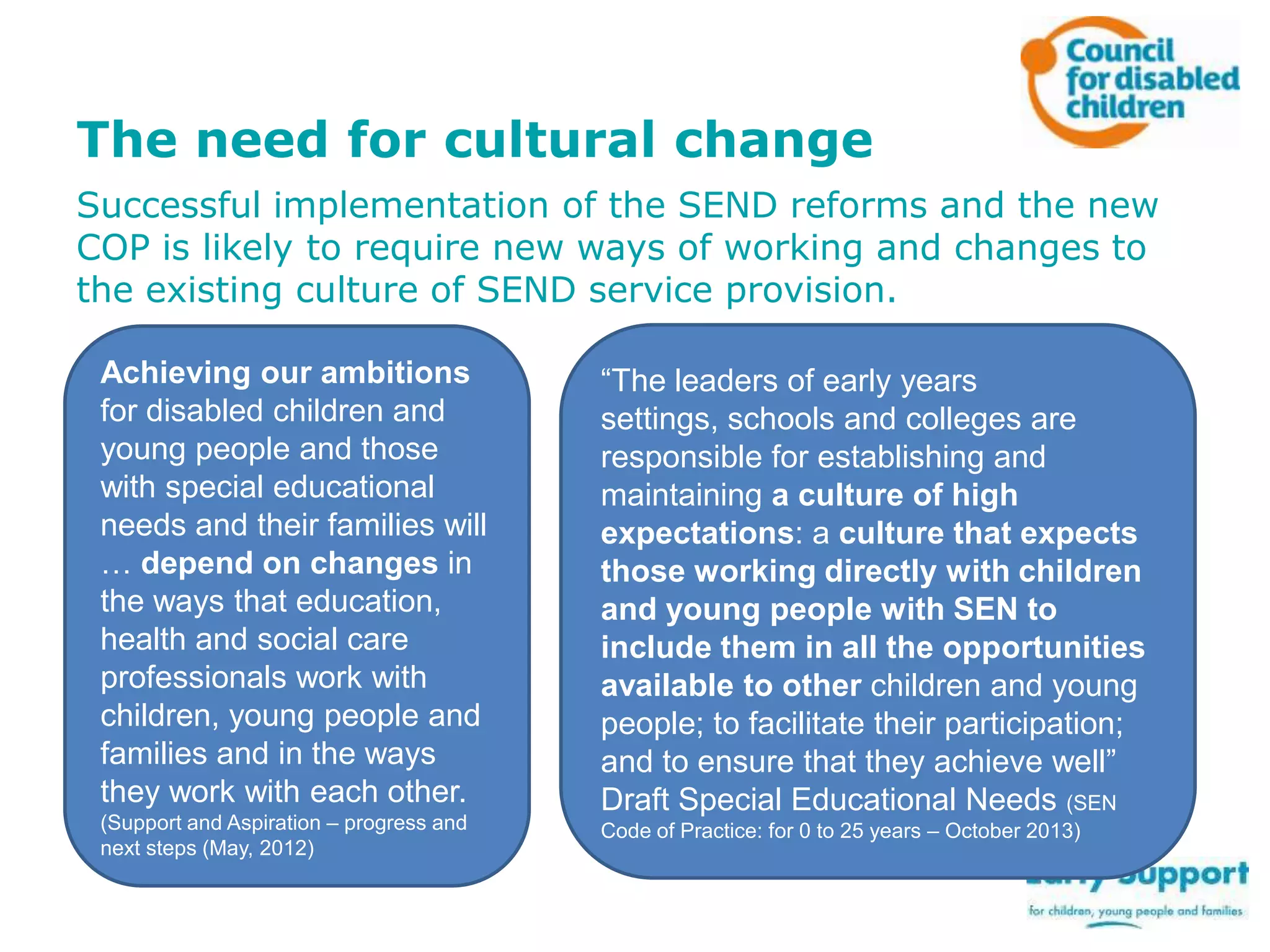
‘Achieving our ambitions for disabled
children and young people and those
with special educational needs and
their families will mean changes in
the law. We have made clear that we
intend to introduce a Children and
Families Bill during the second
session of this Parliament to achieve
that. But it will also depend on
changes in the ways that
education, health and social care
professionals work with children,
young people and families and in the
ways they work with each other.’
The need for cultural change
Successful implementation of the SEND reforms and the new
COP is likely to require new ways of working and changes to
the existing culture of SEND service provision.
Achieving our ambitions
for disabled children and
young people and those
with special educational
needs and their families will
… depend on changes in
the ways that education,
health and social care
professionals work with
children, young people and
families and in the ways
they work with each other.
(Support and Aspiration – progress and
next steps (May, 2012)

“The leaders of early years
settings, schools and colleges are
responsible for establishing and
maintaining a culture of high
expectations: a culture that expects
those working directly with children
and young people with SEN to
include them in all the opportunities
available to other children and young
people; to facilitate their participation;
and to ensure that they achieve well”
Draft Special Educational Needs (SEN
Code of Practice: for 0 to 25 years – October 2013)
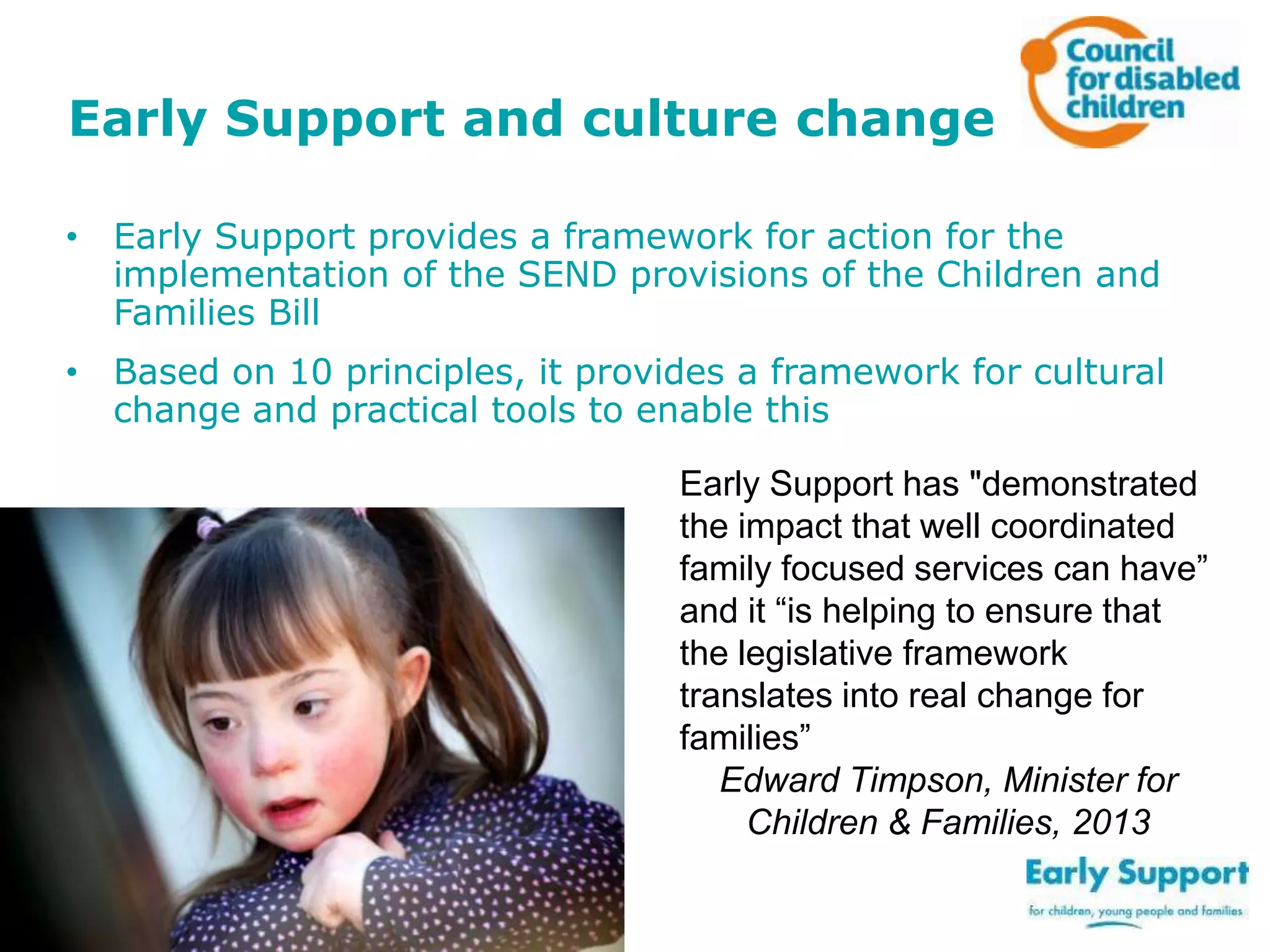
Early Support and culture change
• Early Support provides a framework for action for the
implementation of the SEND provisions of the Children and
Families Bill
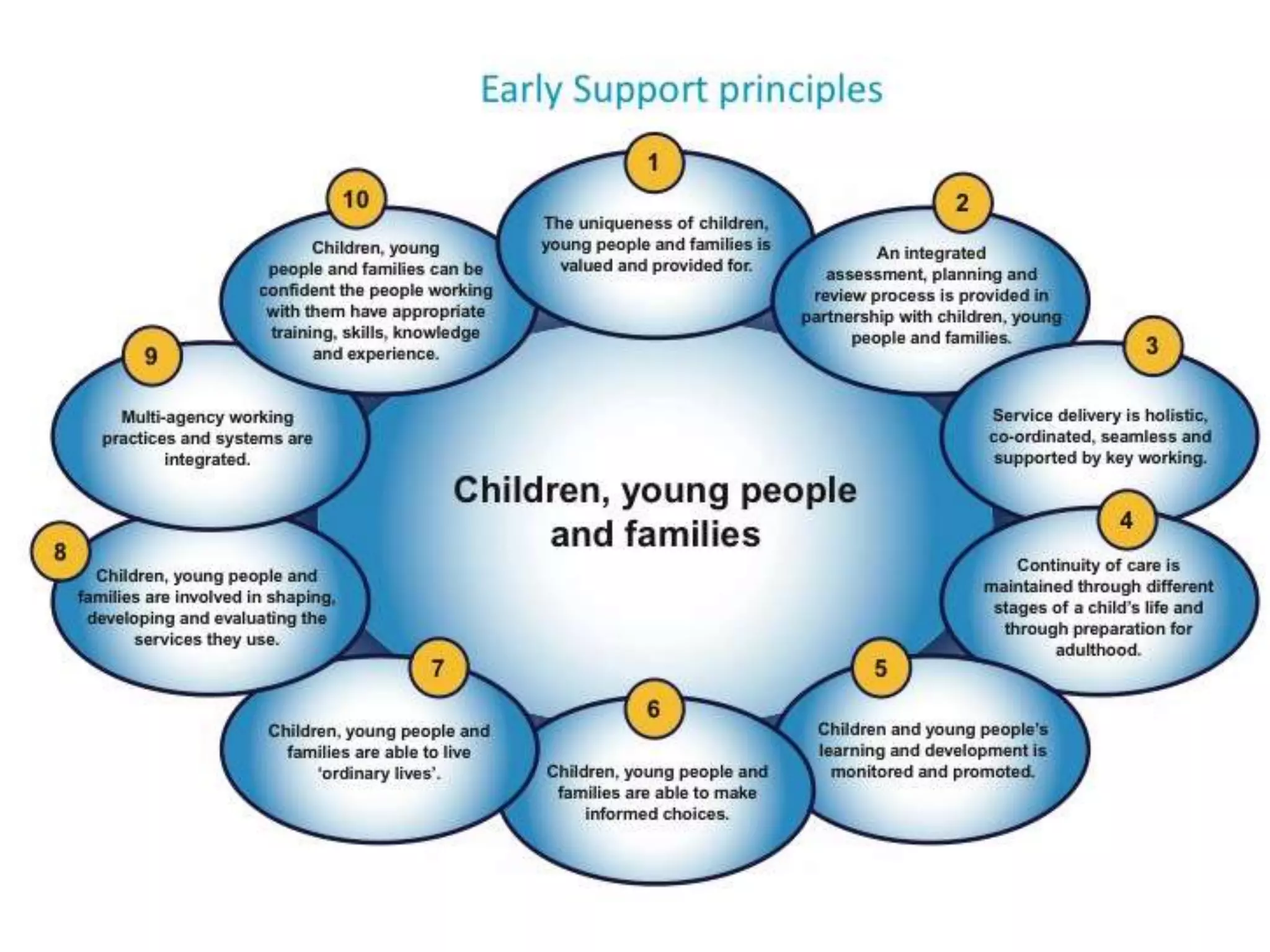
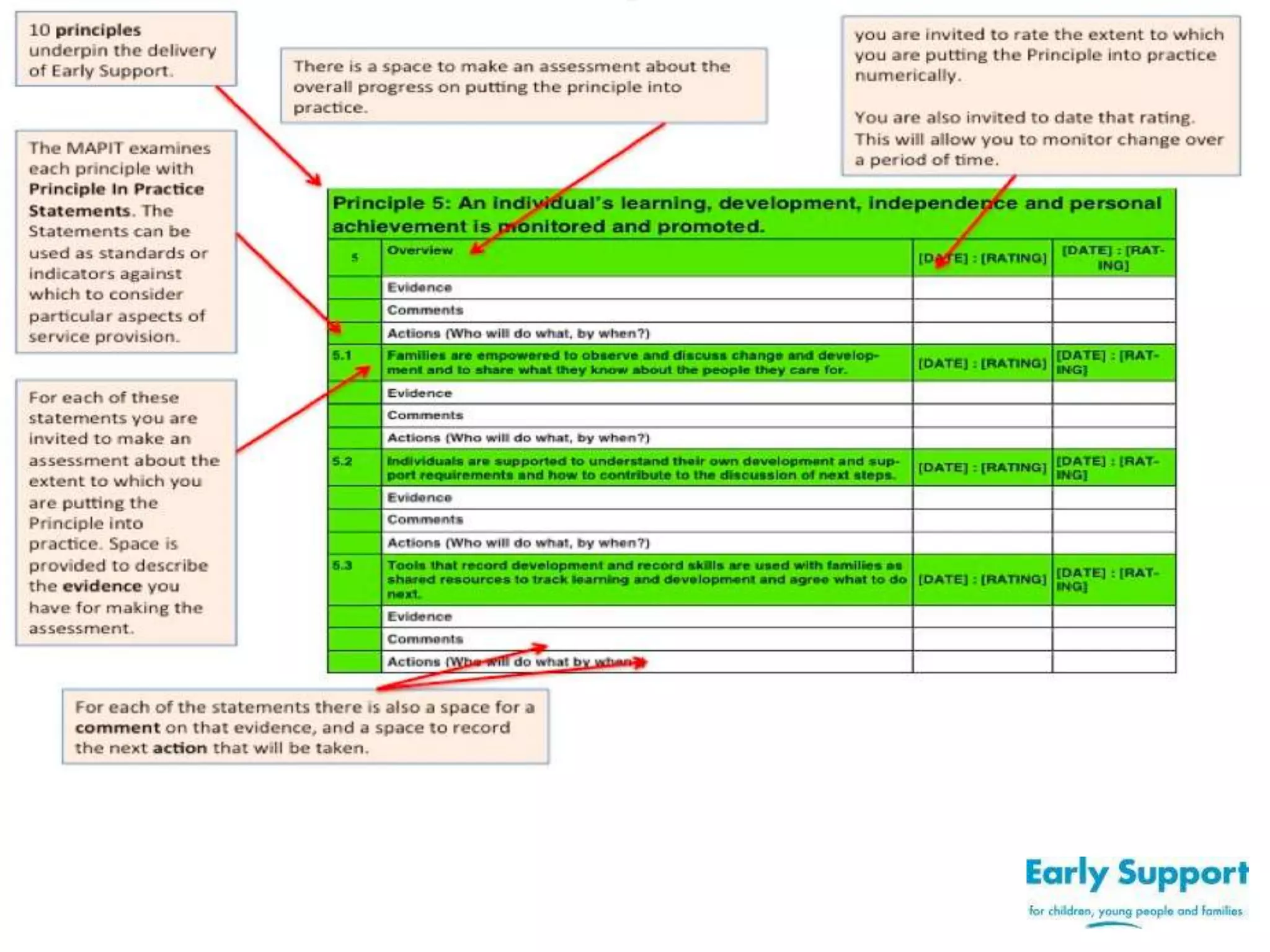
• Based on 10 principles, it provides a framework for cultural
change and practical tools to enable this
Early Support has "demonstrated
the impact that well coordinated
family focused services can have”
and it “is helping to ensure that
the legislative framework
translates into real change for
families”
Edward Timpson, Minister for
Children & Families, 2013
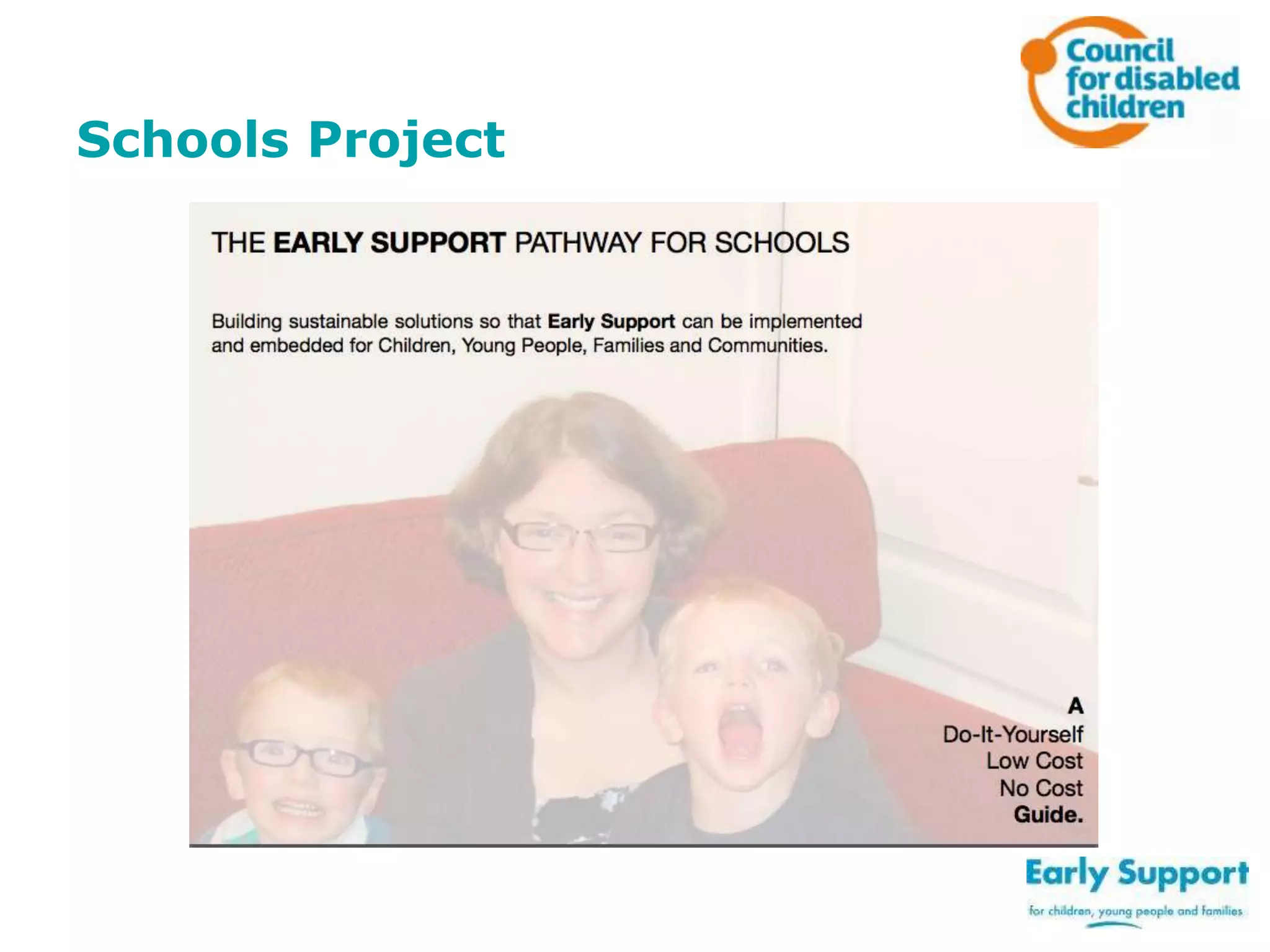
Schools Project
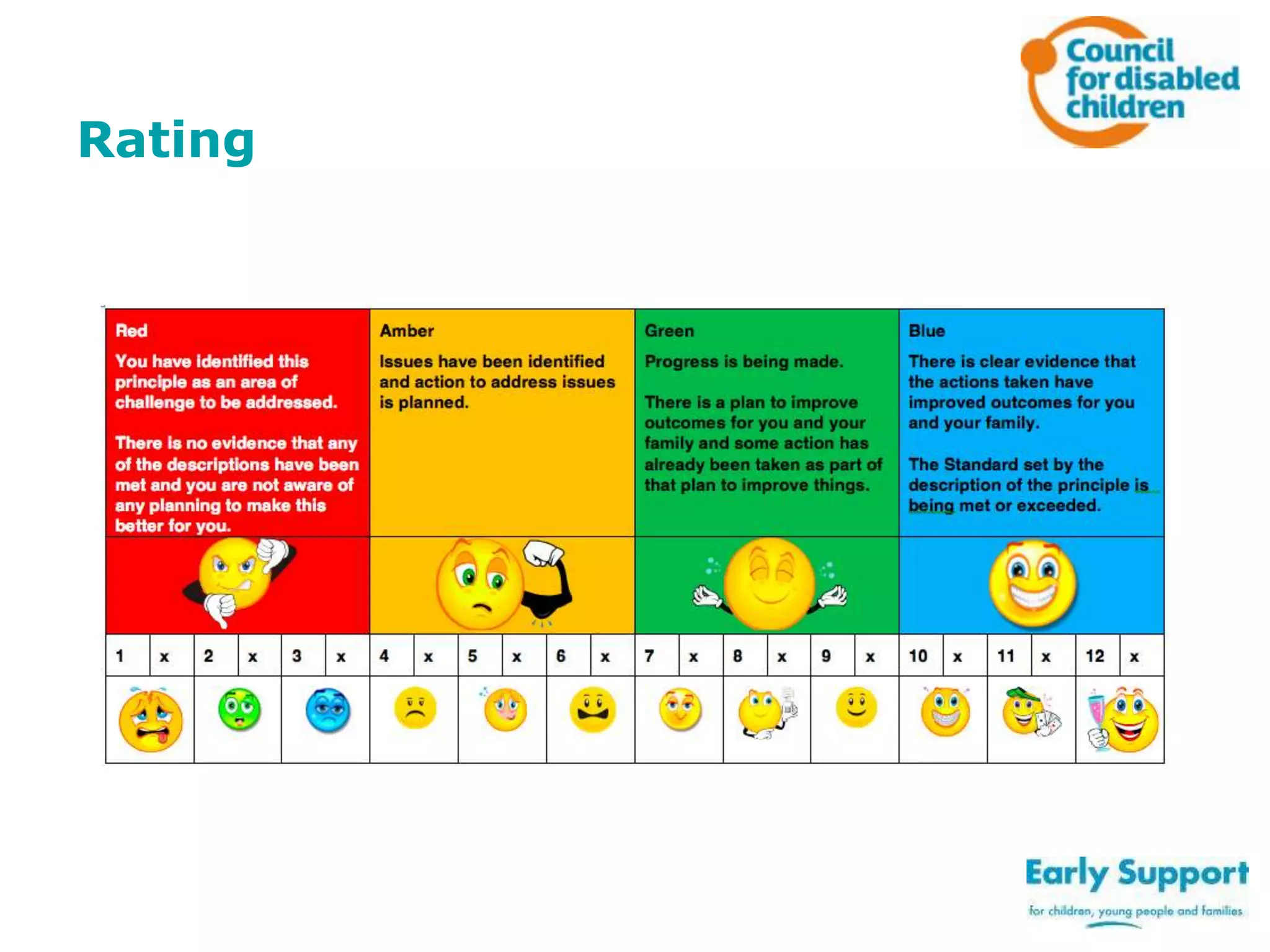
Rating
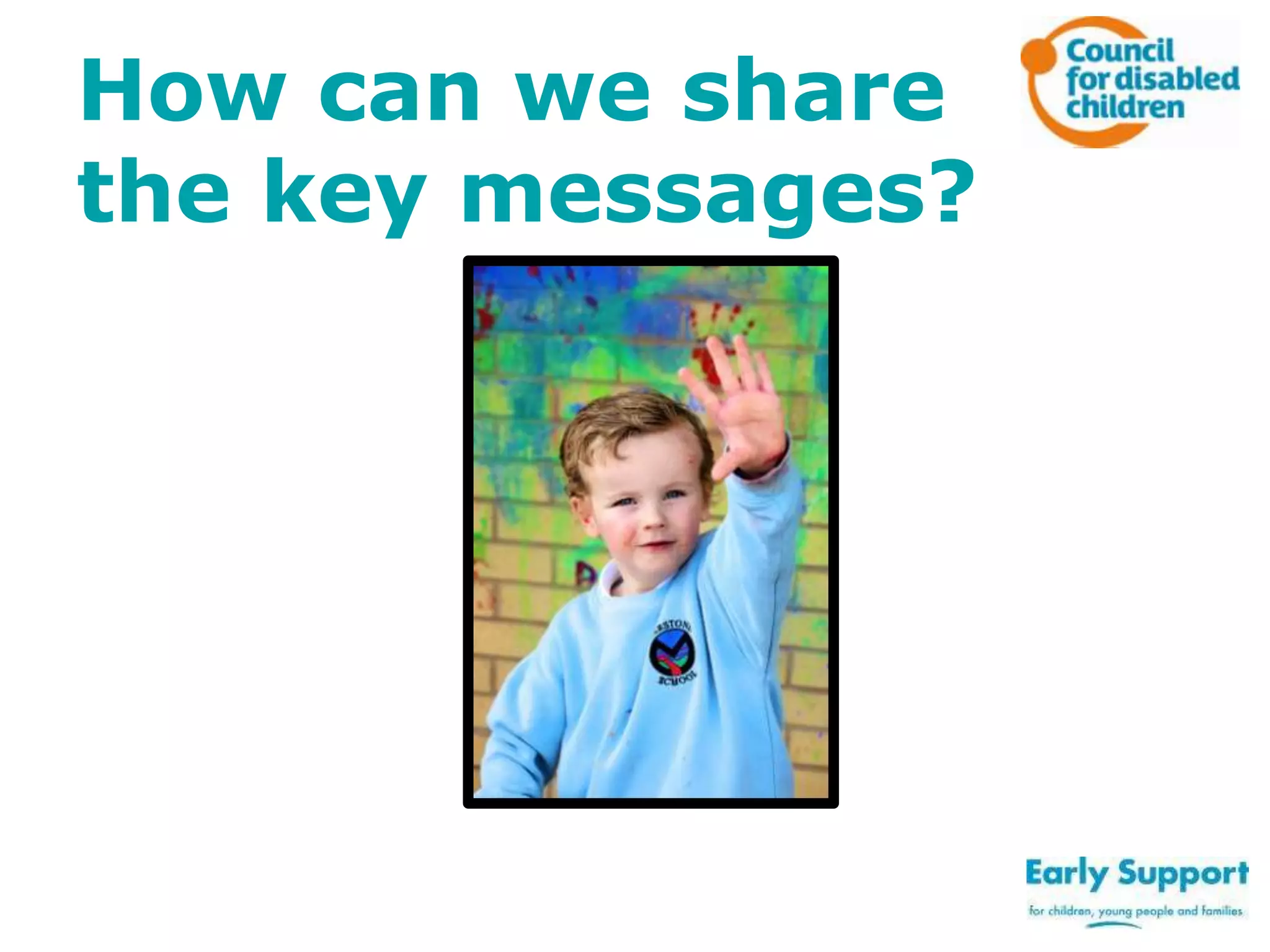
How can we share
the key messages?
http://inprincipletraining.co.
uk
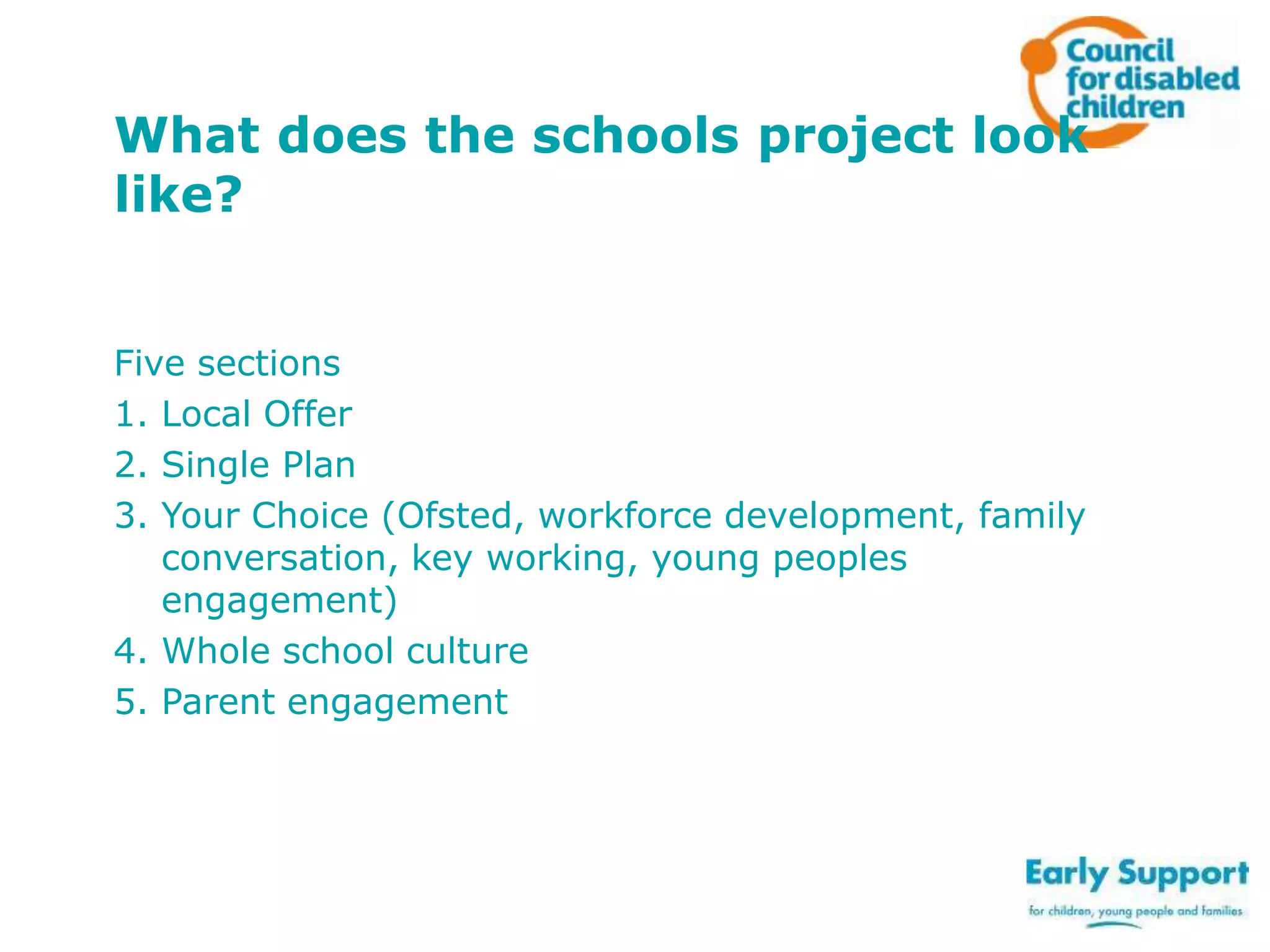
What does the schools project look
like?
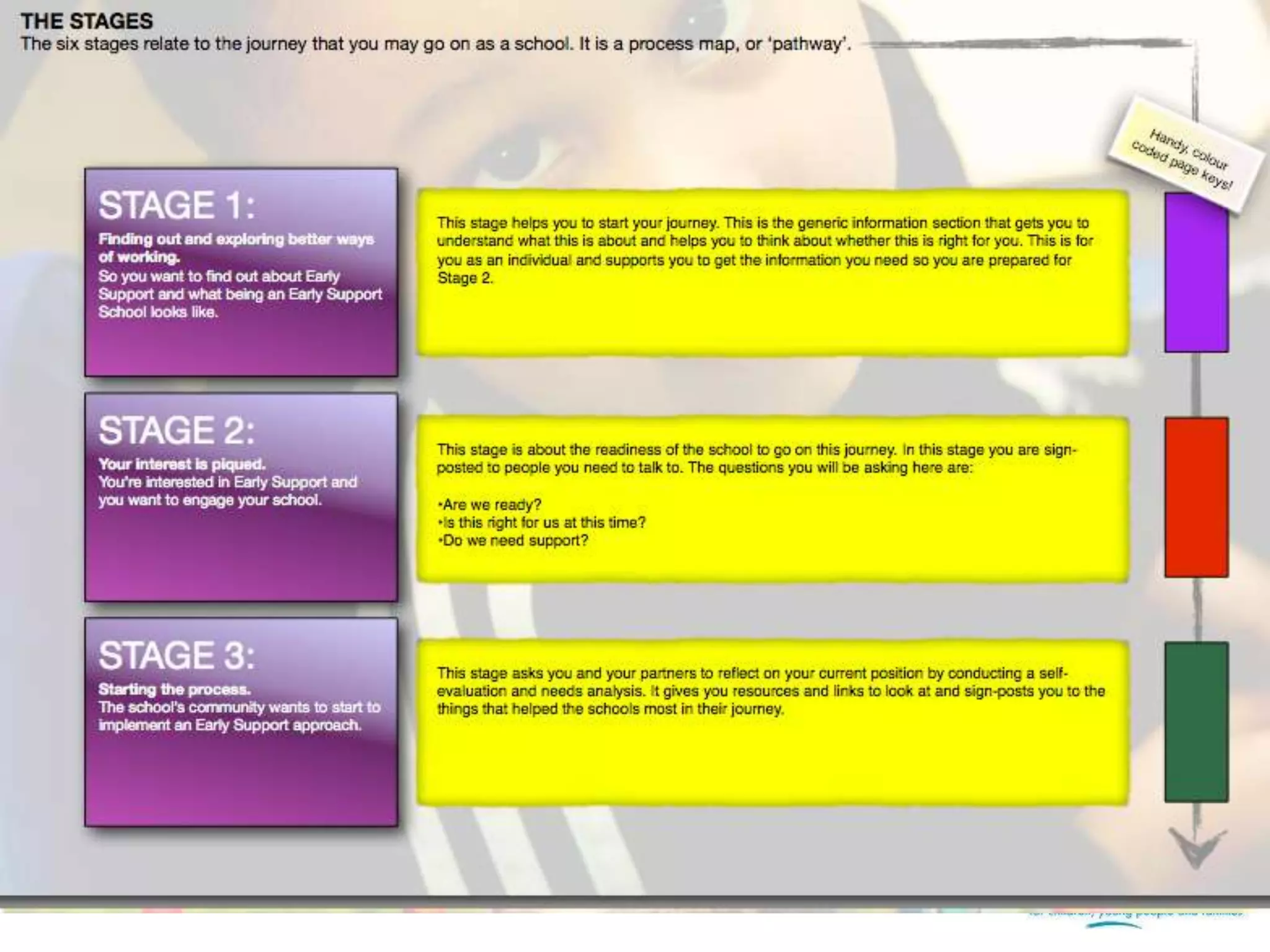
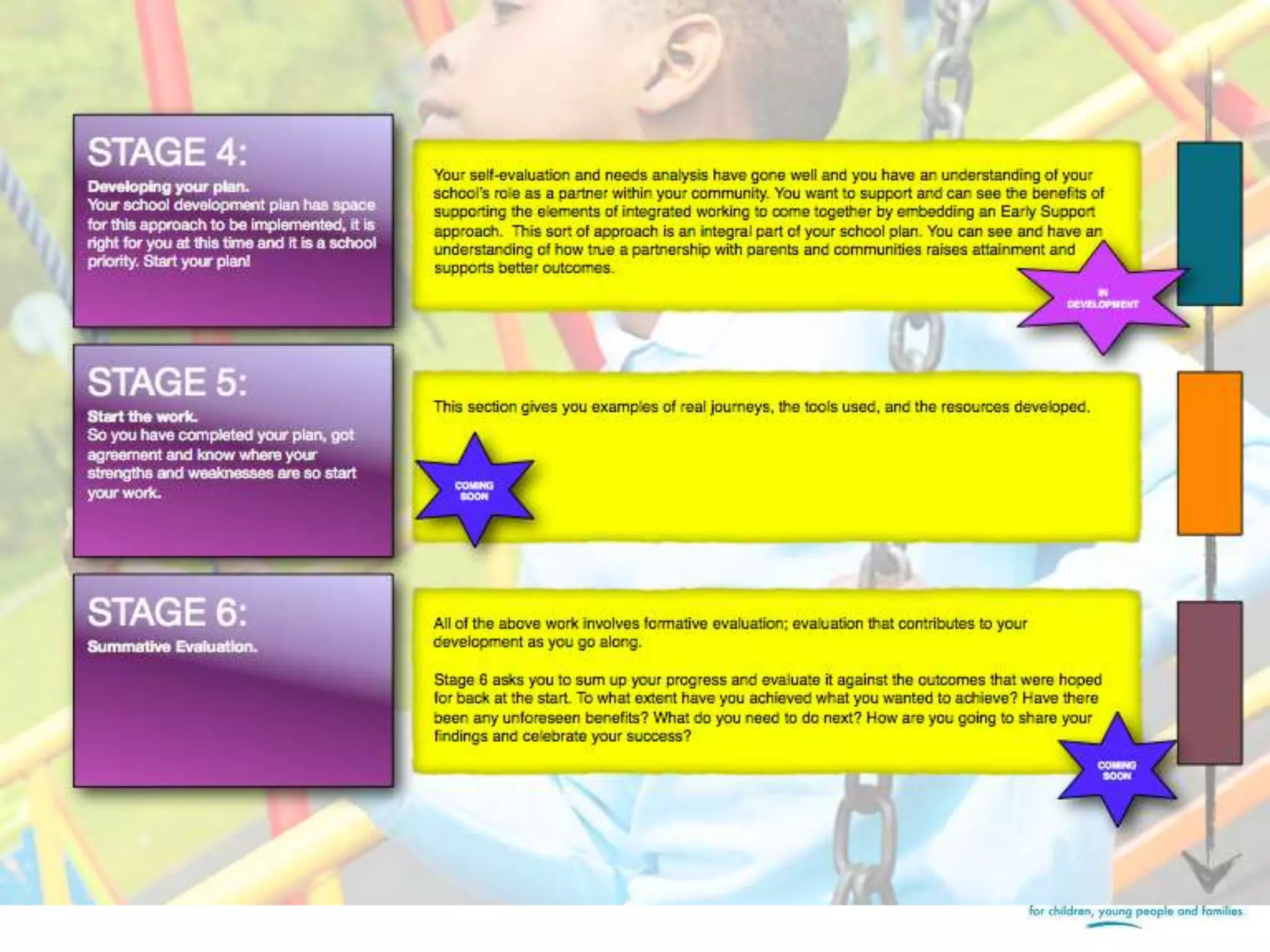
Five sections
1. Local Offer
2. Single Plan
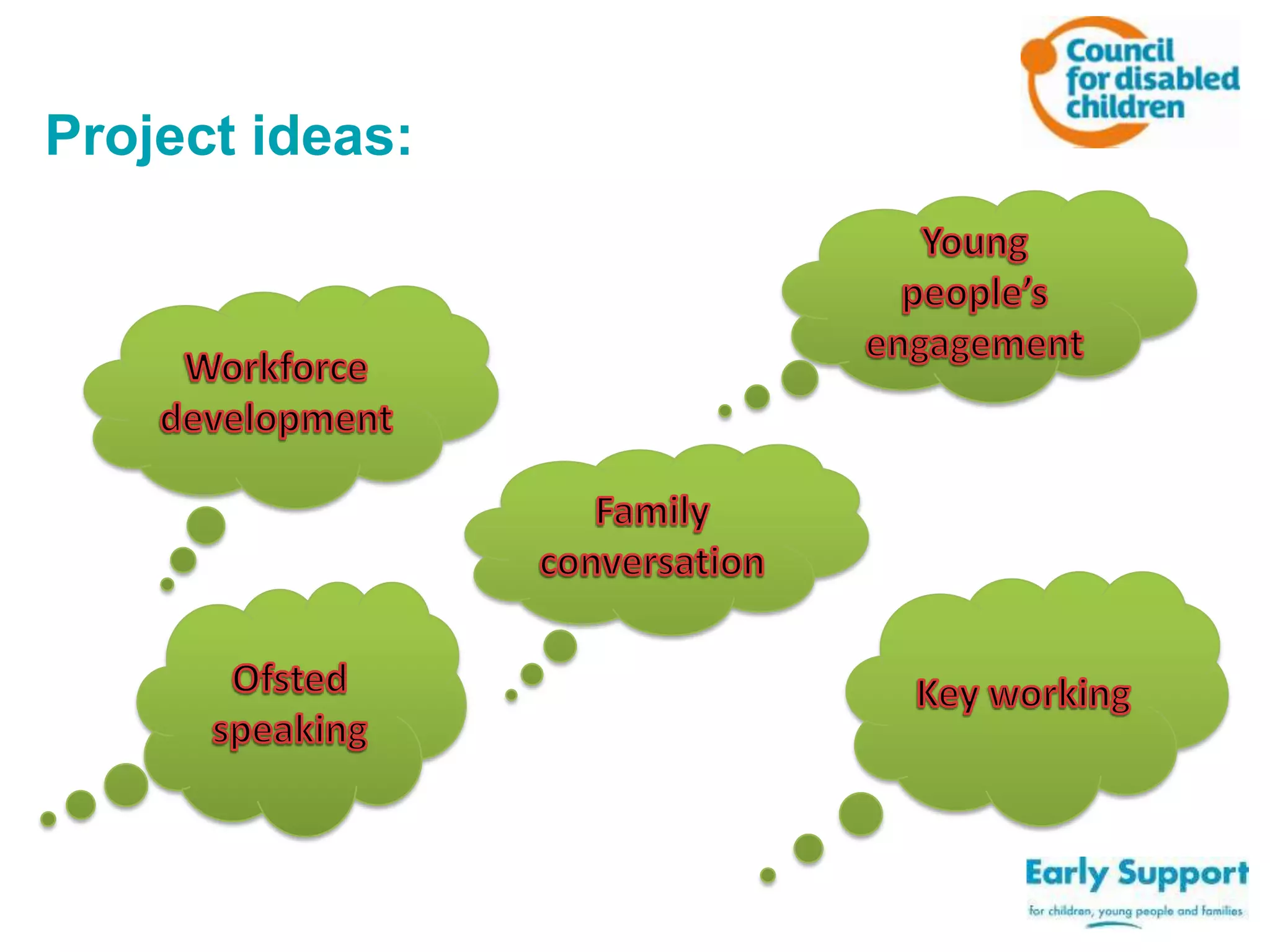
3. Your Choice (Ofsted, workforce development, family
conversation, key working, young peoples
engagement)
4. Whole school culture
5. Parent engagement
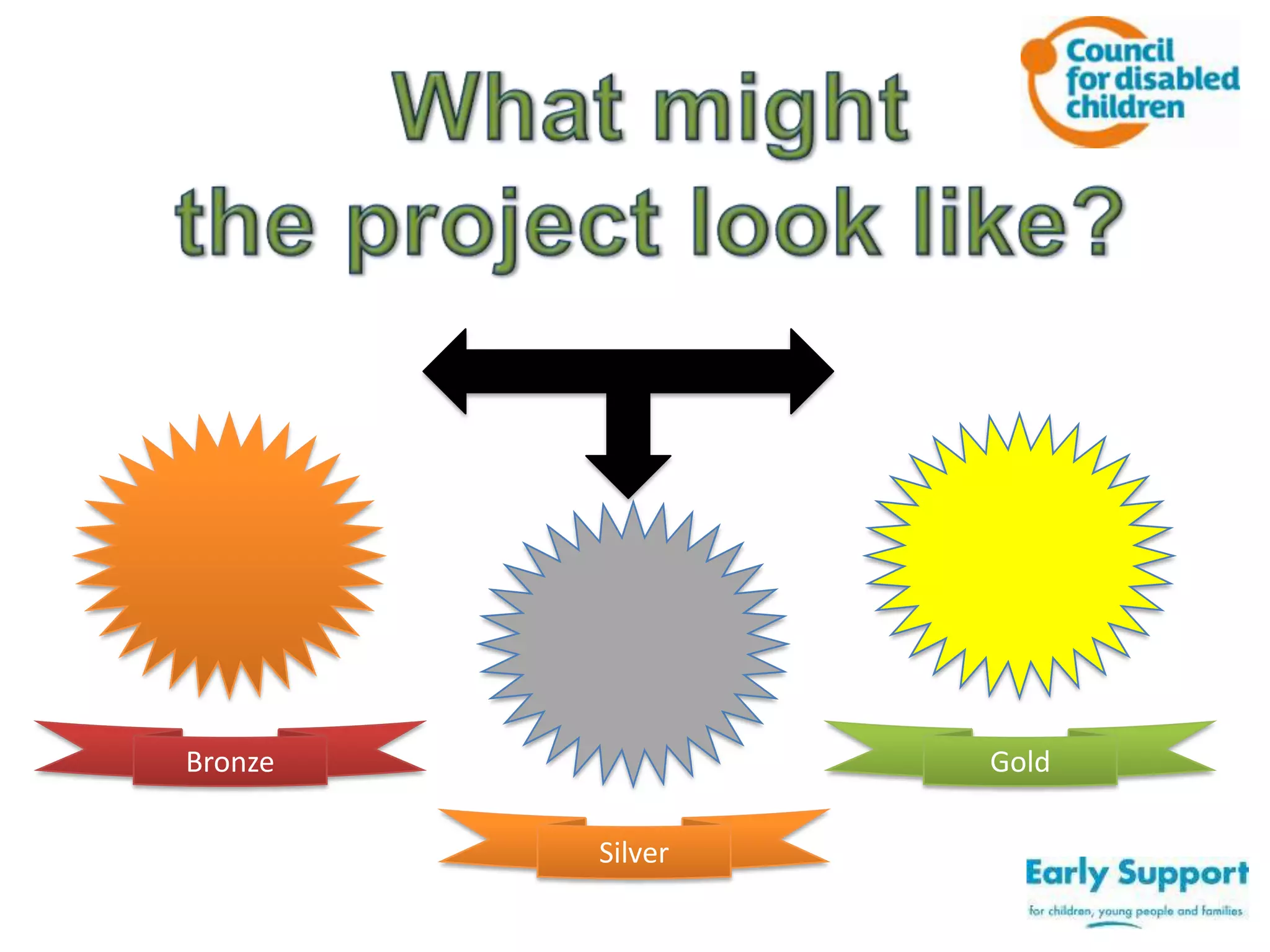
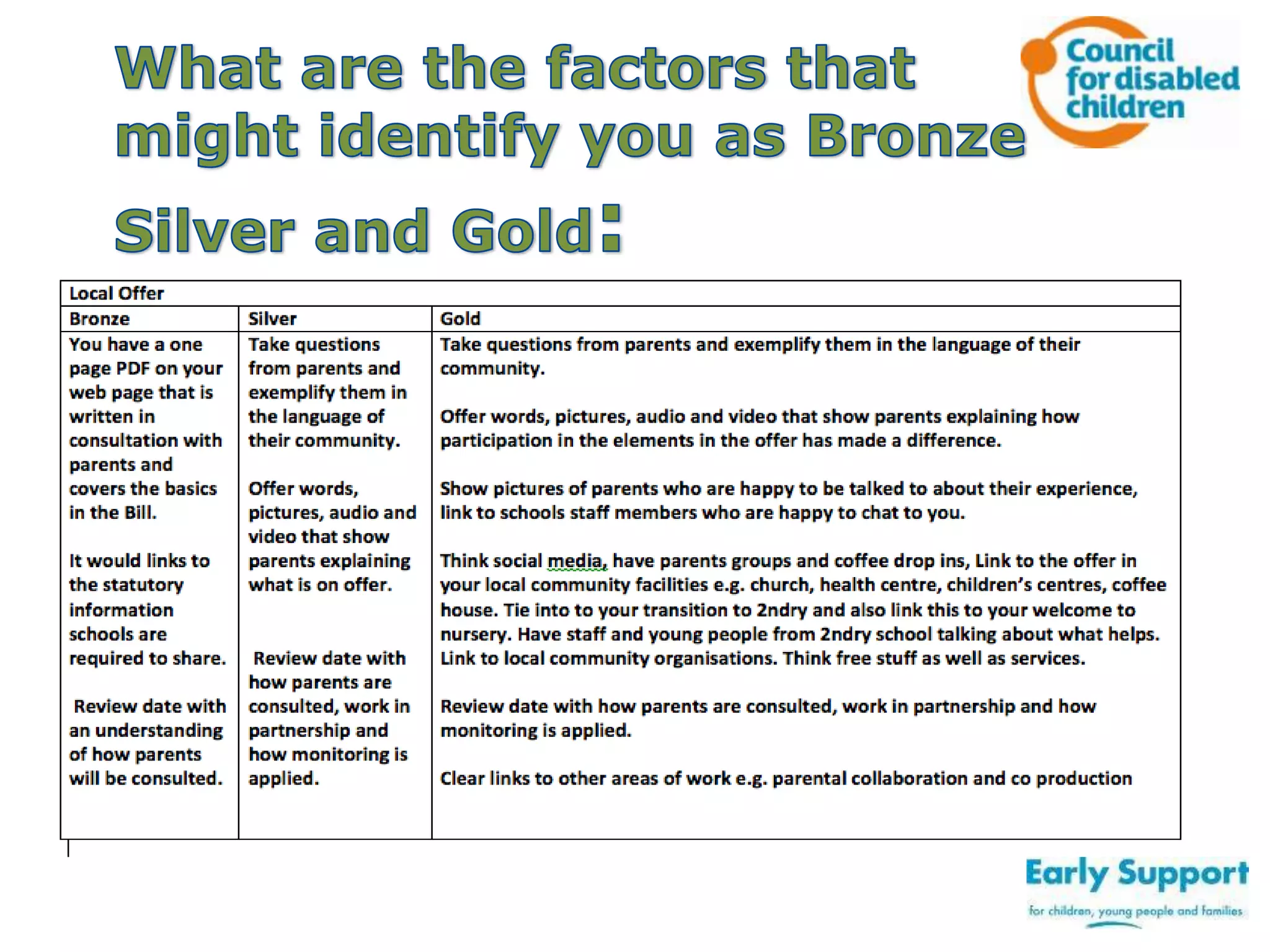
Bronze

Gold
Silver
Local Offer
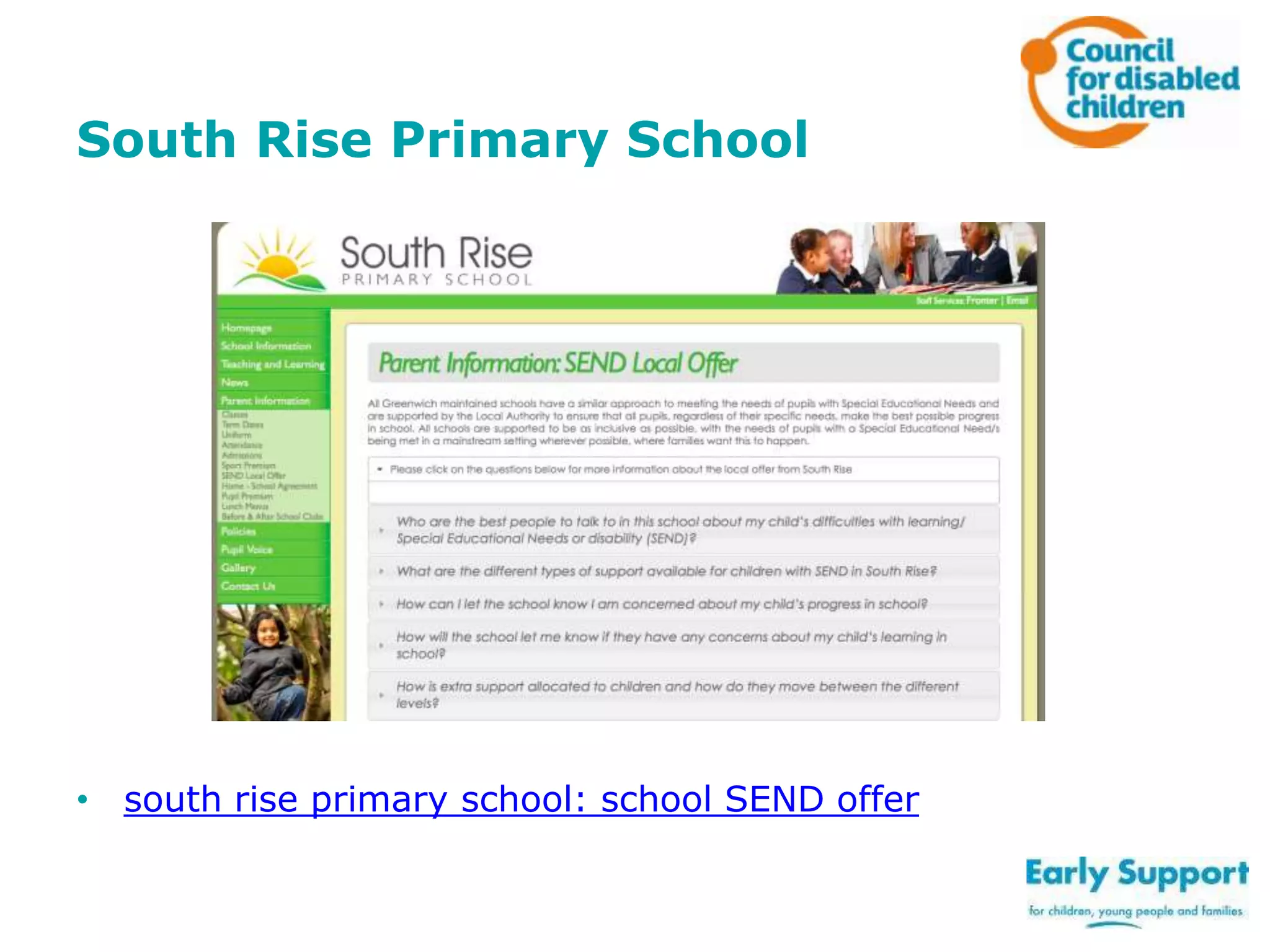
South Rise Primary School

• south rise primary school: school SEND offer
Local Offer ideas inspired from the
South Rise or taking an idea and
building on it:
Video removed as it is so large
Single Plan
Parental Engagement
The Parent Workshops

• The parents’ workshops are a key
element of this approach and
parents. These workshops were
written by parents, for parents and
are delivered by parents.
Why have the workshops?
Issues that parents have
identified

•
•
•
•
•
•
•
•
•
•
•
•

Isolation
Depression
Lack of information
Confusion
Constant battle
No one listens
Family not viewed in context
Lack of social Life
Marriage and relationships
Work
Future for their child
Siblings

The solutions the workshops
offer

•
•

•
•
•
•

Understanding the tools and
resources
Supporting parents to
understand the complex
world they have entered
Building resilience
Supporting parents to access
information
Building their confidence
and their understanding
Getting back to work,
accessing a social life for the
whole family, what’s on in
your area
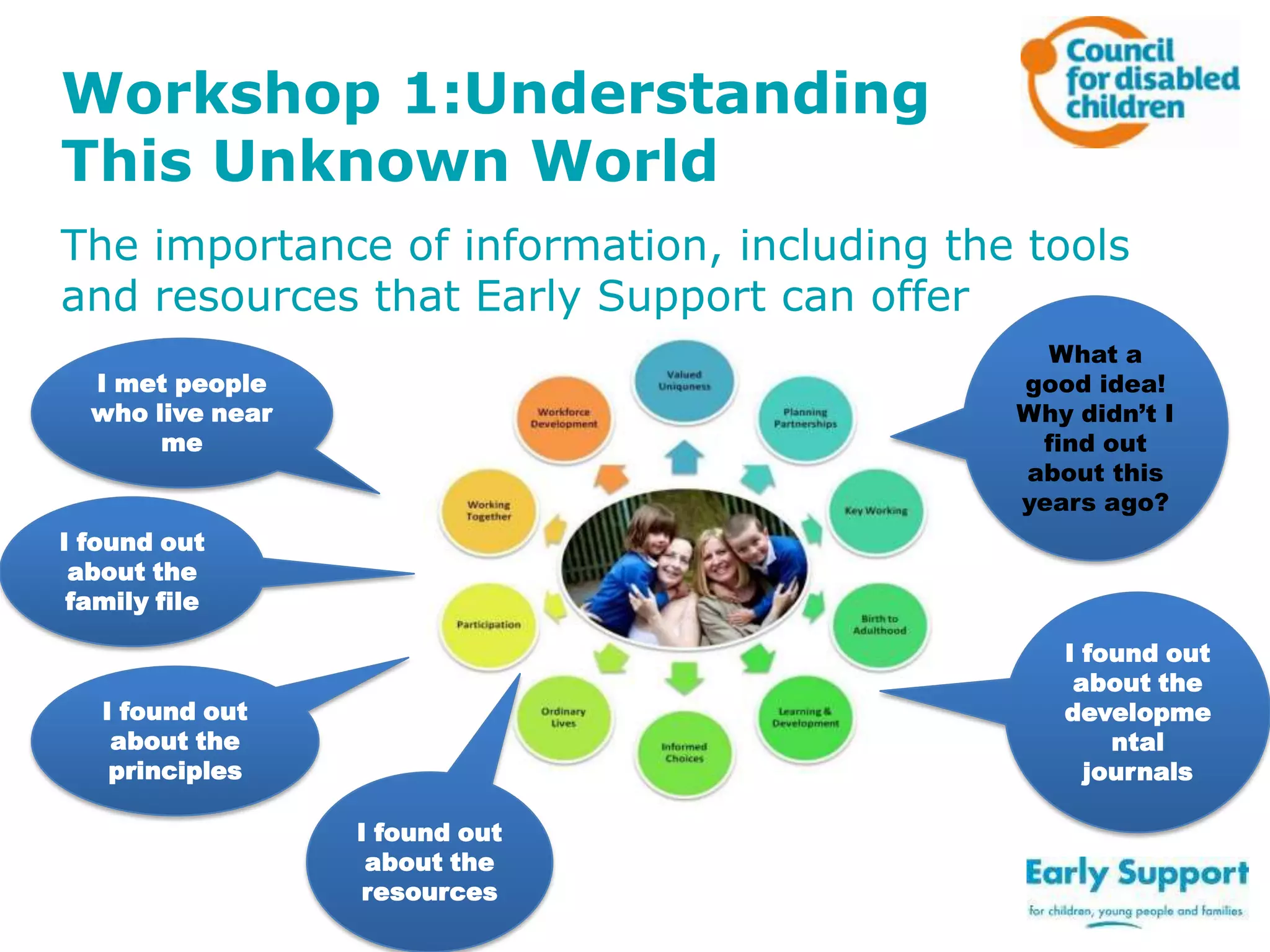
Workshop 1:Understanding
This Unknown World
The importance of information, including the tools
and resources that Early Support can offer
What a
good idea!
Why didn’t I
find out
about this
years ago?

I met people
who live near
me

I found out
about the
family file
I found out
about the
developme
ntal
journals

I found out
about the
principles
I found out
about the
resources
Cultural change
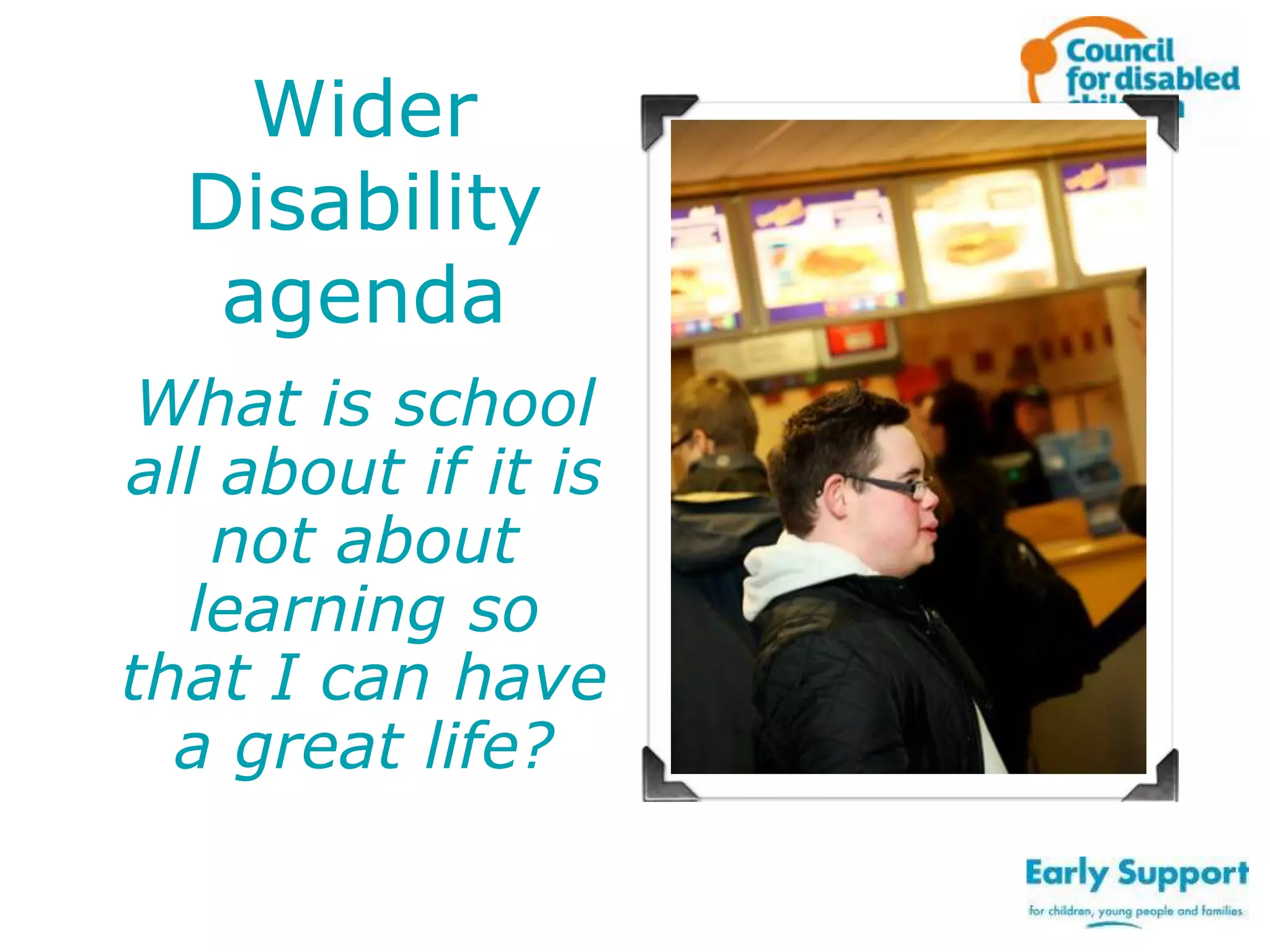
Wider
Disability
agenda
What is school
all about if it is
not about
learning so
that I can have
a great life?
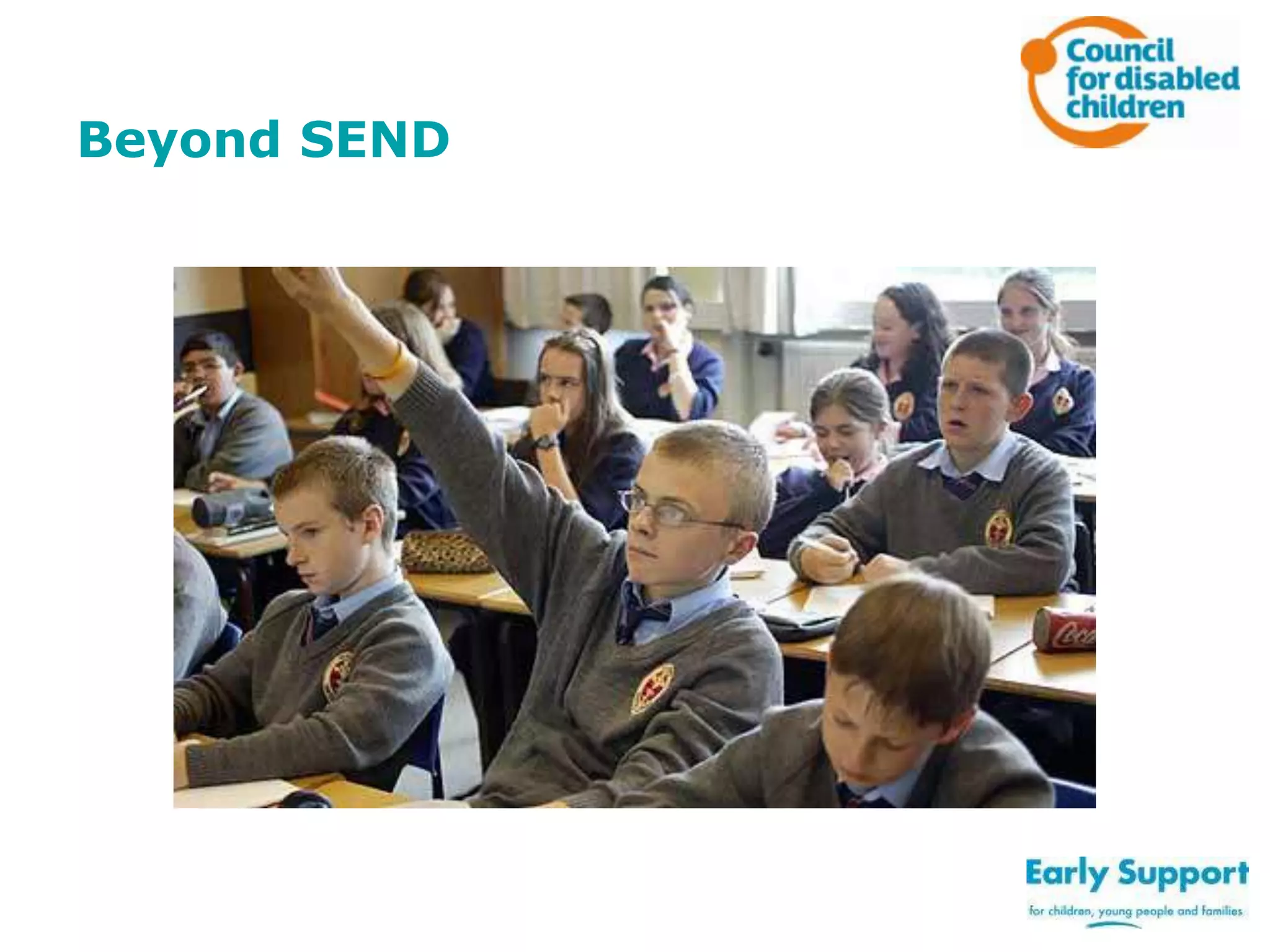
Beyond SEND
Your choice
Project ideas:
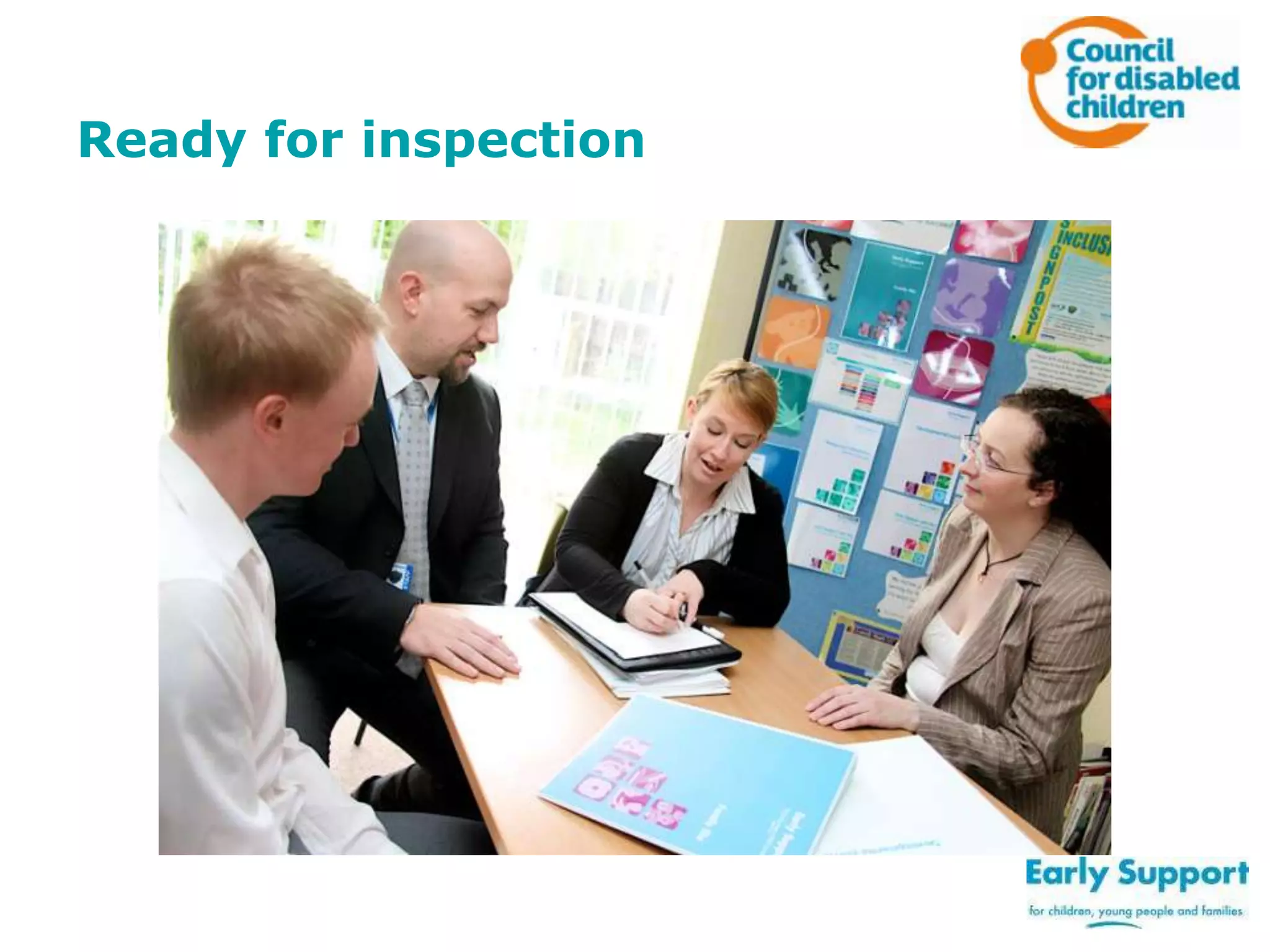
Ready for inspection
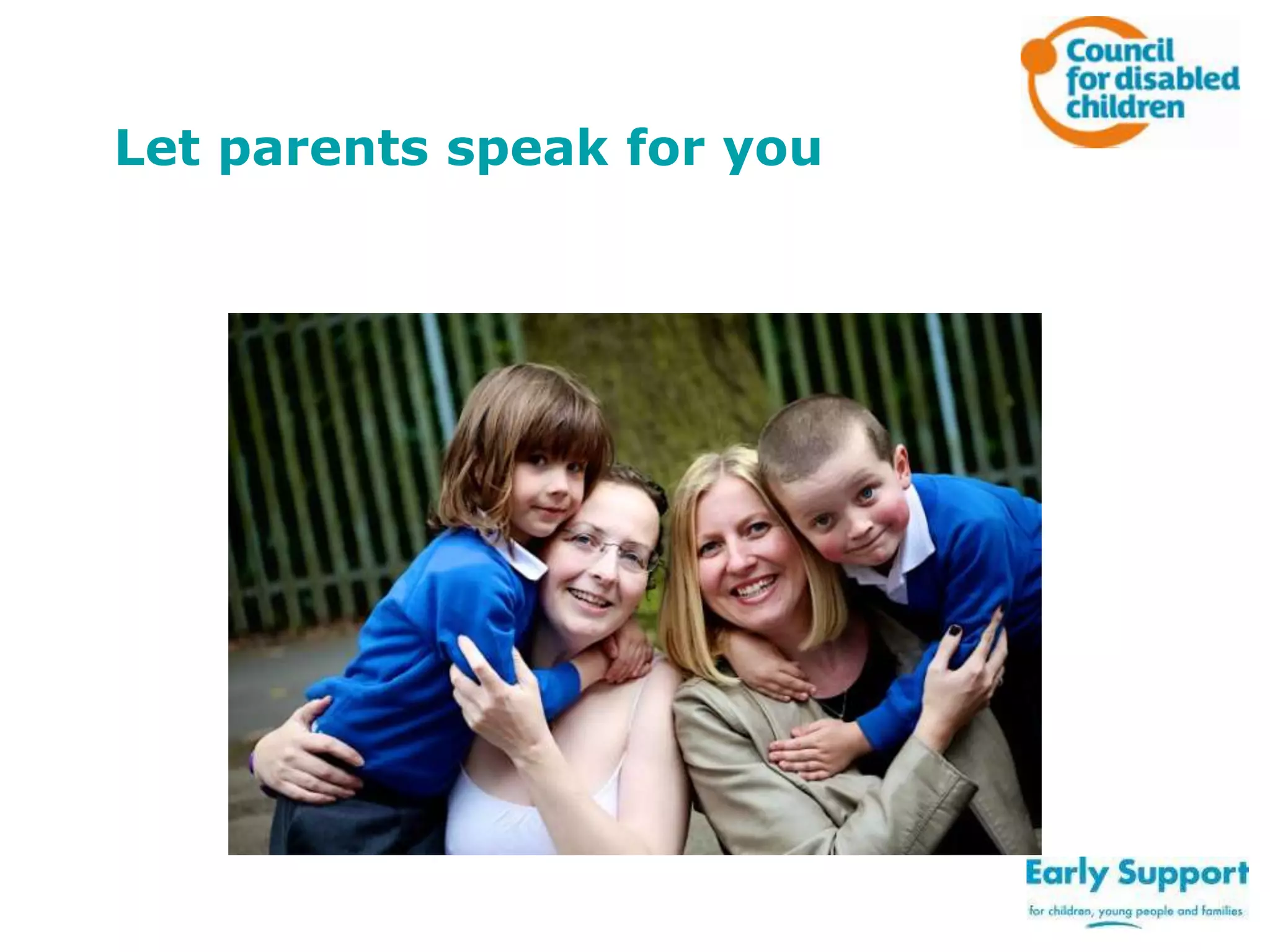
Let parents speak for you
Funding
Can we afford
any of this?
The project….

• All participants across the midlands who are involved in
developing readiness for the implementation of the
plan
• No activity that is not sustainable post the project or
affordable by schools.
What does being in the project
mean?

• Training
• Impact data
• Developing innovative ideas that support readiness for
the Bill – underpinned by the principles and the
partnership approach.
What can do we aim to do within the
project.
• Project management support
• The ability to interview
• Setting up links to information so you can keep
informed
• Links to national examples of good practice and up to
the minute information on what is relevant, new and
current.
Next steps?
• Talk to your senior leadership team
• Invite the project team in to speak to you
• Create a partnership agreement where we identify your
next steps
• Get going on your plan.
Thank you
• Fiona Holmes Regional Facilitator Early Support:
Midlands
• Email: fholmes@solihull.gov.uk
• Web Site: http://inprincipletraining.co.uk
• Twitter:@Fiholmes_ES:
https://twitter.com/FiHolmes_ES
• Facebook:
https://www.facebook.com/fiona.holmes.1044
• Mobile number: 07768 021690

West

Schools project: Early Support and the schools pathway project

  • 1.
    Early Support andthe Solihull Way Fiona Holmes
  • 2.
  • 4.
    Structure change, easy– Culture change, hard! ‘Achieving our ambitions for disabled children and young people and those with special educational needs and their families will mean changes in the law. We have made clear that we intend to introduce a Children and Families Bill during the second session of this Parliament to achieve that. But it will also depend on changes in the ways that education, health and social care professionals work with children, young people and families and in the ways they work with each other.’
  • 5.
    The need forcultural change Successful implementation of the SEND reforms and the new COP is likely to require new ways of working and changes to the existing culture of SEND service provision. Achieving our ambitions for disabled children and young people and those with special educational needs and their families will … depend on changes in the ways that education, health and social care professionals work with children, young people and families and in the ways they work with each other. (Support and Aspiration – progress and next steps (May, 2012) “The leaders of early years settings, schools and colleges are responsible for establishing and maintaining a culture of high expectations: a culture that expects those working directly with children and young people with SEN to include them in all the opportunities available to other children and young people; to facilitate their participation; and to ensure that they achieve well” Draft Special Educational Needs (SEN Code of Practice: for 0 to 25 years – October 2013)
  • 6.
    Early Support andculture change • Early Support provides a framework for action for the implementation of the SEND provisions of the Children and Families Bill • Based on 10 principles, it provides a framework for cultural change and practical tools to enable this Early Support has "demonstrated the impact that well coordinated family focused services can have” and it “is helping to ensure that the legislative framework translates into real change for families” Edward Timpson, Minister for Children & Families, 2013
  • 9.
  • 14.
  • 15.
    How can weshare the key messages?
  • 16.
  • 17.
    What does theschools project look like? Five sections 1. Local Offer 2. Single Plan 3. Your Choice (Ofsted, workforce development, family conversation, key working, young peoples engagement) 4. Whole school culture 5. Parent engagement
  • 18.
  • 19.
  • 21.
    South Rise PrimarySchool • south rise primary school: school SEND offer
  • 22.
    Local Offer ideasinspired from the South Rise or taking an idea and building on it:
  • 23.
    Video removed asit is so large
  • 24.
  • 26.
  • 27.
    The Parent Workshops •The parents’ workshops are a key element of this approach and parents. These workshops were written by parents, for parents and are delivered by parents.
  • 28.
    Why have theworkshops? Issues that parents have identified • • • • • • • • • • • • Isolation Depression Lack of information Confusion Constant battle No one listens Family not viewed in context Lack of social Life Marriage and relationships Work Future for their child Siblings The solutions the workshops offer • • • • • • Understanding the tools and resources Supporting parents to understand the complex world they have entered Building resilience Supporting parents to access information Building their confidence and their understanding Getting back to work, accessing a social life for the whole family, what’s on in your area
  • 29.
    Workshop 1:Understanding This UnknownWorld The importance of information, including the tools and resources that Early Support can offer What a good idea! Why didn’t I find out about this years ago? I met people who live near me I found out about the family file I found out about the developme ntal journals I found out about the principles I found out about the resources
  • 30.
  • 31.
    Wider Disability agenda What is school allabout if it is not about learning so that I can have a great life?
  • 32.
  • 33.
  • 34.
  • 35.
  • 36.
  • 37.
  • 38.
    The project…. • Allparticipants across the midlands who are involved in developing readiness for the implementation of the plan • No activity that is not sustainable post the project or affordable by schools.
  • 39.
    What does beingin the project mean? • Training • Impact data • Developing innovative ideas that support readiness for the Bill – underpinned by the principles and the partnership approach.
  • 40.
    What can dowe aim to do within the project. • Project management support • The ability to interview • Setting up links to information so you can keep informed • Links to national examples of good practice and up to the minute information on what is relevant, new and current.
  • 41.
    Next steps? • Talkto your senior leadership team • Invite the project team in to speak to you • Create a partnership agreement where we identify your next steps • Get going on your plan.
  • 42.
    Thank you • FionaHolmes Regional Facilitator Early Support: Midlands • Email: fholmes@solihull.gov.uk • Web Site: http://inprincipletraining.co.uk • Twitter:@Fiholmes_ES: https://twitter.com/FiHolmes_ES • Facebook: https://www.facebook.com/fiona.holmes.1044 • Mobile number: 07768 021690 West

Editor's Notes

  • #3 Early Support: What is it?Early Support is an approach that supports access to better outcomes for families, children and young people. Early Support has a focus on disability. Nationally, it is the main approach used in supporting readiness for the Children and Families Bill (SEN&D). It has a role in bringing partners and agendas together and supports the cultural change necessary for effective implementation.Early Support for children, young people and families consists of three key elements:The 10 Early Support principles of best practice ‘The Family Partnership Model’, developed by Professor Hilton DavisThe 10 Key Working Functions Together these three elements become the ‘Early Support Approach’. There are some fundamentals that need to be in place to support the model to be successful. These are as follows:A willingness to explore and implement change whilst constantly reflecting and challenging practice, with the support of a robust process.A common language and network to support communication.Tools and resources to support implementation.Training to support both workforce development and cultural change.
  • #4 Early Support: What is it?Early Support is an approach that supports access to better outcomes for families, children and young people. Early Support has a focus on disability. Nationally, it is the main approach used in supporting readiness for the Children and Families Bill (SEN&D). It has a role in bringing partners and agendas together and supports the cultural change necessary for effective implementation.
  • #24 The workshops underpin a cultural changeThey are not about better parentingThey are not about counselingThey are about creating parents who are more informed, engaged, empowered and resilient.Outcomes from these workshopsParents and their families have a better social lifeThey get on better togetherThey engage with professionals as partners They are more likely to access employmentUnderstand their world betterNot bad for a series of workshops!We train professionals for 2 – 4 years but expect parents to manage with little or no training. When schools, health centers, and children’s centers understand the impact of the workshops they realize they can not afford not to put them on. We have had councilors, pediatricians, head teachers, heath visitors and parents asking for these workshops at a strategic level – they are very very powerful.
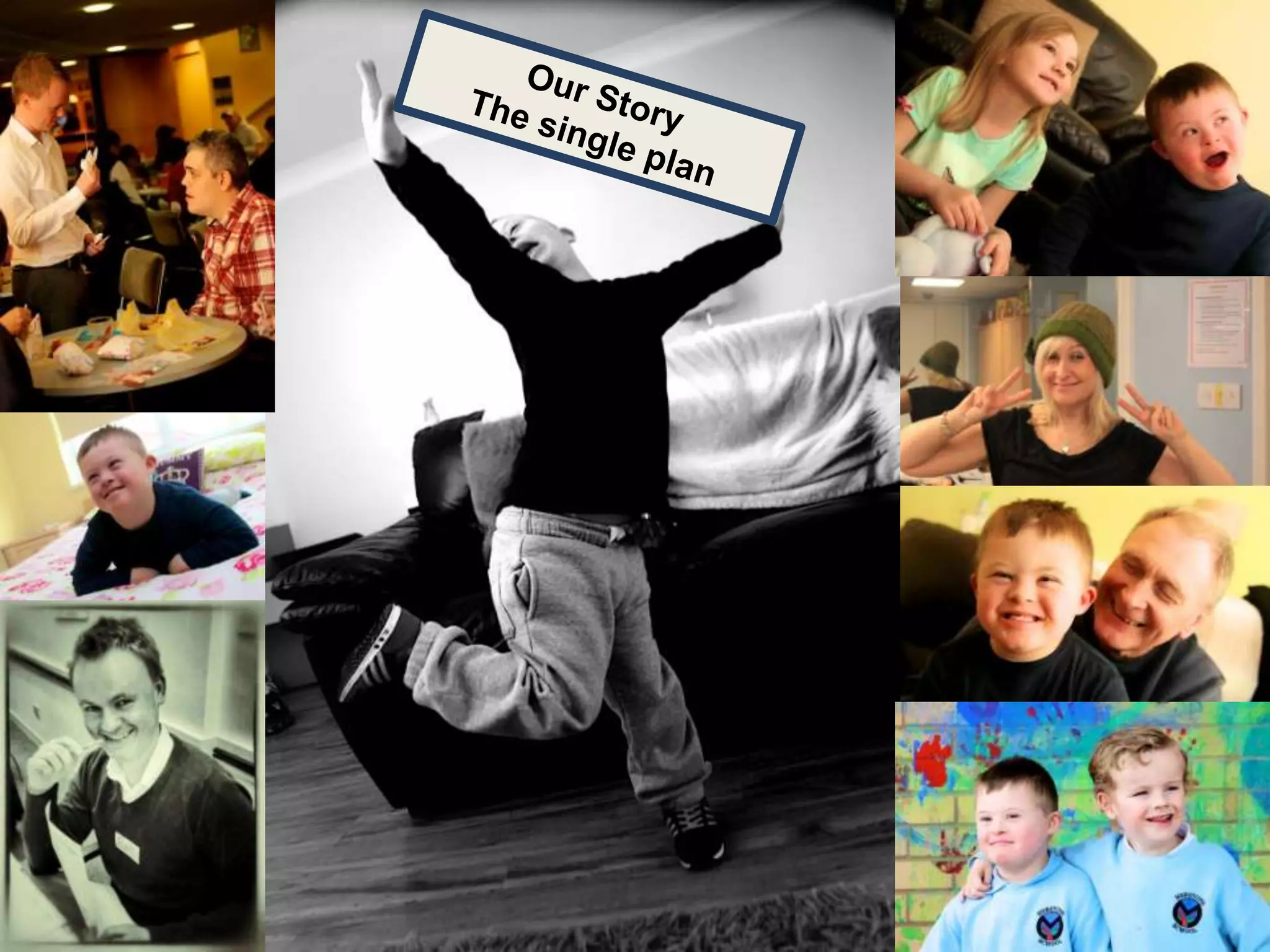
  • #26 Nikki’s Story Danny arriving - shock grief isolationAge 3 parent workshops - not alone, confidence, information, family file, developmental journalCAF - working in partnership with prof around me, transition, developmental journal in partnership with settingIntegrated plan, support with access to mainstream school and then transition into special school For me? The hard thing to evaluate from my perspective is that there was no issue in my journey that was put right. Working using the Early Support approach you do not get the impact data of solving an issue. More powerfully you get an on-going successful journey.Support groups - volunteering - led to employment at SMBC - led toSignpost inclusion - supporting families to have positive futures in their communitiesSupport groups offering emotional and practical support Parent workshops Family activities Sibling support Consultation with Solihull MBC 
  • #28 Early Support is the Government’s mechanism to improve the quality, consistency and co-ordination of services for disabled children (from birth through to adulthood) and their families. It is an approach based on 10 principles of best practice and is underpinned by the partnership approach.Early Support is being sponsored by the Government and is Championed by the Council for Disabled Children. It has tools, resources, training and a regional network. I have some leaflets that have our weblink and also the areas of work that are supported under this umbrella branding. Our aim is to enable as much as possible free and then support capacity building to enable communities to set up and run best practice training on their own. Today Early Support has a well established,highly evaluated series of peer led Workshops aimed at delivering these outcomes. The workshops are the mechanism that we use to support parents and carers to actively participate in their child’s life journey.They have also proven to be extremely effective as entry level Parent Carer Participation training, ensuring a steady flow of knowledgeable Parent Carers
  • #30  “We were lucky in a way that our son was so complex as he met everyone’s thresholds and criteria. We had good support, and lots of practitioners involved in his care but they were all experts in the various ‘bits’ of him, and I was the one who told everyone else what was going on. I still had to go and find out things for myself though, and much of the information came from other parents” Time table of the day30 minutes Welcome and introductions20 minutes Outline of all workshops and aims for today45 minutes What are the Early Support materials?15 minutes Break (at the appropriate time)45 minutes What is this all about?20 minutes What is in this for us?45 minutes Lunch (at appropriate time)20 minutes Where to go from here...15 minutes Summary of the day Thank you and goodbye OutcomesThe importance of informationRecognise why supporting parent carers is vitalBe aware of the role of Early SupportMake sense of the jargon around supporting additional needsRecognise how the experiences of other parent carers can support youRecognise the value of Early Support resourcesThe workshops are 2 – 3 hoursThey are run by parents for parentsThey can be run by a parent professional partnershipThey are run by churches, health centresChildren’s centresSchools Nurseries
  • #32 Short BreaksAiming High for Disabled ChildrenHealthSocial care Education Health and Care Plans
  • #33 What does inclusion mean to youWhere does it sitTaking lessons learnt from exceptional extended schools initiatives.Early HelpTroubled Families
  • #36 “Don’t lose sight of the extraordinary in search of ‘outstanding’”Overall effectivenessAchievement of pupils at schoolQuality of teachingBehavior and safetyQuality of leadership in, and management of, the schooloutstanding’ ‘good’ ‘requires improvement’ ‘inadequate’ ‘Special measures’documented evidence of the work of governors and their impactreports of any external evaluation of the school.Web site that reflects what is going onActive interaction with web site of parents showing real storiesIn order to make a judgement about the quality of education provided in the school, inspectors mustfirst make four key judgements. These are: the achievement of pupils at the school the quality of teaching in the school the behaviour and safety of pupils at the school.the quality of leadership in, and management of, the schoolIn addition, inspectors must also consider:the spiritual, moral, social and cultural development of pupils at the school the extent to which the education provided by the school meets the needs of the range of pupils at the school, and in particular the needs of: pupils who have a disability for the purposes of the Equality Act 2010 pupils who have special educational needs.
  • #37 Their storiesImpact on the individual families let them tell their storiesHow do they communicate with each otherCan they find the information and does it meet their needsLocal offer
  • #38 Access to additional funds Looking beyond the box