Schedule Risk
Analysis for Complex
Projects
Andy Abu-Bakar
Project Controls Expo – 18th November 2014
2
About the speaker
Andy Abu-Bakar CEng MIMechE
Risk Assurance Services Lead – Rhead Group
Eight years MoD various roles: Project Manager, Systems Engineer, Aircraft Trials and Certification
Three years PPM consulting: Defence and Aerospace roles
Key skills:
 Project Management
 Risk management & improvement
 Quantitative Risk Analysis & decision support
3
Contents
1. Introduction to Schedule Risk Analysis
2. Case study – project background
3. Analysis approach
4. Developing the models
5. Interpreting and briefing results
4
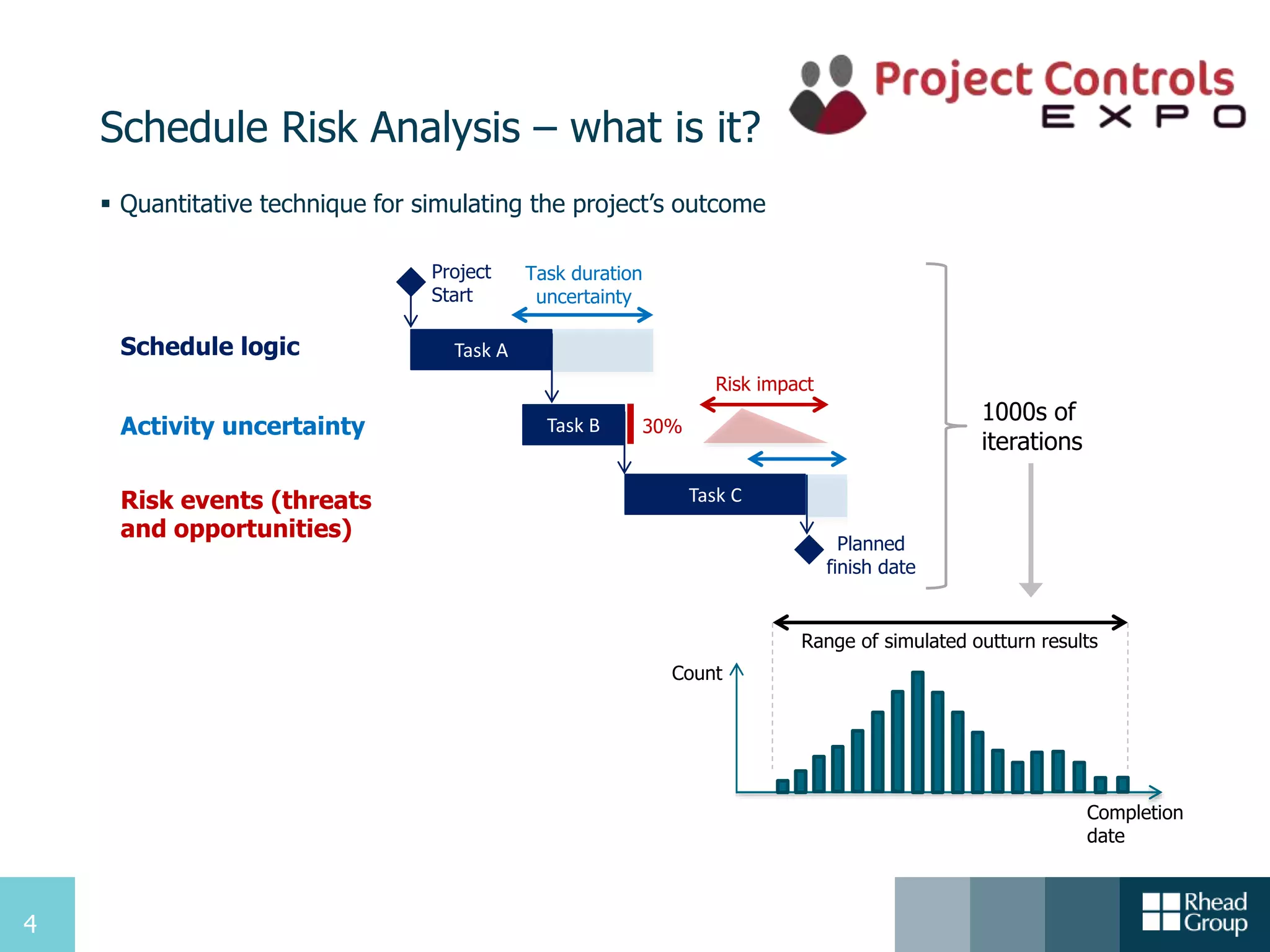
Schedule Risk Analysis – what is it?
1000s of
iterations
Count
Completion
date
Range of simulated outturn results
 Quantitative technique for simulating the project’s outcome
Schedule logic
Activity uncertainty
Risk events (threats
and opportunities)
Task A
Task C
Project
Start
Planned
finish date
Task B
Task duration
uncertainty
Risk impact
30%
5
Schedule Risk Analysis – why do it?
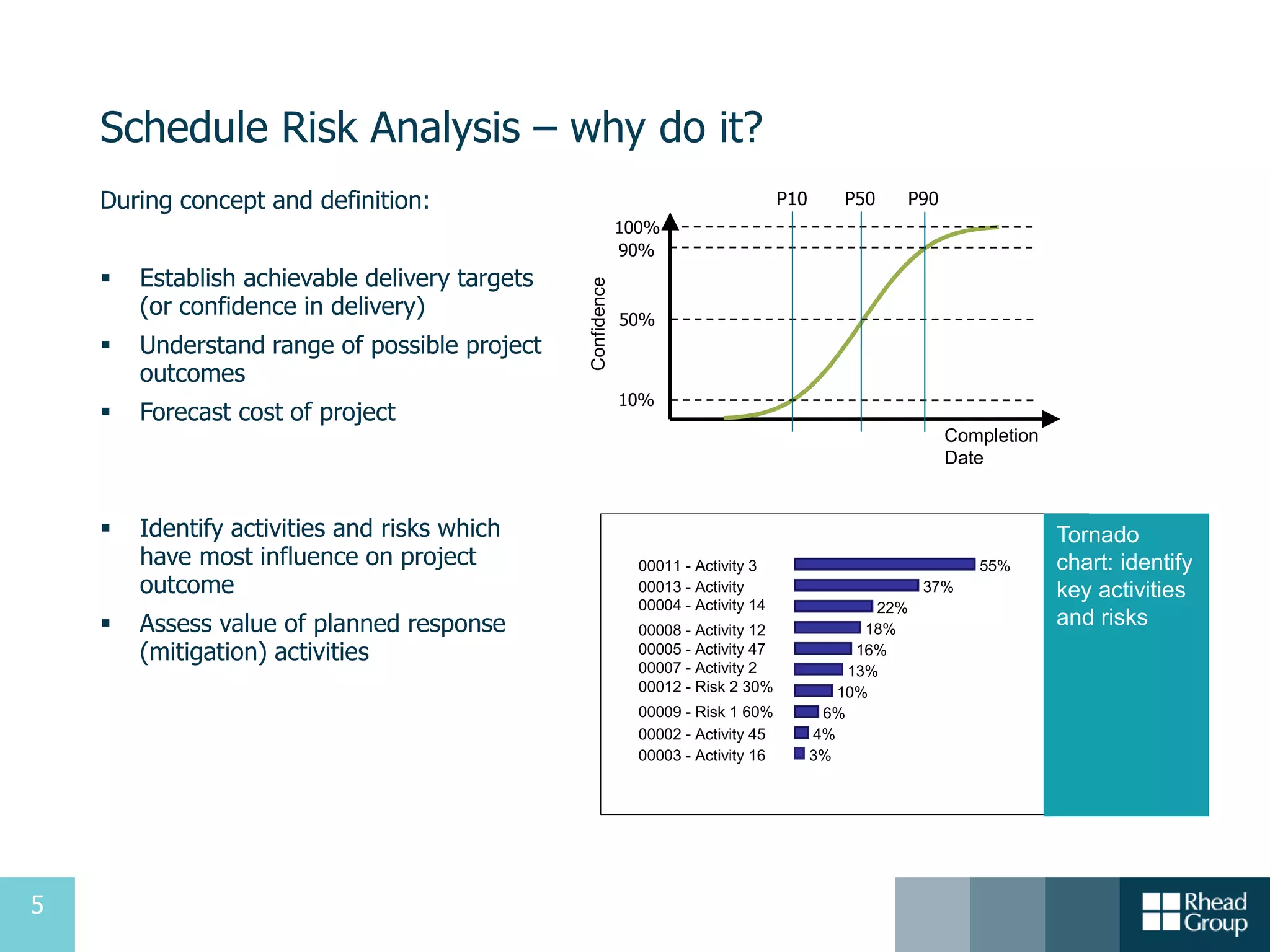
During concept and definition:
 Establish achievable delivery targets
(or confidence in delivery)
 Understand range of possible project
outcomes
 Forecast cost of project
Completion
Date
100%
50%
90%
10%
Confidence
P10 P50 P90
00011 - Activity 3 55%
00013 - Activity 37%
00004 - Activity 14 22%
00008 - Activity 12 18%
00005 - Activity 47 16%
00007 - Activity 2 13%
00012 - Risk 2 30% 10%
00009 - Risk 1 60% 6%
00002 - Activity 45 4%
00003 - Activity 16 3%
00011 - Activity 3 55%
00013 - Activity 37%
00004 - Activity 14 22%
00008 - Activity 12 18%
00005 - Activity 47 16%
00007 - Activity 2 13%
00012 - Risk 2 30% 10%
00009 - Risk 1 60% 6%
00002 - Activity 45 4%
00003 - Activity 16 3%
 Identify activities and risks which
have most influence on project
outcome
 Assess value of planned response
(mitigation) activities
Tornado
chart: identify
key activities
and risks
6
Schedule Risk Analysis – why do it?
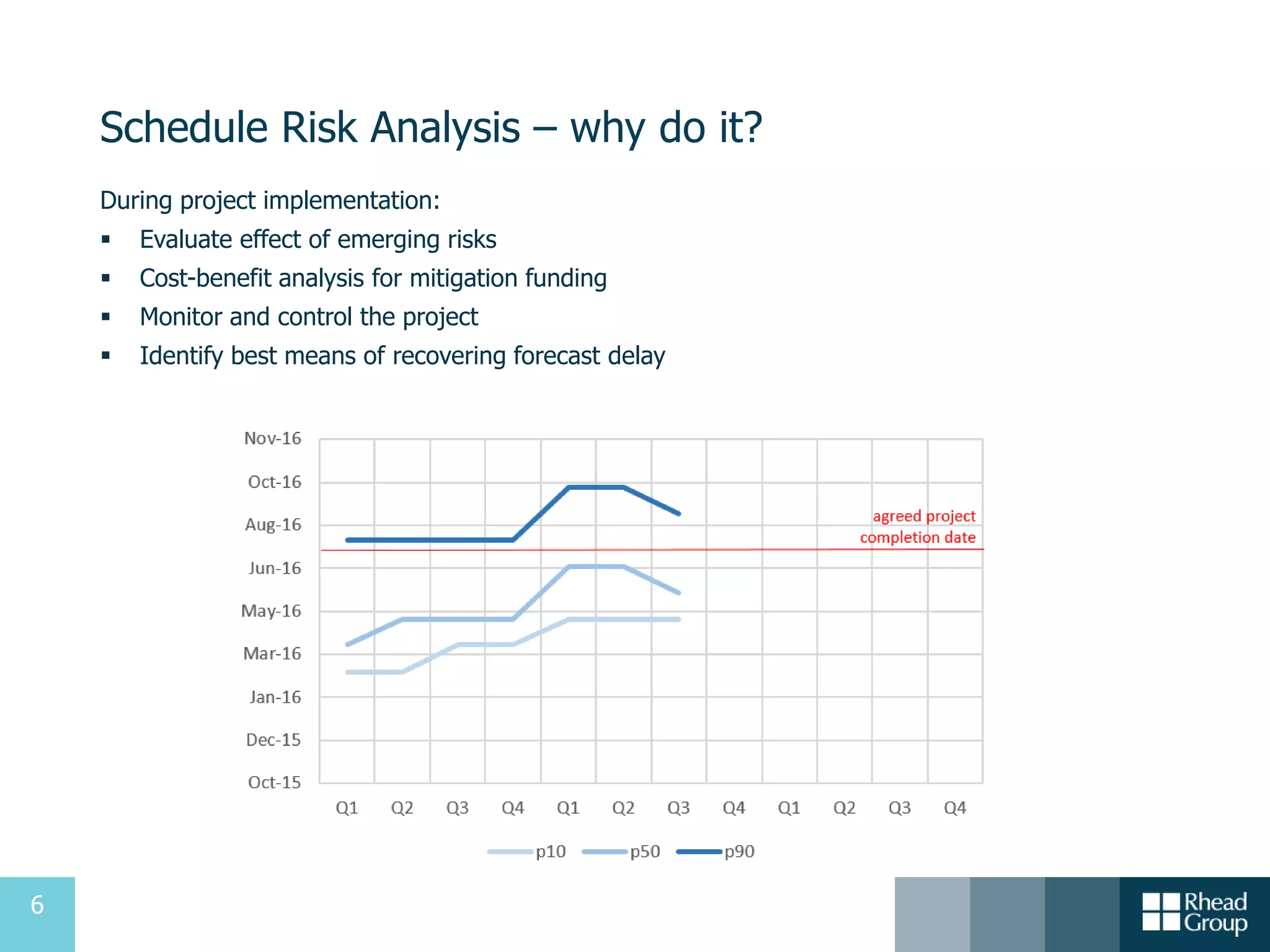
During project implementation:
 Evaluate effect of emerging risks
 Cost-benefit analysis for mitigation funding
 Monitor and control the project
 Identify best means of recovering forecast delay
7
Case study: large public sector engineering project
Significant capital investment (£100Ms)
 Production and integration of a number of complex systems
 Development and proving of novel technology
 Planning, construction and commissioning of bespoke manufacturing facilities
 Trials and demonstration activities to support handover to user
 Training and support systems
Currently in definition phase approaching main investment decision
Collaboration between government body and
number of industry suppliers
 Number of large engineering contractors
 Multiple sites UK and abroad
8
Case study: analysis objectives
 SRA is central to government case for investment
– Critical indicator used for investment decision
– Helps to define project time and cost envelope
– Must withstand detailed scrutiny
 Ongoing use of analysis throughout project life
– Key project monitoring & control tool
– Identify major schedule drivers
– Develop and evaluate response strategies
– Improve confidence in achieving delivery
milestones
9
Case study: project challenges
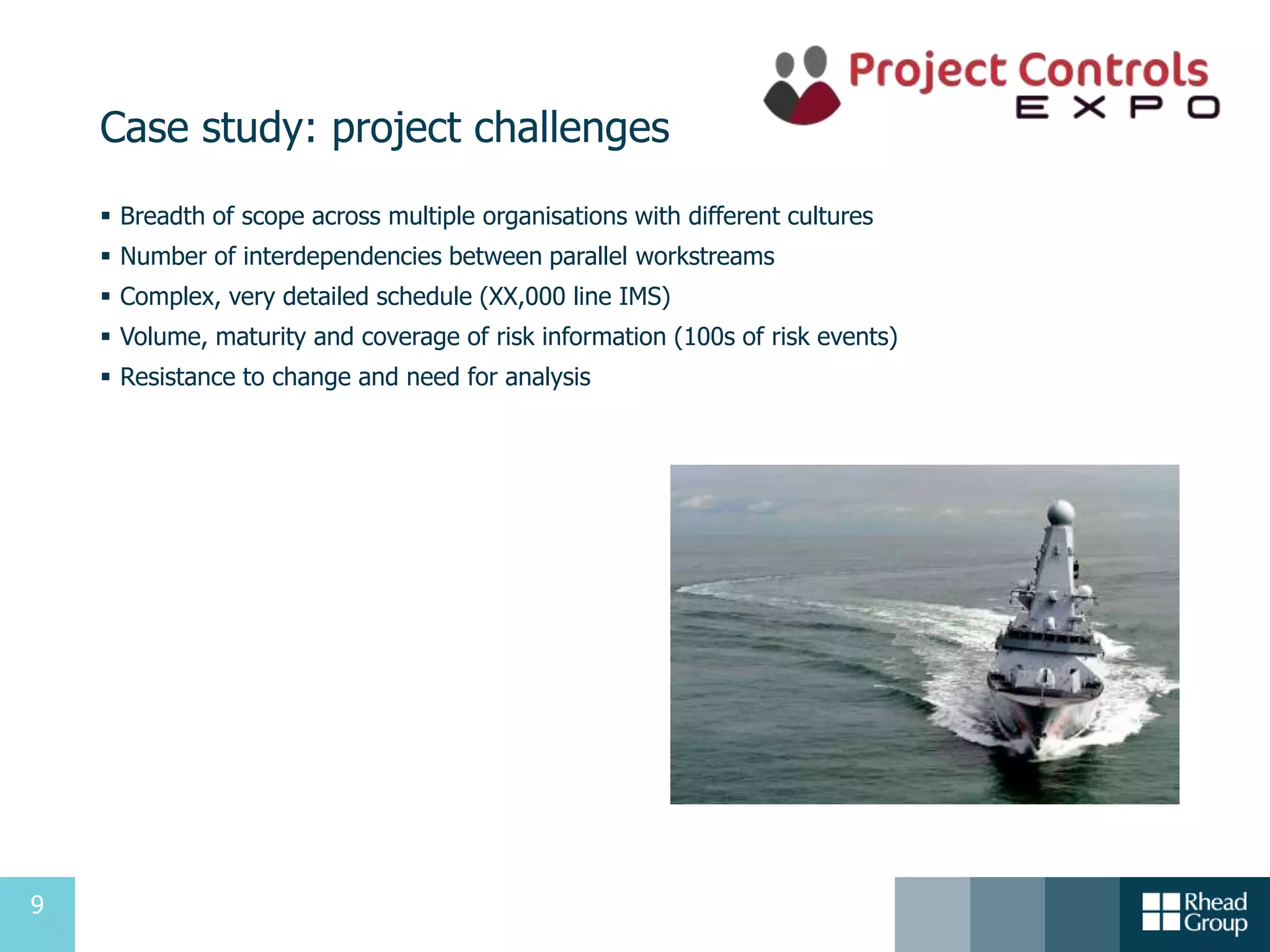
 Breadth of scope across multiple organisations with different cultures
 Number of interdependencies between parallel workstreams
 Complex, very detailed schedule (XX,000 line IMS)
 Volume, maturity and coverage of risk information (100s of risk events)
 Resistance to change and need for analysis
10
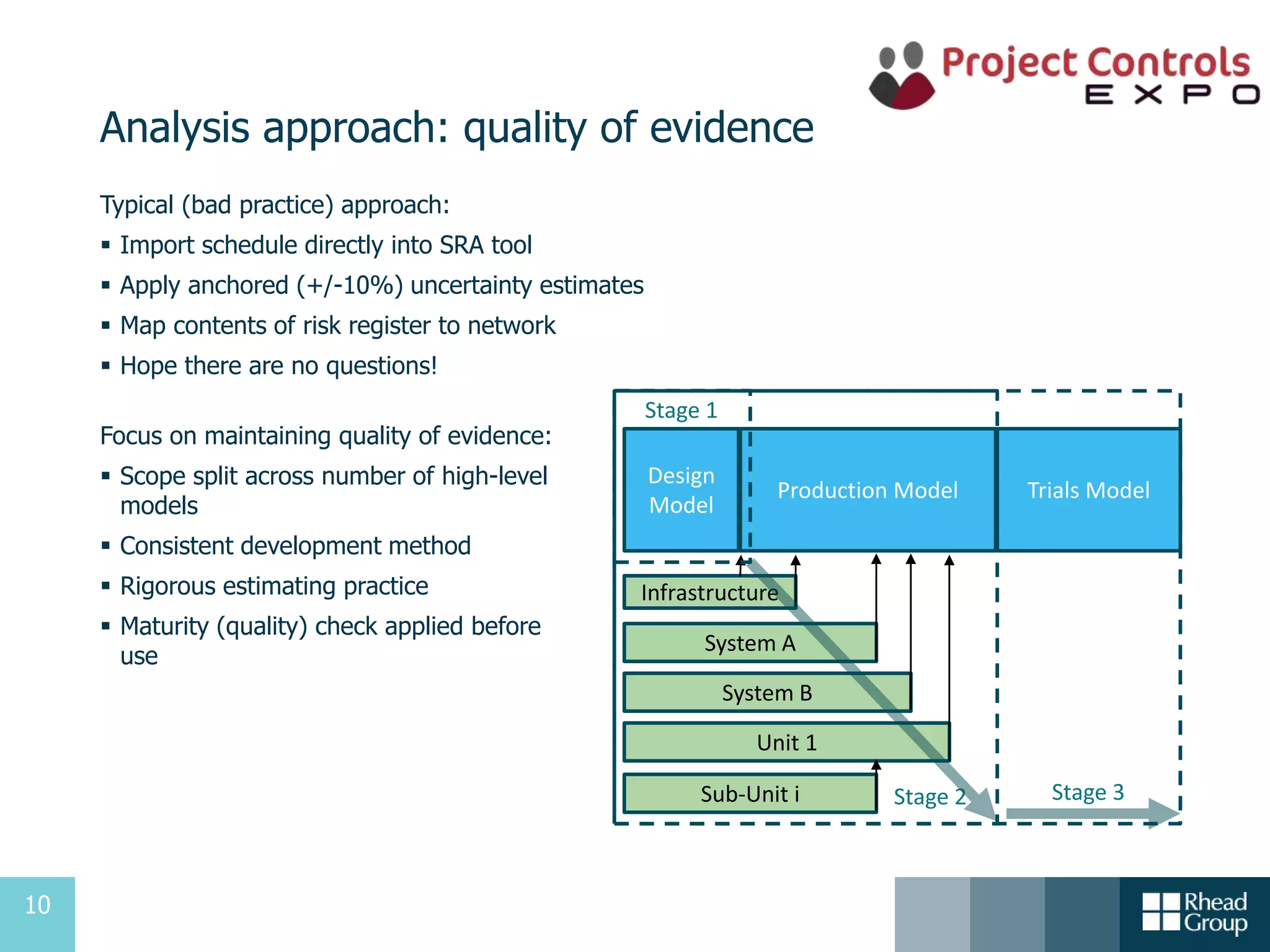
Analysis approach: quality of evidence
Typical (bad practice) approach:
 Import schedule directly into SRA tool
 Apply anchored (+/-10%) uncertainty estimates
 Map contents of risk register to network
 Hope there are no questions!
Focus on maintaining quality of evidence:
 Scope split across number of high-level
models
 Consistent development method
 Rigorous estimating practice
 Maturity (quality) check applied before
use
Design
Model
Production Model Trials Model
Infrastructure
System A
System B
Sub-Unit i
Unit 1
Stage 1
Stage 2 Stage 3
11
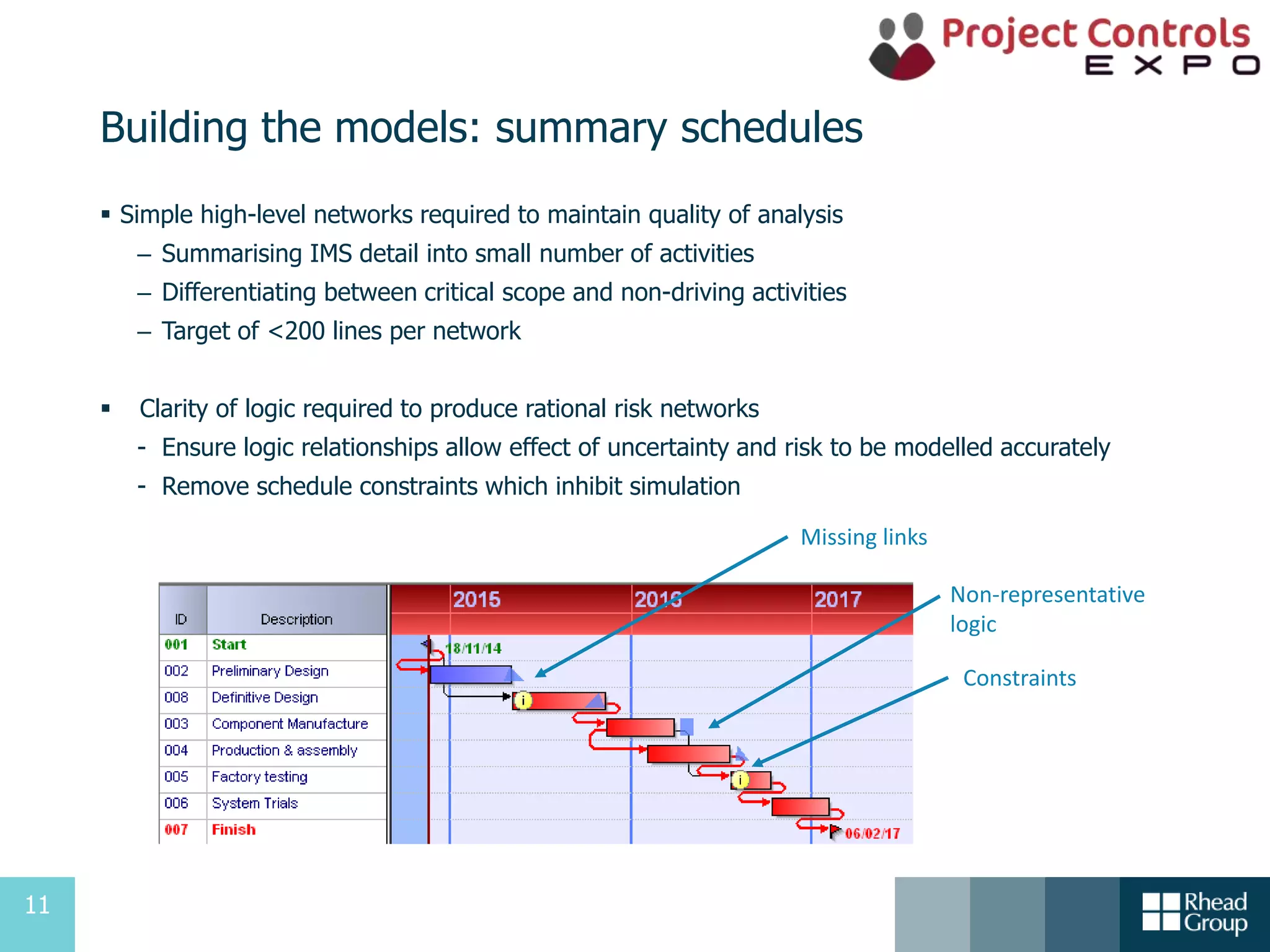
Building the models: summary schedules
 Simple high-level networks required to maintain quality of analysis
– Summarising IMS detail into small number of activities
– Differentiating between critical scope and non-driving activities
– Target of <200 lines per network
 Clarity of logic required to produce rational risk networks
- Ensure logic relationships allow effect of uncertainty and risk to be modelled accurately
- Remove schedule constraints which inhibit simulation
Missing links
Constraints
Non-representative
logic
12
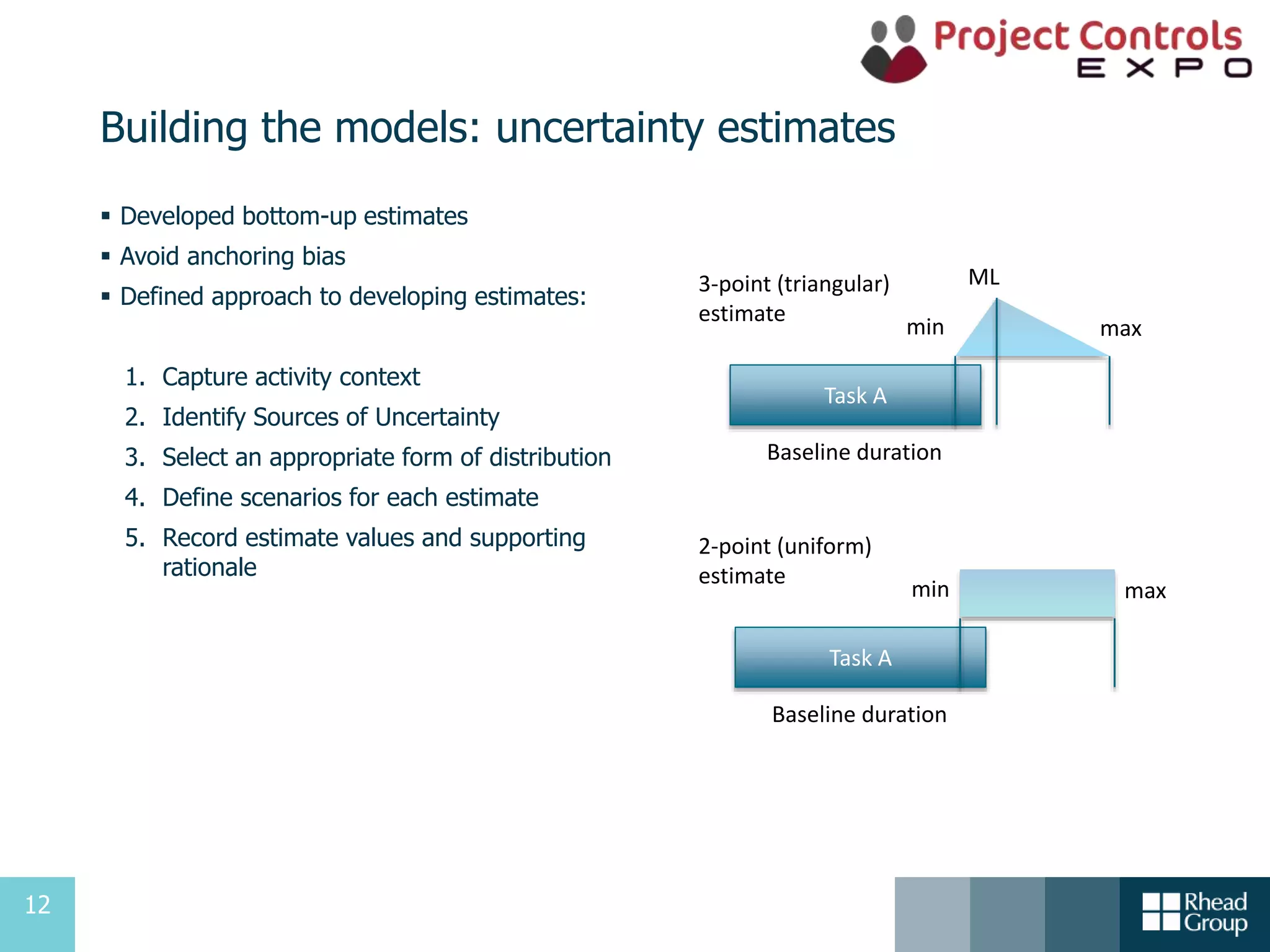
Building the models: uncertainty estimates
 Developed bottom-up estimates
 Avoid anchoring bias
 Defined approach to developing estimates:
1. Capture activity context
2. Identify Sources of Uncertainty
3. Select an appropriate form of distribution
4. Define scenarios for each estimate
5. Record estimate values and supporting
rationale
Task A
min
ML
max
Baseline duration
Task A
min max
Baseline duration
3-point (triangular)
estimate
2-point (uniform)
estimate
13
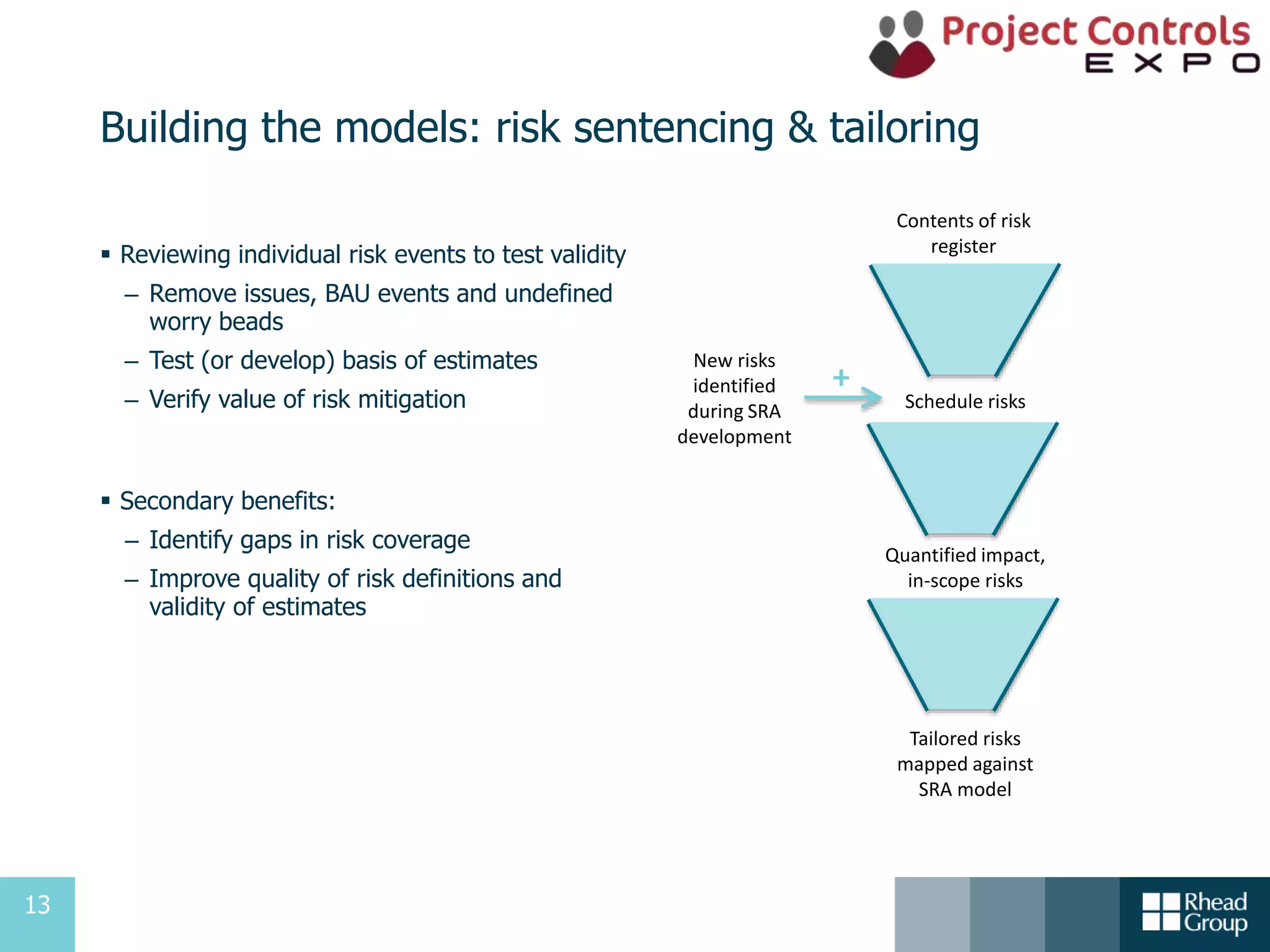
Building the models: risk sentencing & tailoring
 Reviewing individual risk events to test validity
– Remove issues, BAU events and undefined
worry beads
– Test (or develop) basis of estimates
– Verify value of risk mitigation
Contents of risk
register
Schedule risks
Quantified impact,
in-scope risks
Tailored risks
mapped against
SRA model
New risks
identified
during SRA
development
+
 Secondary benefits:
– Identify gaps in risk coverage
– Improve quality of risk definitions and
validity of estimates
14
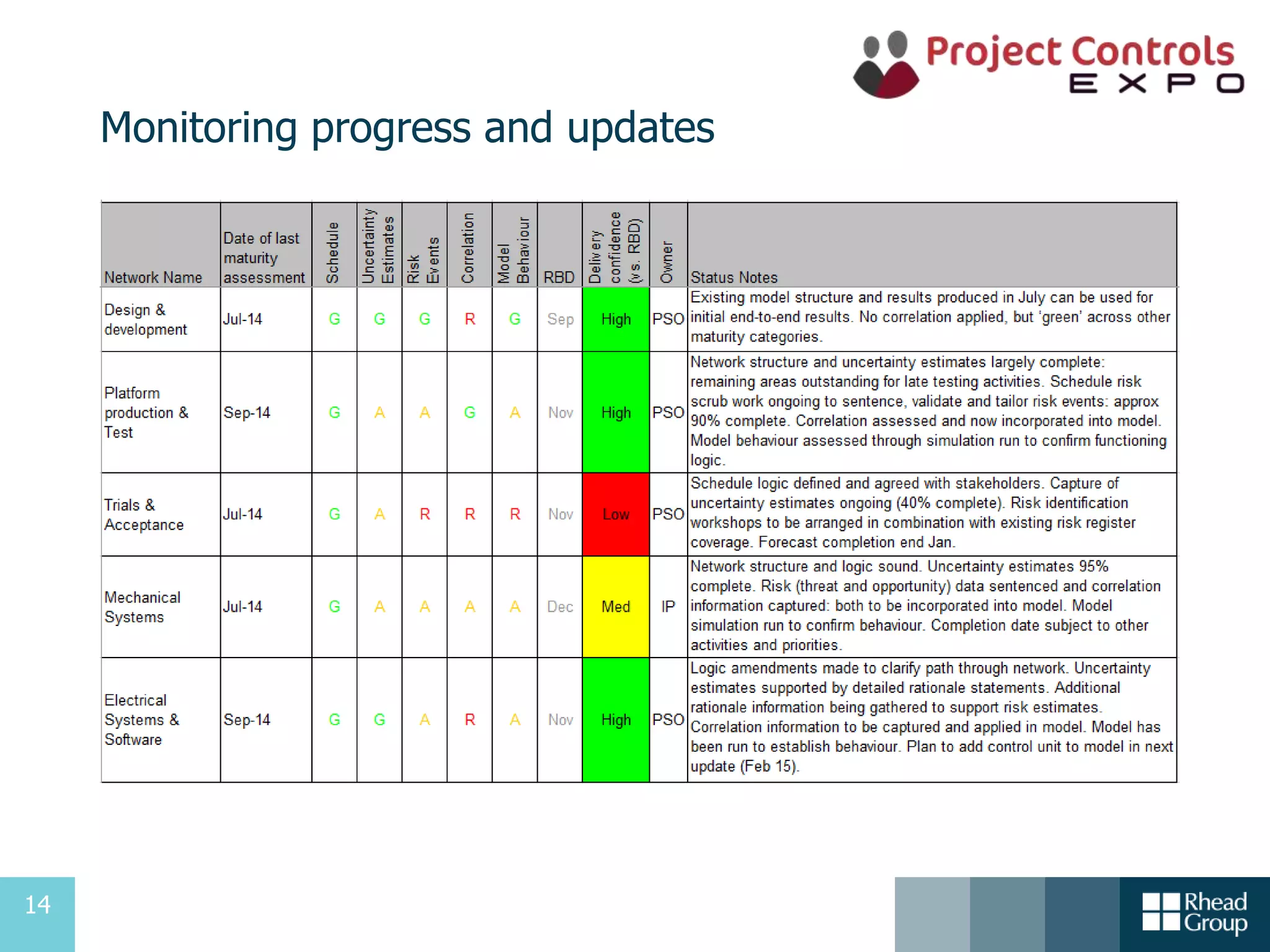
Monitoring progress and updates
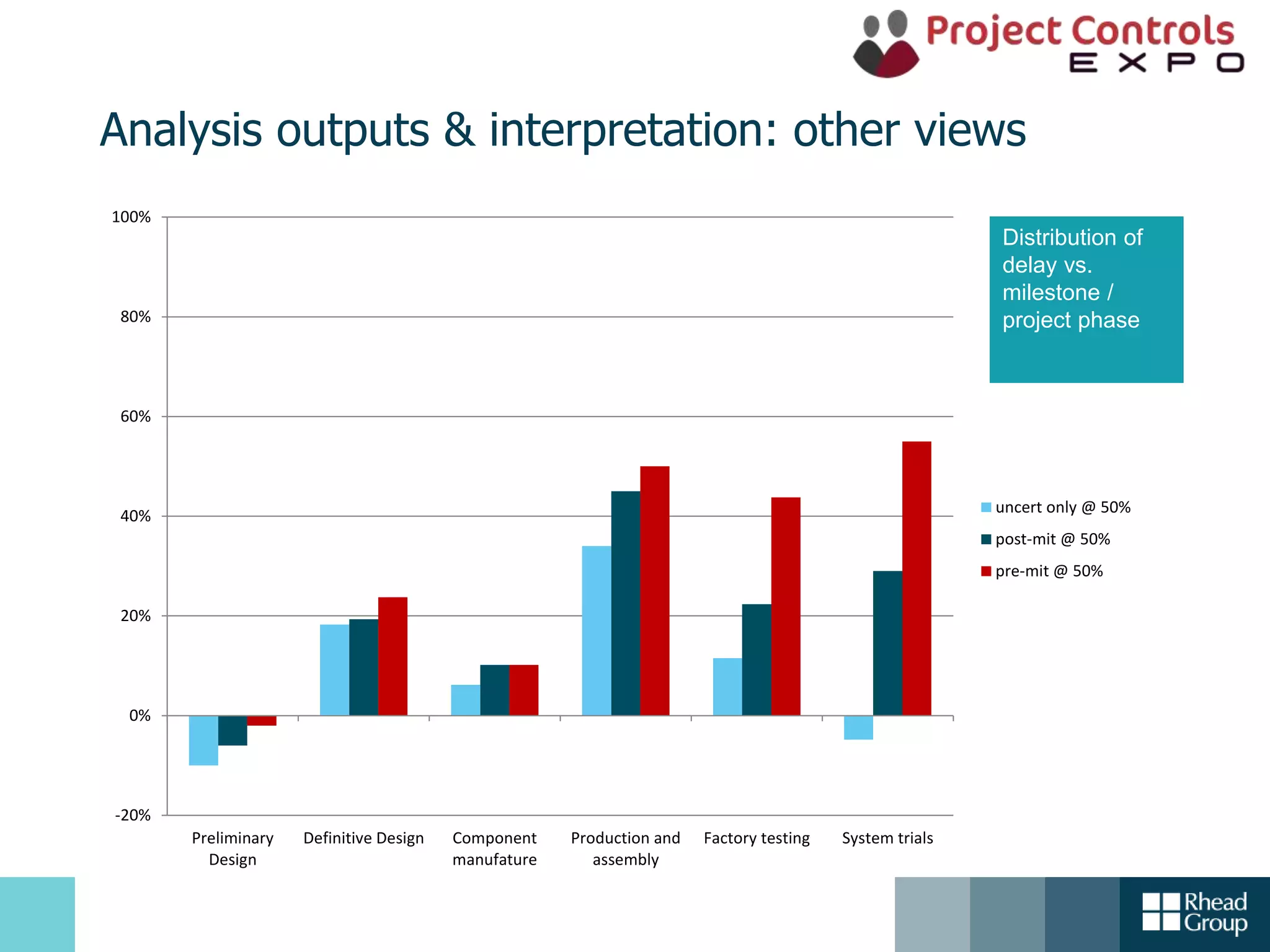
Analysis outputs & interpretation: other views
Distribution of
delay vs.
milestone /
project phase
-20%
0%
20%
40%
60%
80%
100%
Preliminary
Design
Definitive Design Component
manufature
Production and
assembly
Factory testing System trials
uncert only @ 50%
post-mit @ 50%
pre-mit @ 50%
16
Summary and LFE
 SRA forecast data supported by auditable evidence
 Identified main areas of uncertainty, threats to delivery and what lay behind them
 Developed and helped implement actions to mitigate risk
 Initiated re-planning of design phase to improve confidence
 Focusing on quality of supporting data ensures results can be explained and acted upon
 Actionable recommendations help temper ‘bad news’
 Communication process
– Taking time to review process used helps to establish buy-in
– Make sure contributors see results first
– Make sure briefings are limited to those who have a stake in the analysis
– Identify and develop response recommendations
QUESTIONS?

Project Controls Expo, 18th Nov 2014 - "Schedule Risk Analysis for Complex Projects" By Andy Abu-Bakar

  • 1.
    Schedule Risk Analysis forComplex Projects Andy Abu-Bakar Project Controls Expo – 18th November 2014
  • 2.
    2 About the speaker AndyAbu-Bakar CEng MIMechE Risk Assurance Services Lead – Rhead Group Eight years MoD various roles: Project Manager, Systems Engineer, Aircraft Trials and Certification Three years PPM consulting: Defence and Aerospace roles Key skills:  Project Management  Risk management & improvement  Quantitative Risk Analysis & decision support
  • 3.
    3 Contents 1. Introduction toSchedule Risk Analysis 2. Case study – project background 3. Analysis approach 4. Developing the models 5. Interpreting and briefing results
  • 4.
    4 Schedule Risk Analysis– what is it? 1000s of iterations Count Completion date Range of simulated outturn results  Quantitative technique for simulating the project’s outcome Schedule logic Activity uncertainty Risk events (threats and opportunities) Task A Task C Project Start Planned finish date Task B Task duration uncertainty Risk impact 30%
  • 5.
    5 Schedule Risk Analysis– why do it? During concept and definition:  Establish achievable delivery targets (or confidence in delivery)  Understand range of possible project outcomes  Forecast cost of project Completion Date 100% 50% 90% 10% Confidence P10 P50 P90 00011 - Activity 3 55% 00013 - Activity 37% 00004 - Activity 14 22% 00008 - Activity 12 18% 00005 - Activity 47 16% 00007 - Activity 2 13% 00012 - Risk 2 30% 10% 00009 - Risk 1 60% 6% 00002 - Activity 45 4% 00003 - Activity 16 3% 00011 - Activity 3 55% 00013 - Activity 37% 00004 - Activity 14 22% 00008 - Activity 12 18% 00005 - Activity 47 16% 00007 - Activity 2 13% 00012 - Risk 2 30% 10% 00009 - Risk 1 60% 6% 00002 - Activity 45 4% 00003 - Activity 16 3%  Identify activities and risks which have most influence on project outcome  Assess value of planned response (mitigation) activities Tornado chart: identify key activities and risks
  • 6.
    6 Schedule Risk Analysis– why do it? During project implementation:  Evaluate effect of emerging risks  Cost-benefit analysis for mitigation funding  Monitor and control the project  Identify best means of recovering forecast delay
  • 7.
    7 Case study: largepublic sector engineering project Significant capital investment (£100Ms)  Production and integration of a number of complex systems  Development and proving of novel technology  Planning, construction and commissioning of bespoke manufacturing facilities  Trials and demonstration activities to support handover to user  Training and support systems Currently in definition phase approaching main investment decision Collaboration between government body and number of industry suppliers  Number of large engineering contractors  Multiple sites UK and abroad
  • 8.
    8 Case study: analysisobjectives  SRA is central to government case for investment – Critical indicator used for investment decision – Helps to define project time and cost envelope – Must withstand detailed scrutiny  Ongoing use of analysis throughout project life – Key project monitoring & control tool – Identify major schedule drivers – Develop and evaluate response strategies – Improve confidence in achieving delivery milestones
  • 9.
    9 Case study: projectchallenges  Breadth of scope across multiple organisations with different cultures  Number of interdependencies between parallel workstreams  Complex, very detailed schedule (XX,000 line IMS)  Volume, maturity and coverage of risk information (100s of risk events)  Resistance to change and need for analysis
  • 10.
    10 Analysis approach: qualityof evidence Typical (bad practice) approach:  Import schedule directly into SRA tool  Apply anchored (+/-10%) uncertainty estimates  Map contents of risk register to network  Hope there are no questions! Focus on maintaining quality of evidence:  Scope split across number of high-level models  Consistent development method  Rigorous estimating practice  Maturity (quality) check applied before use Design Model Production Model Trials Model Infrastructure System A System B Sub-Unit i Unit 1 Stage 1 Stage 2 Stage 3
  • 11.
    11 Building the models:summary schedules  Simple high-level networks required to maintain quality of analysis – Summarising IMS detail into small number of activities – Differentiating between critical scope and non-driving activities – Target of <200 lines per network  Clarity of logic required to produce rational risk networks - Ensure logic relationships allow effect of uncertainty and risk to be modelled accurately - Remove schedule constraints which inhibit simulation Missing links Constraints Non-representative logic
  • 12.
    12 Building the models:uncertainty estimates  Developed bottom-up estimates  Avoid anchoring bias  Defined approach to developing estimates: 1. Capture activity context 2. Identify Sources of Uncertainty 3. Select an appropriate form of distribution 4. Define scenarios for each estimate 5. Record estimate values and supporting rationale Task A min ML max Baseline duration Task A min max Baseline duration 3-point (triangular) estimate 2-point (uniform) estimate
  • 13.
    13 Building the models:risk sentencing & tailoring  Reviewing individual risk events to test validity – Remove issues, BAU events and undefined worry beads – Test (or develop) basis of estimates – Verify value of risk mitigation Contents of risk register Schedule risks Quantified impact, in-scope risks Tailored risks mapped against SRA model New risks identified during SRA development +  Secondary benefits: – Identify gaps in risk coverage – Improve quality of risk definitions and validity of estimates
  • 14.
  • 15.
    Analysis outputs &interpretation: other views Distribution of delay vs. milestone / project phase -20% 0% 20% 40% 60% 80% 100% Preliminary Design Definitive Design Component manufature Production and assembly Factory testing System trials uncert only @ 50% post-mit @ 50% pre-mit @ 50%
  • 16.
    16 Summary and LFE SRA forecast data supported by auditable evidence  Identified main areas of uncertainty, threats to delivery and what lay behind them  Developed and helped implement actions to mitigate risk  Initiated re-planning of design phase to improve confidence  Focusing on quality of supporting data ensures results can be explained and acted upon  Actionable recommendations help temper ‘bad news’  Communication process – Taking time to review process used helps to establish buy-in – Make sure contributors see results first – Make sure briefings are limited to those who have a stake in the analysis – Identify and develop response recommendations
  • 17.