Downloaded 520 times

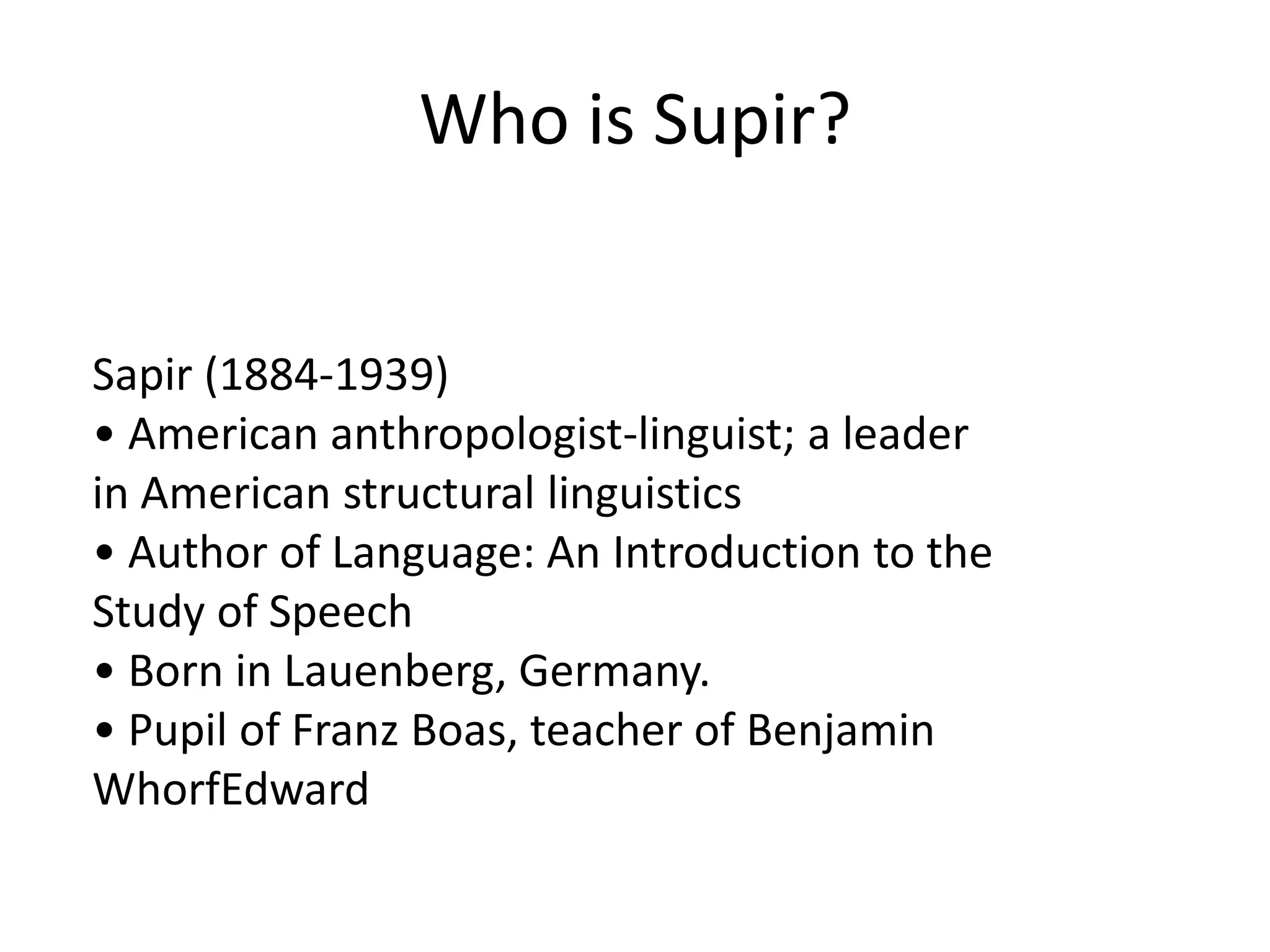
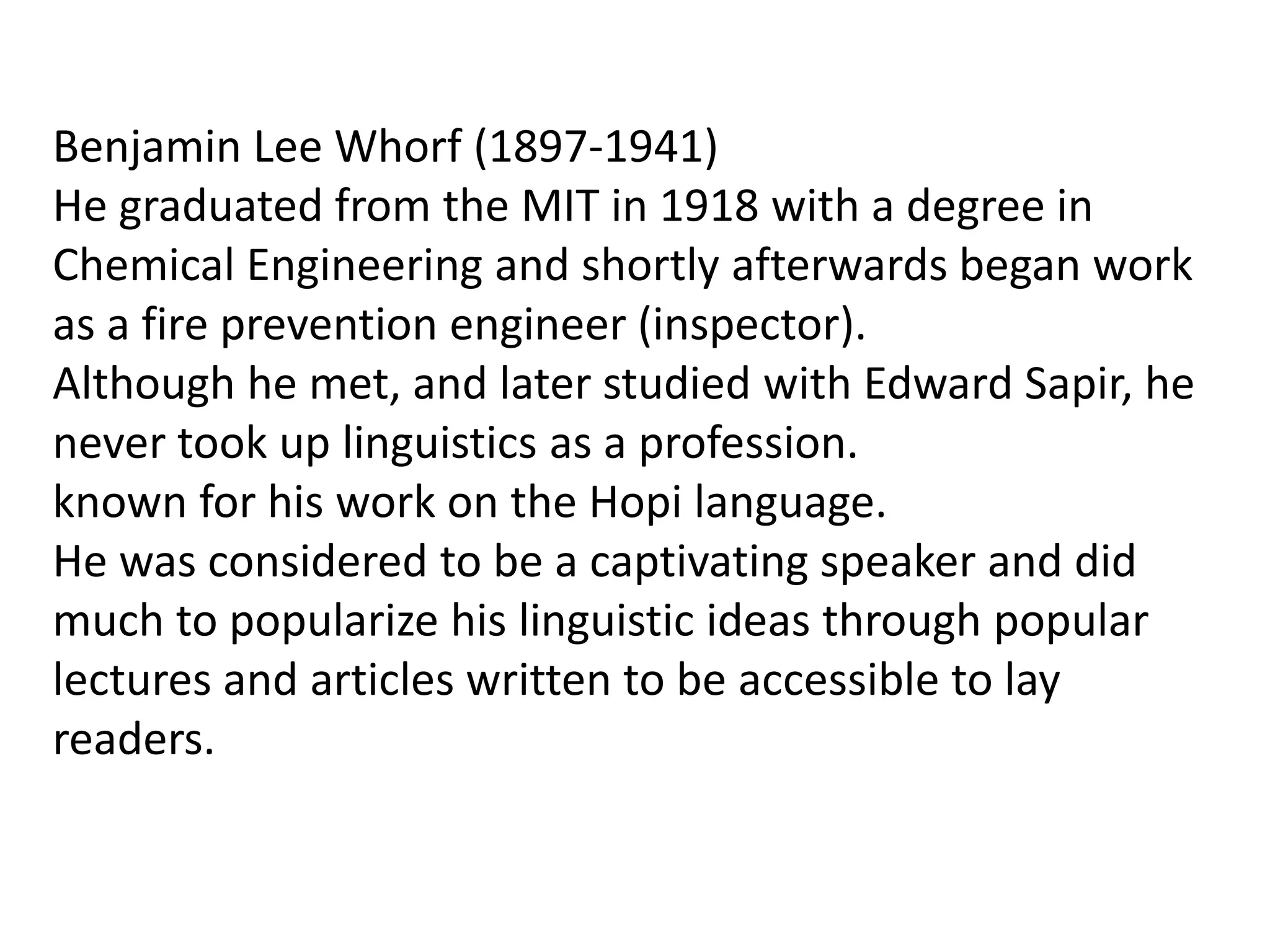
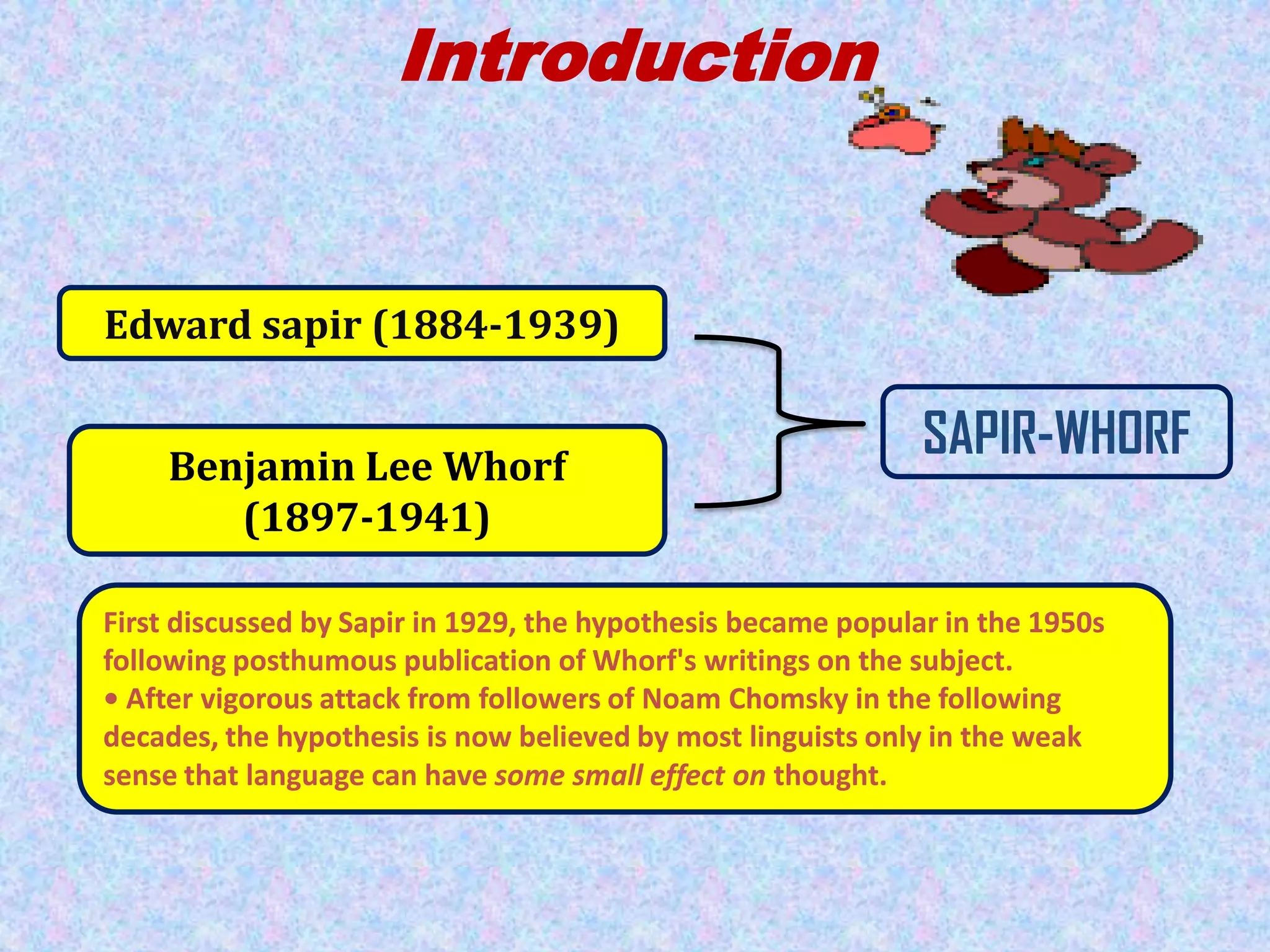
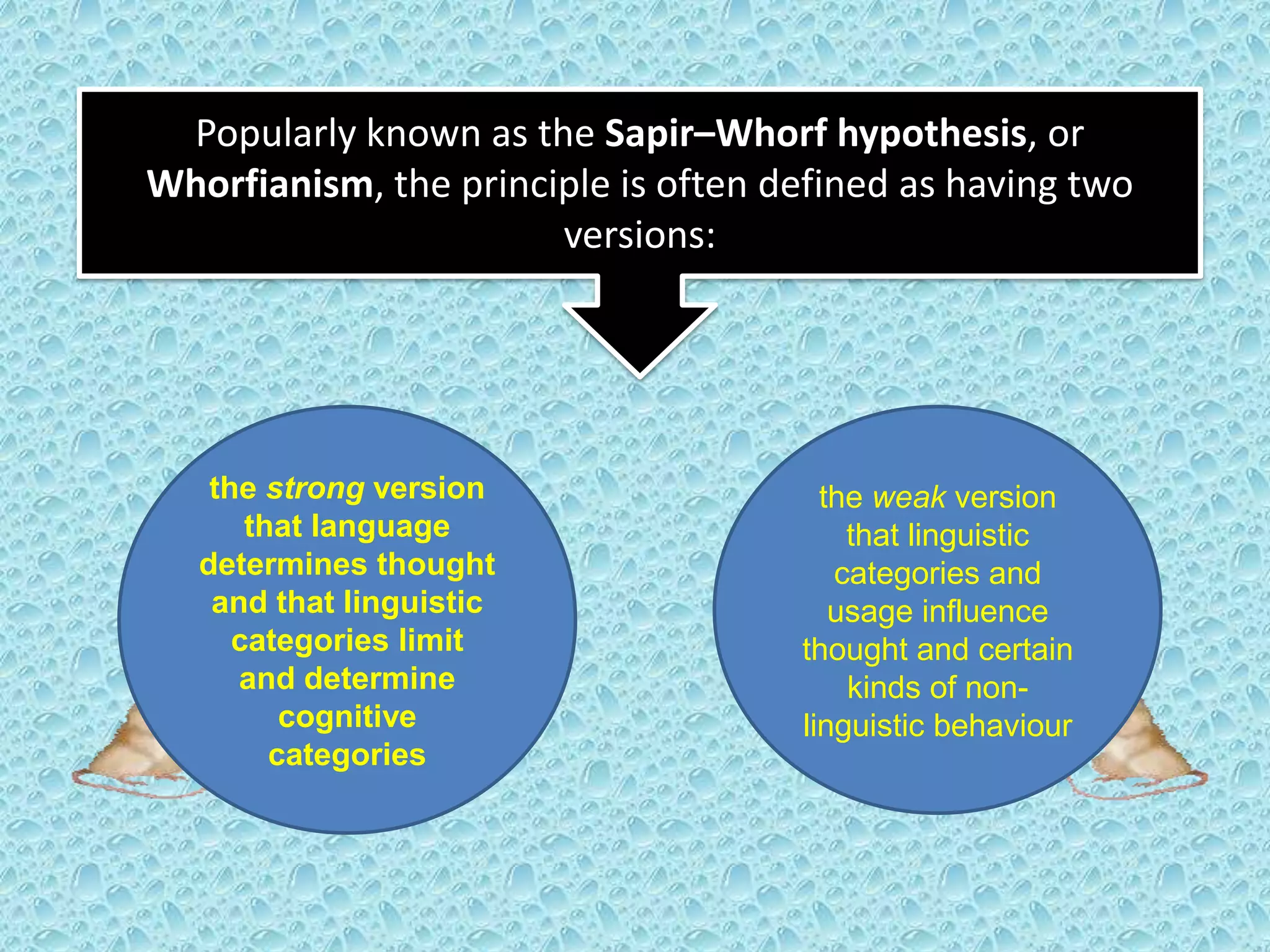
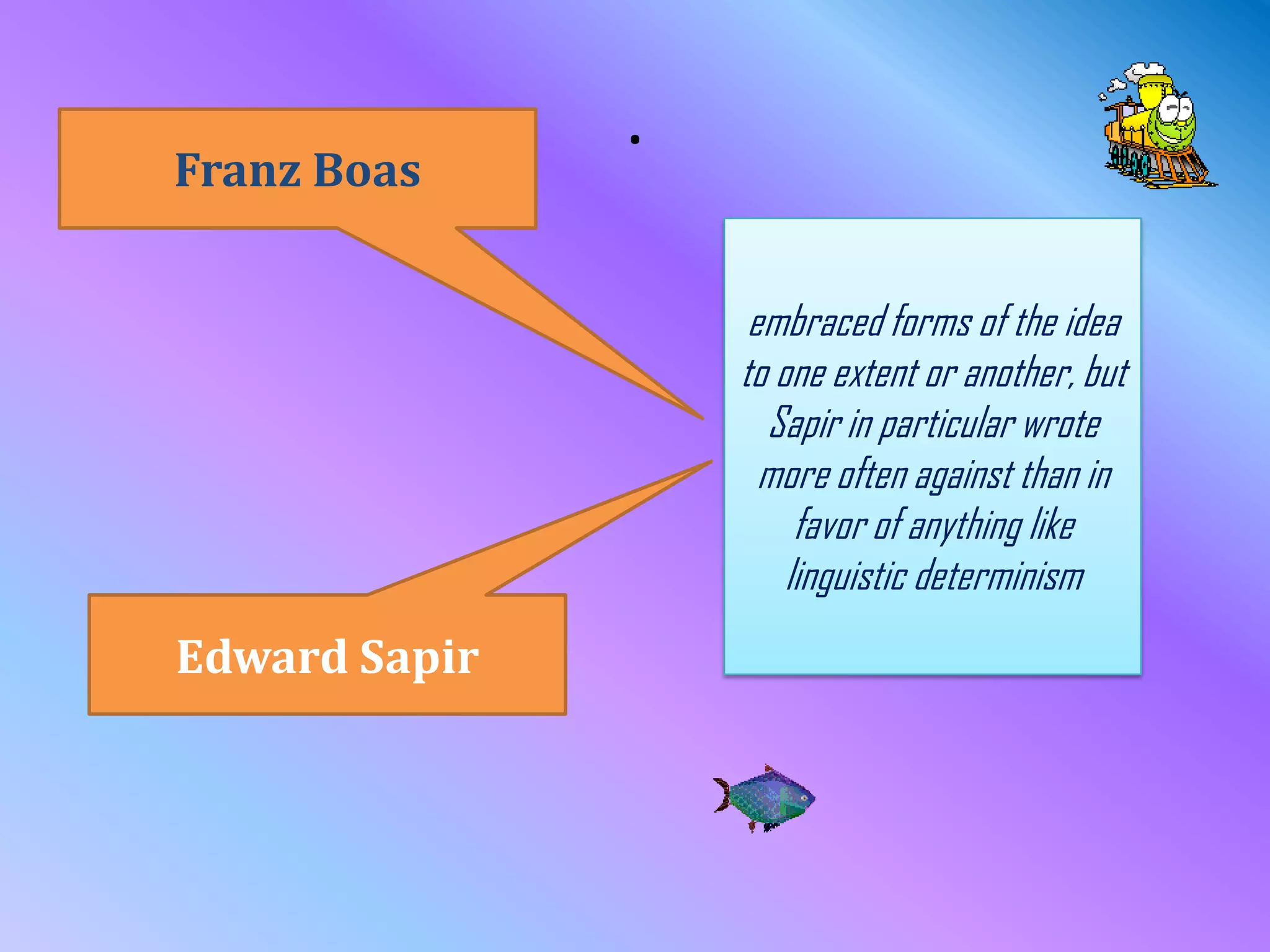








This document discusses the Sapir-Whorf hypothesis, which was first proposed by Edward Sapir and later expanded upon by Benjamin Lee Whorf. It presents the key figures and their backgrounds, including Sapir's work in linguistics and Whorf's study of the Hopi language. The hypothesis is introduced as having both a strong version, that language determines thought, and a weak version, that language influences thought. While heavily criticized, most linguists now accept the weak version to some degree. Examples are given of how language can reflect cultural differences in areas like kinship terminology. The conclusion is that while the extreme versions have been disproven, most agree there is some influence of language on thought.


![[BROCHURE] Italy Tour Project | @SlideON](https://cdn.slidesharecdn.com/ss_thumbnails/brochure8-251215152319-2805af68-thumbnail.jpg?width=640&height=640&fit=bounds)


![Chapt_4[1].ppt very interseting and important](https://cdn.slidesharecdn.com/ss_thumbnails/chapt41-251208222956-7cf5e0fa-thumbnail.jpg?width=640&height=640&fit=bounds)


