RULE 87
ACTIONS BY AND
AGAINST
EXECUTORS AND
ADMINISTRATORS
SECTION 1
Actions which may and
which may not be brought
against executor or
administrator.
ACTIONS THAT MAY BE BROUGHT DIRECTLY
AGAINST THE EXECUTOR AND ADMINISTRATOR:
 Recovery of real/personal property or any
interest therein from the estate.
 Enforcement of a lien thereon.
 Action to recover damages arising from tort.
ACTIONS THAT MAY NOT BE BROUGHT AGAINST
EXECUTOR OR ADMINISTRATOR:
Claims for the recovery of
 money
 debt
 interest
SECTION 2
Executor or administrator
may bring or defend actions
which survive.
ACTIONS MAY BE BROUGHT BY THE EXECUTOR
OR ADMINISTRATOR
Recovery or protection of the property or rights
of the deceased, action for causes which
survive.
SECTION 3
Heirs may not sue until
share assigned.
HEIRS MAY NOT SUE UNTIL SHARE ASSIGNED
Before distribution is made or before any
residue is known, the heirs and devisees
have no cause of action against the executor
or administrator for recovery of the property
left by the decedent.
SECTION 4
Executor or administrator may
compound with debtor.
EXECUTOR OR ADMINISTRATOR MAY
COMPOUND WITH DEBTOR
With the approval of the court, an executor or
administrator may compound with the debtor
of the deceased for a debt due, and may give
a discharge of such debt on receiving a just
dividend of the estate of the debtor.
SECTION 5
Mortgage due estate
may be foreclosed.
 There is no need of a
special authority from
the court for the
administrator or
executor to bring an
action for foreclosure
on behalf of the estate.
SECTION 6
Proceedings when property
concealed, embezzled, or
fraudulently conveyed.
GENERAL RULE: (SEC. 6)
The probate court has no
authority to decide
whether or not the
properties belong to the
estate or to the person
being examined since
probate courts are courts
of limited jurisdiction.
Exceptions:
 Provisional
determination of
ownership for inclusion
in the inventory;
 Submission to the
court’s jurisdiction.
SECTION 7
Person entrusted with estate
compelled to render
account.
SECTION 8
Embezzlement before
letters issued.
EMBEZZLEMENT BEFORE LETTERS ISSUED
The responsible person shall be liable to an
action in favor of the executor or
administrator of the estate for double the
value of the property sold.
SECTION 9
Property fraudulently conveyed
by deceased may be
recovered. When executor or
administrator must bring
action.
REQUISITES: (SEC. 9)
1. Application of the creditors;
2. Payment of cost and expenses; and
3. Give security therefore to the executor or
administrator.
SECTION 10
When creditor may bring action.
Lien for costs.
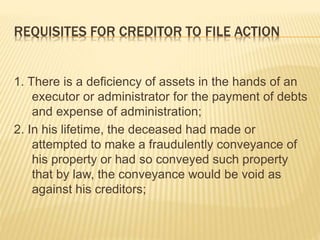
REQUISITES FOR CREDITOR TO FILE ACTION
1. There is a deficiency of assets in the hands of an
executor or administrator for the payment of debts
and expense of administration;
2. In his lifetime, the deceased had made or
attempted to make a fraudulently conveyance of
his property or had so conveyed such property
that by law, the conveyance would be void as
against his creditors;
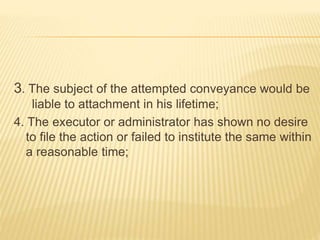
3. The subject of the attempted conveyance would be
liable to attachment in his lifetime;
4. The executor or administrator has shown no desire
to file the action or failed to institute the same within
a reasonable time;
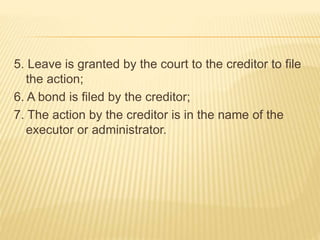
5. Leave is granted by the court to the creditor to file
the action;
6. A bond is filed by the creditor;
7. The action by the creditor is in the name of the
executor or administrator.
THANK YOU

Rule87

  • 1.
    RULE 87 ACTIONS BYAND AGAINST EXECUTORS AND ADMINISTRATORS
  • 2.
    SECTION 1 Actions whichmay and which may not be brought against executor or administrator.
  • 3.
    ACTIONS THAT MAYBE BROUGHT DIRECTLY AGAINST THE EXECUTOR AND ADMINISTRATOR:  Recovery of real/personal property or any interest therein from the estate.  Enforcement of a lien thereon.  Action to recover damages arising from tort.
  • 4.
    ACTIONS THAT MAYNOT BE BROUGHT AGAINST EXECUTOR OR ADMINISTRATOR: Claims for the recovery of  money  debt  interest
  • 5.
    SECTION 2 Executor oradministrator may bring or defend actions which survive.
  • 6.
    ACTIONS MAY BEBROUGHT BY THE EXECUTOR OR ADMINISTRATOR Recovery or protection of the property or rights of the deceased, action for causes which survive.
  • 7.
    SECTION 3 Heirs maynot sue until share assigned.
  • 8.
    HEIRS MAY NOTSUE UNTIL SHARE ASSIGNED Before distribution is made or before any residue is known, the heirs and devisees have no cause of action against the executor or administrator for recovery of the property left by the decedent.
  • 9.
    SECTION 4 Executor oradministrator may compound with debtor.
  • 10.
    EXECUTOR OR ADMINISTRATORMAY COMPOUND WITH DEBTOR With the approval of the court, an executor or administrator may compound with the debtor of the deceased for a debt due, and may give a discharge of such debt on receiving a just dividend of the estate of the debtor.
  • 11.
    SECTION 5 Mortgage dueestate may be foreclosed.  There is no need of a special authority from the court for the administrator or executor to bring an action for foreclosure on behalf of the estate.
  • 12.
    SECTION 6 Proceedings whenproperty concealed, embezzled, or fraudulently conveyed.
  • 13.
    GENERAL RULE: (SEC.6) The probate court has no authority to decide whether or not the properties belong to the estate or to the person being examined since probate courts are courts of limited jurisdiction. Exceptions:  Provisional determination of ownership for inclusion in the inventory;  Submission to the court’s jurisdiction.
  • 14.
    SECTION 7 Person entrustedwith estate compelled to render account.
  • 15.
  • 16.
    EMBEZZLEMENT BEFORE LETTERSISSUED The responsible person shall be liable to an action in favor of the executor or administrator of the estate for double the value of the property sold.
  • 17.
    SECTION 9 Property fraudulentlyconveyed by deceased may be recovered. When executor or administrator must bring action.
  • 18.
    REQUISITES: (SEC. 9) 1.Application of the creditors; 2. Payment of cost and expenses; and 3. Give security therefore to the executor or administrator.
  • 19.
    SECTION 10 When creditormay bring action. Lien for costs.
  • 20.
    REQUISITES FOR CREDITORTO FILE ACTION 1. There is a deficiency of assets in the hands of an executor or administrator for the payment of debts and expense of administration; 2. In his lifetime, the deceased had made or attempted to make a fraudulently conveyance of his property or had so conveyed such property that by law, the conveyance would be void as against his creditors;
  • 21.
    3. The subjectof the attempted conveyance would be liable to attachment in his lifetime; 4. The executor or administrator has shown no desire to file the action or failed to institute the same within a reasonable time;
  • 22.
    5. Leave isgranted by the court to the creditor to file the action; 6. A bond is filed by the creditor; 7. The action by the creditor is in the name of the executor or administrator.
  • 23.