SECTION 1. When order for distribution of
residue made?
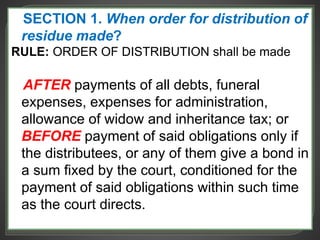
RULE: ORDER OF DISTRIBUTION shall be made
AFTER payments of all debts, funeral
expenses, expenses for administration,
allowance of widow and inheritance tax; or
BEFORE payment of said obligations only if
the distributees, or any of them give a bond in
a sum fixed by the court, conditioned for the
payment of said obligations within such time
as the court directs.
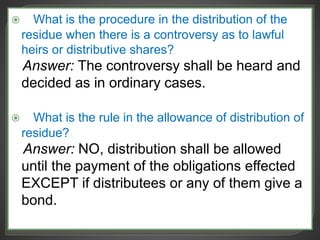
 What is the procedure in the distribution of the
residue when there is a controversy as to lawful
heirs or distributive shares?
Answer: The controversy shall be heard and
decided as in ordinary cases.
 What is the rule in the allowance of distribution of
residue?
Answer: NO, distribution shall be allowed
until the payment of the obligations effected
EXCEPT if distributees or any of them give a
bond.
Section 2. Questions as to advancement to be
determined.
 What court has jurisdiction over Questions as to
advancement made by decedent to his heirs? And
what is the effect of its final order?
Answer: The court having jurisdiction over
the estate proceedings, and the effect of
which is that the final order of the court
thereon shall be binding on the person raising
the questions and on the heir.
Section 3. By whom expenses of partition paid.
The executor or administrator- if they have
retained sufficient effect in their hands at the
time of distribution to be lawfully applied for
the partition expenses, when the court
deemed it equitable and consistent to the
intention of the testator. Otherwise the
parties of interest in the partition in
proportion to their respective shares or
interest
What may the Court recourse if the party in interest
of the partition shall not pay obligations?
Answer: the court may issue an execution in
the name of the executor or administrator
against the party not paying for the sum
assessed.
Section 4. Recording the order of partition of
estate
How done?
Certified copies of Order or judgment shall be
recorded in Registry of deeds of the province
where the property is situated
-----------------------------------------------
Notes and cases
Stages in the distribution of the estate
Payment of obligations
Declaration of Heirs
Determination of Proportion
Powers of Probate Court
1. Custody and control of the entire estate
2. Jurisdiction to settle the claims of an heir and
adjudication of the properties
3. Determine right of the natural child
4. Make declaration of heirs
5. Jurisdiction to action for compulsory recognition
of a natural child
6. Judicial declaration that a certain person is the
only heir of the decedent
7. Determine proportion of distributee.
8. Order preliminary attachment of interest in the
estate.
Powers of Probate Court
9. Issue writ of execution: generally probate court
cannot issue writ of execution BECAUSE its orders
usually refers to the adjudication of claims against
estate which the executor/administrator may satisfy
without resorting to writ of execution EXCEPT in the
following circumstances;
To satisfy the contributive shares of devisees, legatees and heirs in
possession of the decedent’s assets
To enforce payment of expenses of partition
To satisfy the costs when a person is cited for examination in probate
proceedings
10. Issue writ of possession for recovery of the share by
the heir or other interested parties from executor or
administrator
 Purpose of administration- liquidation and distribution
of residue among heirs and legatees. Liquidation
means the determination of all assets of the estate and
payment of all debts and expenses.
 Approval of a project of partition does not necessarily
terminate administration.
 An order which determines the distributive shares of
heirs is appealable. If not appealed, it becomes final.
 The probate court loses jurisdiction over the settlement
proceedings only upon payment of all debts and
expenses of the obligor and delivery of the entire estate
to all the heirs. (Guilas vs Judge of the CFI of
Pampanga)
Rule 90

Rule 90

  • 2.
    SECTION 1. Whenorder for distribution of residue made? RULE: ORDER OF DISTRIBUTION shall be made AFTER payments of all debts, funeral expenses, expenses for administration, allowance of widow and inheritance tax; or BEFORE payment of said obligations only if the distributees, or any of them give a bond in a sum fixed by the court, conditioned for the payment of said obligations within such time as the court directs.
  • 3.
     What isthe procedure in the distribution of the residue when there is a controversy as to lawful heirs or distributive shares? Answer: The controversy shall be heard and decided as in ordinary cases.  What is the rule in the allowance of distribution of residue? Answer: NO, distribution shall be allowed until the payment of the obligations effected EXCEPT if distributees or any of them give a bond.
  • 4.
    Section 2. Questionsas to advancement to be determined.  What court has jurisdiction over Questions as to advancement made by decedent to his heirs? And what is the effect of its final order? Answer: The court having jurisdiction over the estate proceedings, and the effect of which is that the final order of the court thereon shall be binding on the person raising the questions and on the heir.
  • 5.
    Section 3. Bywhom expenses of partition paid. The executor or administrator- if they have retained sufficient effect in their hands at the time of distribution to be lawfully applied for the partition expenses, when the court deemed it equitable and consistent to the intention of the testator. Otherwise the parties of interest in the partition in proportion to their respective shares or interest
  • 6.
    What may theCourt recourse if the party in interest of the partition shall not pay obligations? Answer: the court may issue an execution in the name of the executor or administrator against the party not paying for the sum assessed.
  • 7.
    Section 4. Recordingthe order of partition of estate How done? Certified copies of Order or judgment shall be recorded in Registry of deeds of the province where the property is situated ----------------------------------------------- Notes and cases Stages in the distribution of the estate Payment of obligations Declaration of Heirs Determination of Proportion
  • 8.
    Powers of ProbateCourt 1. Custody and control of the entire estate 2. Jurisdiction to settle the claims of an heir and adjudication of the properties 3. Determine right of the natural child 4. Make declaration of heirs 5. Jurisdiction to action for compulsory recognition of a natural child 6. Judicial declaration that a certain person is the only heir of the decedent 7. Determine proportion of distributee. 8. Order preliminary attachment of interest in the estate.
  • 9.
    Powers of ProbateCourt 9. Issue writ of execution: generally probate court cannot issue writ of execution BECAUSE its orders usually refers to the adjudication of claims against estate which the executor/administrator may satisfy without resorting to writ of execution EXCEPT in the following circumstances; To satisfy the contributive shares of devisees, legatees and heirs in possession of the decedent’s assets To enforce payment of expenses of partition To satisfy the costs when a person is cited for examination in probate proceedings 10. Issue writ of possession for recovery of the share by the heir or other interested parties from executor or administrator
  • 10.
     Purpose ofadministration- liquidation and distribution of residue among heirs and legatees. Liquidation means the determination of all assets of the estate and payment of all debts and expenses.  Approval of a project of partition does not necessarily terminate administration.  An order which determines the distributive shares of heirs is appealable. If not appealed, it becomes final.  The probate court loses jurisdiction over the settlement proceedings only upon payment of all debts and expenses of the obligor and delivery of the entire estate to all the heirs. (Guilas vs Judge of the CFI of Pampanga)