Notes on Civil Procedure by Lawrence Villamar 
Source: “Revised Rules of Procedure Annotated” (Estopia, 2013) 
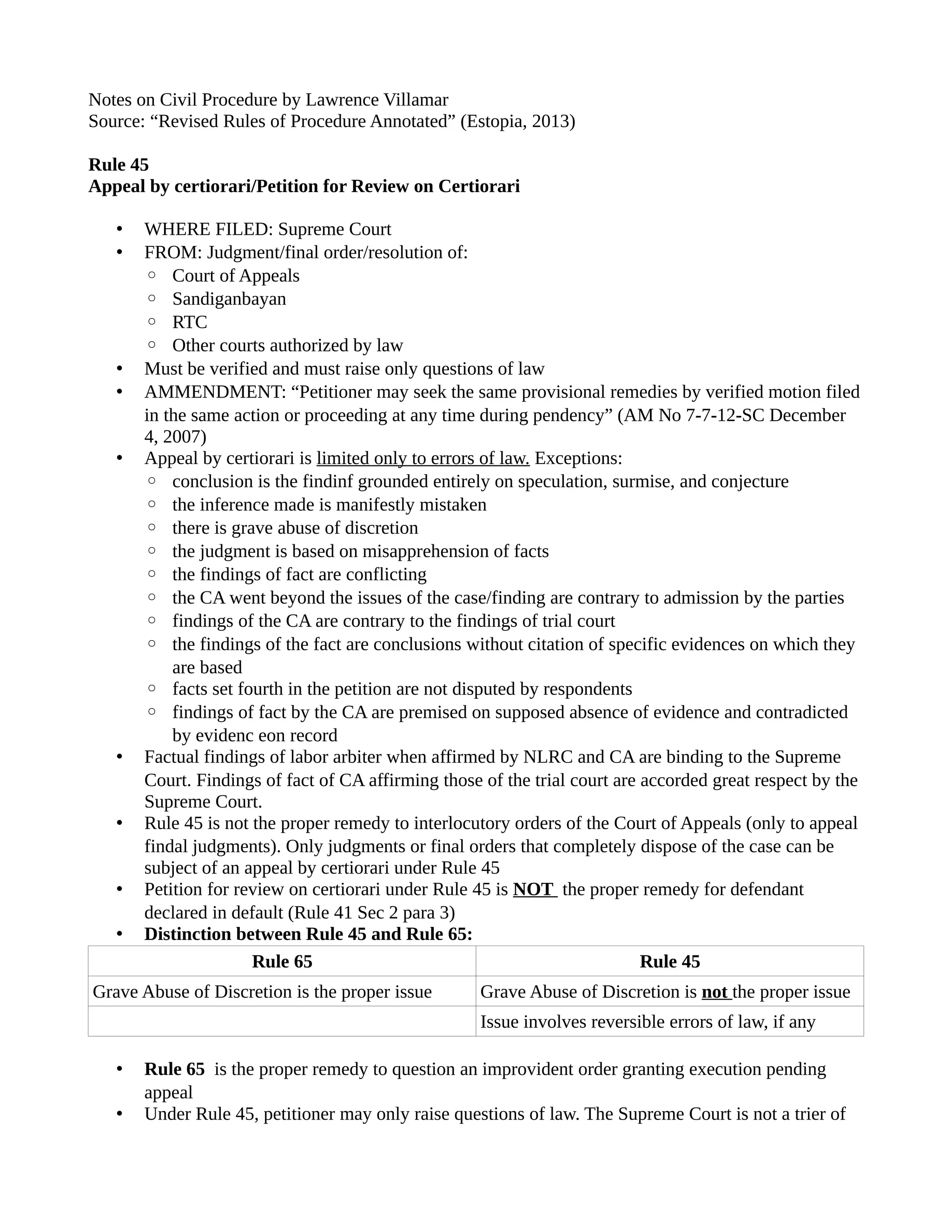
Rule 45 
Appeal by certiorari/Petition for Review on Certiorari 
• WHERE FILED: Supreme Court 
• FROM: Judgment/final order/resolution of: 
◦ Court of Appeals 
◦ Sandiganbayan 
◦ RTC 
◦ Other courts authorized by law 
• Must be verified and must raise only questions of law 
• AMMENDMENT: “Petitioner may seek the same provisional remedies by verified motion filed 
in the same action or proceeding at any time during pendency” (AM No 7-7-12-SC December 
4, 2007) 
• Appeal by certiorari is limited only to errors of law. Exceptions: 
◦ conclusion is the findinf grounded entirely on speculation, surmise, and conjecture 
◦ the inference made is manifestly mistaken 
◦ there is grave abuse of discretion 
◦ the judgment is based on misapprehension of facts 
◦ the findings of fact are conflicting 
◦ the CA went beyond the issues of the case/finding are contrary to admission by the parties 
◦ findings of the CA are contrary to the findings of trial court 
◦ the findings of the fact are conclusions without citation of specific evidences on which they 
are based 
◦ facts set fourth in the petition are not disputed by respondents 
◦ findings of fact by the CA are premised on supposed absence of evidence and contradicted 
by evidenc eon record 
• Factual findings of labor arbiter when affirmed by NLRC and CA are binding to the Supreme 
Court. Findings of fact of CA affirming those of the trial court are accorded great respect by the 
Supreme Court. 
• Rule 45 is not the proper remedy to interlocutory orders of the Court of Appeals (only to appeal 
findal judgments). Only judgments or final orders that completely dispose of the case can be 
subject of an appeal by certiorari under Rule 45 
• Petition for review on certiorari under Rule 45 is NOT the proper remedy for defendant 
declared in default (Rule 41 Sec 2 para 3) 
• Distinction between Rule 45 and Rule 65: 
Rule 65 Rule 45 
Grave Abuse of Discretion is the proper issue Grave Abuse of Discretion is not the proper issue 
Issue involves reversible errors of law, if any 
• Rule 65 is the proper remedy to question an improvident order granting execution pending 
appeal 
• Under Rule 45, petitioner may only raise questions of law. The Supreme Court is not a trier of
Notes on Civil Procedure by Lawrence Villamar 
Source: “Revised Rules of Procedure Annotated” (Estopia, 2013) 
facts (subject to exceptions enumerated above). 
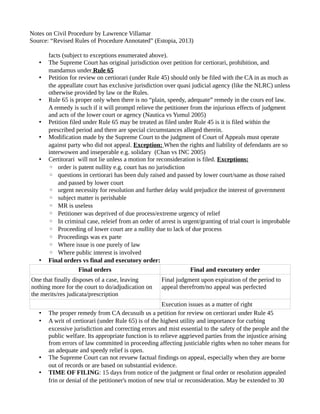
• The Supreme Court has original jurisdiction over petition for certiorari, prohibition, and 
mandamus under Rule 65 
• Petition for review on certiorari (under Rule 45) should only be filed with the CA in as much as 
the appeallate court has exclusive jurisdiction over quasi judicial agency (like the NLRC) unless 
otherwise provided by law or the Rules. 
• Rule 65 is proper only when there is no “plain, speedy, adequate” remedy in the cours eof law. 
A remedy is such if it will promptl relieve the petitioner from the injurious effects of judgment 
and acts of the lower court or agency (Nautica vs Yumul 2005) 
• Petition filed under Rule 65 may be treated as filed under Rule 45 is it is filed within the 
prescribed period and there are special circumstances alleged therein. 
• Modification made by the Supreme Court to the judgment of Court of Appeals must operate 
against party who did not appeal. Exception: When the rights and liability of defendants are so 
interwowen and inseperable e.g. solidary (Chan vs INC 2005) 
• Certitorari will not lie unless a motion for reconsideration is filed. Exceptions: 
◦ order is patent nullity e.g. court has no jurisdiction 
◦ questions in certiorari has been duly raised and passed by lower court/same as those raised 
and passed by lower court 
◦ urgent necessity for resolution and further delay wuld prejudice the interest of government 
◦ subject matter is perishable 
◦ MR is useless 
◦ Petitioner was deprived of due process/extreme urgency of relief 
◦ In criminal case, releief from an order of arrest is urgent/granting of trial court is improbable 
◦ Proceeding of lower court are a nullity due to lack of due process 
◦ Proceedings was ex parte 
◦ Where issue is one purely of law 
◦ Where public interest is involved 
• Final orders vs final and executory order: 
Final orders Final and executory order 
One that finally disposes of a case, leaving 
nothing more for the court to do/adjudication on 
the merits/res judicata/prescription 
Final judgment upon expiration of the period to 
appeal therefrom/no appeal was perfected 
Execution issues as a matter of right 
• The proper remedy from CA decusuib us a petition for review on certiorari under Rule 45 
• A writ of certiorari (under Rule 65) is of the highest utility and importance for curbing 
excessive jurisdiction and correcting errors and mist essential to the safety of the people and the 
public welfare. Its appropriate function is to relieve aggrieved parties from the injustice arising 
from errors of law committed in proceeding affecting justiciable rights when no toher means for 
an adequate and speedy relief is open. 
• The Supreme Court can not revuew factual findings on appeal, especially when they are borne 
out of records or are based on substantial evidence. 
• TIME OF FILING: 15 days from notice of the judgment or final order or resolution appealed 
frin or denial of the petitioner's motion of new trial or reconsideration. May be extended to 30
Notes on Civil Procedure by Lawrence Villamar 
Source: “Revised Rules of Procedure Annotated” (Estopia, 2013) 
days with justifiable reasons, and on motion duly filed, and served, with full payment of docket 
and other lawful fees and deposit for costs vefore expireation of reglementary period. If not 
filed within period, decision of CA becomes final and executory and petition for review under 
Rule 45 may be properly outrightly dismissed due to correlative right oof winner to enjoy the 
finality of the decision. 
• Failure to implead lower court does not automaticallu mean the dismissal of the appeal, but it 
authorizes the dismissal of the petition. 
• Review is not a matter if right but of sound judicial discretion (Sec. 6 Rule 45) 
• Upon filing of petition, the Supreme Court assumes jurisdication regardless of whether or not 
the petitionw ill be given due course 
• Mode of appeal available to both civil and criminal except in criminal cases with penalty 
imposed is death, reclusion perpetua or life imprisonment (Sec. 9 Rule 45). 
• Motion for postponement, what must be borne: (a) reason for postponement and (b) merits of 
the case of the movant. May not be interefered by mandamus or appeal, except when grave 
abuse of discretion is shown. It is addressed to the sound discretion of the court predicated to 
considerations that the end of justice and fairness should be served thereby, more than 
convenience of court or parties. Postponement is part and parcel of procuderal system of 
dispensing justice. Exception: 
◦ substantial rights are affected and intention to delat is manfest

Remedial Law Rule 45 estopia

  • 1.
    Notes on CivilProcedure by Lawrence Villamar Source: “Revised Rules of Procedure Annotated” (Estopia, 2013) Rule 45 Appeal by certiorari/Petition for Review on Certiorari • WHERE FILED: Supreme Court • FROM: Judgment/final order/resolution of: ◦ Court of Appeals ◦ Sandiganbayan ◦ RTC ◦ Other courts authorized by law • Must be verified and must raise only questions of law • AMMENDMENT: “Petitioner may seek the same provisional remedies by verified motion filed in the same action or proceeding at any time during pendency” (AM No 7-7-12-SC December 4, 2007) • Appeal by certiorari is limited only to errors of law. Exceptions: ◦ conclusion is the findinf grounded entirely on speculation, surmise, and conjecture ◦ the inference made is manifestly mistaken ◦ there is grave abuse of discretion ◦ the judgment is based on misapprehension of facts ◦ the findings of fact are conflicting ◦ the CA went beyond the issues of the case/finding are contrary to admission by the parties ◦ findings of the CA are contrary to the findings of trial court ◦ the findings of the fact are conclusions without citation of specific evidences on which they are based ◦ facts set fourth in the petition are not disputed by respondents ◦ findings of fact by the CA are premised on supposed absence of evidence and contradicted by evidenc eon record • Factual findings of labor arbiter when affirmed by NLRC and CA are binding to the Supreme Court. Findings of fact of CA affirming those of the trial court are accorded great respect by the Supreme Court. • Rule 45 is not the proper remedy to interlocutory orders of the Court of Appeals (only to appeal findal judgments). Only judgments or final orders that completely dispose of the case can be subject of an appeal by certiorari under Rule 45 • Petition for review on certiorari under Rule 45 is NOT the proper remedy for defendant declared in default (Rule 41 Sec 2 para 3) • Distinction between Rule 45 and Rule 65: Rule 65 Rule 45 Grave Abuse of Discretion is the proper issue Grave Abuse of Discretion is not the proper issue Issue involves reversible errors of law, if any • Rule 65 is the proper remedy to question an improvident order granting execution pending appeal • Under Rule 45, petitioner may only raise questions of law. The Supreme Court is not a trier of
  • 2.
    Notes on CivilProcedure by Lawrence Villamar Source: “Revised Rules of Procedure Annotated” (Estopia, 2013) facts (subject to exceptions enumerated above). • The Supreme Court has original jurisdiction over petition for certiorari, prohibition, and mandamus under Rule 65 • Petition for review on certiorari (under Rule 45) should only be filed with the CA in as much as the appeallate court has exclusive jurisdiction over quasi judicial agency (like the NLRC) unless otherwise provided by law or the Rules. • Rule 65 is proper only when there is no “plain, speedy, adequate” remedy in the cours eof law. A remedy is such if it will promptl relieve the petitioner from the injurious effects of judgment and acts of the lower court or agency (Nautica vs Yumul 2005) • Petition filed under Rule 65 may be treated as filed under Rule 45 is it is filed within the prescribed period and there are special circumstances alleged therein. • Modification made by the Supreme Court to the judgment of Court of Appeals must operate against party who did not appeal. Exception: When the rights and liability of defendants are so interwowen and inseperable e.g. solidary (Chan vs INC 2005) • Certitorari will not lie unless a motion for reconsideration is filed. Exceptions: ◦ order is patent nullity e.g. court has no jurisdiction ◦ questions in certiorari has been duly raised and passed by lower court/same as those raised and passed by lower court ◦ urgent necessity for resolution and further delay wuld prejudice the interest of government ◦ subject matter is perishable ◦ MR is useless ◦ Petitioner was deprived of due process/extreme urgency of relief ◦ In criminal case, releief from an order of arrest is urgent/granting of trial court is improbable ◦ Proceeding of lower court are a nullity due to lack of due process ◦ Proceedings was ex parte ◦ Where issue is one purely of law ◦ Where public interest is involved • Final orders vs final and executory order: Final orders Final and executory order One that finally disposes of a case, leaving nothing more for the court to do/adjudication on the merits/res judicata/prescription Final judgment upon expiration of the period to appeal therefrom/no appeal was perfected Execution issues as a matter of right • The proper remedy from CA decusuib us a petition for review on certiorari under Rule 45 • A writ of certiorari (under Rule 65) is of the highest utility and importance for curbing excessive jurisdiction and correcting errors and mist essential to the safety of the people and the public welfare. Its appropriate function is to relieve aggrieved parties from the injustice arising from errors of law committed in proceeding affecting justiciable rights when no toher means for an adequate and speedy relief is open. • The Supreme Court can not revuew factual findings on appeal, especially when they are borne out of records or are based on substantial evidence. • TIME OF FILING: 15 days from notice of the judgment or final order or resolution appealed frin or denial of the petitioner's motion of new trial or reconsideration. May be extended to 30
  • 3.
    Notes on CivilProcedure by Lawrence Villamar Source: “Revised Rules of Procedure Annotated” (Estopia, 2013) days with justifiable reasons, and on motion duly filed, and served, with full payment of docket and other lawful fees and deposit for costs vefore expireation of reglementary period. If not filed within period, decision of CA becomes final and executory and petition for review under Rule 45 may be properly outrightly dismissed due to correlative right oof winner to enjoy the finality of the decision. • Failure to implead lower court does not automaticallu mean the dismissal of the appeal, but it authorizes the dismissal of the petition. • Review is not a matter if right but of sound judicial discretion (Sec. 6 Rule 45) • Upon filing of petition, the Supreme Court assumes jurisdication regardless of whether or not the petitionw ill be given due course • Mode of appeal available to both civil and criminal except in criminal cases with penalty imposed is death, reclusion perpetua or life imprisonment (Sec. 9 Rule 45). • Motion for postponement, what must be borne: (a) reason for postponement and (b) merits of the case of the movant. May not be interefered by mandamus or appeal, except when grave abuse of discretion is shown. It is addressed to the sound discretion of the court predicated to considerations that the end of justice and fairness should be served thereby, more than convenience of court or parties. Postponement is part and parcel of procuderal system of dispensing justice. Exception: ◦ substantial rights are affected and intention to delat is manfest