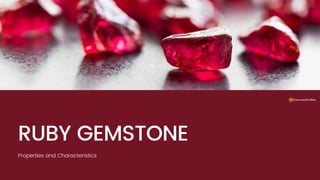
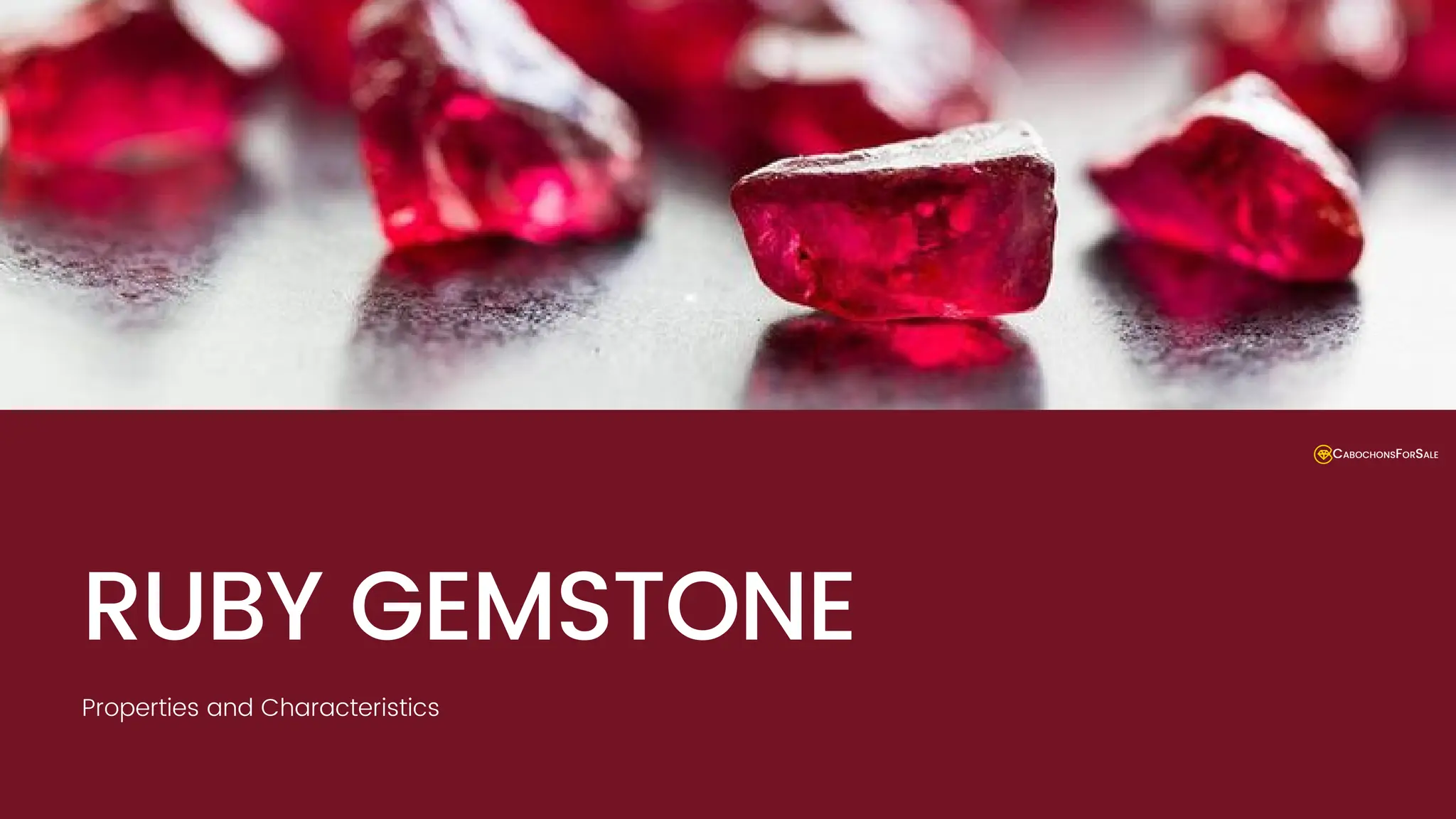
RUBY GEMSTONE
Properties and Characteristics
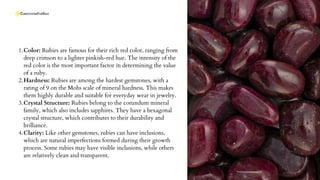
Color: Rubies are famous for their rich red color, ranging from
deep crimson to a lighter pinkish-red hue. The intensity of the
red color is the most important factor in determining the value
of a ruby.
1.
Hardness: Rubies are among the hardest gemstones, with a
rating of 9 on the Mohs scale of mineral hardness. This makes
them highly durable and suitable for everyday wear in jewelry.
2.
Crystal Structure: Rubies belong to the corundum mineral
family, which also includes sapphires. They have a hexagonal
crystal structure, which contributes to their durability and
brilliance.
3.
Clarity: Like other gemstones, rubies can have inclusions,
which are natural imperfections formed during their growth
process. Some rubies may have visible inclusions, while others
are relatively clean and transparent.
4.
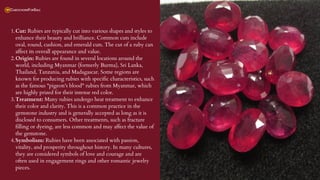
Cut: Rubies are typically cut into various shapes and styles to
enhance their beauty and brilliance. Common cuts include
oval, round, cushion, and emerald cuts. The cut of a ruby can
affect its overall appearance and value.
1.
Origin: Rubies are found in several locations around the
world, including Myanmar (formerly Burma), Sri Lanka,
Thailand, Tanzania, and Madagascar. Some regions are
known for producing rubies with specific characteristics, such
as the famous "pigeon's blood" rubies from Myanmar, which
are highly prized for their intense red color.
2.
Treatment: Many rubies undergo heat treatment to enhance
their color and clarity. This is a common practice in the
gemstone industry and is generally accepted as long as it is
disclosed to consumers. Other treatments, such as fracture
filling or dyeing, are less common and may affect the value of
the gemstone.
3.
Symbolism: Rubies have been associated with passion,
vitality, and prosperity throughout history. In many cultures,
they are considered symbols of love and courage and are
often used in engagement rings and other romantic jewelry
pieces.
4.
Thank you!
www.cabochonsforsale.com

Ruby Gemstone Properties and Characteristics

  • 1.
  • 2.
    Color: Rubies arefamous for their rich red color, ranging from deep crimson to a lighter pinkish-red hue. The intensity of the red color is the most important factor in determining the value of a ruby. 1. Hardness: Rubies are among the hardest gemstones, with a rating of 9 on the Mohs scale of mineral hardness. This makes them highly durable and suitable for everyday wear in jewelry. 2. Crystal Structure: Rubies belong to the corundum mineral family, which also includes sapphires. They have a hexagonal crystal structure, which contributes to their durability and brilliance. 3. Clarity: Like other gemstones, rubies can have inclusions, which are natural imperfections formed during their growth process. Some rubies may have visible inclusions, while others are relatively clean and transparent. 4.
  • 3.
    Cut: Rubies aretypically cut into various shapes and styles to enhance their beauty and brilliance. Common cuts include oval, round, cushion, and emerald cuts. The cut of a ruby can affect its overall appearance and value. 1. Origin: Rubies are found in several locations around the world, including Myanmar (formerly Burma), Sri Lanka, Thailand, Tanzania, and Madagascar. Some regions are known for producing rubies with specific characteristics, such as the famous "pigeon's blood" rubies from Myanmar, which are highly prized for their intense red color. 2. Treatment: Many rubies undergo heat treatment to enhance their color and clarity. This is a common practice in the gemstone industry and is generally accepted as long as it is disclosed to consumers. Other treatments, such as fracture filling or dyeing, are less common and may affect the value of the gemstone. 3. Symbolism: Rubies have been associated with passion, vitality, and prosperity throughout history. In many cultures, they are considered symbols of love and courage and are often used in engagement rings and other romantic jewelry pieces. 4.
  • 4.