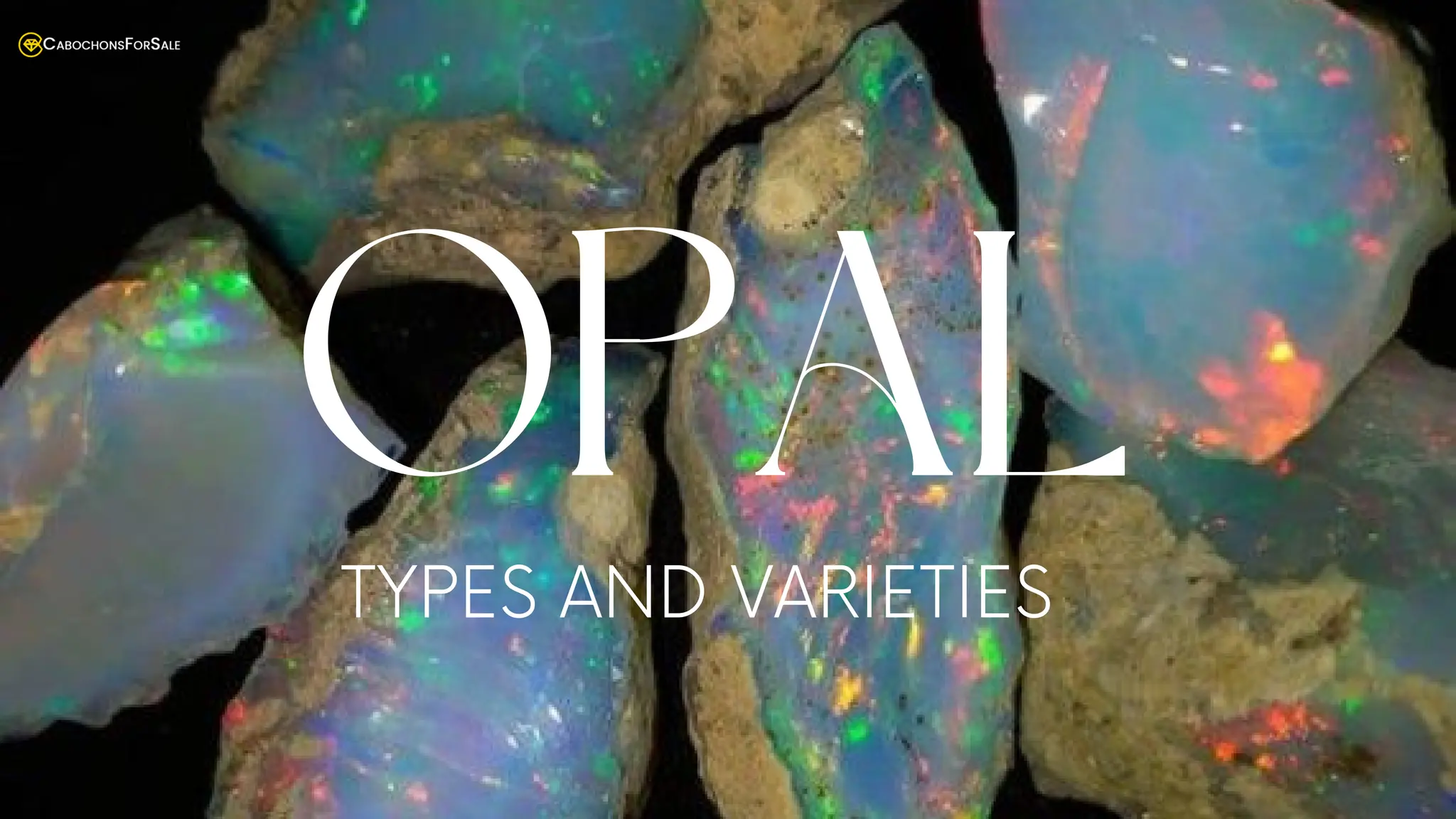
OPAL
TYPES AND VARIETIES
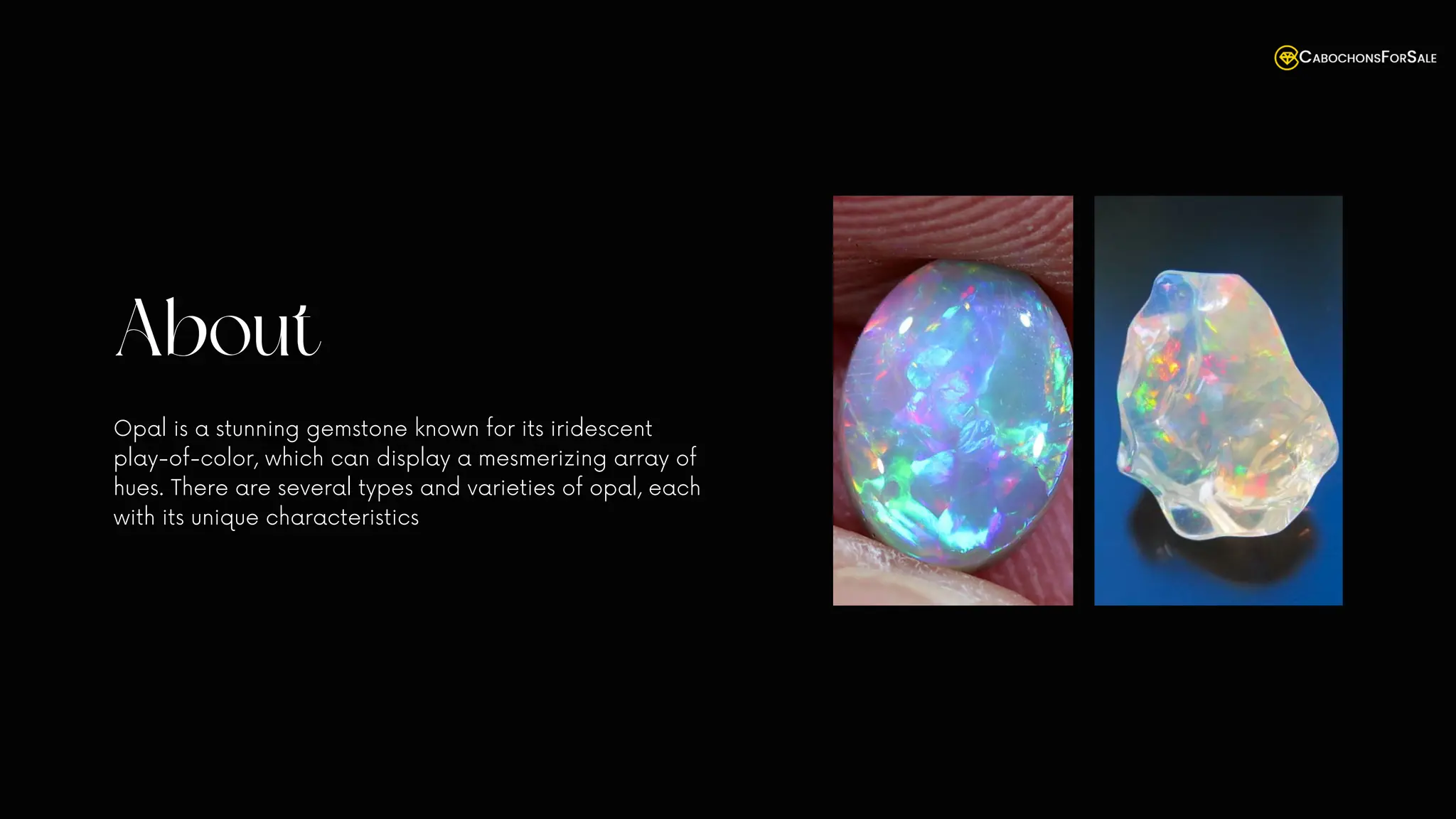
About
Opal is a stunning gemstone known for its iridescent
play-of-color, which can display a mesmerizing array of
hues. There are several types and varieties of opal, each
with its unique characteristics
Precious Opal
This is the most well-known type of opal and is prized for its play-
of-color, which can exhibit a full spectrum of colors. Precious
opal can be further classified into various categories based on its
background color, transparency, and pattern:
Black Opal: These opals have a dark body color, which
enhances the vibrancy of their play-of-color.
White Opal: White opals have a light to white body color,
which provides a contrasting background for the play-of-
color.
Crystal Opal: Crystal opals are transparent to translucent,
allowing light to penetrate and enhance the play-of-color.
Fire Opal: Fire opals are known for their vibrant orange to
red body color, often without play-of-color. They are valued
for their intense coloration.
Common
Opal:
Unlike precious opal, common opal lacks the play-of-color and is
valued for its unique colors and patterns. Common opal can come
in a variety of colors, including white, pink, blue, and green.
Opal Doublets
and Triplets:
These are composite
stones made by
adhering a thin layer of
precious opal onto a
backing material (in
the case of doublets) or
sandwiching it between
a clear quartz or glass
cap (in the case of
triplets). These are
often used to enhance
the appearance and
durability of the opal.
Boulder
Opal:
Boulder opal is found
embedded in ironstone
boulders. It often
displays a thin layer of
precious opal attached
to the ironstone matrix,
resulting in unique
patterns and color
combinations.
Matrix Opal:
Matrix opal forms within the host
rock (matrix), with veins or patches
of precious opal dispersed
throughout the host material. These
opals are often cut with the matrix
included to create unique patterns
and textures.
Hydrophane
Opal:
Hydrophane opal has the unique property of becoming
temporarily transparent when soaked in water. This
characteristic is due to its porous nature, which allows it to
absorb water.
Synthetic Opal:
Synthetic opals are man-made opals produced in a
laboratory. While they mimic the appearance of natural
opals, they lack the uniqueness and value of natural
specimens.
www.cabochonsforsale.com
THANK YOU

Various Types and Varieties of Opal Gemstone

  • 1.
  • 2.
    About Opal is astunning gemstone known for its iridescent play-of-color, which can display a mesmerizing array of hues. There are several types and varieties of opal, each with its unique characteristics
  • 3.
    Precious Opal This isthe most well-known type of opal and is prized for its play- of-color, which can exhibit a full spectrum of colors. Precious opal can be further classified into various categories based on its background color, transparency, and pattern: Black Opal: These opals have a dark body color, which enhances the vibrancy of their play-of-color. White Opal: White opals have a light to white body color, which provides a contrasting background for the play-of- color. Crystal Opal: Crystal opals are transparent to translucent, allowing light to penetrate and enhance the play-of-color. Fire Opal: Fire opals are known for their vibrant orange to red body color, often without play-of-color. They are valued for their intense coloration.
  • 4.
    Common Opal: Unlike precious opal,common opal lacks the play-of-color and is valued for its unique colors and patterns. Common opal can come in a variety of colors, including white, pink, blue, and green.
  • 5.
    Opal Doublets and Triplets: Theseare composite stones made by adhering a thin layer of precious opal onto a backing material (in the case of doublets) or sandwiching it between a clear quartz or glass cap (in the case of triplets). These are often used to enhance the appearance and durability of the opal.
  • 6.
    Boulder Opal: Boulder opal isfound embedded in ironstone boulders. It often displays a thin layer of precious opal attached to the ironstone matrix, resulting in unique patterns and color combinations.
  • 7.
    Matrix Opal: Matrix opalforms within the host rock (matrix), with veins or patches of precious opal dispersed throughout the host material. These opals are often cut with the matrix included to create unique patterns and textures.
  • 8.
    Hydrophane Opal: Hydrophane opal hasthe unique property of becoming temporarily transparent when soaked in water. This characteristic is due to its porous nature, which allows it to absorb water.
  • 9.
    Synthetic Opal: Synthetic opalsare man-made opals produced in a laboratory. While they mimic the appearance of natural opals, they lack the uniqueness and value of natural specimens.
  • 10.