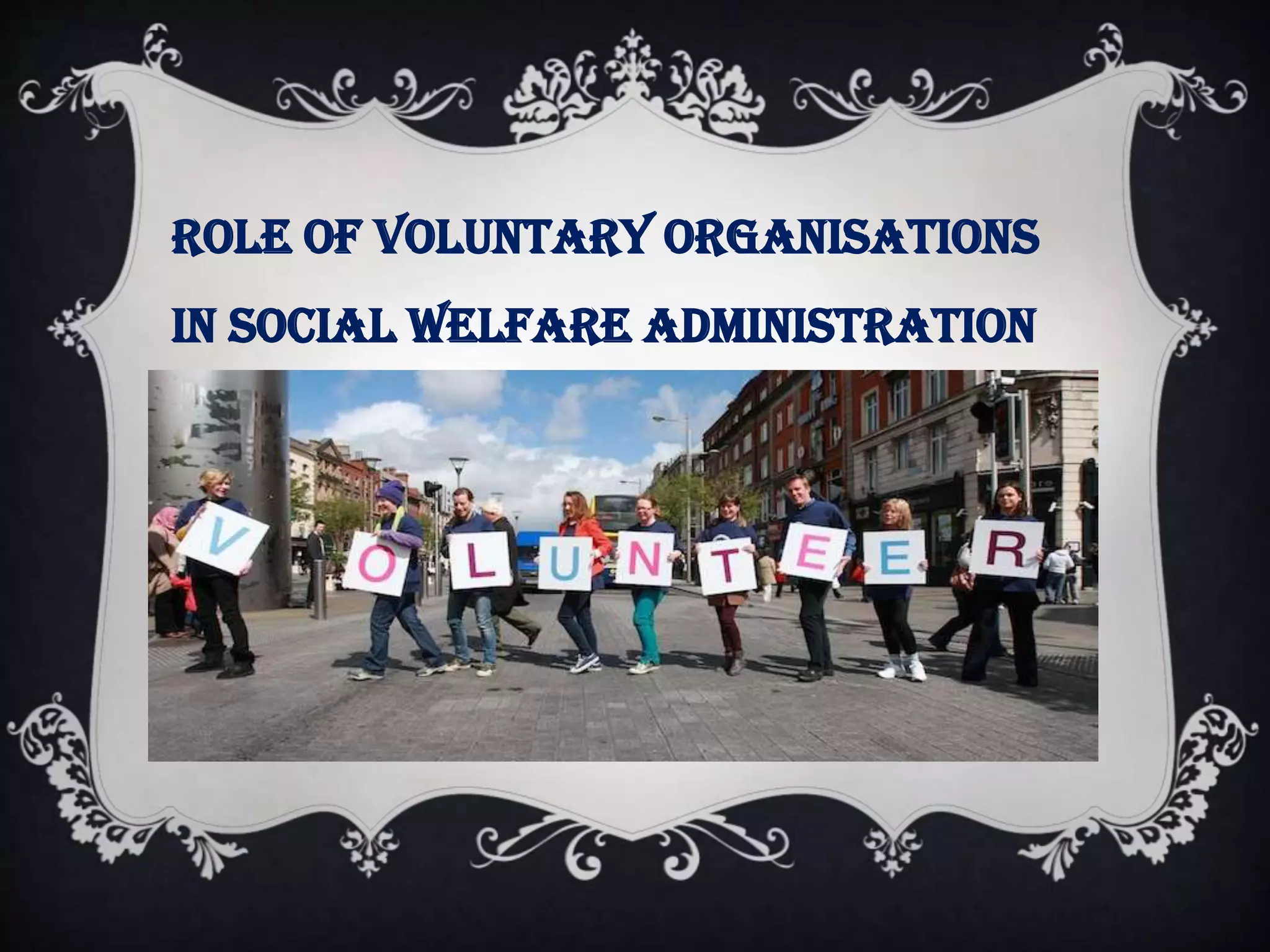
ROLE OF VOLUNTARY ORGANISATIONS
IN SOCIAL WELFARE ADMINISTRATION
MEANING OF VOLUNTARY
ORGANIZATION
 A voluntary association or union also sometimes called
a voluntary organization, unincorporated
association, common-interest association, or just
an association.
 Is a group of individuals who enter into an agreement
as volunteers to form a body (or organization) to accomplish
a purpose.
 Common examples include trade associations, trade
unions, learned societies and professional
associations, environmental groups, and various other types
of groups.
IN THE HISTORY
 During the second half of the 19th century, nationalist
consciousness spread across India and self- help emerged as the
primary focus of socio-political movements.
 Numerous organizations were established during this period,
1. Friend-in-need Society (1858)
2. Prathana Samaj (1873)
3. Arya Samaj (1875)
4. WHO declared the term NGO in 1945
HISTORY OF VOLUNTARY
ORGANIZATION
 Though the term NGO became popular in India only in the
1980’s the voluntary sector has an older tradition.
 Since independence from the British in 1947, the voluntary
sector had a lot of respect in the minds of people-
 First because the father of the nation MAHATMA GANDHI
was an active participant
 Second because India has always had the tradition of honoring
those who have made some sacrifice to help others
CRITERIA OF OFFICIALLY DECLARED
VOLUNTARY ORGANIZATION
 organization should be a legal entity
 activities to be open to all citizens of India irrespective of
religion, caste, creed, sex or race
CR ITER IA OF OFFICIA LLY DECLA R ED
VOLUNTA RY ORGA NIZA TION
 Objective of serving the social and economic needs of the community as a
whole and mainly the weaker sections
 must not work for profit but on no profit and no loss basis
 have the necessary flexibility, professional competence and organizational
skills to implement programmes
 office bearers should not be elected members of any political party
 declares that it will adopt constitutional and non-violent means for rural
development purposes
 committed to secular and democratic concepts
ROLE OF VOLUNTA RY ORGA NIZA TION
IN SOCIA L DEVELOPMENT
Traditionally …..
 They went into village or a group of village and ran
1.Literacy programmes 2.Crèches for children 3.Clinics
4. Encouraged farmers to experiment with new crops and livestock breeds
that bring more money
5. Helped weavers and other village artisans to market their products
RESEARCH / ADVOCACY /
LEGAL
The second role of voluntary organization as ..
 Who research a particular subject in depth
 Lobbied with the government or with industry
 Petitioned the courts for improvements in the
lives of the citizens
 Eg. CSE – CENTRE FOR SCIENCE AND
ENVIRONMENT, New Delhi
ACTIVISTS
 They are against the bureaucrats and
politicians if they were found wrong and
also file petition against them
 They alerted media towards these
acts.
 And made people aware about he
happenings
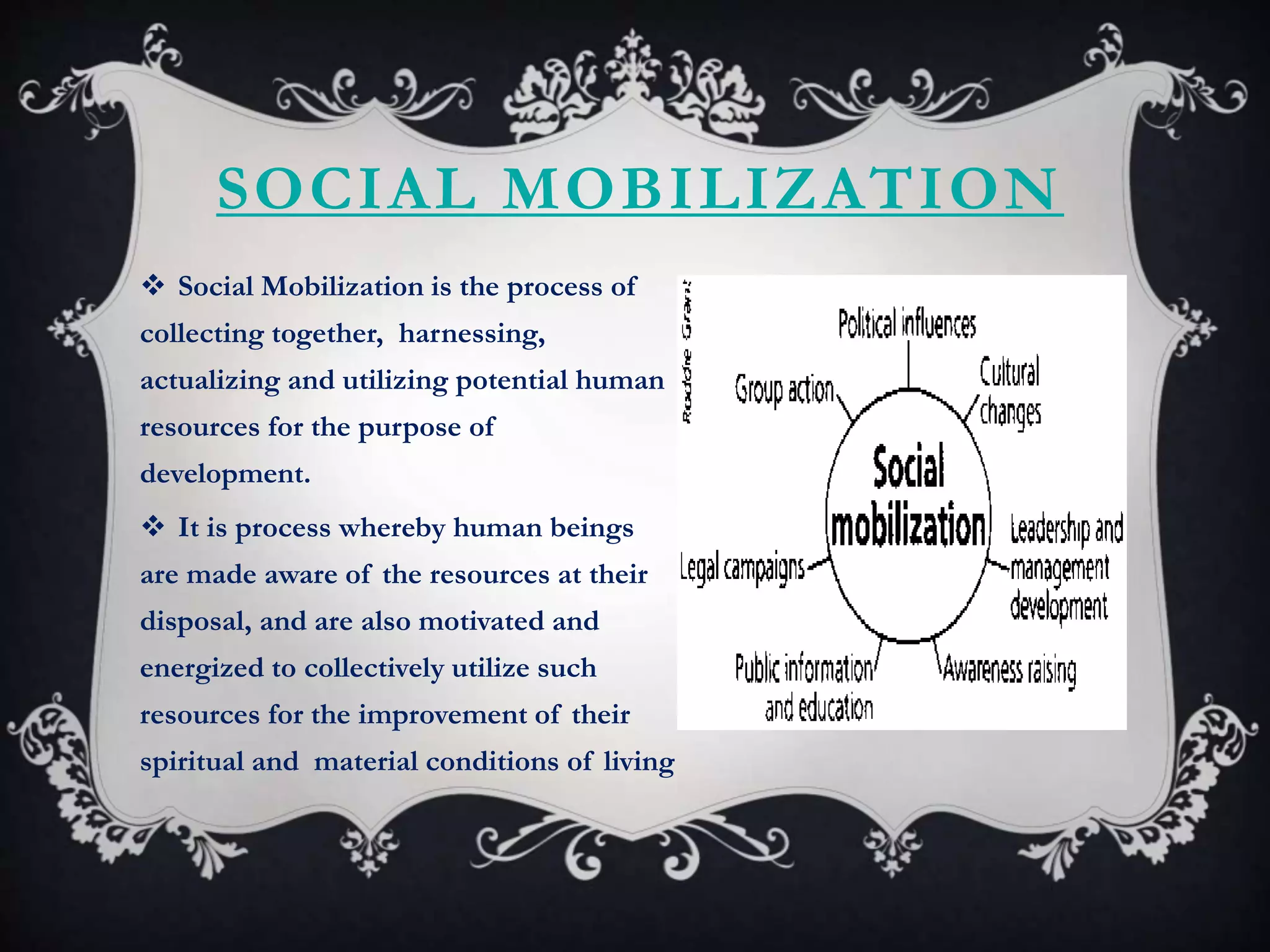
SOCIAL MOBILIZATION
 Social Mobilization is the process of
collecting together, harnessing,
actualizing and utilizing potential human
resources for the purpose of
development.
 It is process whereby human beings
are made aware of the resources at their
disposal, and are also motivated and
energized to collectively utilize such
resources for the improvement of their
spiritual and material conditions of living
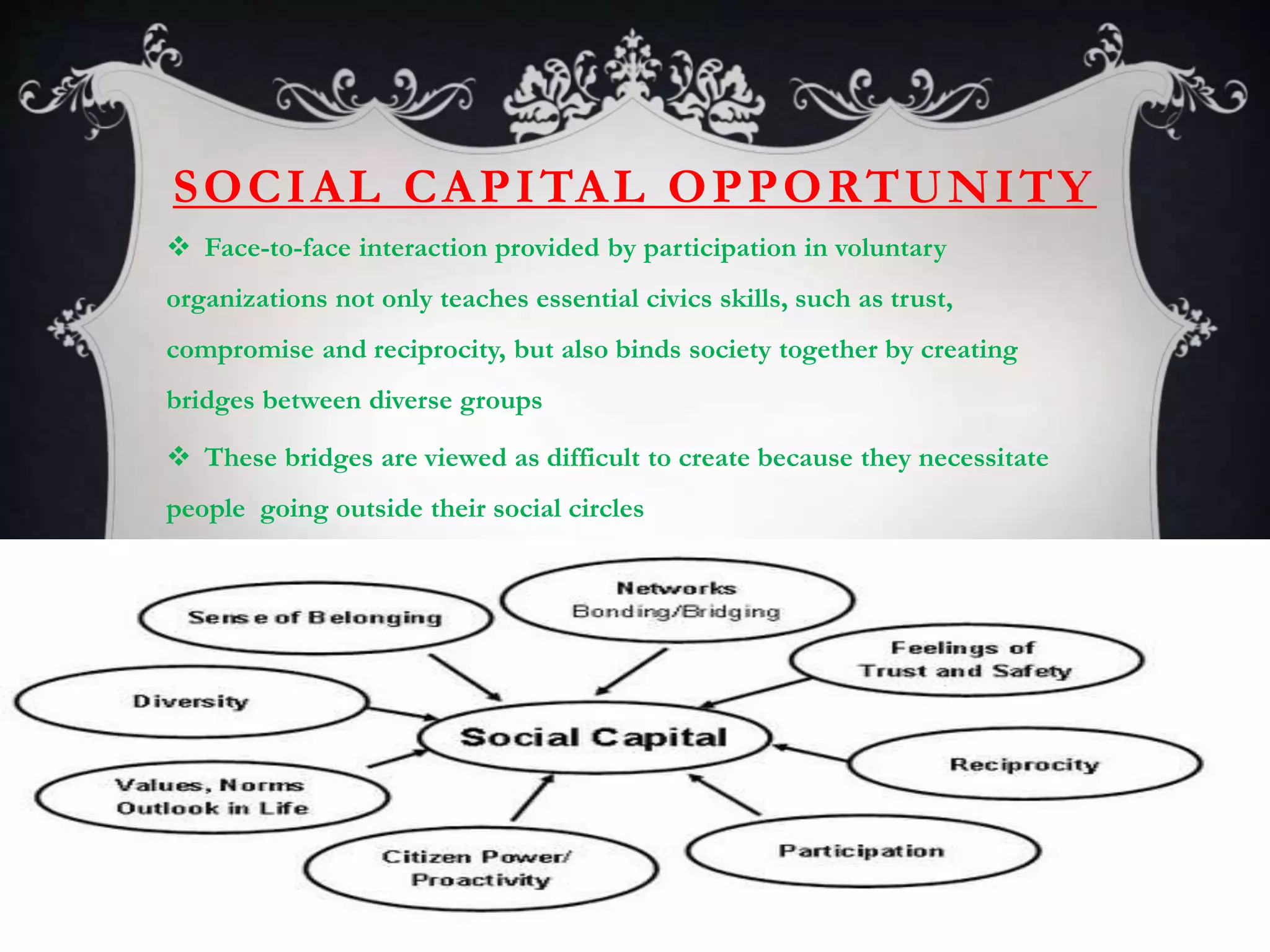
SOCIAL CAPITAL OPPORTUNITY
 Face-to-face interaction provided by participation in voluntary
organizations not only teaches essential civics skills, such as trust,
compromise and reciprocity, but also binds society together by creating
bridges between diverse groups
 These bridges are viewed as difficult to create because they necessitate
people going outside their social circles
RURAL DEVELOPMENT
 Supplementing Government efforts as
they are close to the mind and hearts of
the rural people
 Provides self employment training
 Poverty alleviation programs
 Development of women and children
in rural areas
 Various other central and state
schemes
NEED FOR REFORMS IN
VOLUNTARY ORGANIZATION
 Consequence of coalition government
 engagement in policy design and implementation
 The sustainability and viability of services in a time of cuts
 Poor commissioning practice
 An uneven playing field for commissioning services
 Getting the design of payment by results right
THANK YOU
REFERENCES
 Books
1. The Role of Social Capital: Bridging, Bonding or Both? - Mary Foster, Agnes Mein
hard, Ida Berger
2. Social welfare administration – S. L. Goel
3. Strengthening the role of voluntary development organization's: policy issues
facing official aid agencies – Alan F .Fowler
 Websites
1. www.slideshare.net
2. www.academia.edu
3. www.studymode.com

role of voluntary organisation

  • 1.
    ROLE OF VOLUNTARYORGANISATIONS IN SOCIAL WELFARE ADMINISTRATION
  • 2.
    MEANING OF VOLUNTARY ORGANIZATION A voluntary association or union also sometimes called a voluntary organization, unincorporated association, common-interest association, or just an association.  Is a group of individuals who enter into an agreement as volunteers to form a body (or organization) to accomplish a purpose.  Common examples include trade associations, trade unions, learned societies and professional associations, environmental groups, and various other types of groups.
  • 3.
    IN THE HISTORY During the second half of the 19th century, nationalist consciousness spread across India and self- help emerged as the primary focus of socio-political movements.  Numerous organizations were established during this period, 1. Friend-in-need Society (1858) 2. Prathana Samaj (1873) 3. Arya Samaj (1875) 4. WHO declared the term NGO in 1945
  • 4.
    HISTORY OF VOLUNTARY ORGANIZATION Though the term NGO became popular in India only in the 1980’s the voluntary sector has an older tradition.  Since independence from the British in 1947, the voluntary sector had a lot of respect in the minds of people-  First because the father of the nation MAHATMA GANDHI was an active participant  Second because India has always had the tradition of honoring those who have made some sacrifice to help others
  • 5.
    CRITERIA OF OFFICIALLYDECLARED VOLUNTARY ORGANIZATION  organization should be a legal entity  activities to be open to all citizens of India irrespective of religion, caste, creed, sex or race
  • 6.
    CR ITER IAOF OFFICIA LLY DECLA R ED VOLUNTA RY ORGA NIZA TION  Objective of serving the social and economic needs of the community as a whole and mainly the weaker sections  must not work for profit but on no profit and no loss basis  have the necessary flexibility, professional competence and organizational skills to implement programmes  office bearers should not be elected members of any political party  declares that it will adopt constitutional and non-violent means for rural development purposes  committed to secular and democratic concepts
  • 7.
    ROLE OF VOLUNTARY ORGA NIZA TION IN SOCIA L DEVELOPMENT Traditionally …..  They went into village or a group of village and ran 1.Literacy programmes 2.Crèches for children 3.Clinics 4. Encouraged farmers to experiment with new crops and livestock breeds that bring more money 5. Helped weavers and other village artisans to market their products
  • 8.
    RESEARCH / ADVOCACY/ LEGAL The second role of voluntary organization as ..  Who research a particular subject in depth  Lobbied with the government or with industry  Petitioned the courts for improvements in the lives of the citizens  Eg. CSE – CENTRE FOR SCIENCE AND ENVIRONMENT, New Delhi
  • 9.
    ACTIVISTS  They areagainst the bureaucrats and politicians if they were found wrong and also file petition against them  They alerted media towards these acts.  And made people aware about he happenings
  • 10.
    SOCIAL MOBILIZATION  SocialMobilization is the process of collecting together, harnessing, actualizing and utilizing potential human resources for the purpose of development.  It is process whereby human beings are made aware of the resources at their disposal, and are also motivated and energized to collectively utilize such resources for the improvement of their spiritual and material conditions of living
  • 11.
    SOCIAL CAPITAL OPPORTUNITY Face-to-face interaction provided by participation in voluntary organizations not only teaches essential civics skills, such as trust, compromise and reciprocity, but also binds society together by creating bridges between diverse groups  These bridges are viewed as difficult to create because they necessitate people going outside their social circles
  • 12.
    RURAL DEVELOPMENT  SupplementingGovernment efforts as they are close to the mind and hearts of the rural people  Provides self employment training  Poverty alleviation programs  Development of women and children in rural areas  Various other central and state schemes
  • 13.
    NEED FOR REFORMSIN VOLUNTARY ORGANIZATION  Consequence of coalition government  engagement in policy design and implementation  The sustainability and viability of services in a time of cuts  Poor commissioning practice  An uneven playing field for commissioning services  Getting the design of payment by results right
  • 14.
  • 15.
    REFERENCES  Books 1. TheRole of Social Capital: Bridging, Bonding or Both? - Mary Foster, Agnes Mein hard, Ida Berger 2. Social welfare administration – S. L. Goel 3. Strengthening the role of voluntary development organization's: policy issues facing official aid agencies – Alan F .Fowler  Websites 1. www.slideshare.net 2. www.academia.edu 3. www.studymode.com