Robotics & Coding
Empowering Kids in Australia with Technology
Introduction
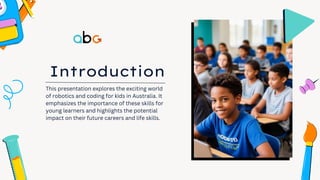
This presentation explores the exciting world
of robotics and coding for kids in Australia. It
emphasizes the importance of these skills for
young learners and highlights the potential
impact on their future careers and life skills.
Robotics Basics
01
What is Robotics?
Robotics is a multidisciplinary field that involves designing,
constructing, and operating robots. It integrates various
technologies including mechanics, electronics, and computer
science. For kids, understanding robotics helps them develop
critical thinking, creativity, and problem-solving skills.
Importance of
Robotics for Kids
Introducing kids to robotics helps to ignite their interest in STEM
(Science, Technology, Engineering, and Mathematics). It fosters
teamwork, enhances their technical skills, and prepares them for
a tech-driven future by enabling them to understand and create
technology rather than just consuming it.
Types of
Robots
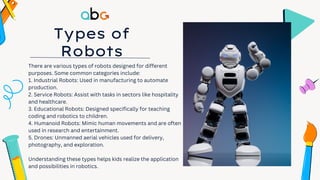
There are various types of robots designed for different
purposes. Some common categories include:
1. Industrial Robots: Used in manufacturing to automate
production.
2. Service Robots: Assist with tasks in sectors like hospitality
and healthcare.
3. Educational Robots: Designed specifically for teaching
coding and robotics to children.
4. Humanoid Robots: Mimic human movements and are often
used in research and entertainment.
5. Drones: Unmanned aerial vehicles used for delivery,
photography, and exploration.
Understanding these types helps kids realize the application
and possibilities in robotics.
Coding
Fundamentals
02
Introduction
to Coding
Coding is the process of creating instructions
for computers to follow, allowing us to build
applications, games, and websites. For
children, learning to code not only enhances
their computational thinking but also
encourages creativity and logical reasoning. It
introduces them to a new form of literacy in
the digital age that can be fun and engaging
through interactive activities and games.
Coding Languages
for Kids
There are several programming languages that are particularly suitable for kids.
Some of the most popular include:
1. Scratch: A visual programming language that allows children to create animations
and games through simple drag-and-drop coding blocks.
2. Python: Known for its readability, Python is often used in educational settings to
introduce kids to real coding concepts.
3. JavaScript: The backbone of web programming, kids can use JavaScript to make
interactive web pages.
These languages are designed to be accessible and fun for young learners while
laying a foundation for more complex programming in the future.
Benefits of
Learning to Code
Learning to code provides numerous benefits for children:
1. Problem-Solving Skills: Coding requires logical thinking and fosters creativity in
problem-solving.
2. Resilience: Debugging code teaches kids perseverance and patience in overcoming
challenges.
3. Career Opportunities: As technology continues to evolve, coding skills are
increasingly in demand in the job market.
4. Collaboration: Many coding projects encourage teamwork and collaboration,
building communication skills.
These benefits contribute to their personal development and prepare them for future
academic and career success.
Conclusion
Robotics and coding are essential skills in today's technology-
driven world. They not only stimulate young minds through
engaging activities but also prepare children for future
opportunities in various STEM fields. By integrating these
subjects into education, we can equip kids with the skills they
need to thrive in a rapidly changing environment.
Thanks!
Do you have any questions?
info@aeroboticsglobal.com
1800237626
aeroboticsglobal.com

Robotics & Coding: Unlocking Innovation and Future Technology

  • 1.
    Robotics & Coding EmpoweringKids in Australia with Technology
  • 2.
    Introduction This presentation exploresthe exciting world of robotics and coding for kids in Australia. It emphasizes the importance of these skills for young learners and highlights the potential impact on their future careers and life skills.
  • 3.
  • 4.
    What is Robotics? Roboticsis a multidisciplinary field that involves designing, constructing, and operating robots. It integrates various technologies including mechanics, electronics, and computer science. For kids, understanding robotics helps them develop critical thinking, creativity, and problem-solving skills.
  • 5.
    Importance of Robotics forKids Introducing kids to robotics helps to ignite their interest in STEM (Science, Technology, Engineering, and Mathematics). It fosters teamwork, enhances their technical skills, and prepares them for a tech-driven future by enabling them to understand and create technology rather than just consuming it.
  • 6.
    Types of Robots There arevarious types of robots designed for different purposes. Some common categories include: 1. Industrial Robots: Used in manufacturing to automate production. 2. Service Robots: Assist with tasks in sectors like hospitality and healthcare. 3. Educational Robots: Designed specifically for teaching coding and robotics to children. 4. Humanoid Robots: Mimic human movements and are often used in research and entertainment. 5. Drones: Unmanned aerial vehicles used for delivery, photography, and exploration. Understanding these types helps kids realize the application and possibilities in robotics.
  • 7.
  • 8.
    Introduction to Coding Coding isthe process of creating instructions for computers to follow, allowing us to build applications, games, and websites. For children, learning to code not only enhances their computational thinking but also encourages creativity and logical reasoning. It introduces them to a new form of literacy in the digital age that can be fun and engaging through interactive activities and games.
  • 9.
    Coding Languages for Kids Thereare several programming languages that are particularly suitable for kids. Some of the most popular include: 1. Scratch: A visual programming language that allows children to create animations and games through simple drag-and-drop coding blocks. 2. Python: Known for its readability, Python is often used in educational settings to introduce kids to real coding concepts. 3. JavaScript: The backbone of web programming, kids can use JavaScript to make interactive web pages. These languages are designed to be accessible and fun for young learners while laying a foundation for more complex programming in the future.
  • 10.
    Benefits of Learning toCode Learning to code provides numerous benefits for children: 1. Problem-Solving Skills: Coding requires logical thinking and fosters creativity in problem-solving. 2. Resilience: Debugging code teaches kids perseverance and patience in overcoming challenges. 3. Career Opportunities: As technology continues to evolve, coding skills are increasingly in demand in the job market. 4. Collaboration: Many coding projects encourage teamwork and collaboration, building communication skills. These benefits contribute to their personal development and prepare them for future academic and career success.
  • 11.
    Conclusion Robotics and codingare essential skills in today's technology- driven world. They not only stimulate young minds through engaging activities but also prepare children for future opportunities in various STEM fields. By integrating these subjects into education, we can equip kids with the skills they need to thrive in a rapidly changing environment.
  • 12.
    Thanks! Do you haveany questions? info@aeroboticsglobal.com 1800237626 aeroboticsglobal.com