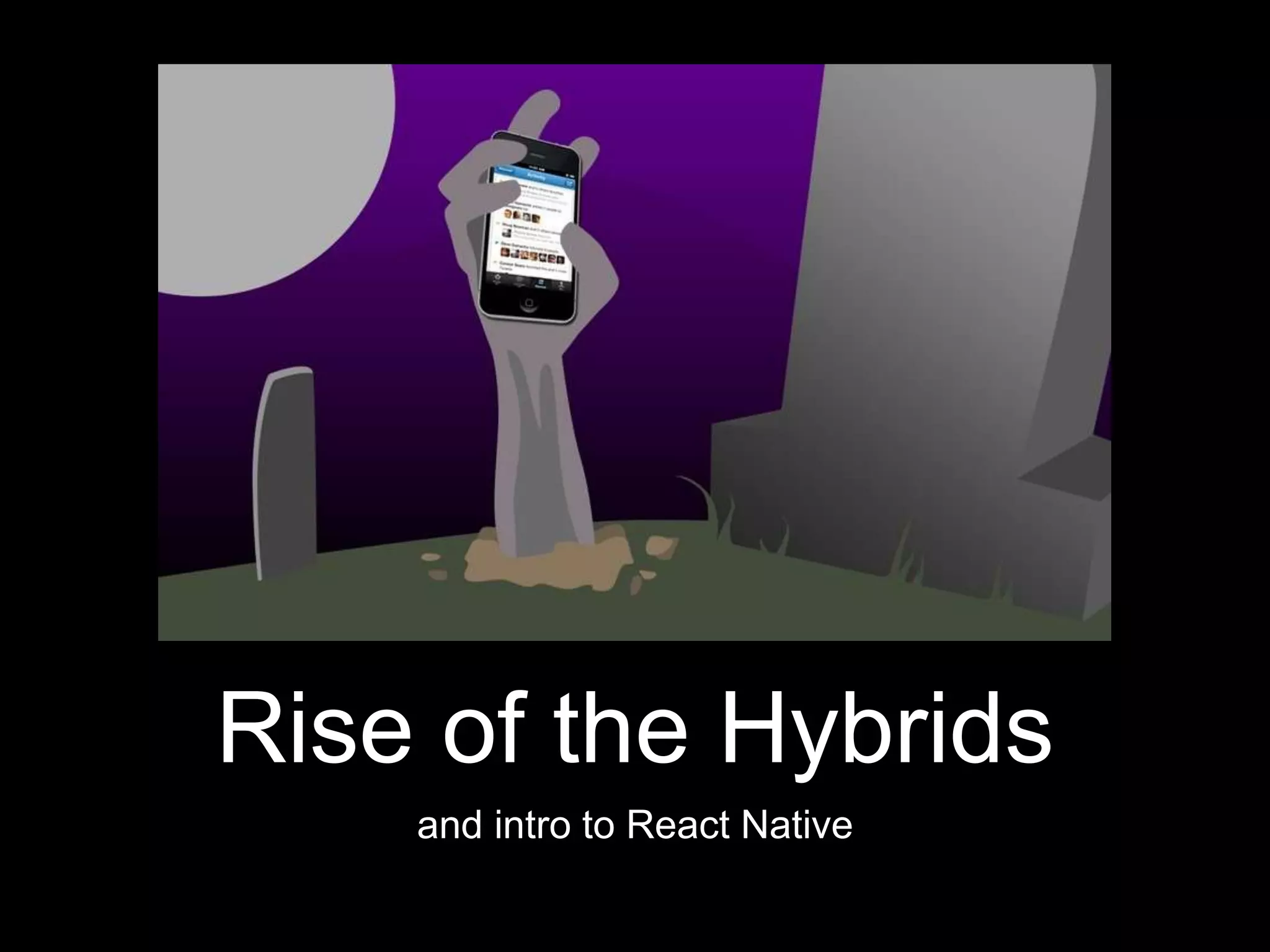
Rise of the Hybrids
and intro to React Native
What is a hybrid application?
• A hybrid application is built with web development
skills: HTML5, CSS and JavaScript that packages
into a native container like Cordova or PhoneGap
Why?
• Cross-platform out of the box, write once run
anywhere
• Develop your crazy ideas fast, real fast
• Any web developer can become an app
developer
• Workflow + tooling = win
Hybrids
Are we there yet?
Ionic Framework
• Psuedo-commercial (or soon to be?) backing
• Feature complete (1.0)
• Components, transitions, animations and gestures
• Framework doesn't encourage customization
• Powerful tools: ionic-cli, ng-cordova, ionic-view, ionic-creator,
ionic-box, ionic-push
• Easy to learn, great documentation
• Build on Angular 1.x, but what about 2.0?
famo.us
• Targets a specific need: performance
• GPU accelerated, JavaScript and DOM rendering engine.
claims for 60 fps animations
• Seamless integration with AngularJS
• Zero components, you must build everything on your own
• Steep lurning curve, documentation is lacking
• Old news?
F7
• iOS only with complete suite of components and
native feel
• Own MVC framework / DOM library (Dom7), hard
to integrate with AngularJS
• Very good for creating iOS app prototypes
• Extensive mileage
Honorable Mention
• Topcoat (UI)
• Reapp (ReactJS, UI)
• jqmobile (eww)
• jquery ui (eww)
Performance
• Performance is the natural discriminator
• iOS webkit + Apple hardware + Apple OS - great fit. Great
performance, no brainer.
• Android device fragmentation
• Crap webviews on older devices
• Crap hardware/os vendors
• Broken framework, in general (Android)
• Alas: shitty performance
Performance
• Click latency (even after 300ms removed)
• Scroll jitter, janking
• Memory leaks (Android webviews)
• View layouting
Performance
• Android
• Nearly every framework but Ionic has crap performance
• Use alternative webview engines
• Be ready for supporting and maintaining them
• Test on devices, or:
• Go from Nexus 5 upwards
• iOS
• Be happy, pick a framework and move along
Browser Standards
• Desktop
• First, we weren’t there
• Then we felt like we’re there
• Then we realized we arent
• 3-4 years forward
• We’re sort of there
• Mobile
• We’re feeling like we’re there
• Screw it. When in doubt, use native bridges and Cordova plugins.
Native Wrappers
• Depicted as “Hybrids done right”
• Xamarin, AppCelerator Titanium, Telerik…
• Avoid browser wars, crappy webviews
• UI glitches (keyboards)
• Save a ton of time: use native styling, controls vs. rebuilding
them with hybrids
• Use your own workflow
• Better performance (?)
Native Wrappers
• The recipe:
• Wrap every native framework element in JS / C# / Ruby / Etc.
• Make bad compromises for API design, support all platforms
• Embed an engine (therefore: JS, C#, Ruby.. where’s Lua?)
• Fix bridging bugs
• Fix performance bugs due to bridging
• Always be behind the host and take heat from developers
• Always break when Apple releases new stuff
Native Wrappers
• Verdict:
• No time/focus for thought behind UI, no paradigm
shift
• If you only have C# devs, do Xamarin, JS, do
Titanium, and so on.
• Be ready to compromise on features, time to market
and performance.
• If only Native Wrappers were done right...
React Native
Introduction
What is React Native?
• React/ReactJS
• A paradigm shift in UI engineering on the Web
• MAJOR investment from Facebook (React all over your FB page)
• Wrappers done right: React brought to native.
• Runs on JavaScriptCore (iOS)
• Not a write once, run anywhere solution
• Learn once, write anywhere
• Native iOS components
• Will kill other “Native Wrapper” frameworks.
Why choose React Native?
• Workflow. Same productivity as in Hybrids, minus all the bad parts.
• (React) Declarative UI, functional, immutable = quality
• Extensible, reuse anything you’ve already built and use your favourite
native libraries
• CSS styling using and embracing flexbox
• Performance happy
• Integrate with existing apps natively (see what I did there?)
• Facebook: in production in several major apps.
• Android coming soon… (summer?)
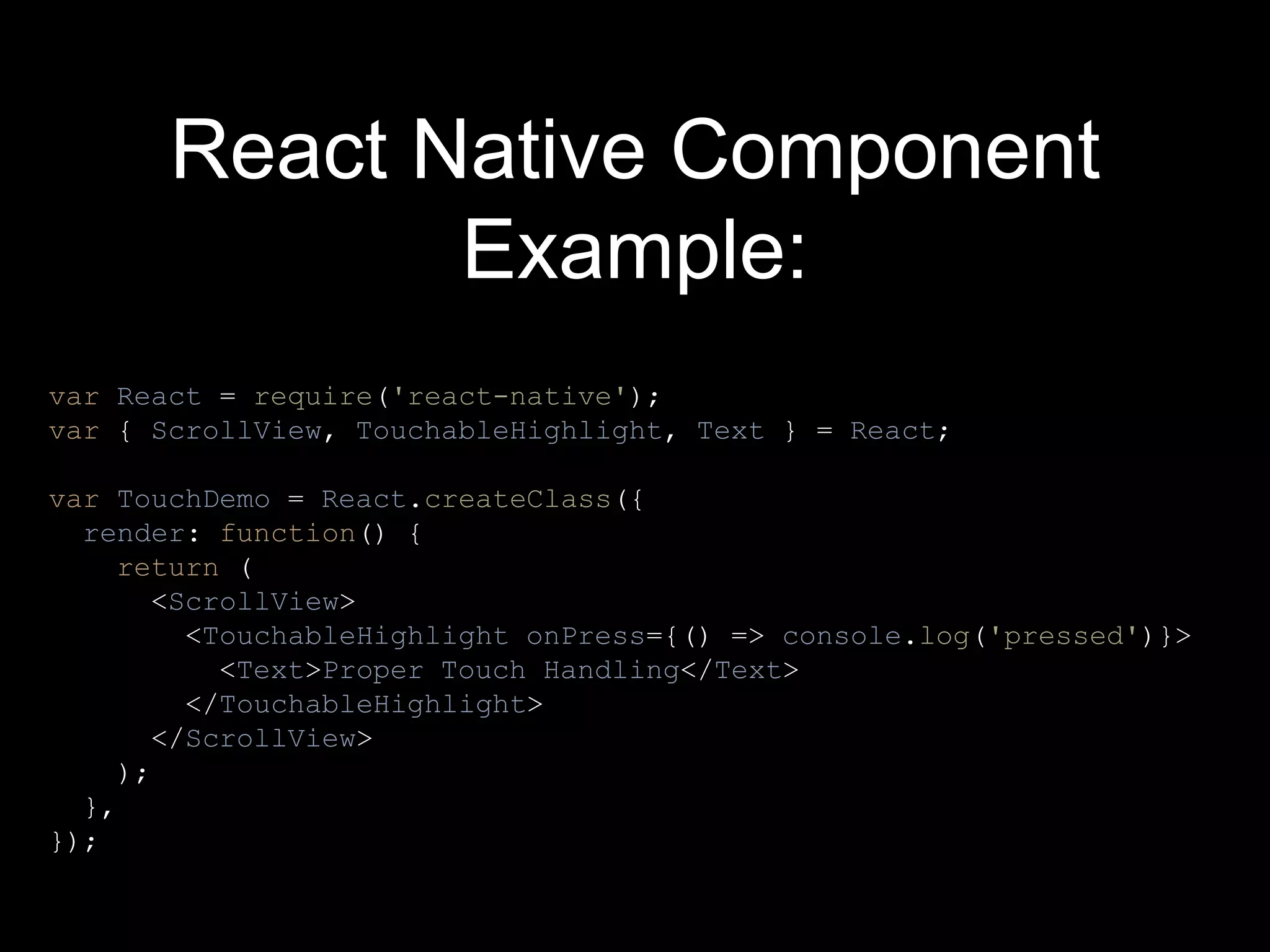
React Native Component
Example:
var React = require('react-native');
var { ScrollView, TouchableHighlight, Text } = React;
var TouchDemo = React.createClass({
render: function() {
return (
<ScrollView>
<TouchableHighlight onPress={() => console.log('pressed')}>
<Text>Proper Touch Handling</Text>
</TouchableHighlight>
</ScrollView>
);
},
});
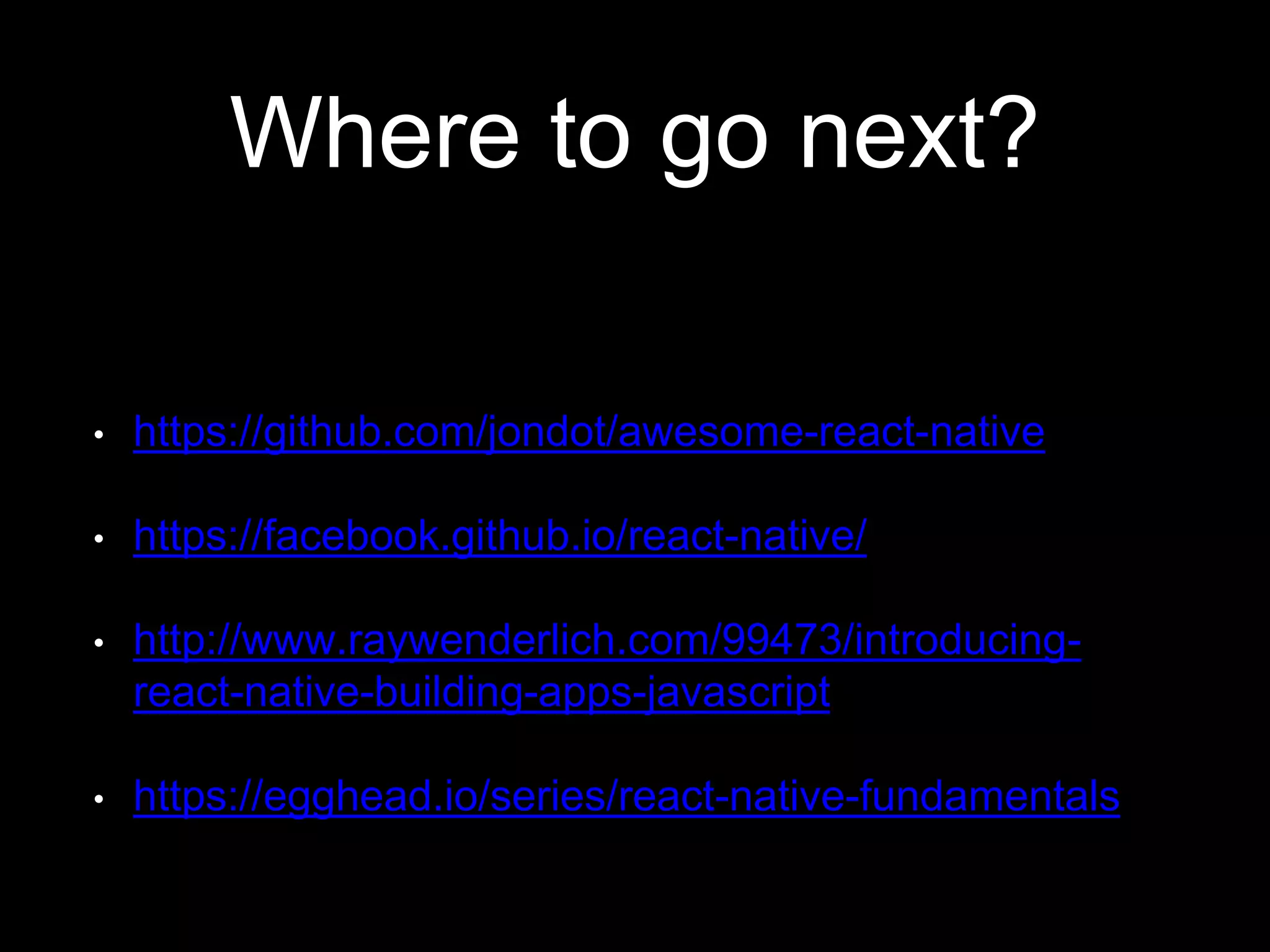
Where to go next?
• https://github.com/jondot/awesome-react-native
• https://facebook.github.io/react-native/
• http://www.raywenderlich.com/99473/introducing-
react-native-building-apps-javascript
• https://egghead.io/series/react-native-fundamentals

Rise of the hybrids

  • 1.
    Rise of theHybrids and intro to React Native
  • 2.
    What is ahybrid application? • A hybrid application is built with web development skills: HTML5, CSS and JavaScript that packages into a native container like Cordova or PhoneGap
  • 3.
    Why? • Cross-platform outof the box, write once run anywhere • Develop your crazy ideas fast, real fast • Any web developer can become an app developer • Workflow + tooling = win
  • 4.
  • 5.
    Ionic Framework • Psuedo-commercial(or soon to be?) backing • Feature complete (1.0) • Components, transitions, animations and gestures • Framework doesn't encourage customization • Powerful tools: ionic-cli, ng-cordova, ionic-view, ionic-creator, ionic-box, ionic-push • Easy to learn, great documentation • Build on Angular 1.x, but what about 2.0?
  • 6.
    famo.us • Targets aspecific need: performance • GPU accelerated, JavaScript and DOM rendering engine. claims for 60 fps animations • Seamless integration with AngularJS • Zero components, you must build everything on your own • Steep lurning curve, documentation is lacking • Old news?
  • 7.
    F7 • iOS onlywith complete suite of components and native feel • Own MVC framework / DOM library (Dom7), hard to integrate with AngularJS • Very good for creating iOS app prototypes • Extensive mileage
  • 8.
    Honorable Mention • Topcoat(UI) • Reapp (ReactJS, UI) • jqmobile (eww) • jquery ui (eww)
  • 9.
    Performance • Performance isthe natural discriminator • iOS webkit + Apple hardware + Apple OS - great fit. Great performance, no brainer. • Android device fragmentation • Crap webviews on older devices • Crap hardware/os vendors • Broken framework, in general (Android) • Alas: shitty performance
  • 10.
    Performance • Click latency(even after 300ms removed) • Scroll jitter, janking • Memory leaks (Android webviews) • View layouting
  • 11.
    Performance • Android • Nearlyevery framework but Ionic has crap performance • Use alternative webview engines • Be ready for supporting and maintaining them • Test on devices, or: • Go from Nexus 5 upwards • iOS • Be happy, pick a framework and move along
  • 12.
    Browser Standards • Desktop •First, we weren’t there • Then we felt like we’re there • Then we realized we arent • 3-4 years forward • We’re sort of there • Mobile • We’re feeling like we’re there • Screw it. When in doubt, use native bridges and Cordova plugins.
  • 13.
    Native Wrappers • Depictedas “Hybrids done right” • Xamarin, AppCelerator Titanium, Telerik… • Avoid browser wars, crappy webviews • UI glitches (keyboards) • Save a ton of time: use native styling, controls vs. rebuilding them with hybrids • Use your own workflow • Better performance (?)
  • 14.
    Native Wrappers • Therecipe: • Wrap every native framework element in JS / C# / Ruby / Etc. • Make bad compromises for API design, support all platforms • Embed an engine (therefore: JS, C#, Ruby.. where’s Lua?) • Fix bridging bugs • Fix performance bugs due to bridging • Always be behind the host and take heat from developers • Always break when Apple releases new stuff
  • 15.
    Native Wrappers • Verdict: •No time/focus for thought behind UI, no paradigm shift • If you only have C# devs, do Xamarin, JS, do Titanium, and so on. • Be ready to compromise on features, time to market and performance. • If only Native Wrappers were done right...
  • 16.
  • 17.
    What is ReactNative? • React/ReactJS • A paradigm shift in UI engineering on the Web • MAJOR investment from Facebook (React all over your FB page) • Wrappers done right: React brought to native. • Runs on JavaScriptCore (iOS) • Not a write once, run anywhere solution • Learn once, write anywhere • Native iOS components • Will kill other “Native Wrapper” frameworks.
  • 18.
    Why choose ReactNative? • Workflow. Same productivity as in Hybrids, minus all the bad parts. • (React) Declarative UI, functional, immutable = quality • Extensible, reuse anything you’ve already built and use your favourite native libraries • CSS styling using and embracing flexbox • Performance happy • Integrate with existing apps natively (see what I did there?) • Facebook: in production in several major apps. • Android coming soon… (summer?)
  • 19.
    React Native Component Example: varReact = require('react-native'); var { ScrollView, TouchableHighlight, Text } = React; var TouchDemo = React.createClass({ render: function() { return ( <ScrollView> <TouchableHighlight onPress={() => console.log('pressed')}> <Text>Proper Touch Handling</Text> </TouchableHighlight> </ScrollView> ); }, });
  • 21.
    Where to gonext? • https://github.com/jondot/awesome-react-native • https://facebook.github.io/react-native/ • http://www.raywenderlich.com/99473/introducing- react-native-building-apps-javascript • https://egghead.io/series/react-native-fundamentals