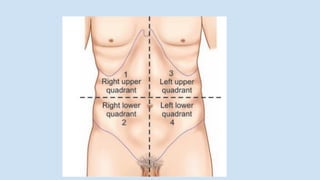
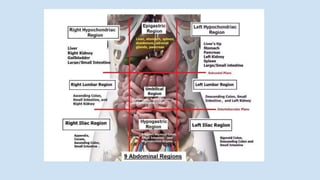
Theory lecture scheme:
MBBS batch 2020 Phase 3,
Part 2
Topic: Revision of case of
Right Upper Quadrant
Abdominal Lump
-Dr. Rana M. Rajneesh
Head of Unit 3
Deptt. Of Surgery
A sequential approach to a patient complaining about abdominal lump
-
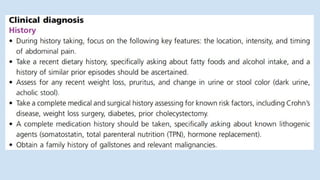
● Extracting relevant history
● Thorough clinical examination
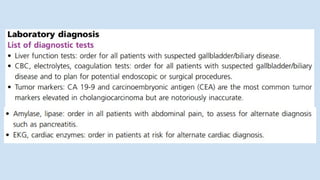
● Correct diagnosis by conducting investigations guided by above
history & examination
● Offering adequate treatment
History
● Demographic data -
○ Age
○ Gender
○ Occupation
○ Address
○ Socio economic status
○ Date of admission
○ Date of examination
○ Bed no.
● Presenting complaints -
○ abdominal lump: Mode of onset (Whether appeared spontaneously or after
trauma/surgery), duration, site, approx size, progression/regression, any
association with meals/posture/straining/trauma, whether disappears
spontaneously
○ pain: site, onset, duration, character, radiation/migration/referred, any
relieving /aggravating factors
● Other associated complaints -
○ nausea/vomiting: character, amount, frequency, content (hematemesis),
○ relieving/aggravating factors, altered bowel habit: diarrhea, constipation,
obstipation, flatulent dyspepsia etc
○ melaena/hematochezia
○ jaundice: onset, duration, progression etc.
● Past & personal history:
○ Comorbidity/treatments- medical or surgical
○ Sleep-wake cycle/ eating habits/ appetite/ bladder & bowel habits/
substance abuse
○ Family/ menstrual & obstetric history
Physical Examination
Prerequisites: Consent, environment, chaperon
● General survey:
○ built, nutrition, mentation
○ vitals
○ signs-pallor, icterus, cyanosis, pedal edema, lymphadenopathy, clubbing.
● Systemic examination:
○ CNS/Respiratory/Cardiovascular examination
● Inspection:
○ Contour (normal/scaphoid/obese/distension), symmetric/asymmetric
○ Skin- scars, pigmentation, signs of inflammation, wounds/ulcer, engorged
veins etc
○ Umbilicus- position
○ Visible abnormal protuberance/lump
○ Movement-with respiration/peristalsis/pulsations
○ Hernial orifices
Per Abdomen Examination
● Palpation:
○ Soft/tense/distention
○ Temperature
○ Tenderness
○ Palpable organomegaly & its description
○ Palpable lump: site, tenderness, size, surface, shape, consistency, margins,
movement(respiration/all directions/ballotable),
pulsatile(transmitted/expansile), *intraperitoneal vs parietal wall vs
retroperitoneal
○ Hernial sites
● Parietal vs intra abdominal swelling
If the swelling is parietal the swelling will become more prominent (Intra-
abdominal swelling becomes less prominent) when the abdominal muscles
are made taut and will be freely movable over the taut muscle.
If the swelling is parietal but fixed to the abdominal muscle the swelling will
not be movable when the muscles are made taut
Another differentiating point is that if the swelling moves vertically with
respiration it is obviously an intra-abdominal swelling.
● Percussion:
○ Technique for lump
○ Technique for evaluation of ascites
○ Span of organomegaly
○ Solid lump-dull (superficial), resonant(coils of bowel overlying)
● Auscultation:
○ Bowel sounds
○ Abnormal sounds (bruit, hums)
Differential Diagnoses of RUQ Lump
● PARIETAL SWELLINGS:
○ skin & subcutaneous tissue-sebaceous cyst, lipoma, fibroma,
neurofibroma, angioma, etc
○ cold abscess
● INTRA ABDOMINAL:
● Liver- hepatomegaly(fatty liver, infections, malignancy), isolated palpable liver
lesion(hydatid), congenital riedel's lobe, amoebic hepatitis & abscess,
suppurative pylephlebitis, suppurative cholangitis, gumma of liver, hydatid
cyst, liver carcinoma- primary vs secondary, cirrhosis
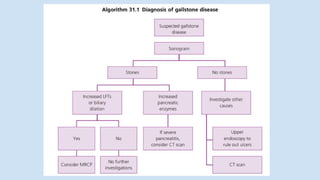
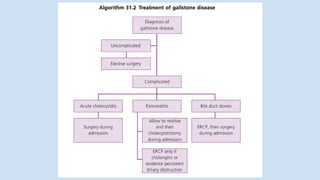
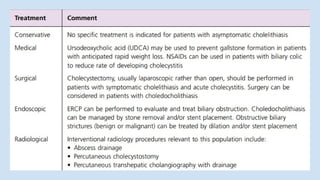
● Gallbladder: benign- smooth globular lump, upper margin
not defined, movement with respiration
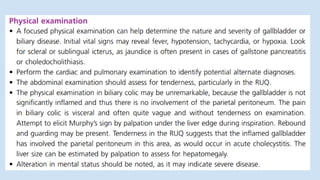
○ Acute cholecystitis (Murphy’s sign: At the height of inspiration when
the inflamed gallbladder impinges on the thumb there will be a catch
in breath and patient will wince with pain. The Murphy’s sign is said to
be positive)
○ Mucocele
○ Empyema with stone impaction neck
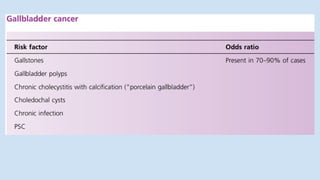
○ Porcelain gallbladder: Extensive calcium encrustation of gallbladder.
‘Porcelain’ refers to bluish discoloration and brittle consistency.
○ Carcinoma gallbladder
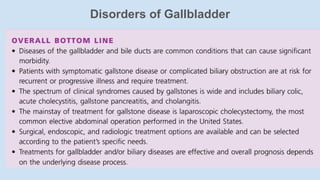
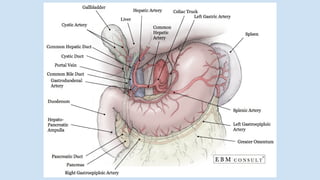
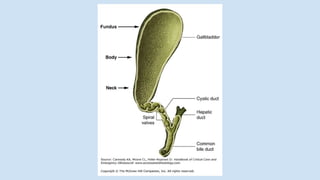
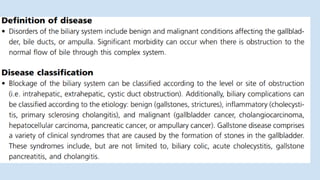
Disorders of Gallbladder
● Subdiaphragmatic Abscess
● Stomach & Duodenum:
○ Subacute perforation of peptic ulcer
○ Hypertrophic pyloric stenosis (m/c in Infants)
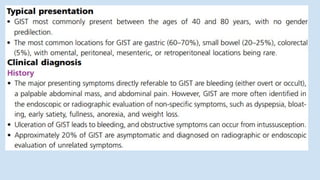
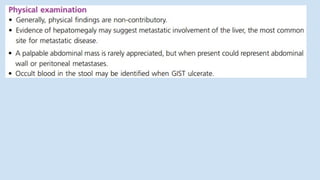
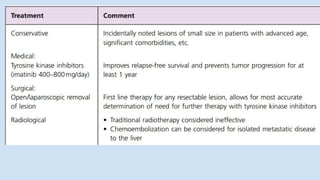
○ GIST
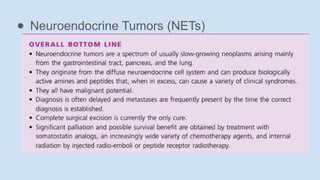
○ Neuroendocrine tumors
● Hepatic flexure of colon
○ Intussusception
○ Colonic ca
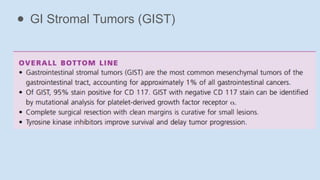
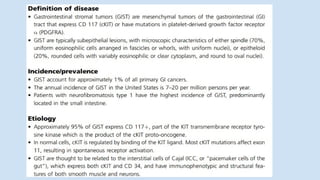
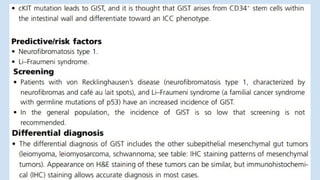
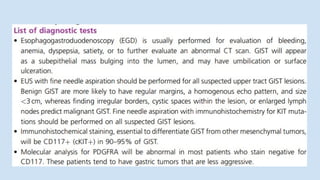
● GI Stromal Tumors (GIST)
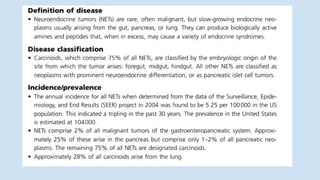
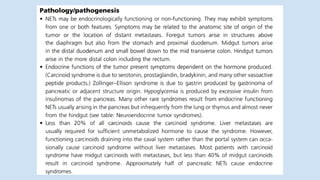
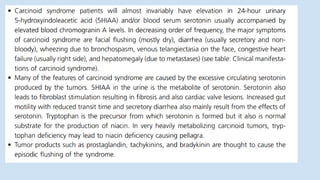
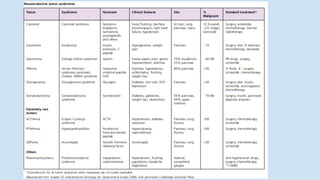
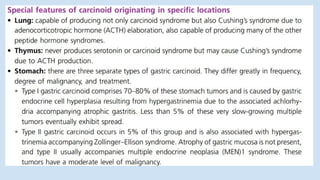
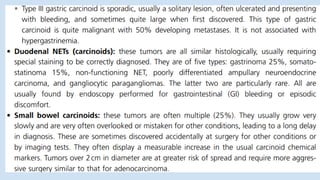
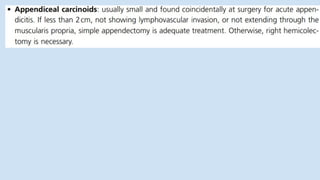
● Neuroendocrine Tumors (NETs)
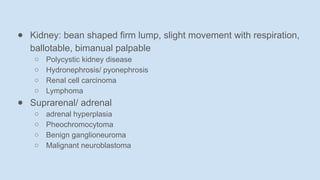
● Kidney: bean shaped firm lump, slight movement with respiration,
ballotable, bimanual palpable
○ Polycystic kidney disease
○ Hydronephrosis/ pyonephrosis
○ Renal cell carcinoma
○ Lymphoma
● Suprarenal/ adrenal
○ adrenal hyperplasia
○ Pheochromocytoma
○ Benign ganglioneuroma
○ Malignant neuroblastoma

Right upper quadrant Lump lecture (1).pptx

  • 1.
    Theory lecture scheme: MBBSbatch 2020 Phase 3, Part 2
  • 2.
    Topic: Revision ofcase of Right Upper Quadrant Abdominal Lump -Dr. Rana M. Rajneesh Head of Unit 3 Deptt. Of Surgery
  • 5.
    A sequential approachto a patient complaining about abdominal lump - ● Extracting relevant history ● Thorough clinical examination ● Correct diagnosis by conducting investigations guided by above history & examination ● Offering adequate treatment
  • 6.
    History ● Demographic data- ○ Age ○ Gender ○ Occupation ○ Address ○ Socio economic status ○ Date of admission ○ Date of examination ○ Bed no.
  • 7.
    ● Presenting complaints- ○ abdominal lump: Mode of onset (Whether appeared spontaneously or after trauma/surgery), duration, site, approx size, progression/regression, any association with meals/posture/straining/trauma, whether disappears spontaneously ○ pain: site, onset, duration, character, radiation/migration/referred, any relieving /aggravating factors ● Other associated complaints - ○ nausea/vomiting: character, amount, frequency, content (hematemesis), ○ relieving/aggravating factors, altered bowel habit: diarrhea, constipation, obstipation, flatulent dyspepsia etc ○ melaena/hematochezia ○ jaundice: onset, duration, progression etc.
  • 8.
    ● Past &personal history: ○ Comorbidity/treatments- medical or surgical ○ Sleep-wake cycle/ eating habits/ appetite/ bladder & bowel habits/ substance abuse ○ Family/ menstrual & obstetric history
  • 9.
    Physical Examination Prerequisites: Consent,environment, chaperon ● General survey: ○ built, nutrition, mentation ○ vitals ○ signs-pallor, icterus, cyanosis, pedal edema, lymphadenopathy, clubbing. ● Systemic examination: ○ CNS/Respiratory/Cardiovascular examination
  • 10.
    ● Inspection: ○ Contour(normal/scaphoid/obese/distension), symmetric/asymmetric ○ Skin- scars, pigmentation, signs of inflammation, wounds/ulcer, engorged veins etc ○ Umbilicus- position ○ Visible abnormal protuberance/lump ○ Movement-with respiration/peristalsis/pulsations ○ Hernial orifices Per Abdomen Examination
  • 11.
    ● Palpation: ○ Soft/tense/distention ○Temperature ○ Tenderness ○ Palpable organomegaly & its description ○ Palpable lump: site, tenderness, size, surface, shape, consistency, margins, movement(respiration/all directions/ballotable), pulsatile(transmitted/expansile), *intraperitoneal vs parietal wall vs retroperitoneal ○ Hernial sites
  • 12.
    ● Parietal vsintra abdominal swelling If the swelling is parietal the swelling will become more prominent (Intra- abdominal swelling becomes less prominent) when the abdominal muscles are made taut and will be freely movable over the taut muscle. If the swelling is parietal but fixed to the abdominal muscle the swelling will not be movable when the muscles are made taut Another differentiating point is that if the swelling moves vertically with respiration it is obviously an intra-abdominal swelling.
  • 13.
    ● Percussion: ○ Techniquefor lump ○ Technique for evaluation of ascites ○ Span of organomegaly ○ Solid lump-dull (superficial), resonant(coils of bowel overlying) ● Auscultation: ○ Bowel sounds ○ Abnormal sounds (bruit, hums)
  • 14.
    Differential Diagnoses ofRUQ Lump ● PARIETAL SWELLINGS: ○ skin & subcutaneous tissue-sebaceous cyst, lipoma, fibroma, neurofibroma, angioma, etc ○ cold abscess ● INTRA ABDOMINAL: ● Liver- hepatomegaly(fatty liver, infections, malignancy), isolated palpable liver lesion(hydatid), congenital riedel's lobe, amoebic hepatitis & abscess, suppurative pylephlebitis, suppurative cholangitis, gumma of liver, hydatid cyst, liver carcinoma- primary vs secondary, cirrhosis
  • 15.
    ● Gallbladder: benign-smooth globular lump, upper margin not defined, movement with respiration ○ Acute cholecystitis (Murphy’s sign: At the height of inspiration when the inflamed gallbladder impinges on the thumb there will be a catch in breath and patient will wince with pain. The Murphy’s sign is said to be positive) ○ Mucocele ○ Empyema with stone impaction neck ○ Porcelain gallbladder: Extensive calcium encrustation of gallbladder. ‘Porcelain’ refers to bluish discoloration and brittle consistency. ○ Carcinoma gallbladder
  • 16.
  • 32.
    ● Subdiaphragmatic Abscess ●Stomach & Duodenum: ○ Subacute perforation of peptic ulcer ○ Hypertrophic pyloric stenosis (m/c in Infants) ○ GIST ○ Neuroendocrine tumors ● Hepatic flexure of colon ○ Intussusception ○ Colonic ca
  • 33.
    ● GI StromalTumors (GIST)
  • 40.
  • 48.
    ● Kidney: beanshaped firm lump, slight movement with respiration, ballotable, bimanual palpable ○ Polycystic kidney disease ○ Hydronephrosis/ pyonephrosis ○ Renal cell carcinoma ○ Lymphoma ● Suprarenal/ adrenal ○ adrenal hyperplasia ○ Pheochromocytoma ○ Benign ganglioneuroma ○ Malignant neuroblastoma