Reverse Engineering
- ASHUTOSH SHUKLA
CAD/CAM AND ROBOTICS
INTRODUCTION
What Is Reverse Engineering?
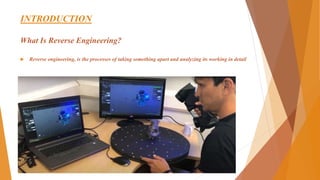
 Reverse engineering, is the processes of taking something apart and analyzing its working in detail
Reverse Engineering Leads to a New understanding about Products
 Important step in the design process
 It is the process of analyzing a product’s function and features
 Begins with a product ends with understanding
Uses of reverse engineering
 Develop replacement parts for old equipment
 Create detailed documentation to manufacture old products for which documentation is not available.
 Precision measurements are taken
 CAD programs used to generate solid models
Reverse Engineering and Patents
Patent Law
 Designed to protect inventors
 Competitor may reverse engineer and copy a design
 Recourse: Sue for patent infringement
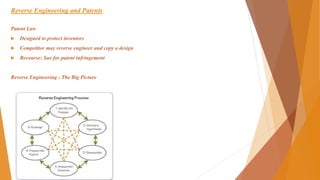
Reverse Engineering : The Big Picture
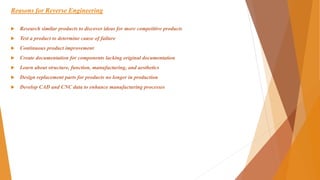
Reasons for Reverse Engineering
 Research similar products to discover ideas for more competitive products
 Test a product to determine cause of failure
 Continuous product improvement
 Create documentation for components lacking original documentation
 Learn about structure, function, manufacturing, and aesthetics
 Design replacement parts for products no longer in production
 Develop CAD and CNC data to enhance manufacturing processes
Reverse Engineering :Step by Step
 Identify the purpose
 Develop a hypothesis
 Disassembly
 Analyze the elements
 Prepare the report
 Product redesign
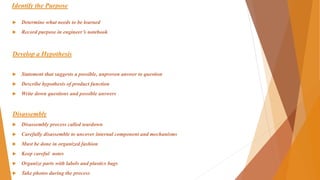
Identify the Purpose
 Determine what needs to be learned
 Record purpose in engineer’s notebook
Develop a Hypothesis
 Statement that suggests a possible, unproven answer to question
 Describe hypothesis of product function
 Write down questions and possible answers
Disassembly
 Disassembly process called teardown
 Carefully disassemble to uncover internal component and mechanisms
 Must be done in organized fashion
 Keep careful notes
 Organize parts with labels and plastics bags
 Take photos during the process
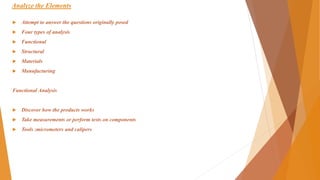
Analyze the Elements
 Attempt to answer the questions originally posed
 Four types of analysis
 Functional
 Structural
 Materials
 Manufacturing
Functional Analysis
 Discover how the products works
 Take measurements or perform tests on components
 Tools :micrometers and calipers
Structural Analysis
 Determine purpose of each part
 Determine how parts interact with each other
 Finite Element Analysis
 -Used to learn more about structural qualities
Materials Analysis
 Identify material by its common name
 Useful to know what the manufacturing process is
 Material properties may be determined by testing
 Molded plastics parts may be labeled with the material type or symbol
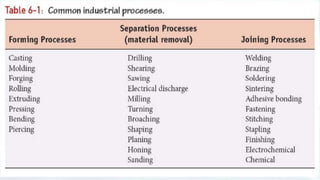
Types of Manufacturing process
 Forming
 Separation
 Joining
REVERSE 123.pptx
REVERSE 123.pptx

REVERSE 123.pptx

  • 1.
    Reverse Engineering - ASHUTOSHSHUKLA CAD/CAM AND ROBOTICS
  • 2.
    INTRODUCTION What Is ReverseEngineering?  Reverse engineering, is the processes of taking something apart and analyzing its working in detail
  • 3.
    Reverse Engineering Leadsto a New understanding about Products  Important step in the design process  It is the process of analyzing a product’s function and features  Begins with a product ends with understanding Uses of reverse engineering  Develop replacement parts for old equipment  Create detailed documentation to manufacture old products for which documentation is not available.  Precision measurements are taken  CAD programs used to generate solid models
  • 4.
    Reverse Engineering andPatents Patent Law  Designed to protect inventors  Competitor may reverse engineer and copy a design  Recourse: Sue for patent infringement Reverse Engineering : The Big Picture
  • 5.
    Reasons for ReverseEngineering  Research similar products to discover ideas for more competitive products  Test a product to determine cause of failure  Continuous product improvement  Create documentation for components lacking original documentation  Learn about structure, function, manufacturing, and aesthetics  Design replacement parts for products no longer in production  Develop CAD and CNC data to enhance manufacturing processes
  • 6.
    Reverse Engineering :Stepby Step  Identify the purpose  Develop a hypothesis  Disassembly  Analyze the elements  Prepare the report  Product redesign
  • 7.
    Identify the Purpose Determine what needs to be learned  Record purpose in engineer’s notebook Develop a Hypothesis  Statement that suggests a possible, unproven answer to question  Describe hypothesis of product function  Write down questions and possible answers Disassembly  Disassembly process called teardown  Carefully disassemble to uncover internal component and mechanisms  Must be done in organized fashion  Keep careful notes  Organize parts with labels and plastics bags  Take photos during the process
  • 8.
    Analyze the Elements Attempt to answer the questions originally posed  Four types of analysis  Functional  Structural  Materials  Manufacturing Functional Analysis  Discover how the products works  Take measurements or perform tests on components  Tools :micrometers and calipers
  • 9.
    Structural Analysis  Determinepurpose of each part  Determine how parts interact with each other  Finite Element Analysis  -Used to learn more about structural qualities Materials Analysis  Identify material by its common name  Useful to know what the manufacturing process is  Material properties may be determined by testing  Molded plastics parts may be labeled with the material type or symbol Types of Manufacturing process  Forming  Separation  Joining