“Retailing includes all the activities involved
in selling goods or Services directly to final
consumers for personal , Non business
use”.(Philip Kotler )

 A person who obtains products from one party and
sell it to other people at a mark up price value.
 OR
 The sale of commodities or goods in small quantities
to ultimate consumers.
Retailer(Reseller ,
Merchant)

 Department Store
 Malls
 Warehouse store
 Discount store
 Variety store
 Specialty stores
 General store
 Convenience store
 Supermarkets
 Hypermarkets
 Vending machines
 Superstore
 E- tailers
Types of Retailing

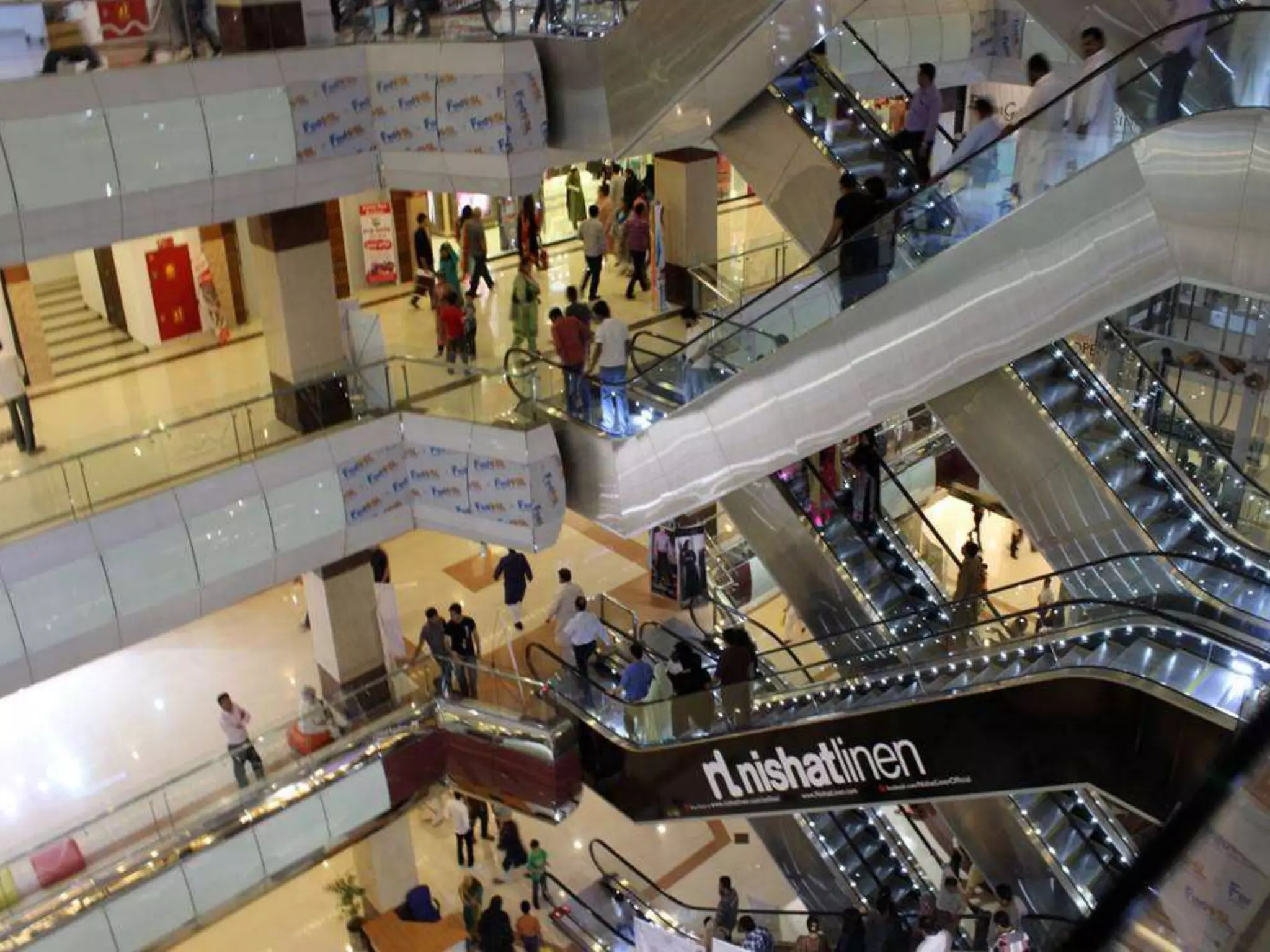
 A large store that has separate areas in which
different kinds of products are sold.
 All departments are housed under the same roof to
facilitate Buying, customer service, merchandising,
and control.
 Carries several product lines
 Each line is operated as a separate department
Department Store



 Malls have a range of retail shops at a single outlet
 Provide products , food , entertainment , ornaments
and all those products which human are willing to
buy
 High quality products available
 Provide high services
 High price is charged due to high quality and high
services
 E.g. centaurus Islamabad
Malls



Difference Between Mall
and Department Store
 Mall has a bigger
environment
 Shoppers can go from one
building unit to another
 Various things can be
bought at the same place
in a mall.
 Price charged is high due
to high service and
goodwill
 Department Store is only
a small place
comparatively
 But such walkways are
not seen in department
stores as they are just
single units
 Limited products are
available
 Price is average not too
high

 Offer products with low cost but high quality
 Bulk amount of products are stored for selling
 Factories mostly keep Warehouses
 Products when finalize are stored in warehouse for
sale
Warehouse store


 A shop that sells goods at less than the normal retail
price.
 Offer low prices
 Mostly sell outdated (non food items) or off season
products , less fashionable non branded products.
 Provide free service as discount like Pizza delivery
Discount store



 Sells a wide variety of relatively small items
 Limited products
 Mostly low cost products
 OR
 A shop where many small and inexpensive items can
be bought.
Variety store


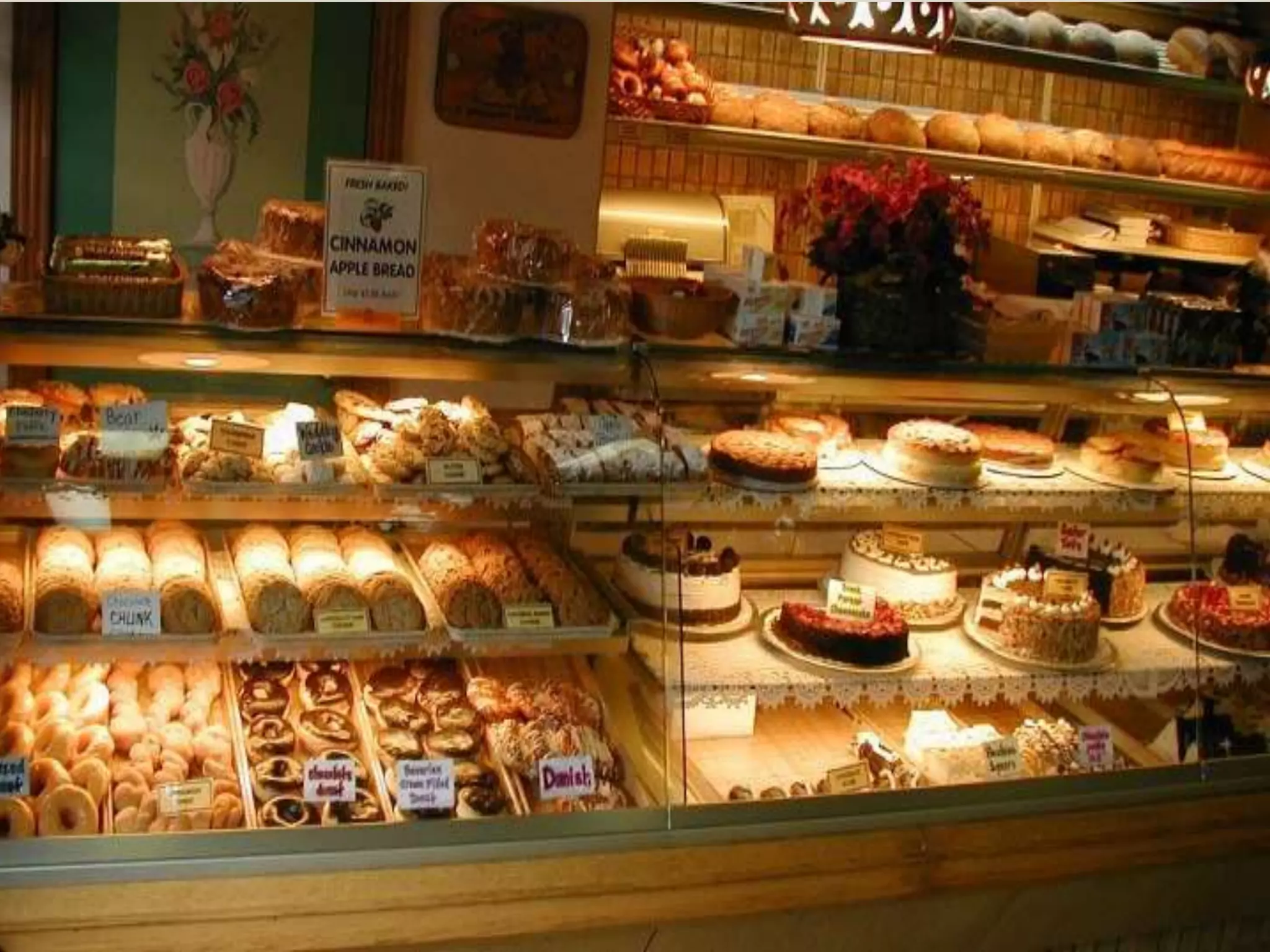
 Focus on specific product categories
 Offer different qualities of the same line products
 Different prices are charged according to quality
 Retailer is able to offer the customer expert
knowledge and a high level of service
 E.g. shoes shop , book store and bakery etc.
Specialty stores




 Located usually in a small or rural community
(town or village)
 Sells a wide range of products
 Mostly a single shop not divided into departments
 Provide basic need products
General store


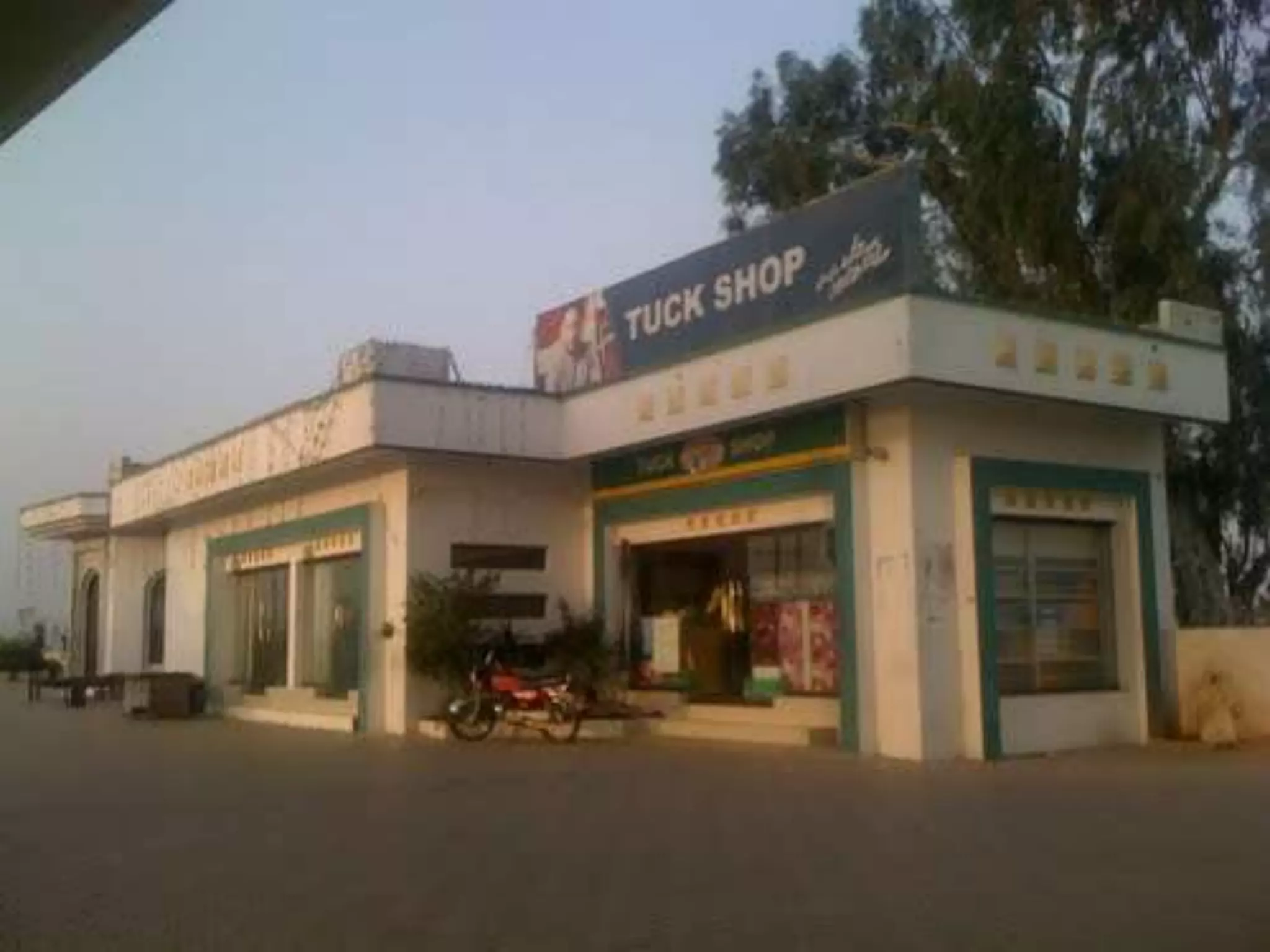
 Usually located in residential areas
 Provide limited products
 Provide products more then average price due to the
added value of convenience
 Such stores are used in emergency cases
 Like tuck shops at fuel stations etc.
Convenience store



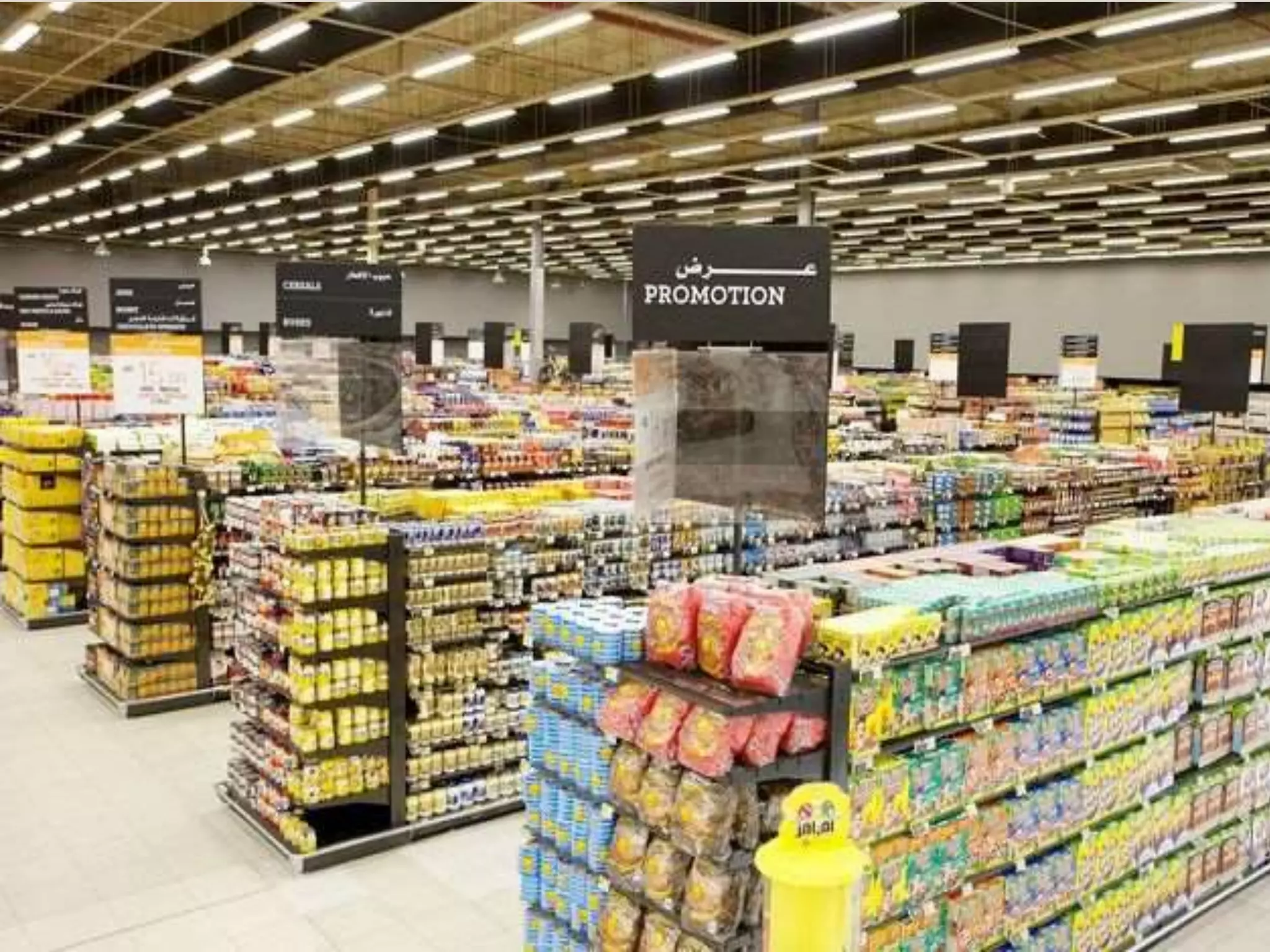
 Self service stores
 Consisting mainly grocery and limited products
 Average price is charged to products
 Mostly found in cities
Supermarkets



 Combination of supermarket and discount store ,
larger then a superstore
 Provide huge volume of products
 Low margin of price is added
Hypermarkets


 Vending machines are automated piece of
equipment
 Developed before 20th century
 Fist used only for cold drinks and now it offer
different food products at the same time
 Costumers can drop money coins or could use credit
card into it and get the valued product
 Available anytime but in limited places
Vending machines


 Provides most routinely purchased products
 Offer food and non food products
 Mainly found in supermarkets
Superstore



 Retailer enables customers to shop on-line via the
internet and buy products which are then delivered
 Retailer is highly convenient and is able to supply a
wider geographic customer base
 Retailers provides much and more services even free
home delivery
 Such as amazon , Ebay and OLX
E- tailers



Retailing

  • 2.
    “Retailing includes allthe activities involved in selling goods or Services directly to final consumers for personal , Non business use”.(Philip Kotler )
  • 3.
      A personwho obtains products from one party and sell it to other people at a mark up price value.  OR  The sale of commodities or goods in small quantities to ultimate consumers. Retailer(Reseller , Merchant)
  • 4.
      Department Store Malls  Warehouse store  Discount store  Variety store  Specialty stores  General store  Convenience store  Supermarkets  Hypermarkets  Vending machines  Superstore  E- tailers Types of Retailing
  • 5.
      A largestore that has separate areas in which different kinds of products are sold.  All departments are housed under the same roof to facilitate Buying, customer service, merchandising, and control.  Carries several product lines  Each line is operated as a separate department Department Store
  • 6.
  • 7.
  • 8.
      Malls havea range of retail shops at a single outlet  Provide products , food , entertainment , ornaments and all those products which human are willing to buy  High quality products available  Provide high services  High price is charged due to high quality and high services  E.g. centaurus Islamabad Malls
  • 9.
  • 10.
  • 11.
     Difference Between Mall andDepartment Store  Mall has a bigger environment  Shoppers can go from one building unit to another  Various things can be bought at the same place in a mall.  Price charged is high due to high service and goodwill  Department Store is only a small place comparatively  But such walkways are not seen in department stores as they are just single units  Limited products are available  Price is average not too high
  • 12.
      Offer productswith low cost but high quality  Bulk amount of products are stored for selling  Factories mostly keep Warehouses  Products when finalize are stored in warehouse for sale Warehouse store
  • 13.
  • 14.
      A shopthat sells goods at less than the normal retail price.  Offer low prices  Mostly sell outdated (non food items) or off season products , less fashionable non branded products.  Provide free service as discount like Pizza delivery Discount store
  • 15.
  • 16.
  • 17.
      Sells awide variety of relatively small items  Limited products  Mostly low cost products  OR  A shop where many small and inexpensive items can be bought. Variety store
  • 18.
  • 19.
      Focus onspecific product categories  Offer different qualities of the same line products  Different prices are charged according to quality  Retailer is able to offer the customer expert knowledge and a high level of service  E.g. shoes shop , book store and bakery etc. Specialty stores
  • 20.
  • 21.
  • 22.
  • 23.
      Located usuallyin a small or rural community (town or village)  Sells a wide range of products  Mostly a single shop not divided into departments  Provide basic need products General store
  • 24.
  • 25.
      Usually locatedin residential areas  Provide limited products  Provide products more then average price due to the added value of convenience  Such stores are used in emergency cases  Like tuck shops at fuel stations etc. Convenience store
  • 26.
  • 27.
  • 28.
      Self servicestores  Consisting mainly grocery and limited products  Average price is charged to products  Mostly found in cities Supermarkets
  • 29.
  • 30.
  • 31.
      Combination ofsupermarket and discount store , larger then a superstore  Provide huge volume of products  Low margin of price is added Hypermarkets
  • 32.
  • 33.
      Vending machinesare automated piece of equipment  Developed before 20th century  Fist used only for cold drinks and now it offer different food products at the same time  Costumers can drop money coins or could use credit card into it and get the valued product  Available anytime but in limited places Vending machines
  • 34.
  • 35.
      Provides mostroutinely purchased products  Offer food and non food products  Mainly found in supermarkets Superstore
  • 36.
  • 37.
  • 38.
      Retailer enablescustomers to shop on-line via the internet and buy products which are then delivered  Retailer is highly convenient and is able to supply a wider geographic customer base  Retailers provides much and more services even free home delivery  Such as amazon , Ebay and OLX E- tailers
  • 39.
  • 40.