Contact
Information
Essential Contact Details
Includefull name, phone number, email, LinkedIn
profile, and residential address for effective
communication.
Professional Presentation
Ensure contact details are current, formal, and
professionally presented to appeal to potential
employers.
4.
Career
Objective
Express Professional Aspirations
Careerobjectives help students clearly state their professional
goals and ambitions in a concise manner.
Role and Contribution Focus
Objectives specify the desired role and how students plan to add
value to the organization they join.
Tailored for Target Industry
Career objectives should be customized to align with the specific
industry or job being pursued.
Demonstrate Clarity and Motivation
A well-written career objective reveals purpose, motivation, and
confidence to potential employers.
5.
Education
Listing Academic Qualifications
Studentsshould list degrees in reverse chronological order including degree name, institution, and graduation
year.
Including Grades and Achievements
Include CGPA or percentage and highlight additional academic achievements or relevant coursework.
Showcasing Academic Readiness
This section offers a snapshot of the student’s academic background and preparedness for professional roles.
6.
Internships /
Projects
Internship Details
Includetitle, organization, and duration of each internship to
provide clear context.
Project Descriptions
Briefly describe responsibilities and achievements to showcase
practical skills and contributions.
Real-World Experience
Highlighting internships and projects demonstrates ability to
apply theoretical knowledge practically.
7.
Skills
Technical Skills
Technical skillsinclude proficiency in software tools, programming
languages, and industry-specific technologies relevant to the field.
Soft Skills
Soft skills encompass communication, teamwork, and problem-
solving abilities essential for workplace collaboration and success.
Clear Organization
Skills should be organized clearly using bullet points or categories to
highlight key competencies for recruiters.
8.
Certifications
Purpose of Certifications
Certificationsshow extra qualifications and dedication to
continuous professional growth and learning.
Essential Certification Details
Include certification name, issuing organization, and completion
date for clarity and credibility.
Benefits for Resume
Relevant certifications highlight specialized skills, improving
resume impact and industry value.
9.
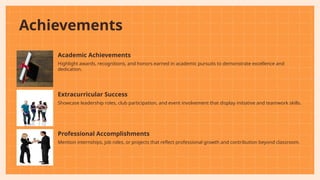
Achievements
Academic Achievements
Highlight awards,recognitions, and honors earned in academic pursuits to demonstrate excellence and
dedication.
Extracurricular Success
Showcase leadership roles, club participation, and event involvement that display initiative and teamwork skills.
Professional Accomplishments
Mention internships, job roles, or projects that reflect professional growth and contribution beyond classroom.
10.
References Purpose ofReferences
References enhance credibility by confirming a student’s skills
and character to potential employers or institutions.
Details to Include
List full names, designations, organizations, and contact
information for each reference clearly and professionally.
Permission and Etiquette
Always seek permission before listing someone as a reference to
ensure they are willing to support your application.
Optional But Valuable
Including references is optional but can greatly strengthen job
applications requiring endorsements or validations.
#3
This section is intended for students to provide their basic contact details. It should include their full name, phone number, email address, LinkedIn profile (if available), and residential address. These details are essential for potential employers to reach out and for networking purposes. Students should ensure that the information is current and professionally presented, using a formal email address and a complete LinkedIn profile if applicable.
#4
The career objective section allows students to articulate their professional aspirations. It should be a concise statement that reflects their goals, the type of role they are seeking, and how they intend to contribute to an organization. This section sets the tone for the resume and should be tailored to align with the industry or position the student is targeting. A well-written objective demonstrates clarity of purpose and motivation.
#5
In the education section, students should list their academic qualifications in reverse chronological order. This includes the degree name, institution, year of graduation, and CGPA or percentage. Additional academic achievements or relevant coursework can also be included to highlight strengths. This section provides a snapshot of the student’s academic background and readiness for professional roles.
#6
This section is for detailing any internships or academic projects undertaken by the student. Each entry should include the title, organization, duration, and a brief description of responsibilities and accomplishments. Highlighting real-world experience and practical skills gained during these engagements helps demonstrate the student’s ability to apply theoretical knowledge in professional settings.
#7
Students should list both technical and soft skills relevant to their field of study and career goals. Examples include proficiency in software tools, languages, communication, teamwork, and problem-solving abilities. This section should be organized clearly, possibly using bullet points or categories, to make it easy for recruiters to identify key competencies.
#8
Certifications demonstrate additional qualifications and commitment to professional development. Students should include the name of the certification, the issuing organization, and the date of completion. Relevant certifications can enhance a resume by showcasing specialized knowledge or skills that are valued in the industry.
#9
This section is for listing notable academic, extracurricular, or professional achievements. Examples include awards, recognitions, leadership roles, or successful event participation. Including achievements helps students stand out by highlighting their initiative, excellence, and contributions beyond the classroom.
#10
References provide credibility and support for the student’s qualifications. Students should list names, designations, organizations, and contact information of individuals who can vouch for their skills and character. It is advisable to seek permission before listing someone as a reference. This section is optional but can be valuable for job applications requiring endorsements.