REST API vs. GraphQL: Which Should You Pick for Your Project?
1.
REST API vs.GraphQL:
Which Should You
Pick for Your Project?
A COMPARISON FOR DEVELOPERS AND BUSINESSES
2.
Introduction
Building an app?Choosing between REST API and GraphQL is crucial for
how your app communicates with servers. Let’s break it down simply.
3.
What’s REST API?
-Works like a fixed menu: each resource has a dedicated endpoint.
- Uses HTTP methods (GET, POST, PUT, DELETE).
- Example: GET /users → Returns user list.
4.
Why REST APIWorks
- Simple to learn and implement.
- Supports caching for faster performance.
- Structured responses make data handling easier.
5.
Downsides of RESTAPI
- Over-fetching: Retrieves more data than needed.
- Under-fetching: Requires multiple requests for related data.
6.
What’s GraphQL?
- Likea custom order: request exactly what you need.
- Uses a single endpoint for all queries.
- Example query: Fetching only name and email of a user.
7.
Why GraphQL Shines
-No over-fetching: Fetch only the needed data.
- Single request for multiple resources.
- Real-time updates with subscriptions.
8.
Downsides of GraphQL
-Steeper learning curve.
- Requires extra setup for caching and error handling.
9.
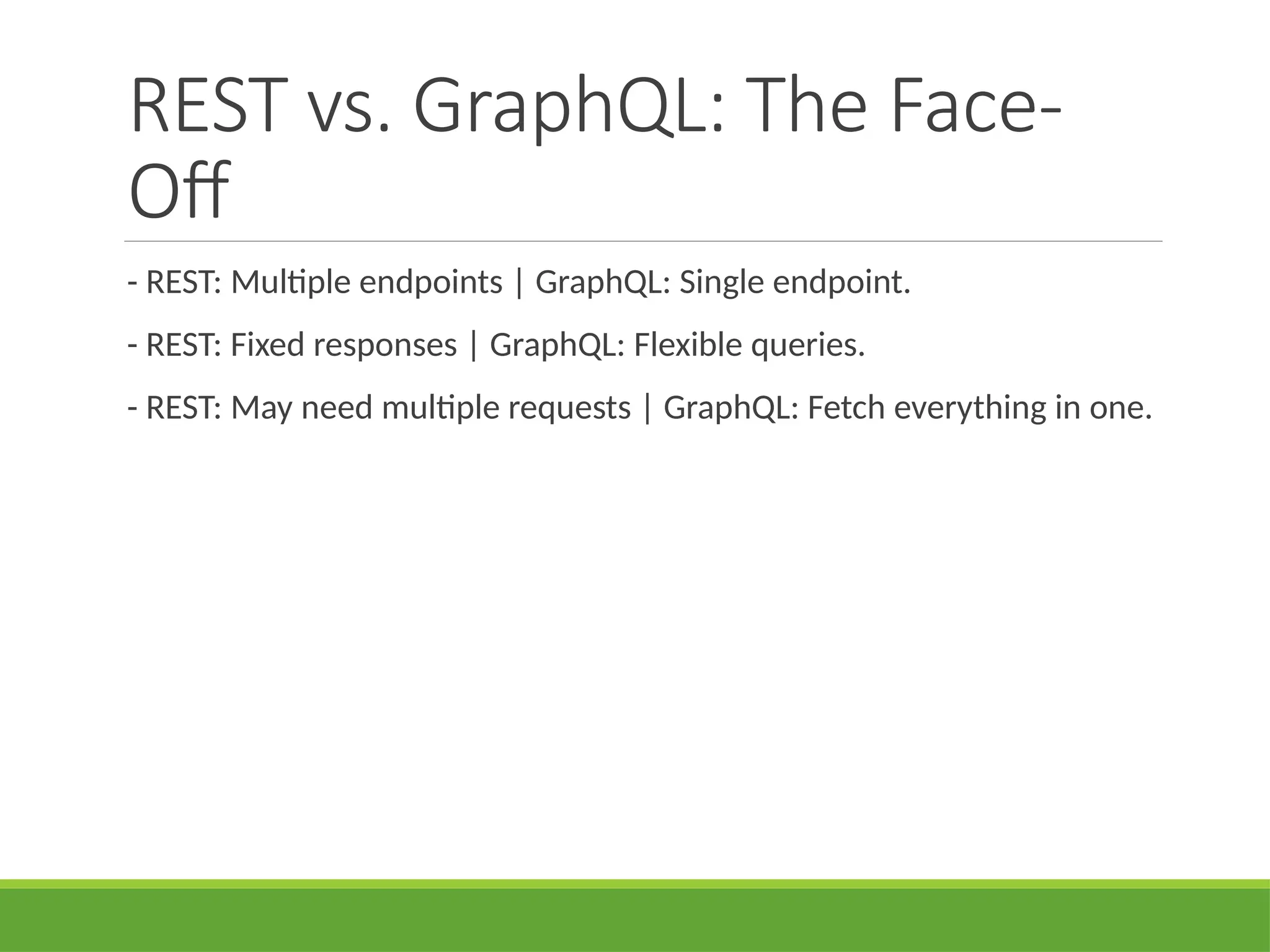
REST vs. GraphQL:The Face-
Off
- REST: Multiple endpoints | GraphQL: Single endpoint.
- REST: Fixed responses | GraphQL: Flexible queries.
- REST: May need multiple requests | GraphQL: Fetch everything in one.
10.
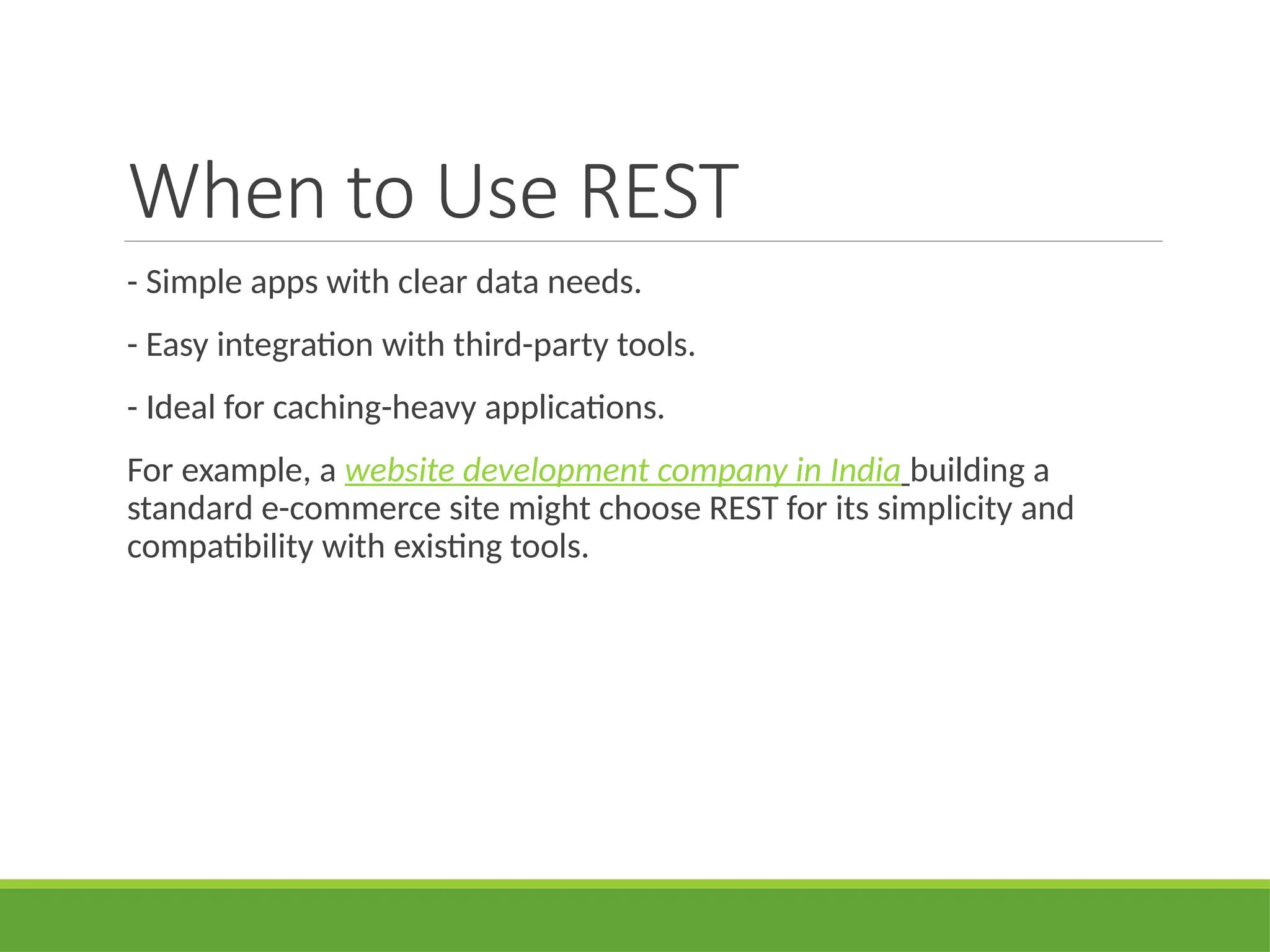
When to UseREST
- Simple apps with clear data needs.
- Easy integration with third-party tools.
- Ideal for caching-heavy applications.
For example, a website development company in India building a
standard e-commerce site might choose REST for its simplicity and
compatibility with existing tools.
11.
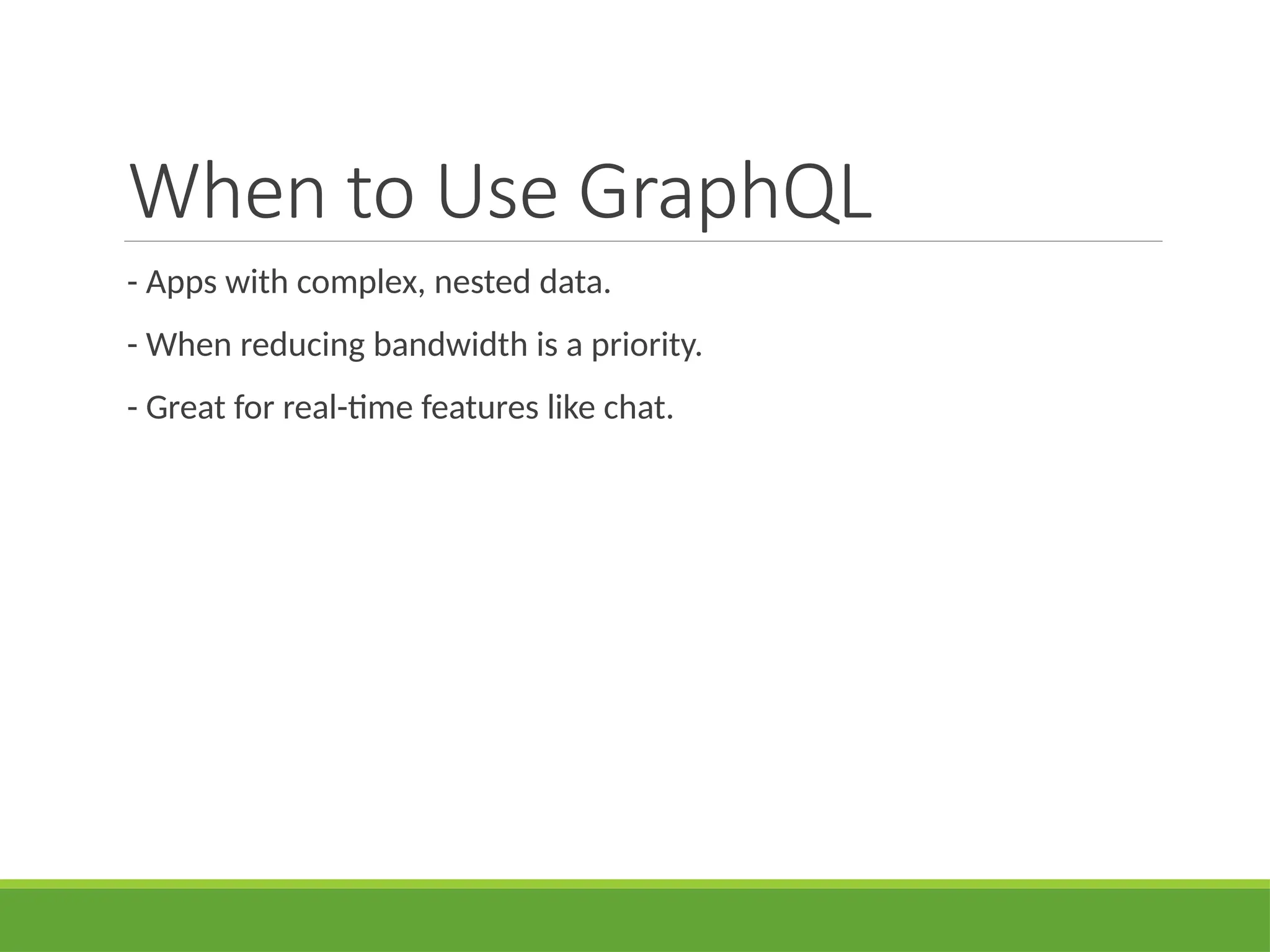
When to UseGraphQL
- Apps with complex, nested data.
- When reducing bandwidth is a priority.
- Great for real-time features like chat.
12.
Conclusion
- REST isgreat for simplicity and speed.
- GraphQL is ideal for flexibility and efficiency.
- Some projects even use both for different needs.