Responsibility Aspects in Service engineering
for e-Government
Christophe Feltus
Abdelaziz Khadraoui
Anastasiya Yurchyshyna
Michel Léonard
Eric Dubois
Outline
1. Trends and challenges in services engineering for e-Government
2. Towards integrating the responsibility dimension
 Service and its dimensions
 Ontological layer
 Organisational layer
 Informational layer
 Technical layer
 Responsibility dimension
3. Conclusions and perspectives
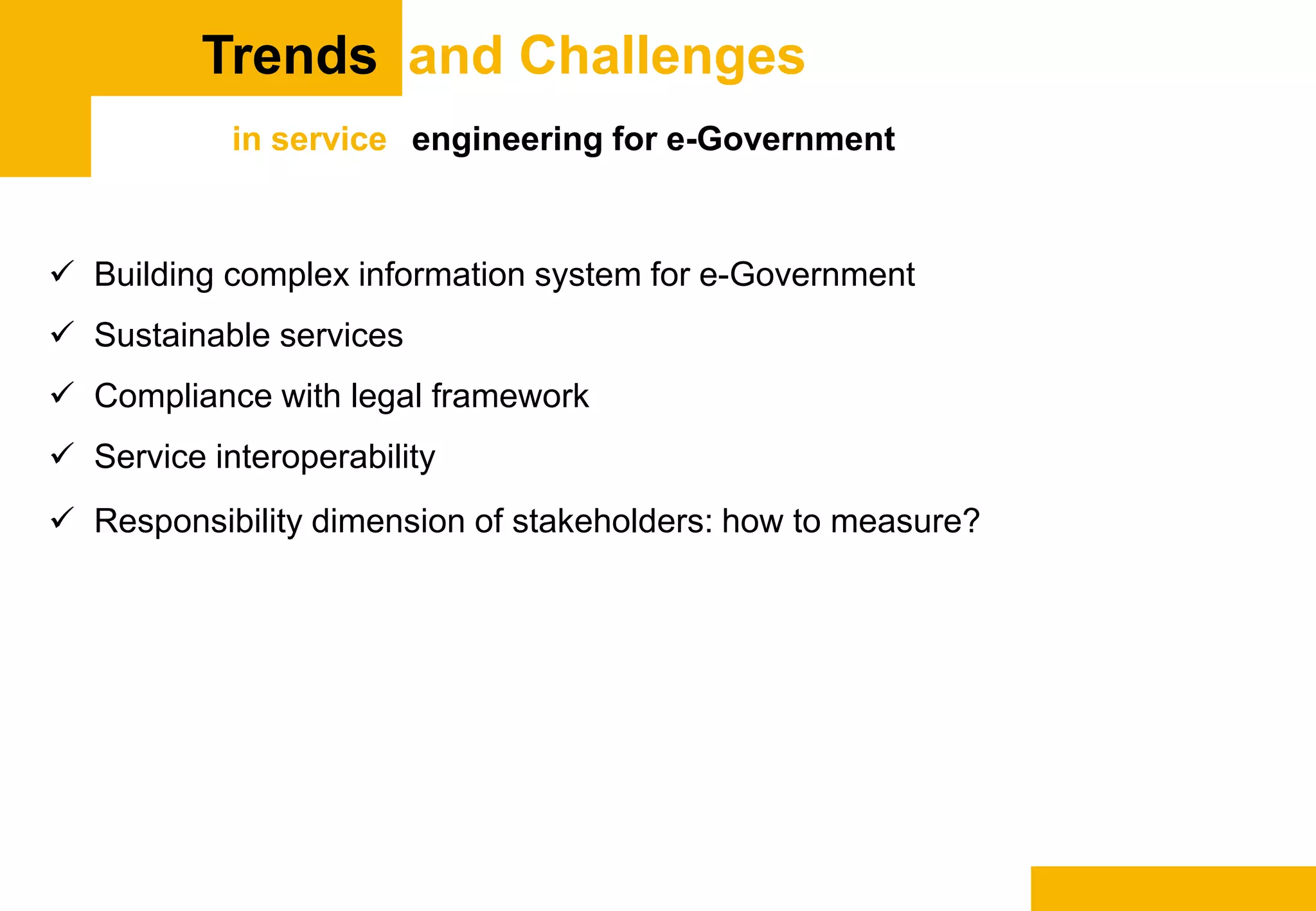
 Building complex information system for e-Government
 Sustainable services
 Compliance with legal framework
 Service interoperability
 Responsibility dimension of stakeholders: how to measure?
Trends and Challenges
in service engineering for e-Government
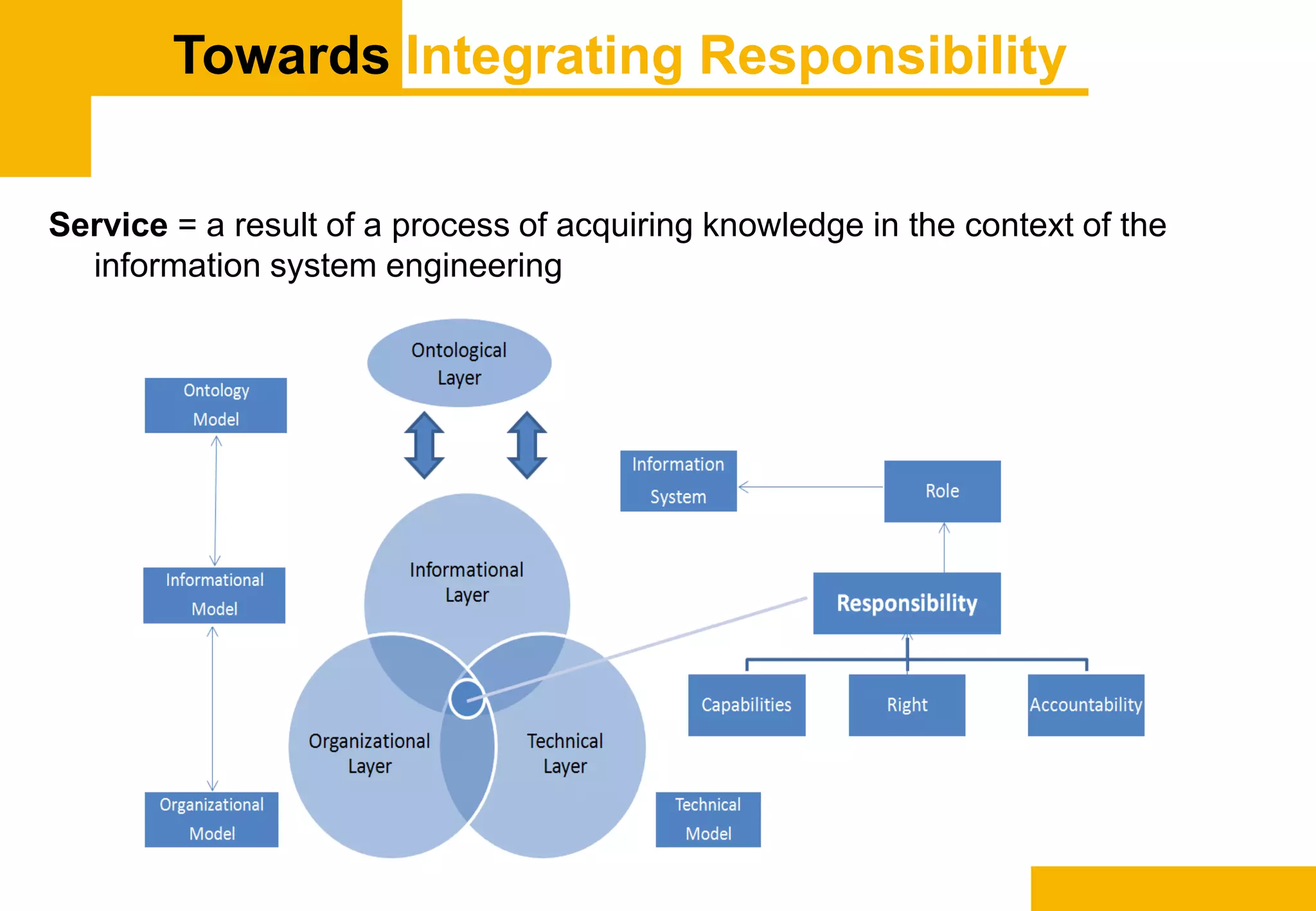
Towards Integrating Responsibility
Service = a result of a process of acquiring knowledge in the context of the
information system engineering
Towards Integrating Responsibility
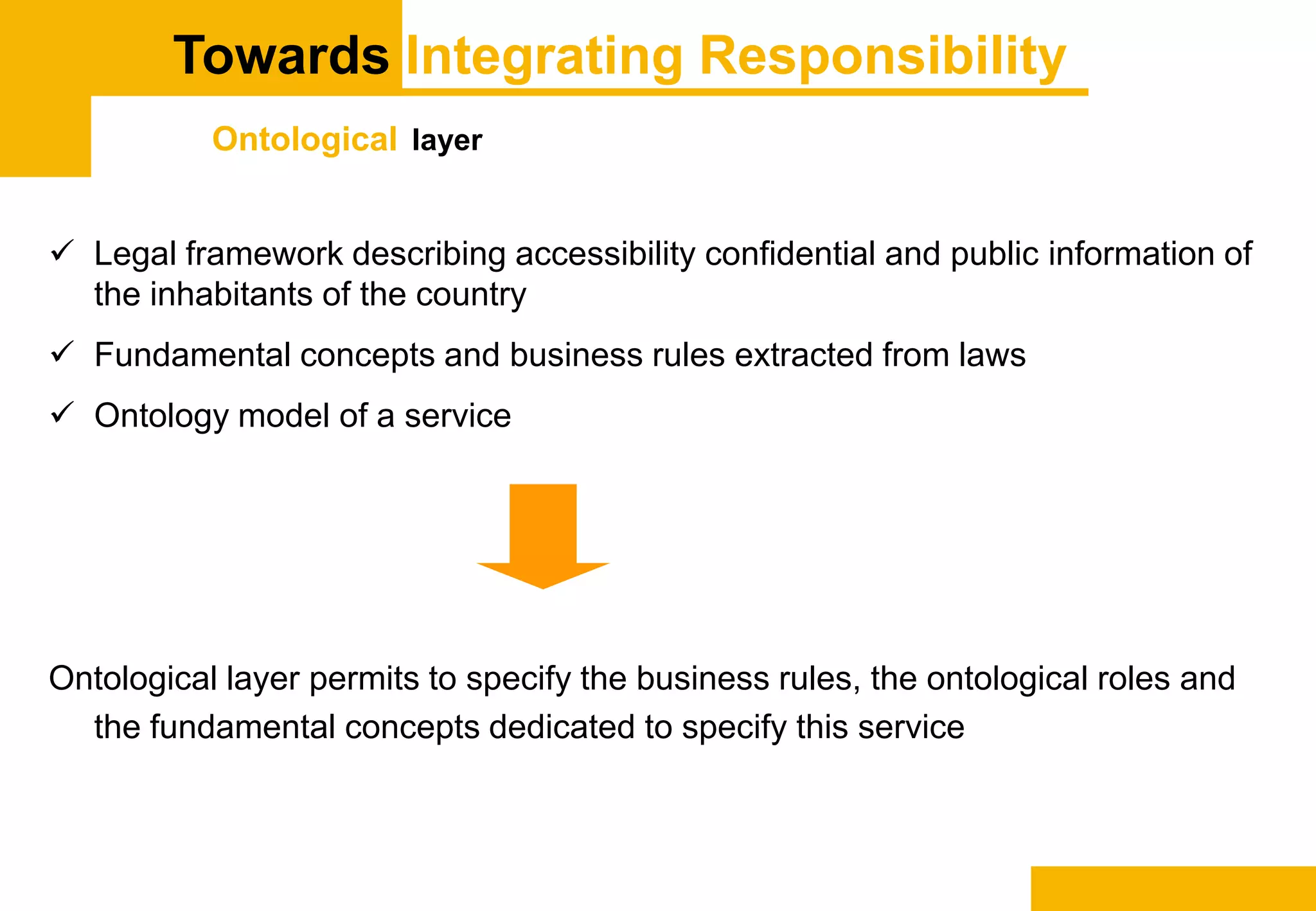
Ontological layer
 Legal framework describing accessibility confidential and public information of
the inhabitants of the country
 Fundamental concepts and business rules extracted from laws
 Ontology model of a service
Ontological layer permits to specify the business rules, the ontological roles and
the fundamental concepts dedicated to specify this service
Towards Integrating Responsibility
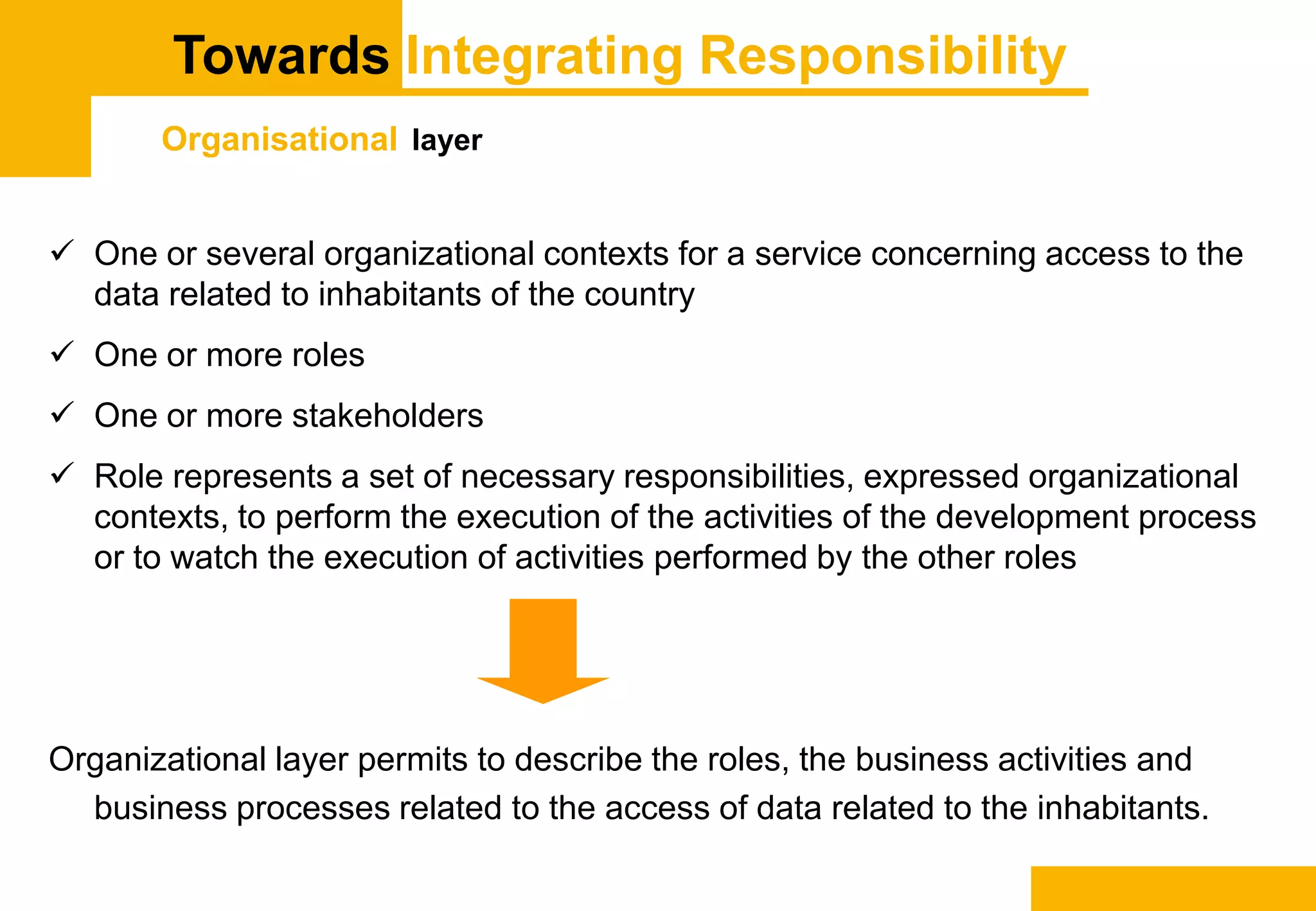
Organisational layer
 One or several organizational contexts for a service concerning access to the
data related to inhabitants of the country
 One or more roles
 One or more stakeholders
 Role represents a set of necessary responsibilities, expressed organizational
contexts, to perform the execution of the activities of the development process
or to watch the execution of activities performed by the other roles
Organizational layer permits to describe the roles, the business activities and
business processes related to the access of data related to the inhabitants.
Towards Integrating Responsibility
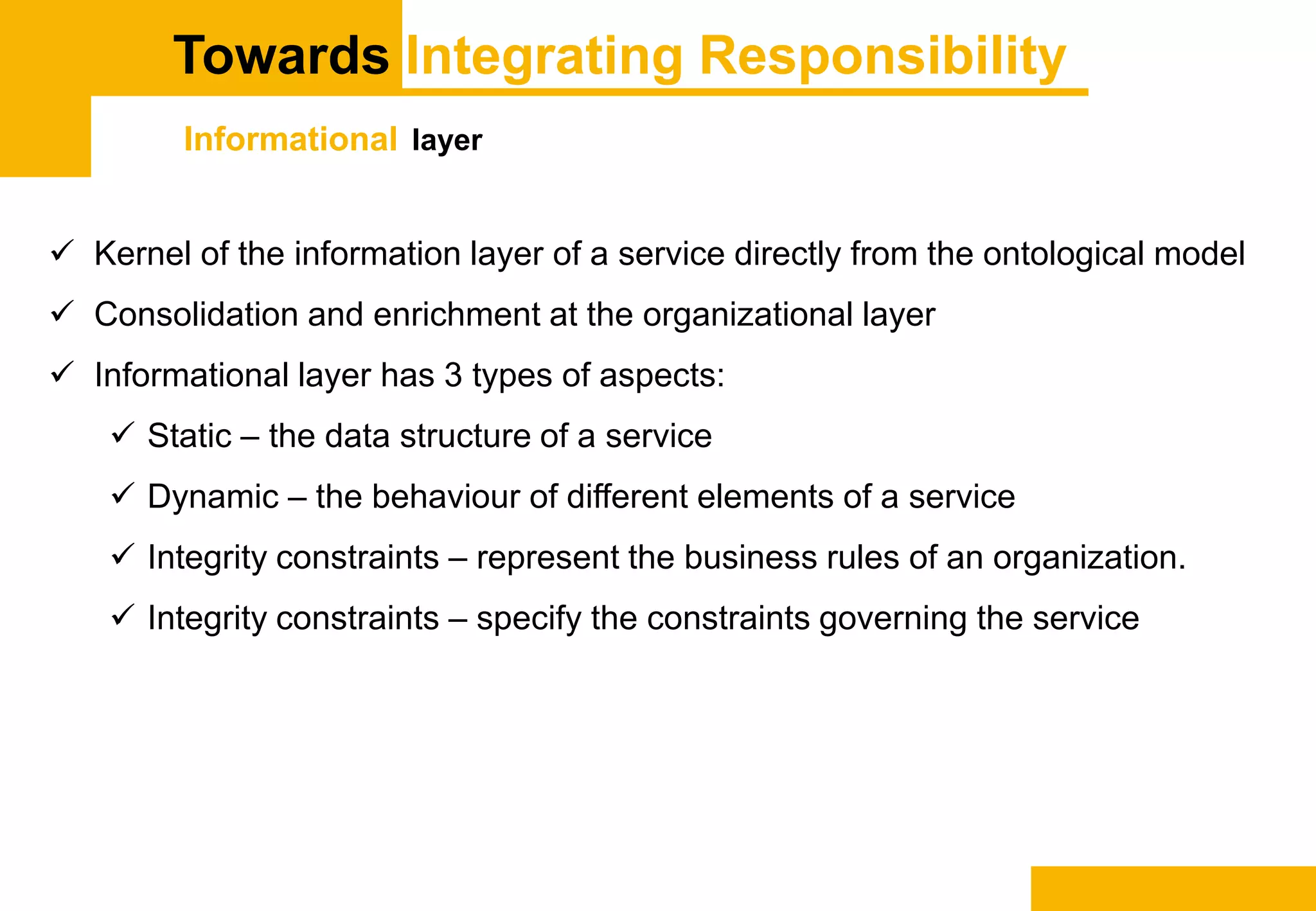
Informational layer
 Kernel of the information layer of a service directly from the ontological model
 Consolidation and enrichment at the organizational layer
 Informational layer has 3 types of aspects:
 Static – the data structure of a service
 Dynamic – the behaviour of different elements of a service
 Integrity constraints – represent the business rules of an organization.
 Integrity constraints – specify the constraints governing the service
Towards Integrating Responsibility
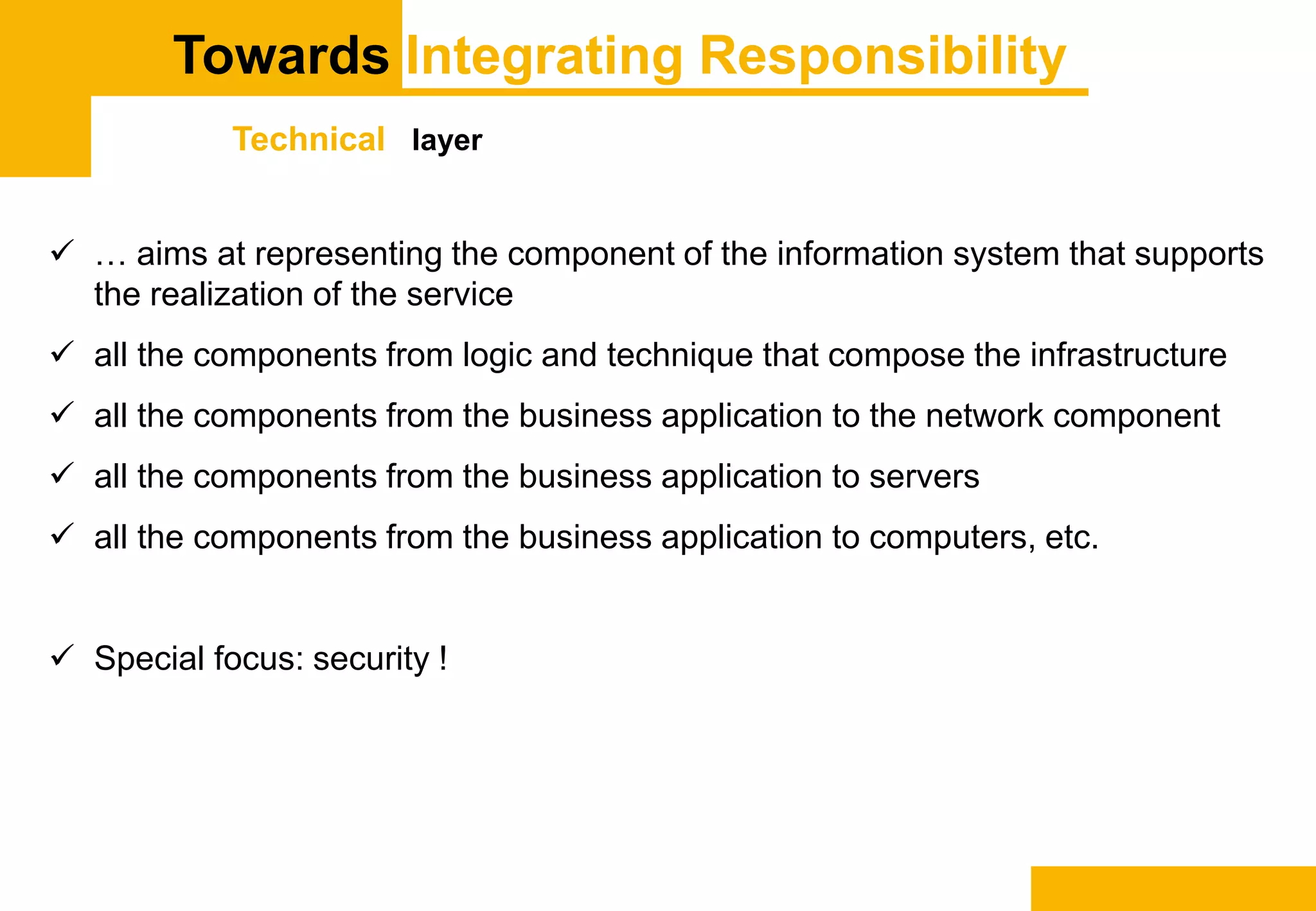
Technical layer
 … aims at representing the component of the information system that supports
the realization of the service
 all the components from logic and technique that compose the infrastructure
 all the components from the business application to the network component
 all the components from the business application to servers
 all the components from the business application to computers, etc.
 Special focus: security !
Towards Integrating Responsibility
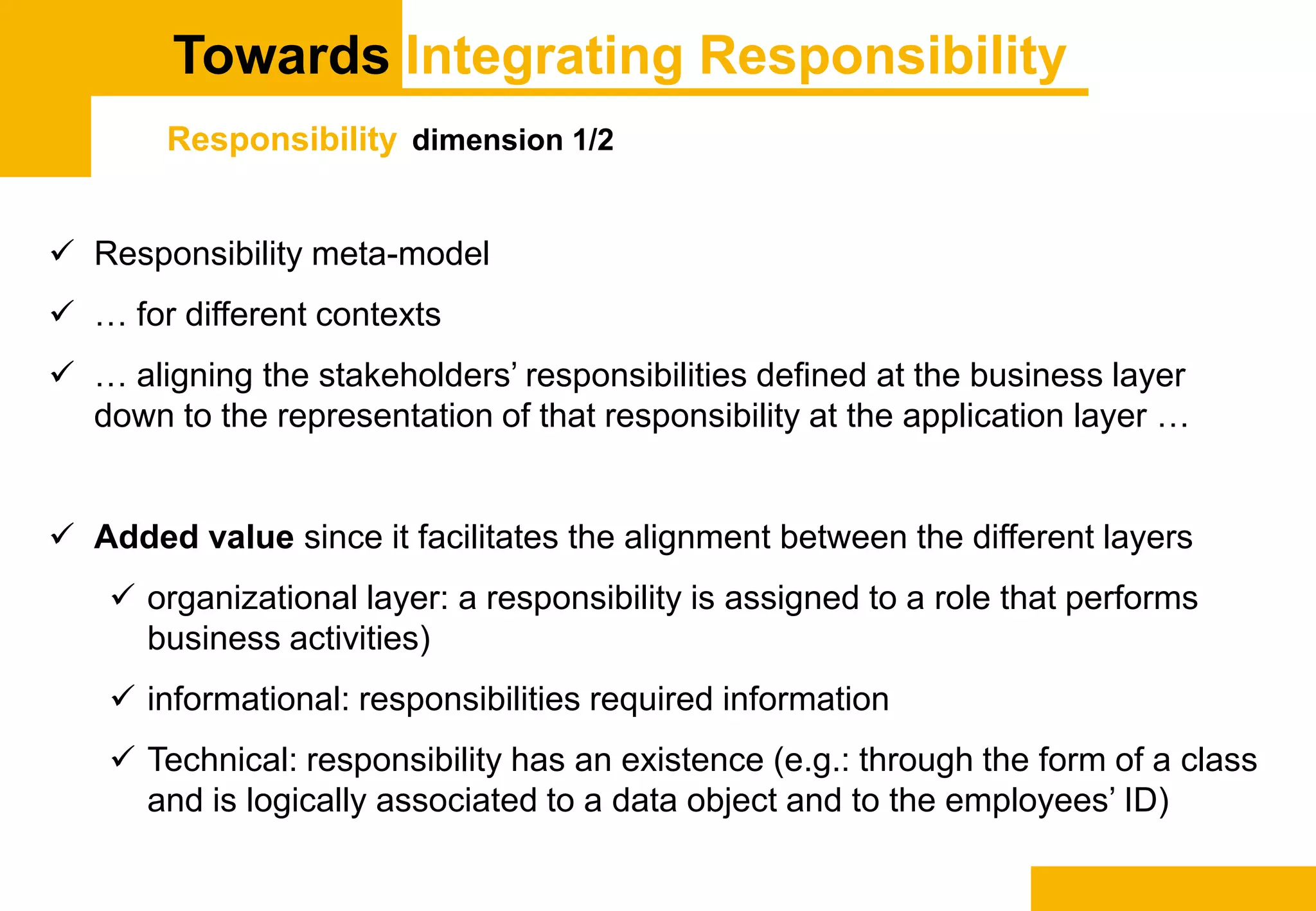
Responsibility dimension 1/2
 Responsibility meta-model
 … for different contexts
 … aligning the stakeholders’ responsibilities defined at the business layer
down to the representation of that responsibility at the application layer …
 Added value since it facilitates the alignment between the different layers
 organizational layer: a responsibility is assigned to a role that performs
business activities)
 informational: responsibilities required information
 Technical: responsibility has an existence (e.g.: through the form of a class
and is logically associated to a data object and to the employees’ ID)
Towards Integrating Responsibility
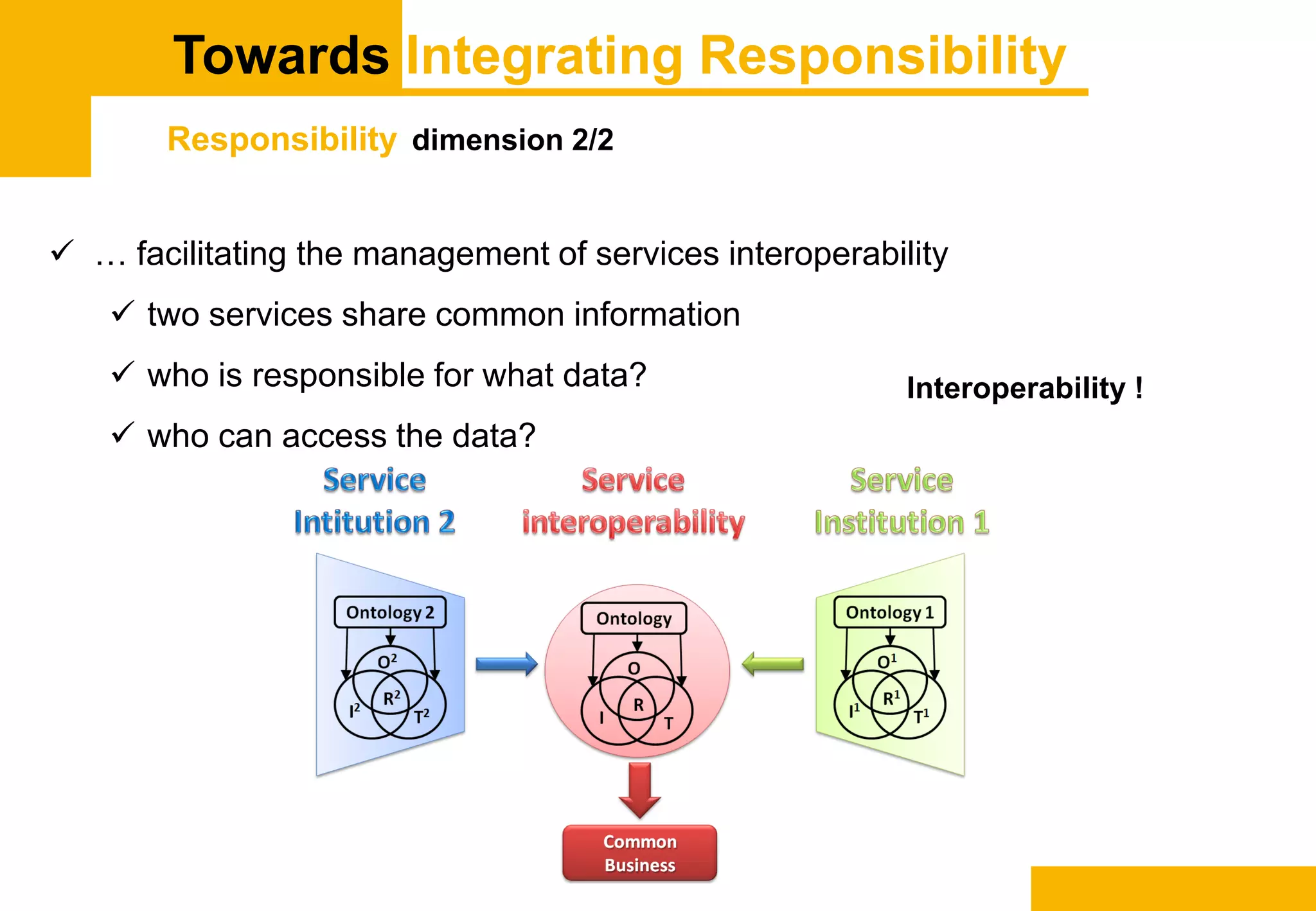
Responsibility dimension 2/2
 … facilitating the management of services interoperability
 two services share common information
 who is responsible for what data?
 who can access the data?
Interoperability !
Conclusions and Perspectives
 Service orientation => new crucial issues and challenges
 Our approach:
 guarantees service compliance
 facilitates the alignment between the different layers of a service
 enhances the management of services interoperability
Perspectives and ongoing works:
 ongoing work: formalization to specify product and process parts
 ongoing work: validation of the approach for managing risks in financial domain
 perspectives: case study in the frame of the management of operational risk in
the financial sector (e.g. Basel II and III and Sarbanes-Oxley Act)
Thank you for your attention!
Anastasiya.Yurchyshyna@unige.ch
Thank you for your attention!

Responsibility aspects in service engineering for e government

  • 1.
    Responsibility Aspects inService engineering for e-Government Christophe Feltus Abdelaziz Khadraoui Anastasiya Yurchyshyna Michel Léonard Eric Dubois
  • 2.
    Outline 1. Trends andchallenges in services engineering for e-Government 2. Towards integrating the responsibility dimension  Service and its dimensions  Ontological layer  Organisational layer  Informational layer  Technical layer  Responsibility dimension 3. Conclusions and perspectives
  • 3.
     Building complexinformation system for e-Government  Sustainable services  Compliance with legal framework  Service interoperability  Responsibility dimension of stakeholders: how to measure? Trends and Challenges in service engineering for e-Government
  • 4.
    Towards Integrating Responsibility Service= a result of a process of acquiring knowledge in the context of the information system engineering
  • 5.
    Towards Integrating Responsibility Ontologicallayer  Legal framework describing accessibility confidential and public information of the inhabitants of the country  Fundamental concepts and business rules extracted from laws  Ontology model of a service Ontological layer permits to specify the business rules, the ontological roles and the fundamental concepts dedicated to specify this service
  • 6.
    Towards Integrating Responsibility Organisationallayer  One or several organizational contexts for a service concerning access to the data related to inhabitants of the country  One or more roles  One or more stakeholders  Role represents a set of necessary responsibilities, expressed organizational contexts, to perform the execution of the activities of the development process or to watch the execution of activities performed by the other roles Organizational layer permits to describe the roles, the business activities and business processes related to the access of data related to the inhabitants.
  • 7.
    Towards Integrating Responsibility Informationallayer  Kernel of the information layer of a service directly from the ontological model  Consolidation and enrichment at the organizational layer  Informational layer has 3 types of aspects:  Static – the data structure of a service  Dynamic – the behaviour of different elements of a service  Integrity constraints – represent the business rules of an organization.  Integrity constraints – specify the constraints governing the service
  • 8.
    Towards Integrating Responsibility Technicallayer  … aims at representing the component of the information system that supports the realization of the service  all the components from logic and technique that compose the infrastructure  all the components from the business application to the network component  all the components from the business application to servers  all the components from the business application to computers, etc.  Special focus: security !
  • 9.
    Towards Integrating Responsibility Responsibilitydimension 1/2  Responsibility meta-model  … for different contexts  … aligning the stakeholders’ responsibilities defined at the business layer down to the representation of that responsibility at the application layer …  Added value since it facilitates the alignment between the different layers  organizational layer: a responsibility is assigned to a role that performs business activities)  informational: responsibilities required information  Technical: responsibility has an existence (e.g.: through the form of a class and is logically associated to a data object and to the employees’ ID)
  • 10.
    Towards Integrating Responsibility Responsibilitydimension 2/2  … facilitating the management of services interoperability  two services share common information  who is responsible for what data?  who can access the data? Interoperability !
  • 11.
    Conclusions and Perspectives Service orientation => new crucial issues and challenges  Our approach:  guarantees service compliance  facilitates the alignment between the different layers of a service  enhances the management of services interoperability Perspectives and ongoing works:  ongoing work: formalization to specify product and process parts  ongoing work: validation of the approach for managing risks in financial domain  perspectives: case study in the frame of the management of operational risk in the financial sector (e.g. Basel II and III and Sarbanes-Oxley Act)
  • 12.
    Thank you foryour attention! Anastasiya.Yurchyshyna@unige.ch Thank you for your attention!