Response: Research for influence Heloise Emdon 18 June 2007 Cape Town Book Fair Information for Change
International Development Reseach Centre Origins Pearson Report ‘Partners in Development‘ (1969): Gap in Scientific and technological capacities between North and South IDRC Act (1970) Philosophy Hopper-Pearson Debate at the first Board meeting: support to researchers in developing countries vs. support to Canadian researchers  Responsive yet proactive
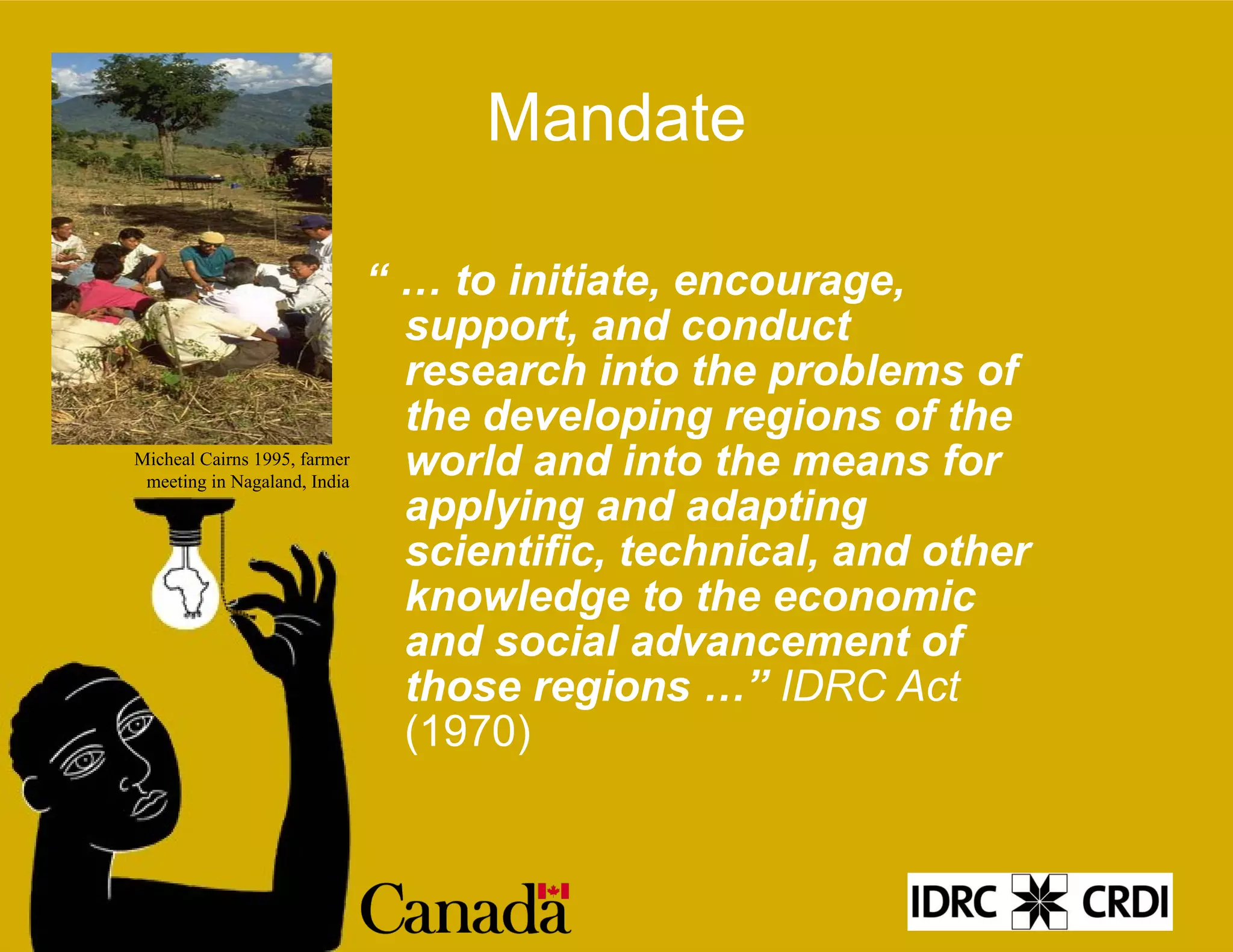
Mandate “ …  to initiate, encourage, support, and conduct research into the problems of the developing regions of the world and into the means for applying and adapting scientific, technical, and other knowledge to the economic and social advancement of those regions …”  IDRC Act  (1970) Micheal Cairns 1995, farmer meeting in Nagaland, India
Seeking out social innovators Venture Capitalists of Ideas for development Seeking social innovators in the field of Environment, Economy, ICTs and Innovation
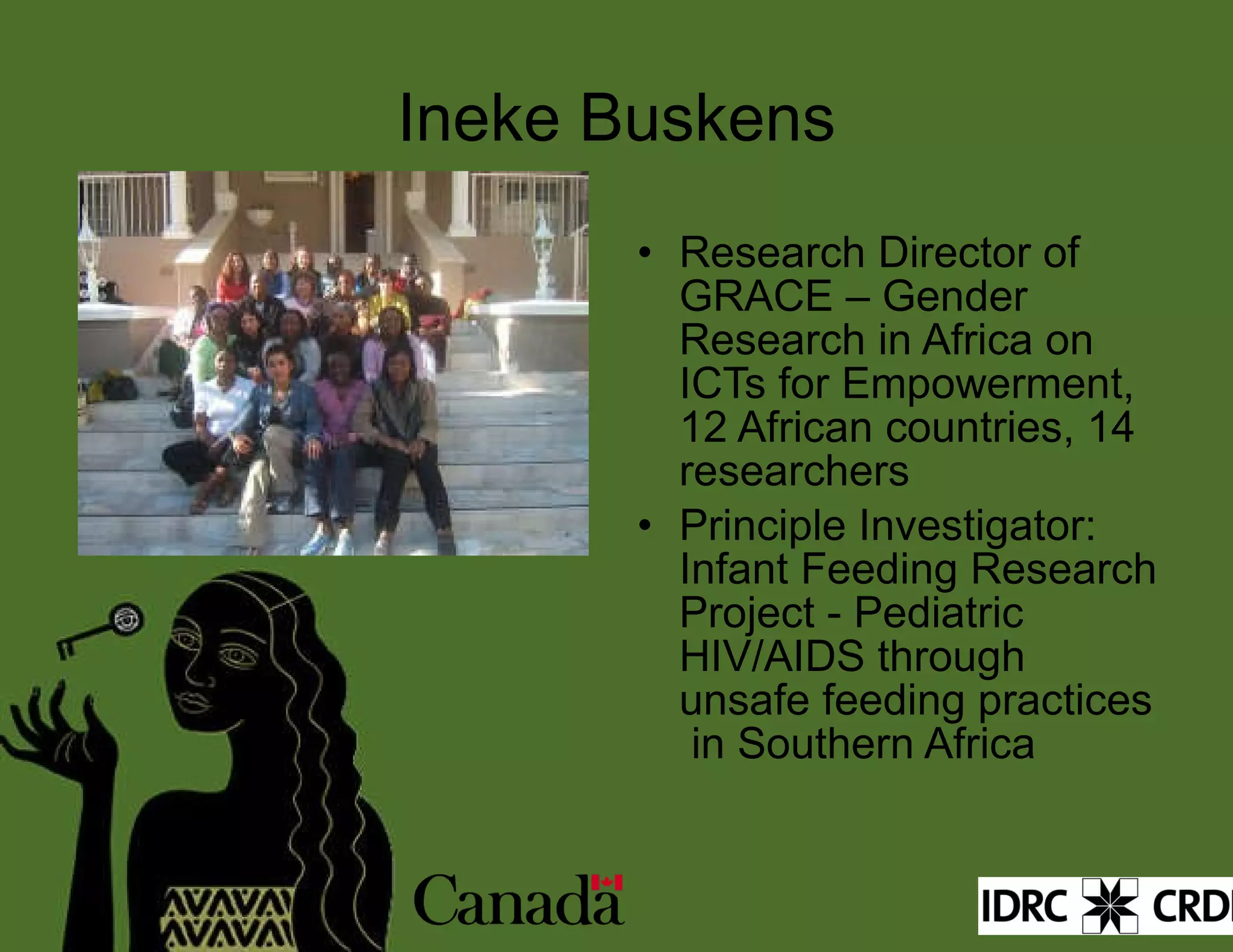
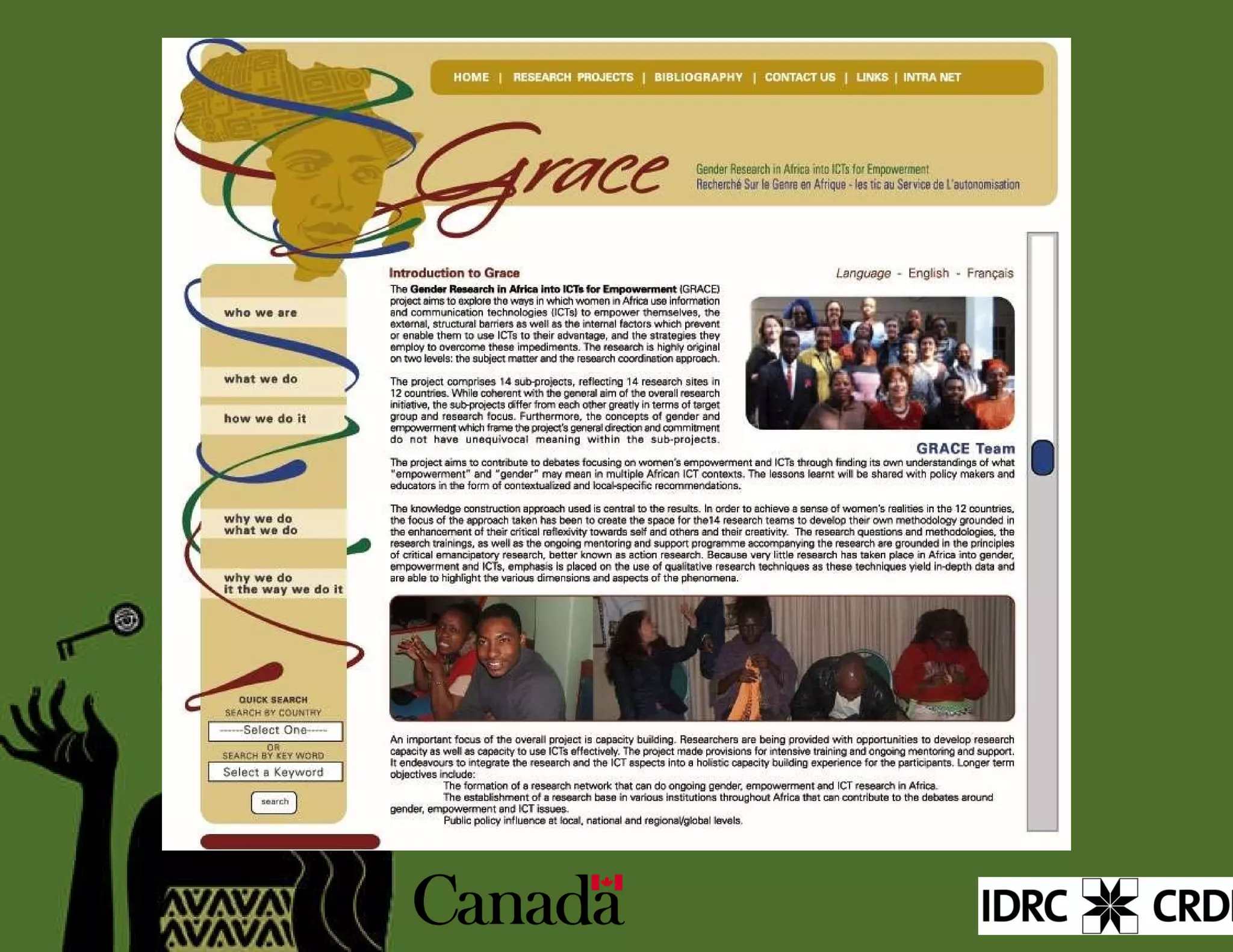
Ineke Buskens Research Director of GRACE – Gender Research in Africa on ICTs for Empowerment, 12 African countries, 14 researchers Principle Investigator: Infant Feeding Research Project - Pediatric HIV/AIDS through unsafe feeding practices  in Southern Africa
 
What she said: Research – being human, constructing meaning Paradigms of research – whether, what, how Researcher – you, changed by the research, how Reflective change: Critical awareness, confidence, coherence, connection Quality of research Use of research: information for knowledge and change
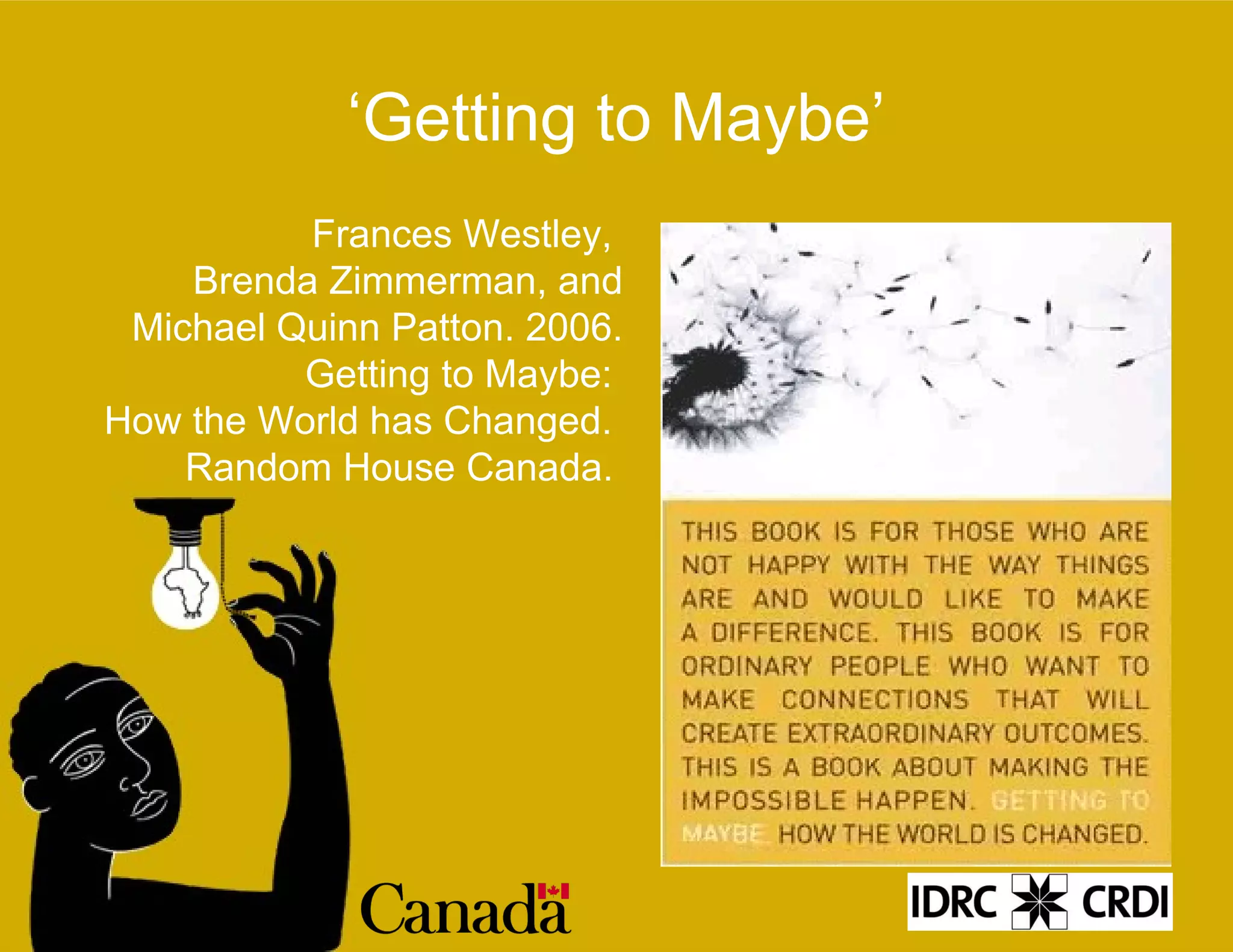
‘ Getting to Maybe’ Frances Westley,  Brenda Zimmerman, and Michael Quinn Patton. 2006. Getting to Maybe:  How the World has Changed.  Random House Canada.
‘ Dagu is life’ Afaris, nomadic Ethiopian tribe survived harsh environmental conditions, believe it is a sacred responsibility to listen and share  dagu  – information – more than pure data On meeting other Afari families they will sit down, talk, listen for hours The exchange of dagu trumps all other responsibilities, the collectively make sense of pattern To survive Afaris need all members to be sensitive and aware of emerging patterns – natural and social Severe punishments for failing to share  dagu  or misrepresenting, p133-4
Social change -- guide to the journey Intentionality and complexity Intent: deliberate commitment to act Complexity science: unpredictability irrespective of intent To what extent and in what ways can we be deliberate and intentional about those things that seem to emegere without our control, without our intention?” core theme of book Questions are key Tensions revealed and amplified Relationships key to understanding and engaging with complex dynamics of social innovation Mindset crucial – framed inquiry not certititude, embracing paradoxes and tolerate multiple perspectives
Drivers of social innovators Poverty, hunger, HIV/AIDS, abuse, crime, homicide, disability CHBs (concerned human beings) Liberation theologists, Bob Geldoff, Mohammed Yunnus, Brazilians, hosts of voluntary organisations, NGOs Getting to Maybe: Commitment, call, passion to change the impossible Stand still: reflection, self knowledge, the call, asking the right questions Powerful stranger: opposition, systems, regulations, policies Letting the flow find you: the tipping point, emergence, intentionality, knowing patterns, recognizing flow, dagu Cold Heaven: when is change success? When hope and history rhyme The doors open
Craft of social innovation Pattern recognition – recognise it when it finds you Strategic big picture thinking – where you are in the greater scheme of things Knowing how to interpret information and convert it to knowledge you can use to move forward Living with paradoxes: great vision vs staring reality in the face
Developmental Evaluation Do it! Grounded in complexity, systems understanding Beyond the personal Outcome Mapping
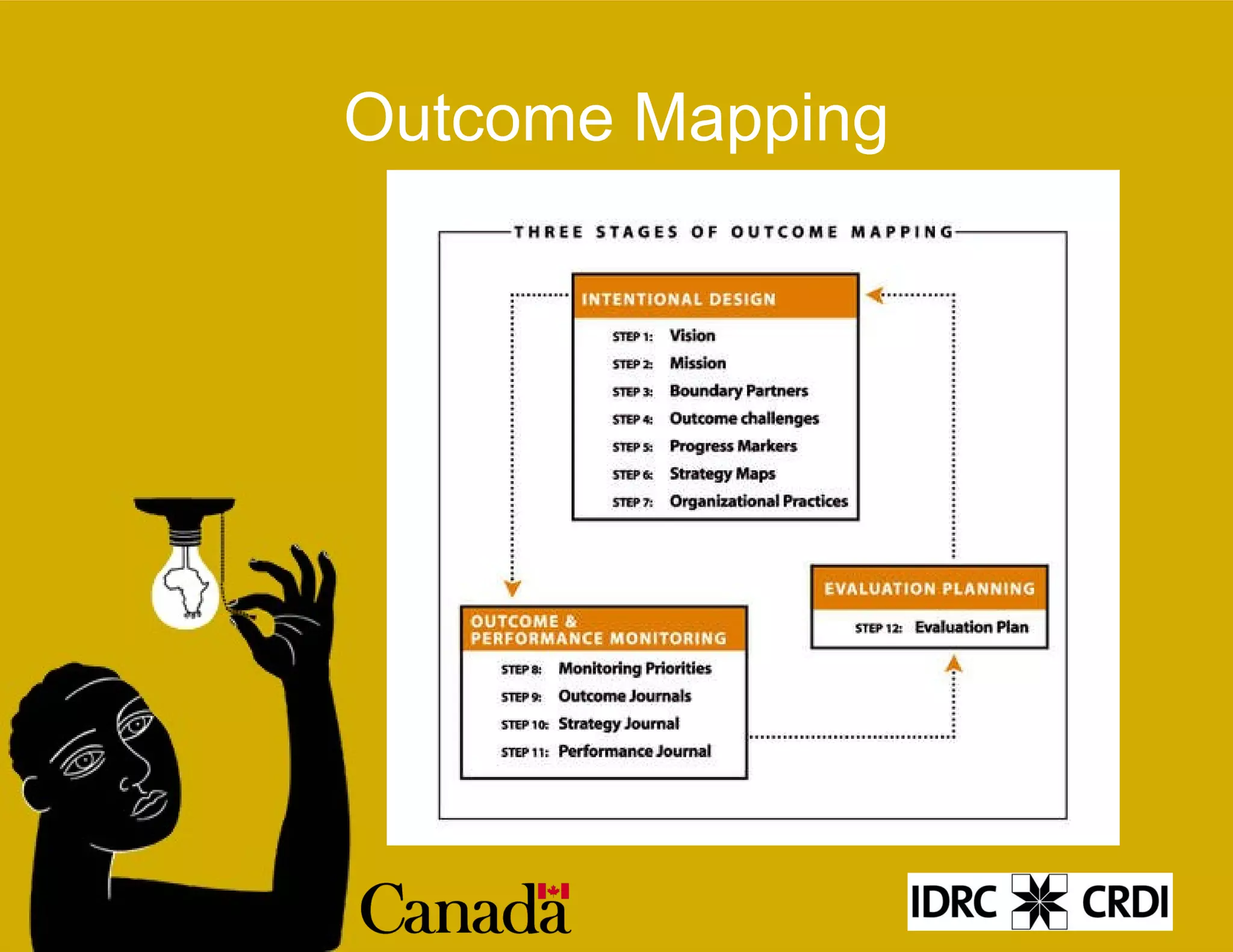
Outcome Mapping
When research knowledge change lives? ART and electronic medical records Free and open source software for universities, EMR and hospitals, microcredit Bandwidth for universities in Africa Telecoms policies to ensure services for all in Africa Shoestring networks in poor and remote communities
In short…. Working with research partners who are social innovators Have a mindset to change the world Intention and complexity Learn, evaluate, big picture Know who they are in grander scheme of things Strategic use of outcomes Publish, disseminate Research for influence Research for change
Discussion Discussion Thank you [email_address]

Response: Research for influence

  • 1.
    Response: Research forinfluence Heloise Emdon 18 June 2007 Cape Town Book Fair Information for Change
  • 2.
    International Development ReseachCentre Origins Pearson Report ‘Partners in Development‘ (1969): Gap in Scientific and technological capacities between North and South IDRC Act (1970) Philosophy Hopper-Pearson Debate at the first Board meeting: support to researchers in developing countries vs. support to Canadian researchers Responsive yet proactive
  • 3.
    Mandate “ … to initiate, encourage, support, and conduct research into the problems of the developing regions of the world and into the means for applying and adapting scientific, technical, and other knowledge to the economic and social advancement of those regions …” IDRC Act (1970) Micheal Cairns 1995, farmer meeting in Nagaland, India
  • 4.
    Seeking out socialinnovators Venture Capitalists of Ideas for development Seeking social innovators in the field of Environment, Economy, ICTs and Innovation
  • 5.
    Ineke Buskens ResearchDirector of GRACE – Gender Research in Africa on ICTs for Empowerment, 12 African countries, 14 researchers Principle Investigator: Infant Feeding Research Project - Pediatric HIV/AIDS through unsafe feeding practices in Southern Africa
  • 6.
  • 7.
    What she said:Research – being human, constructing meaning Paradigms of research – whether, what, how Researcher – you, changed by the research, how Reflective change: Critical awareness, confidence, coherence, connection Quality of research Use of research: information for knowledge and change
  • 8.
    ‘ Getting toMaybe’ Frances Westley, Brenda Zimmerman, and Michael Quinn Patton. 2006. Getting to Maybe: How the World has Changed. Random House Canada.
  • 9.
    ‘ Dagu islife’ Afaris, nomadic Ethiopian tribe survived harsh environmental conditions, believe it is a sacred responsibility to listen and share dagu – information – more than pure data On meeting other Afari families they will sit down, talk, listen for hours The exchange of dagu trumps all other responsibilities, the collectively make sense of pattern To survive Afaris need all members to be sensitive and aware of emerging patterns – natural and social Severe punishments for failing to share dagu or misrepresenting, p133-4
  • 10.
    Social change --guide to the journey Intentionality and complexity Intent: deliberate commitment to act Complexity science: unpredictability irrespective of intent To what extent and in what ways can we be deliberate and intentional about those things that seem to emegere without our control, without our intention?” core theme of book Questions are key Tensions revealed and amplified Relationships key to understanding and engaging with complex dynamics of social innovation Mindset crucial – framed inquiry not certititude, embracing paradoxes and tolerate multiple perspectives
  • 11.
    Drivers of socialinnovators Poverty, hunger, HIV/AIDS, abuse, crime, homicide, disability CHBs (concerned human beings) Liberation theologists, Bob Geldoff, Mohammed Yunnus, Brazilians, hosts of voluntary organisations, NGOs Getting to Maybe: Commitment, call, passion to change the impossible Stand still: reflection, self knowledge, the call, asking the right questions Powerful stranger: opposition, systems, regulations, policies Letting the flow find you: the tipping point, emergence, intentionality, knowing patterns, recognizing flow, dagu Cold Heaven: when is change success? When hope and history rhyme The doors open
  • 12.
    Craft of socialinnovation Pattern recognition – recognise it when it finds you Strategic big picture thinking – where you are in the greater scheme of things Knowing how to interpret information and convert it to knowledge you can use to move forward Living with paradoxes: great vision vs staring reality in the face
  • 13.
    Developmental Evaluation Doit! Grounded in complexity, systems understanding Beyond the personal Outcome Mapping
  • 14.
  • 15.
    When research knowledgechange lives? ART and electronic medical records Free and open source software for universities, EMR and hospitals, microcredit Bandwidth for universities in Africa Telecoms policies to ensure services for all in Africa Shoestring networks in poor and remote communities
  • 16.
    In short…. Workingwith research partners who are social innovators Have a mindset to change the world Intention and complexity Learn, evaluate, big picture Know who they are in grander scheme of things Strategic use of outcomes Publish, disseminate Research for influence Research for change
  • 17.
    Discussion Discussion Thankyou [email_address]