Why people resist change &
how we can overcome it.
Light Spark Group
Lucy Grimwade
Presented by :
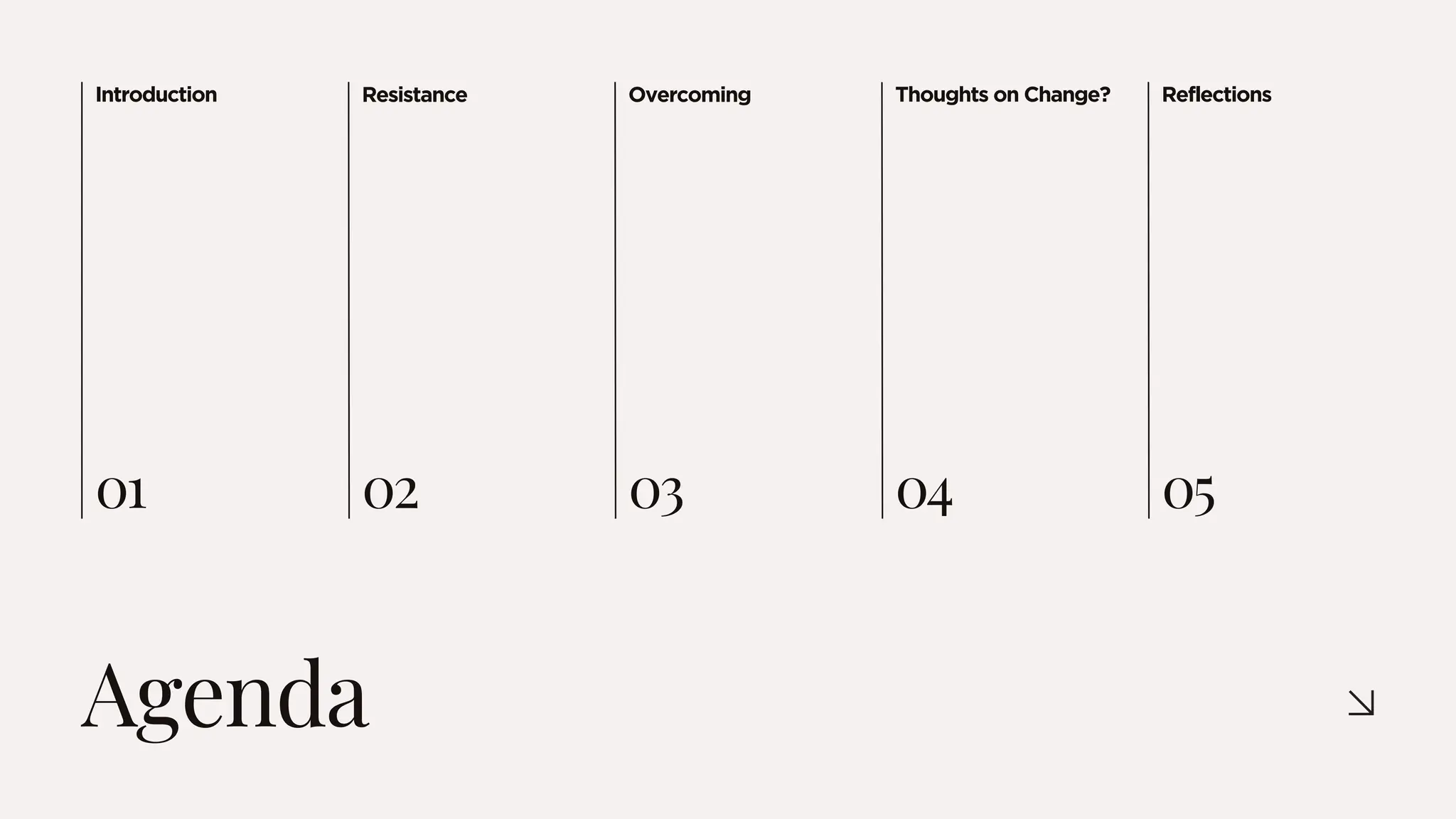
Agenda
01
Introduction
02
Resistance
03
Overcoming
04
Thoughts on Change?
05
Reflections
Hi, I’m Lucy - a change
strategist, coach, and
storyteller with a deep
fascination for how we
navigate the unknown.
I’ve spent years guiding people and businesses through change. First by figuring
it out for myself, then by helping others do the same. And if there’s one thing I
know for sure, it’s this: change doesn’t have to feel like stepping into the unknown
without a map.
Introduction
Light Spark Group
Strategic & People-Centred
Change Consultancy
70% of change
initiatives fail because
of employee resistance
and lack of support.
Resistance to change is natural, but it can be managed. Today, we’re going to
explore why people resist change at work and how we can move through it with
confidence.
Introduction
Why people resist change
People feel comfortable with what they know.
Change creates uncertainty about roles, expectations, and
Fear of the
unknown
Change can feel imposed rather than chosen.
Employees may feel their voices aren’t heard.
Loss of
control
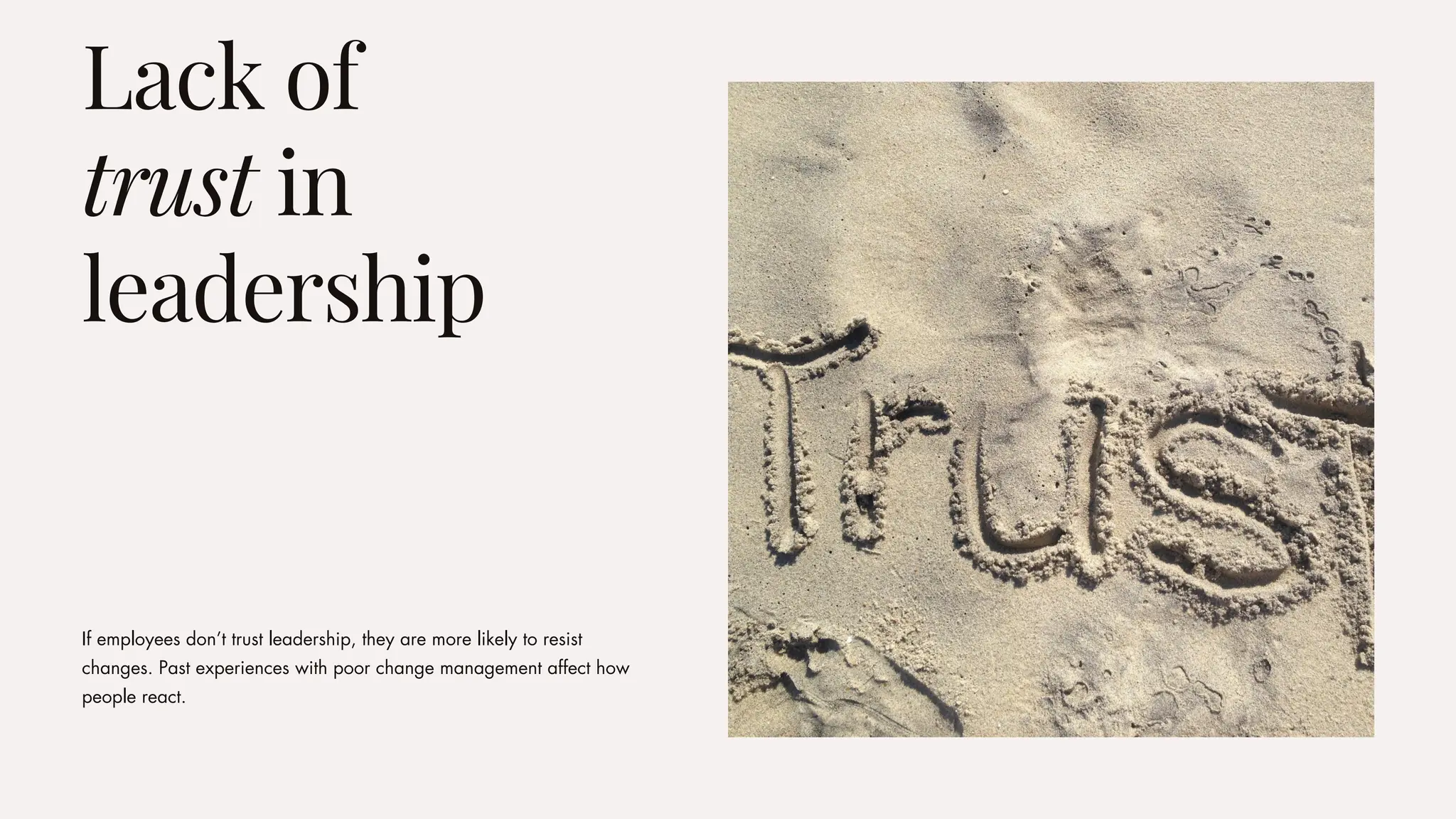
If employees don’t trust leadership, they are more likely to resist
changes. Past experiences with poor change management affect how
people react.
Lack of
trust in
leadership
The human brain prefers routines. Change requires rewiring habits,
which takes effort and stepping outside of the comfort zone.
Habit and
Comfort
Zones
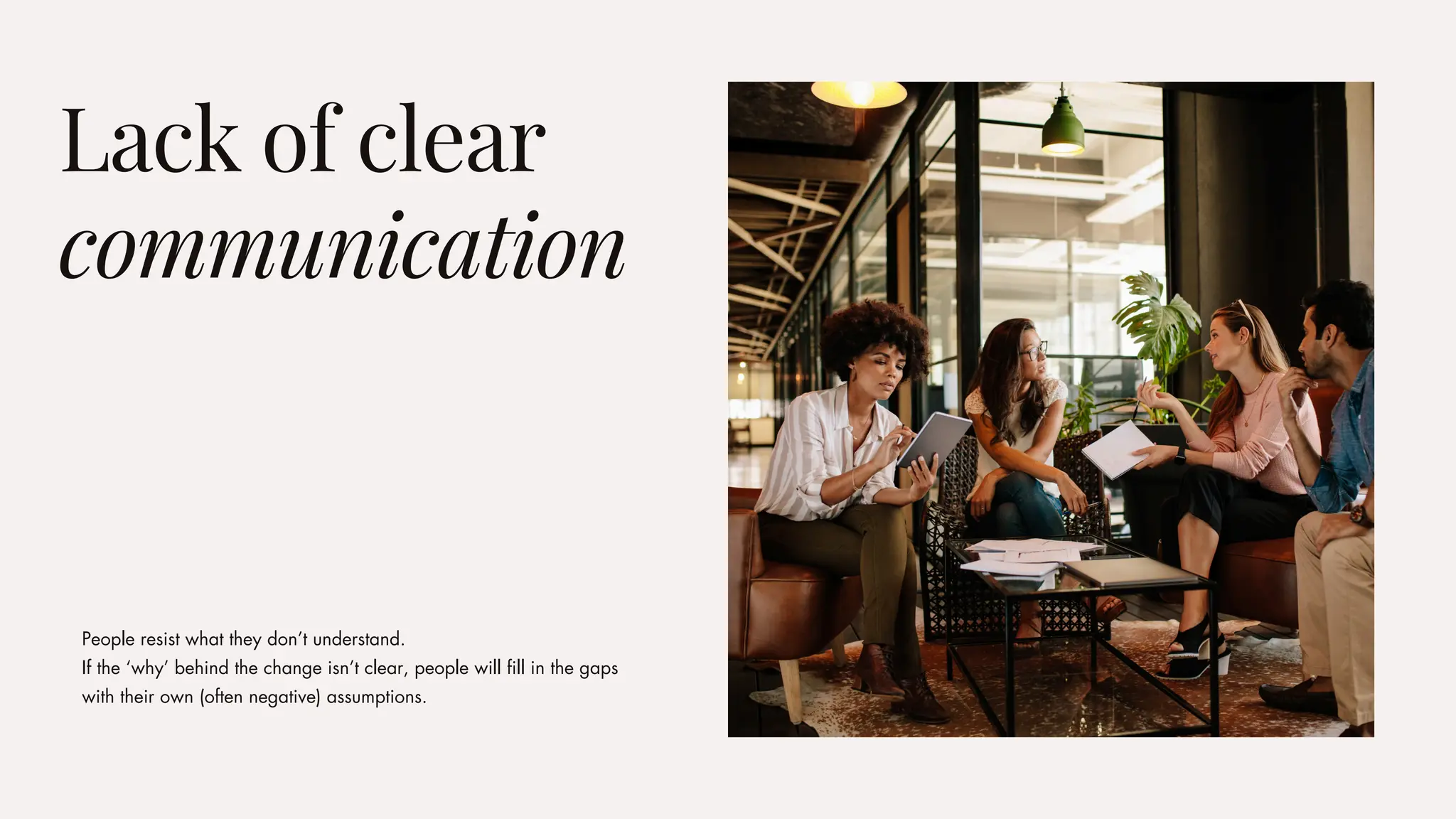
People resist what they don’t understand.
If the ‘why’ behind the change isn’t clear, people will fill in the gaps
with their own (often negative) assumptions.
Lack of clear
communication
How to overcome it...
The more involved people are in the
change, the less resistance they feel.
Tip: Encourage employees to ask
questions, seek clarity, and provide
input.
Leaders need to create an
environment where people feel safe to
express concerns.
Tip: Instead of shutting down
concerns, acknowledge them and
provide support.
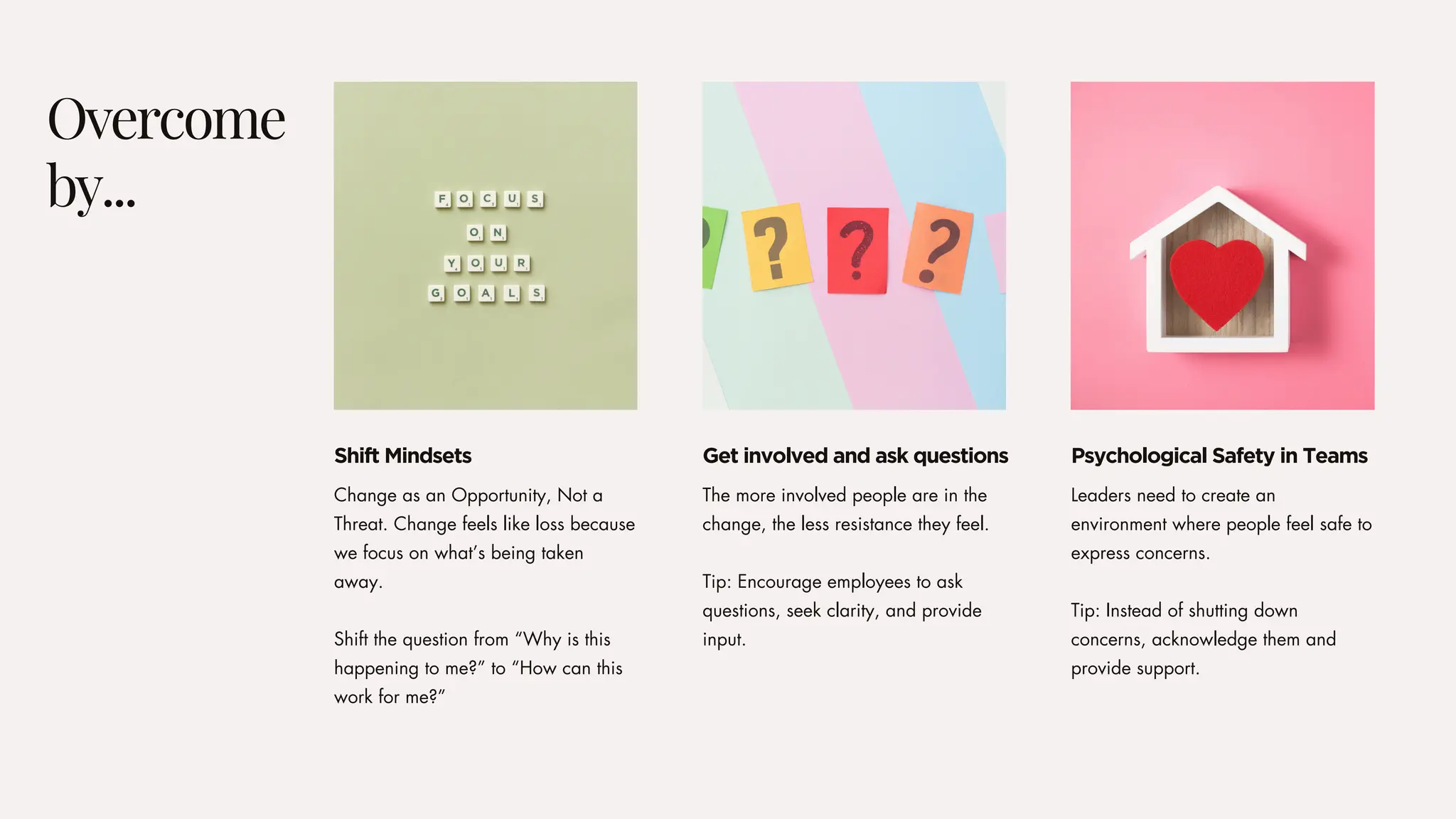
Change as an Opportunity, Not a
Threat. Change feels like loss because
we focus on what’s being taken
away.
Shift the question from “Why is this
happening to me?” to “How can this
work for me?”
Overcome
by...
Get involved and ask questions Psychological Safety in Teams
Shift Mindsets
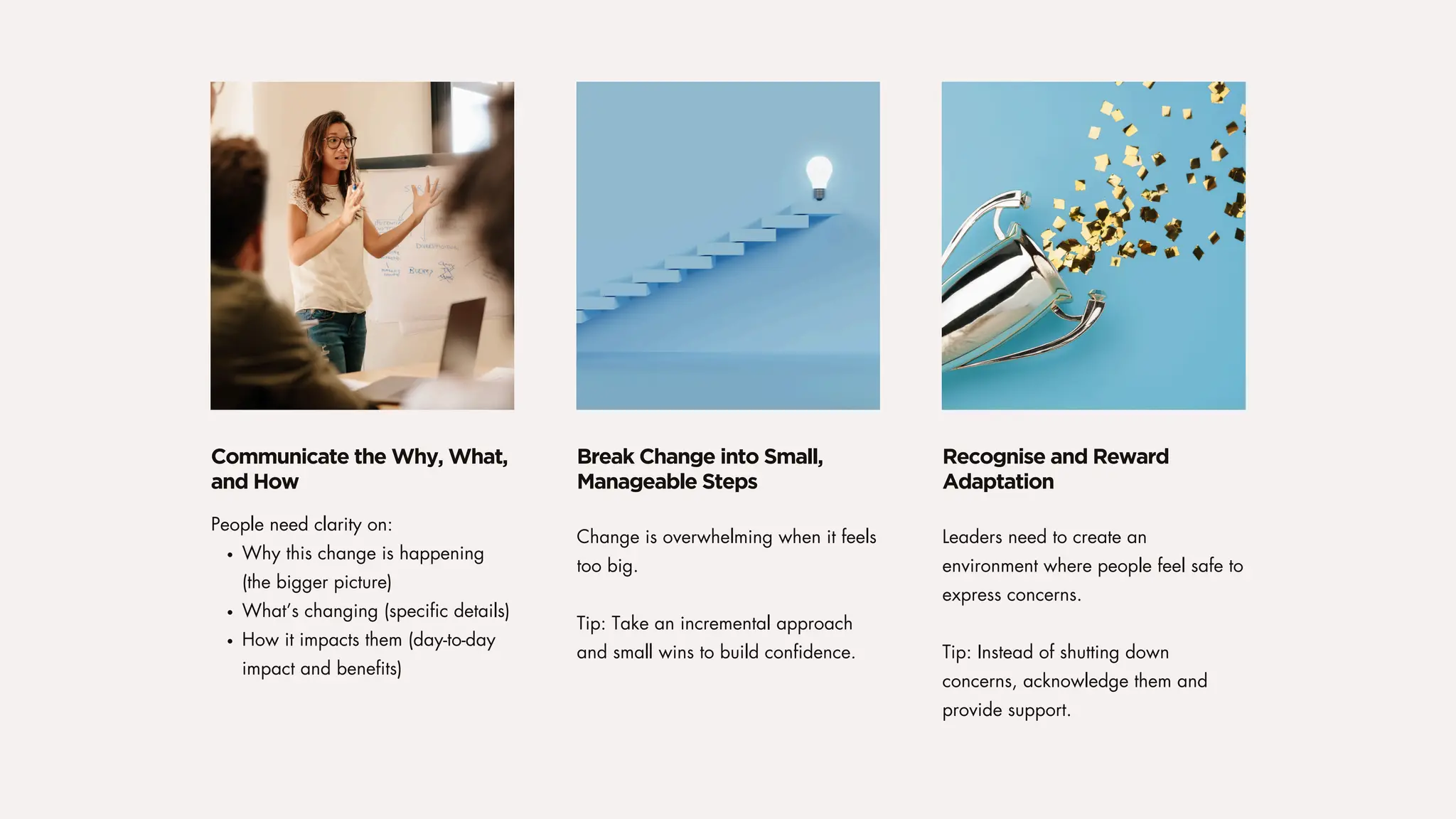
Change is overwhelming when it feels
too big.
Tip: Take an incremental approach
and small wins to build confidence.
Leaders need to create an
environment where people feel safe to
express concerns.
Tip: Instead of shutting down
concerns, acknowledge them and
provide support.
People need clarity on:
Why this change is happening
(the bigger picture)
What’s changing (specific details)
How it impacts them (day-to-day
impact and benefits)
Break Change into Small,
Manageable Steps
Recognise and Reward
Adaptation
Communicate the Why, What,
and How
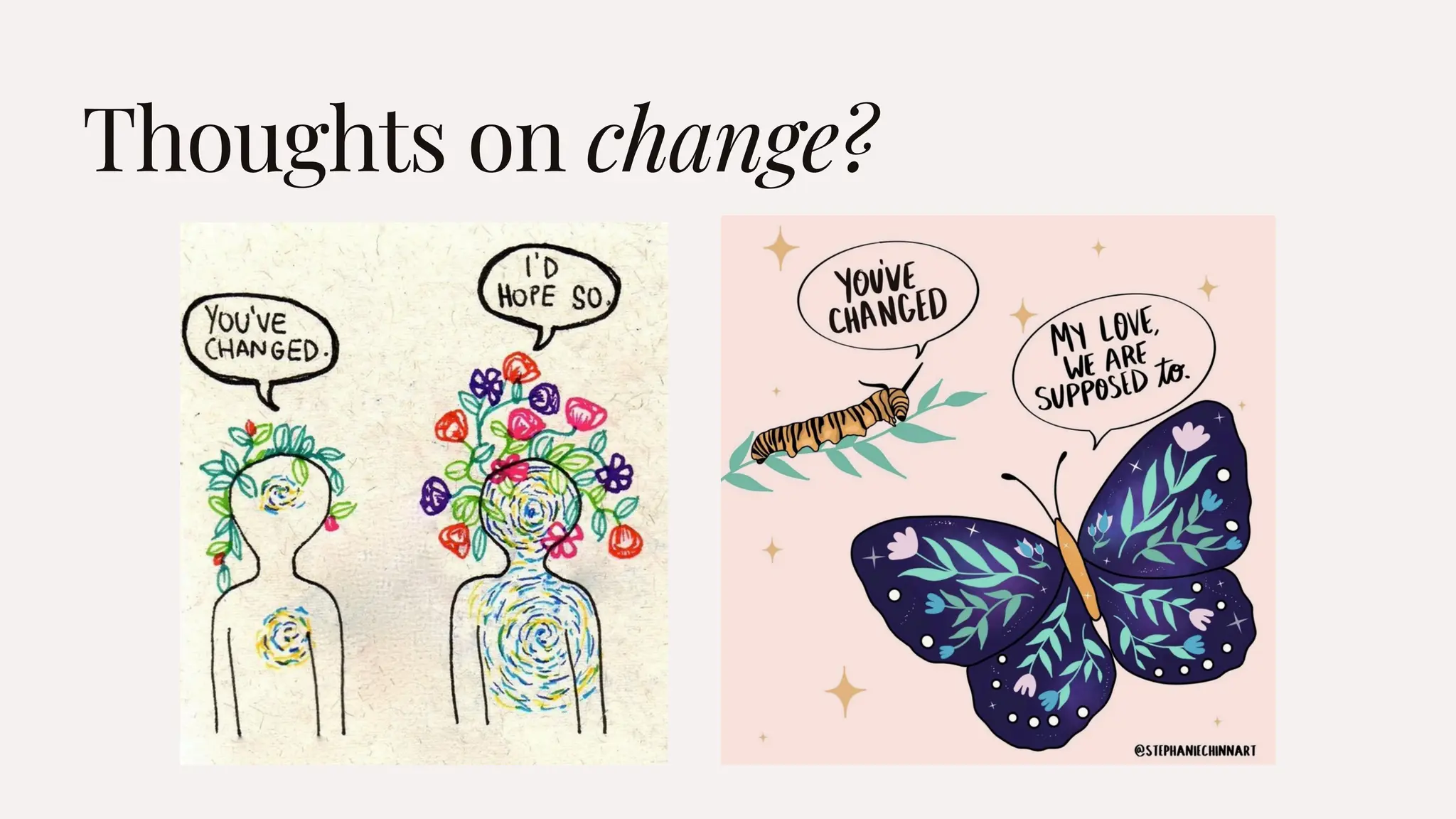
Thoughts on change?
Your reflections...
Any
Questions?
Get in touch
www.lightsparkgroup.com lucy@lightsparkgroup.com
Websites Email
www.allyshipactually.com
/in/lucygrimwade
@lugrimwade
Social Media

Resistance of Change & overcome it - presentation

  • 1.
    Why people resistchange & how we can overcome it. Light Spark Group Lucy Grimwade Presented by :
  • 2.
  • 3.
    Hi, I’m Lucy- a change strategist, coach, and storyteller with a deep fascination for how we navigate the unknown. I’ve spent years guiding people and businesses through change. First by figuring it out for myself, then by helping others do the same. And if there’s one thing I know for sure, it’s this: change doesn’t have to feel like stepping into the unknown without a map. Introduction Light Spark Group Strategic & People-Centred Change Consultancy
  • 4.
    70% of change initiativesfail because of employee resistance and lack of support. Resistance to change is natural, but it can be managed. Today, we’re going to explore why people resist change at work and how we can move through it with confidence. Introduction
  • 5.
  • 6.
    People feel comfortablewith what they know. Change creates uncertainty about roles, expectations, and Fear of the unknown
  • 7.
    Change can feelimposed rather than chosen. Employees may feel their voices aren’t heard. Loss of control
  • 8.
    If employees don’ttrust leadership, they are more likely to resist changes. Past experiences with poor change management affect how people react. Lack of trust in leadership
  • 9.
    The human brainprefers routines. Change requires rewiring habits, which takes effort and stepping outside of the comfort zone. Habit and Comfort Zones
  • 10.
    People resist whatthey don’t understand. If the ‘why’ behind the change isn’t clear, people will fill in the gaps with their own (often negative) assumptions. Lack of clear communication
  • 11.
  • 12.
    The more involvedpeople are in the change, the less resistance they feel. Tip: Encourage employees to ask questions, seek clarity, and provide input. Leaders need to create an environment where people feel safe to express concerns. Tip: Instead of shutting down concerns, acknowledge them and provide support. Change as an Opportunity, Not a Threat. Change feels like loss because we focus on what’s being taken away. Shift the question from “Why is this happening to me?” to “How can this work for me?” Overcome by... Get involved and ask questions Psychological Safety in Teams Shift Mindsets
  • 13.
    Change is overwhelmingwhen it feels too big. Tip: Take an incremental approach and small wins to build confidence. Leaders need to create an environment where people feel safe to express concerns. Tip: Instead of shutting down concerns, acknowledge them and provide support. People need clarity on: Why this change is happening (the bigger picture) What’s changing (specific details) How it impacts them (day-to-day impact and benefits) Break Change into Small, Manageable Steps Recognise and Reward Adaptation Communicate the Why, What, and How
  • 14.
  • 15.
  • 16.
  • 17.
    Get in touch www.lightsparkgroup.comlucy@lightsparkgroup.com Websites Email www.allyshipactually.com /in/lucygrimwade @lugrimwade Social Media