Practical Electrical
Design for
Residential Units
Professional Career
01
Aris Lorenz G. Lavarro
REE / MEP
Managing Partner & Acting Chief MEP Engineer
Operations Manager 5yrs
Dep't Head; Engineering and Maintenance
Shift Electrical Supervisor
Rollstar General Contractor (Currently)
United Technologies & Waterfall Pumps Manufacturing,
UAE (2015 - 2021)
AUF Medical Center (2013 - 2015_
Sweet Crystal Integrated Sugar Mill (2011-2013)
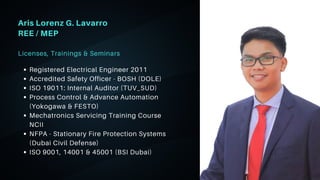
Licenses, Trainings & Seminars
Aris Lorenz G. Lavarro
REE / MEP
Registered Electrical Engineer 2011
Accredited Safety Officer - BOSH (DOLE)
ISO 19011: Internal Auditor (TUV_SUD)
Process Control & Advance Automation
(Yokogawa & FESTO)
Mechatronics Servicing Training Course
NCII
NFPA - Stationary Fire Protection Systems
(Dubai Civil Defense)
ISO 9001, 14001 & 45001 (BSI Dubai)
06
Understand electrical design basics.
01
What to expect on this session
Recognize all types of electrical symbols, drawings, design stages,
buildings, codes, terminologies, loads and major electrical equipments.
Create a base knowledge and able to prepare a electrical design
able to prepare with the theoretical and practical electrical design concepts
noting that these concepts are explored incordance to Philippine Electrical
Code
02
03
06
Scope of the session
Introduction
01
02
03
Electrical Symbols
Electrical Terms & Definitions
SI Units
04
05
06
General Overview of Generation, transmission & distribution
stage of electricity
Basics of Electricity & Circuits
06
Scope of the course
Electrical Load Classifications and Types
07
08
09
Actual Electrical Design and Layout
Calculation Schedule of Load, Branch Circuits and Conductor
Sizing
Activity
10
06
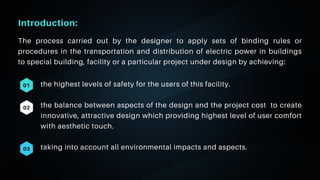
Introduction:
the highest levels of safety for the users of this facility.
the balance between aspects of the design and the project cost to create
innovative, attractive design which providing highest level of user comfort
with aesthetic touch.
taking into account all environmental impacts and aspects.
01
02
03
The process carried out by the designer to apply sets of binding rules or
procedures in the transportation and distribution of electric power in buildings
to special building, facility or a particular project under design by achieving:
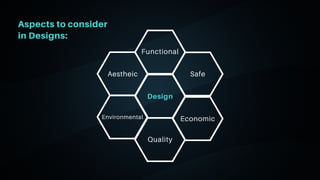
Design
Aestheic Safe
Economic
Environmental
Functional
Quality
Aspects to consider
in Designs:
06
Electrical Symbols
06
Electrical Symbol:
is a small picture or image called a pictogram used to represent various
electrical and electronic devices (such as wires, batteries, resistors, and
transistors) in a schematic diagram of an electrical or electronic circuit.
These symbols can vary from country to country, but are today to a large extent
internationally standardized.
06
Electrical Terms and Definition
06
Electrical Terms and Definition:
All electrical design engineers should be aware of these definitions they
considered it as their own language in the world of electrical engineering.
The terms and defitinition are not intended to include commonly defined
general terms or commonly defined technical terms from related codes and
standards.
As electrical engineer here in the Philippines, terms and definitions are refered
on the lastest edition of Philippine Electrical Code.
https://www.electricianphilippines.com/2020/05/philippine-electrical-code-
terms-and.html
06
SI UNITS
06
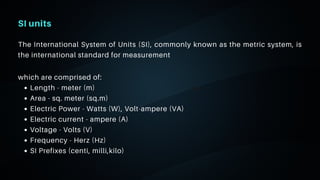
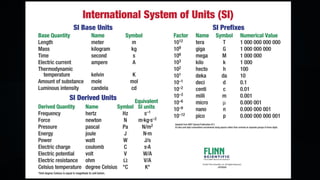
SI units
The International System of Units (SI), commonly known as the metric system, is
the international standard for measurement
Length - meter (m)
Area - sq. meter (sq.m)
Electric Power - Watts (W), Volt-ampere (VA)
Electric current - ampere (A)
Voltage - Volts (V)
Frequency - Herz (Hz)
SI Prefixes (centi, milli,kilo)
which are comprised of:
06
General Overview of Generation,
transmission & distribution stage
of electricity
06
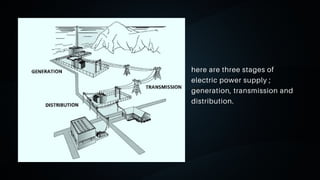
here are three stages of
electric power supply ;
generation, transmission and
distribution.
06
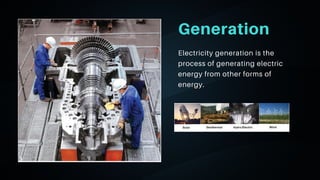
Electricity generation is the
process of generating electric
energy from other forms of
energy.
Generation
06
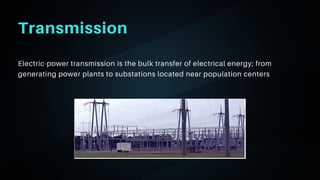
Electric-power transmission is the bulk transfer of electrical energy; from
generating power plants to substations located near population centers
Transmission
06
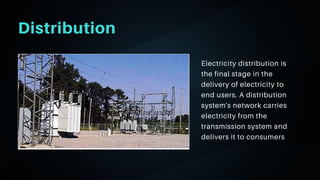
Electricity distribution is
the final stage in the
delivery of electricity to
end users. A distribution
system's network carries
electricity from the
transmission system and
delivers it to consumers
Distribution
06
Basics of Electricity & Circuits
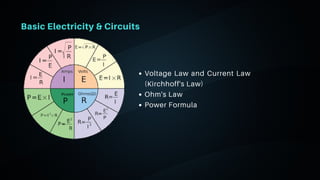
Basic Electricity & Circuits
Voltage Law and Current Law
(Kirchhoff's Law)
Ohm's Law
Power Formula
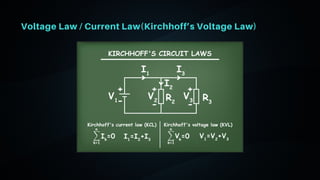
Voltage Law / Current Law(Kirchhoff’s Voltage Law)
06
Electrical Load Classifications and
Types
06
Load Classifications
the Electrical Load is The part or component in a circuit that converts electricity
into light, heat, or mechanical motion. Examples of loads are a light bulb,
appliance, or motor.
The electrical loads can be classified into various categories according to
various factors.
Lighting Load.
Receptacles / General / Small Appliances Load.
Power Loads or Special Loads: HVAC, Motors, Electric Dryers or Cooking
Unit, HD Lamps, Emergency purpose loads
According To Load Function:
06
Lighting Loads
Incandescent lamp.
Compact fluorescent lamp.
Fluorescent tube.
Discharge lamps.
Light Emitting Diode (LED).
Artificial light sources are categorized by the technology used to produce the
light. There's dozens of sources, with a few common in household applications
and others more suitable for industrial uses. The five most common light sources
are as follows: (Indoor or Outdoor Types)
1.
2.
3.
4.
5.
06
Small Appliances
Plug loads: devices that plug into a facility’s electrical system and powered
by means of an ordinary AC plug or any electrical equipment that is plugged
into a wall outlet.
Receptacle loads: equipment loads normally served through electrical
receptacles
General Purpose loads/Miscellaneous loads/Process energy loads.
Appliance electrical load is the load which the electrical designer can’t specify
its actual requirements because it doesn’t serve any particular load and
subjected to the consumer needs.
Appliance electrical loads can be called as one of the following names:
06
Electric Load or Special Loads
Heating, Ventilating, Air-conditioning Units (HVAC)
Motor loads (Pumps, Elevators, Escalartors and the like.)
Electric Dryers and Electric Cooking Appliances
Heavy duty Lamps
Emergency Purpose Loads
Special loads is the load which are used to have specific functions such as:
06
Actual Electrical Design and
Layout
06
What is Electrical Design?
General Notes or Specifications
Symbol or legends
Lighting and Power Layout
Single line and Riser Diagram
Schedule of Loads
Auxiliary Systems
Electrical design entails planning, creating, testing, or supervising the
development and installation of electrical equipment, including lighting
equipment, power systems, power distribution, fire and life safety systems,
electronic components, and voice and data communications infrastructure.
Electrical Plans and design output are:
06
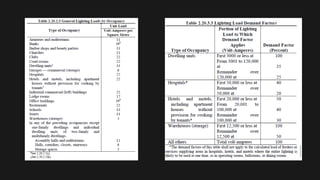
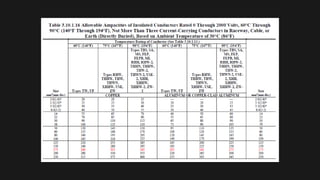
Calculation for Schedule of Load,
Branch Circuits and Conductor
Sizing
06
Thank you!

Residential-Electrical-Design ELECTRICAL ENGG

  • 1.
  • 2.
    Professional Career 01 Aris LorenzG. Lavarro REE / MEP Managing Partner & Acting Chief MEP Engineer Operations Manager 5yrs Dep't Head; Engineering and Maintenance Shift Electrical Supervisor Rollstar General Contractor (Currently) United Technologies & Waterfall Pumps Manufacturing, UAE (2015 - 2021) AUF Medical Center (2013 - 2015_ Sweet Crystal Integrated Sugar Mill (2011-2013)
  • 3.
    Licenses, Trainings &Seminars Aris Lorenz G. Lavarro REE / MEP Registered Electrical Engineer 2011 Accredited Safety Officer - BOSH (DOLE) ISO 19011: Internal Auditor (TUV_SUD) Process Control & Advance Automation (Yokogawa & FESTO) Mechatronics Servicing Training Course NCII NFPA - Stationary Fire Protection Systems (Dubai Civil Defense) ISO 9001, 14001 & 45001 (BSI Dubai)
  • 4.
    06 Understand electrical designbasics. 01 What to expect on this session Recognize all types of electrical symbols, drawings, design stages, buildings, codes, terminologies, loads and major electrical equipments. Create a base knowledge and able to prepare a electrical design able to prepare with the theoretical and practical electrical design concepts noting that these concepts are explored incordance to Philippine Electrical Code 02 03
  • 5.
    06 Scope of thesession Introduction 01 02 03 Electrical Symbols Electrical Terms & Definitions SI Units 04 05 06 General Overview of Generation, transmission & distribution stage of electricity Basics of Electricity & Circuits
  • 6.
    06 Scope of thecourse Electrical Load Classifications and Types 07 08 09 Actual Electrical Design and Layout Calculation Schedule of Load, Branch Circuits and Conductor Sizing Activity 10
  • 7.
    06 Introduction: the highest levelsof safety for the users of this facility. the balance between aspects of the design and the project cost to create innovative, attractive design which providing highest level of user comfort with aesthetic touch. taking into account all environmental impacts and aspects. 01 02 03 The process carried out by the designer to apply sets of binding rules or procedures in the transportation and distribution of electric power in buildings to special building, facility or a particular project under design by achieving:
  • 8.
  • 9.
  • 10.
    06 Electrical Symbol: is asmall picture or image called a pictogram used to represent various electrical and electronic devices (such as wires, batteries, resistors, and transistors) in a schematic diagram of an electrical or electronic circuit. These symbols can vary from country to country, but are today to a large extent internationally standardized.
  • 11.
  • 12.
    06 Electrical Terms andDefinition: All electrical design engineers should be aware of these definitions they considered it as their own language in the world of electrical engineering. The terms and defitinition are not intended to include commonly defined general terms or commonly defined technical terms from related codes and standards. As electrical engineer here in the Philippines, terms and definitions are refered on the lastest edition of Philippine Electrical Code. https://www.electricianphilippines.com/2020/05/philippine-electrical-code- terms-and.html
  • 13.
  • 14.
    06 SI units The InternationalSystem of Units (SI), commonly known as the metric system, is the international standard for measurement Length - meter (m) Area - sq. meter (sq.m) Electric Power - Watts (W), Volt-ampere (VA) Electric current - ampere (A) Voltage - Volts (V) Frequency - Herz (Hz) SI Prefixes (centi, milli,kilo) which are comprised of:
  • 16.
    06 General Overview ofGeneration, transmission & distribution stage of electricity
  • 17.
    06 here are threestages of electric power supply ; generation, transmission and distribution.
  • 18.
    06 Electricity generation isthe process of generating electric energy from other forms of energy. Generation
  • 19.
    06 Electric-power transmission isthe bulk transfer of electrical energy; from generating power plants to substations located near population centers Transmission
  • 20.
    06 Electricity distribution is thefinal stage in the delivery of electricity to end users. A distribution system's network carries electricity from the transmission system and delivers it to consumers Distribution
  • 21.
  • 22.
    Basic Electricity &Circuits Voltage Law and Current Law (Kirchhoff's Law) Ohm's Law Power Formula
  • 23.
    Voltage Law /Current Law(Kirchhoff’s Voltage Law)
  • 24.
  • 25.
    06 Load Classifications the ElectricalLoad is The part or component in a circuit that converts electricity into light, heat, or mechanical motion. Examples of loads are a light bulb, appliance, or motor. The electrical loads can be classified into various categories according to various factors. Lighting Load. Receptacles / General / Small Appliances Load. Power Loads or Special Loads: HVAC, Motors, Electric Dryers or Cooking Unit, HD Lamps, Emergency purpose loads According To Load Function:
  • 26.
    06 Lighting Loads Incandescent lamp. Compactfluorescent lamp. Fluorescent tube. Discharge lamps. Light Emitting Diode (LED). Artificial light sources are categorized by the technology used to produce the light. There's dozens of sources, with a few common in household applications and others more suitable for industrial uses. The five most common light sources are as follows: (Indoor or Outdoor Types) 1. 2. 3. 4. 5.
  • 27.
    06 Small Appliances Plug loads:devices that plug into a facility’s electrical system and powered by means of an ordinary AC plug or any electrical equipment that is plugged into a wall outlet. Receptacle loads: equipment loads normally served through electrical receptacles General Purpose loads/Miscellaneous loads/Process energy loads. Appliance electrical load is the load which the electrical designer can’t specify its actual requirements because it doesn’t serve any particular load and subjected to the consumer needs. Appliance electrical loads can be called as one of the following names:
  • 28.
    06 Electric Load orSpecial Loads Heating, Ventilating, Air-conditioning Units (HVAC) Motor loads (Pumps, Elevators, Escalartors and the like.) Electric Dryers and Electric Cooking Appliances Heavy duty Lamps Emergency Purpose Loads Special loads is the load which are used to have specific functions such as:
  • 29.
  • 30.
    06 What is ElectricalDesign? General Notes or Specifications Symbol or legends Lighting and Power Layout Single line and Riser Diagram Schedule of Loads Auxiliary Systems Electrical design entails planning, creating, testing, or supervising the development and installation of electrical equipment, including lighting equipment, power systems, power distribution, fire and life safety systems, electronic components, and voice and data communications infrastructure. Electrical Plans and design output are:
  • 31.
    06 Calculation for Scheduleof Load, Branch Circuits and Conductor Sizing
  • 34.