Regional block anesthesia
SHUSHANJIA
Objectives
• Mastering the basic category of local
anesthesia
• Mastering the diagnosis and treatment of
local anesthetic toxicity.
• Being familiar with the performing of
subarachnoid space puncture
Key Concepts
• CNS symptoms of local anesthetic toxicity.
• Treatments of local anesthetic toxicity.
Introduction
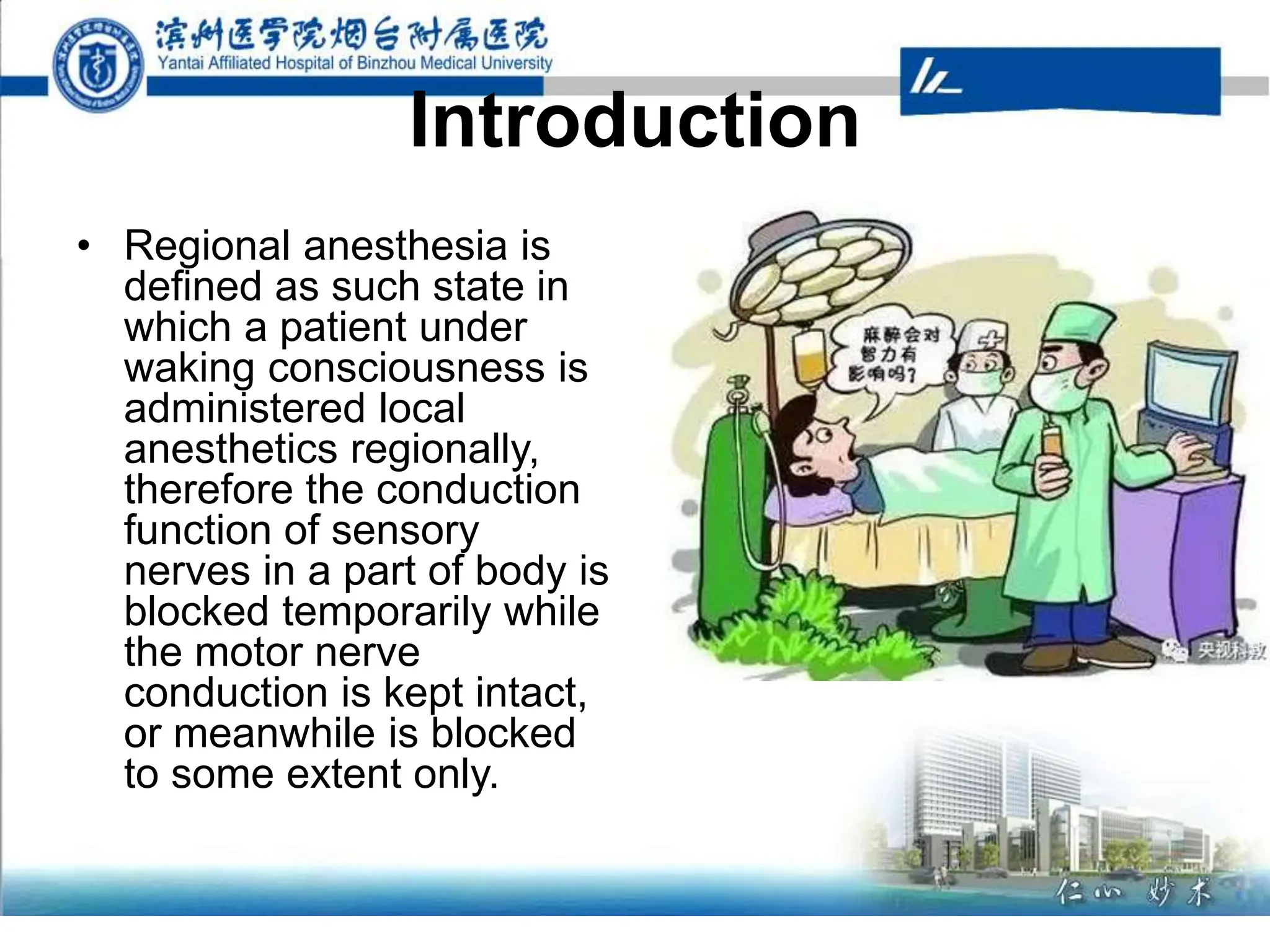
• Regional anesthesia is
defined as such state in
which a patient under
waking consciousness is
administered local
anesthetics regionally,
therefore the conduction
function of sensory
nerves in a part of body is
blocked temporarily while
the motor nerve
conduction is kept intact,
or meanwhile is blocked
to some extent only.
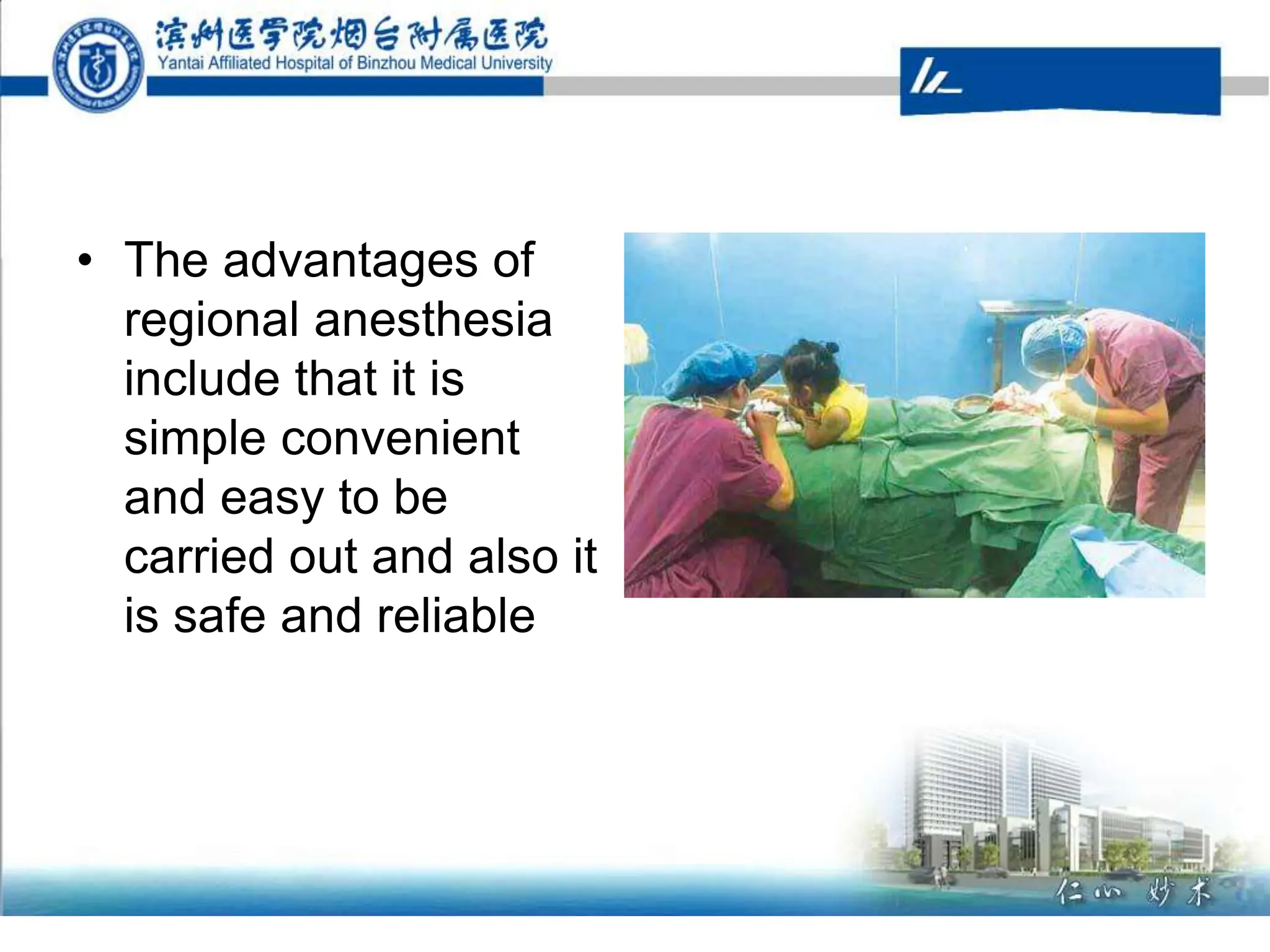
• The advantages of
regional anesthesia
include that it is
simple convenient
and easy to be
carried out and also it
is safe and reliable
Common regional anesthesia
include four classes:
• topical anesthesia,
• local infiltration anesthesia,
• field block
• nerve blockade.
• The latter can be classified further into
nerve trunk blockade, epidural block and
spinal analgesia.
Topical anesthesia
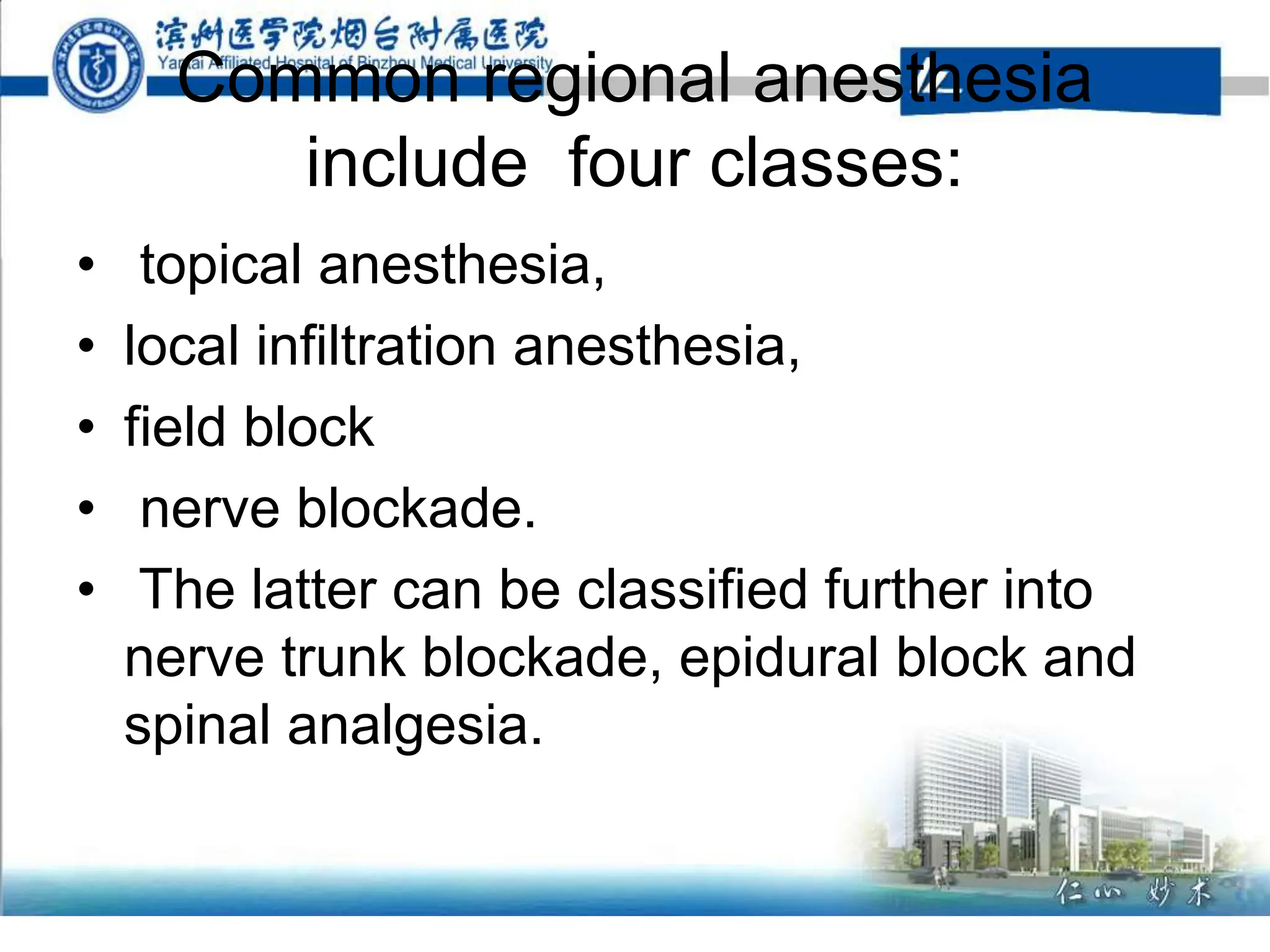
• Analgesia state induced
by the effects of local
anesthetics with potent
permeability on local
mucous membrane is
called topical anesthesia .
Topical anesthesia is
frequently used in the
superficial operation or
examination as that on
eyes, nasal cavity, oral
cavity, throat, trachea etc
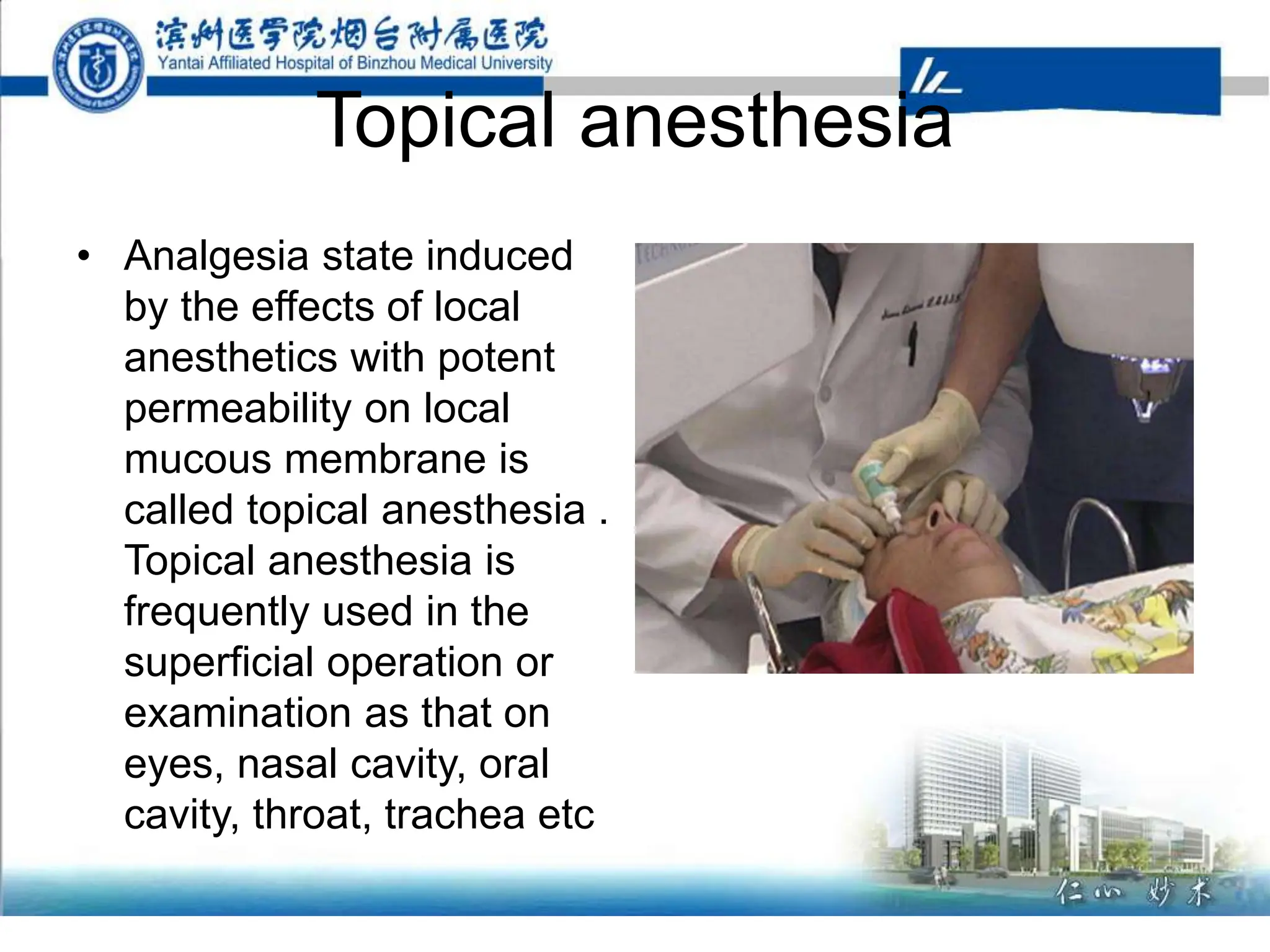
• The peripheral nerves
in cornea are
accessible, 0. 5% -
1% of tetracaine can
be administered and
the potency may last
for 30 minutes. In
case needed, the
drug can be
administered
repeatedly.
Local infiltration anesthesia
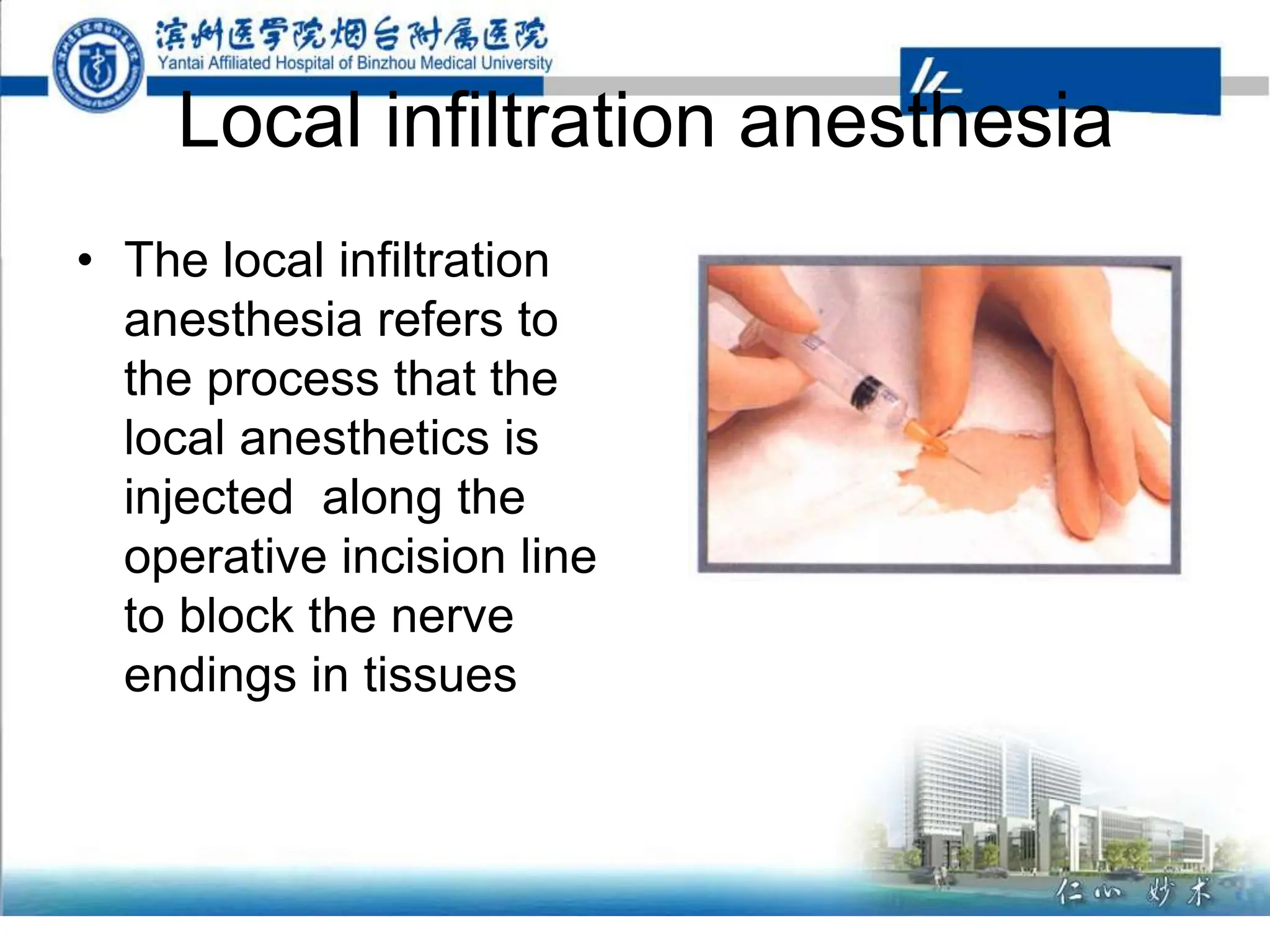
• The local infiltration
anesthesia refers to
the process that the
local anesthetics is
injected along the
operative incision line
to block the nerve
endings in tissues
Procedure
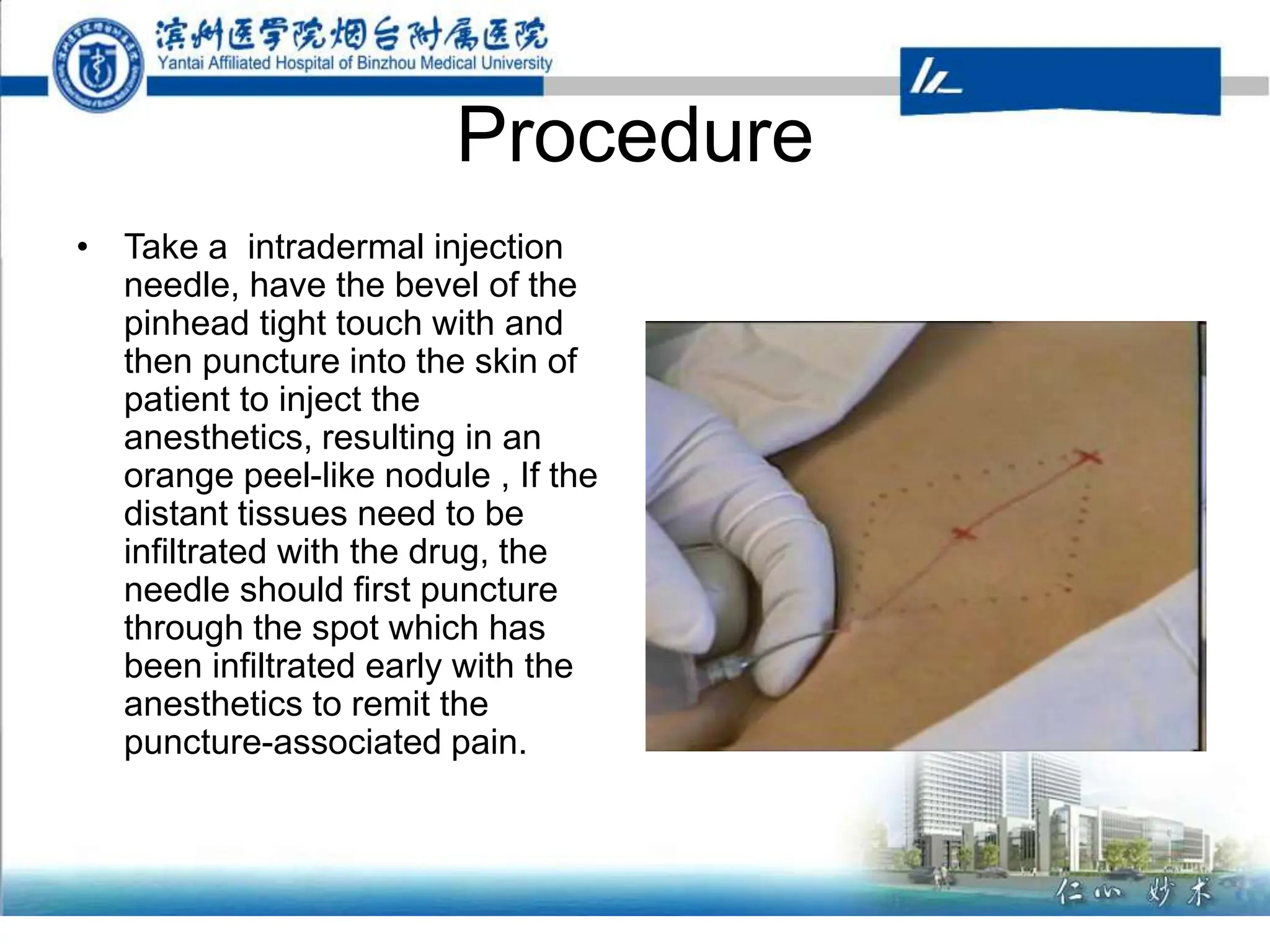
• Take a intradermal injection
needle, have the bevel of the
pinhead tight touch with and
then puncture into the skin of
patient to inject the
anesthetics, resulting in an
orange peel-like nodule , If the
distant tissues need to be
infiltrated with the drug, the
needle should first puncture
through the spot which has
been infiltrated early with the
anesthetics to remit the
puncture-associated pain.
Announcements
• Always do pumpback first before
injecting the anesthetics in order to avoid
the possibility of getting the drug into
blood vessels directly
• Never exceed the maximal dose allowed
for every injection in order to avoid the
toxic reactions of the anesthetics.
• In the spots of infection or tumor, local
infiltration anesthesia is unsuitable.
Field block
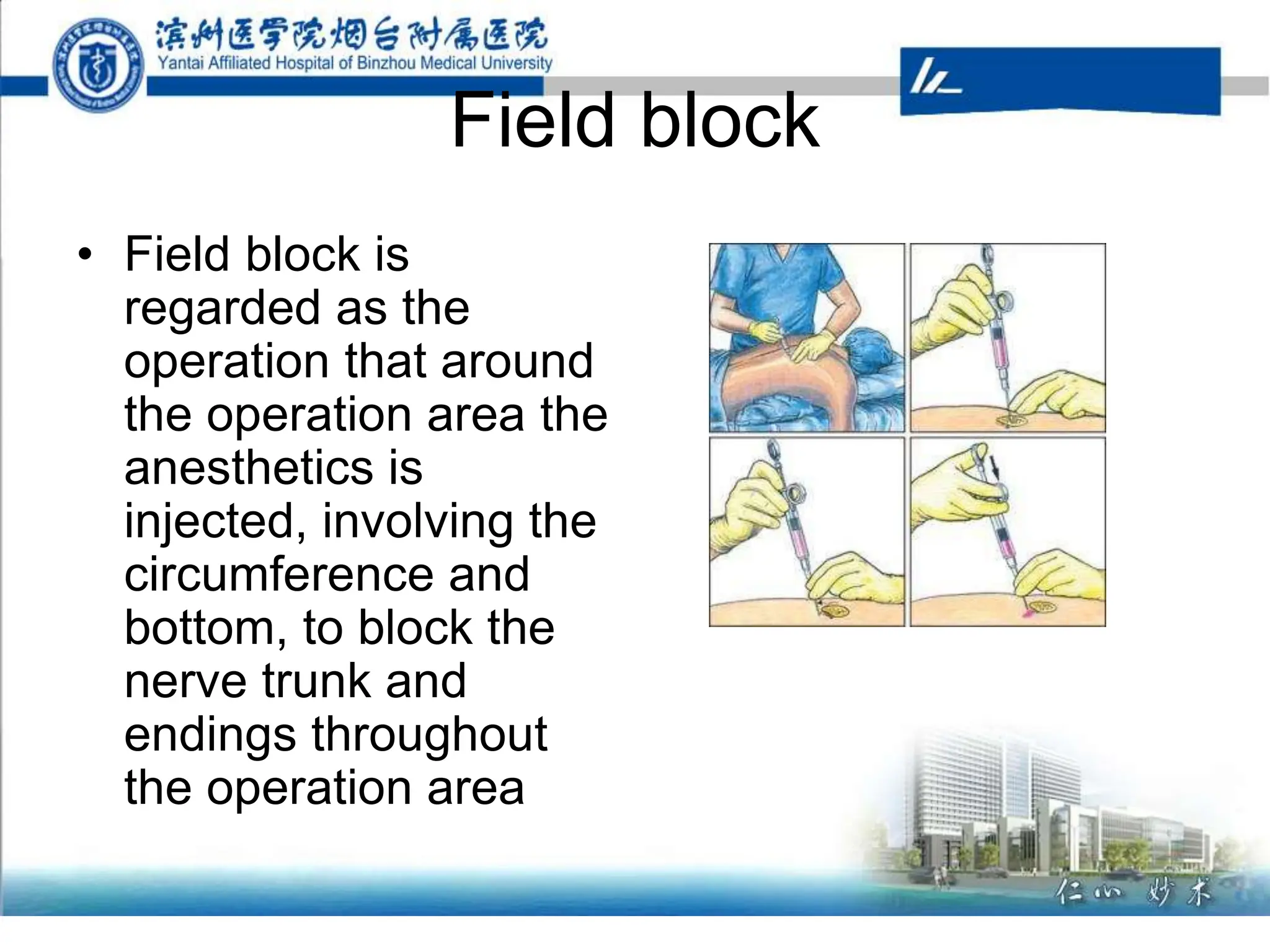
• Field block is
regarded as the
operation that around
the operation area the
anesthetics is
injected, involving the
circumference and
bottom, to block the
nerve trunk and
endings throughout
the operation area
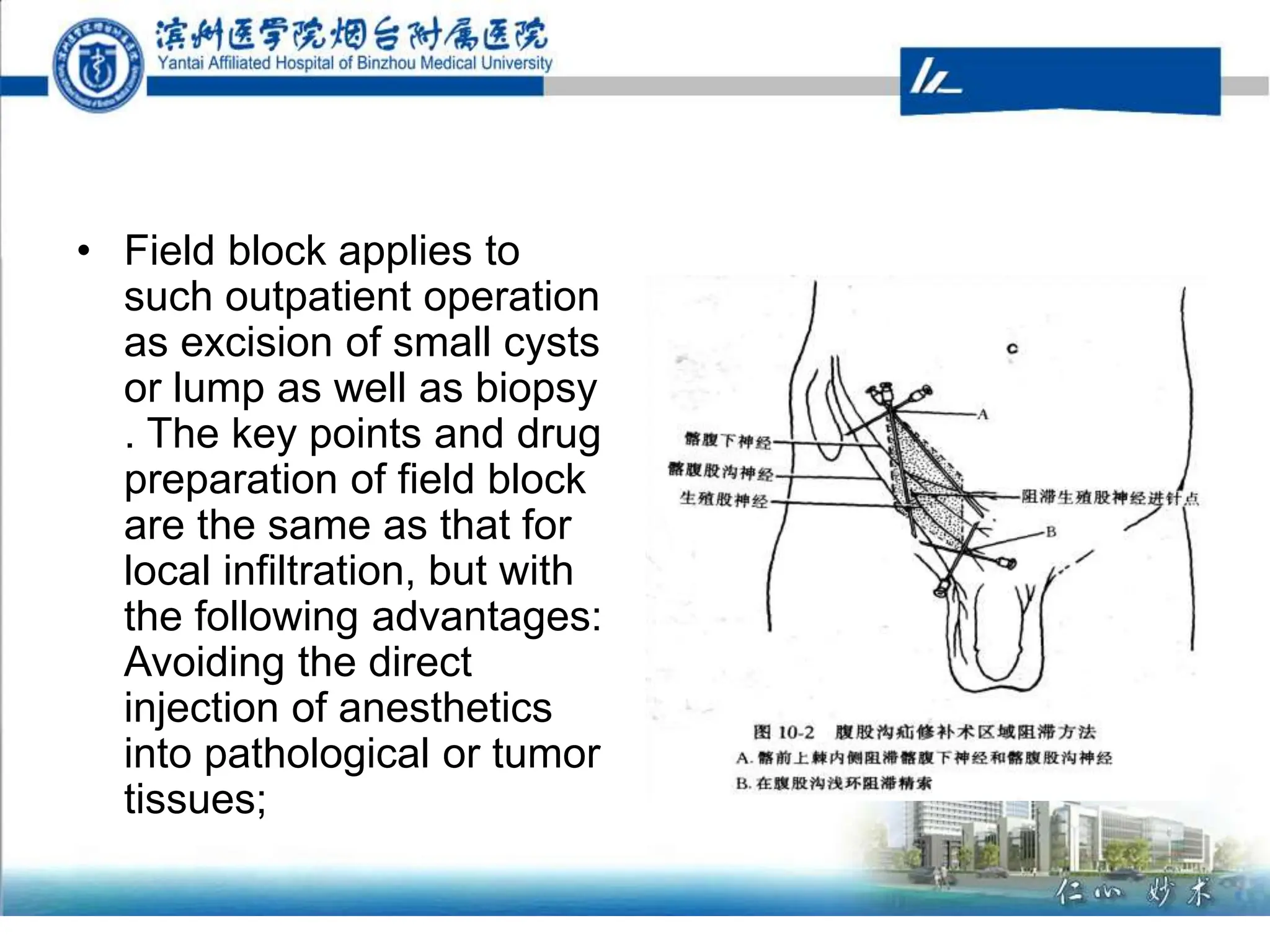
• Field block applies to
such outpatient operation
as excision of small cysts
or lump as well as biopsy
. The key points and drug
preparation of field block
are the same as that for
local infiltration, but with
the following advantages:
Avoiding the direct
injection of anesthetics
into pathological or tumor
tissues;
Nerve block
• nerve trunk blockade,
• epidural block and spinal analgesia.
• Brachial plexus block
• Sciatic nerve block
• epidural block and spinal analgesia
Systemic toxic reactions of local
anesthetics
• Causes;
• Accident injection of local anesthetics into
blood vessels during anesthesia or its
dose used exceeding maximal safety
dose.
Central nervous system
Symptoms
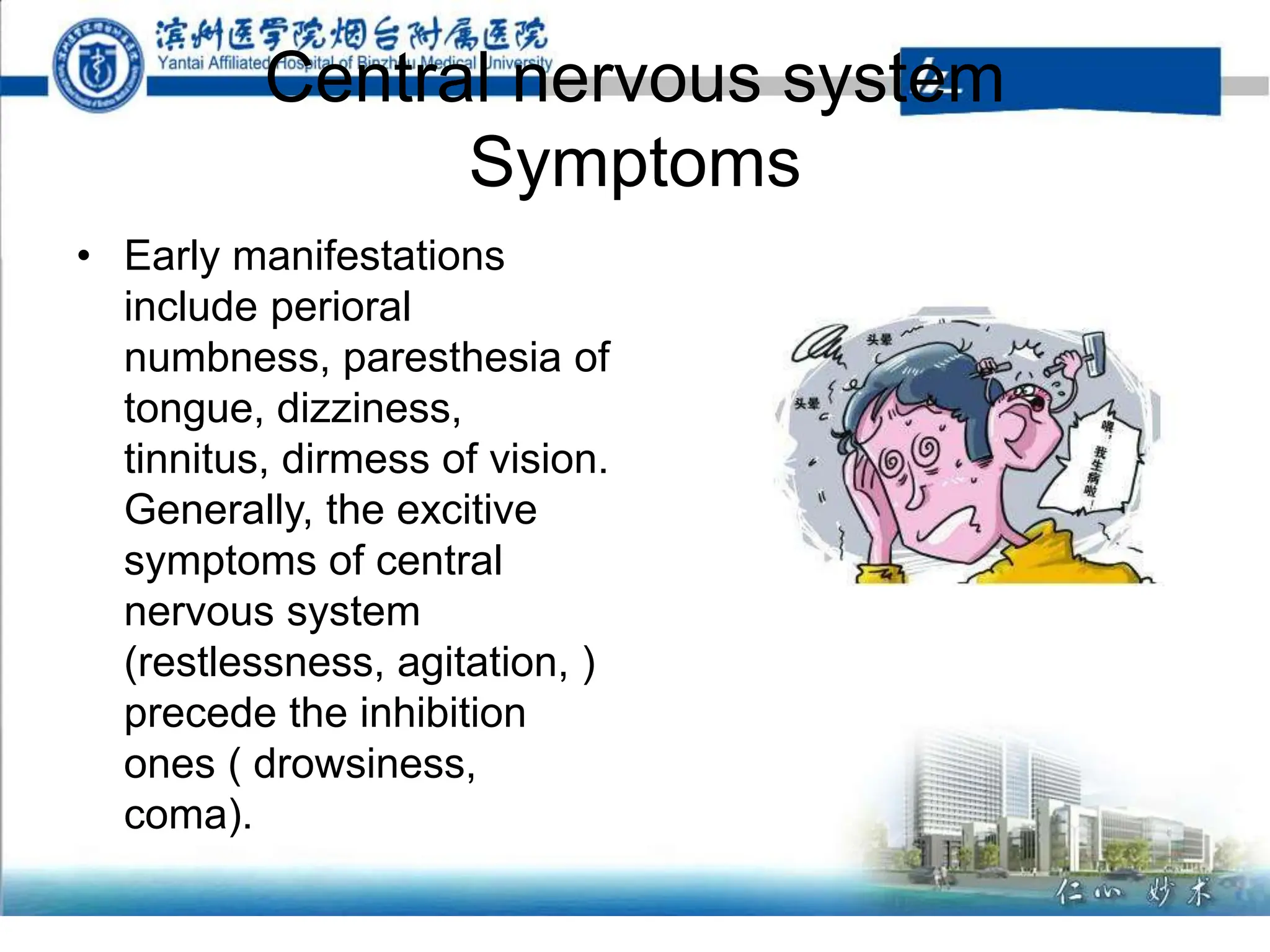
• Early manifestations
include perioral
numbness, paresthesia of
tongue, dizziness,
tinnitus, dirmess of vision.
Generally, the excitive
symptoms of central
nervous system
(restlessness, agitation, )
precede the inhibition
ones ( drowsiness,
coma).
Protective measures
• Never exceed the safety dose of local anesthetics.
• Reduce the dose appropriately, depending on the patient’s
conditions and injection site.
• Always do aspiration first before injection. Only when no blood
was withdrawn can we start injection, and during injection of test
dose, we should observe whether any uncomfortable reactions
appear.
• For those with no contraindications involving vasopressors, add
appropriate amount of epinephrine in local anesthetics solution to
delay the absorption of drug.
• Give appropriate amount of benzodiazepines, to raise the
threshold of toxicity, and observe prodromes closely of the
reactions. Once symptoms occur, stop injection immediately.
Treatments
• the treatments for the general toxic reaction of local
anesthetics mainly involve supporting therapy.
• Stop using local anesthetics.
• Sedation and hyperventilation may raise the threshold
of seizure.
• Maintain sufficient ventilation and oxygenation
because anoxia and acidosis may increase the general
toxicity of local anesthetics. When needed, administer
scoline (1-2 mg,/kg)to stop convulsion and perform
tracheal intubation for positive pressure ventilation.
• scoline may stop the convulsion in seizure, but can not
stop the epilepsy in central nervous system.
Intravenous injection of midazolam (2 - 5 mg) or
propofo(1 mg/kg) may stop seizure itself.
summary
• Regional anesthesia is defined as a
patient under waking consciousness is
administered local anesthetics
regionally, therefore the conduction
function of sensory nerves in a part of
body is blocked temporarily.
summary
• Common regional anesthesia includes
the following; topical anesthesia, local
infiltration anesthesia, field block and
nerve blockade. The latter can be
classified further into nerve trunk
blockade, epidural block and spinal
analgesia.
summary
• The greatest immediate risk of regional
anesthesia is systemic toxicity of local
anesthetics from intravascular injection
and rapid or excessive amounts absorbed
. Anesthesiologists need to use local
anesthetics with cautions.
Reginal Block Anesthesia-anesthesia topic

Reginal Block Anesthesia-anesthesia topic

  • 1.
  • 2.
    Objectives • Mastering thebasic category of local anesthesia • Mastering the diagnosis and treatment of local anesthetic toxicity. • Being familiar with the performing of subarachnoid space puncture
  • 3.
    Key Concepts • CNSsymptoms of local anesthetic toxicity. • Treatments of local anesthetic toxicity.
  • 4.
    Introduction • Regional anesthesiais defined as such state in which a patient under waking consciousness is administered local anesthetics regionally, therefore the conduction function of sensory nerves in a part of body is blocked temporarily while the motor nerve conduction is kept intact, or meanwhile is blocked to some extent only.
  • 5.
    • The advantagesof regional anesthesia include that it is simple convenient and easy to be carried out and also it is safe and reliable
  • 6.
    Common regional anesthesia includefour classes: • topical anesthesia, • local infiltration anesthesia, • field block • nerve blockade. • The latter can be classified further into nerve trunk blockade, epidural block and spinal analgesia.
  • 7.
    Topical anesthesia • Analgesiastate induced by the effects of local anesthetics with potent permeability on local mucous membrane is called topical anesthesia . Topical anesthesia is frequently used in the superficial operation or examination as that on eyes, nasal cavity, oral cavity, throat, trachea etc
  • 8.
    • The peripheralnerves in cornea are accessible, 0. 5% - 1% of tetracaine can be administered and the potency may last for 30 minutes. In case needed, the drug can be administered repeatedly.
  • 9.
    Local infiltration anesthesia •The local infiltration anesthesia refers to the process that the local anesthetics is injected along the operative incision line to block the nerve endings in tissues
  • 10.
    Procedure • Take aintradermal injection needle, have the bevel of the pinhead tight touch with and then puncture into the skin of patient to inject the anesthetics, resulting in an orange peel-like nodule , If the distant tissues need to be infiltrated with the drug, the needle should first puncture through the spot which has been infiltrated early with the anesthetics to remit the puncture-associated pain.
  • 11.
    Announcements • Always dopumpback first before injecting the anesthetics in order to avoid the possibility of getting the drug into blood vessels directly • Never exceed the maximal dose allowed for every injection in order to avoid the toxic reactions of the anesthetics. • In the spots of infection or tumor, local infiltration anesthesia is unsuitable.
  • 12.
    Field block • Fieldblock is regarded as the operation that around the operation area the anesthetics is injected, involving the circumference and bottom, to block the nerve trunk and endings throughout the operation area
  • 13.
    • Field blockapplies to such outpatient operation as excision of small cysts or lump as well as biopsy . The key points and drug preparation of field block are the same as that for local infiltration, but with the following advantages: Avoiding the direct injection of anesthetics into pathological or tumor tissues;
  • 14.
    Nerve block • nervetrunk blockade, • epidural block and spinal analgesia. • Brachial plexus block • Sciatic nerve block • epidural block and spinal analgesia
  • 15.
    Systemic toxic reactionsof local anesthetics • Causes; • Accident injection of local anesthetics into blood vessels during anesthesia or its dose used exceeding maximal safety dose.
  • 16.
    Central nervous system Symptoms •Early manifestations include perioral numbness, paresthesia of tongue, dizziness, tinnitus, dirmess of vision. Generally, the excitive symptoms of central nervous system (restlessness, agitation, ) precede the inhibition ones ( drowsiness, coma).
  • 17.
    Protective measures • Neverexceed the safety dose of local anesthetics. • Reduce the dose appropriately, depending on the patient’s conditions and injection site. • Always do aspiration first before injection. Only when no blood was withdrawn can we start injection, and during injection of test dose, we should observe whether any uncomfortable reactions appear. • For those with no contraindications involving vasopressors, add appropriate amount of epinephrine in local anesthetics solution to delay the absorption of drug. • Give appropriate amount of benzodiazepines, to raise the threshold of toxicity, and observe prodromes closely of the reactions. Once symptoms occur, stop injection immediately.
  • 18.
    Treatments • the treatmentsfor the general toxic reaction of local anesthetics mainly involve supporting therapy. • Stop using local anesthetics. • Sedation and hyperventilation may raise the threshold of seizure. • Maintain sufficient ventilation and oxygenation because anoxia and acidosis may increase the general toxicity of local anesthetics. When needed, administer scoline (1-2 mg,/kg)to stop convulsion and perform tracheal intubation for positive pressure ventilation. • scoline may stop the convulsion in seizure, but can not stop the epilepsy in central nervous system. Intravenous injection of midazolam (2 - 5 mg) or propofo(1 mg/kg) may stop seizure itself.
  • 19.
    summary • Regional anesthesiais defined as a patient under waking consciousness is administered local anesthetics regionally, therefore the conduction function of sensory nerves in a part of body is blocked temporarily.
  • 20.
    summary • Common regionalanesthesia includes the following; topical anesthesia, local infiltration anesthesia, field block and nerve blockade. The latter can be classified further into nerve trunk blockade, epidural block and spinal analgesia.
  • 21.
    summary • The greatestimmediate risk of regional anesthesia is systemic toxicity of local anesthetics from intravascular injection and rapid or excessive amounts absorbed . Anesthesiologists need to use local anesthetics with cautions.