
Hammad Tariq
Optometrist
Isra Medical University Islamabad
Reflection
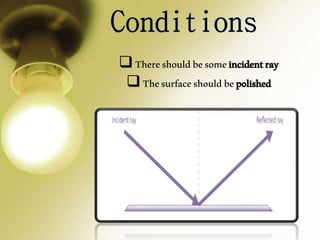
Conditionsforreflection
Lawsofreflection
Typesofreflection
OphthalmicUse
Luminousobjectsarethosewhichgiveofthere
ownlighte.g.sun
Non-Luminousobjectsarethosewhichdon’t
giveoftheownlighte:gmoon
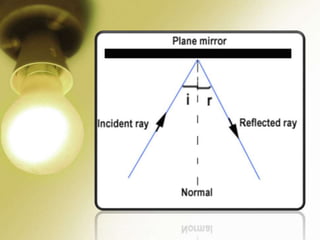
 Reflectionisthechangeindirectionofawave
front betweentwodifferentmediasothatthe
wavefrontreturnsintothemediumfromwhich
itoriginated
 Whenlightraystravelinginamedium
reachestheboundaryofothermedium,theyturn
backtothefirstmedium.Thisphenomenonof
turningbackoflightintothesamemediumafter
strikingtheboundaryofothermediumiscalled
ReflectionofLight
Thereshouldbesomeincidentray
Thesurfaceshouldbepolished
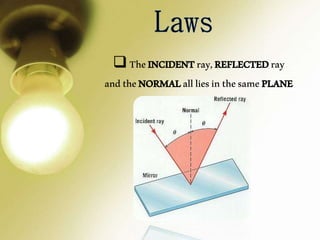
TheINCIDENTray,REFLECTEDray
andtheNORMALallliesinthesamePLANE
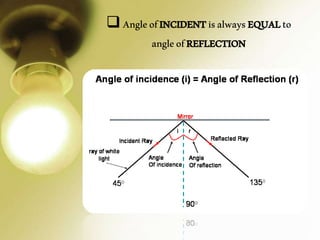
AngleofINCIDENTisalwaysEQUALto
angleofREFLECTION
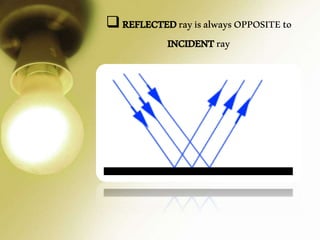
REFLECTEDrayisalwaysOPPOSITEto
INCIDENTray
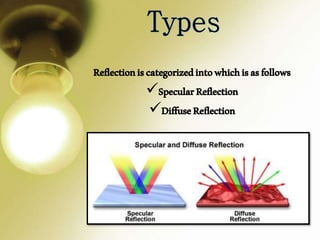
Reflectioniscategorizedintowhichisasfollows
SpecularReflection
DiffuseReflection
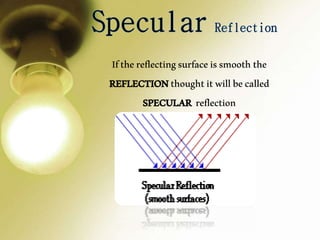
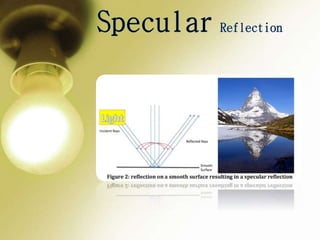
Ifthereflectingsurfaceissmooththe
REFLECTIONthoughtitwillbecalled
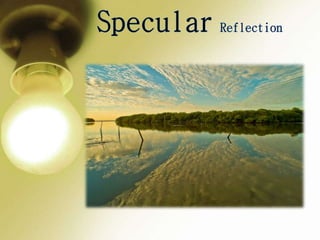
SPECULAR reflection
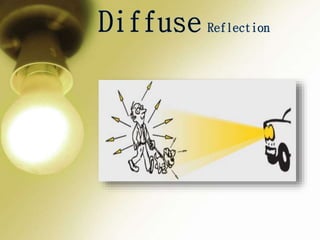
Whenlightstrikessurfaceofnon-metallic
materialitbouncesoffinall directionsbythe
microscopicirregularitiesthisiscalleddiffuse
reflection
Or
Ifthereflectingsurfaceisroughthereflection
thoughtitwillbecalleddiffuserefection
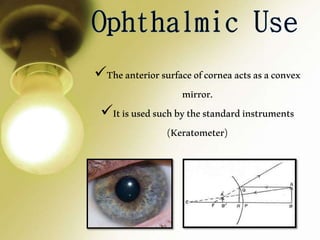
Theanteriorsurfaceofcorneaactsasaconvex
mirror.
Itisusedsuchbythestandardinstruments
(Keratometer)
Reflection of light