Recruitment
Presented
by :Lokanath prusty
content
 Introduction
 Recruitment process
 conclusion
Introduction to Recruitment
Why is Recruitment Important?
• Recruitment is the process of finding and
attracting qualified candidates for job openings.
• It plays a crucial role in building a talented and
diverse workforce.
• Effective recruitment ensures the right people are
hired for the right positions.
• This leads to increased productivity, employee
satisfaction, and organizational success.
Identifying Job Requirements
Defining the Ideal Candidate
• Clearly define the skills, qualifications, and
experience required for the job.
• Consider both technical and soft skills that are
essential for success in the role.
• Ensure job descriptions are accurate and
appealing to attract suitable candidates.
• Define the cultural fit and values that align with
your organization.
s
Sourcing Candidates
Finding Potential Candidates
• Utilize multiple channels to attract a wide pool of
candidates.
• Advertise job openings on job boards, social
media, and professional networking platforms.
• Consider using recruitment agencies or
headhunters to find passive candidates.
• Employee referrals can also be a valuable source
of high-quality candidates.
Photo by Pexels
Screening and Selection
Evaluating and Choosing Candidates
• Review resumes and applications to shortlist
qualified candidates.
• Conduct phone or video interviews to assess
candidates' communication and basic skills.
• Organize in-person or virtual interviews to
evaluate candidates' technical and cultural fit.
• Assess candidates through tests, assessments,
and reference checks before making a final
decision.
Interviewing Techniques
Effective Interviewing Process
• Prepare structured interview questions that
assess candidates' relevant skills and experience.
• Use behavioral and situational questions to gauge
candidates' problem-solving and decision-making
abilities.
• Ensure a fair and unbiased interview process to
avoid any form of discrimination.
• Take notes and evaluate each candidate
objectively based on predetermined criteria.
Onboarding and Orientation
Successful Integration of New Hires
• Develop an onboarding program to help new
employees acclimate to the organization.
• Provide necessary training, resources, and
support to facilitate a smooth transition.
• Assign mentors or buddies to help new hires
adapt to the company culture and team
dynamics.
• Regularly check in with new employees to
address any concerns and ensure their success.
Employee Retention Strategies
Keeping Your Top Talent Engaged
• Recognize and reward high-performing
employees to motivate and retain them.
• Provide opportunities for career growth and
professional development.
• Promote a positive work environment and foster
open communication.
• Offer competitive compensation and benefits
packages to attract and retain top talent.
Conclusion
Key Takeaways
• Effective recruitment is essential for finding the
right talent for your organization.
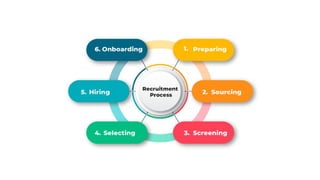
• It involves identifying job requirements, sourcing
candidates, and conducting thorough screening
and selection processes.
• Successful onboarding, employee retention
strategies, and diversity and inclusion efforts
contribute to a strong workforce.
• By following these steps, you can build a talented
and diverse team that drives organizational
success.
THANK YOU

recruitment .pptx for MBA and PGDM Students

  • 1.
  • 2.
  • 3.
    Introduction to Recruitment Whyis Recruitment Important? • Recruitment is the process of finding and attracting qualified candidates for job openings. • It plays a crucial role in building a talented and diverse workforce. • Effective recruitment ensures the right people are hired for the right positions. • This leads to increased productivity, employee satisfaction, and organizational success.
  • 5.
    Identifying Job Requirements Definingthe Ideal Candidate • Clearly define the skills, qualifications, and experience required for the job. • Consider both technical and soft skills that are essential for success in the role. • Ensure job descriptions are accurate and appealing to attract suitable candidates. • Define the cultural fit and values that align with your organization. s
  • 6.
    Sourcing Candidates Finding PotentialCandidates • Utilize multiple channels to attract a wide pool of candidates. • Advertise job openings on job boards, social media, and professional networking platforms. • Consider using recruitment agencies or headhunters to find passive candidates. • Employee referrals can also be a valuable source of high-quality candidates. Photo by Pexels
  • 7.
    Screening and Selection Evaluatingand Choosing Candidates • Review resumes and applications to shortlist qualified candidates. • Conduct phone or video interviews to assess candidates' communication and basic skills. • Organize in-person or virtual interviews to evaluate candidates' technical and cultural fit. • Assess candidates through tests, assessments, and reference checks before making a final decision.
  • 8.
    Interviewing Techniques Effective InterviewingProcess • Prepare structured interview questions that assess candidates' relevant skills and experience. • Use behavioral and situational questions to gauge candidates' problem-solving and decision-making abilities. • Ensure a fair and unbiased interview process to avoid any form of discrimination. • Take notes and evaluate each candidate objectively based on predetermined criteria.
  • 9.
    Onboarding and Orientation SuccessfulIntegration of New Hires • Develop an onboarding program to help new employees acclimate to the organization. • Provide necessary training, resources, and support to facilitate a smooth transition. • Assign mentors or buddies to help new hires adapt to the company culture and team dynamics. • Regularly check in with new employees to address any concerns and ensure their success.
  • 10.
    Employee Retention Strategies KeepingYour Top Talent Engaged • Recognize and reward high-performing employees to motivate and retain them. • Provide opportunities for career growth and professional development. • Promote a positive work environment and foster open communication. • Offer competitive compensation and benefits packages to attract and retain top talent.
  • 11.
    Conclusion Key Takeaways • Effectiverecruitment is essential for finding the right talent for your organization. • It involves identifying job requirements, sourcing candidates, and conducting thorough screening and selection processes. • Successful onboarding, employee retention strategies, and diversity and inclusion efforts contribute to a strong workforce. • By following these steps, you can build a talented and diverse team that drives organizational success.

  • 12.