Recognise The
Different Types of
Indoor Positioning
Systems
Industry-leading techniques ensure you get
positions measured in centimetres, not metres.
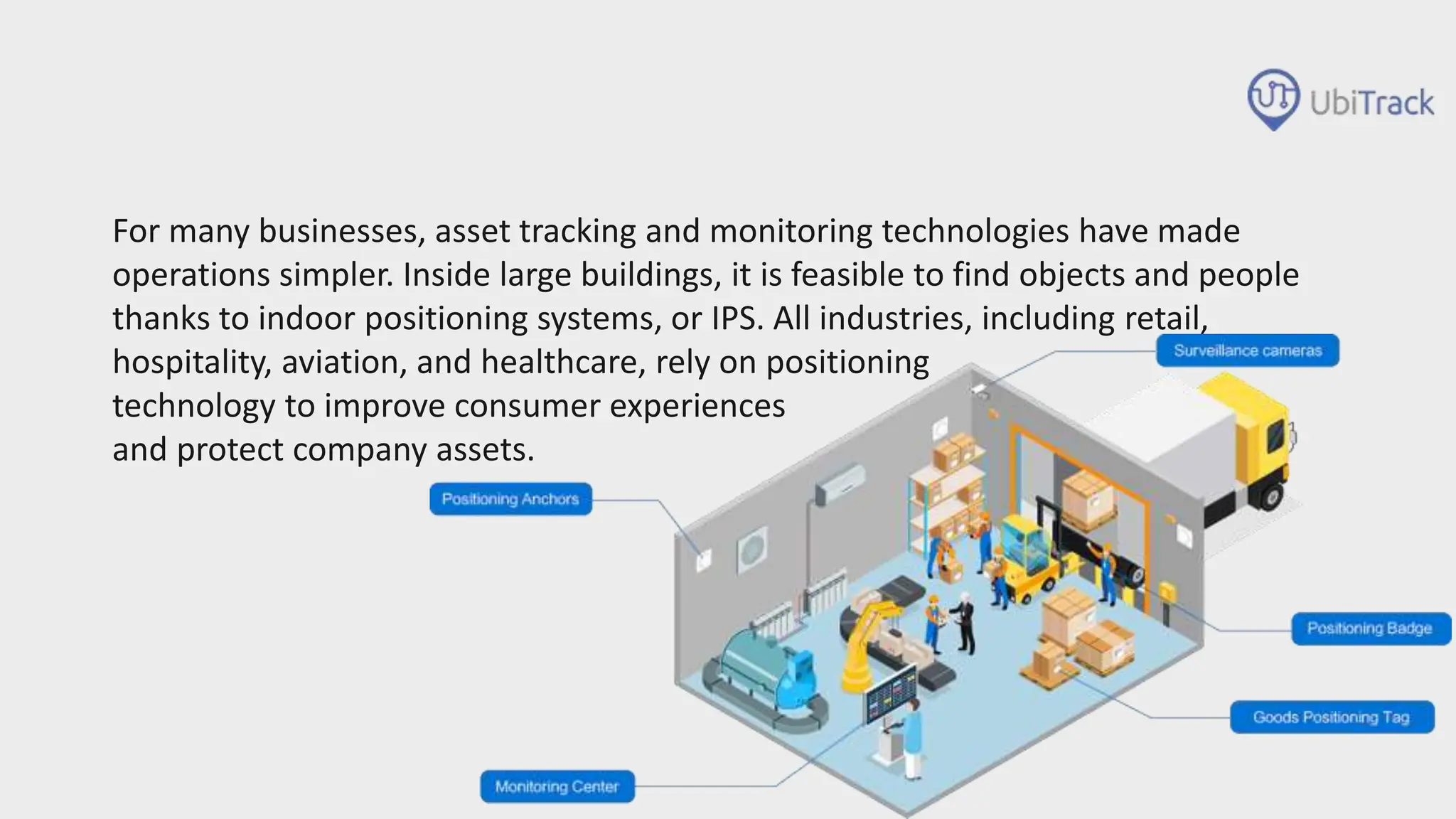
For many businesses, asset tracking and monitoring technologies have made
operations simpler. Inside large buildings, it is feasible to find objects and people
thanks to indoor positioning systems, or IPS. All industries, including retail,
hospitality, aviation, and healthcare, rely on positioning
technology to improve consumer experiences
and protect company assets.
Passive RFID
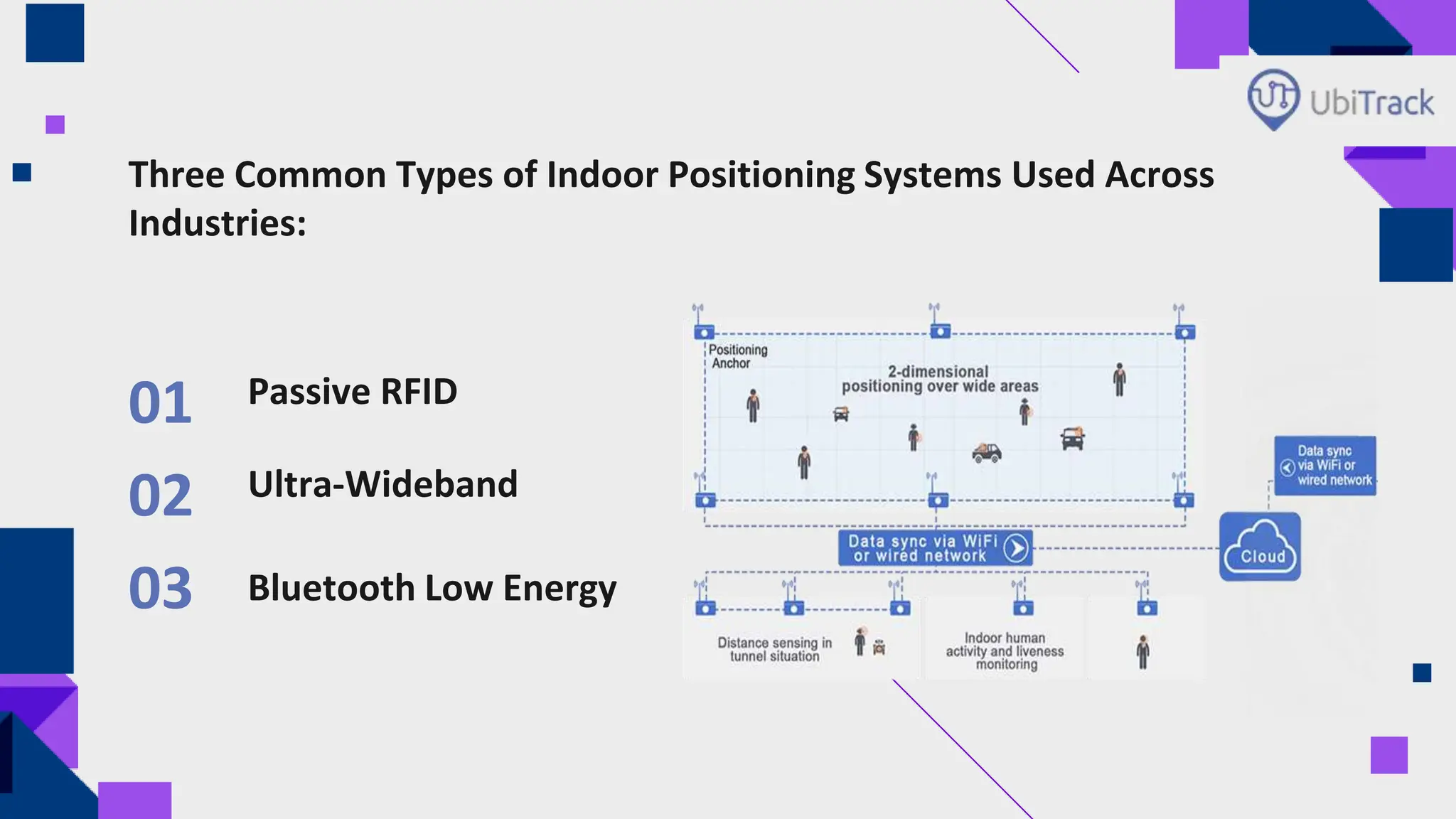
Three Common Types of Indoor Positioning Systems Used Across
Industries:
01
02
03
Ultra-Wideband
Bluetooth Low Energy
Passive Radio-frequency
identification -
Radio-frequency identification is known as
RFID. It uses radio waves to wirelessly
communicate the object's identity.
Transponders and a reader are included. It
requires little upkeep and is reasonably
priced.
Ultra-Wideband Technology
For localization across a large area, ultra-wideband is best. The indoor positioning
sensor can locate an object to within a few centimetres of its location. Since UVW
technology began to be used in iPhones, the term "ultra-wideband technology" has
gained widespread usage.
A kind of wireless technology called
Bluetooth Low Energy makes it possible for
a personal area network to use radio
waves. It is now essential to the security,
fitness, beacons, healthcare, and
entertainment sectors.
Bluetooth Low Energy -
Indoor Position Tracking System
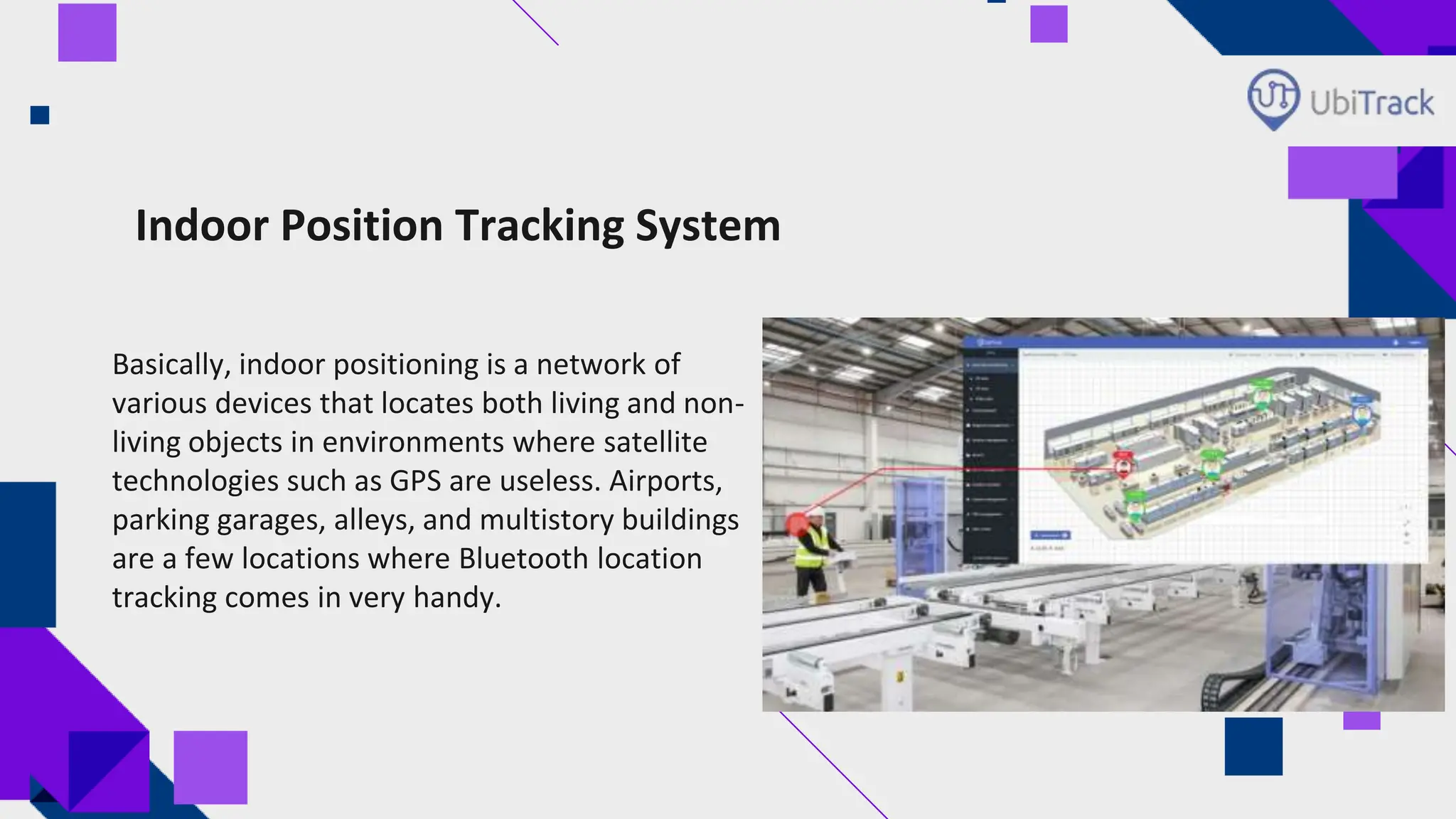
Basically, indoor positioning is a network of
various devices that locates both living and non-
living objects in environments where satellite
technologies such as GPS are useless. Airports,
parking garages, alleys, and multistory buildings
are a few locations where Bluetooth location
tracking comes in very handy.
Does anyone have any questions?
https://www.ubitrack.com/
https://twitter.com/UbiBot_io
sales@ubitrack.com
Thanks

Recognise The Different Types of Indoor Positioning Systems.ppt

  • 1.
    Recognise The Different Typesof Indoor Positioning Systems Industry-leading techniques ensure you get positions measured in centimetres, not metres.
  • 2.
    For many businesses,asset tracking and monitoring technologies have made operations simpler. Inside large buildings, it is feasible to find objects and people thanks to indoor positioning systems, or IPS. All industries, including retail, hospitality, aviation, and healthcare, rely on positioning technology to improve consumer experiences and protect company assets.
  • 3.
    Passive RFID Three CommonTypes of Indoor Positioning Systems Used Across Industries: 01 02 03 Ultra-Wideband Bluetooth Low Energy
  • 4.
    Passive Radio-frequency identification - Radio-frequencyidentification is known as RFID. It uses radio waves to wirelessly communicate the object's identity. Transponders and a reader are included. It requires little upkeep and is reasonably priced.
  • 5.
    Ultra-Wideband Technology For localizationacross a large area, ultra-wideband is best. The indoor positioning sensor can locate an object to within a few centimetres of its location. Since UVW technology began to be used in iPhones, the term "ultra-wideband technology" has gained widespread usage.
  • 6.
    A kind ofwireless technology called Bluetooth Low Energy makes it possible for a personal area network to use radio waves. It is now essential to the security, fitness, beacons, healthcare, and entertainment sectors. Bluetooth Low Energy -
  • 7.
    Indoor Position TrackingSystem Basically, indoor positioning is a network of various devices that locates both living and non- living objects in environments where satellite technologies such as GPS are useless. Airports, parking garages, alleys, and multistory buildings are a few locations where Bluetooth location tracking comes in very handy.
  • 8.
    Does anyone haveany questions? https://www.ubitrack.com/ https://twitter.com/UbiBot_io sales@ubitrack.com Thanks