React and MobX
A Truly Reactive App
Intro	
Jacob Orshalick
solutionsfit | http://www.solutionsfit.com
jacob@solutionsfit.com
React Basics
UI Component framework
Provides the View layer in MVC
Components can have internal state
Not intended to provide complete UI solution
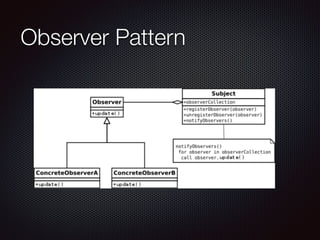
Observer Pattern
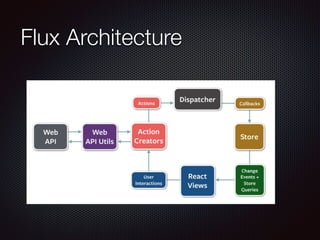
Flux Architecture
Flux Architecture
Facebook Approach
More complicated Observer Pattern
State Immutability, makes undo operations easy
Redux is most commonly used framework
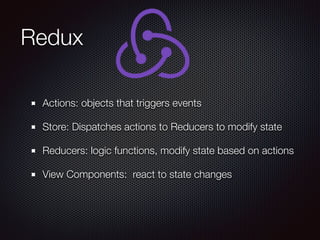
Redux
Actions: objects that triggers events
Store: Dispatches actions to Reducers to modify state
Reducers: logic functions, modify state based on actions
View Components: react to state changes
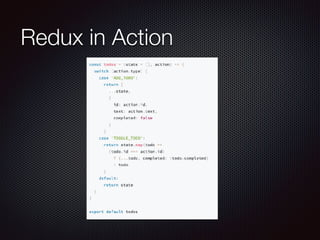
Redux in Action
How about MobX?
Simplified architecture
Intuitive behavior
Unobtrusive state management
Simply put, much less code!
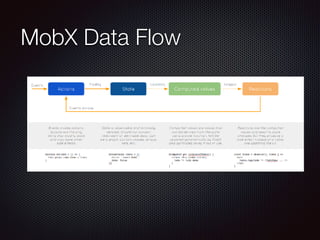
MobX Data Flow
Stores
Stores are the classes that maintain the app state
Contain the app data and operations on that data
Provide the state to components
@observable
Used on attributes that hold page state
Wraps the attribute with MobX magic
Changes to the object will update observers
export class UserStore {
@observable users: User[] = [];
@observable currentUser: User;
... ...
}
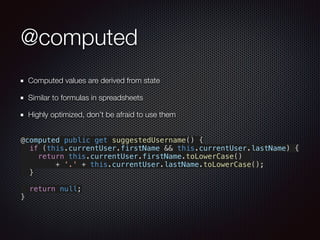
@computed
Computed values are derived from state
Similar to formulas in spreadsheets
Highly optimized, don’t be afraid to use them
@computed public get suggestedUsername() {
if (this.currentUser.firstName && this.currentUser.lastName) {
return this.currentUser.firstName.toLowerCase()
+ '.' + this.currentUser.lastName.toLowerCase();
}
return null;
}
@observer
Turns ReactJS components into reactive components
Ensures that data changes result in re-rendering
Applies only to MobX wrapped data
@observer
export class UserForm extends React.Component<UserFormProps, {}> {
... ...
}
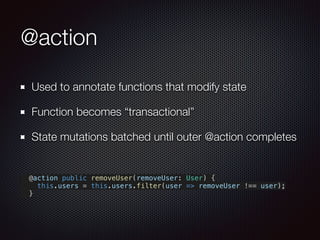
@action
Used to annotate functions that modify state
Function becomes “transactional”
State mutations batched until outer @action completes
@action public removeUser(removeUser: User) {
this.users = this.users.filter(user => removeUser !== user);
}
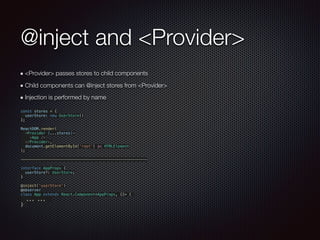
@inject and <Provider>
<Provider> passes stores to child components
Child components can @inject stores from <Provider>
Injection is performed by name
const stores = {
userStore: new UserStore()
};
ReactDOM.render(
<Provider {...stores}>
<App />
</Provider>,
document.getElementById('root') as HTMLElement
);
————————————————————————————————————————————————————————
interface AppProps {
userStore?: UserStore;
}
@inject('userStore')
@observer
class App extends React.Component<AppProps, {}> {
... ...
}
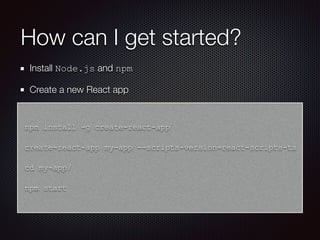
How can I get started?
Install Node.js and npm
Create a new React app
npm install -g create-react-app
create-react-app my-app --scripts-version=react-scripts-ts
cd my-app/
npm start
How can I get started?
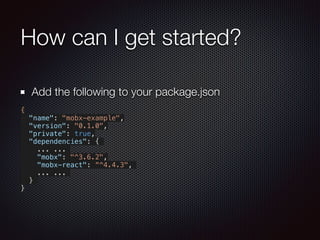
Add the following to your package.json
{
"name": "mobx-example",
"version": "0.1.0",
"private": true,
"dependencies": {
... ...
"mobx": "^3.6.2",
"mobx-react": “^4.4.3",
... ...
}
}
Code Example
React and MobX Code Example Walk-through
Questions?
Jacob Orshalick
solutionsfit | http://www.solutionsfit.com
jacob@solutionsfit.com
References
https://redux.js.org
https://mobx.js.org
https://github.com/facebook/create-react-app
https://www.npmjs.com/get-npm
All images are the property of their creators

React and MobX: A Truly Reactive App

  • 1.
    React and MobX ATruly Reactive App
  • 2.
    Intro Jacob Orshalick solutionsfit |http://www.solutionsfit.com jacob@solutionsfit.com
  • 3.
    React Basics UI Componentframework Provides the View layer in MVC Components can have internal state Not intended to provide complete UI solution
  • 4.
  • 5.
  • 6.
    Flux Architecture Facebook Approach Morecomplicated Observer Pattern State Immutability, makes undo operations easy Redux is most commonly used framework
  • 7.
    Redux Actions: objects thattriggers events Store: Dispatches actions to Reducers to modify state Reducers: logic functions, modify state based on actions View Components: react to state changes
  • 8.
  • 9.
    How about MobX? Simplifiedarchitecture Intuitive behavior Unobtrusive state management Simply put, much less code!
  • 10.
  • 11.
    Stores Stores are theclasses that maintain the app state Contain the app data and operations on that data Provide the state to components
  • 12.
    @observable Used on attributesthat hold page state Wraps the attribute with MobX magic Changes to the object will update observers export class UserStore { @observable users: User[] = []; @observable currentUser: User; ... ... }
  • 13.
    @computed Computed values arederived from state Similar to formulas in spreadsheets Highly optimized, don’t be afraid to use them @computed public get suggestedUsername() { if (this.currentUser.firstName && this.currentUser.lastName) { return this.currentUser.firstName.toLowerCase() + '.' + this.currentUser.lastName.toLowerCase(); } return null; }
  • 14.
    @observer Turns ReactJS componentsinto reactive components Ensures that data changes result in re-rendering Applies only to MobX wrapped data @observer export class UserForm extends React.Component<UserFormProps, {}> { ... ... }
  • 15.
    @action Used to annotatefunctions that modify state Function becomes “transactional” State mutations batched until outer @action completes @action public removeUser(removeUser: User) { this.users = this.users.filter(user => removeUser !== user); }
  • 16.
    @inject and <Provider> <Provider>passes stores to child components Child components can @inject stores from <Provider> Injection is performed by name const stores = { userStore: new UserStore() }; ReactDOM.render( <Provider {...stores}> <App /> </Provider>, document.getElementById('root') as HTMLElement ); ———————————————————————————————————————————————————————— interface AppProps { userStore?: UserStore; } @inject('userStore') @observer class App extends React.Component<AppProps, {}> { ... ... }
  • 17.
    How can Iget started? Install Node.js and npm Create a new React app npm install -g create-react-app create-react-app my-app --scripts-version=react-scripts-ts cd my-app/ npm start
  • 18.
    How can Iget started? Add the following to your package.json { "name": "mobx-example", "version": "0.1.0", "private": true, "dependencies": { ... ... "mobx": "^3.6.2", "mobx-react": “^4.4.3", ... ... } }
  • 19.
    Code Example React andMobX Code Example Walk-through
  • 20.
    Questions? Jacob Orshalick solutionsfit |http://www.solutionsfit.com jacob@solutionsfit.com
  • 21.