Random Sampling
+
RAT-Stats
Agenda
Part I – Sampling
Part II – RAT-Stats
Part III – Application
Objectives
What?
Why?
How?
Sampling
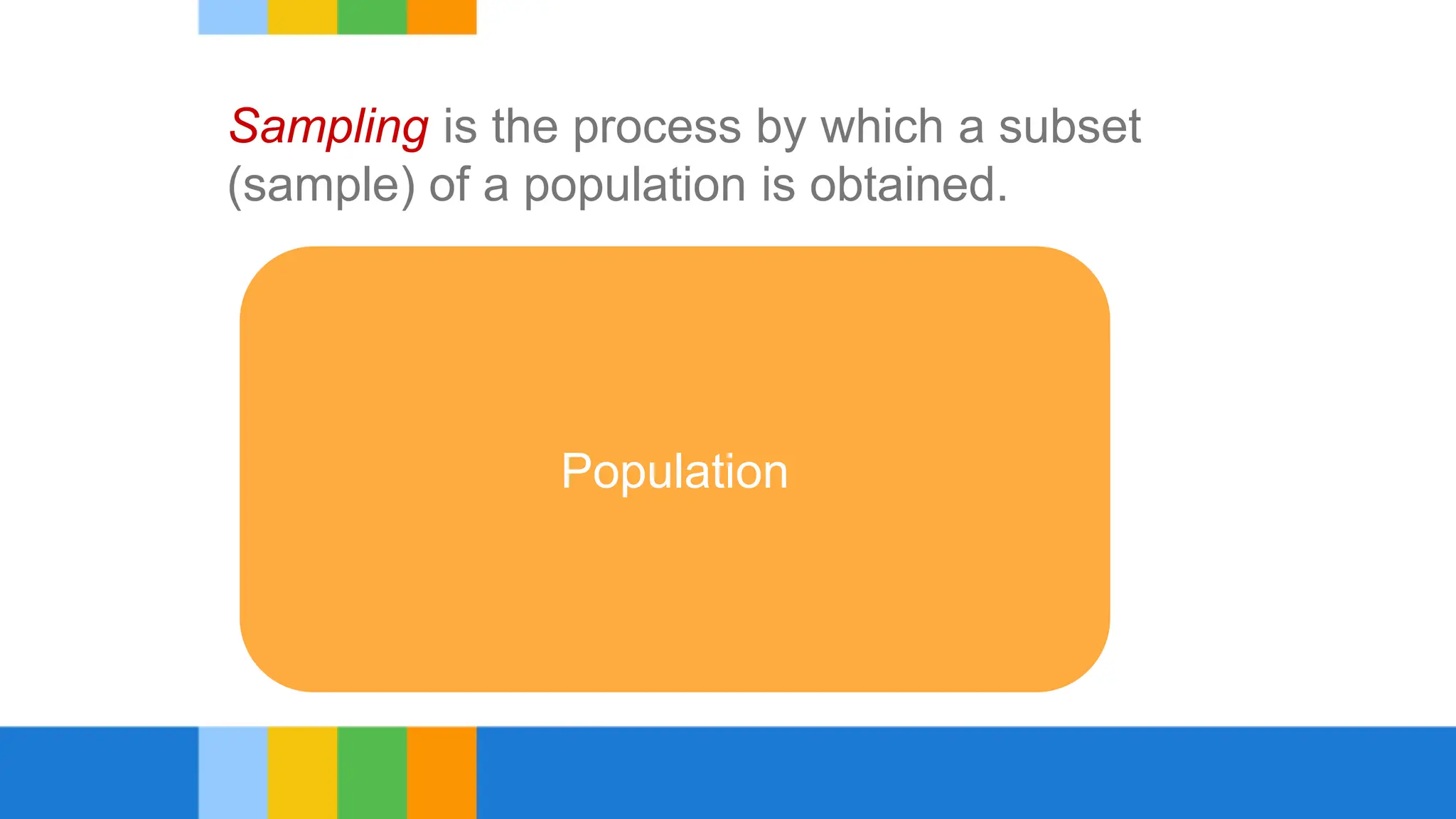
Population
Sampling is the process by which a subset
(sample) of a population is obtained.
Sample
Common Terms
Population - The entire pool from which a statistical sample is drawn
Sample - A subset of the population
Sampling Unit – What is measured in the audit
Sample Frame – Subset of the population defined as variables of
interest from which the sample will be randomly selected and over
which the sample will be extrapolated
Confidence Interval – The probability that the value of a parameter
falls within a specified range of values
Common Terms
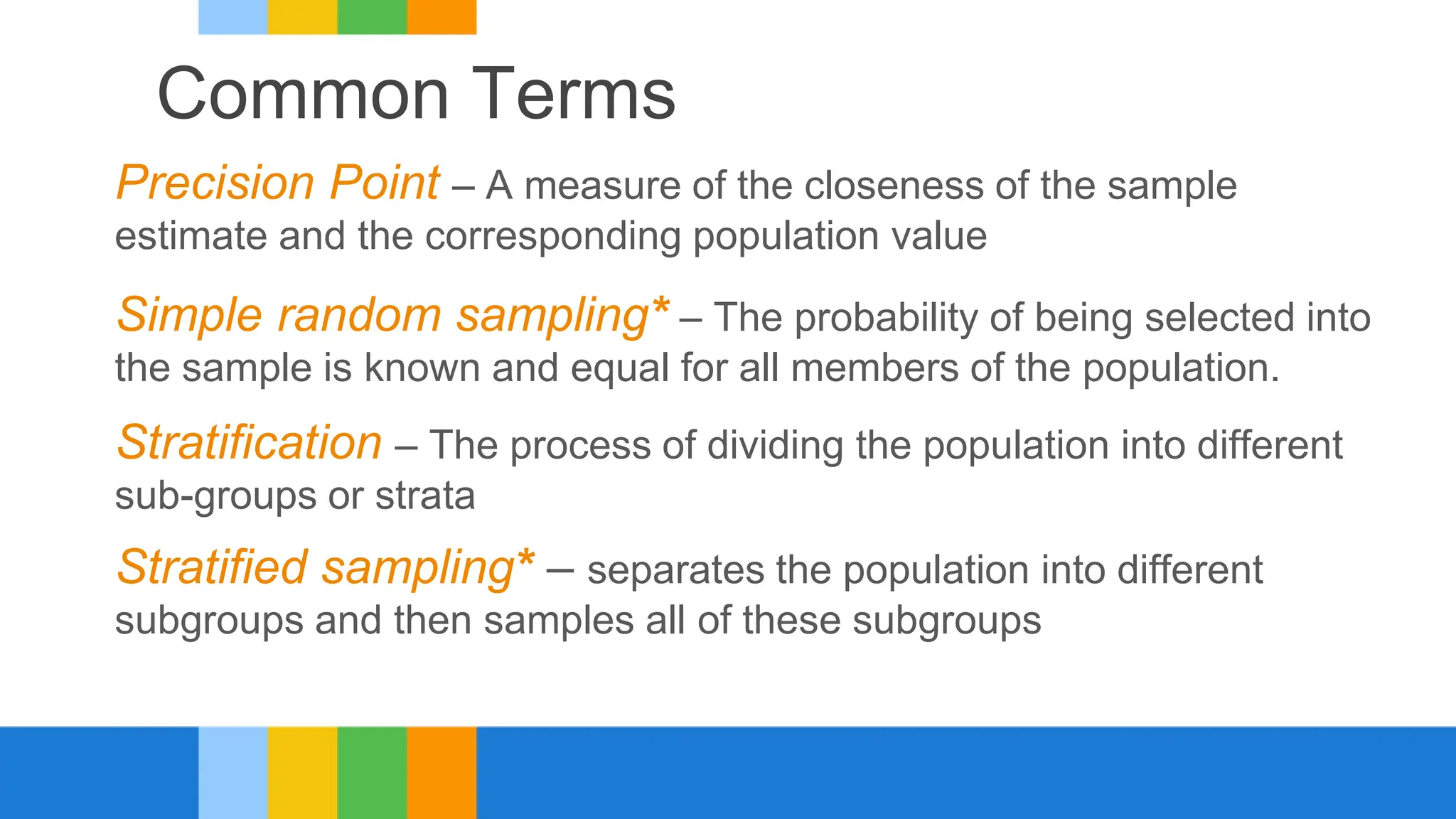
Stratification – The process of dividing the population into different
sub-groups or strata
Precision Point – A measure of the closeness of the sample
estimate and the corresponding population value
Simple random sampling* – The probability of being selected into
the sample is known and equal for all members of the population.
Stratified sampling* – separates the population into different
subgroups and then samples all of these subgroups
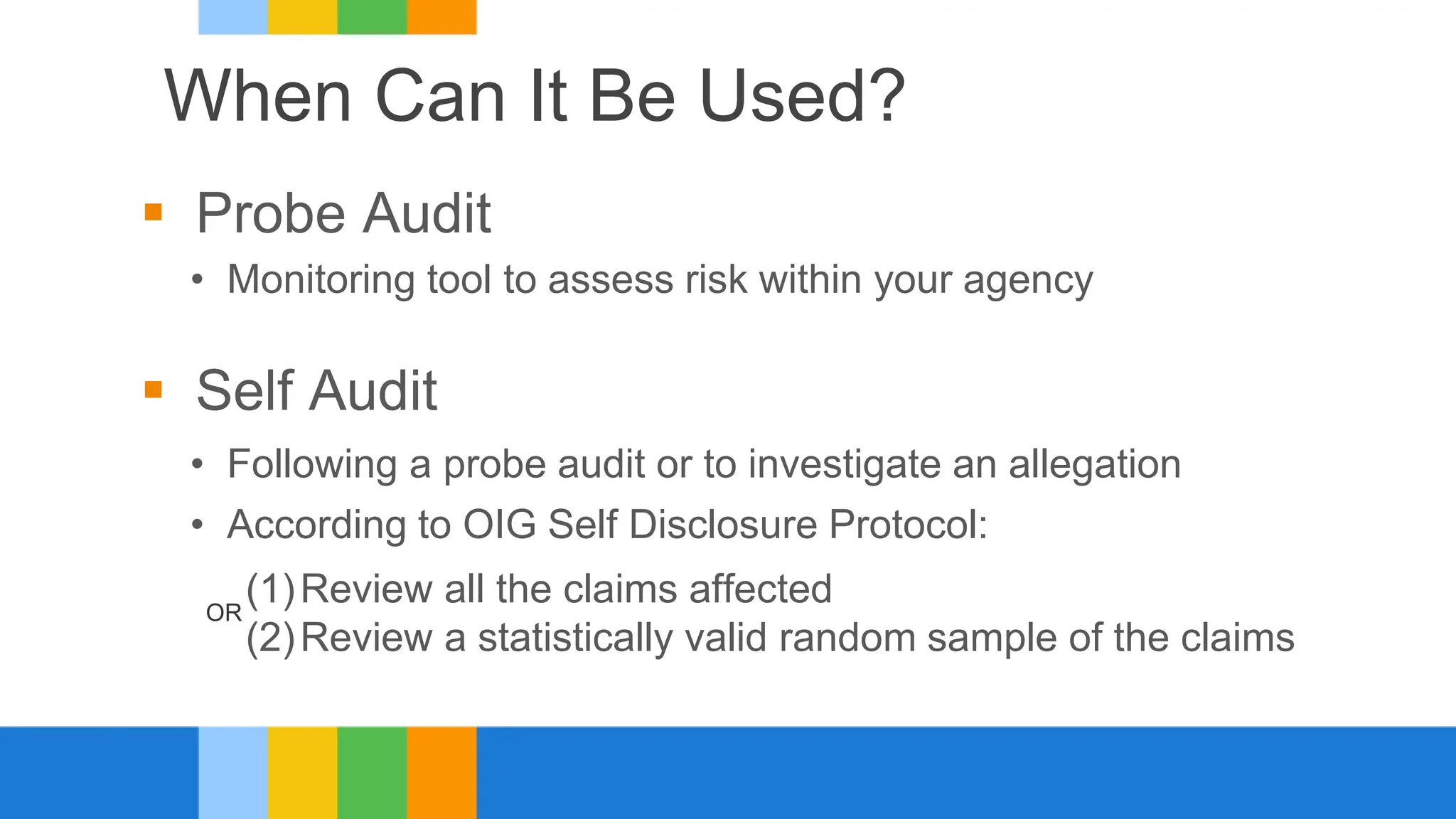
When Can It Be Used?
 Probe Audit
 Self Audit
• Monitoring tool to assess risk within your agency
• Following a probe audit or to investigate an allegation
• According to OIG Self Disclosure Protocol:
(1)Review all the claims affected
(2)Review a statistically valid random sample of the claims
OR
The Process
1 – Define the population
2 – Identify the sampling frame
3 – Select a sampling design or procedure
4 – Determine sample size
5 – Draw the sample
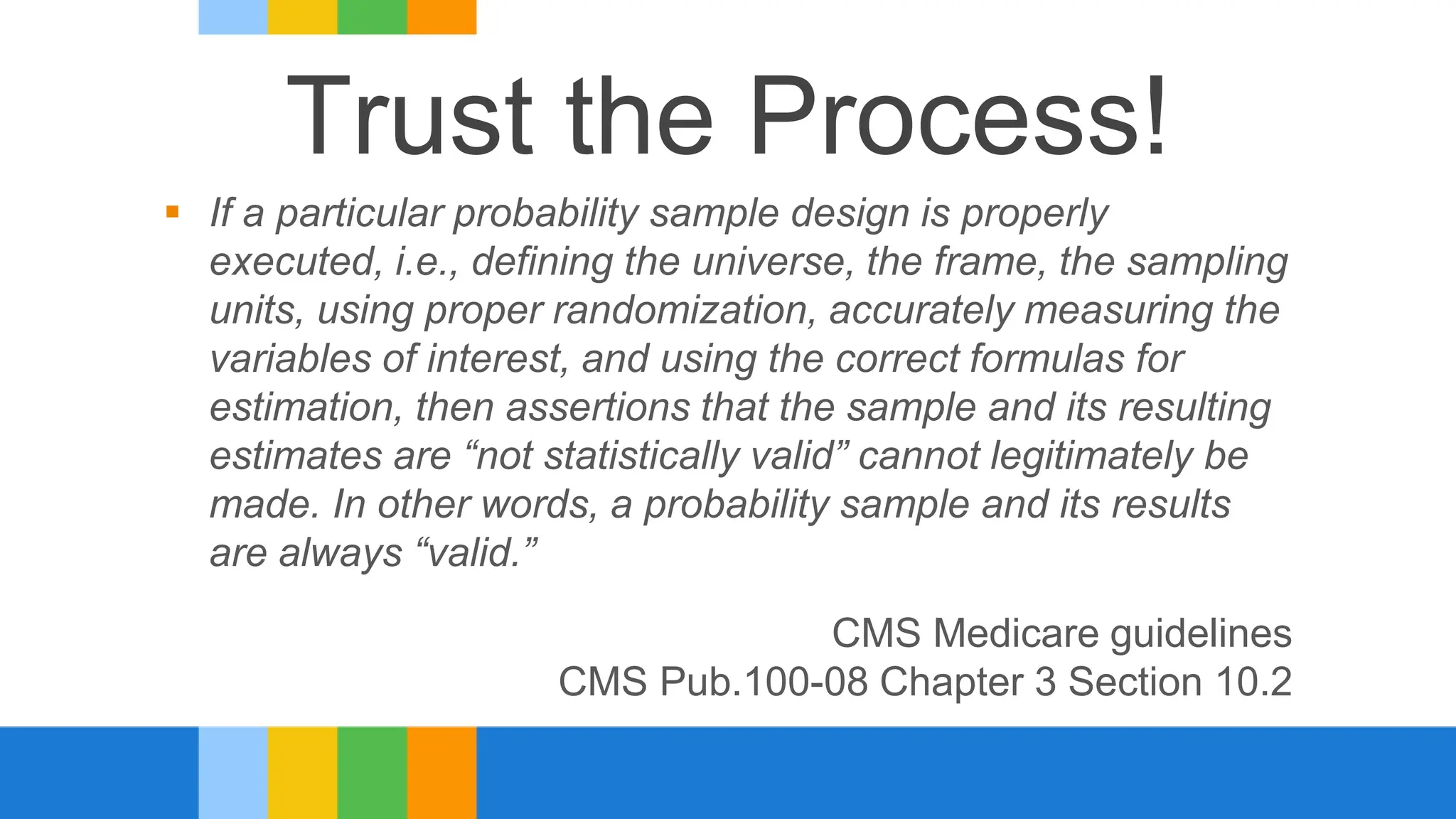
Trust the Process!
 If a particular probability sample design is properly
executed, i.e., defining the universe, the frame, the sampling
units, using proper randomization, accurately measuring the
variables of interest, and using the correct formulas for
estimation, then assertions that the sample and its resulting
estimates are “not statistically valid” cannot legitimately be
made. In other words, a probability sample and its results
are always “valid.”
CMS Medicare guidelines
CMS Pub.100-08 Chapter 3 Section 10.2
RAT-Stats
What Does It Mean?
Regional
Advanced
Techniques
Statistics
What Can It Do?
 Determines statistically valid sample size
 Generates replicable random number sets
through seed numbers*
 Determines a range of financial impacts based
on the sample reviewed
*-Always document the seed number, so that your work is able to be replicated
either by another person in your agency or an outside source
The Magic
Illustrated
^Example of a Random Number Set
^Formula to determine Confidence
Application
Let’s Practice!
 The step-by-step walkthrough takes you through the
entire sampling process, down to the very key stroke
 A web-based walkthrough is being developed and will
be released in early 2019
 Walkthrough guide is available on the CBH website*
*-Worksheets containing fabricated data which can be used for practice developing a
sample, in combination with the walkthrough, are available upon request. Please
contact Nicole Beaufort via email at Nicole.Beaufort@phila.gov to request the
worksheet.
Takeaways
 Sampling with RAT-Stats is both efficient and
accurate
 Strengthens agency’s ability to monitor for issues
related to Fraud, Waste, and Abuse
 RAT-Stats software used by both OIG and CMS
– Also used by CBH to develop samples in both probe audits and targeted audits
 Not just for use in audits involving extrapolation
– Can also be used for internal audits and sample creation for self audits
References
 Center for Medicare and Medicaid Services. 2018. Publication 100-08 -
Medicare Program Integrity Manual. https://www.cms.gov/Regulations-and-
Guidance/Guidance/Manuals/Internet-Only-Manuals-IOMs-
Items/CMS019033.html.
 Office of Inspector General - U.S. Department of Health & Human Services.
2013. Provider Self-Disclosure Protocol. https://oig.hhs.gov/compliance/self-
disclosure-info/protocol.asp.

Random-Sampling-w-RAT-Stats.pptx

  • 1.
  • 2.
    Agenda Part I –Sampling Part II – RAT-Stats Part III – Application
  • 3.
  • 4.
  • 5.
    Population Sampling is theprocess by which a subset (sample) of a population is obtained. Sample
  • 6.
    Common Terms Population -The entire pool from which a statistical sample is drawn Sample - A subset of the population Sampling Unit – What is measured in the audit Sample Frame – Subset of the population defined as variables of interest from which the sample will be randomly selected and over which the sample will be extrapolated Confidence Interval – The probability that the value of a parameter falls within a specified range of values
  • 7.
    Common Terms Stratification –The process of dividing the population into different sub-groups or strata Precision Point – A measure of the closeness of the sample estimate and the corresponding population value Simple random sampling* – The probability of being selected into the sample is known and equal for all members of the population. Stratified sampling* – separates the population into different subgroups and then samples all of these subgroups
  • 8.
    When Can ItBe Used?  Probe Audit  Self Audit • Monitoring tool to assess risk within your agency • Following a probe audit or to investigate an allegation • According to OIG Self Disclosure Protocol: (1)Review all the claims affected (2)Review a statistically valid random sample of the claims OR
  • 9.
    The Process 1 –Define the population 2 – Identify the sampling frame 3 – Select a sampling design or procedure 4 – Determine sample size 5 – Draw the sample
  • 10.
    Trust the Process! If a particular probability sample design is properly executed, i.e., defining the universe, the frame, the sampling units, using proper randomization, accurately measuring the variables of interest, and using the correct formulas for estimation, then assertions that the sample and its resulting estimates are “not statistically valid” cannot legitimately be made. In other words, a probability sample and its results are always “valid.” CMS Medicare guidelines CMS Pub.100-08 Chapter 3 Section 10.2
  • 11.
  • 12.
    What Does ItMean? Regional Advanced Techniques Statistics
  • 13.
    What Can ItDo?  Determines statistically valid sample size  Generates replicable random number sets through seed numbers*  Determines a range of financial impacts based on the sample reviewed *-Always document the seed number, so that your work is able to be replicated either by another person in your agency or an outside source
  • 14.
    The Magic Illustrated ^Example ofa Random Number Set ^Formula to determine Confidence
  • 15.
  • 16.
    Let’s Practice!  Thestep-by-step walkthrough takes you through the entire sampling process, down to the very key stroke  A web-based walkthrough is being developed and will be released in early 2019  Walkthrough guide is available on the CBH website* *-Worksheets containing fabricated data which can be used for practice developing a sample, in combination with the walkthrough, are available upon request. Please contact Nicole Beaufort via email at Nicole.Beaufort@phila.gov to request the worksheet.
  • 17.
    Takeaways  Sampling withRAT-Stats is both efficient and accurate  Strengthens agency’s ability to monitor for issues related to Fraud, Waste, and Abuse  RAT-Stats software used by both OIG and CMS – Also used by CBH to develop samples in both probe audits and targeted audits  Not just for use in audits involving extrapolation – Can also be used for internal audits and sample creation for self audits
  • 18.
    References  Center forMedicare and Medicaid Services. 2018. Publication 100-08 - Medicare Program Integrity Manual. https://www.cms.gov/Regulations-and- Guidance/Guidance/Manuals/Internet-Only-Manuals-IOMs- Items/CMS019033.html.  Office of Inspector General - U.S. Department of Health & Human Services. 2013. Provider Self-Disclosure Protocol. https://oig.hhs.gov/compliance/self- disclosure-info/protocol.asp.