RAILWAY RESERVATIONSYSTEM
SRINIVAS
BCOM(C.A)
14795
INTRODUTION
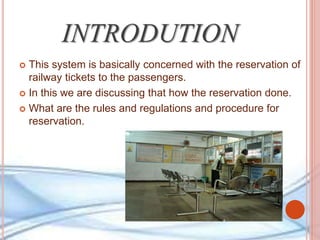
 This system is basically concerned with the reservation of
railway tickets to the passengers.
 In this we are discussing that how the reservation done.
 What are the rules and regulations and procedure for
reservation.
CNTD…
 In this project we are going to include all the entities
related to reservation.
 Employees
 Customers
 Stations
 Trains
 Forms
 Ticket
 Class
EMPLOYEES
 According to 2014 in indian railways the employees
are 1.334 million.
 In this part we are covering all the details related to
employee.
 Emp_name
 Emp_id
 Address
 Gender
 Phn_no
 Date_joined
 Date_shift
CUSTOMER
 In this part we are covering all the details related to
customer required for reservation.
 Customer_name
 Customer_id
 Address
 Age
 Gender
 Phone no
STATIONS
 In this part we are covering the details of the station ex:
station name, number of trains passing or going from that
station or coming to that station. Number of platforms,
number of lines.
 Station_name
 No. of lines
 Station_id
 No. of platforms
TRAINS
 In this part we are covering all the details related to the
trains. We are covering train no, train name, no. of
passengers travelling through train, classes is train, route
through which the train is going.
 Train_name
 Train_no.
FORMS
 Forms are the most important part of reservation. Forms
are the source to know the details of the customers.
 Form_name
 Form_id
TICKET
 This is part where covering the tickets details. It includes
many attributes like id of tickets, class, fare, source
stations, destination station etc.
 PNR_no.
 Ticket_no.
 Source and Destination
 Class
 Fare
 Train_id
 Seat_id
CLASS
 In this part we are covering the different types of classes
that is:
 1st class
 2nd class
 Sleeper class
 General class
 So, the price depends upon the class the customer
selects. General is the cheapest class.
Railway Reservation system

Railway Reservation system

  • 1.
  • 2.
    INTRODUTION  This systemis basically concerned with the reservation of railway tickets to the passengers.  In this we are discussing that how the reservation done.  What are the rules and regulations and procedure for reservation.
  • 3.
    CNTD…  In thisproject we are going to include all the entities related to reservation.  Employees  Customers  Stations  Trains  Forms  Ticket  Class
  • 4.
    EMPLOYEES  According to2014 in indian railways the employees are 1.334 million.  In this part we are covering all the details related to employee.  Emp_name  Emp_id  Address  Gender  Phn_no  Date_joined  Date_shift
  • 5.
    CUSTOMER  In thispart we are covering all the details related to customer required for reservation.  Customer_name  Customer_id  Address  Age  Gender  Phone no
  • 6.
    STATIONS  In thispart we are covering the details of the station ex: station name, number of trains passing or going from that station or coming to that station. Number of platforms, number of lines.  Station_name  No. of lines  Station_id  No. of platforms
  • 7.
    TRAINS  In thispart we are covering all the details related to the trains. We are covering train no, train name, no. of passengers travelling through train, classes is train, route through which the train is going.  Train_name  Train_no.
  • 8.
    FORMS  Forms arethe most important part of reservation. Forms are the source to know the details of the customers.  Form_name  Form_id
  • 9.
    TICKET  This ispart where covering the tickets details. It includes many attributes like id of tickets, class, fare, source stations, destination station etc.  PNR_no.  Ticket_no.  Source and Destination  Class  Fare  Train_id  Seat_id
  • 10.
    CLASS  In thispart we are covering the different types of classes that is:  1st class  2nd class  Sleeper class  General class  So, the price depends upon the class the customer selects. General is the cheapest class.