เนื้อหาโดยสังเขป
• Introduction
• Physicaland chemical effect of radiation
• Cell survival curve
• Radioprotectors and radiosensitizers
• Effect of radiation on molecules and cells
3.
Sea of radiationwe live in
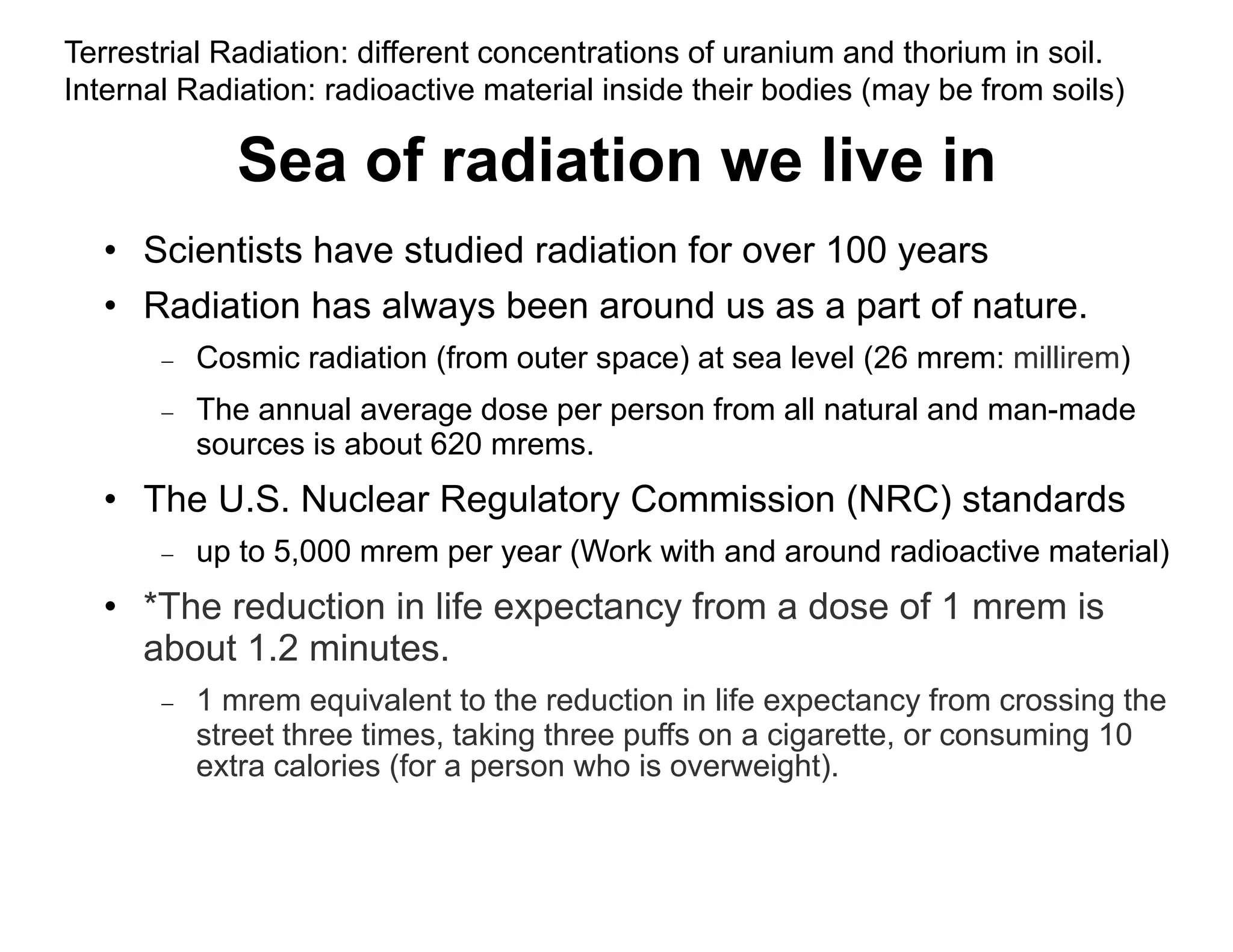
• Scientists have studied radiation for over 100 years
• Radiation has always been around us as a part of nature.
Cosmic radiation (from outer space) at sea level (26 mrem: millirem)
The annual average dose per person from all natural and man-made
sources is about 620 mrems.
• The U.S. Nuclear Regulatory Commission (NRC) standards
up to 5,000 mrem per year (Work with and around radioactive material)
• *The reduction in life expectancy from a dose of 1 mrem is
about 1.2 minutes.
1 mrem equivalent to the reduction in life expectancy from crossing the
street three times, taking three puffs on a cigarette, or consuming 10
extra calories (for a person who is overweight).
Terrestrial Radiation: different concentrations of uranium and thorium in soil.
Internal Radiation: radioactive material inside their bodies (may be from soils)
4.
รังสี Definition
• Radiationis an energy in the form of
electro-magnetic waves or particulate
matter, traveling in the air.
• A type of radiation that is able to
disrupt atoms and molecules on which
they pass through, giving rise to ions
and free radicals.
รังสีก่อประจุ Ionizing Radiation
รังสีไม่ก่อประจุ : ช่วงตํ่าของแถบ EM waves
5.
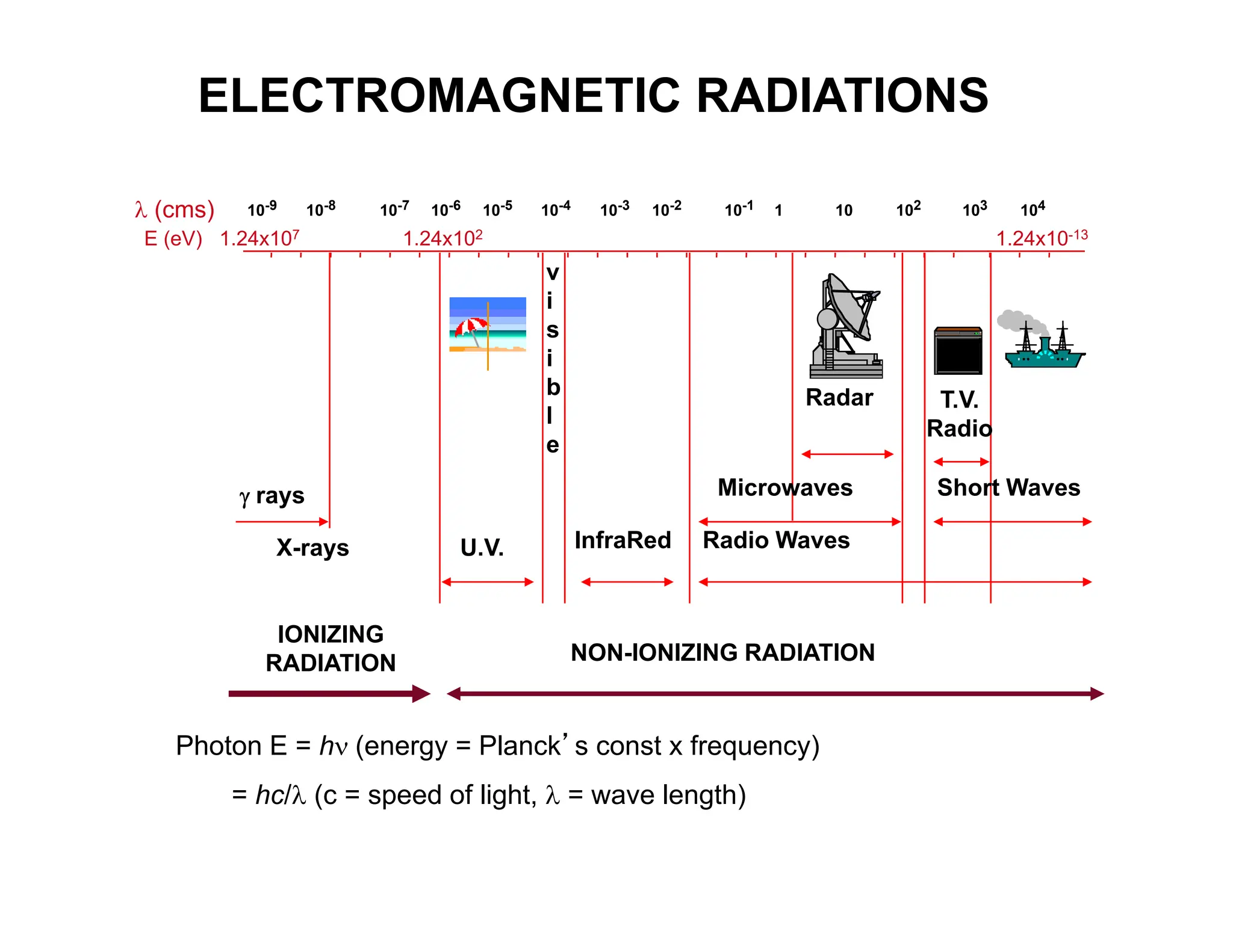
ELECTROMAGNETIC RADIATIONS
Photon E= h(energy = Planck’s const x frequency)
= hc/ (c = speed of light, = wave length)
10-9 10-8 10-7 10-6 10-5 10-4 10-3 10-2 10-1 1 10 102 103 104
rays
X-rays U.V.
v
i
s
i
b
l
e
InfraRed Radio Waves
Microwaves Short Waves
T.V.
Radio
Radar
IONIZING
RADIATION NON-IONIZING RADIATION
(cms)
E (eV) 1.24x10⁷ 1.24x10² 1.24x10⁻¹³
6.
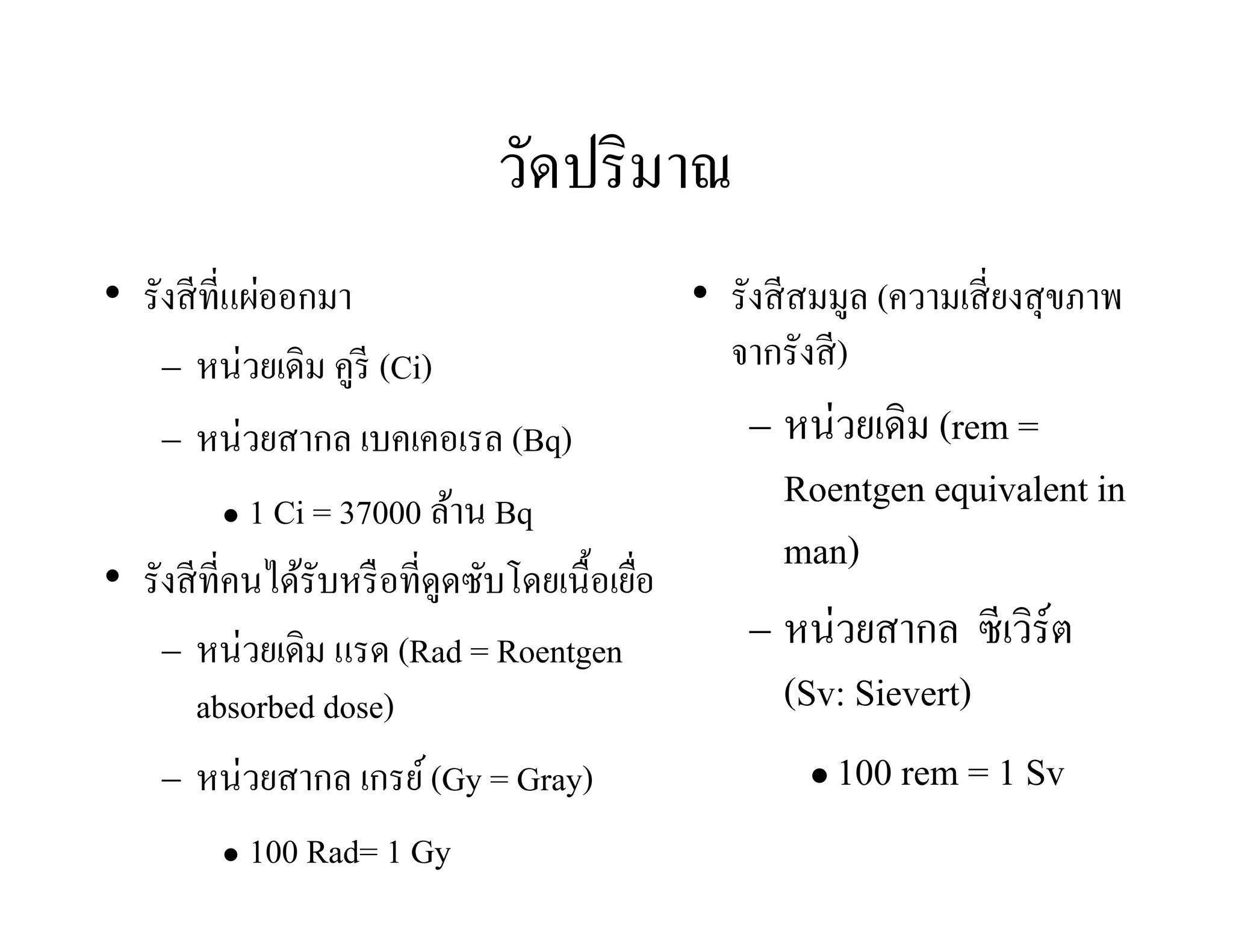
กัมมันตภาพรังสี Radioactivity
• Ifa nucleus is unstable for any reason, it
will emit and absorb particles. There are
many types of radiation and they are all
pertinent to everyday life and health as
well as nuclear physical applications.
• การแผ่รังสีได้เองอย่างต่อเนื่องของธาตุกัมมันตรังสี
Radiobiology
• Basic principles of physics and biology:
action of ionizing radiation on biological
tissues and living organisms
7.
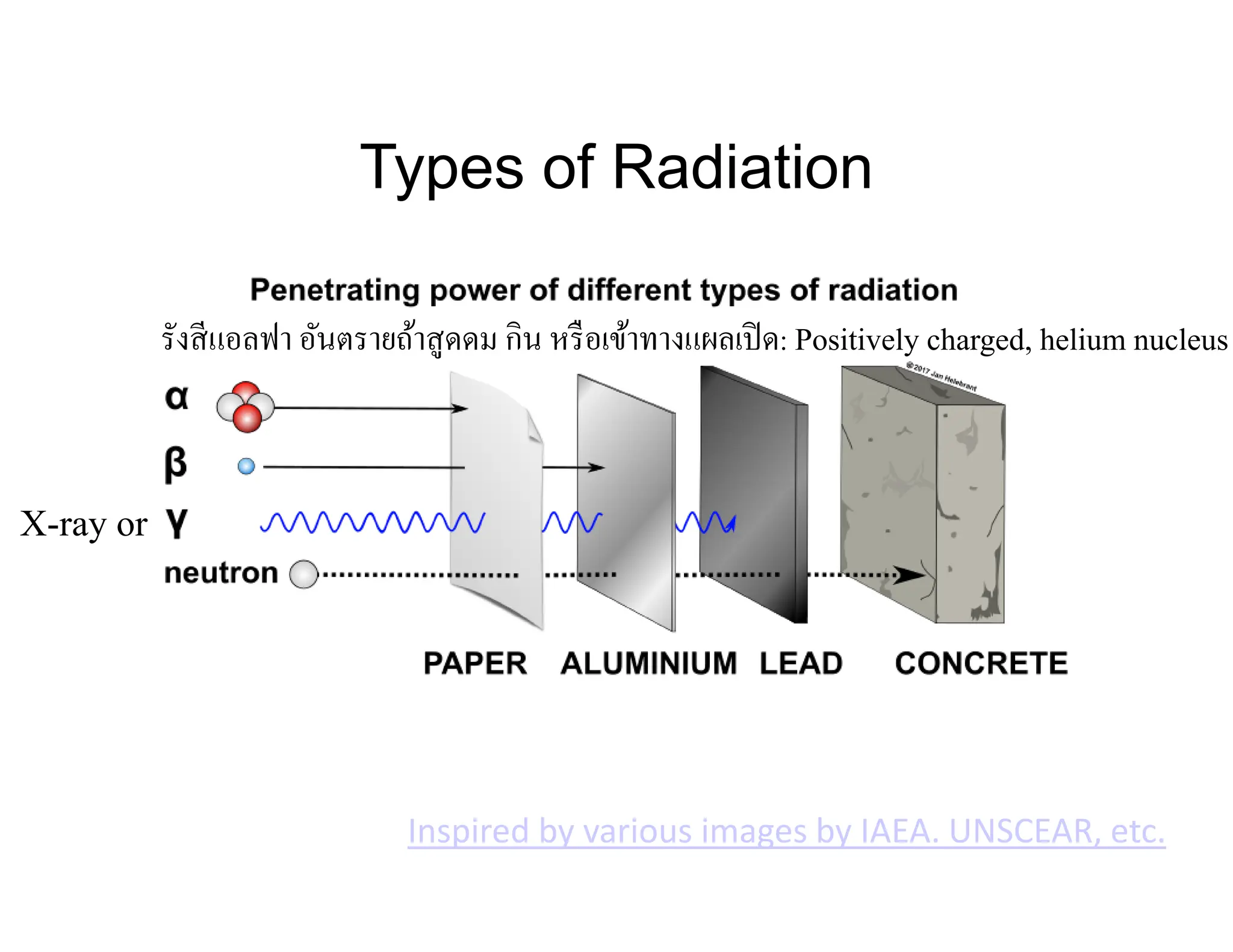
Types of Radiation
Inspiredby various images by IAEA. UNSCEAR, etc.
X-ray or
รังสีแอลฟา อันตรายถ้าสูดดม กิน หรือเข้าทางแผลเปิด: Positively charged, helium nucleus
8.
Man-Made Radiation
• Diagnosticradiology (X-rays) : The largest source of man-
made radiation
• Nuclear medicine (Radiopharmaceuticals)
• Radiotherapy (Co-60)
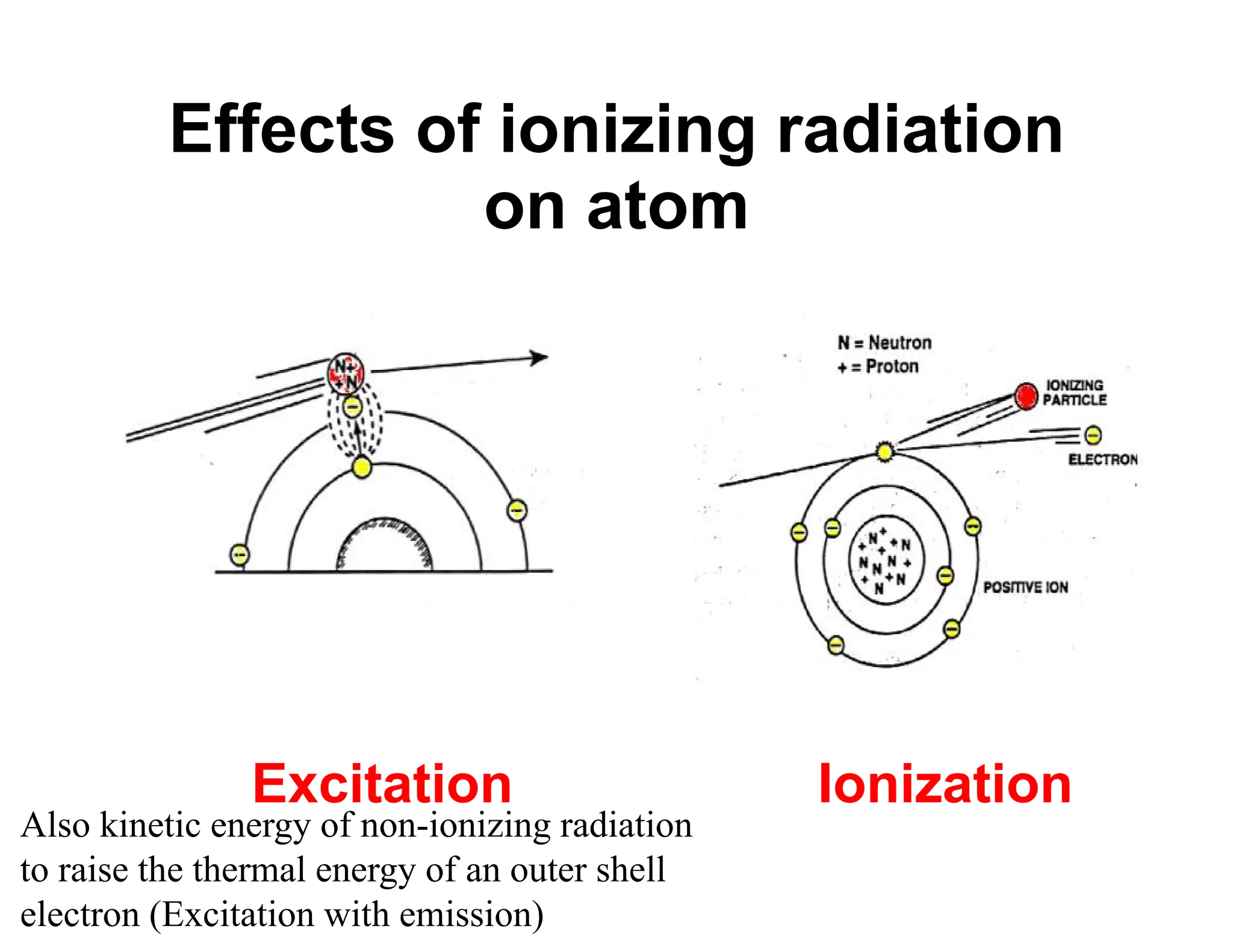
Effects of ionizingradiation
on atom
Ionization
Excitation
Also kinetic energy of non-ionizing radiation
to raise the thermal energy of an outer shell
electron (Excitation with emission)
11.
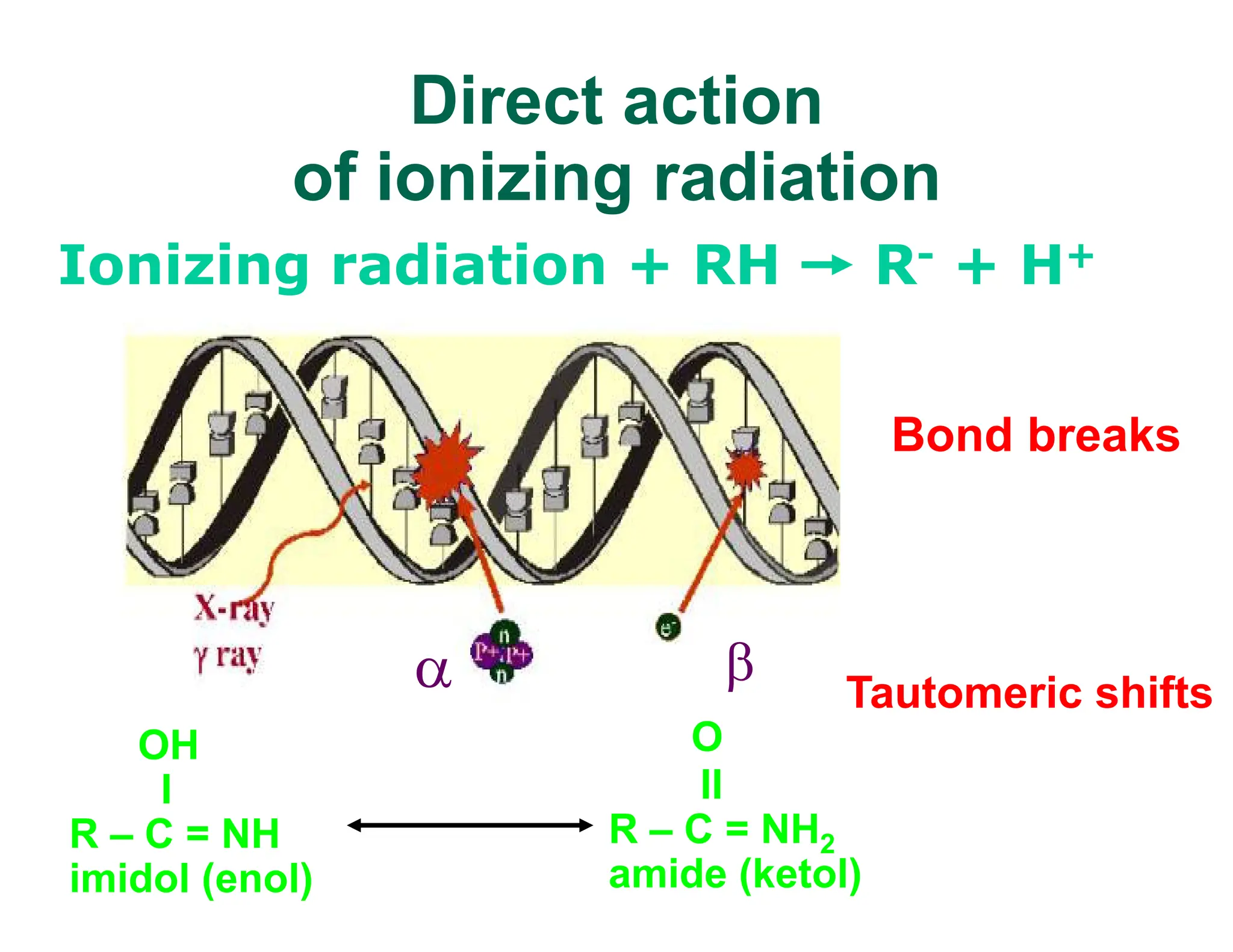
Direct action
of ionizingradiation
Ionizing radiation + RH R- + H+
OH
I
R – C = NH
imidol (enol)
O
II
R – C = NH2
amide (ketol)
Tautomeric shifts
Bond breaks
12.
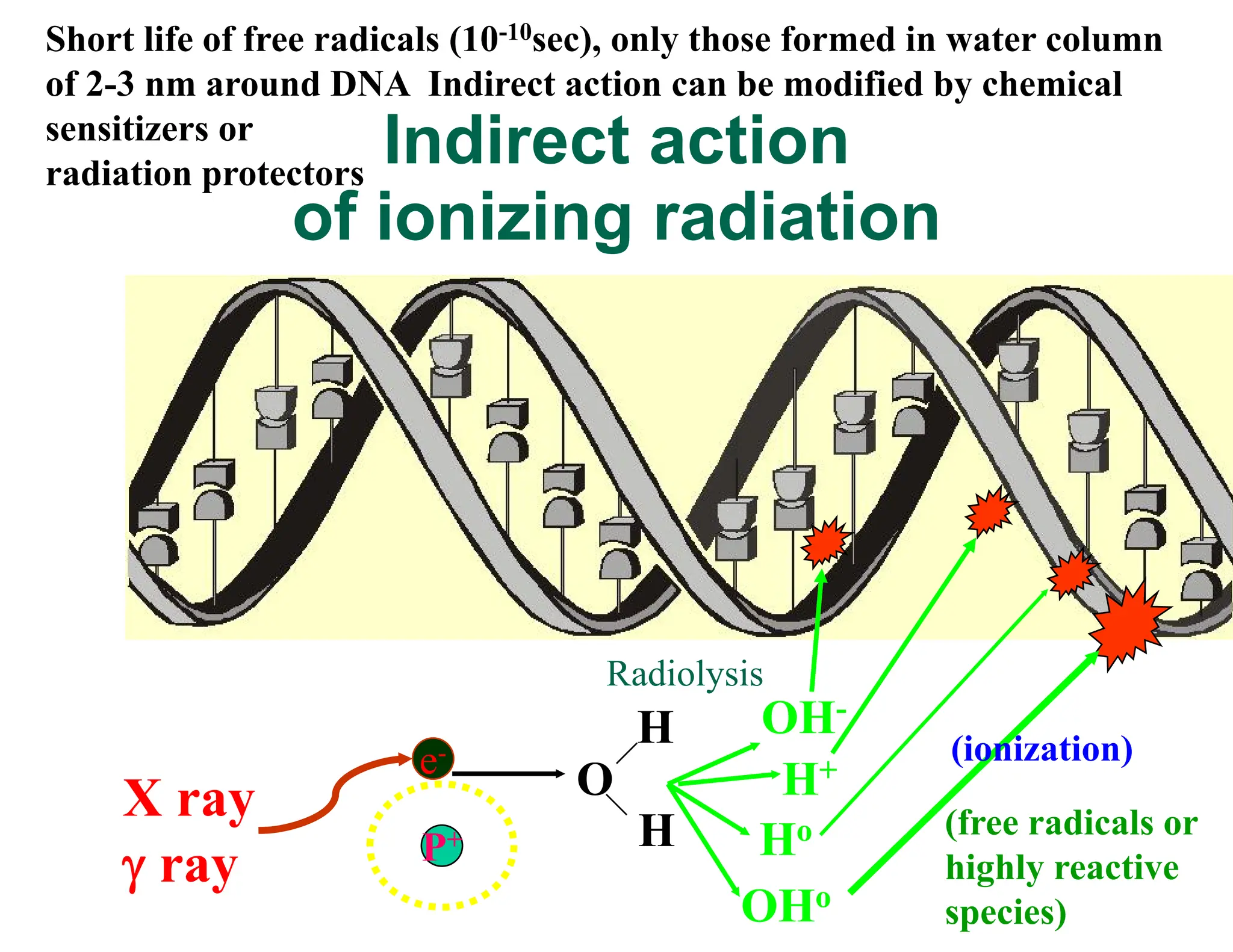
e-
X ray
rayP+
O
H
H OH-
H+
Ho
OHo
Indirect action
of ionizing radiation
(free radicals or
highly reactive
species)
(ionization)
Radiolysis
Short life of free radicals (10-10sec), only those formed in water column
of 2-3 nm around DNA Indirect action can be modified by chemical
sensitizers or
radiation protectors
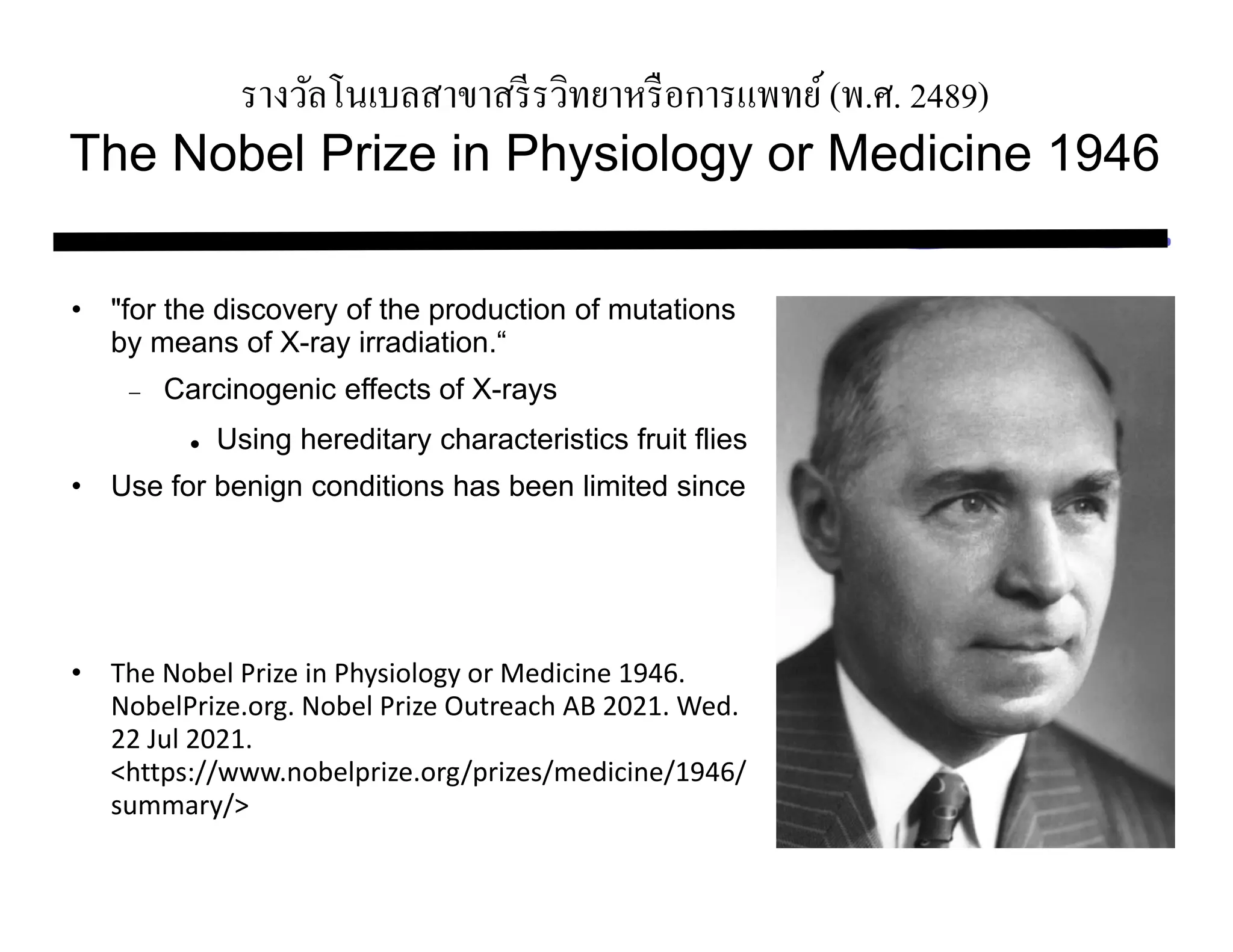
รางวัลโนเบลสาขาสรีรวิทยาหรือการแพทย์(พ.ศ. 2489)
The NobelPrize in Physiology or Medicine 1946
• "for the discovery of the production of mutations
by means of X-ray irradiation.“
Carcinogenic effects of X-rays
Using hereditary characteristics fruit flies
• Use for benign conditions has been limited since
• The Nobel Prize in Physiology or Medicine 1946.
NobelPrize.org. Nobel Prize Outreach AB 2021. Wed.
22 Jul 2021.
<https://www.nobelprize.org/prizes/medicine/1946/
summary/>
Classification of radiations
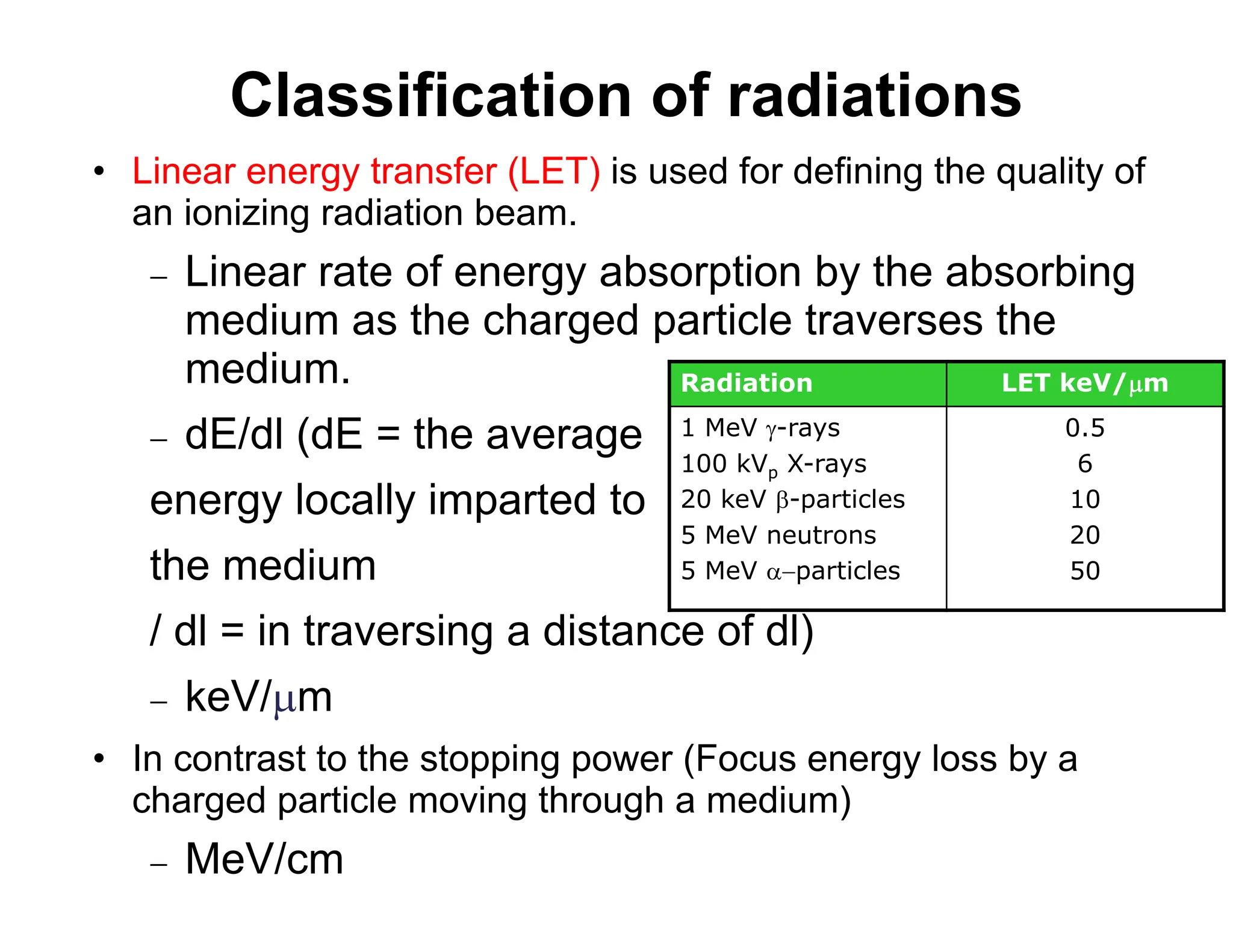
•Linear energy transfer (LET) is used for defining the quality of
an ionizing radiation beam.
Linear rate of energy absorption by the absorbing
medium as the charged particle traverses the
medium.
dE/dl (dE = the average
energy locally imparted to
the medium
/ dl = in traversing a distance of dl)
keV/m
• In contrast to the stopping power (Focus energy loss by a
charged particle moving through a medium)
MeV/cm
Radiation LET keV/m
1 MeV -rays
100 kVp X-rays
20 keV -particles
5 MeV neutrons
5 MeV particles
0.5
6
10
20
50
17.
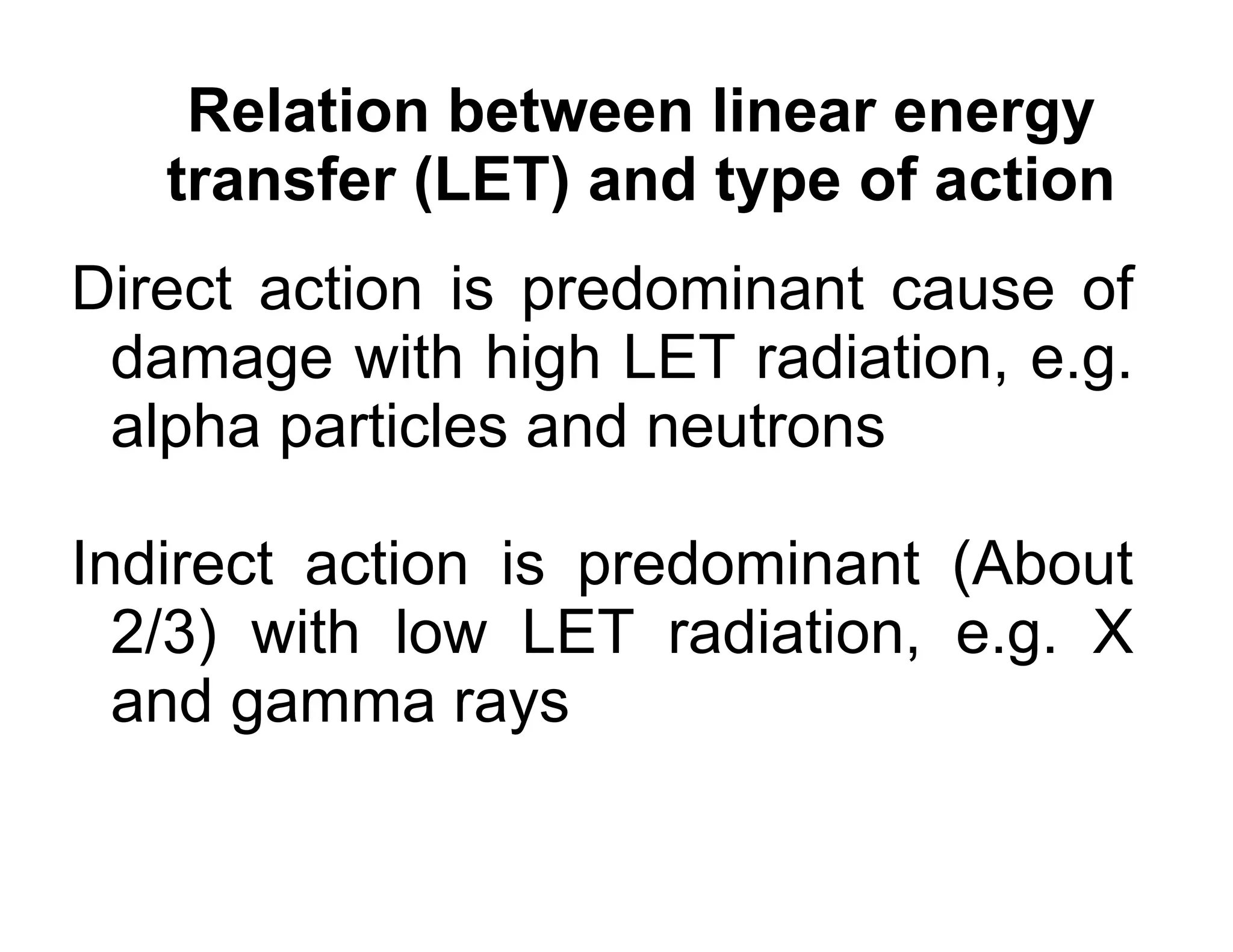
Relation between linearenergy
transfer (LET) and type of action
Direct action is predominant cause of
damage with high LET radiation, e.g.
alpha particles and neutrons
Indirect action is predominant (About
2/3) with low LET radiation, e.g. X
and gamma rays
18.
The stage ofaction
of ionizing radiation
Physical stage The transfer of kinetic energy from ionizing
radiation to atoms or molecules leads to
excitation and ionization of these atoms or
molecules
10 – 18 –
10 – 15
seconds
Physic-chemical
stage
The displace of absorbed energy of ionizing
radiation into molecules and between them.
Formation of free radicals
10 – 14 –
10 – 11
seconds
Chemical stage Reactions between free radicals, reactions
between free radicals and intact molecules.
Formation of molecules with abnormal
structure and function
10 – 6 –
10 – 3
seconds
Biological stage Formation of injures on all levels – from
cellular structures to organism and
population.
Development of processes of biological
damage and reparative processes
Seconds
– years
19.
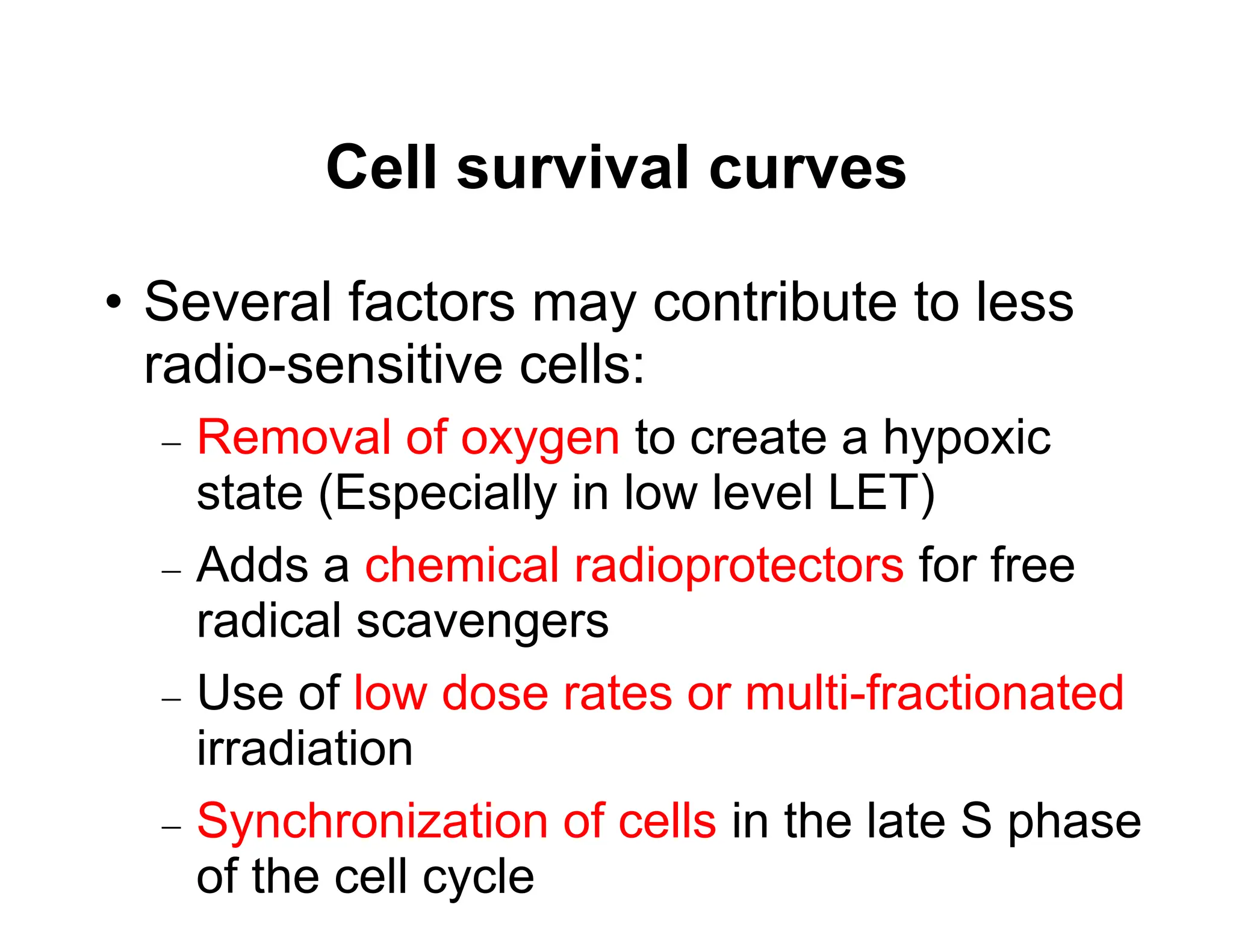
Cell survival curves
•Several factors may contribute to less
radio-sensitive cells:
Removal of oxygen to create a hypoxic
state (Especially in low level LET)
Adds a chemical radioprotectors for free
radical scavengers
Use of low dose rates or multi-fractionated
irradiation
Synchronization of cells in the late S phase
of the cell cycle
20.
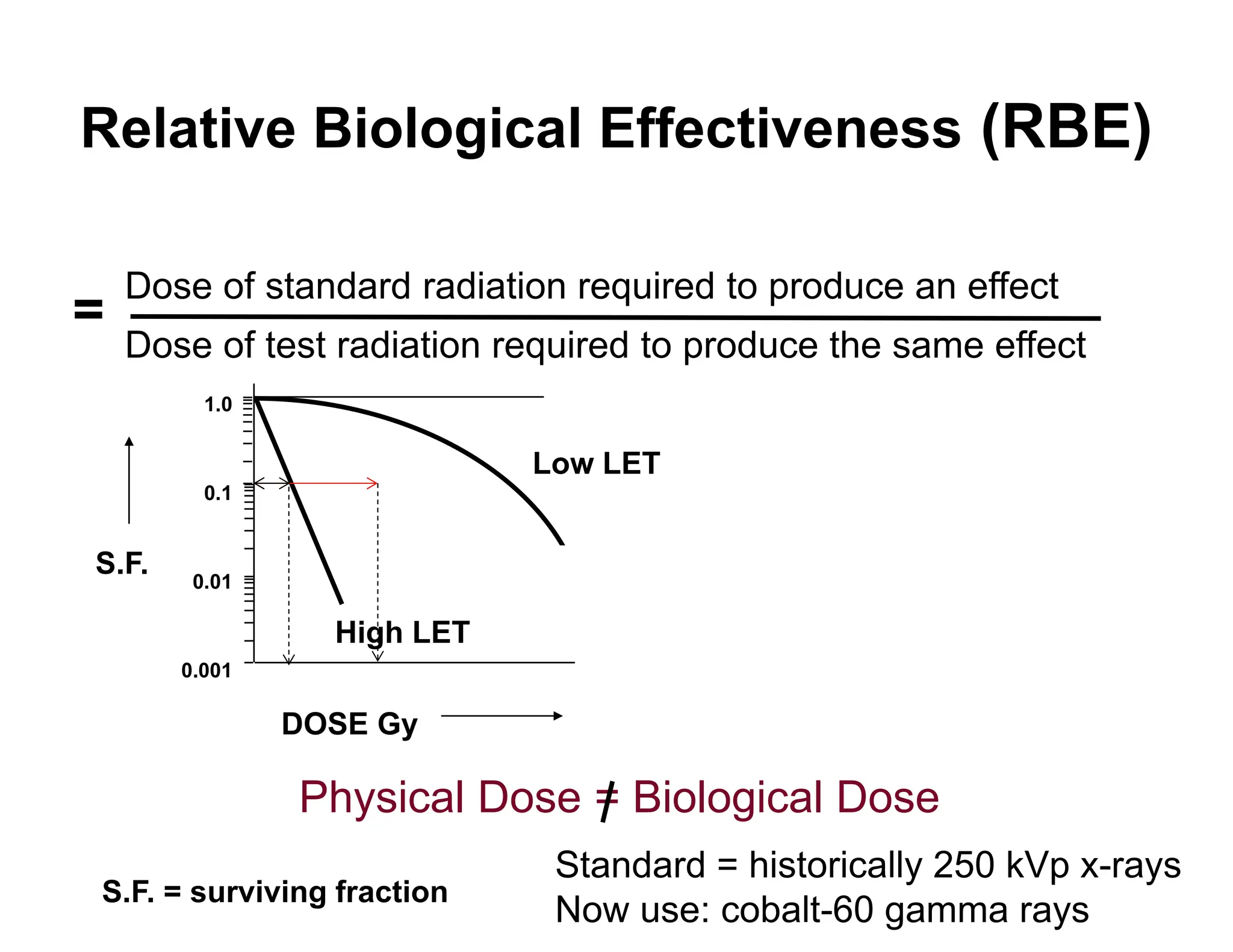
Relative Biological Effectiveness(RBE)
Dose of standard radiation required to produce an effect
Dose of test radiation required to produce the same effect
=
S.F.
1.0
0.1
0.01
0.001
DOSE Gy
High LET
Low LET
Physical Dose = Biological Dose
S.F. = surviving fraction
Standard = historically 250 kVp x-rays
Now use: cobalt-60 gamma rays
21.
Linear Energy Transfer(LET keV/m)
RELATIVE
BIOLOGICAL
EFFECTIVENESS
(for cell kill)
1000
100
10
1
0
2
4
6
8
RBE
Diagnostic
X-rays
Fast
Neutrons
Alpha
Particles
overkill
0.1
Co-60
gamma rays
0
1
2
3
4
OER
OER
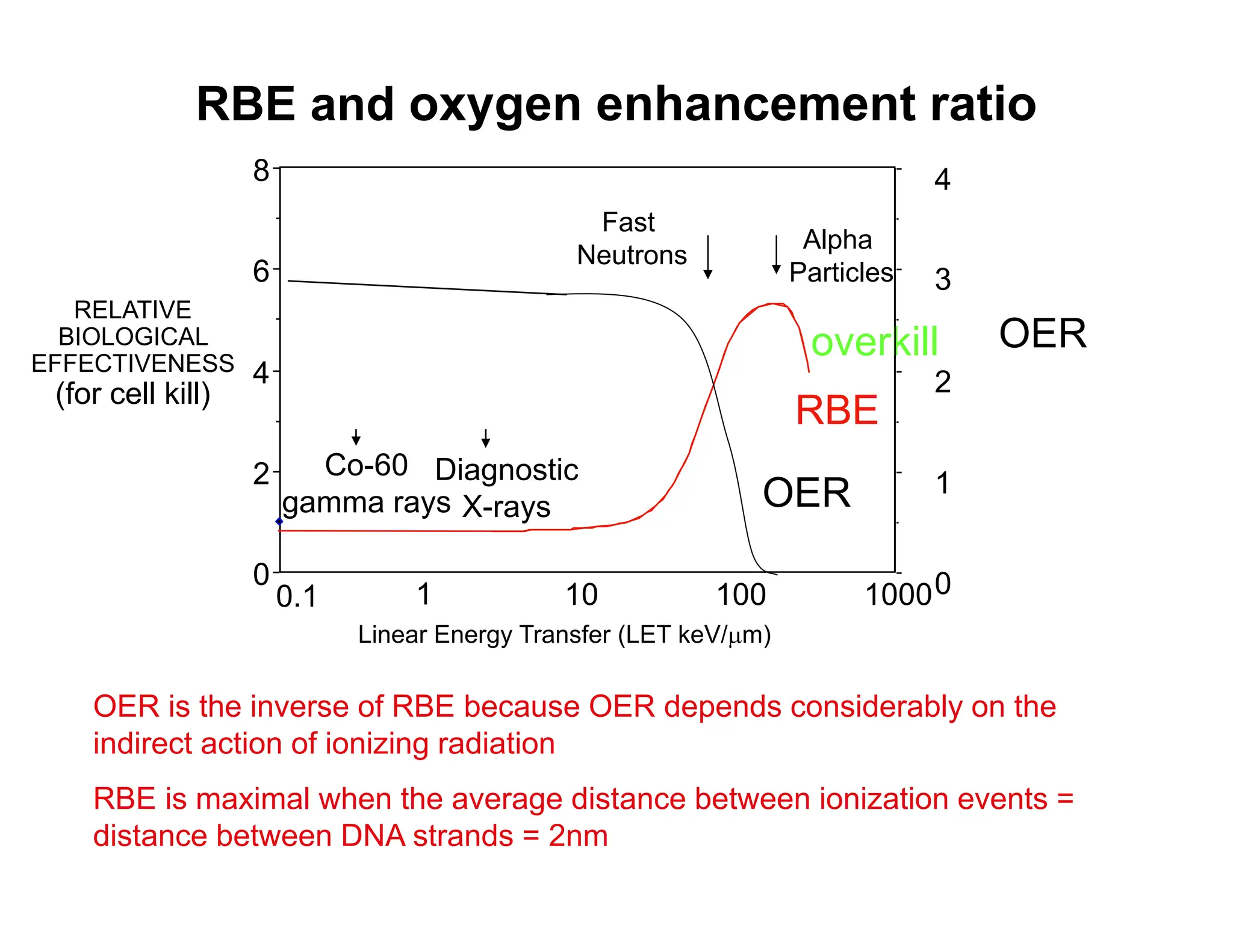
OER is the inverse of RBE because OER depends considerably on the
indirect action of ionizing radiation
RBE is maximal when the average distance between ionization events =
distance between DNA strands = 2nm
RBE and oxygen enhancement ratio
22.
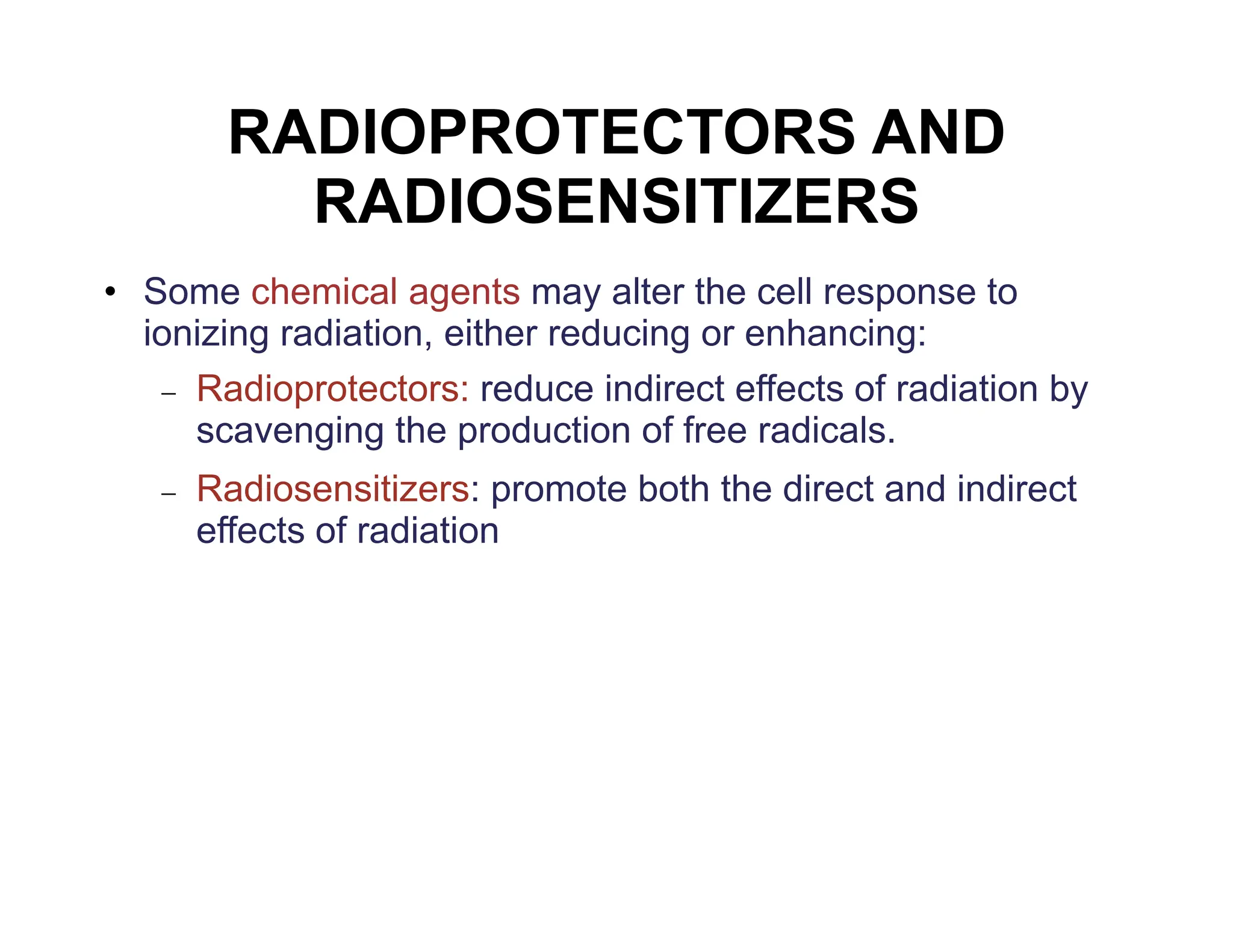
RADIOPROTECTORS AND
RADIOSENSITIZERS
• Somechemical agents may alter the cell response to
ionizing radiation, either reducing or enhancing:
Radioprotectors: reduce indirect effects of radiation by
scavenging the production of free radicals.
Radiosensitizers: promote both the direct and indirect
effects of radiation
23.
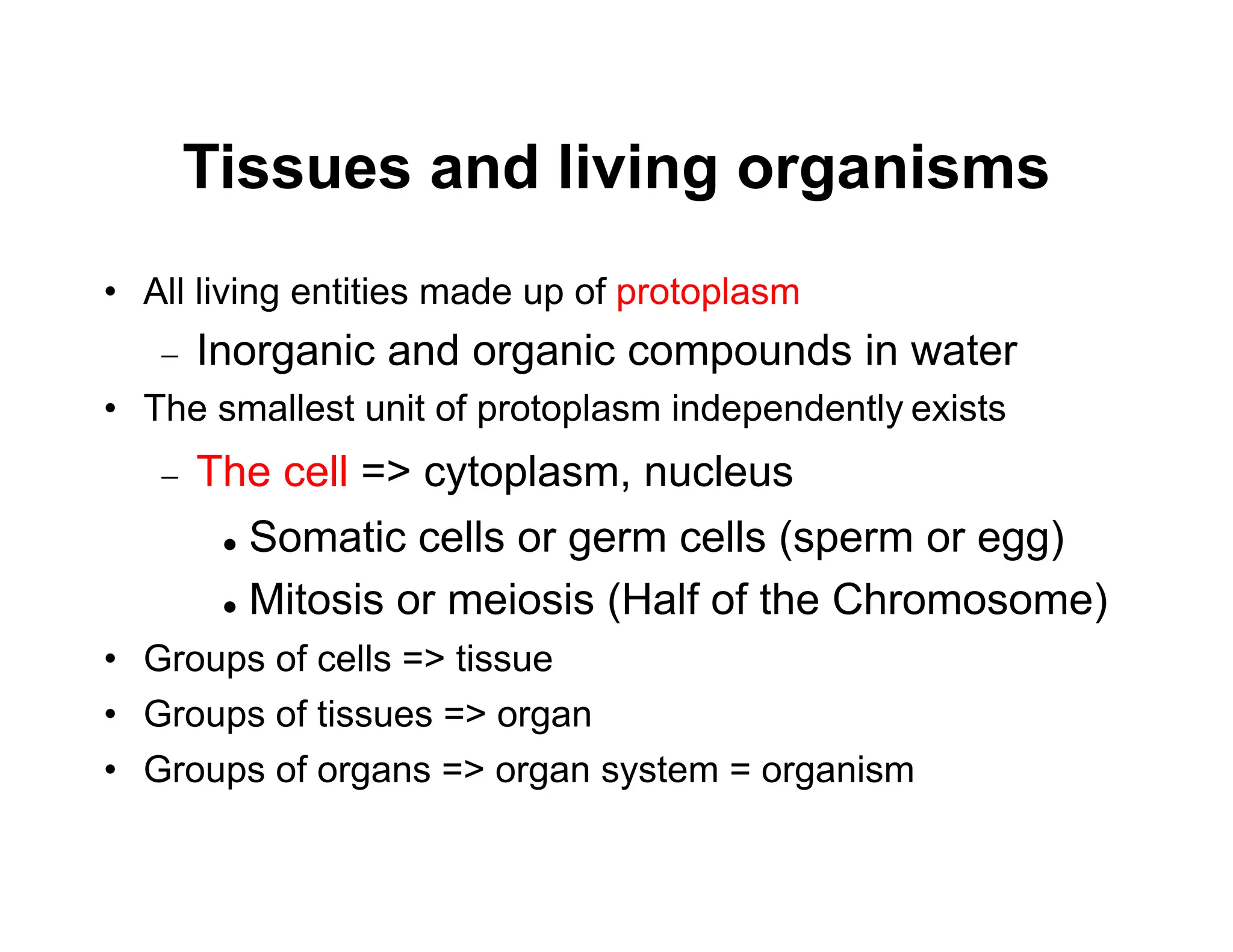
Tissues and livingorganisms
• All living entities made up of protoplasm
Inorganic and organic compounds in water
• The smallest unit of protoplasm independently exists
The cell => cytoplasm, nucleus
Somatic cells or germ cells (sperm or egg)
Mitosis or meiosis (Half of the Chromosome)
• Groups of cells => tissue
• Groups of tissues => organ
• Groups of organs => organ system = organism
24.
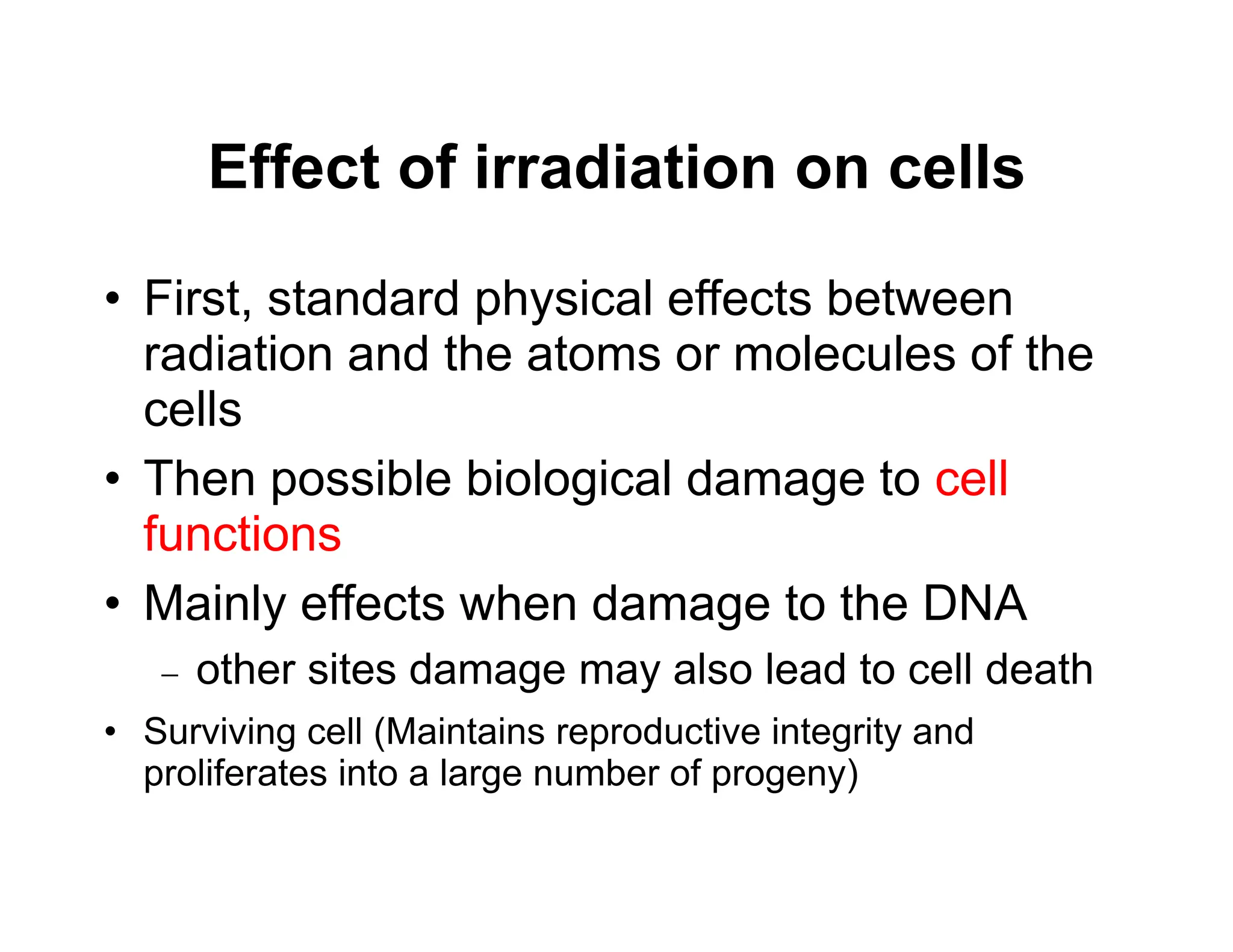
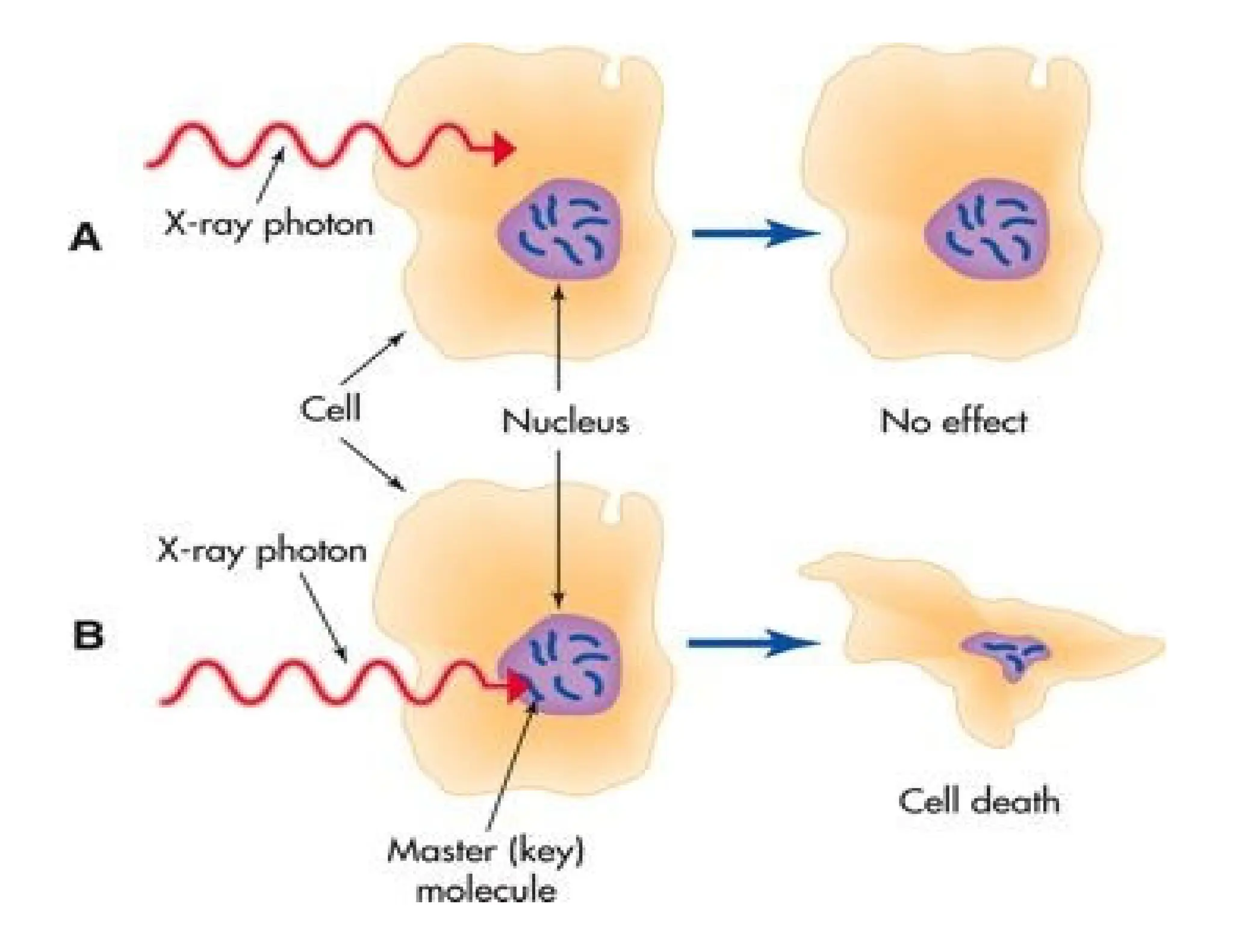
Effect of irradiationon cells
• First, standard physical effects between
radiation and the atoms or molecules of the
cells
• Then possible biological damage to cell
functions
• Mainly effects when damage to the DNA
other sites damage may also lead to cell death
• Surviving cell (Maintains reproductive integrity and
proliferates into a large number of progeny)
25.
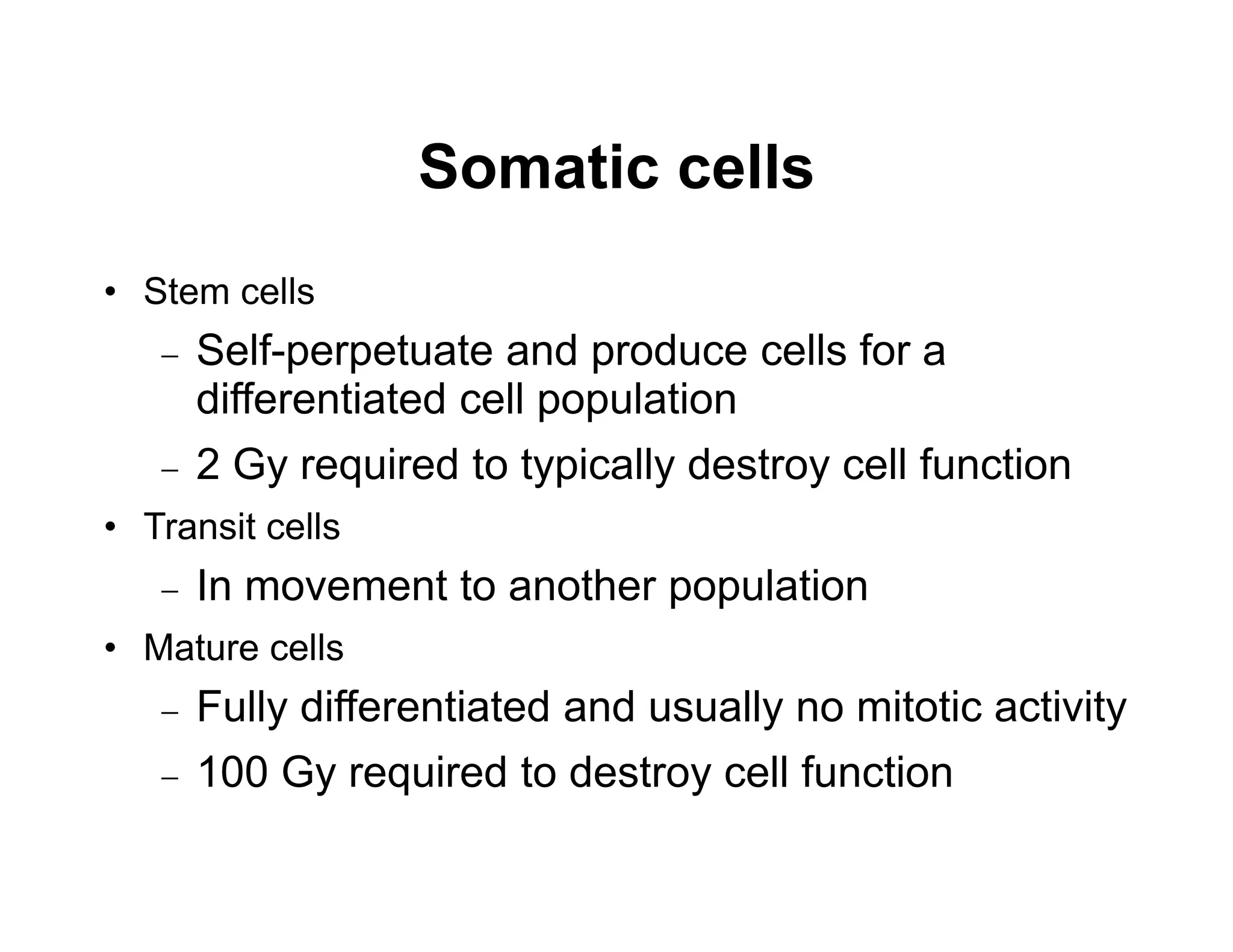
Somatic cells
• Stemcells
Self-perpetuate and produce cells for a
differentiated cell population
2 Gy required to typically destroy cell function
• Transit cells
In movement to another population
• Mature cells
Fully differentiated and usually no mitotic activity
100 Gy required to destroy cell function
26.
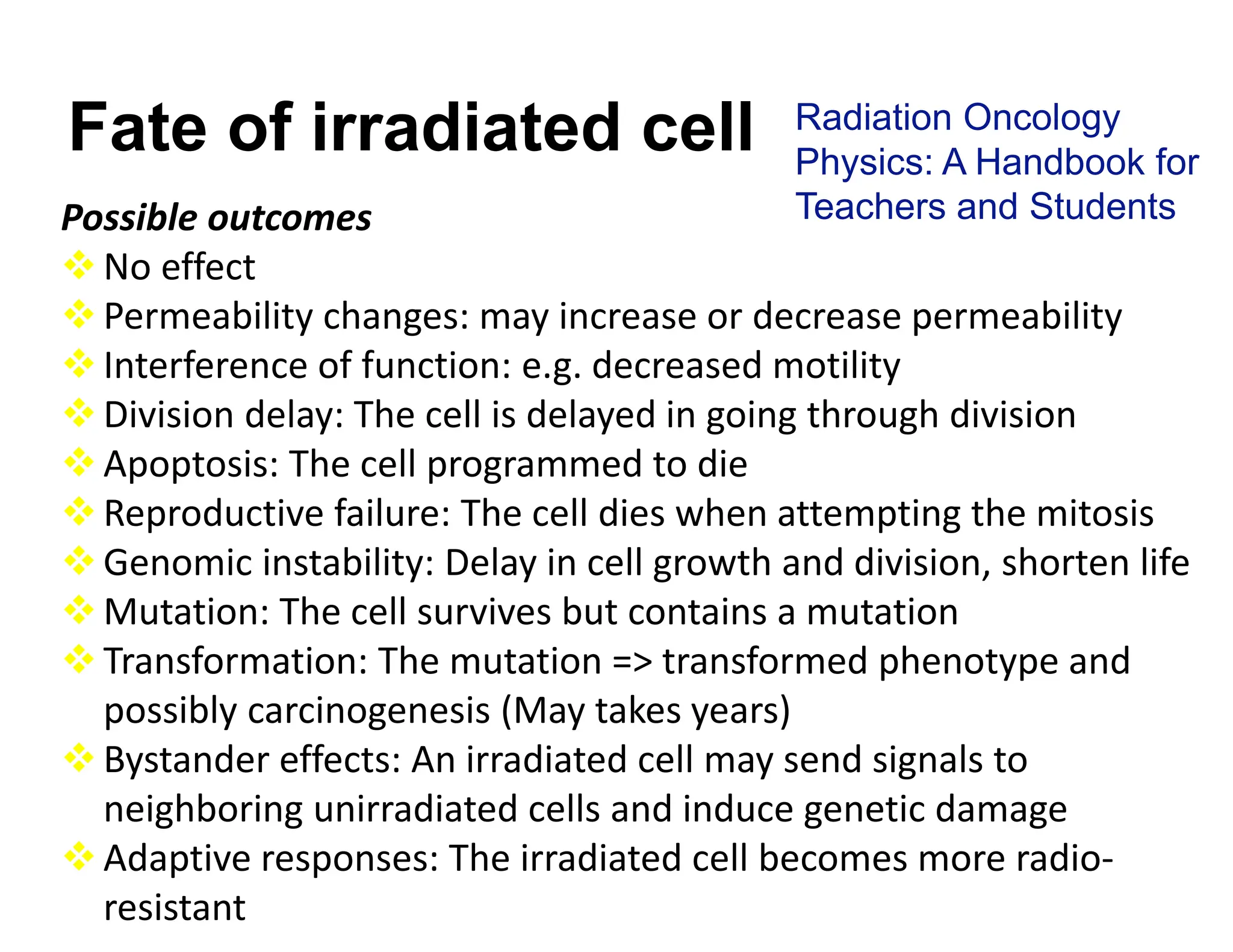
Possible outcomes
No effect
Permeabilitychanges: may increase or decrease permeability
Interference of function: e.g. decreased motility
Division delay: The cell is delayed in going through division
Apoptosis: The cell programmed to die
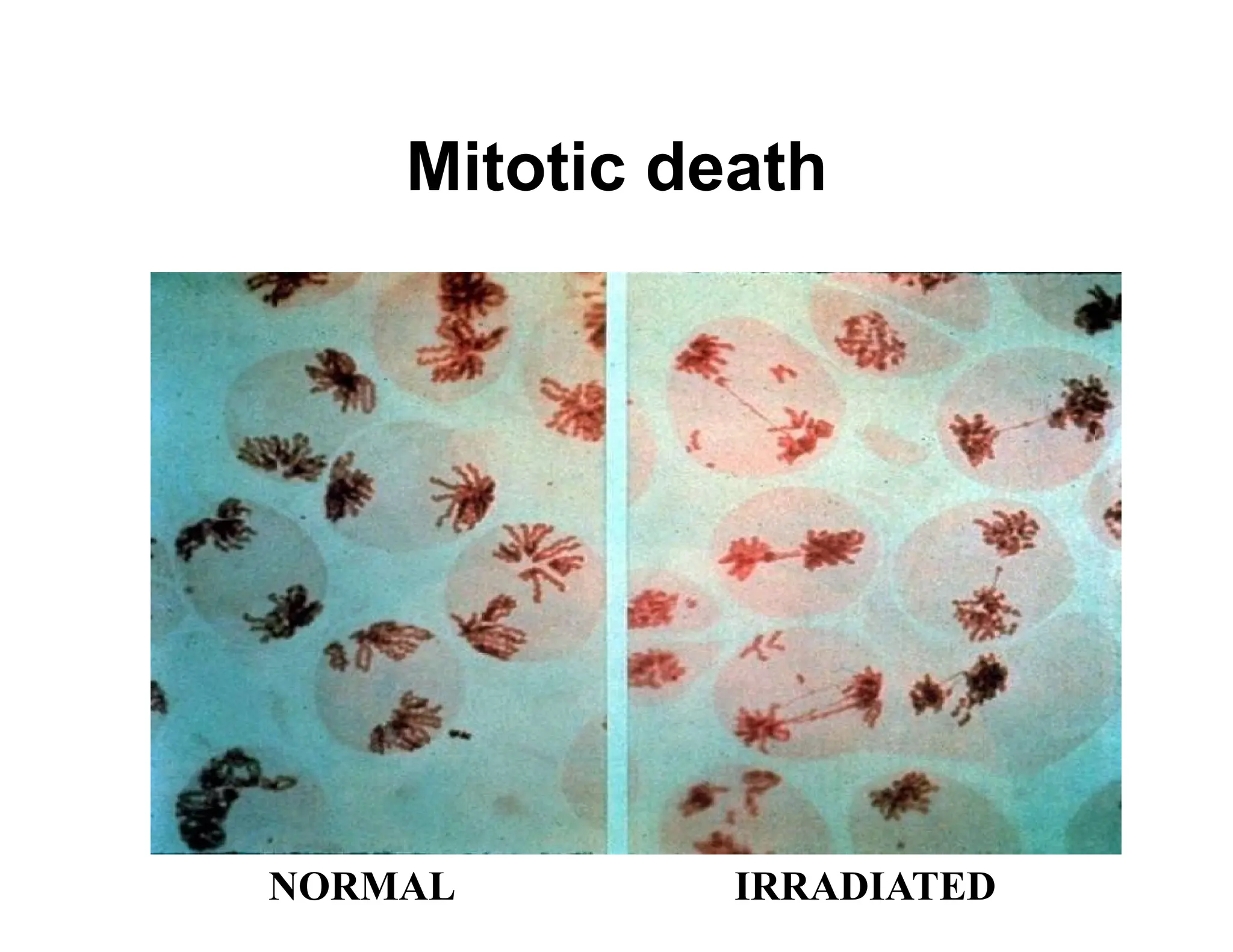
Reproductive failure: The cell dies when attempting the mitosis
Genomic instability: Delay in cell growth and division, shorten life
Mutation: The cell survives but contains a mutation
Transformation: The mutation => transformed phenotype and
possibly carcinogenesis (May takes years)
Bystander effects: An irradiated cell may send signals to
neighboring unirradiated cells and induce genetic damage
Adaptive responses: The irradiated cell becomes more radio‐
resistant
Fate of irradiated cell Radiation Oncology
Physics: A Handbook for
Teachers and Students
28.
Study materials
• EricJH, Giaccia AJ. Radiobiology for the
Radiologist. Lippincott Williams & Wilkins, 2018
• Suntharalingam N, Podgorsak EB, Hendry JH.
Radiation Oncology Physics: A Handbook for
Teachers and Students. Vienna: IAEA publication,
2005.
• Kumar V, Abbas AK, Aster JC. Robbins and Cotran:
Pathologic Basis of Disease. 10th ed. Philadelphia:
Elsevier Saunders, 2021.
29.
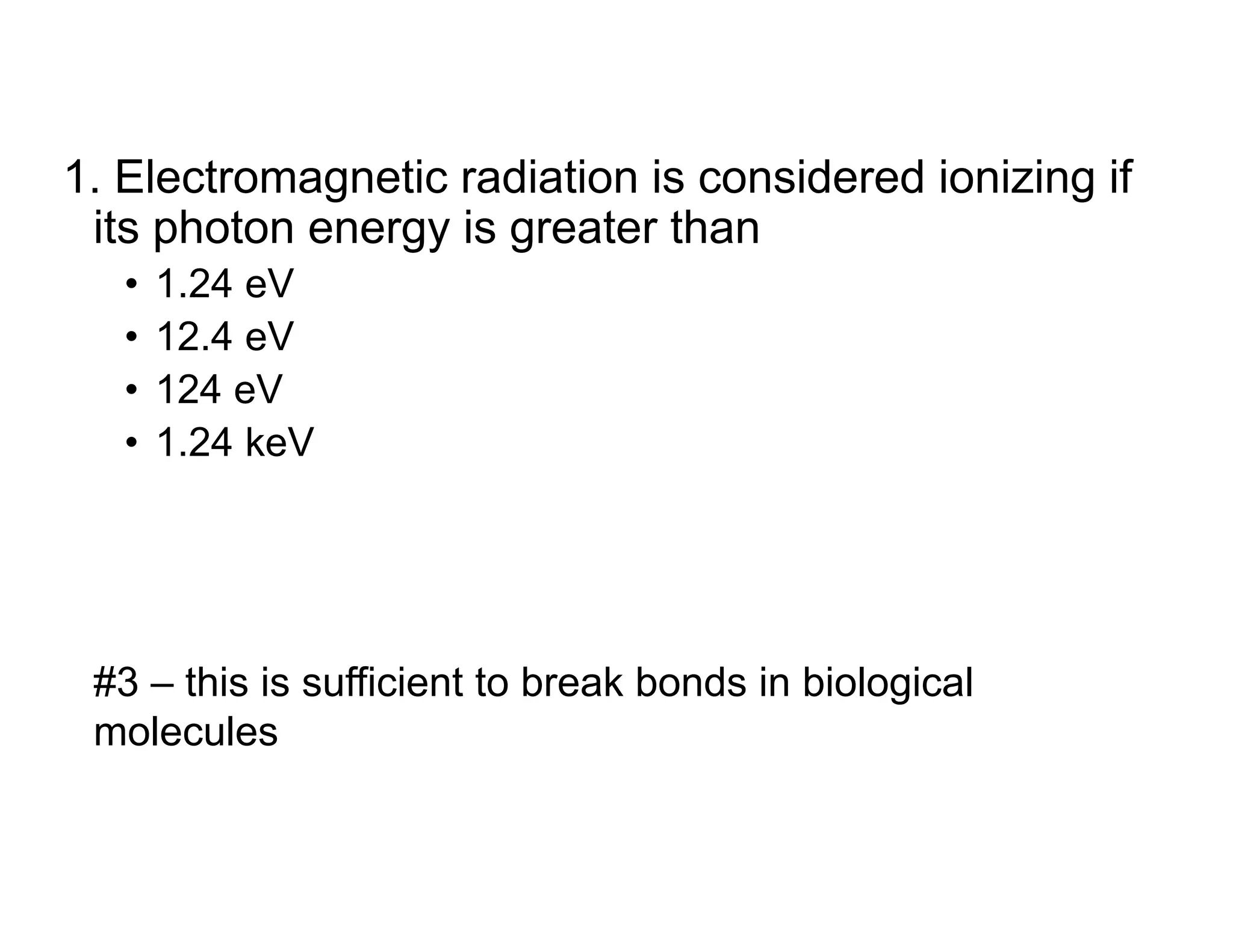
1. Electromagnetic radiationis considered ionizing if
its photon energy is greater than
• 1.24 eV
• 12.4 eV
• 124 eV
• 1.24 keV
#3 – this is sufficient to break bonds in biological
molecules
30.
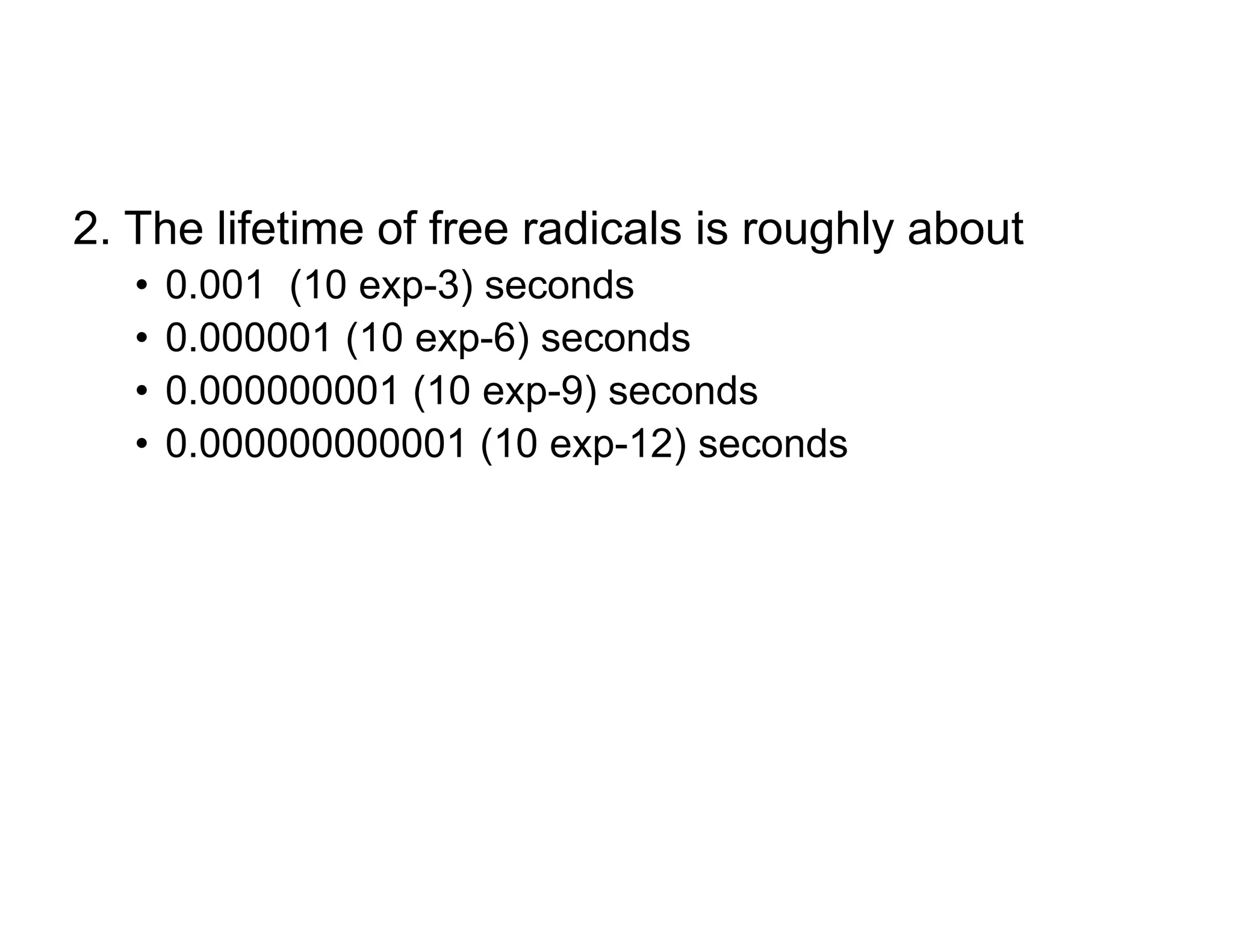
2. The lifetimeof free radicals is roughly about
• 0.001 (10 exp-3) seconds
• 0.000001 (10 exp-6) seconds
• 0.000000001 (10 exp-9) seconds
• 0.000000000001 (10 exp-12) seconds
31.
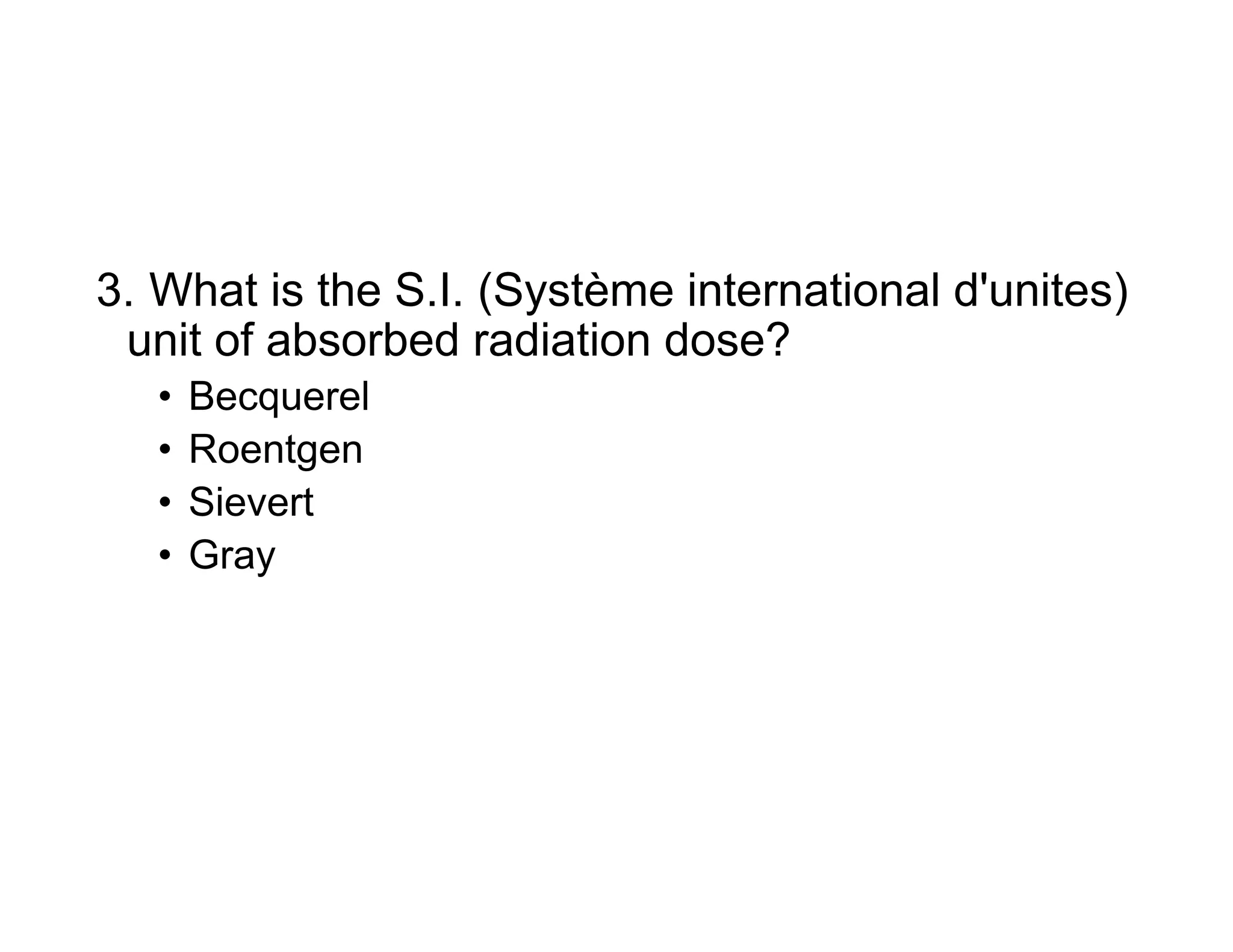
3. What isthe S.I. (Système international d'unites)
unit of absorbed radiation dose?
• Becquerel
• Roentgen
• Sievert
• Gray
32.
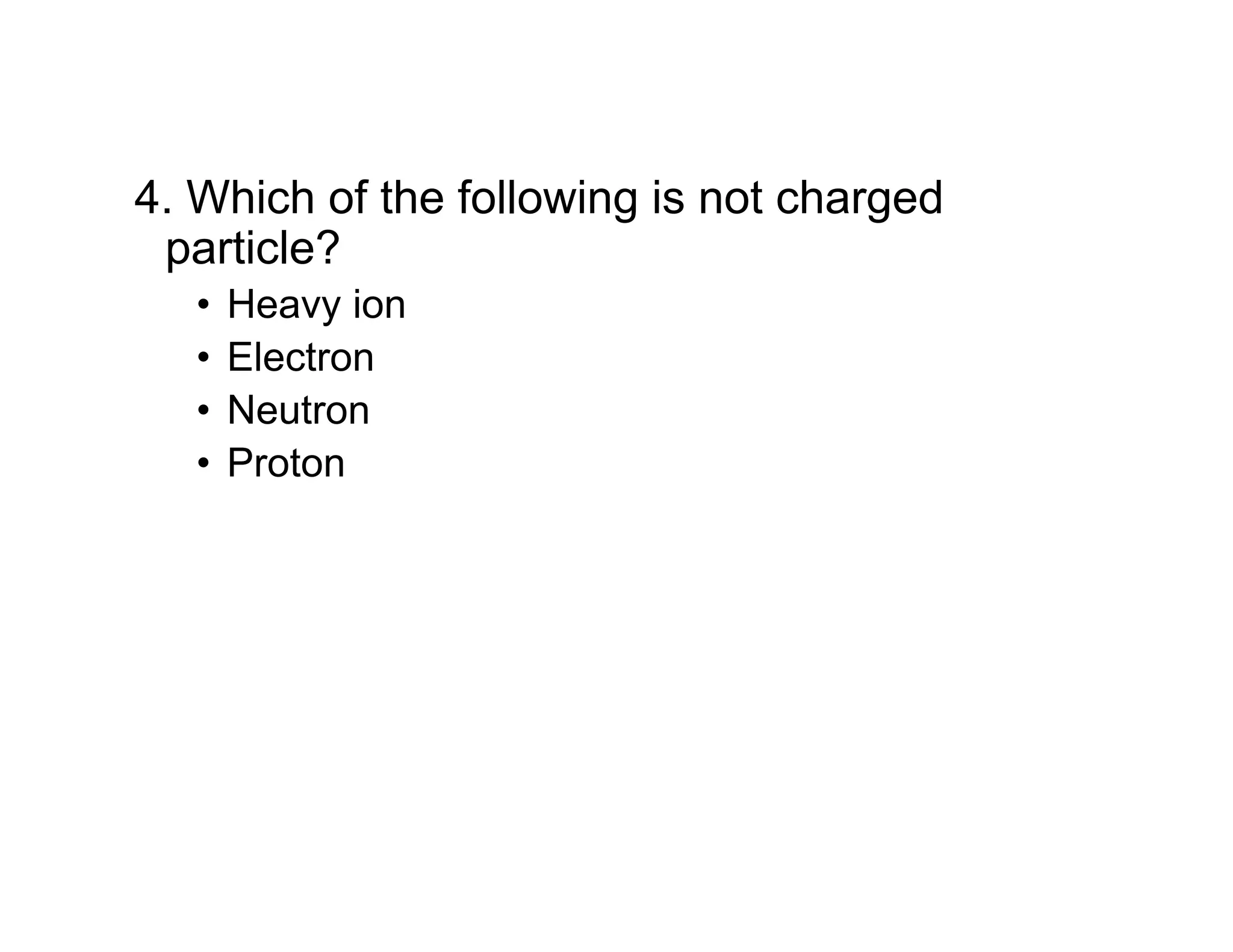
4. Which ofthe following is not charged
particle?
• Heavy ion
• Electron
• Neutron
• Proton
33.
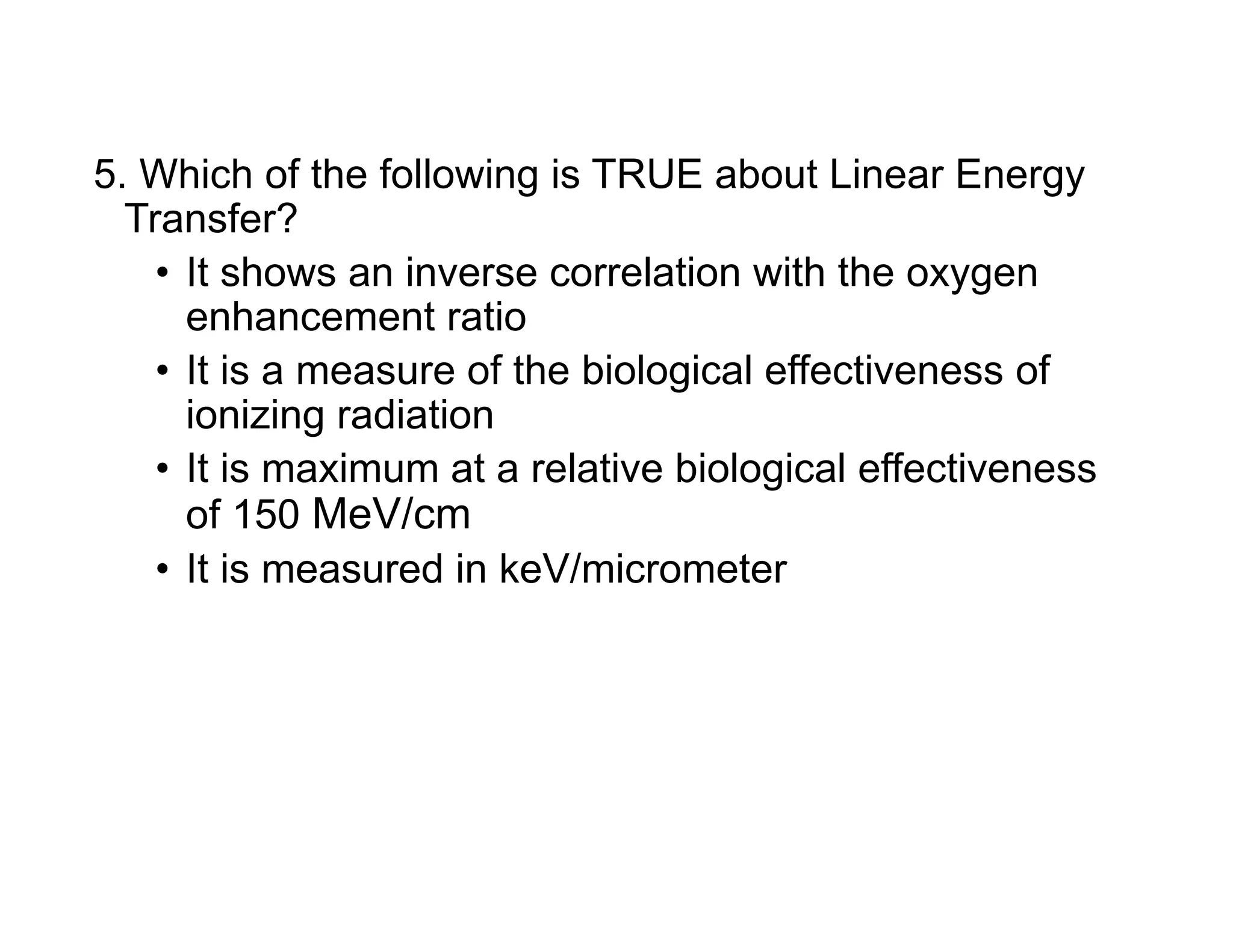
5. Which ofthe following is TRUE about Linear Energy
Transfer?
• It shows an inverse correlation with the oxygen
enhancement ratio
• It is a measure of the biological effectiveness of
ionizing radiation
• It is maximum at a relative biological effectiveness
of 150 MeV/cm
• It is measured in keV/micrometer