In the modern world, communication is no longer confined to just mode or form. With the rapid development of technology and the increasing reliance on digital media the way we share and receive information has evolve significantly. One of the most prominent changes in communication today is the emergence of multimodal texts text that combines various modes of communication, such as written language, images, sounds, videos and more.
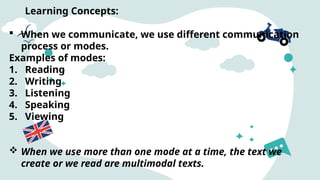
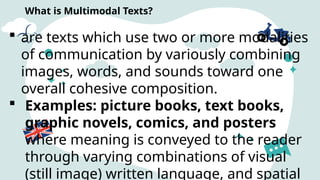
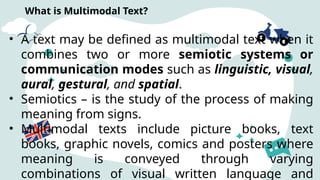
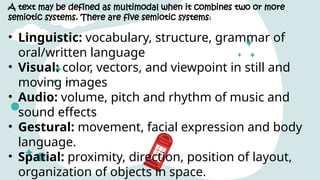
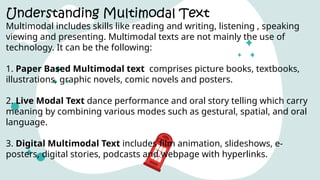
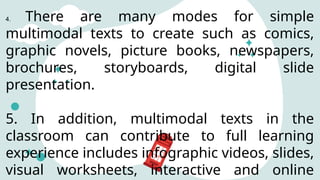
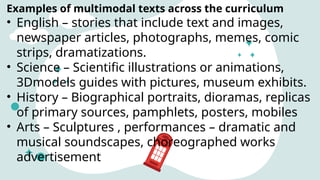
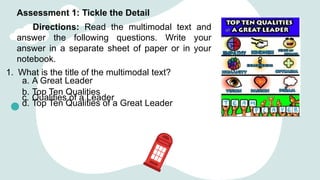
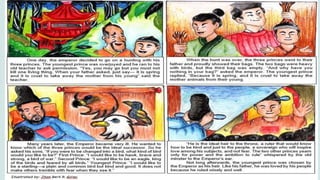
A multimodal text refers to any communication that involves multiple modes or semiotic resources to convey meaning. These modes can include visual, linguistic, audio, gestural, spatial and more. For instance, an advertisement may combine written text, visual images, and audio to to create a compelling message, while a video game incorporate narrative storytelling, visuals, and sound effects to engage the player. Multimodal texts have become a crucial part of our everyday lives from social media posts to online tutorials, news articles and even interactive video games. They offer a richer, more dynamic way to communicate and gave profound implications for education, communication theory, and media studies. In this detailed description we will explore what multimodal text are, how they function, their significance, and the challenges they pose.
A multimodal text is any communication product that integrates two or more modes or types of semiotic resources to convey meaning. The term mode refers to the specific channels which information is communicated and each mode has its own distinct affordances ways in which it can be used to express ideas. The most common modes of multimodal text include: Linguistic Mode: written or spoken language. This is the most familiar and traditionally dominant mode in texts such as books, articles and speeches. Visual Mode; Images, illustrations and other visual elements that convey meaning such as photos, charts, graphs, and infographics.
Audio Mode: Sound elements such as music, sound effects, speech, and silence. Audio can enhance the emotional tone and provide additional context to a message. Gestural Mode: Body movement, facial expressions and other physical gestures that communicate meaning in face-to-face interactions or in films and video content. Spatial Mode: The arrangement elements in a physical or digital space, such as the layout of the webpage, the organization of items in a store, or the design of the graphic. Signage Mode: Use of symbols signs and other graphic elements to convey meaning like road signs, logos and public information boards.
Characteristics of Multimodal Text:
Multimodal texts are characterized by the way they combine these various modes to create meaning. Each mode works together reinforcing or enhancing the message conveyed. Here are some key characteristics of multimodal texts:
1. Interdependence of Modes. The modes in a multimodal text do not function independently, rather than rely on each other to convey a coherent meaning. For example, a video that.





![21stQ1M4 (2) [Autosaved] [Autosaved].pptx](https://cdn.slidesharecdn.com/ss_thumbnails/21stq1m42autosavedautosaved-250629235955-db53a5dd-thumbnail.jpg?width=640&height=640&fit=bounds)


