Autism Spectrum Disorder
What is it?Characterised by difficulties in social interaction, impaired communication, restricted and repetitive interests and behaviours and sensory sensitivities.Spectrum – range and severity of the difficulties varyIncludes autistic disorder, Asperger’s disorder and pervasive developmental disorder.1 in 160 Australians have ASD and is more prevalent in boys than girls
Social InteractionLimited use and understanding of non-verbal communication such as eye gaze, facial expression and gestureDifficulties forming and sustaining friendshipsLack of seeking to share enjoyment, interest and activities with other peopleDifficulties with social and emotional responsiveness
CommunicationDelayed language developmentDifficulties initiating and sustaining conversationsStereotyped and repetitive use of language such as repeating phrases from televisionLimited imaginative or make-believe play
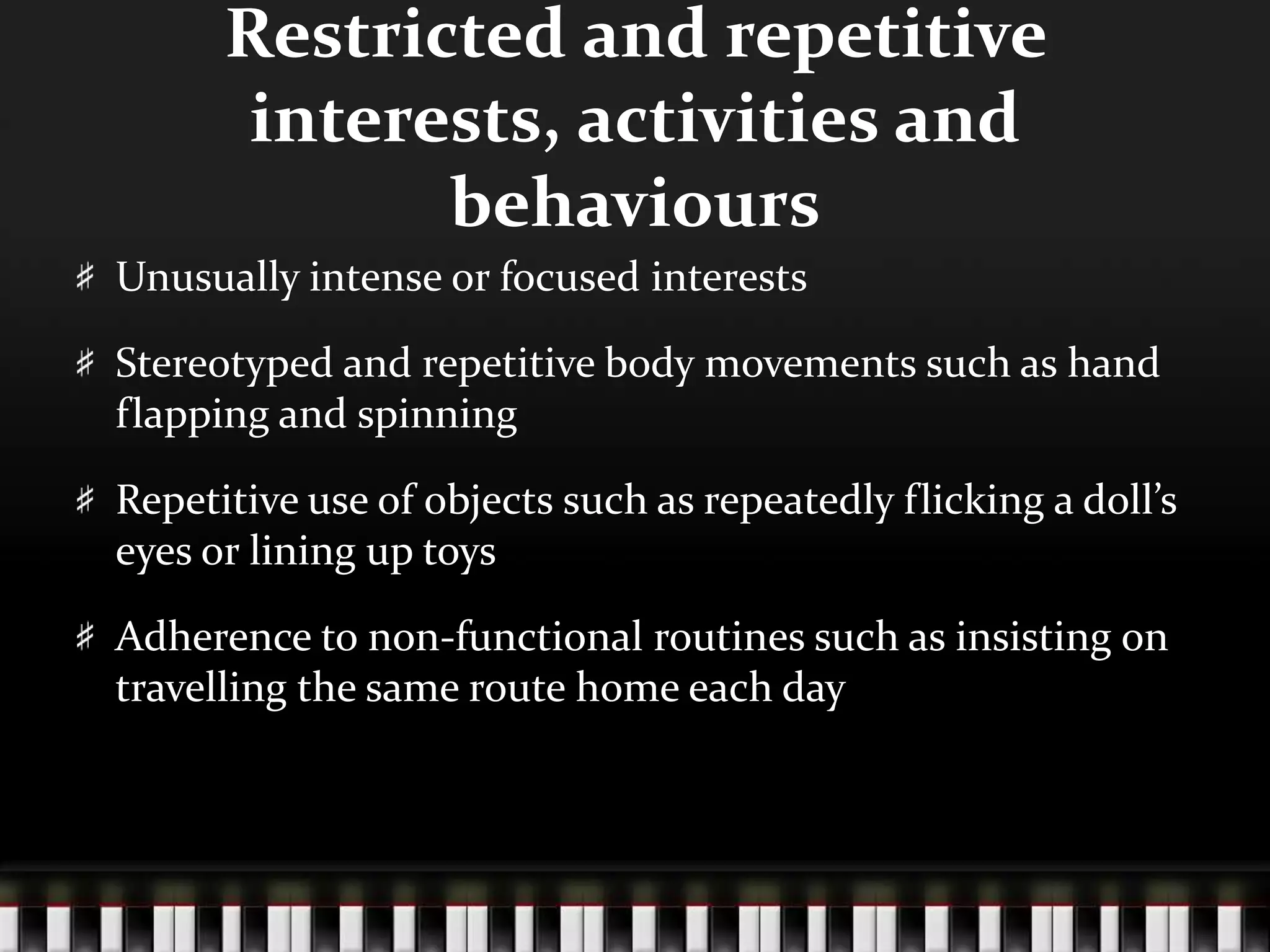
Restricted and repetitive interests, activities and behavioursUnusually intense or focused interestsStereotyped and repetitive body movements such as hand flapping and spinningRepetitive use of objects such as repeatedly flicking a doll’s eyes or lining up toysAdherence to non-functional routines such as insisting on travelling the same route home each day
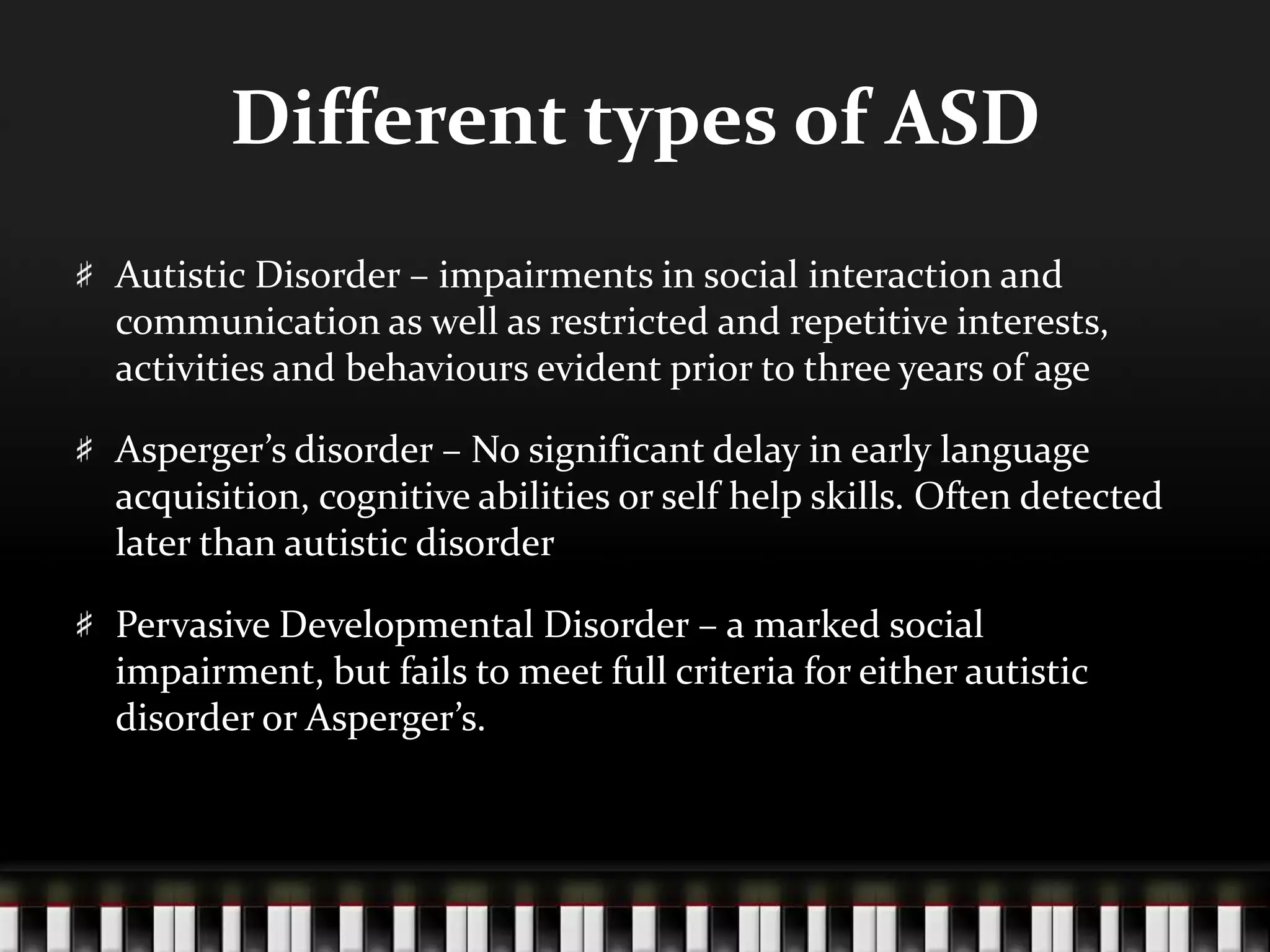
Different types of ASDAutistic Disorder – impairments in social interaction and communication as well as restricted and repetitive interests, activities and behaviours evident prior to three years of ageAsperger’s disorder – No significant delay in early language acquisition, cognitive abilities or self help skills. Often detected later than autistic disorderPervasive Developmental Disorder – a marked social impairment, but fails to meet full criteria for either autistic disorder or Asperger’s.
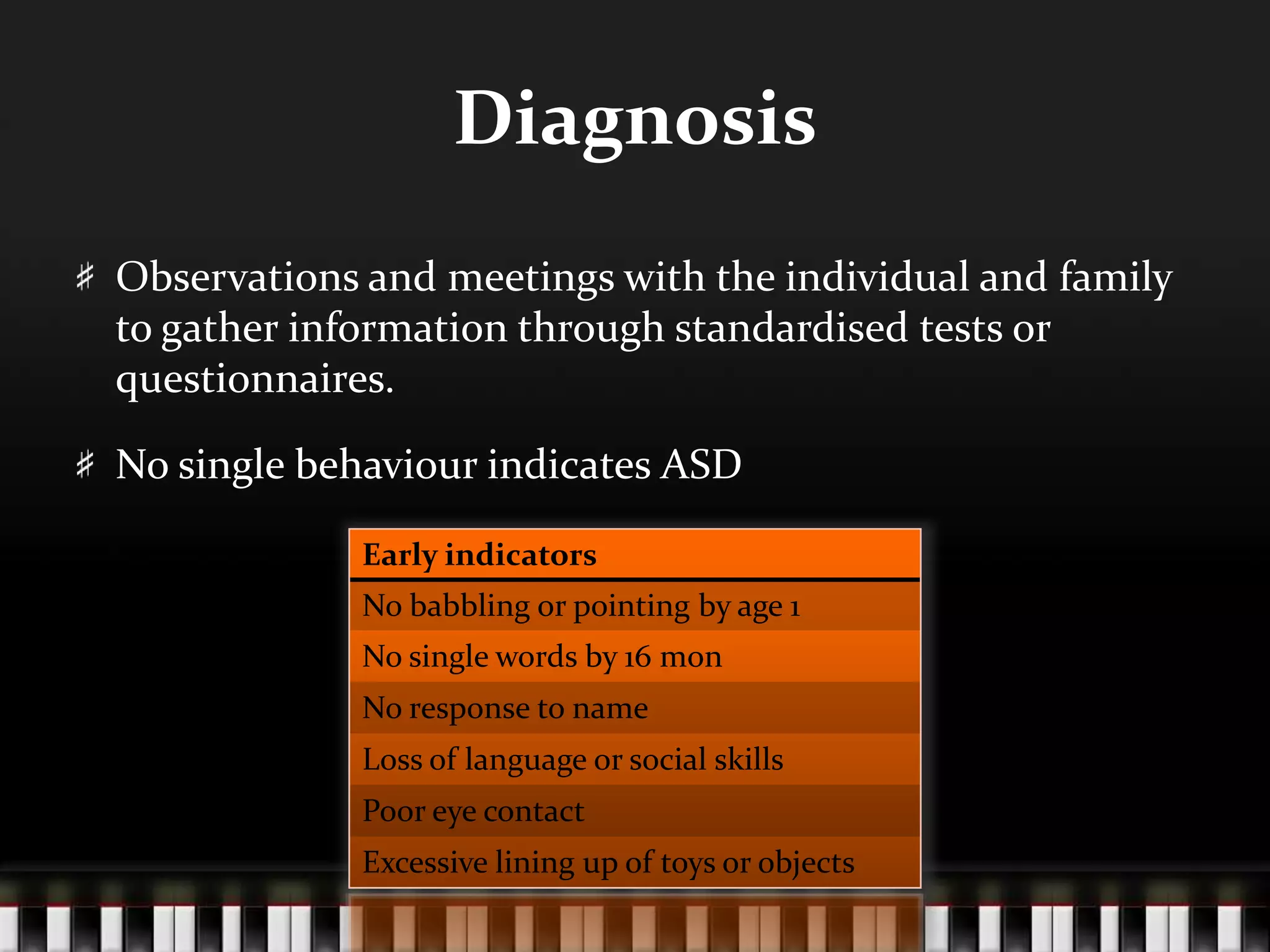
DiagnosisObservations and meetings with the individual and family to gather information through standardised tests or questionnaires.No single behaviour indicates ASD
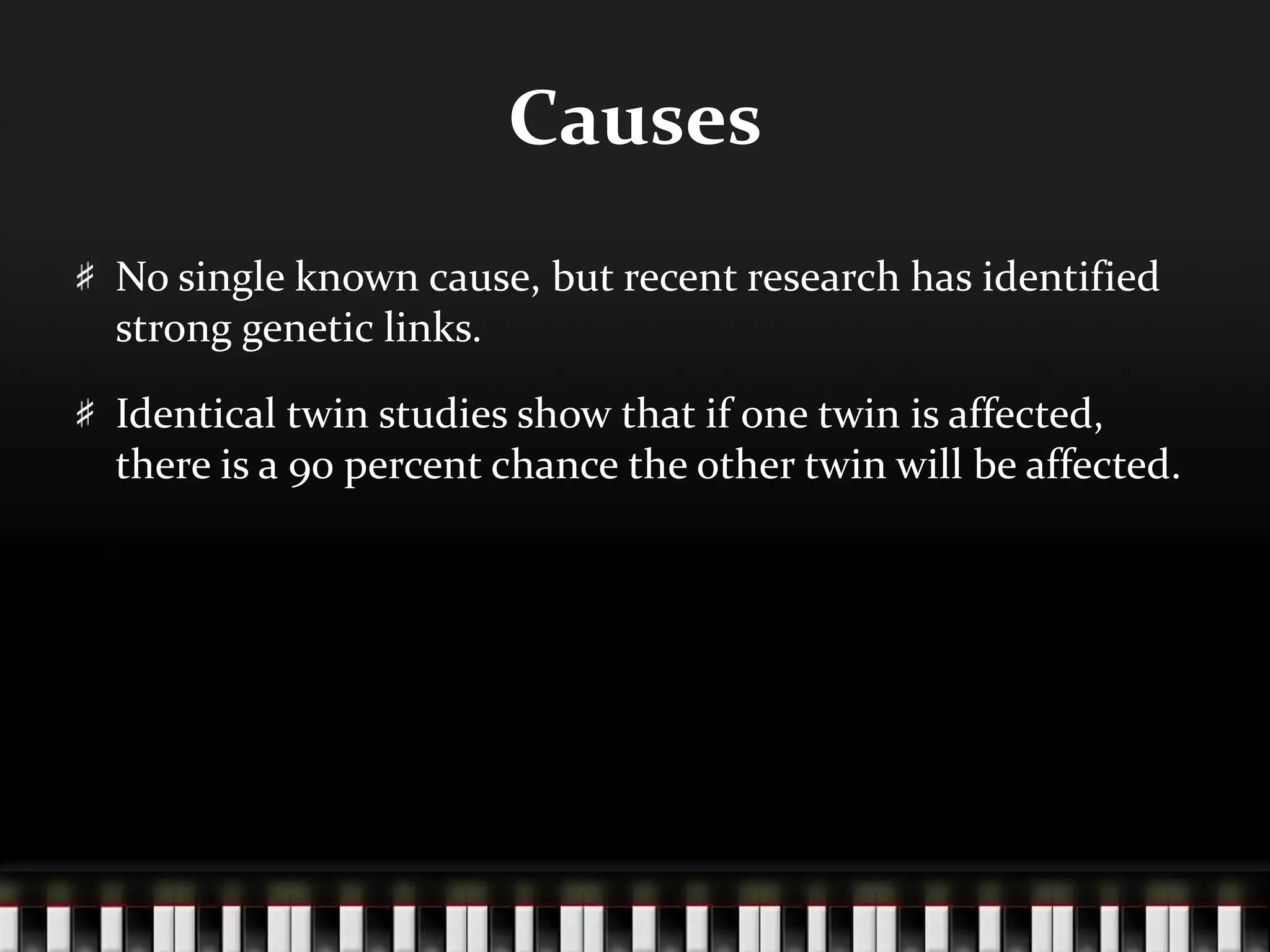
CausesNo single known cause, but recent research has identified strong genetic links.Identical twin studies show that if one twin is affected, there is a 90 percent chance the other twin will be affected.
TreatmentsEducational/behavioural interventions (e.g. Applied Behavioural Analysis)Medications

Q2 l09 autistic spectrum disorders

  • 1.
  • 2.
    What is it?Characterisedby difficulties in social interaction, impaired communication, restricted and repetitive interests and behaviours and sensory sensitivities.Spectrum – range and severity of the difficulties varyIncludes autistic disorder, Asperger’s disorder and pervasive developmental disorder.1 in 160 Australians have ASD and is more prevalent in boys than girls
  • 3.
    Social InteractionLimited useand understanding of non-verbal communication such as eye gaze, facial expression and gestureDifficulties forming and sustaining friendshipsLack of seeking to share enjoyment, interest and activities with other peopleDifficulties with social and emotional responsiveness
  • 4.
    CommunicationDelayed language developmentDifficultiesinitiating and sustaining conversationsStereotyped and repetitive use of language such as repeating phrases from televisionLimited imaginative or make-believe play
  • 5.
    Restricted and repetitiveinterests, activities and behavioursUnusually intense or focused interestsStereotyped and repetitive body movements such as hand flapping and spinningRepetitive use of objects such as repeatedly flicking a doll’s eyes or lining up toysAdherence to non-functional routines such as insisting on travelling the same route home each day
  • 6.
    Different types ofASDAutistic Disorder – impairments in social interaction and communication as well as restricted and repetitive interests, activities and behaviours evident prior to three years of ageAsperger’s disorder – No significant delay in early language acquisition, cognitive abilities or self help skills. Often detected later than autistic disorderPervasive Developmental Disorder – a marked social impairment, but fails to meet full criteria for either autistic disorder or Asperger’s.
  • 7.
    DiagnosisObservations and meetingswith the individual and family to gather information through standardised tests or questionnaires.No single behaviour indicates ASD
  • 8.
    CausesNo single knowncause, but recent research has identified strong genetic links.Identical twin studies show that if one twin is affected, there is a 90 percent chance the other twin will be affected.
  • 9.
    TreatmentsEducational/behavioural interventions (e.g.Applied Behavioural Analysis)Medications