PYTHON –Object Oriented
Programming Language
What is OOPS?
Object-oriented programming (OOP) is a computer programming
model that organizes software design around data, or objects, rather
than functions and logic. An object can be defined as a data field that
has unique attributes and behavior.
The first step in OOP is to collect all of the objects a programmer wants
to manipulate and identify how they relate to each other -- an exercise
known as data modeling.
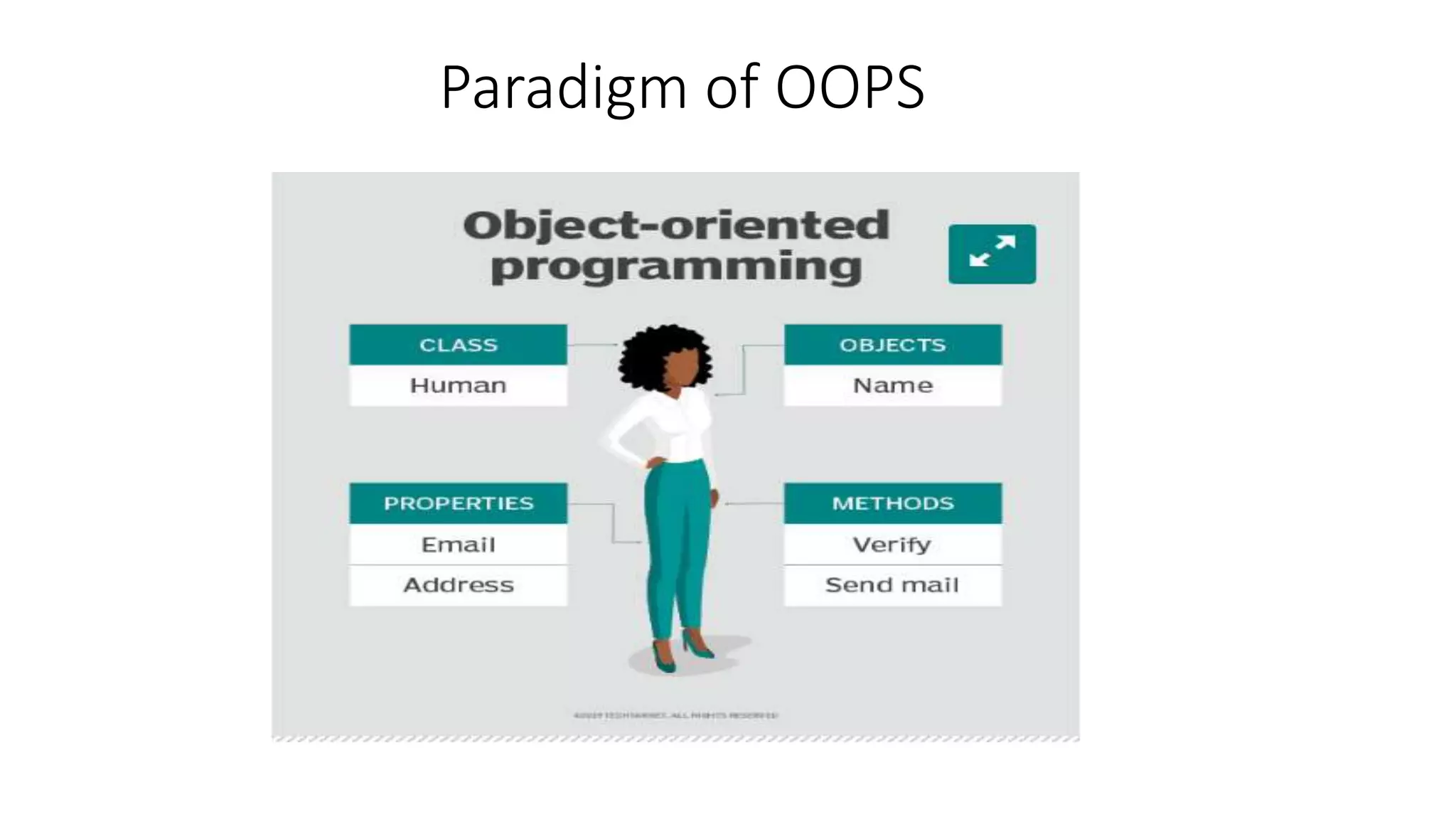
Examples of an object can range from physical entities, such as a
human being who is described by properties like name and address, to
small computer programs, such as widgets.
Paradigm of OOPS
Structure of OOPS?
Class: user-defined data types that act as the blueprint for individual
objects, attributes and methods.
Objects : are instances of a class created with specifically defined data.
Methods : are functions that are defined inside a class that describe
the behaviors of an object.
Attributes : are defined in the class template and represent the state of
an object. Objects will have data stored in the attributes field. Class
attributes belong to the class itself.
Examples of OOPS?
Popular pure OOP languages include:
1. Ruby
2. Scala
3. JADE
4. Emerald
Programming languages designed primarily for OOP include:
1. Java
2. Python
3. C++
Other programming languages that pair with OOP include:
1. Visual Basic .NET
2. PHP
3. JavaScript
Benefits of OOPS
Modularity. Encapsulation enables objects to be self-contained, making
troubleshooting and collaborative development easier.
Reusability. Code can be reused through inheritance, meaning a team does
not have to write the same code multiple times.
Productivity. Programmers can construct new programs quicker through the
use of multiple libraries and reusable code.
Easily upgradable and scalable. Programmers can implement system
functionalities independently.
Interface descriptions. Descriptions of external systems are simple, due to
message passing techniques that are used for objects communication.
Security. Using encapsulation and abstraction, complex code is hidden,
software maintenance is easier and internet protocols are protected.
Flexibility. Polymorphism enables a single function to adapt to the class it is
placed in. Different objects can also pass through the same interface.
Criticism of OOPS
Functional programming: This includes languages such as Erlang and Scala,
which are used for telecommunications and fault tolerant systems.
Structured or modular programming: This includes languages such as PHP
and C#.
Imperative programming: This alternative to OOP focuses on function rather
than models and includes C++ and Java.
Declarative programming: This programming method involves statements on
what the task or desired outcome is but not how to achieve it. Languages
include Prolog and Lisp.
Logical programming: This method, which is based mostly in formal logic and
uses languages such as Prolog, contains a set of sentences that express facts
or rules about a problem domain. It focuses on tasks that can benefit from
rule-based logical queries.
Is Python being OOPS?
Python is an object-oriented language. This means that everything in
python is an object.
Unlike other programming languages, Python revolves around the
concept of objects. Hence, it is an Object-Oriented Programming
Language(OOPs).
Classes and objects are two main aspects of OOPs.
Python Class
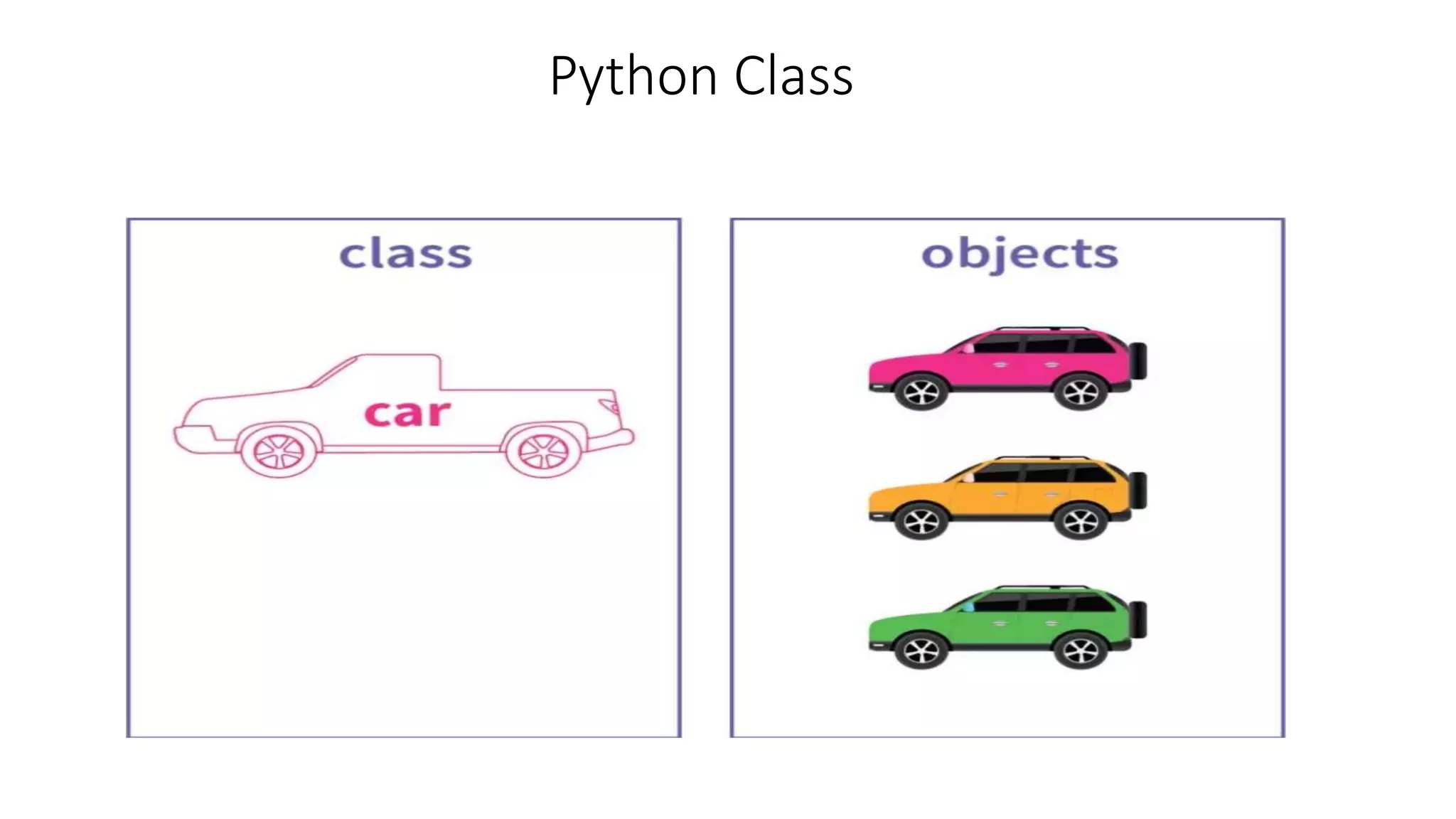
A class is a user-defined blueprint or prototype from which objects are
created.
Creating a new class creates a new type of object, allowing new
instances of that type to be made.
Each class instance can have attributes attached to it for maintaining
its state. Class instances can also have methods (defined by their class)
for modifying their state.
Python Class
Class and Object Definition
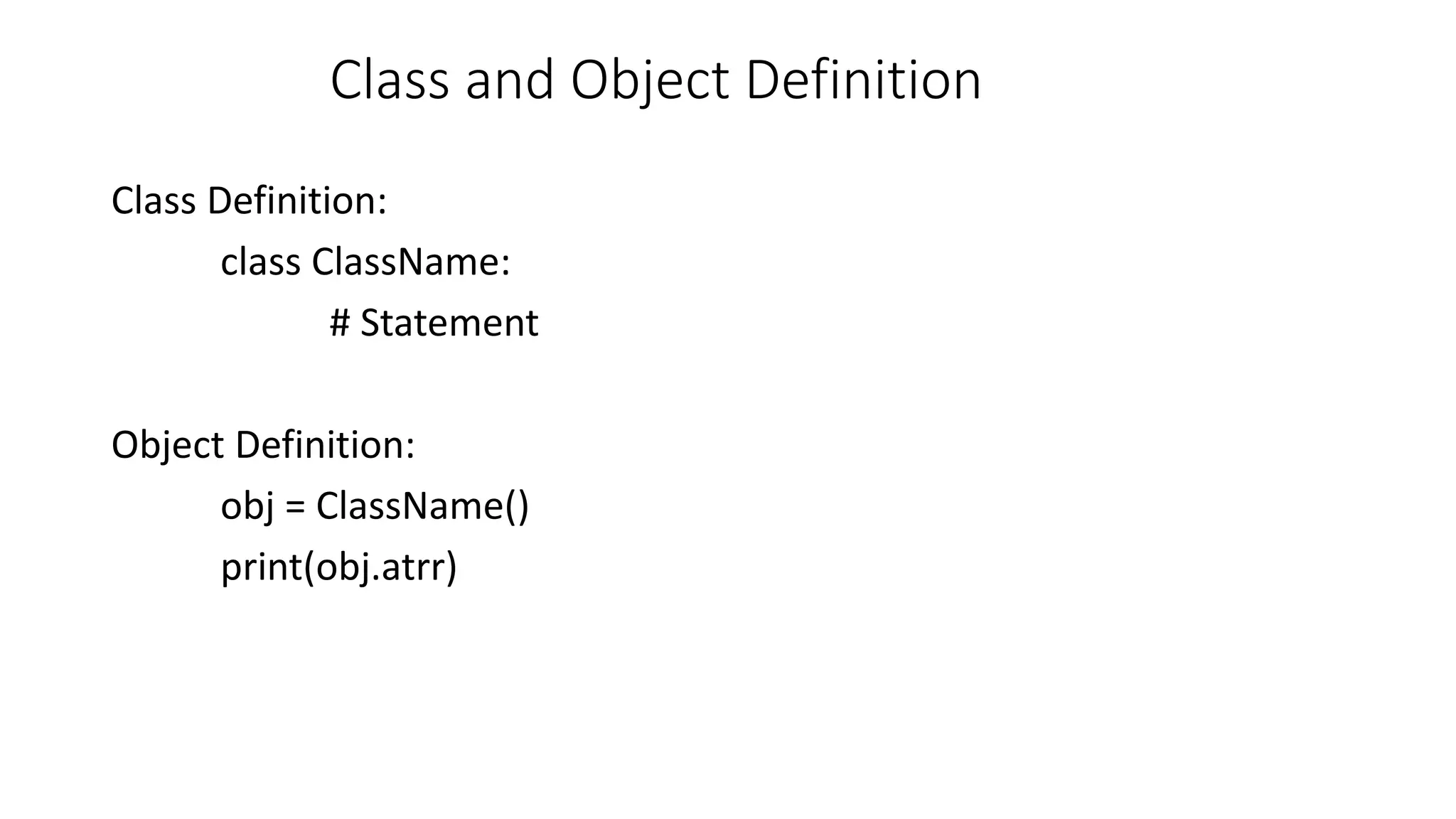
Class Definition:
class ClassName:
# Statement
Object Definition:
obj = ClassName()
print(obj.atrr)
Points on Python Class
Class creates a user-defined data structure, which holds its own data
members and member functions, which can be accessed and used by
creating an instance of that class. A class is like a blueprint for an
object.
Classes are created by keyword class.
Attributes are the variables that belong to a class.
Attributes are always public and can be accessed using the dot (.)
operator. Eg.: Myclass.Myattribute
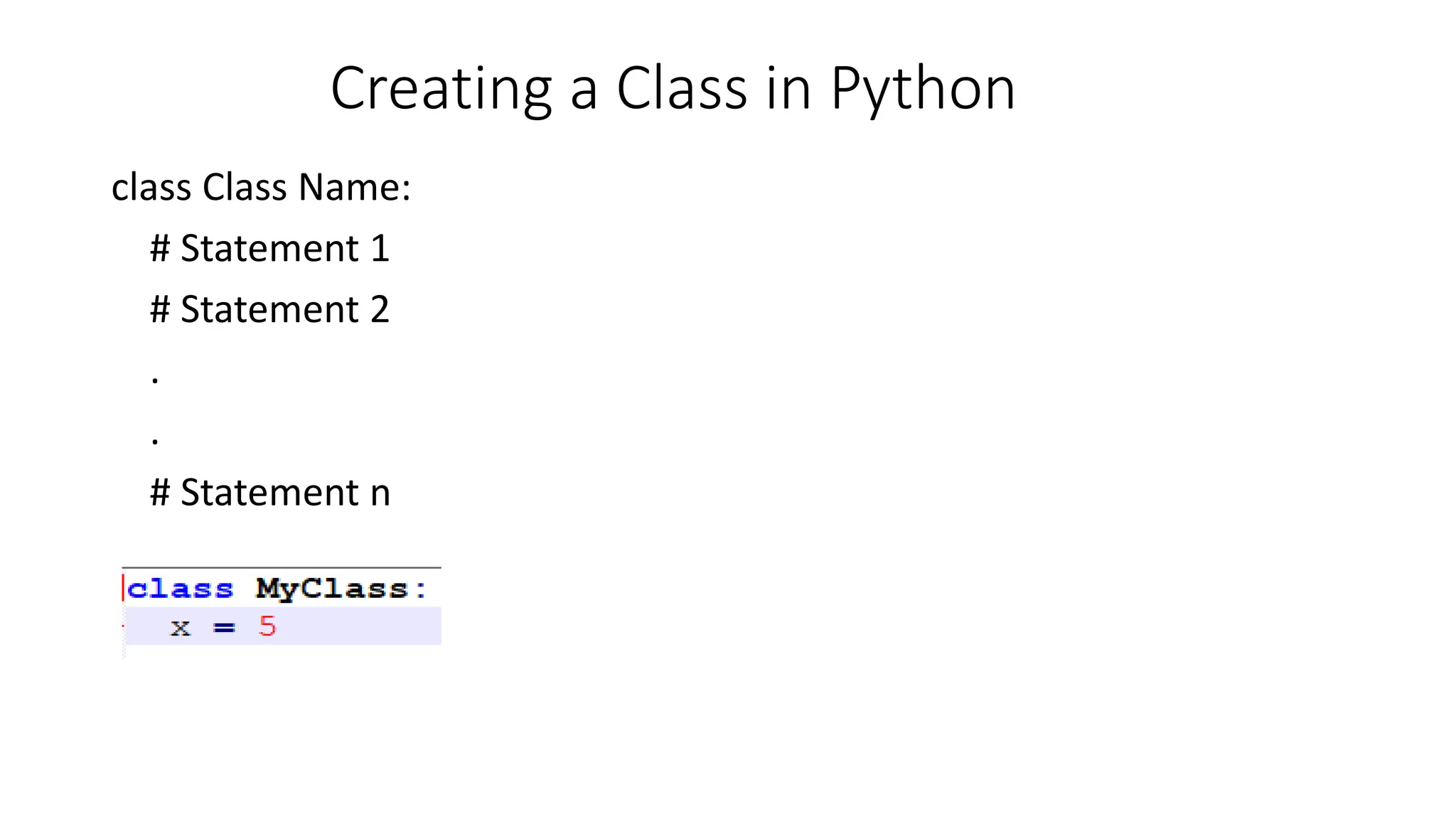
Creating a Class in Python
class Class Name:
# Statement 1
# Statement 2
.
.
# Statement n
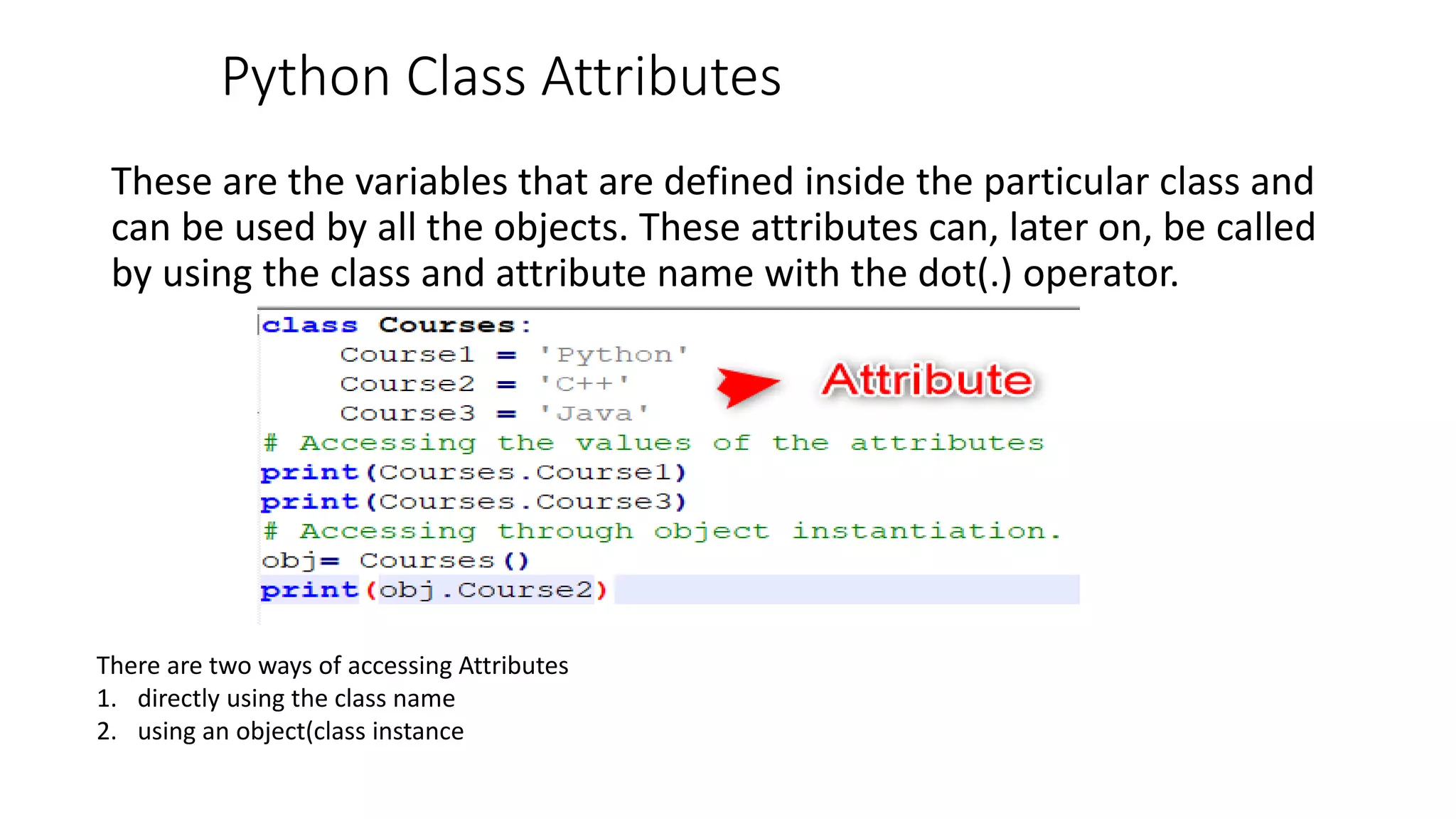
Python Class Attributes
These are the variables that are defined inside the particular class and
can be used by all the objects. These attributes can, later on, be called
by using the class and attribute name with the dot(.) operator.
There are two ways of accessing Attributes
1. directly using the class name
2. using an object(class instance
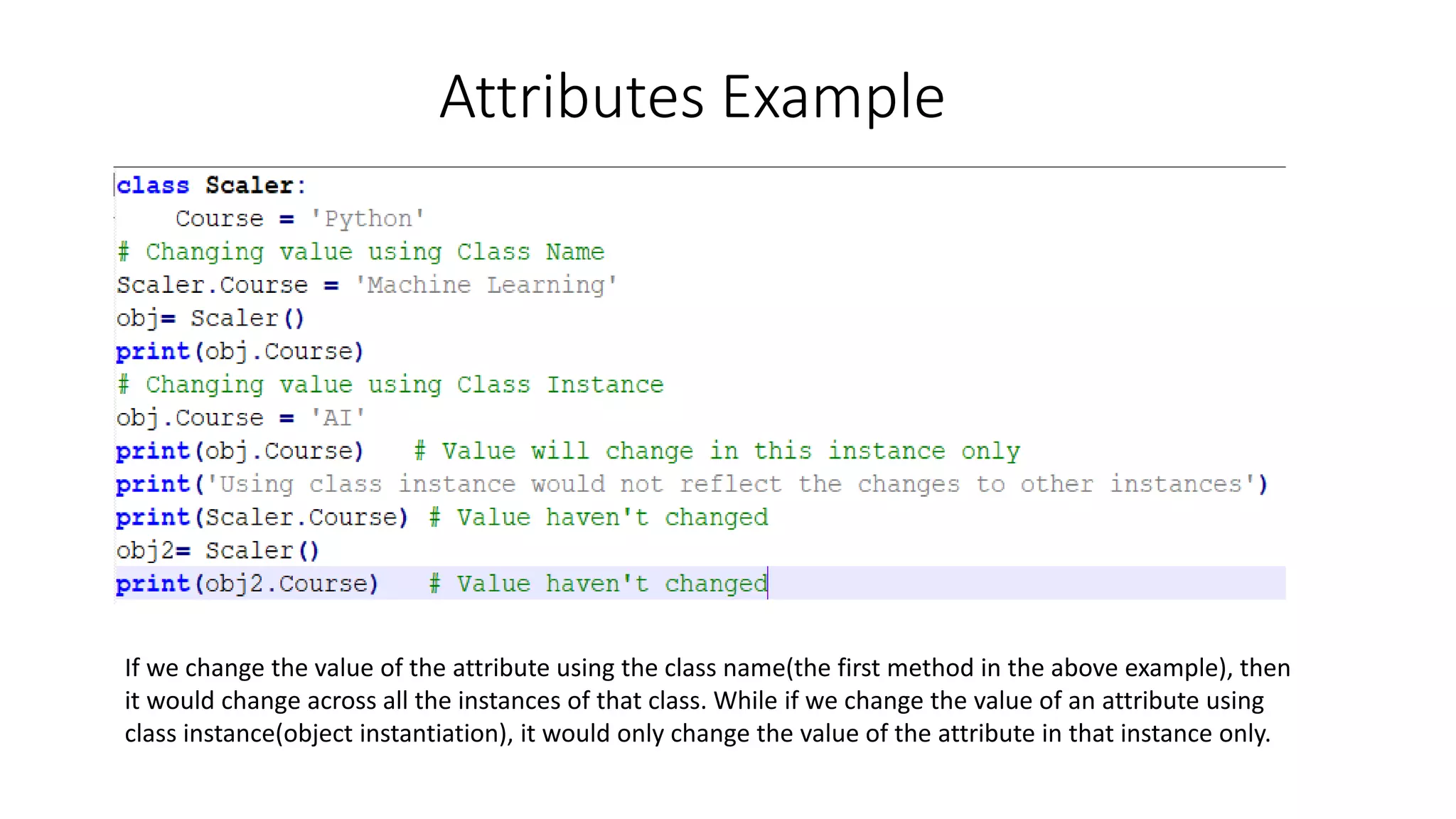
Attributes Example
If we change the value of the attribute using the class name(the first method in the above example), then
it would change across all the instances of that class. While if we change the value of an attribute using
class instance(object instantiation), it would only change the value of the attribute in that instance only.
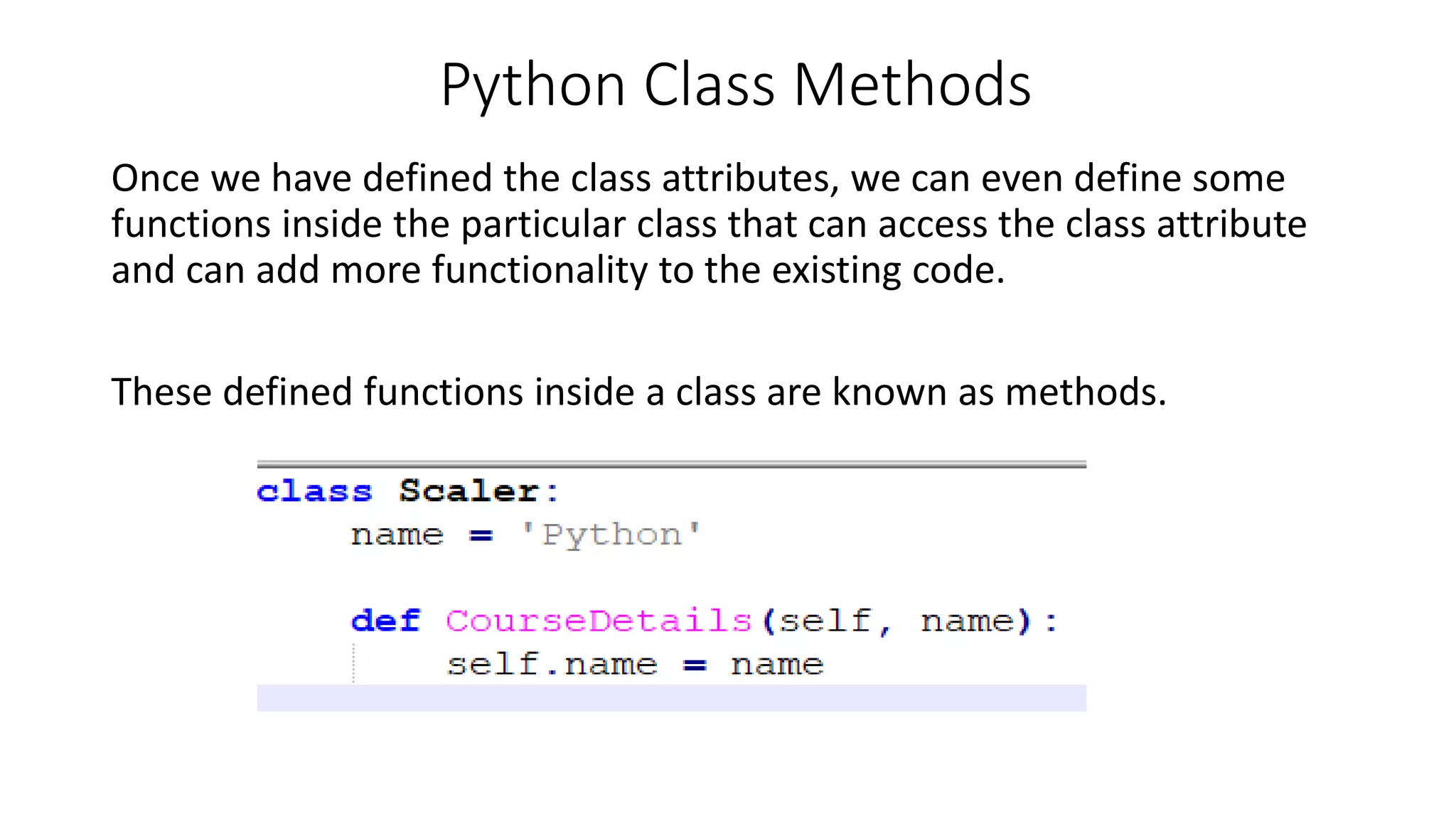
Python Class Methods
Once we have defined the class attributes, we can even define some
functions inside the particular class that can access the class attribute
and can add more functionality to the existing code.
These defined functions inside a class are known as methods.
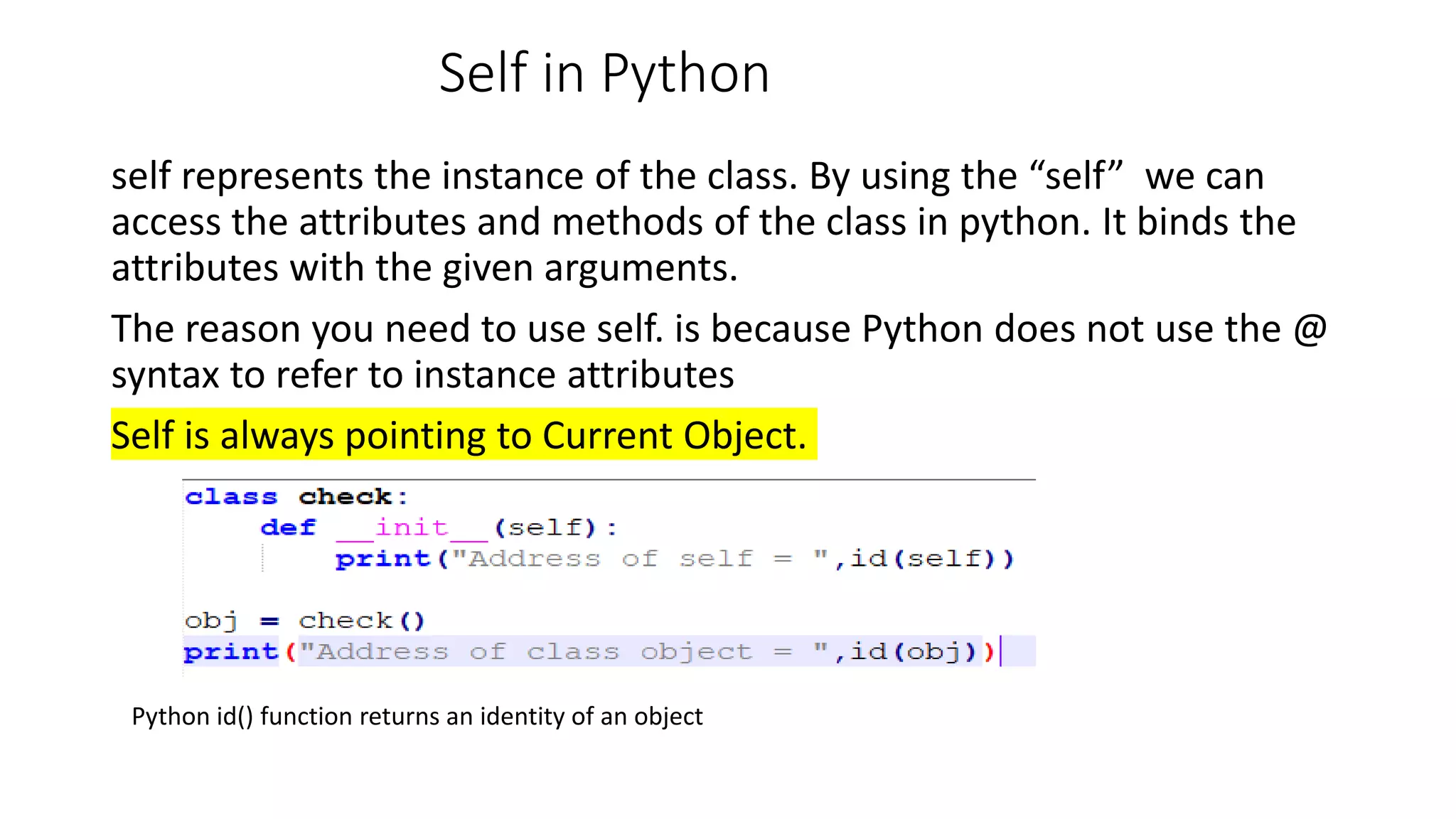
Self in Python
self represents the instance of the class. By using the “self” we can
access the attributes and methods of the class in python. It binds the
attributes with the given arguments.
The reason you need to use self. is because Python does not use the @
syntax to refer to instance attributes
Self is always pointing to Current Object.
Python id() function returns an identity of an object
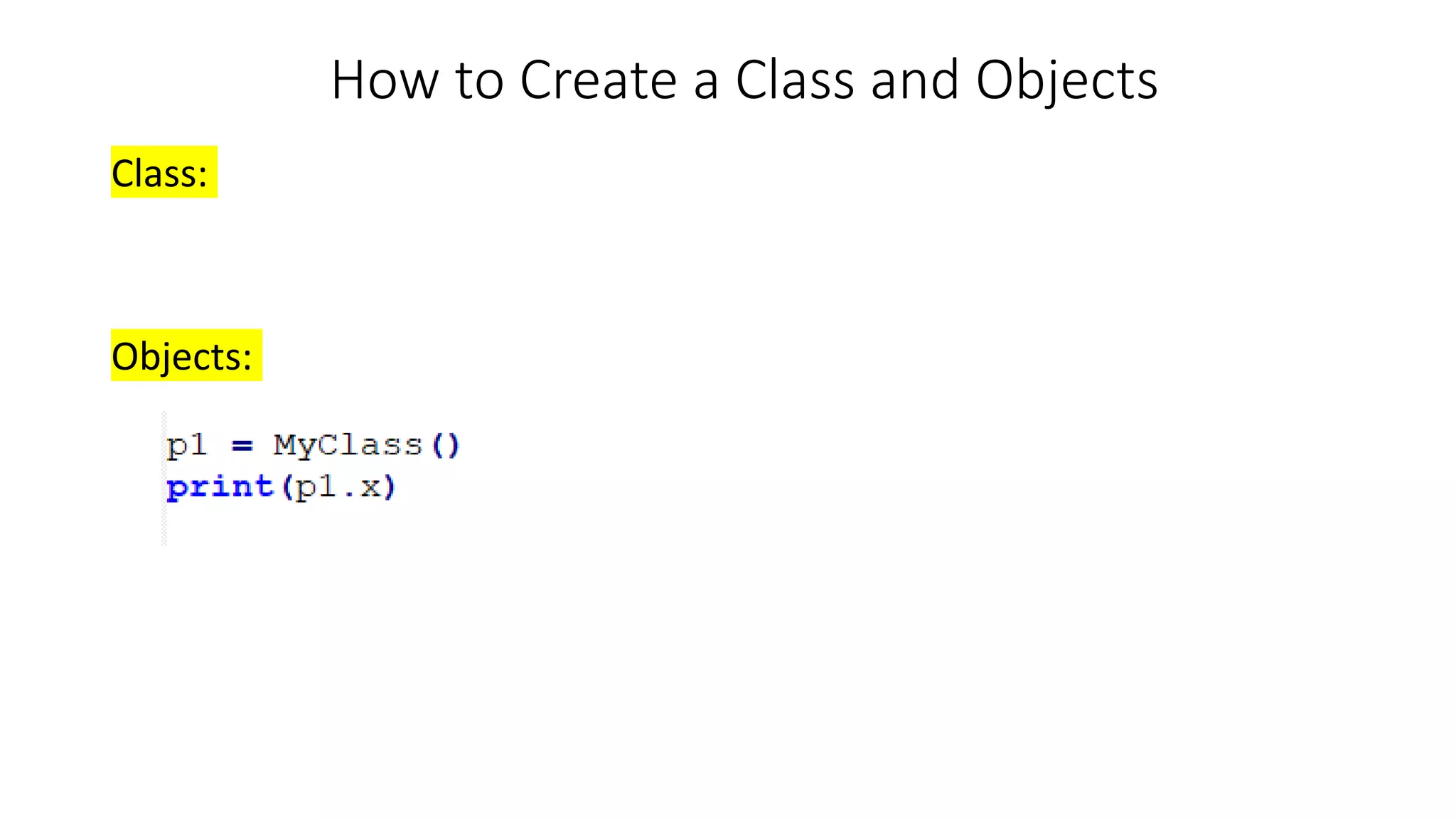
How to Create a Class and Objects
Class:
Objects:
What is __Init__ Function?
In an object-oriented approach, the __init__ method is the Python
equivalent of the C++ constructor. Every time an object is created from
a class, the __init__function is called. The __init__ method only allows
the class to initialize the object's attributes. It is only used within
classes.
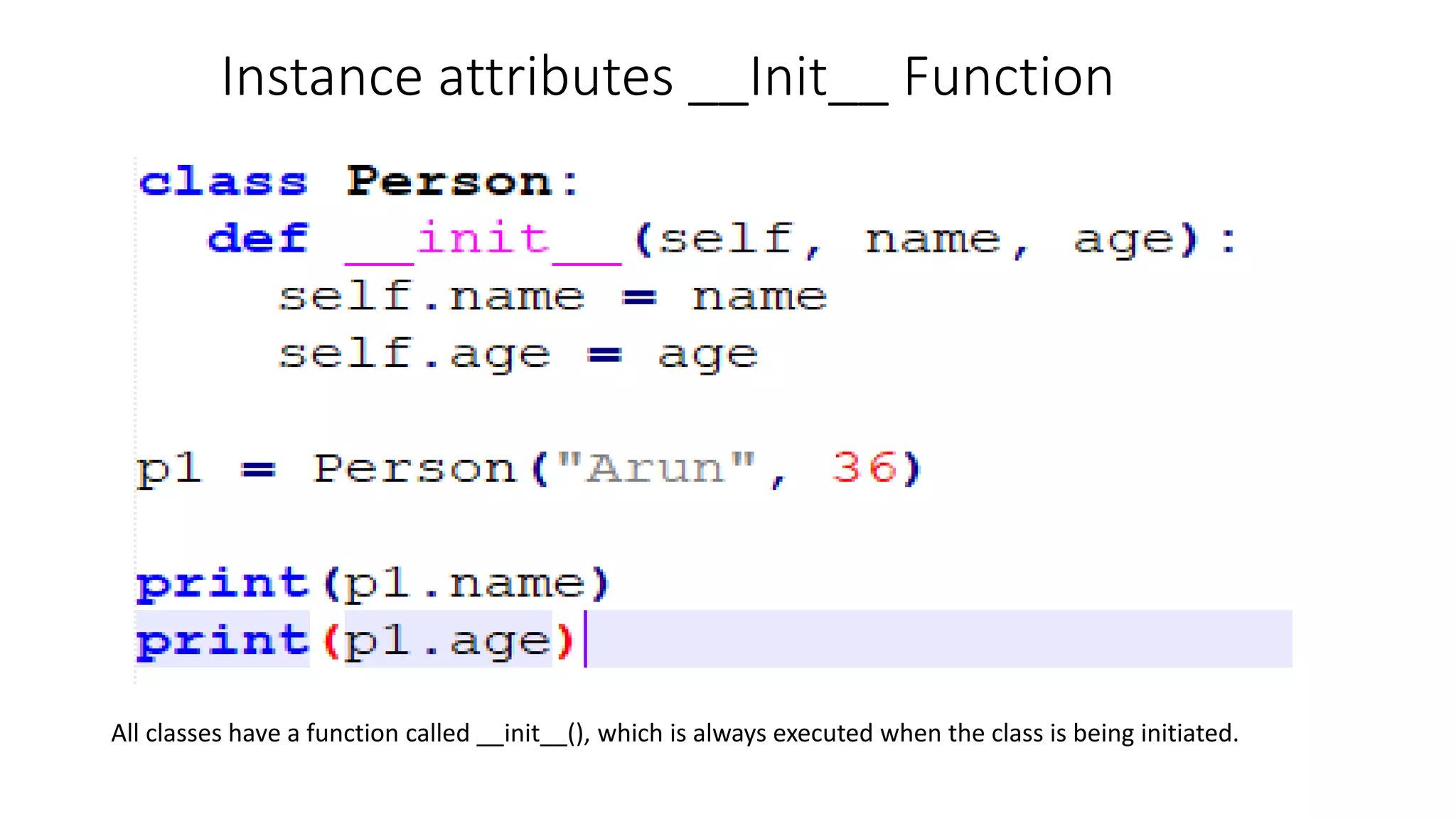
Instance attributes __Init__ Function
All classes have a function called __init__(), which is always executed when the class is being initiated.
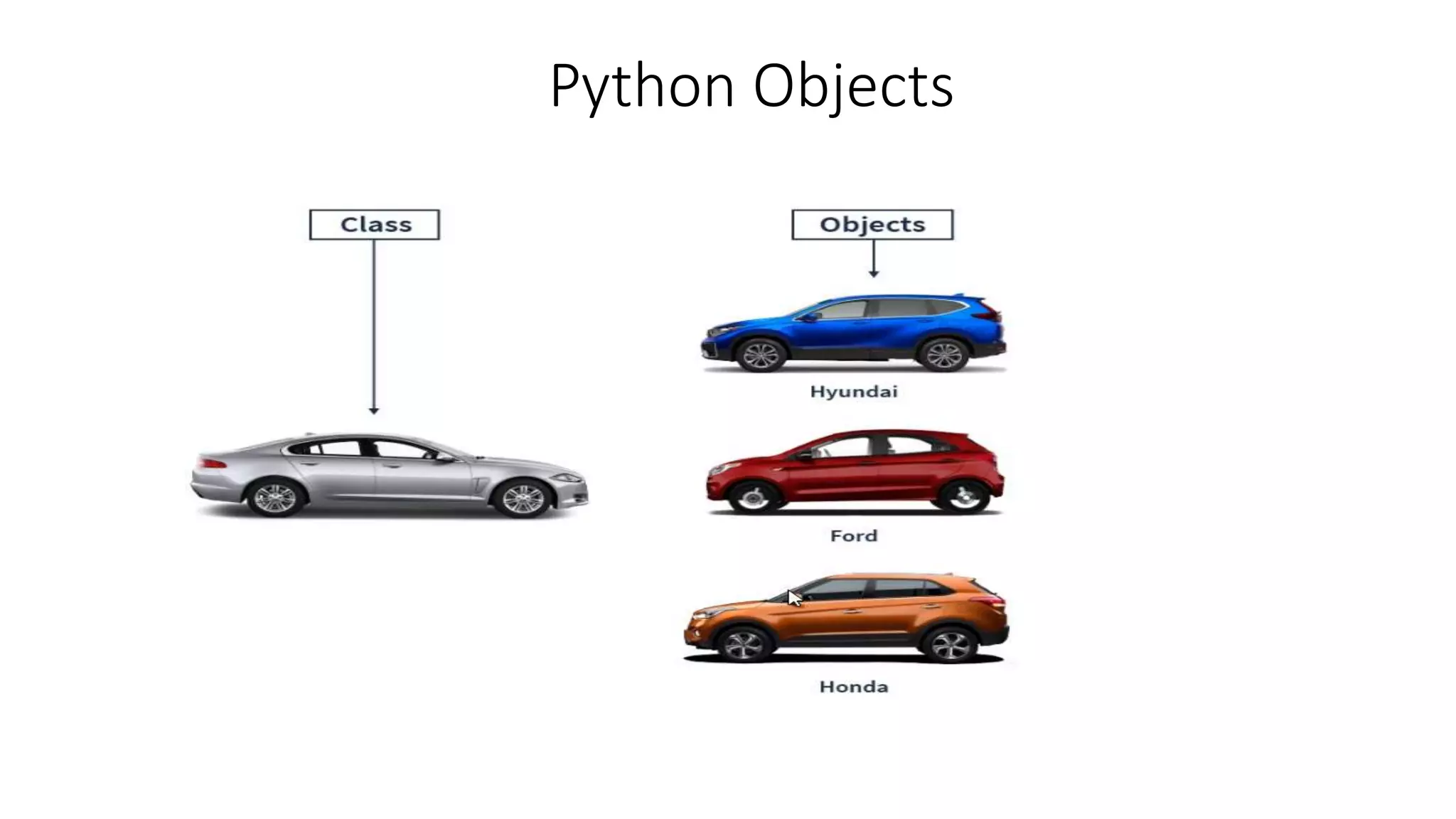
Python Objects
Class Objects
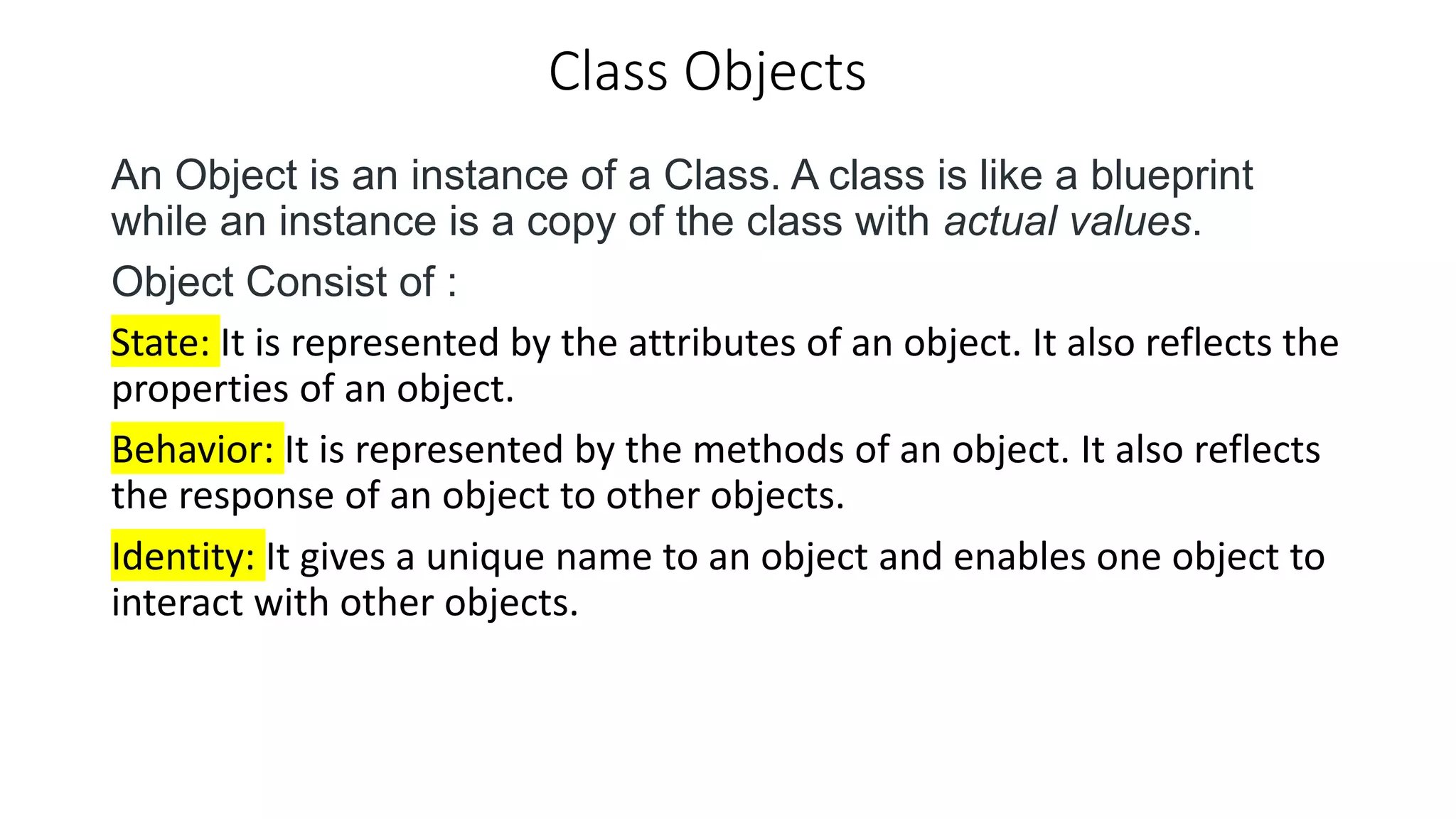
An Object is an instance of a Class. A class is like a blueprint
while an instance is a copy of the class with actual values.
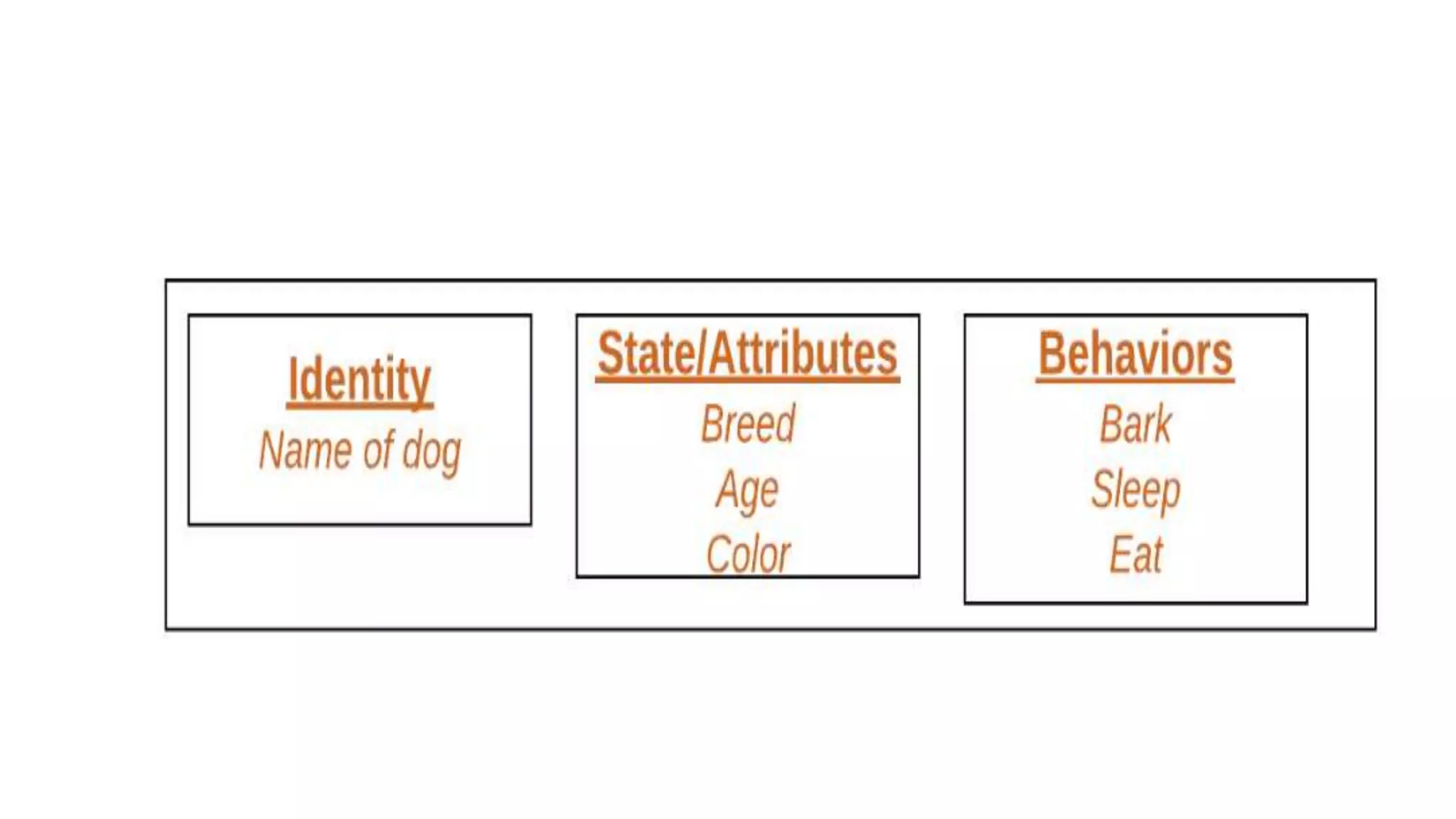
Object Consist of :
State: It is represented by the attributes of an object. It also reflects the
properties of an object.
Behavior: It is represented by the methods of an object. It also reflects
the response of an object to other objects.
Identity: It gives a unique name to an object and enables one object to
interact with other objects.
Declaring Objects
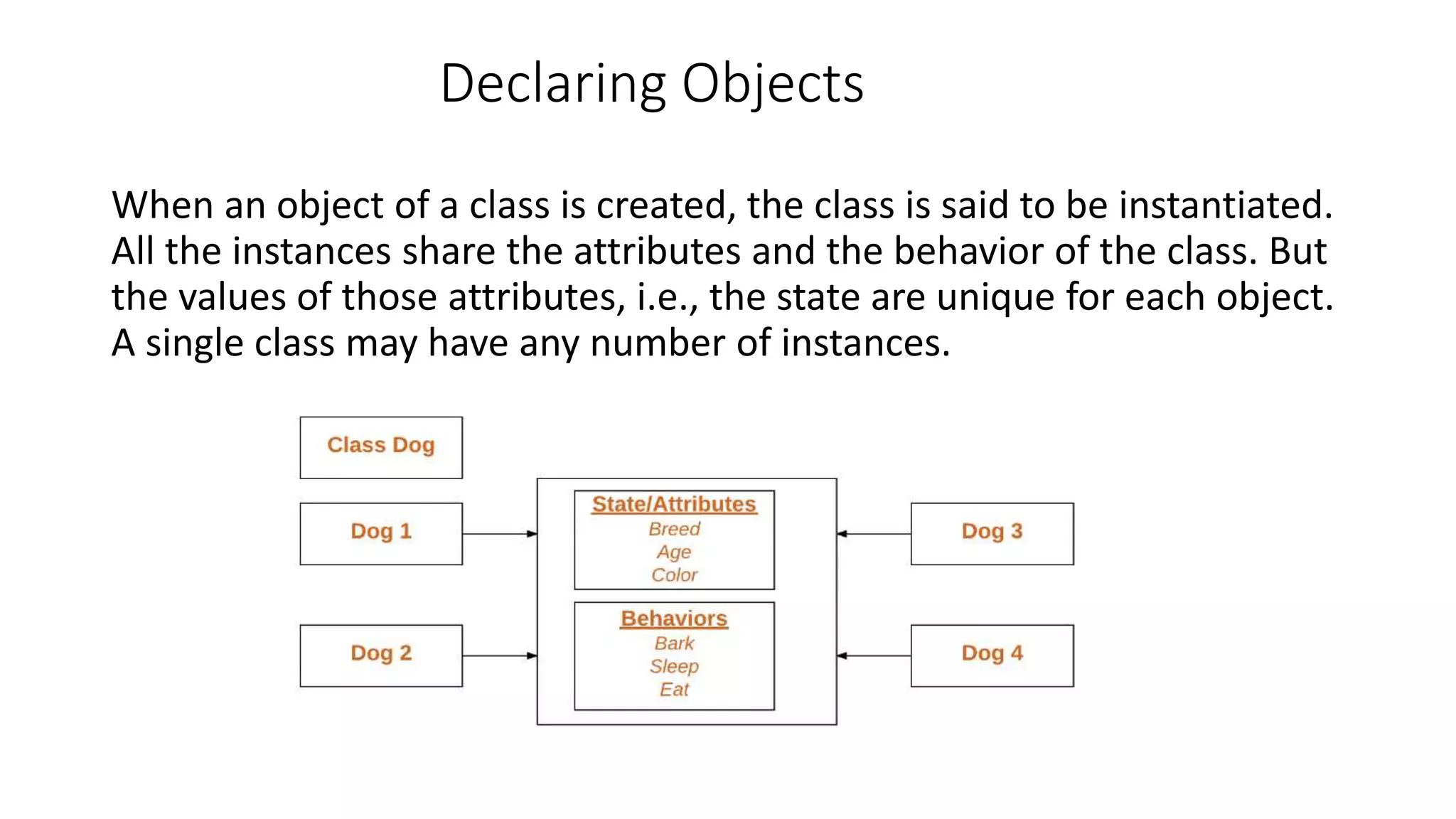
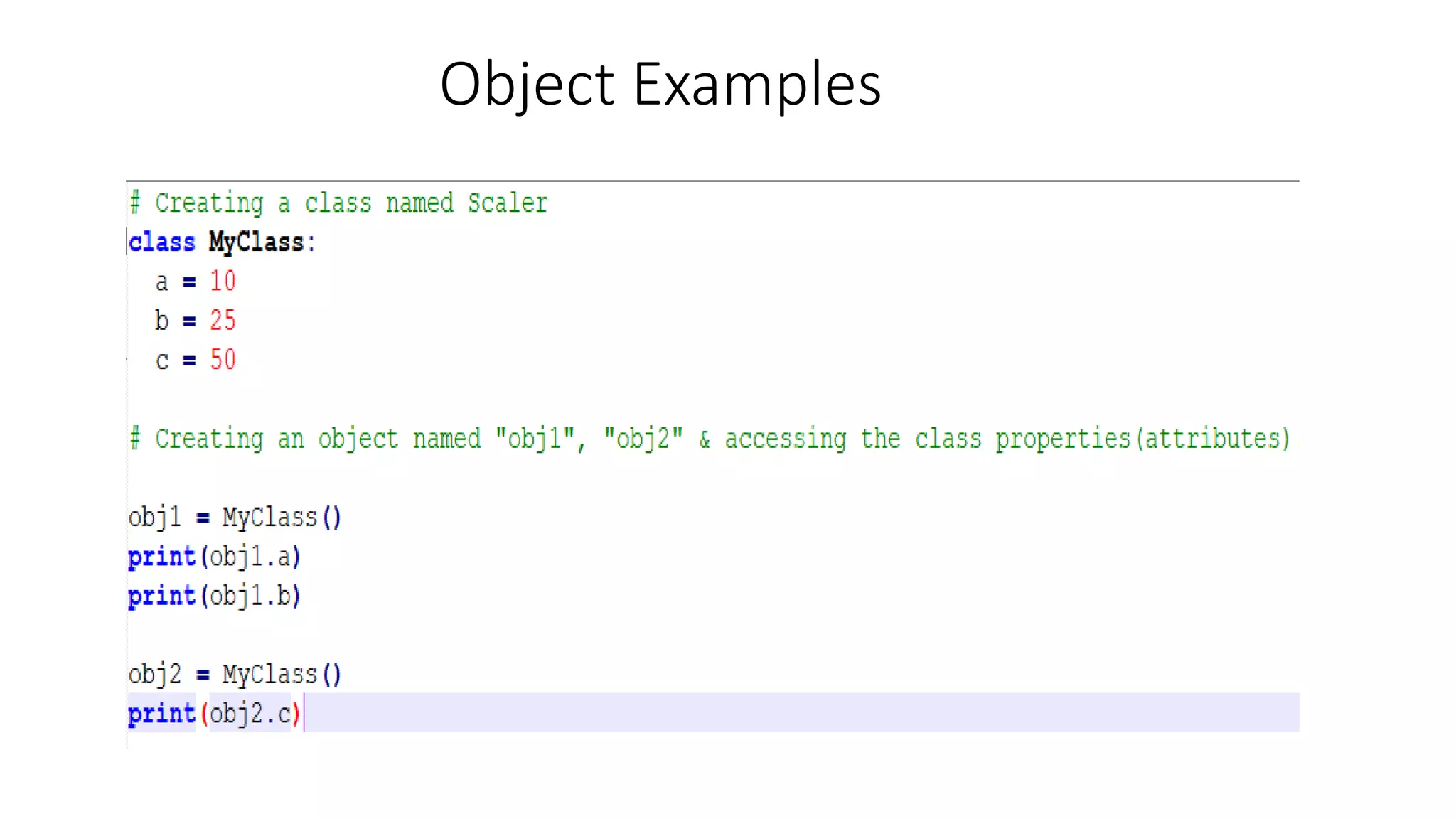
When an object of a class is created, the class is said to be instantiated.
All the instances share the attributes and the behavior of the class. But
the values of those attributes, i.e., the state are unique for each object.
A single class may have any number of instances.
Object Examples
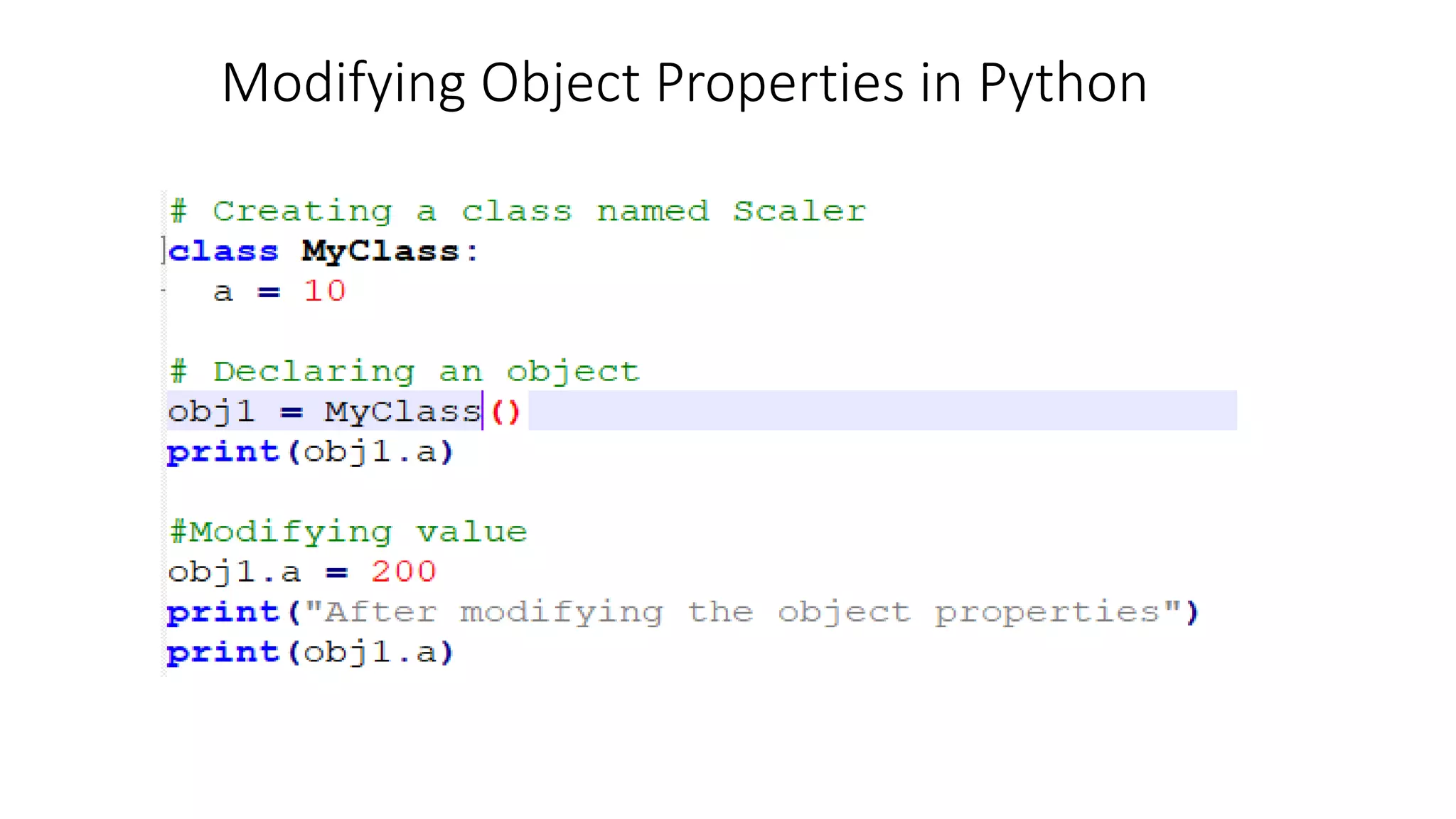
Modifying Object Properties in Python
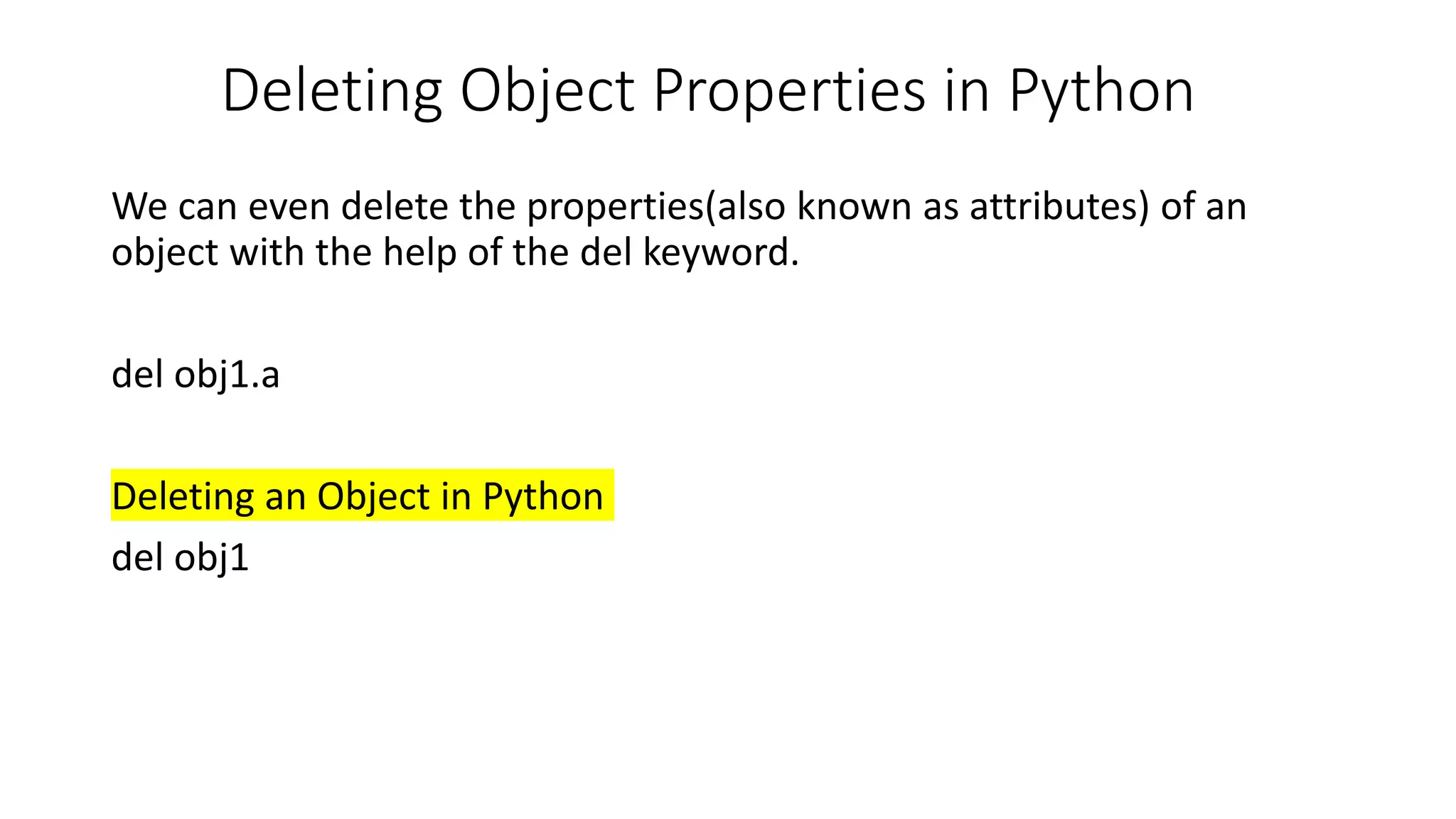
Deleting Object Properties in Python
We can even delete the properties(also known as attributes) of an
object with the help of the del keyword.
del obj1.a
Deleting an Object in Python
del obj1

Python-Classes.pptx

  • 1.
  • 2.
    What is OOPS? Object-orientedprogramming (OOP) is a computer programming model that organizes software design around data, or objects, rather than functions and logic. An object can be defined as a data field that has unique attributes and behavior. The first step in OOP is to collect all of the objects a programmer wants to manipulate and identify how they relate to each other -- an exercise known as data modeling. Examples of an object can range from physical entities, such as a human being who is described by properties like name and address, to small computer programs, such as widgets.
  • 3.
  • 4.
    Structure of OOPS? Class:user-defined data types that act as the blueprint for individual objects, attributes and methods. Objects : are instances of a class created with specifically defined data. Methods : are functions that are defined inside a class that describe the behaviors of an object. Attributes : are defined in the class template and represent the state of an object. Objects will have data stored in the attributes field. Class attributes belong to the class itself.
  • 5.
    Examples of OOPS? Popularpure OOP languages include: 1. Ruby 2. Scala 3. JADE 4. Emerald Programming languages designed primarily for OOP include: 1. Java 2. Python 3. C++ Other programming languages that pair with OOP include: 1. Visual Basic .NET 2. PHP 3. JavaScript
  • 6.
    Benefits of OOPS Modularity.Encapsulation enables objects to be self-contained, making troubleshooting and collaborative development easier. Reusability. Code can be reused through inheritance, meaning a team does not have to write the same code multiple times. Productivity. Programmers can construct new programs quicker through the use of multiple libraries and reusable code. Easily upgradable and scalable. Programmers can implement system functionalities independently. Interface descriptions. Descriptions of external systems are simple, due to message passing techniques that are used for objects communication. Security. Using encapsulation and abstraction, complex code is hidden, software maintenance is easier and internet protocols are protected. Flexibility. Polymorphism enables a single function to adapt to the class it is placed in. Different objects can also pass through the same interface.
  • 7.
    Criticism of OOPS Functionalprogramming: This includes languages such as Erlang and Scala, which are used for telecommunications and fault tolerant systems. Structured or modular programming: This includes languages such as PHP and C#. Imperative programming: This alternative to OOP focuses on function rather than models and includes C++ and Java. Declarative programming: This programming method involves statements on what the task or desired outcome is but not how to achieve it. Languages include Prolog and Lisp. Logical programming: This method, which is based mostly in formal logic and uses languages such as Prolog, contains a set of sentences that express facts or rules about a problem domain. It focuses on tasks that can benefit from rule-based logical queries.
  • 8.
    Is Python beingOOPS? Python is an object-oriented language. This means that everything in python is an object. Unlike other programming languages, Python revolves around the concept of objects. Hence, it is an Object-Oriented Programming Language(OOPs). Classes and objects are two main aspects of OOPs.
  • 9.
    Python Class A classis a user-defined blueprint or prototype from which objects are created. Creating a new class creates a new type of object, allowing new instances of that type to be made. Each class instance can have attributes attached to it for maintaining its state. Class instances can also have methods (defined by their class) for modifying their state.
  • 10.
  • 11.
    Class and ObjectDefinition Class Definition: class ClassName: # Statement Object Definition: obj = ClassName() print(obj.atrr)
  • 12.
    Points on PythonClass Class creates a user-defined data structure, which holds its own data members and member functions, which can be accessed and used by creating an instance of that class. A class is like a blueprint for an object. Classes are created by keyword class. Attributes are the variables that belong to a class. Attributes are always public and can be accessed using the dot (.) operator. Eg.: Myclass.Myattribute
  • 13.
    Creating a Classin Python class Class Name: # Statement 1 # Statement 2 . . # Statement n
  • 14.
    Python Class Attributes Theseare the variables that are defined inside the particular class and can be used by all the objects. These attributes can, later on, be called by using the class and attribute name with the dot(.) operator. There are two ways of accessing Attributes 1. directly using the class name 2. using an object(class instance
  • 15.
    Attributes Example If wechange the value of the attribute using the class name(the first method in the above example), then it would change across all the instances of that class. While if we change the value of an attribute using class instance(object instantiation), it would only change the value of the attribute in that instance only.
  • 16.
    Python Class Methods Oncewe have defined the class attributes, we can even define some functions inside the particular class that can access the class attribute and can add more functionality to the existing code. These defined functions inside a class are known as methods.
  • 17.
    Self in Python selfrepresents the instance of the class. By using the “self” we can access the attributes and methods of the class in python. It binds the attributes with the given arguments. The reason you need to use self. is because Python does not use the @ syntax to refer to instance attributes Self is always pointing to Current Object. Python id() function returns an identity of an object
  • 18.
    How to Createa Class and Objects Class: Objects:
  • 19.
    What is __Init__Function? In an object-oriented approach, the __init__ method is the Python equivalent of the C++ constructor. Every time an object is created from a class, the __init__function is called. The __init__ method only allows the class to initialize the object's attributes. It is only used within classes.
  • 20.
    Instance attributes __Init__Function All classes have a function called __init__(), which is always executed when the class is being initiated.
  • 21.
  • 22.
    Class Objects An Objectis an instance of a Class. A class is like a blueprint while an instance is a copy of the class with actual values. Object Consist of : State: It is represented by the attributes of an object. It also reflects the properties of an object. Behavior: It is represented by the methods of an object. It also reflects the response of an object to other objects. Identity: It gives a unique name to an object and enables one object to interact with other objects.
  • 24.
    Declaring Objects When anobject of a class is created, the class is said to be instantiated. All the instances share the attributes and the behavior of the class. But the values of those attributes, i.e., the state are unique for each object. A single class may have any number of instances.
  • 25.
  • 26.
  • 27.
    Deleting Object Propertiesin Python We can even delete the properties(also known as attributes) of an object with the help of the del keyword. del obj1.a Deleting an Object in Python del obj1