Introduction to Pulse
• Definition: The pulse is the a rhythmic expansion and
contraction of the arterial walls due to the surge of
blood following each heartbeat.
• Significance: Pulse assessment provides crucial
information about the cardiovascular system,
including heart rate, rhythm, and strength.
Pulse Characteristics
Rate: Number of beats per minute (bpm).
– Normal Range: 60-100 bpm for adults.
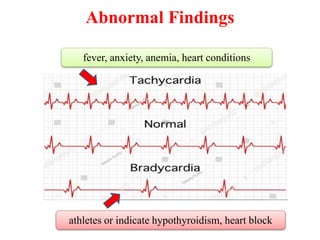
– Tachycardia: >100 bpm.
– Bradycardia: <60 bpm.
Note : Normally Heart Rate = Pulse Rate
Abnormal Findings
fever, anxiety, anemia, heart conditions
athletes or indicate hypothyroidism, heart block
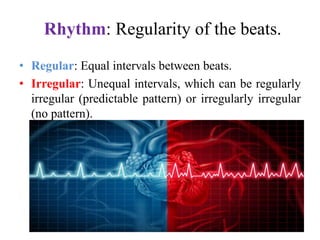
Rhythm: Regularity of the beats.
• Regular: Equal intervals between beats.
• Irregular: Unequal intervals, which can be regularly
irregular (predictable pattern) or irregularly irregular
(no pattern).
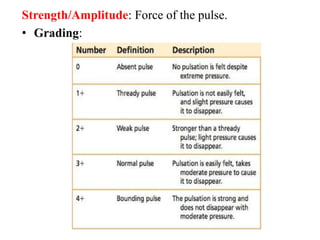
Strength/Amplitude: Force of the pulse.
• Grading:
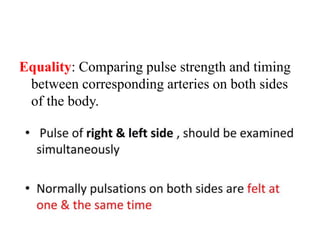
Equality: Comparing pulse strength and timing
between corresponding arteries on both sides
of the body.
Anatomy and Physiology
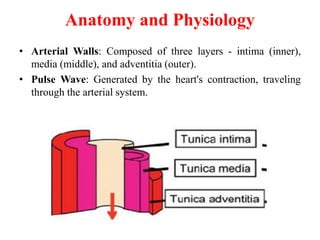
• Arterial Walls: Composed of three layers - intima (inner),
media (middle), and adventitia (outer).
• Pulse Wave: Generated by the heart's contraction, traveling
through the arterial system.
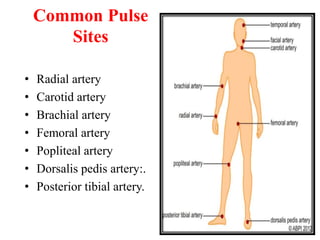
Common Pulse
Sites
• Radial artery
• Carotid artery
• Brachial artery
• Femoral artery
• Popliteal artery
• Dorsalis pedis artery:.
• Posterior tibial artery.
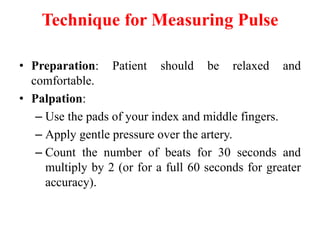
Technique for Measuring Pulse
• Preparation: Patient should be relaxed and
comfortable.
• Palpation:
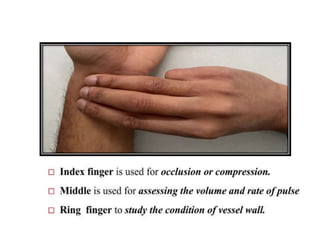
– Use the pads of your index and middle fingers.
– Apply gentle pressure over the artery.
– Count the number of beats for 30 seconds and
multiply by 2 (or for a full 60 seconds for greater
accuracy).
Clinical Implications
• Normal Findings: Regular rhythm, normal rate (60-
100 bpm), and 2+ amplitude.
Special Considerations
• Age Variations: Infants and children have higher
normal pulse rates compared to adults.
• Condition of the Patient: Shock, dehydration, and
other conditions can affect pulse characteristics.
• Medications: Some drugs (e.g., beta-blockers) can
slow the pulse, while others (e.g., stimulants) can
increase it.
Documentation
• Record: Rate, rhythm, strength, and any
discrepancies or abnormalities.
• Example: "Pulse: 72 bpm, regular, 2+, equal
bilaterally."
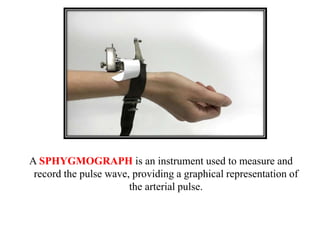
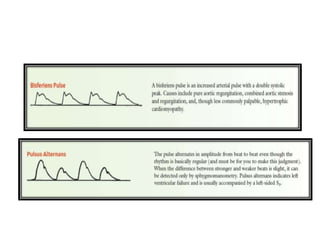
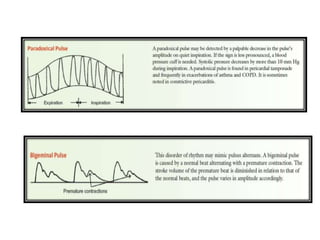
A SPHYGMOGRAPH is an instrument used to measure and
record the pulse wave, providing a graphical representation of
the arterial pulse.
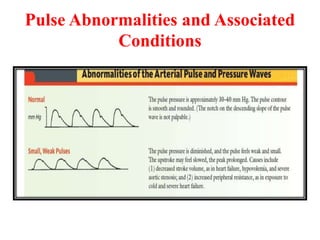
Pulse Abnormalities and Associated
Conditions
Summary
• The pulse is a vital sign reflecting the heart's function
and systemic arterial health.
• Systematic assessment of rate, rhythm, amplitude,
and equality provides valuable diagnostic
information.
• Always correlate pulse findings with the clinical
context for accurate diagnosis and management.

PULSE.pptx PPPPPPPPPPPPPPPPPPPPPPPPPPPPPPPPPPPPPPPPPPPPP

  • 2.
    Introduction to Pulse •Definition: The pulse is the a rhythmic expansion and contraction of the arterial walls due to the surge of blood following each heartbeat. • Significance: Pulse assessment provides crucial information about the cardiovascular system, including heart rate, rhythm, and strength.
  • 3.
    Pulse Characteristics Rate: Numberof beats per minute (bpm). – Normal Range: 60-100 bpm for adults. – Tachycardia: >100 bpm. – Bradycardia: <60 bpm. Note : Normally Heart Rate = Pulse Rate
  • 4.
    Abnormal Findings fever, anxiety,anemia, heart conditions athletes or indicate hypothyroidism, heart block
  • 5.
    Rhythm: Regularity ofthe beats. • Regular: Equal intervals between beats. • Irregular: Unequal intervals, which can be regularly irregular (predictable pattern) or irregularly irregular (no pattern).
  • 6.
    Strength/Amplitude: Force ofthe pulse. • Grading:
  • 7.
    Equality: Comparing pulsestrength and timing between corresponding arteries on both sides of the body.
  • 8.
    Anatomy and Physiology •Arterial Walls: Composed of three layers - intima (inner), media (middle), and adventitia (outer). • Pulse Wave: Generated by the heart's contraction, traveling through the arterial system.
  • 10.
    Common Pulse Sites • Radialartery • Carotid artery • Brachial artery • Femoral artery • Popliteal artery • Dorsalis pedis artery:. • Posterior tibial artery.
  • 11.
    Technique for MeasuringPulse • Preparation: Patient should be relaxed and comfortable. • Palpation: – Use the pads of your index and middle fingers. – Apply gentle pressure over the artery. – Count the number of beats for 30 seconds and multiply by 2 (or for a full 60 seconds for greater accuracy).
  • 12.
    Clinical Implications • NormalFindings: Regular rhythm, normal rate (60- 100 bpm), and 2+ amplitude.
  • 13.
    Special Considerations • AgeVariations: Infants and children have higher normal pulse rates compared to adults. • Condition of the Patient: Shock, dehydration, and other conditions can affect pulse characteristics. • Medications: Some drugs (e.g., beta-blockers) can slow the pulse, while others (e.g., stimulants) can increase it.
  • 14.
    Documentation • Record: Rate,rhythm, strength, and any discrepancies or abnormalities. • Example: "Pulse: 72 bpm, regular, 2+, equal bilaterally."
  • 15.
    A SPHYGMOGRAPH isan instrument used to measure and record the pulse wave, providing a graphical representation of the arterial pulse.
  • 16.
    Pulse Abnormalities andAssociated Conditions
  • 19.
    Summary • The pulseis a vital sign reflecting the heart's function and systemic arterial health. • Systematic assessment of rate, rhythm, amplitude, and equality provides valuable diagnostic information. • Always correlate pulse findings with the clinical context for accurate diagnosis and management.