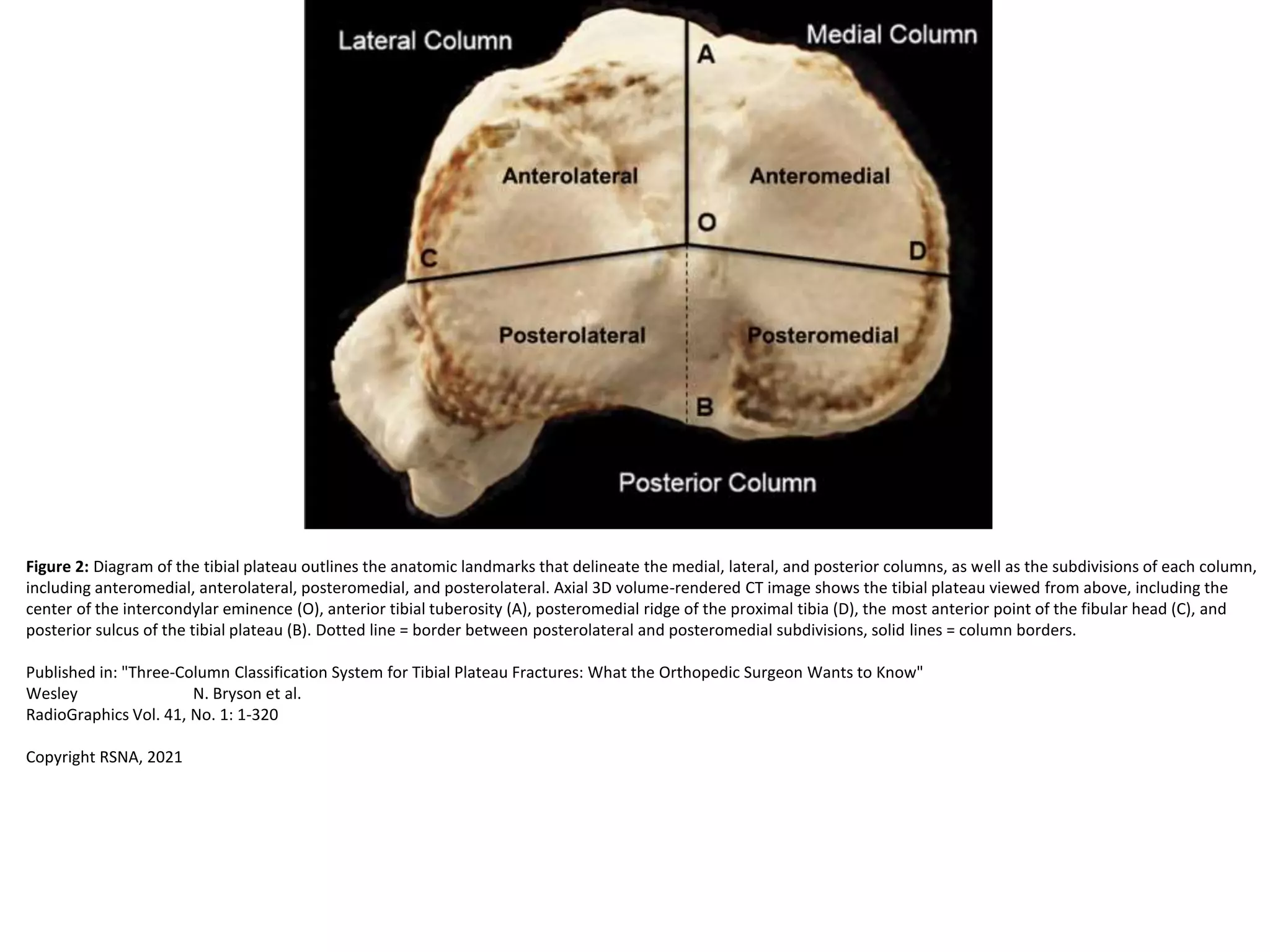
Figure 2: Diagram of the tibial plateau outlines the anatomic landmarks that delineate the medial, lateral, and posterior columns, as well as the subdivisions of each column,
including anteromedial, anterolateral, posteromedial, and posterolateral. Axial 3D volume-rendered CT image shows the tibial plateau viewed from above, including the
center of the intercondylar eminence (O), anterior tibial tuberosity (A), posteromedial ridge of the proximal tibia (D), the most anterior point of the fibular head (C), and
posterior sulcus of the tibial plateau (B). Dotted line = border between posterolateral and posteromedial subdivisions, solid lines = column borders.
Published in: "Three-Column Classification System for Tibial Plateau Fractures: What the Orthopedic Surgeon Wants to Know"
Wesley N. Bryson et al.
RadioGraphics Vol. 41, No. 1: 1-320
Copyright RSNA, 2021

proximal tibia

  • 1.
    Figure 2: Diagramof the tibial plateau outlines the anatomic landmarks that delineate the medial, lateral, and posterior columns, as well as the subdivisions of each column, including anteromedial, anterolateral, posteromedial, and posterolateral. Axial 3D volume-rendered CT image shows the tibial plateau viewed from above, including the center of the intercondylar eminence (O), anterior tibial tuberosity (A), posteromedial ridge of the proximal tibia (D), the most anterior point of the fibular head (C), and posterior sulcus of the tibial plateau (B). Dotted line = border between posterolateral and posteromedial subdivisions, solid lines = column borders. Published in: "Three-Column Classification System for Tibial Plateau Fractures: What the Orthopedic Surgeon Wants to Know" Wesley N. Bryson et al. RadioGraphics Vol. 41, No. 1: 1-320 Copyright RSNA, 2021