PROBLEM CASE
PRESENTATION
DR. NOUREEN MUSHTAQ
FCPS TRAINEE
NICU/NICH
BIO DATA:
 B/O TAHIRA
 GENDER: FEMALE
 D.O.B: 26THTH FEB 2023
 D.O.A: 25TH MARCH 2023
 WEIGHT: 2.7KG
 BIRTH WEIGHT WAS 2.6KG
 RESIDENT OF: GARDEN KARACHI
PRESENTING COMPLAIN:
PRESENTED IN ER WITH C/O:
 LOOSE STOOL FOR 6 DAYS
 BLACK DISCOLORATION OF RIGHT 4th DISTAL PHALANX AND LEFT 4th
AND 5TH DISTAL PHALANX OF HAND FOR 5 DAYS
 RELUCTANT TO FEED FOR 2 DAYS
HOPC:
 According to mother baby was alright till 20th day of life then developed
complain of loose stool that was 8 to 10 episodes per day, yellow in color
watery consistency, not containing blood, associated history of reluctant to
feed for 2 days. During this period mother noticed blackish discoloration
of distal end of baby’s right 4th distal phalanx and left 3rd and 4th distal
phalanx which was progressing gradually.
 For these complains first they visited to local clinic where baby had been
prescribed antibiotics but no improvement occur, at 26thth day of life they
took the baby to NICH ER, where baby was admitted, and retained in ER
for one day then shifted to NICU on 27th DOL.
 There was no history of bleeding from other sites, fever, rash, vomiting,
trauma, no hx of previous blood transfusion.
BIRTH HISTORY:
 ANTENATAL HISTORY:
 BOOKED CASE AT 7TH MONTH OF GESTATION, NO REGULAR
ANTENATAL VISITS DONE
 2 ULTRASOUND SCANS DONE THAT WERE ALL NORMAL
 MULTIVITAMIN AND FOLIC ACID SUPPLEMENTS WERE TAKEN
 TETNUS TOXOID WAS GIVEN
 NO HISTORY OF DIABETES, HYPERTENSION OR ANY OTHER
CHRONIC ILLNESS DURING PREGNANCY
 NO HISTORY OF DRUG USE DURING PREGNANCY
 NO HISTORY OF FEVER RASH BURNING MICTURITION DURING
PREGNANCY
 NATAL HISTORY:
 BORN AT 38TH WEEK OF GESTATION VIA SVD AT FATMIYAH HOSPITAL
DUE TO PREVIOUS TWO CESAREAN DELIVERIES.
 NO HISTORY OF EXCESSIVE BLOOD LOSS, PROM, CPD, OBSTRUCTED
LABOUR, MATERNAL FEVER, AT THE TIME OF DELIVERY.
 POST NATAL HISTORY:
 CRIED IMMEDIATELY AFTER BIRTH.
 NO HISTORY OF CYANOSIS, MECONIUM ASPIRATION, OR JAUNDICE DURING
FIRST DAY OF LIFE.
 PASSED URINE AFTER 1 HOUR OF BIRTH, AND STOOL AFTER 6 HRS OF BIRTh.
 FEEDING STARTED AFTER 4 HOURS OF BIRTH, TOP FEED STARTED.
FEEDING HISTORY:
 BABY WAS ON TOP FEED FROM FIRST DAY OF LIFE BECAUSE OF NO
LACTATION FROM MOTHER.
 SIMILAC FORMULA FEED WAS GIVEN TO BABY, WITH DILUTION OF 1:1 IN
BOILED WATER.
 1.5 Oz MILK GIVEN EVERY 2 TO 3 HOURLY TO BABY.
 FEED WAS GIVEN THROUGH BOTTLE FEEDER, WHICH THEY USED TO
WASHED AFTER EVERY FEED WITH SOAP AND BOIL THAT FEEDER TWICE A
DAY.
VACCINATION HISTORY:
 NO VACCINATION DONE.
FAMILY HISTORY:
 10TH PRODUCT OF CONSANGINOUS MARRIAGE.
 HISTORY OF ONE PREVIOUS MISCARRIAGE.
 OTHER SIBLINGS ARE ALIVE AND HEALTHY.
 NO HISTORY OF ANY BLOOD DISORDER OR HERIDITARY DISEASE IN
FAMILY.
 FAMILY HISTORY WAS UNREMARKABLE.
SOCIOECONOMIC HISTORY:
 FATHER IS RIKSHAW DRIVER, AND IS THE ONLY SOURCE OF EARNING.
 LIVE IN OWN HOUSE, TWO ROOMS, AND 12 MEMBERS LIVE.
 THEY DRINK UNBOILED WATER.
GENERAL PHYSICAL EXAMINATION:
 SICK LOOKING, LETHARGIC BABY, WITH WEAK CRY, HAVING VITALS OF:
 HR = 169 bpm
 RR = 79 breath/min
 TEMP = A/F
 SpO2 = 97% on room air on 3 lit of oxygen via nasal prong.
 RBS = 102mg/dl
 SUBVITALS:
THERE WAS NO ANEMIA, JAUNDICE, EDEMA and CYANOSIS.
DYSNEA(marked) and DEHYDRATION(some) were present.
 ANTHROPOMETRIC MEASUREMENTS:
WEIGHT = 2.7KG (AT 25TH CENTILE)
LENGTH = 51CM (AT 75TH CENTILE)
FOC = 36.5CM (AT 50TH CENTILE)
LOCAL EXAMINATION:
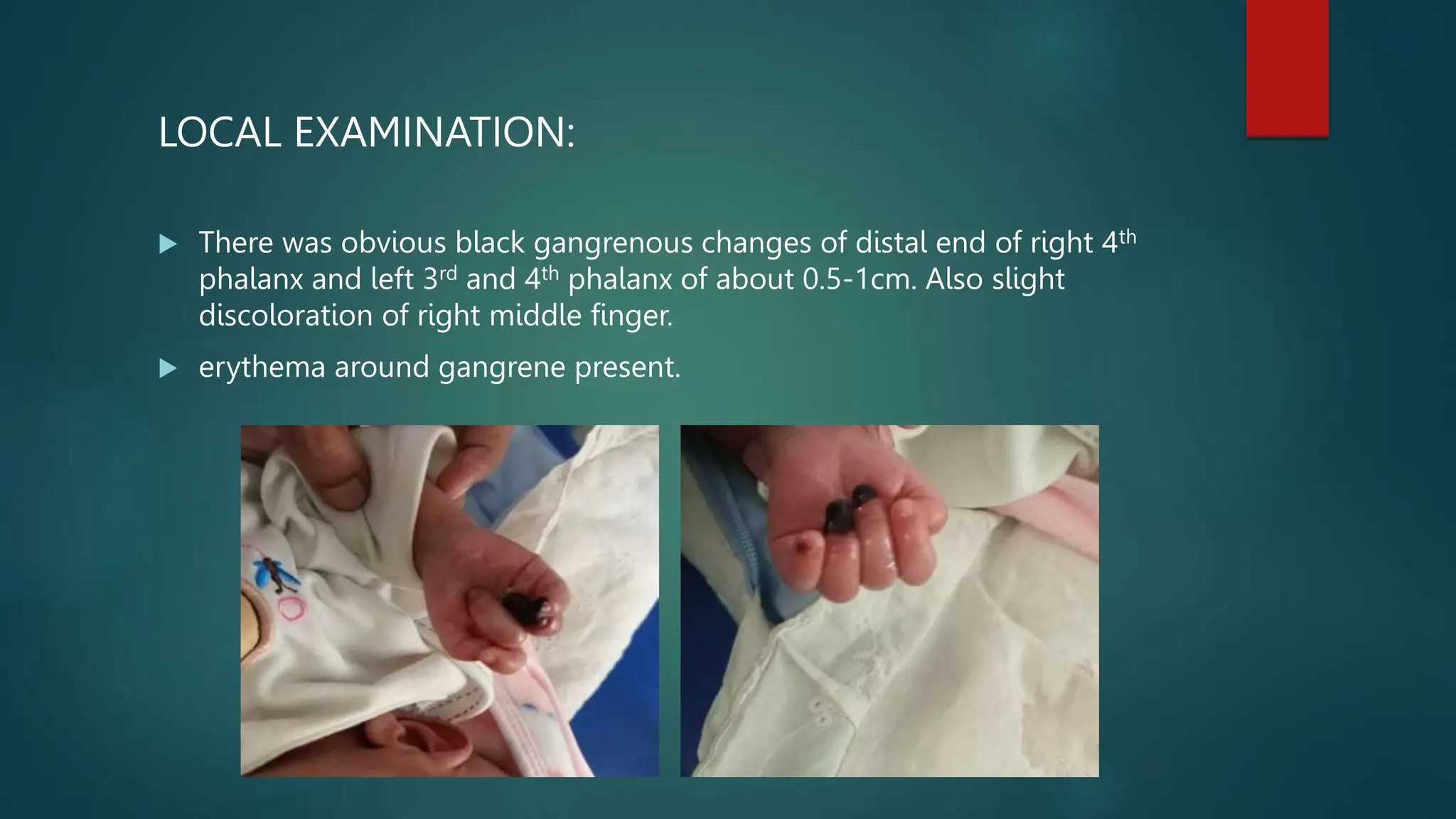
 There was obvious black gangrenous changes of distal end of right 4th
phalanx and left 3rd and 4th phalanx of about 0.5-1cm. Also slight
discoloration of right middle finger.
 erythema around gangrene present.
HEAD TO TOE EXAMINATION:
 Head normal in shape with open ant fontanelle of 2*2cm
 No cataract formation or any other abnormal features in eye.
 Facial features were normal, no coarse facies or dysmorphic features
present.
 Normal back and spine examination.
 Normal looking female genitalia.
 No any bruises, rash, or deformity noted.
CNS Examination:
 spontaneous eye opening and limb movement.
 Pupils were bilaterally equally reactive to light.
 Fontanelles were sunken, 2*2cm in diameter.
 Tone slightly increased in all four limbs, posturing.
 Power was 5/5 in all four limbs.
 Neonatal reflexes:
Moros = incomplete
Sucking = fair
Rooting = fair
Grasp = fair
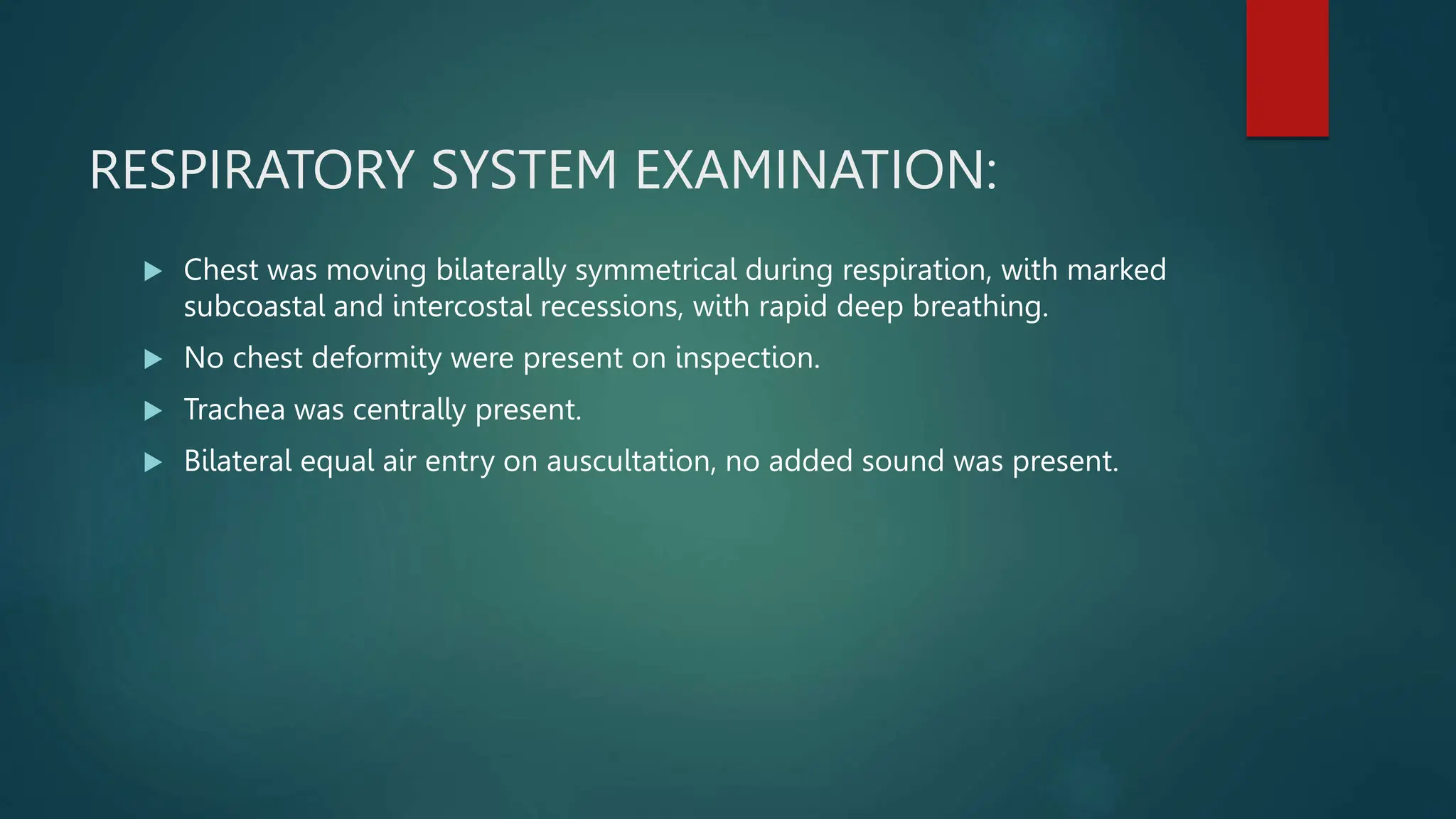
RESPIRATORY SYSTEM EXAMINATION:
 Chest was moving bilaterally symmetrical during respiration, with marked
subcoastal and intercostal recessions, with rapid deep breathing.
 No chest deformity were present on inspection.
 Trachea was centrally present.
 Bilateral equal air entry on auscultation, no added sound was present.
ABDOMINAL EXAMINATION:
 Normal in shape, moving symmetrically with respiration.
 Centrally placed umbilicus, no pus or any other discharge were there from
umbilicus.
 Soft non tender abdomen on palpation, liver was palpable 3 cm below
costal margin, spleen not palpable.
 Gut sounds were audible.
CARDIOVASCULAR EXAMINATION:
 Normal shape of precordium, with no visible pulsation, scar mark or
bulging.
 Apex beat was present in 4th ICS, medial to mid clavicular line
 No thrill or heave present.
 S1 and S2 were audible without any murmur.
 All peripheral pulses were palpable, were regular, weak pulses. No radio-
radial or radio-femoral delay were present.
 CRT was less than 3 seconds.
PROVISIONAL DIAGNOSIS:
TERM, AGA, NORMAL BIRTH WEIGHT BABY:
1. Acute Gastroenteritis with thromboembolic phenomena secondary
to dehydration
2. Sepsis/DIC
3. Thrombophilia secondary to:
Protein C or S deficiency
Factor 5 Leiden mutation
Antithrombin 3 deficiency
INVESTIGATIONS:
CBC:
25/3/23
Hb 12gm/dl
WBCs 26.7k
Neutrophils 75%
Lymphocytes 21.4%
Eosinophils 2%
Monocytes 2%
Plateletes 54k
CBC:
27/3/23
9.1gm/dl
13.4k
73%
25%
2%
2%
149k
CBC:
31/3/23
9.6gm/dl
13.4k
57%
38%
2.8%
198k
CBC:
2/4/23
10.5gm/dl
8.8k
55%
40%
2.1%
2%
178k
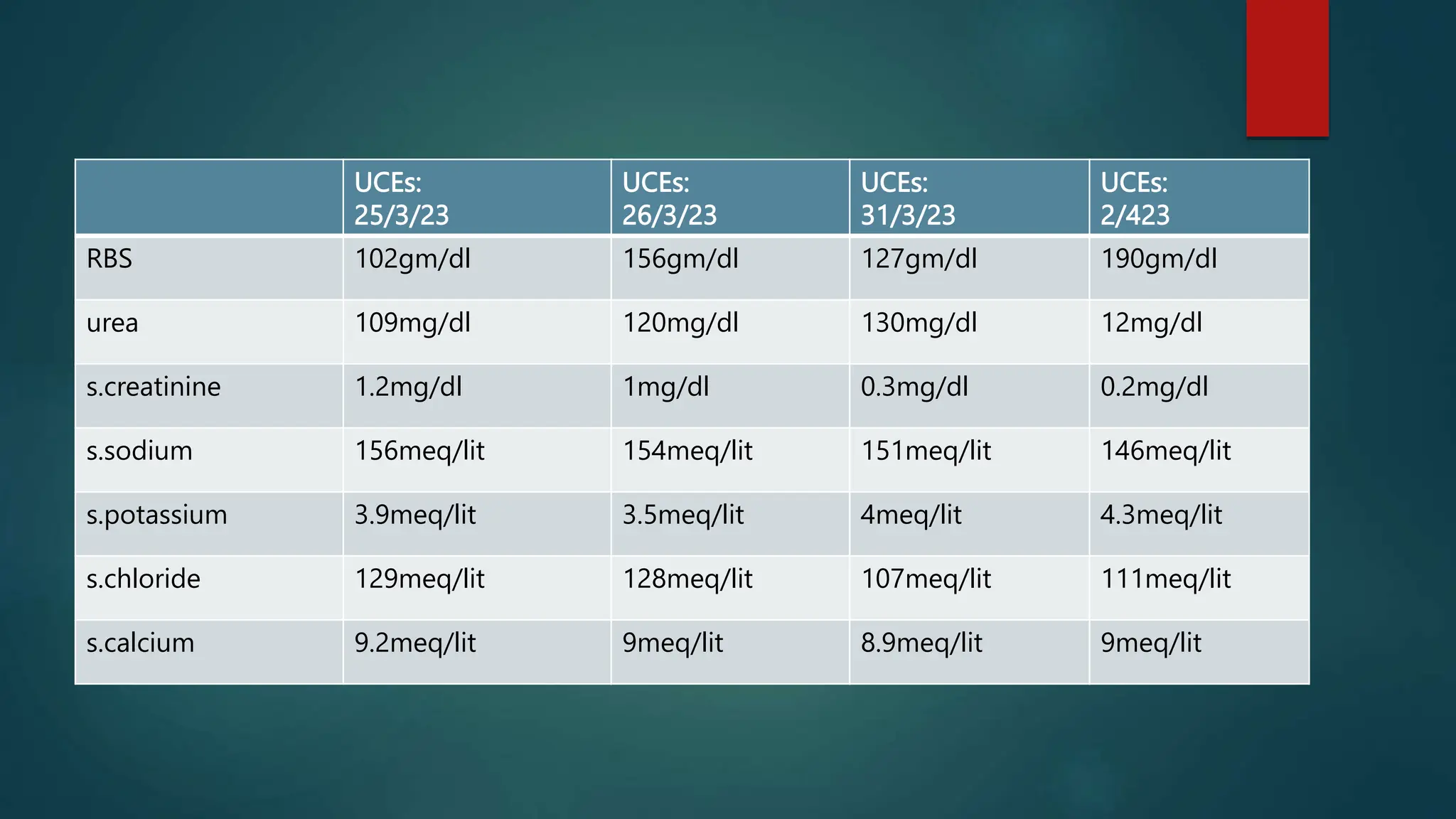
UCEs:
25/3/23
RBS 102gm/dl
urea 109mg/dl
s.creatinine 1.2mg/dl
s.sodium 156meq/lit
s.potassium 3.9meq/lit
s.chloride 129meq/lit
s.calcium 9.2meq/lit
UCEs:
26/3/23
156gm/dl
120mg/dl
1mg/dl
154meq/lit
3.5meq/lit
128meq/lit
9meq/lit
UCEs:
31/3/23
127gm/dl
130mg/dl
0.3mg/dl
151meq/lit
4meq/lit
107meq/lit
8.9meq/lit
UCEs:
2/423
190gm/dl
12mg/dl
0.2mg/dl
146meq/lit
4.3meq/lit
111meq/lit
9meq/lit
LFT:
Mg
Total bili
SGPT
ALP
Albumin
PT
APTT
2.2
0.4
17
110
2.7
14.4
21.6
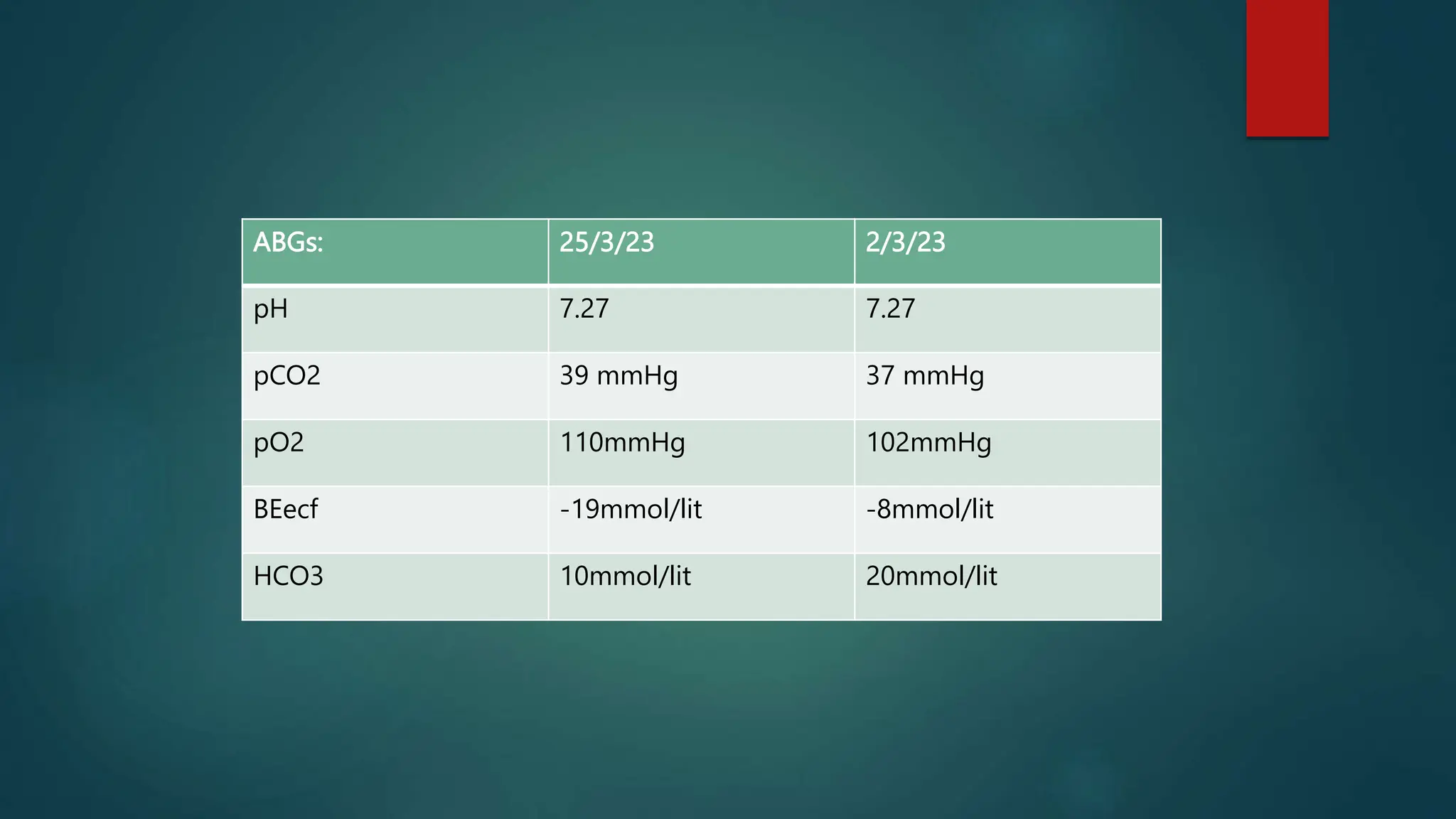
ABGs: 25/3/23
pH 7.27
pCO2 39 mmHg
pO2 110mmHg
BEecf -19mmol/lit
HCO3 10mmol/lit
2/3/23
7.27
37 mmHg
102mmHg
-8mmol/lit
20mmol/lit
Blood C/S:
Shows no bacterial growth.
FINAL DIAGNOSIS:
TERM/AGE/Normal Birth Weight
Protein S deficiency secondary to???
COURSE IN NICU:
 IV line maintained
 Kept on 3lit oxygen via nasal prong
 Kept NPO initially
 Vitals/RBS monitoring done
 IV fluids first NS bolus from 15ml/kg given twice then IV fluid 2/3RD 0.45%
DS/5% DW from 200ml/kg/day started
 Antibiotic Inj. Cefotaxime and Inj. Ampicilin started
 Inj. Phenytoin for increased tone started
 Labs were sent
 FFPs in BD was transfused for initial 1week.
 Topical application of GTN started on fingers
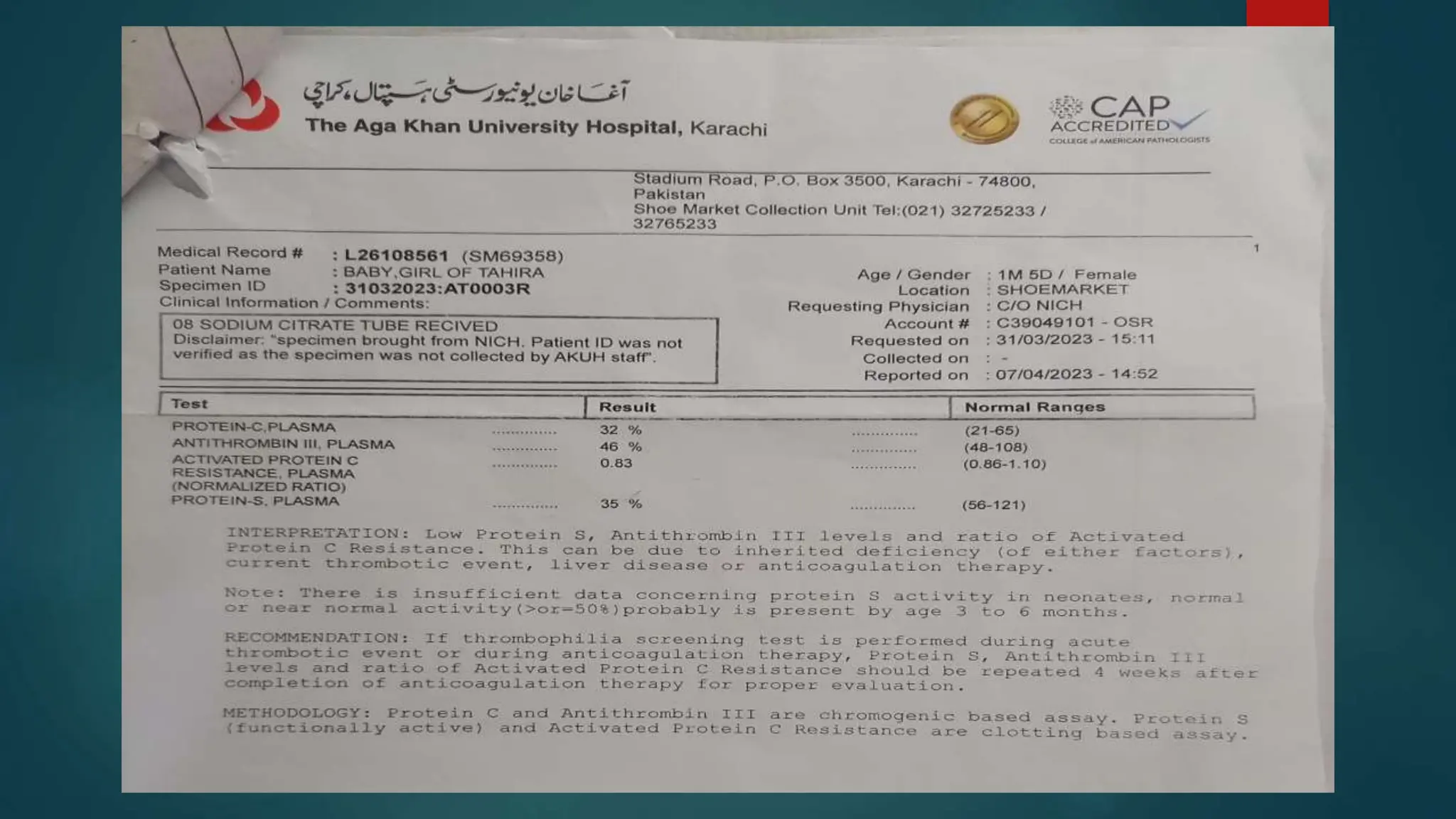
 Workup for diagnosis done
 Repeat ABGs and UCEs were sent after giving two boluses of NS which shows improved
blood gases and metabolic acidosis.
 One other bolus of NS from 20ml/kg was given with monitoring of sign of volume
overload.
 After that blood gases and serum creatinine started to improve, but serum sodium was
still on higher side, so managed according to protocol.
 Feed via OG started and gradually increased.
 Injection Enoxaparin 1.7mg/kg/dose SC twice a day was started after
sending workup for thrombophilia.
 Condition improved after 8 days and baby was stepped down to non
critical area on DMF and on Room Air.
 Hematologist opinion also taken, and she advices to continue enoxaparin
for 6 weeks and then repeat protein S function assay after stopping
enoxaparin.
Prescription On Discharge:
 Continue Inj. Enoxaparin
 Stop IV antibiotic after 3 days of discharge
 Follow up in OPD
 Regular eye examination from ophthalmologist
 Plan to continue anticoagulation therapy for 6 weeks then repeat protein S
level
 Follow up with Hemotologist
DISCUSSION:
Purpura Fulminans:
 Neonatal purpura fulminans describes a clinico-pathological entity of
dermal microvascular thrombosis associated with disseminated
intravascular coagulation (DIC) and perivascular hemorrhage, occurring in
the newborn period. The clinical presentation is that of acute DIC and
hemorrhagic necrosis of the skin.
 The clinical severity may vary depending on the underlying cause, e.g.
genetic variability of severe congenital protein C and S deficiencies. The
onset of symptoms is usually within 2-12 h after birth. However, infants
presenting with a delayed onset of purpura fulminans, between 6 and 12
months of age, are reported.The skin lesions initially appear dark red and
then become purple-black and indurated
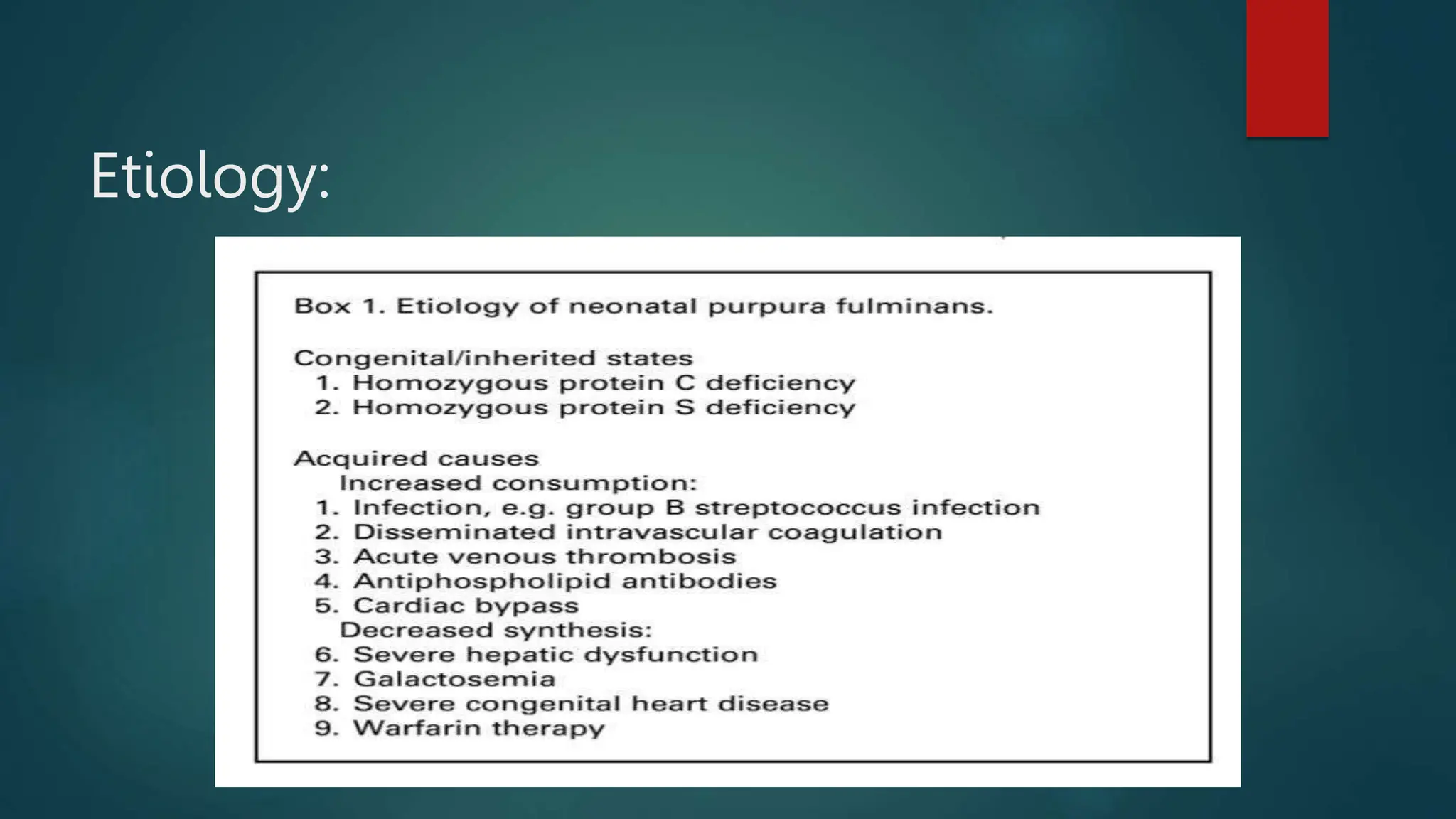
Etiology:
Protein S deficiency:
 Protein S deficiency is an inherited thrombophilia associated with an
increased risk of thromboembolism.
 It serves as a cofactor for activated protein C, which inactivates
procoagulant factors Va and VIIIa, reducing thrombin generation
 Protein S also serves as a cofactor for activated protein C in enhancing
fibrinolysis and can directly inhibit prothrombin activation via interactions
with other coagulation factors
 Total protein S levels in healthy newborns at term are 15 to 30 percent of
that in adults, while C4b-binding protein is markedly reduced to less than
20 percent. Thus, free protein S predominates and functional protein S
levels are only slightly reduced compared with those in adults
 C4b-binding protein is an acute phase reactant. Thus, several of the
conditions listed previously may be associated with a shift of protein S
from the free form to the bound (inactive) form, potentially leading to an
erroneous diagnosis of protein S deficiency
Genetics of protein S deficiency:
 Protein S deficiency (MIM 612336) is an autosomal dominant condition
due to mutations in the PROS1 gene, a large gene on chromosome 3.
 Subsequently, a number of additional familial mutations have been
described
 The majority of individuals with hereditary protein S deficiency are
heterozygous for a PROS1 mutation, although rare homozygous or
compound heterozygous individuals with much more severe clinical
features have been reported
Types Of Congenital/Hereditary Protein
S Deficiency:
 Type I – Type I deficiency (reduced total protein S, free protein S, and
protein S function) is the classic type of inherited protein S deficiency.
 Type II – Type II deficiency (normal total and free protein S; reduced
protein S function) is rare (case reports only).
 ●Type III – Type III deficiency (selectively reduced free protein S and
protein S function; normal total protein S)
Clinical Presentation:
 The age of onset of thrombosis varies by heterozygous versus
homozygous state. Heterozygous protein S deficiency causes thrombosis
in persons younger than 40 to 45 years of age. The rare homozygous
patients have onset in early infancy.
 Severe protein S deficiency resulting from congenital homozygous
mutations presents in neonates soon after birth and has a characteristic
presentation of purpura fulminans (PF). Affected individuals rarely survive
childhood without early diagnosis and treatment
Laboratory Investigations:
 Choice and interpretation of protein S assay — Protein S deficiency is the most
difficult of the hereditary thrombophilias to document with certainty. As
previously noted, protein S levels in the general population vary more widely
than those of protein C or antithrombin.
 Free protein S is our preferred approach to screening as it appears to be the
best test for true deficiency [72,73]. Combining free protein S levels with other
testing such as a functional assay does not appear to improve diagnostic
accuracy.
 In practice, it is preferable to investigate patients suspected of having protein S
(or protein C) deficiency after a vitamin K antagonist has been discontinued for at
least two weeks.
 If it is not possible to discontinue warfarin due to the severity of the thrombosis
or thrombotic risk, it may be possible to assay protein S levels while the patient is
receiving heparin, which does not alter protein S concentration.
 Direct oral anticoagulants (DOACs; dabigatran, apixaban, edoxaban, rivaroxaban)
can affect the functional assays for protein S
 Heparin and low molecular weight heparin do not interfere with testing for
protein S deficiency
Management:
 The mainstay of management of severe acquired, transient deficiencies of
protein C or S is aggressive treatment of the underlying cause, although
replacement therapy has been used in such cases.
 Initial anticoagulation consists of either unfractionated heparin (UFH) or
low molecular weight heparin (LMWH)
 UFH should be administered at a dose of 28 U/kg/h with a Target anti-Xa
level of 0.3-0.7 U/mL. The recommended dose of LMWH is 1.0-
1.5mg/kg/dose every 12h with a therapeutic target anti-Xa level of 0.5-1
U/mL.
 Initiation of warfarin therapy should overlap and only commence after
several days of anticoagulation with UFH/LMWH to avoid warfarin induced
skin necrosis and other thrombotic complications
Monitoring Of Therapy:
 Due to the risk of bleeding or recurrent purpura fulminans, INRs often
need to be monitored on a weekly basis.
 D-Dimer is a useful marker for activation of the coagulation cascade and
has been a helpful indicator both of adequate replacement and
anticoagulation therapy in neonates.
 A rising or elevated D-dimer may be the first sign of recurrent purpura
fulminans.
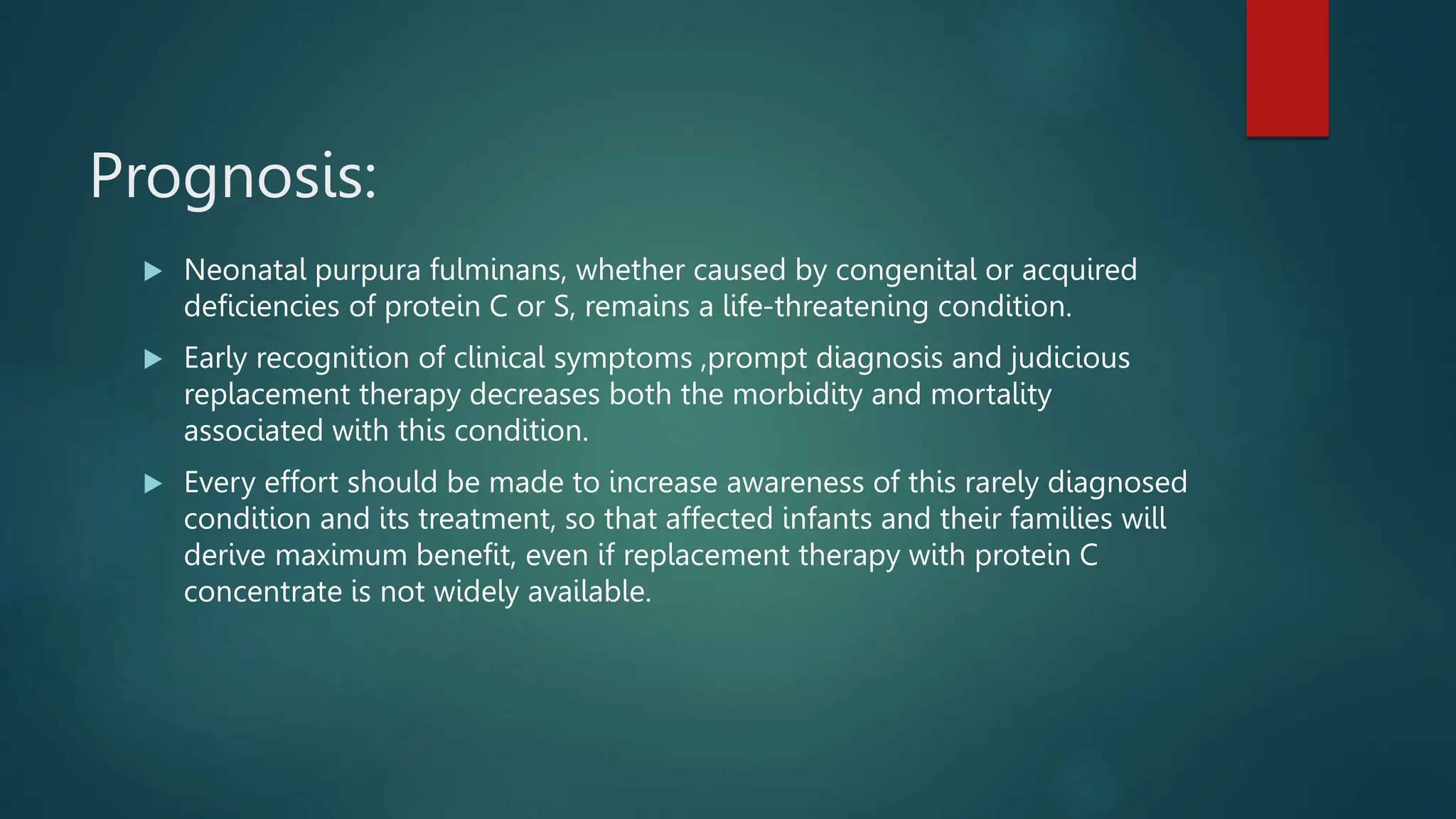
Prognosis:
 Neonatal purpura fulminans, whether caused by congenital or acquired
deficiencies of protein C or S, remains a life-threatening condition.
 Early recognition of clinical symptoms ,prompt diagnosis and judicious
replacement therapy decreases both the morbidity and mortality
associated with this condition.
 Every effort should be made to increase awareness of this rarely diagnosed
condition and its treatment, so that affected infants and their families will
derive maximum benefit, even if replacement therapy with protein C
concentrate is not widely available.
THANK YOU💥

Protein C deficiency in Neonate - rare presentation

  • 1.
    PROBLEM CASE PRESENTATION DR. NOUREENMUSHTAQ FCPS TRAINEE NICU/NICH
  • 2.
    BIO DATA:  B/OTAHIRA  GENDER: FEMALE  D.O.B: 26THTH FEB 2023  D.O.A: 25TH MARCH 2023  WEIGHT: 2.7KG  BIRTH WEIGHT WAS 2.6KG  RESIDENT OF: GARDEN KARACHI
  • 3.
    PRESENTING COMPLAIN: PRESENTED INER WITH C/O:  LOOSE STOOL FOR 6 DAYS  BLACK DISCOLORATION OF RIGHT 4th DISTAL PHALANX AND LEFT 4th AND 5TH DISTAL PHALANX OF HAND FOR 5 DAYS  RELUCTANT TO FEED FOR 2 DAYS
  • 4.
    HOPC:  According tomother baby was alright till 20th day of life then developed complain of loose stool that was 8 to 10 episodes per day, yellow in color watery consistency, not containing blood, associated history of reluctant to feed for 2 days. During this period mother noticed blackish discoloration of distal end of baby’s right 4th distal phalanx and left 3rd and 4th distal phalanx which was progressing gradually.
  • 5.
     For thesecomplains first they visited to local clinic where baby had been prescribed antibiotics but no improvement occur, at 26thth day of life they took the baby to NICH ER, where baby was admitted, and retained in ER for one day then shifted to NICU on 27th DOL.  There was no history of bleeding from other sites, fever, rash, vomiting, trauma, no hx of previous blood transfusion.
  • 7.
    BIRTH HISTORY:  ANTENATALHISTORY:  BOOKED CASE AT 7TH MONTH OF GESTATION, NO REGULAR ANTENATAL VISITS DONE  2 ULTRASOUND SCANS DONE THAT WERE ALL NORMAL  MULTIVITAMIN AND FOLIC ACID SUPPLEMENTS WERE TAKEN  TETNUS TOXOID WAS GIVEN  NO HISTORY OF DIABETES, HYPERTENSION OR ANY OTHER CHRONIC ILLNESS DURING PREGNANCY  NO HISTORY OF DRUG USE DURING PREGNANCY  NO HISTORY OF FEVER RASH BURNING MICTURITION DURING PREGNANCY
  • 8.
     NATAL HISTORY: BORN AT 38TH WEEK OF GESTATION VIA SVD AT FATMIYAH HOSPITAL DUE TO PREVIOUS TWO CESAREAN DELIVERIES.  NO HISTORY OF EXCESSIVE BLOOD LOSS, PROM, CPD, OBSTRUCTED LABOUR, MATERNAL FEVER, AT THE TIME OF DELIVERY.
  • 9.
     POST NATALHISTORY:  CRIED IMMEDIATELY AFTER BIRTH.  NO HISTORY OF CYANOSIS, MECONIUM ASPIRATION, OR JAUNDICE DURING FIRST DAY OF LIFE.  PASSED URINE AFTER 1 HOUR OF BIRTH, AND STOOL AFTER 6 HRS OF BIRTh.  FEEDING STARTED AFTER 4 HOURS OF BIRTH, TOP FEED STARTED.
  • 10.
    FEEDING HISTORY:  BABYWAS ON TOP FEED FROM FIRST DAY OF LIFE BECAUSE OF NO LACTATION FROM MOTHER.  SIMILAC FORMULA FEED WAS GIVEN TO BABY, WITH DILUTION OF 1:1 IN BOILED WATER.  1.5 Oz MILK GIVEN EVERY 2 TO 3 HOURLY TO BABY.  FEED WAS GIVEN THROUGH BOTTLE FEEDER, WHICH THEY USED TO WASHED AFTER EVERY FEED WITH SOAP AND BOIL THAT FEEDER TWICE A DAY.
  • 11.
    VACCINATION HISTORY:  NOVACCINATION DONE.
  • 12.
    FAMILY HISTORY:  10THPRODUCT OF CONSANGINOUS MARRIAGE.  HISTORY OF ONE PREVIOUS MISCARRIAGE.  OTHER SIBLINGS ARE ALIVE AND HEALTHY.  NO HISTORY OF ANY BLOOD DISORDER OR HERIDITARY DISEASE IN FAMILY.  FAMILY HISTORY WAS UNREMARKABLE.
  • 13.
    SOCIOECONOMIC HISTORY:  FATHERIS RIKSHAW DRIVER, AND IS THE ONLY SOURCE OF EARNING.  LIVE IN OWN HOUSE, TWO ROOMS, AND 12 MEMBERS LIVE.  THEY DRINK UNBOILED WATER.
  • 14.
    GENERAL PHYSICAL EXAMINATION: SICK LOOKING, LETHARGIC BABY, WITH WEAK CRY, HAVING VITALS OF:  HR = 169 bpm  RR = 79 breath/min  TEMP = A/F  SpO2 = 97% on room air on 3 lit of oxygen via nasal prong.  RBS = 102mg/dl
  • 15.
     SUBVITALS: THERE WASNO ANEMIA, JAUNDICE, EDEMA and CYANOSIS. DYSNEA(marked) and DEHYDRATION(some) were present.
  • 16.
     ANTHROPOMETRIC MEASUREMENTS: WEIGHT= 2.7KG (AT 25TH CENTILE) LENGTH = 51CM (AT 75TH CENTILE) FOC = 36.5CM (AT 50TH CENTILE)
  • 17.
    LOCAL EXAMINATION:  Therewas obvious black gangrenous changes of distal end of right 4th phalanx and left 3rd and 4th phalanx of about 0.5-1cm. Also slight discoloration of right middle finger.  erythema around gangrene present.
  • 18.
    HEAD TO TOEEXAMINATION:  Head normal in shape with open ant fontanelle of 2*2cm  No cataract formation or any other abnormal features in eye.  Facial features were normal, no coarse facies or dysmorphic features present.  Normal back and spine examination.  Normal looking female genitalia.  No any bruises, rash, or deformity noted.
  • 19.
    CNS Examination:  spontaneouseye opening and limb movement.  Pupils were bilaterally equally reactive to light.  Fontanelles were sunken, 2*2cm in diameter.  Tone slightly increased in all four limbs, posturing.  Power was 5/5 in all four limbs.  Neonatal reflexes: Moros = incomplete Sucking = fair Rooting = fair Grasp = fair
  • 20.
    RESPIRATORY SYSTEM EXAMINATION: Chest was moving bilaterally symmetrical during respiration, with marked subcoastal and intercostal recessions, with rapid deep breathing.  No chest deformity were present on inspection.  Trachea was centrally present.  Bilateral equal air entry on auscultation, no added sound was present.
  • 21.
    ABDOMINAL EXAMINATION:  Normalin shape, moving symmetrically with respiration.  Centrally placed umbilicus, no pus or any other discharge were there from umbilicus.  Soft non tender abdomen on palpation, liver was palpable 3 cm below costal margin, spleen not palpable.  Gut sounds were audible.
  • 22.
    CARDIOVASCULAR EXAMINATION:  Normalshape of precordium, with no visible pulsation, scar mark or bulging.  Apex beat was present in 4th ICS, medial to mid clavicular line  No thrill or heave present.  S1 and S2 were audible without any murmur.  All peripheral pulses were palpable, were regular, weak pulses. No radio- radial or radio-femoral delay were present.  CRT was less than 3 seconds.
  • 23.
    PROVISIONAL DIAGNOSIS: TERM, AGA,NORMAL BIRTH WEIGHT BABY: 1. Acute Gastroenteritis with thromboembolic phenomena secondary to dehydration 2. Sepsis/DIC 3. Thrombophilia secondary to: Protein C or S deficiency Factor 5 Leiden mutation Antithrombin 3 deficiency
  • 24.
  • 25.
    CBC: 25/3/23 Hb 12gm/dl WBCs 26.7k Neutrophils75% Lymphocytes 21.4% Eosinophils 2% Monocytes 2% Plateletes 54k CBC: 27/3/23 9.1gm/dl 13.4k 73% 25% 2% 2% 149k CBC: 31/3/23 9.6gm/dl 13.4k 57% 38% 2.8% 198k CBC: 2/4/23 10.5gm/dl 8.8k 55% 40% 2.1% 2% 178k
  • 26.
    UCEs: 25/3/23 RBS 102gm/dl urea 109mg/dl s.creatinine1.2mg/dl s.sodium 156meq/lit s.potassium 3.9meq/lit s.chloride 129meq/lit s.calcium 9.2meq/lit UCEs: 26/3/23 156gm/dl 120mg/dl 1mg/dl 154meq/lit 3.5meq/lit 128meq/lit 9meq/lit UCEs: 31/3/23 127gm/dl 130mg/dl 0.3mg/dl 151meq/lit 4meq/lit 107meq/lit 8.9meq/lit UCEs: 2/423 190gm/dl 12mg/dl 0.2mg/dl 146meq/lit 4.3meq/lit 111meq/lit 9meq/lit
  • 27.
  • 28.
    ABGs: 25/3/23 pH 7.27 pCO239 mmHg pO2 110mmHg BEecf -19mmol/lit HCO3 10mmol/lit 2/3/23 7.27 37 mmHg 102mmHg -8mmol/lit 20mmol/lit
  • 30.
    Blood C/S: Shows nobacterial growth.
  • 31.
    FINAL DIAGNOSIS: TERM/AGE/Normal BirthWeight Protein S deficiency secondary to???
  • 32.
    COURSE IN NICU: IV line maintained  Kept on 3lit oxygen via nasal prong  Kept NPO initially  Vitals/RBS monitoring done  IV fluids first NS bolus from 15ml/kg given twice then IV fluid 2/3RD 0.45% DS/5% DW from 200ml/kg/day started  Antibiotic Inj. Cefotaxime and Inj. Ampicilin started  Inj. Phenytoin for increased tone started  Labs were sent
  • 33.
     FFPs inBD was transfused for initial 1week.  Topical application of GTN started on fingers  Workup for diagnosis done  Repeat ABGs and UCEs were sent after giving two boluses of NS which shows improved blood gases and metabolic acidosis.  One other bolus of NS from 20ml/kg was given with monitoring of sign of volume overload.  After that blood gases and serum creatinine started to improve, but serum sodium was still on higher side, so managed according to protocol.
  • 34.
     Feed viaOG started and gradually increased.  Injection Enoxaparin 1.7mg/kg/dose SC twice a day was started after sending workup for thrombophilia.  Condition improved after 8 days and baby was stepped down to non critical area on DMF and on Room Air.  Hematologist opinion also taken, and she advices to continue enoxaparin for 6 weeks and then repeat protein S function assay after stopping enoxaparin.
  • 35.
    Prescription On Discharge: Continue Inj. Enoxaparin  Stop IV antibiotic after 3 days of discharge  Follow up in OPD  Regular eye examination from ophthalmologist  Plan to continue anticoagulation therapy for 6 weeks then repeat protein S level  Follow up with Hemotologist
  • 36.
  • 37.
    Purpura Fulminans:  Neonatalpurpura fulminans describes a clinico-pathological entity of dermal microvascular thrombosis associated with disseminated intravascular coagulation (DIC) and perivascular hemorrhage, occurring in the newborn period. The clinical presentation is that of acute DIC and hemorrhagic necrosis of the skin.
  • 38.
     The clinicalseverity may vary depending on the underlying cause, e.g. genetic variability of severe congenital protein C and S deficiencies. The onset of symptoms is usually within 2-12 h after birth. However, infants presenting with a delayed onset of purpura fulminans, between 6 and 12 months of age, are reported.The skin lesions initially appear dark red and then become purple-black and indurated
  • 39.
  • 40.
    Protein S deficiency: Protein S deficiency is an inherited thrombophilia associated with an increased risk of thromboembolism.  It serves as a cofactor for activated protein C, which inactivates procoagulant factors Va and VIIIa, reducing thrombin generation  Protein S also serves as a cofactor for activated protein C in enhancing fibrinolysis and can directly inhibit prothrombin activation via interactions with other coagulation factors
  • 41.
     Total proteinS levels in healthy newborns at term are 15 to 30 percent of that in adults, while C4b-binding protein is markedly reduced to less than 20 percent. Thus, free protein S predominates and functional protein S levels are only slightly reduced compared with those in adults  C4b-binding protein is an acute phase reactant. Thus, several of the conditions listed previously may be associated with a shift of protein S from the free form to the bound (inactive) form, potentially leading to an erroneous diagnosis of protein S deficiency
  • 42.
    Genetics of proteinS deficiency:  Protein S deficiency (MIM 612336) is an autosomal dominant condition due to mutations in the PROS1 gene, a large gene on chromosome 3.  Subsequently, a number of additional familial mutations have been described  The majority of individuals with hereditary protein S deficiency are heterozygous for a PROS1 mutation, although rare homozygous or compound heterozygous individuals with much more severe clinical features have been reported
  • 43.
    Types Of Congenital/HereditaryProtein S Deficiency:  Type I – Type I deficiency (reduced total protein S, free protein S, and protein S function) is the classic type of inherited protein S deficiency.  Type II – Type II deficiency (normal total and free protein S; reduced protein S function) is rare (case reports only).  ●Type III – Type III deficiency (selectively reduced free protein S and protein S function; normal total protein S)
  • 44.
    Clinical Presentation:  Theage of onset of thrombosis varies by heterozygous versus homozygous state. Heterozygous protein S deficiency causes thrombosis in persons younger than 40 to 45 years of age. The rare homozygous patients have onset in early infancy.  Severe protein S deficiency resulting from congenital homozygous mutations presents in neonates soon after birth and has a characteristic presentation of purpura fulminans (PF). Affected individuals rarely survive childhood without early diagnosis and treatment
  • 45.
    Laboratory Investigations:  Choiceand interpretation of protein S assay — Protein S deficiency is the most difficult of the hereditary thrombophilias to document with certainty. As previously noted, protein S levels in the general population vary more widely than those of protein C or antithrombin.  Free protein S is our preferred approach to screening as it appears to be the best test for true deficiency [72,73]. Combining free protein S levels with other testing such as a functional assay does not appear to improve diagnostic accuracy.
  • 46.
     In practice,it is preferable to investigate patients suspected of having protein S (or protein C) deficiency after a vitamin K antagonist has been discontinued for at least two weeks.  If it is not possible to discontinue warfarin due to the severity of the thrombosis or thrombotic risk, it may be possible to assay protein S levels while the patient is receiving heparin, which does not alter protein S concentration.  Direct oral anticoagulants (DOACs; dabigatran, apixaban, edoxaban, rivaroxaban) can affect the functional assays for protein S  Heparin and low molecular weight heparin do not interfere with testing for protein S deficiency
  • 47.
    Management:  The mainstayof management of severe acquired, transient deficiencies of protein C or S is aggressive treatment of the underlying cause, although replacement therapy has been used in such cases.  Initial anticoagulation consists of either unfractionated heparin (UFH) or low molecular weight heparin (LMWH)  UFH should be administered at a dose of 28 U/kg/h with a Target anti-Xa level of 0.3-0.7 U/mL. The recommended dose of LMWH is 1.0- 1.5mg/kg/dose every 12h with a therapeutic target anti-Xa level of 0.5-1 U/mL.  Initiation of warfarin therapy should overlap and only commence after several days of anticoagulation with UFH/LMWH to avoid warfarin induced skin necrosis and other thrombotic complications
  • 48.
    Monitoring Of Therapy: Due to the risk of bleeding or recurrent purpura fulminans, INRs often need to be monitored on a weekly basis.  D-Dimer is a useful marker for activation of the coagulation cascade and has been a helpful indicator both of adequate replacement and anticoagulation therapy in neonates.  A rising or elevated D-dimer may be the first sign of recurrent purpura fulminans.
  • 49.
    Prognosis:  Neonatal purpurafulminans, whether caused by congenital or acquired deficiencies of protein C or S, remains a life-threatening condition.  Early recognition of clinical symptoms ,prompt diagnosis and judicious replacement therapy decreases both the morbidity and mortality associated with this condition.  Every effort should be made to increase awareness of this rarely diagnosed condition and its treatment, so that affected infants and their families will derive maximum benefit, even if replacement therapy with protein C concentrate is not widely available.
  • 50.