Project Initiation in
Project
Management
PREPARED FOR HNDE STUDENTS
BY: N.V. SAJANI BIMSARA | DATE: 5/4/2025
Introduction to Project Initiation
 Project Initiation is the first phase in the project life
cycle.
 It involves defining the project at a broad level.
 Sets the foundation for planning and execution.
https://youtu.be/hIhTtzo0eBg
Objectives of Project Initiation
 The main objectives of project initiation include:
• Defining the project purpose and goals.
• Identifying stakeholders and understanding their expectations.
• Determining project feasibility (technical, financial, and
operational).
• Preparing key documents such as the Project Charter and
Business Case.
• Appointing the project manager and project team (initial roles).
Importance of Project Initiation
 Sets clear direction and purpose.
 Provides formal authorization to start the project.
 Ensures the project is feasible and aligned with strategic goals.
 Improves clarity, reduces risks, and enhances success rates.
 Helps manage stakeholder expectations early.
 Avoids misallocation of resources.
Project Life Cycle Overview
 Phases: Initiation, Planning, Execution, Monitoring &
Controlling, Closing.
 Each phase builds on the outputs of the previous
one.
 Initiation establishes the purpose and authorization.
Theoretical Foundation:
Systems Theory
 Views the project as a system within an organization.
 All parts (scope, time, cost) are interrelated.
 Helps understand the project's environment and
interdependencies.
Theoretical Foundation: Goal-
Setting Theory (Locke &
Latham)
 Clear, challenging goals enhance performance.
 Project objectives must be SMART: Specific,
Measurable, Achievable, Relevant, Time-bound.
 Goal-setting motivates team alignment and effort.
Steps in the Project Initiation
Phase
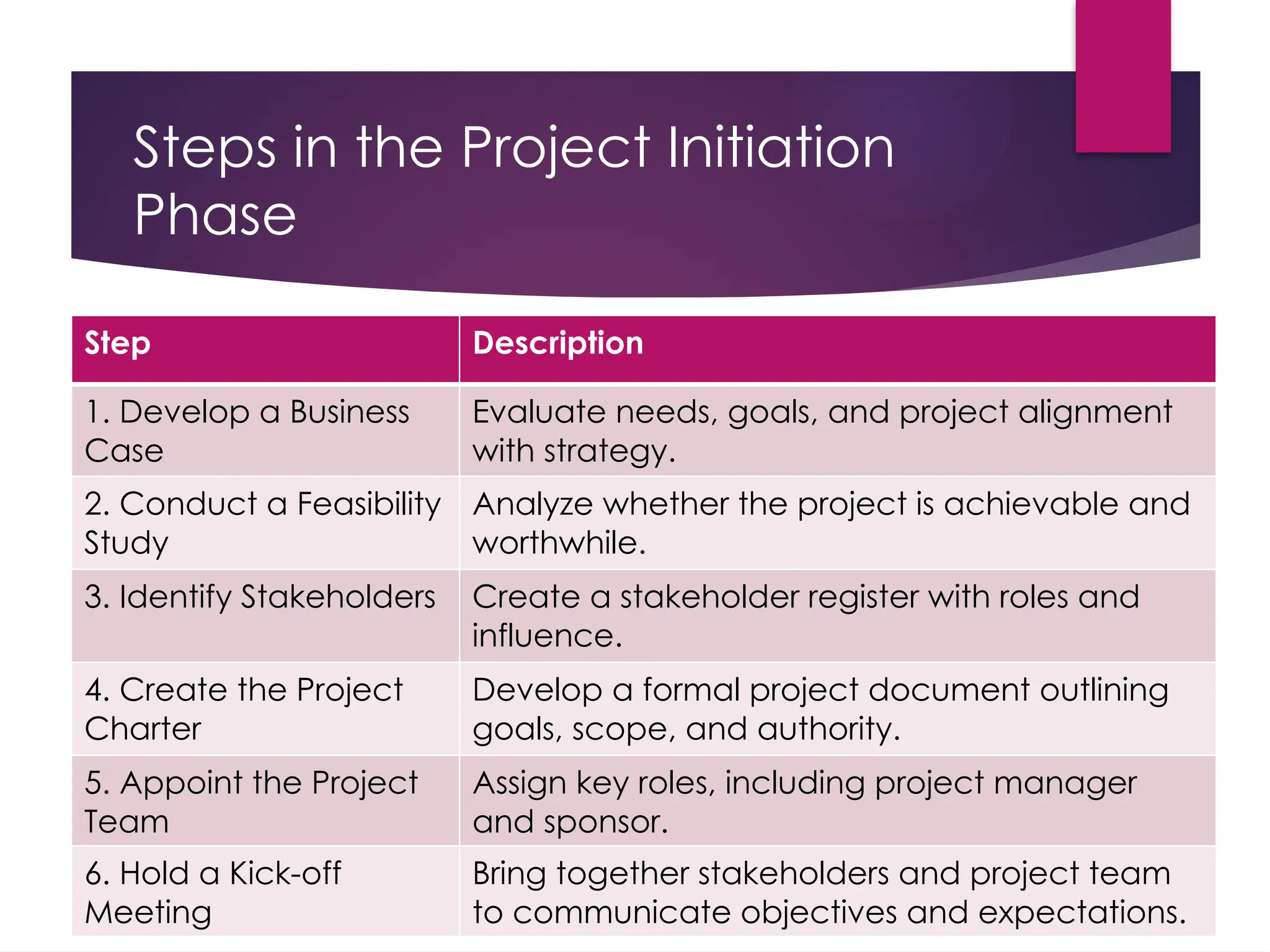
Step Description
1. Develop a Business
Case
Evaluate needs, goals, and project alignment
with strategy.
2. Conduct a Feasibility
Study
Analyze whether the project is achievable and
worthwhile.
3. Identify Stakeholders Create a stakeholder register with roles and
influence.
4. Create the Project
Charter
Develop a formal project document outlining
goals, scope, and authority.
5. Appoint the Project
Team
Assign key roles, including project manager
and sponsor.
6. Hold a Kick-off
Meeting
Bring together stakeholders and project team
to communicate objectives and expectations.
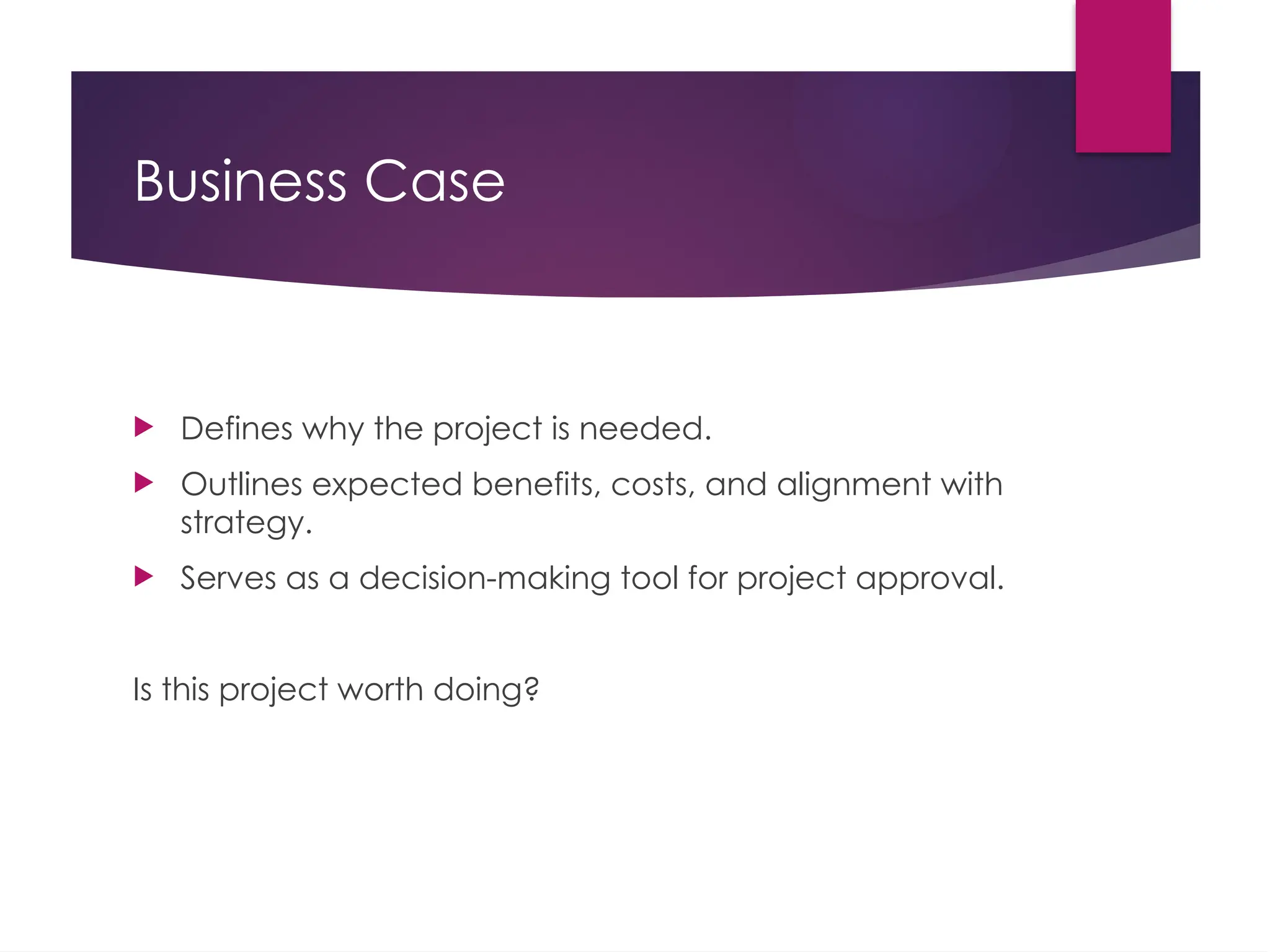
Business Case
 Defines why the project is needed.
 Outlines expected benefits, costs, and alignment with
strategy.
 Serves as a decision-making tool for project approval.
Is this project worth doing?
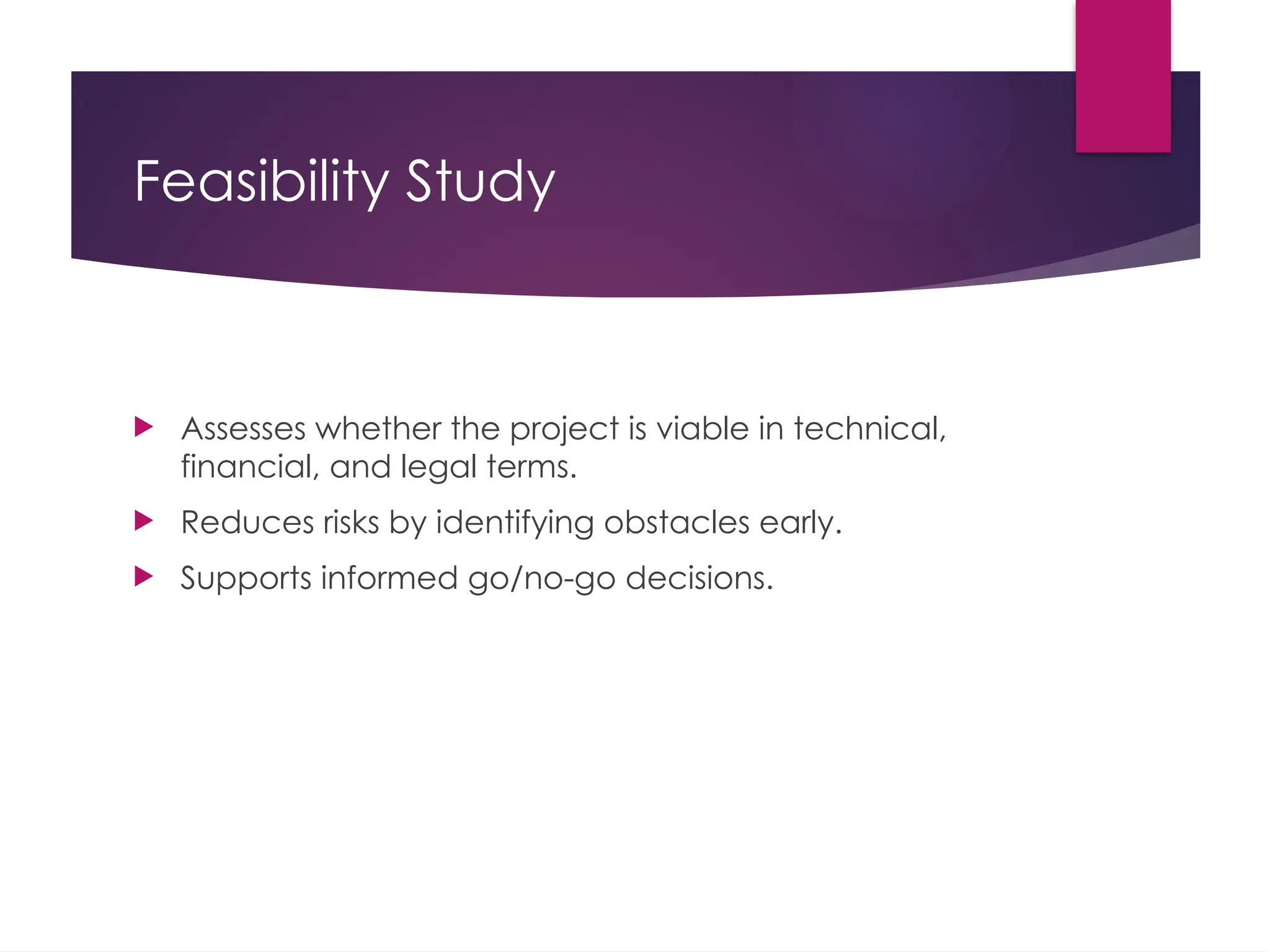
Feasibility Study
 Assesses whether the project is viable in technical,
financial, and legal terms.
 Reduces risks by identifying obstacles early.
 Supports informed go/no-go decisions.
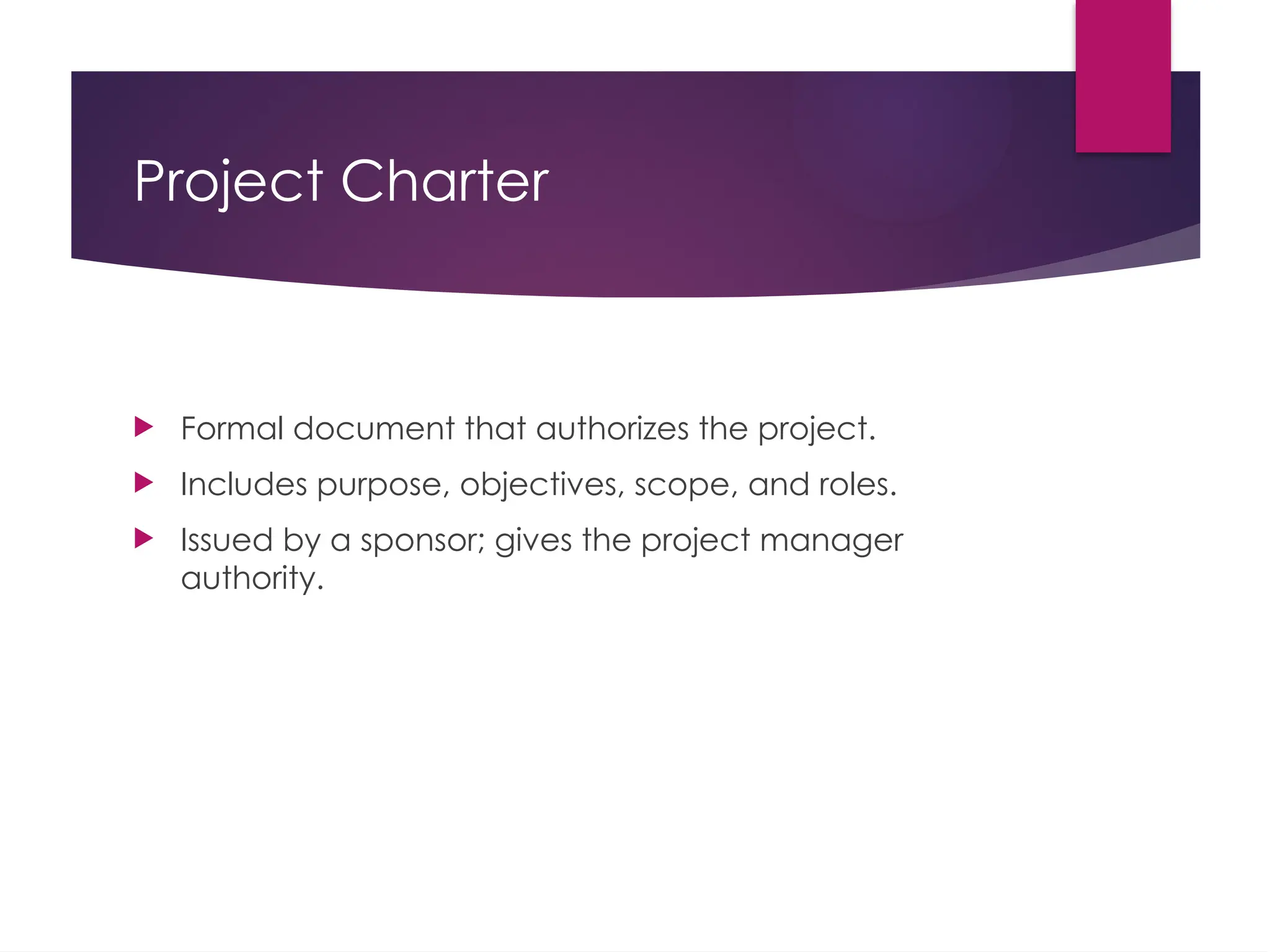
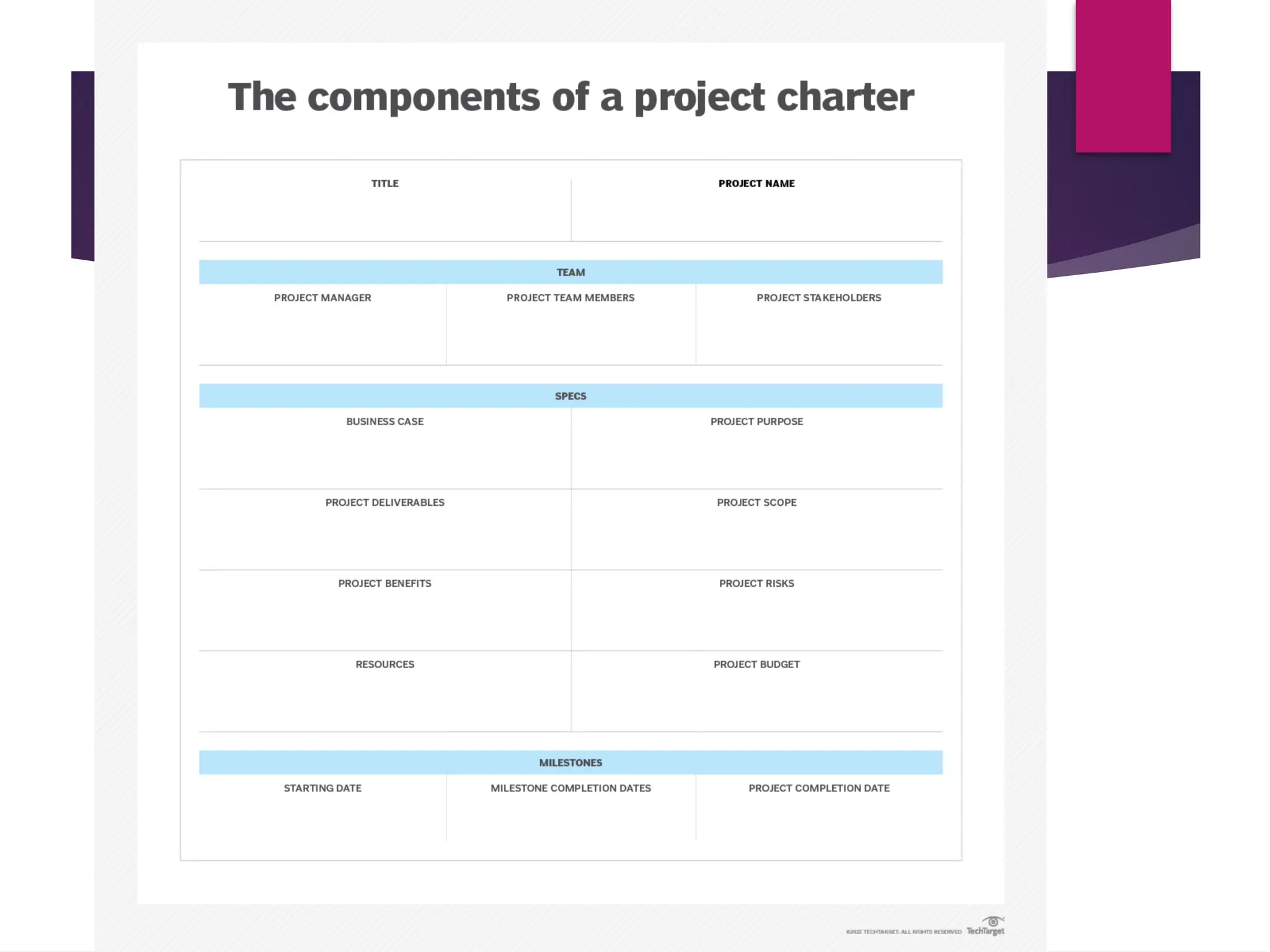
Project Charter
 Formal document that authorizes the project.
 Includes purpose, objectives, scope, and roles.
 Issued by a sponsor; gives the project manager
authority.
Stakeholder Identification &
Analysis
 Identify individuals/groups impacted by the project.
 Analyze interest, influence, and potential conflicts.
 Use Stakeholder Power/Interest Grid for mapping.
Theory: Stakeholder Theory
(Freeman)
 Considers the impact of decisions on all
stakeholders.
 Project success depends on stakeholder satisfaction.
 Promotes ethical and inclusive decision-making.
Defining Project Objectives
 Objectives guide the planning and performance
evaluation.
 Should address what is to be achieved, by when,
and to what standard.
 Well-defined objectives reduce ambiguity.
Scope Definition
 Clarifies project boundaries and deliverables.
 Prevents scope creep and confusion.
 Scope Statement defines inclusions/exclusions.
Assumptions and Constraints
 Assumptions: Conditions believed to be true.
 Constraints: Restrictions such as budget, time, or
resources.
 Both must be documented and managed.
Initial Risk Identification
 Risk is any uncertainty that may affect objectives.
 Identify potential risks early in the process.
 Develop initial mitigation and response plans.
Project Manager Appointment
 PM leads the project through its life cycle.
 Must have the skills, authority, and support.
 Acts as the link between the team and stakeholders.
Kick-off Meeting
 Introduces the team and stakeholders.
 Communicates goals, roles, and expectations.
 Aligns all parties before planning begins.
Example – Construction of a
New Office Building
•Business Case: Company needs a new facility due to expansion.
•Feasibility Study: Assessed construction costs, legal permits, and
availability of land.
•Stakeholders: Company executives, employees, local authorities,
architects, and contractors.
•Project Charter: Includes objectives (construct a 5-story office), timeline
(18 months), and budget ($2 million).
•Kick-off Meeting: Held with architects, contractors, and company
management.
Initiation Tools & Techniques
 SWOT Analysis, PESTLE, Feasibility Matrix.
 Used for evaluating internal and external factors.
 Helps in strategic decision-making.
 Cost-Benefit Analysis
 Stakeholder Analysis
 Expert Judgment
 Brainstorming
 Project Management Software (for documentation and
collaboration)
Ethical Considerations in
Initiation
 Transparency, fairness, and accountability.
 Involves honest communication with stakeholders.
 Supports long-term project and organizational
success.
Case Study: Project Initiation
Failure
 Project lacked clear objectives and sponsor support.
 Resulted in scope creep and budget overrun.
 Lessons: importance of clarity, stakeholder analysis.
Summary of Project Initiation
Phase
 Defines project purpose and feasibility.
 Involves stakeholder and objective alignment.
 Formalized by the project charter.
Project_Initiation in project managment.pptx

  • 1.
    Project Initiation in Project Management PREPAREDFOR HNDE STUDENTS BY: N.V. SAJANI BIMSARA | DATE: 5/4/2025
  • 2.
    Introduction to ProjectInitiation  Project Initiation is the first phase in the project life cycle.  It involves defining the project at a broad level.  Sets the foundation for planning and execution. https://youtu.be/hIhTtzo0eBg
  • 3.
    Objectives of ProjectInitiation  The main objectives of project initiation include: • Defining the project purpose and goals. • Identifying stakeholders and understanding their expectations. • Determining project feasibility (technical, financial, and operational). • Preparing key documents such as the Project Charter and Business Case. • Appointing the project manager and project team (initial roles).
  • 4.
    Importance of ProjectInitiation  Sets clear direction and purpose.  Provides formal authorization to start the project.  Ensures the project is feasible and aligned with strategic goals.  Improves clarity, reduces risks, and enhances success rates.  Helps manage stakeholder expectations early.  Avoids misallocation of resources.
  • 5.
    Project Life CycleOverview  Phases: Initiation, Planning, Execution, Monitoring & Controlling, Closing.  Each phase builds on the outputs of the previous one.  Initiation establishes the purpose and authorization.
  • 6.
    Theoretical Foundation: Systems Theory Views the project as a system within an organization.  All parts (scope, time, cost) are interrelated.  Helps understand the project's environment and interdependencies.
  • 7.
    Theoretical Foundation: Goal- SettingTheory (Locke & Latham)  Clear, challenging goals enhance performance.  Project objectives must be SMART: Specific, Measurable, Achievable, Relevant, Time-bound.  Goal-setting motivates team alignment and effort.
  • 8.
    Steps in theProject Initiation Phase Step Description 1. Develop a Business Case Evaluate needs, goals, and project alignment with strategy. 2. Conduct a Feasibility Study Analyze whether the project is achievable and worthwhile. 3. Identify Stakeholders Create a stakeholder register with roles and influence. 4. Create the Project Charter Develop a formal project document outlining goals, scope, and authority. 5. Appoint the Project Team Assign key roles, including project manager and sponsor. 6. Hold a Kick-off Meeting Bring together stakeholders and project team to communicate objectives and expectations.
  • 9.
    Business Case  Defineswhy the project is needed.  Outlines expected benefits, costs, and alignment with strategy.  Serves as a decision-making tool for project approval. Is this project worth doing?
  • 10.
    Feasibility Study  Assesseswhether the project is viable in technical, financial, and legal terms.  Reduces risks by identifying obstacles early.  Supports informed go/no-go decisions.
  • 11.
    Project Charter  Formaldocument that authorizes the project.  Includes purpose, objectives, scope, and roles.  Issued by a sponsor; gives the project manager authority.
  • 13.
    Stakeholder Identification & Analysis Identify individuals/groups impacted by the project.  Analyze interest, influence, and potential conflicts.  Use Stakeholder Power/Interest Grid for mapping.
  • 14.
    Theory: Stakeholder Theory (Freeman) Considers the impact of decisions on all stakeholders.  Project success depends on stakeholder satisfaction.  Promotes ethical and inclusive decision-making.
  • 15.
    Defining Project Objectives Objectives guide the planning and performance evaluation.  Should address what is to be achieved, by when, and to what standard.  Well-defined objectives reduce ambiguity.
  • 16.
    Scope Definition  Clarifiesproject boundaries and deliverables.  Prevents scope creep and confusion.  Scope Statement defines inclusions/exclusions.
  • 17.
    Assumptions and Constraints Assumptions: Conditions believed to be true.  Constraints: Restrictions such as budget, time, or resources.  Both must be documented and managed.
  • 18.
    Initial Risk Identification Risk is any uncertainty that may affect objectives.  Identify potential risks early in the process.  Develop initial mitigation and response plans.
  • 19.
    Project Manager Appointment PM leads the project through its life cycle.  Must have the skills, authority, and support.  Acts as the link between the team and stakeholders.
  • 20.
    Kick-off Meeting  Introducesthe team and stakeholders.  Communicates goals, roles, and expectations.  Aligns all parties before planning begins.
  • 21.
    Example – Constructionof a New Office Building •Business Case: Company needs a new facility due to expansion. •Feasibility Study: Assessed construction costs, legal permits, and availability of land. •Stakeholders: Company executives, employees, local authorities, architects, and contractors. •Project Charter: Includes objectives (construct a 5-story office), timeline (18 months), and budget ($2 million). •Kick-off Meeting: Held with architects, contractors, and company management.
  • 22.
    Initiation Tools &Techniques  SWOT Analysis, PESTLE, Feasibility Matrix.  Used for evaluating internal and external factors.  Helps in strategic decision-making.  Cost-Benefit Analysis  Stakeholder Analysis  Expert Judgment  Brainstorming  Project Management Software (for documentation and collaboration)
  • 23.
    Ethical Considerations in Initiation Transparency, fairness, and accountability.  Involves honest communication with stakeholders.  Supports long-term project and organizational success.
  • 24.
    Case Study: ProjectInitiation Failure  Project lacked clear objectives and sponsor support.  Resulted in scope creep and budget overrun.  Lessons: importance of clarity, stakeholder analysis.
  • 25.
    Summary of ProjectInitiation Phase  Defines project purpose and feasibility.  Involves stakeholder and objective alignment.  Formalized by the project charter.