
PROFILING IN PYTHON
John
Saturday, December 21, 2013
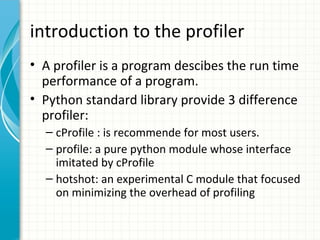
introduction to the profiler
• A profiler is a program descibes the run time
performance of a program.
• Python standard library provide 3 difference
profiler:
– cProfile : is recommende for most users.
– profile: a pure python module whose interface
imitated by cProfile
– hotshot: an experimental C module that focused
on minimizing the overhead of profiling
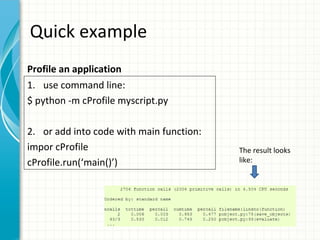
Quick example
Profile an application
1. use command line:
$ python -m cProfile myscript.py
2. or add into code with main function:
impor cProfile
cProfile.run(‘main()’)

The result looks
like:
Cython profiling basic
Enable it for source file
• profiling can be enabled by
adding at the top of file
#cython: profile=True
• Use a special decorator
disable profiling for one
function only:
cimport cython
@cython.profile(False)
def my_func():
pass

Use pstats module review the
profile
import pstats
p = pstats.Stats(‘fooprof’)
p.strip_dirs().sort_stats(‘time’)
.print_stats()
Reference
• http://docs.python.org/2/library/profile.html
Reference
• http://docs.python.org/2/library/profile.html

Profiling in python

  • 1.
  • 2.
    introduction to theprofiler • A profiler is a program descibes the run time performance of a program. • Python standard library provide 3 difference profiler: – cProfile : is recommende for most users. – profile: a pure python module whose interface imitated by cProfile – hotshot: an experimental C module that focused on minimizing the overhead of profiling
  • 3.
    Quick example Profile anapplication 1. use command line: $ python -m cProfile myscript.py 2. or add into code with main function: impor cProfile cProfile.run(‘main()’) The result looks like:
  • 4.
    Cython profiling basic Enableit for source file • profiling can be enabled by adding at the top of file #cython: profile=True • Use a special decorator disable profiling for one function only: cimport cython @cython.profile(False) def my_func(): pass Use pstats module review the profile import pstats p = pstats.Stats(‘fooprof’) p.strip_dirs().sort_stats(‘time’) .print_stats()
  • 6.
  • 7.