Module 1: Introduction to Dining
Service
Dining etiquette refers to the proper way of serving and behaving during meals. It includes respecting the rules of table service, maintaining
cleanliness, and ensuring guests feel comfortable.
Why is it Important?
Creates a Positive Impression: When you serve guests professionally, they feel valued and respected, which reflects well on the company.
Builds Trust with Guests and Colleagues: Proper etiquette shows that you care about details and take your job seriously.
Prevents Mistakes: Following dining etiquette reduces errors, like spilling food or serving the wrong dish.
Improves Service Quality: Good dining etiquette leads to better service, which enhances the overall guest experience.
Examples of Good Dining Etiquette:
Always greet guests with a smile.
Serve food and drinks carefully and without rushing.
Be polite, saying things like “Excuse me,” “Please,” and “Thank you.”
Overview of Different Dining Setups
Dining setups refer to how tables are arranged for meals. This knowledge is essential because different
situations require different arrangements.
• Casual Dining Setup:
Used for simple meals at home or informal gatherings.
Basic items include a plate, fork, spoon, knife, and a glass.
No extra decorations or utensils are required.
• Formal Dining Setup:
Used for important guests, special events, or business dinners.
Includes multiple courses, so there are extra items like a bread plate, wine glasses, and dessert forks.
Everything is arranged neatly and symmetrically. For example, forks go on the left, knives on the right, and
glasses are placed above the knives.
• Buffet Setup:
Common for large gatherings where guests serve themselves.
Plates, cutlery, and napkins are arranged in a single line.
Food is displayed on tables with clear labeling. The server’s role is to assist
guests and keep the area clean.
Understanding different dining setups helps ensure that you prepare the table
correctly for each situation, making the service smooth and professional.
Personal Hygiene and Grooming
Good hygiene and grooming are essential for anyone working in dining service. Guests
notice how clean and well-presented the staff is, and it impacts their overall experience.
• Personal Hygiene Tips:
Wash Your Hands Frequently: Always wash your hands before serving food, after using
the restroom, or after touching dirty surfaces.
Keep Nails Clean and Short: Long or dirty nails can spread germs.
Use Deodorant: Ensure you smell fresh during your shift.
Avoid Touching Your Face or Hair: It looks unprofessional and can spread bacteria.
• Grooming Tips:
Wear Clean Clothes: Your uniform should be neat and free of stains.
Polish Your Shoes: Shoes should look clean and presentable.
Keep Hair Neatly Styled: Long hair should be tied back.
Avoid Strong Perfume: Use mild scents, as strong smells can bother guests.
Cleanliness shows professionalism.
Prevents the spread of germs and illnesses.
Makes guests feel comfortable being served by you.
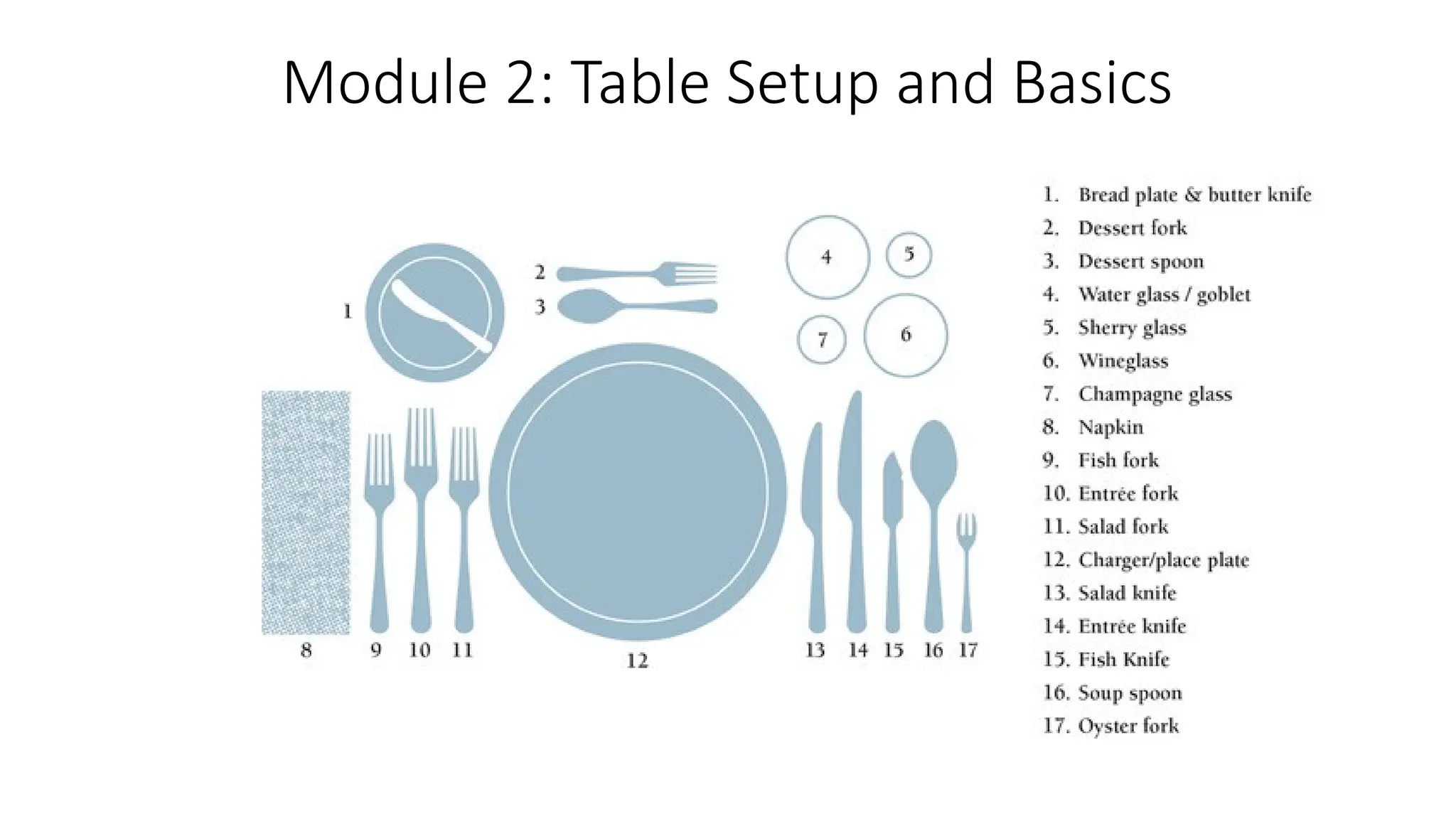
Module 2: Table Setup and Basics
This module teaches the essential skills for setting up a dining table properly. A well-set table creates a good first impression and ensures the
dining experience is smooth and professional.
Arranging Tables: Cutlery, Crockery, and Glassware
• Cutlery: Forks, knives, and spoons used to eat or serve food.
• Crockery: Plates, bowls, and other dishes used to serve or hold food.
• Glassware: Glasses used for drinking water, juice, or other beverages.
How to Arrange Them:
• Plates:
• Place the main dinner plate in the center of each seat.
• If a soup bowl or salad plate is needed, place it on top of the main plate.
• Cutlery:
• Forks go on the left of the plate. The larger fork (for the main course) is closest to the plate, and the smaller fork (for salad or dessert) is placed outside it.
• Knives go on the right of the plate, with the blade facing inward toward the plate.
• Spoons are placed to the right of the knives.
Glassware:
• Water glass is placed directly above the knives.
• If there are additional drinks, such as wine, glasses are placed slightly to the right of
the water glass.
Napkins:
• Place the napkin either on the plate or to the left of the forks.
• It looks organized and professional.
• Makes it easier for guests to find what they need.
• Ensures each item is used in the right order.
Formal Table Settings:
• 2. Formal Table Setting:
Used for special occasions, important guests, or multi-course meals.
• Includes more items, like a bread plate, multiple forks, and glasses for wine or
champagne.
• Items are placed in the order they’ll be used (outside to inside).
• Often includes decorations, such as flowers or candles.
• Example Layout:
• Bread plate with a butter knife placed above the forks.
• Multiple glasses arranged in a triangle shape (water glass, red wine glass,
white wine glass).
• Dessert spoon and fork placed horizontally above the dinner plate.
Module 3: Serving Food and Beverages
This module focuses on the technical aspects of serving food and beverages to
ensure efficiency, professionalism, and guest satisfaction.
Module 3: Serving Food and Beverages
This module focuses on the technical aspects of serving food and beverages to ensure efficiency,
professionalism, and guest satisfaction.
Carrying Trays and Handling Utensils
Key Techniques:
• Carrying Trays:
• Always use both hands when lifting a tray to ensure balance and avoid spillage.
• Place heavier items in the center of the tray to maintain stability.
• Hold the tray slightly above waist level, using one hand for support if needed.
• Handling Utensils:
• Always hold utensils by the handle, not by the part that touches food, to maintain hygiene.
• Arrange utensils neatly on trays to avoid clattering when serving
Professional Ways to Serve Food and Drinks
Food Service Techniques:
• From the Left: Serve solid food items (e.g., main dishes) from the guest's left-hand side
using your left hand.
• From the Right: Serve beverages, soups, and pre-plated dishes from the guest's right-
hand side using your right hand.
• Drink Service Techniques:
• Always pour beverages with the bottle or jug tilted slightly, without touching the glass.
• Stop pouring before the glass is full, leaving space at the top.
• General Guidelines:
• Serve women and older guests first, then move clockwise around the
table.
• Announce the dish while serving (e.g., “Your grilled chicken, sir.”).
• Avoid reaching over guests or placing your hands too close to them.
How to Clear Tables Professionally
Key Steps
• Start from the Right: Clear all used dishes and utensils from the guest’s right-hand side.
• Remove Plates Quietly: Avoid stacking plates noisily or in front of the guest. Use a tray or cart for
clearing.
• Carry Several Items Safely: Hold multiple plates securely, ensuring no food drips onto the table or floor.
• Sequence for Clearing:
• Remove plates after everyone at the table has finished eating (unless the guest requests earlier).
• Clear the plates for the first course before bringing the next course.
• Collect glasses and cutlery last
https://www.youtube.com/watch?v=K5T42WfUcnM
Module 4: Guest Interaction
Polite Communication:
Practice using respectful language when talking to guests. For example, saying
“Please” and “Thank you.”
Being Attentive:
Learn how to notice what the guest needs, like refilling their water glass or
bringing extra napkins.
Module 5: Cleanliness and Safety
Keeping the Dining Area Clean:
Learn how to make sure the table and surrounding area are always neat and free of
mess.
Handling Spills and Breakages:
If something spills or breaks, learn how to clean it up quickly and safely without
causing more problems.
Food Safety Basics:
Understand simple rules to keep food safe, like washing hands before handling food,
storing food at the right temperature, and avoiding cross-contamination.

Professional Dining Skills in the Hospitality Industry

  • 1.
    Module 1: Introductionto Dining Service Dining etiquette refers to the proper way of serving and behaving during meals. It includes respecting the rules of table service, maintaining cleanliness, and ensuring guests feel comfortable. Why is it Important? Creates a Positive Impression: When you serve guests professionally, they feel valued and respected, which reflects well on the company. Builds Trust with Guests and Colleagues: Proper etiquette shows that you care about details and take your job seriously. Prevents Mistakes: Following dining etiquette reduces errors, like spilling food or serving the wrong dish. Improves Service Quality: Good dining etiquette leads to better service, which enhances the overall guest experience. Examples of Good Dining Etiquette: Always greet guests with a smile. Serve food and drinks carefully and without rushing. Be polite, saying things like “Excuse me,” “Please,” and “Thank you.”
  • 2.
    Overview of DifferentDining Setups Dining setups refer to how tables are arranged for meals. This knowledge is essential because different situations require different arrangements. • Casual Dining Setup: Used for simple meals at home or informal gatherings. Basic items include a plate, fork, spoon, knife, and a glass. No extra decorations or utensils are required. • Formal Dining Setup: Used for important guests, special events, or business dinners. Includes multiple courses, so there are extra items like a bread plate, wine glasses, and dessert forks. Everything is arranged neatly and symmetrically. For example, forks go on the left, knives on the right, and glasses are placed above the knives.
  • 3.
    • Buffet Setup: Commonfor large gatherings where guests serve themselves. Plates, cutlery, and napkins are arranged in a single line. Food is displayed on tables with clear labeling. The server’s role is to assist guests and keep the area clean. Understanding different dining setups helps ensure that you prepare the table correctly for each situation, making the service smooth and professional.
  • 4.
    Personal Hygiene andGrooming Good hygiene and grooming are essential for anyone working in dining service. Guests notice how clean and well-presented the staff is, and it impacts their overall experience. • Personal Hygiene Tips: Wash Your Hands Frequently: Always wash your hands before serving food, after using the restroom, or after touching dirty surfaces. Keep Nails Clean and Short: Long or dirty nails can spread germs. Use Deodorant: Ensure you smell fresh during your shift. Avoid Touching Your Face or Hair: It looks unprofessional and can spread bacteria.
  • 5.
    • Grooming Tips: WearClean Clothes: Your uniform should be neat and free of stains. Polish Your Shoes: Shoes should look clean and presentable. Keep Hair Neatly Styled: Long hair should be tied back. Avoid Strong Perfume: Use mild scents, as strong smells can bother guests. Cleanliness shows professionalism. Prevents the spread of germs and illnesses. Makes guests feel comfortable being served by you.
  • 6.
    Module 2: TableSetup and Basics
  • 8.
    This module teachesthe essential skills for setting up a dining table properly. A well-set table creates a good first impression and ensures the dining experience is smooth and professional. Arranging Tables: Cutlery, Crockery, and Glassware • Cutlery: Forks, knives, and spoons used to eat or serve food. • Crockery: Plates, bowls, and other dishes used to serve or hold food. • Glassware: Glasses used for drinking water, juice, or other beverages. How to Arrange Them: • Plates: • Place the main dinner plate in the center of each seat. • If a soup bowl or salad plate is needed, place it on top of the main plate. • Cutlery: • Forks go on the left of the plate. The larger fork (for the main course) is closest to the plate, and the smaller fork (for salad or dessert) is placed outside it. • Knives go on the right of the plate, with the blade facing inward toward the plate. • Spoons are placed to the right of the knives.
  • 9.
    Glassware: • Water glassis placed directly above the knives. • If there are additional drinks, such as wine, glasses are placed slightly to the right of the water glass. Napkins: • Place the napkin either on the plate or to the left of the forks. • It looks organized and professional. • Makes it easier for guests to find what they need. • Ensures each item is used in the right order.
  • 10.
    Formal Table Settings: •2. Formal Table Setting: Used for special occasions, important guests, or multi-course meals. • Includes more items, like a bread plate, multiple forks, and glasses for wine or champagne. • Items are placed in the order they’ll be used (outside to inside). • Often includes decorations, such as flowers or candles. • Example Layout: • Bread plate with a butter knife placed above the forks. • Multiple glasses arranged in a triangle shape (water glass, red wine glass, white wine glass). • Dessert spoon and fork placed horizontally above the dinner plate.
  • 11.
    Module 3: ServingFood and Beverages This module focuses on the technical aspects of serving food and beverages to ensure efficiency, professionalism, and guest satisfaction.
  • 12.
    Module 3: ServingFood and Beverages This module focuses on the technical aspects of serving food and beverages to ensure efficiency, professionalism, and guest satisfaction. Carrying Trays and Handling Utensils Key Techniques: • Carrying Trays: • Always use both hands when lifting a tray to ensure balance and avoid spillage. • Place heavier items in the center of the tray to maintain stability. • Hold the tray slightly above waist level, using one hand for support if needed. • Handling Utensils: • Always hold utensils by the handle, not by the part that touches food, to maintain hygiene. • Arrange utensils neatly on trays to avoid clattering when serving
  • 13.
    Professional Ways toServe Food and Drinks Food Service Techniques: • From the Left: Serve solid food items (e.g., main dishes) from the guest's left-hand side using your left hand. • From the Right: Serve beverages, soups, and pre-plated dishes from the guest's right- hand side using your right hand. • Drink Service Techniques: • Always pour beverages with the bottle or jug tilted slightly, without touching the glass. • Stop pouring before the glass is full, leaving space at the top.
  • 14.
    • General Guidelines: •Serve women and older guests first, then move clockwise around the table. • Announce the dish while serving (e.g., “Your grilled chicken, sir.”). • Avoid reaching over guests or placing your hands too close to them.
  • 15.
    How to ClearTables Professionally Key Steps • Start from the Right: Clear all used dishes and utensils from the guest’s right-hand side. • Remove Plates Quietly: Avoid stacking plates noisily or in front of the guest. Use a tray or cart for clearing. • Carry Several Items Safely: Hold multiple plates securely, ensuring no food drips onto the table or floor. • Sequence for Clearing: • Remove plates after everyone at the table has finished eating (unless the guest requests earlier). • Clear the plates for the first course before bringing the next course. • Collect glasses and cutlery last https://www.youtube.com/watch?v=K5T42WfUcnM
  • 16.
    Module 4: GuestInteraction Polite Communication: Practice using respectful language when talking to guests. For example, saying “Please” and “Thank you.” Being Attentive: Learn how to notice what the guest needs, like refilling their water glass or bringing extra napkins.
  • 17.
    Module 5: Cleanlinessand Safety Keeping the Dining Area Clean: Learn how to make sure the table and surrounding area are always neat and free of mess. Handling Spills and Breakages: If something spills or breaks, learn how to clean it up quickly and safely without causing more problems. Food Safety Basics: Understand simple rules to keep food safe, like washing hands before handling food, storing food at the right temperature, and avoiding cross-contamination.