Lisa Haugen
Mar. 28, 29, 30
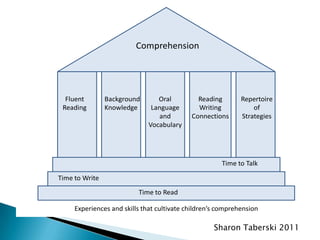
Comprehension


  Fluent        Background       Oral         Reading        Repertoire
 Reading        Knowledge      Language       Writing            of
                                  and       Connections      Strategies
                              Vocabulary


                                                      Time to Talk

Time to Write
                          Time to Read

     Experiences and skills that cultivate children’s comprehension

                                                    Sharon Taberski 2011
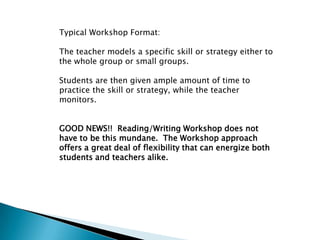
Typical Workshop Format:

The teacher models a specific skill or strategy either to
the whole group or small groups.

Students are then given ample amount of time to
practice the skill or strategy, while the teacher
monitors.


GOOD NEWS!! Reading/Writing Workshop does not
have to be this mundane. The Workshop approach
offers a great deal of flexibility that can energize both
students and teachers alike.
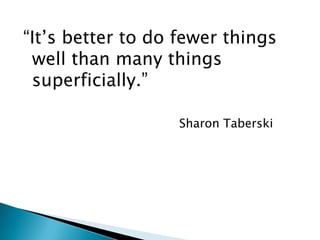
“It’s better to do fewer things
 well than many things
 superficially.”

                   Sharon Taberski
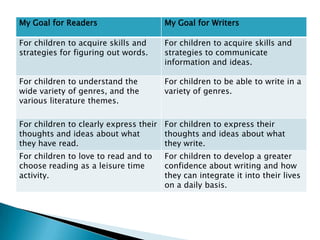
My Goal for Readers                   My Goal for Writers

For children to acquire skills and    For children to acquire skills and
strategies for figuring out words.    strategies to communicate
                                      information and ideas.

For children to understand the        For children to be able to write in a
wide variety of genres, and the       variety of genres.
various literature themes.

For children to clearly express their For children to express their
thoughts and ideas about what         thoughts and ideas about what
they have read.                       they write.
For children to love to read and to   For children to develop a greater
choose reading as a leisure time      confidence about writing and how
activity.                             they can integrate it into their lives
                                      on a daily basis.
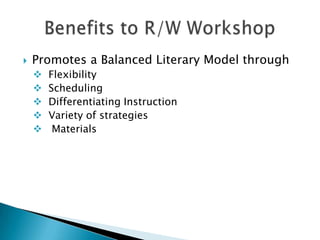
   Promotes a Balanced Literary Model through
       Flexibility
       Scheduling
       Differentiating Instruction
       Variety of strategies
        Materials
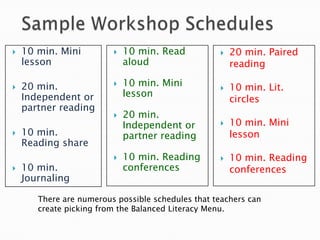
   10 min. Mini            10 min. Read             20 min. Paired
    lesson                   aloud                     reading

   20 min.                 10 min. Mini             10 min. Lit.
    Independent or           lesson
                                                       circles
    partner reading
                            20 min.
                             Independent or           10 min. Mini
   10 min.                  partner reading           lesson
    Reading share
                            10 min. Reading          10 min. Reading
   10 min.                  conferences               conferences
    Journaling

       There are numerous possible schedules that teachers can
       create picking from the Balanced Literacy Menu.
“Researcher Donald Graves recommends that
readers self select about 80 percent of the
texts they read.”


                              Harvey, Goudvis, 2008
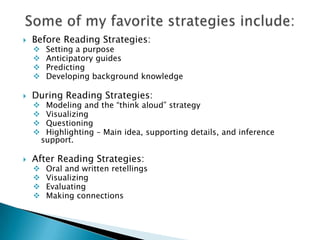
   Before Reading Strategies:
        Setting a purpose
        Anticipatory guides
        Predicting
        Developing background knowledge

   During Reading Strategies:
        Modeling and the “think aloud” strategy
        Visualizing
        Questioning
        Highlighting – Main idea, supporting details, and inference
        support.

   After Reading Strategies:
        Oral and written retellings
        Visualizing
        Evaluating
        Making connections

Professional development power point 2

  • 1.
  • 2.
    Comprehension Fluent Background Oral Reading Repertoire Reading Knowledge Language Writing of and Connections Strategies Vocabulary Time to Talk Time to Write Time to Read Experiences and skills that cultivate children’s comprehension Sharon Taberski 2011
  • 3.
    Typical Workshop Format: Theteacher models a specific skill or strategy either to the whole group or small groups. Students are then given ample amount of time to practice the skill or strategy, while the teacher monitors. GOOD NEWS!! Reading/Writing Workshop does not have to be this mundane. The Workshop approach offers a great deal of flexibility that can energize both students and teachers alike.
  • 4.
    “It’s better todo fewer things well than many things superficially.” Sharon Taberski
  • 5.
    My Goal forReaders My Goal for Writers For children to acquire skills and For children to acquire skills and strategies for figuring out words. strategies to communicate information and ideas. For children to understand the For children to be able to write in a wide variety of genres, and the variety of genres. various literature themes. For children to clearly express their For children to express their thoughts and ideas about what thoughts and ideas about what they have read. they write. For children to love to read and to For children to develop a greater choose reading as a leisure time confidence about writing and how activity. they can integrate it into their lives on a daily basis.
  • 6.
    Promotes a Balanced Literary Model through  Flexibility  Scheduling  Differentiating Instruction  Variety of strategies  Materials
  • 7.
    10 min. Mini  10 min. Read  20 min. Paired lesson aloud reading  20 min.  10 min. Mini  10 min. Lit. Independent or lesson circles partner reading  20 min. Independent or  10 min. Mini  10 min. partner reading lesson Reading share  10 min. Reading  10 min. Reading  10 min. conferences conferences Journaling There are numerous possible schedules that teachers can create picking from the Balanced Literacy Menu.
  • 8.
    “Researcher Donald Gravesrecommends that readers self select about 80 percent of the texts they read.” Harvey, Goudvis, 2008
  • 9.
    Before Reading Strategies:  Setting a purpose  Anticipatory guides  Predicting  Developing background knowledge  During Reading Strategies:  Modeling and the “think aloud” strategy  Visualizing  Questioning  Highlighting – Main idea, supporting details, and inference support.  After Reading Strategies:  Oral and written retellings  Visualizing  Evaluating  Making connections