Probe Card Manufacturing Process in California
California is a hub for technological innovation, with Silicon Valley at its core. Among the myriad
of advanced technologies developed and manufactured in this state, the production of probe cards
stands out as a critical process in the semiconductor industry. Probe cards are essential tools used
in the testing of integrated circuits (ICs) and semiconductor wafers. They ensure the functionality
and reliability of chips before they are packaged and sold. The manufacturing process of probe
cards is complex, involving a combination of precision engineering, materials science, and
advanced manufacturing techniques.
Understanding Probe Cards
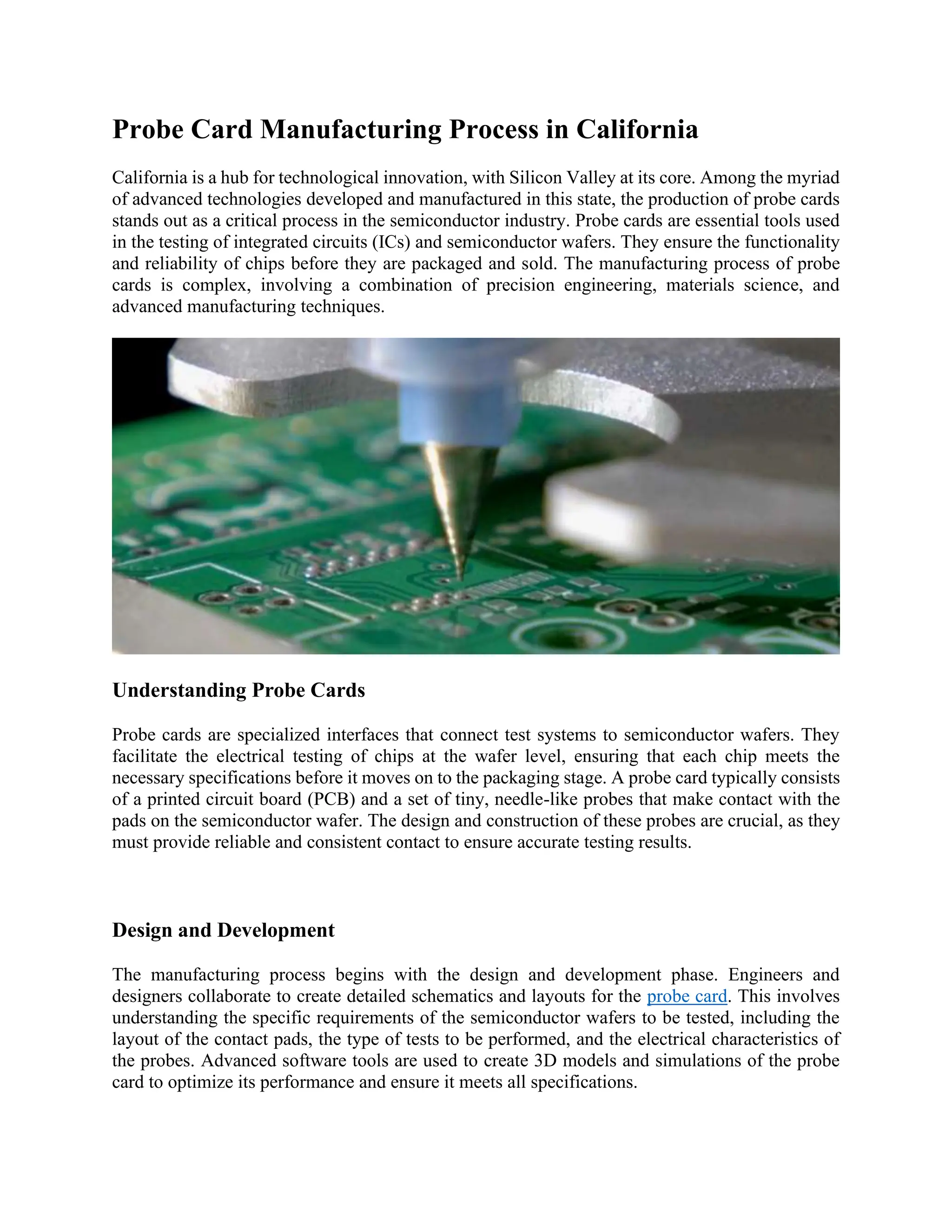
Probe cards are specialized interfaces that connect test systems to semiconductor wafers. They
facilitate the electrical testing of chips at the wafer level, ensuring that each chip meets the
necessary specifications before it moves on to the packaging stage. A probe card typically consists
of a printed circuit board (PCB) and a set of tiny, needle-like probes that make contact with the
pads on the semiconductor wafer. The design and construction of these probes are crucial, as they
must provide reliable and consistent contact to ensure accurate testing results.
Design and Development
The manufacturing process begins with the design and development phase. Engineers and
designers collaborate to create detailed schematics and layouts for the probe card. This involves
understanding the specific requirements of the semiconductor wafers to be tested, including the
layout of the contact pads, the type of tests to be performed, and the electrical characteristics of
the probes. Advanced software tools are used to create 3D models and simulations of the probe
card to optimize its performance and ensure it meets all specifications.
Material Selection
Material selection is a critical step in the manufacturing process. The materials used for the PCB
and the probes must possess specific properties to withstand the demanding conditions of
semiconductor testing. Common materials for the PCB include high-performance laminates that
offer excellent electrical insulation and thermal stability. The probes are typically made from
tungsten or other hard metals, coated with gold or other conductive materials to enhance their
electrical performance and durability.
Fabrication of the PCB
Once the design is finalized, the fabrication of the PCB begins. This involves several steps,
including the deposition of conductive layers, the application of photoresist, and the etching of
circuit patterns. Precision is paramount during this phase, as even the slightest deviation can affect
the performance of the probe card. Advanced photolithography techniques are employed to create
the intricate circuit patterns required for the probe card. After the PCB is fabricated, it undergoes
rigorous testing to ensure it meets all design specifications.
Probe Assembly
The next step in the process is the assembly of the probes. This involves attaching the tiny needle-
like probes to the PCB. The alignment and placement of the probes are critical, as they must
precisely match the contact pads on the semiconductor wafer. This process is often carried out
using advanced robotic systems that can place the probes with micron-level accuracy. The probes
are then bonded to the PCB using specialized adhesives or soldering techniques, ensuring a secure
and reliable connection.
Electrical Testing and Calibration
Once the probe card is assembled, it undergoes a series of electrical tests and calibrations. These
tests are designed to verify that the probe card can accurately conduct the necessary tests on the
semiconductor wafers. The probes are tested for electrical continuity, resistance, and signal
integrity. Any deviations from the specified parameters are corrected through a process of fine-
tuning and calibration. This phase is crucial to ensure that the probe card can deliver reliable and
consistent test results.
Final Inspection and Quality Control
The final step in the manufacturing process is a thorough inspection and quality control. Each
probe card is inspected under high magnification to check for any defects or irregularities. This
includes examining the alignment of the probes, the integrity of the solder joints, and the overall
construction of the card. Advanced imaging and measurement tools are used to ensure that every
aspect of the probe card meets the required standards. Any defects found during this phase are
rectified, or the card is rejected and sent back for rework.
Packaging and Shipping
After passing the final inspection, the probe cards are carefully packaged to prevent any damage
during shipping. They are typically packed in anti-static containers to protect them from
electrostatic discharge, which can damage the delicate probes. The packaging also includes
detailed documentation and certification of the probe card's performance and quality. Finally, the
probe cards are shipped to semiconductor manufacturers and testing facilities around the world,
where they play a critical role in ensuring the reliability and performance of modern electronic
devices.
Continuous Improvement and Innovation
The probe card manufacturing process is not static; it continuously evolves to meet the demands
of the ever-advancing semiconductor industry. Manufacturers invest heavily in research and
development to improve the performance, reliability, and cost-effectiveness of probe cards. This
includes exploring new materials, advanced manufacturing techniques, and innovative design
approaches. Continuous improvement initiatives focus on enhancing yield rates, reducing
production costs, and shortening lead times, ensuring that probe card manufacturers can meet the
growing demands of their customers.
Environmental Considerations
As with all manufacturing processes, environmental considerations are increasingly important in
probe card manufacturing. Companies in California are particularly mindful of their environmental
footprint, given the state's stringent environmental regulations and strong emphasis on
sustainability. Efforts are made to minimize waste, reduce energy consumption, and ensure the
safe handling and disposal of hazardous materials. Recycling programs and the use of eco-friendly
materials are also part of the industry's commitment to environmental responsibility.
Challenges and Future Trends
The probe card manufacturing process faces several challenges, including the need for continuous
innovation to keep pace with the rapid advancements in semiconductor technology. The
miniaturization of semiconductor devices, the increasing complexity of ICs, and the demand for
higher performance and lower costs drive the need for constant improvements in probe card
technology.
Future trends in the industry include the development of probe cards with higher pin counts, better
signal integrity, and the ability to test at higher speeds and frequencies. Additionally, the
integration of advanced materials and the use of artificial intelligence and machine learning in the
design and manufacturing process are expected to play significant roles in the future of probe card
manufacturing.
Conclusion
The probe card manufacturing process in California is a testament to the state's leadership in
technological innovation and precision engineering. From the initial design and material selection
to the final inspection and quality control, each step in the process is meticulously carried out to
ensure the production of high-quality probe cards. These essential tools enable the reliable testing
of semiconductor wafers, ensuring the performance and reliability of modern electronic devices.
As the semiconductor industry continues to evolve, the probe card manufacturing process will
undoubtedly advance, driven by continuous improvement, innovation, and a commitment to
excellence.

Probe Card Manufacturing Process in California

  • 1.
    Probe Card ManufacturingProcess in California California is a hub for technological innovation, with Silicon Valley at its core. Among the myriad of advanced technologies developed and manufactured in this state, the production of probe cards stands out as a critical process in the semiconductor industry. Probe cards are essential tools used in the testing of integrated circuits (ICs) and semiconductor wafers. They ensure the functionality and reliability of chips before they are packaged and sold. The manufacturing process of probe cards is complex, involving a combination of precision engineering, materials science, and advanced manufacturing techniques. Understanding Probe Cards Probe cards are specialized interfaces that connect test systems to semiconductor wafers. They facilitate the electrical testing of chips at the wafer level, ensuring that each chip meets the necessary specifications before it moves on to the packaging stage. A probe card typically consists of a printed circuit board (PCB) and a set of tiny, needle-like probes that make contact with the pads on the semiconductor wafer. The design and construction of these probes are crucial, as they must provide reliable and consistent contact to ensure accurate testing results. Design and Development The manufacturing process begins with the design and development phase. Engineers and designers collaborate to create detailed schematics and layouts for the probe card. This involves understanding the specific requirements of the semiconductor wafers to be tested, including the layout of the contact pads, the type of tests to be performed, and the electrical characteristics of the probes. Advanced software tools are used to create 3D models and simulations of the probe card to optimize its performance and ensure it meets all specifications.
  • 2.
    Material Selection Material selectionis a critical step in the manufacturing process. The materials used for the PCB and the probes must possess specific properties to withstand the demanding conditions of semiconductor testing. Common materials for the PCB include high-performance laminates that offer excellent electrical insulation and thermal stability. The probes are typically made from tungsten or other hard metals, coated with gold or other conductive materials to enhance their electrical performance and durability. Fabrication of the PCB Once the design is finalized, the fabrication of the PCB begins. This involves several steps, including the deposition of conductive layers, the application of photoresist, and the etching of circuit patterns. Precision is paramount during this phase, as even the slightest deviation can affect the performance of the probe card. Advanced photolithography techniques are employed to create the intricate circuit patterns required for the probe card. After the PCB is fabricated, it undergoes rigorous testing to ensure it meets all design specifications. Probe Assembly The next step in the process is the assembly of the probes. This involves attaching the tiny needle- like probes to the PCB. The alignment and placement of the probes are critical, as they must precisely match the contact pads on the semiconductor wafer. This process is often carried out using advanced robotic systems that can place the probes with micron-level accuracy. The probes are then bonded to the PCB using specialized adhesives or soldering techniques, ensuring a secure and reliable connection. Electrical Testing and Calibration Once the probe card is assembled, it undergoes a series of electrical tests and calibrations. These tests are designed to verify that the probe card can accurately conduct the necessary tests on the semiconductor wafers. The probes are tested for electrical continuity, resistance, and signal integrity. Any deviations from the specified parameters are corrected through a process of fine- tuning and calibration. This phase is crucial to ensure that the probe card can deliver reliable and consistent test results.
  • 3.
    Final Inspection andQuality Control The final step in the manufacturing process is a thorough inspection and quality control. Each probe card is inspected under high magnification to check for any defects or irregularities. This includes examining the alignment of the probes, the integrity of the solder joints, and the overall construction of the card. Advanced imaging and measurement tools are used to ensure that every aspect of the probe card meets the required standards. Any defects found during this phase are rectified, or the card is rejected and sent back for rework. Packaging and Shipping After passing the final inspection, the probe cards are carefully packaged to prevent any damage during shipping. They are typically packed in anti-static containers to protect them from electrostatic discharge, which can damage the delicate probes. The packaging also includes detailed documentation and certification of the probe card's performance and quality. Finally, the probe cards are shipped to semiconductor manufacturers and testing facilities around the world, where they play a critical role in ensuring the reliability and performance of modern electronic devices. Continuous Improvement and Innovation The probe card manufacturing process is not static; it continuously evolves to meet the demands of the ever-advancing semiconductor industry. Manufacturers invest heavily in research and development to improve the performance, reliability, and cost-effectiveness of probe cards. This includes exploring new materials, advanced manufacturing techniques, and innovative design approaches. Continuous improvement initiatives focus on enhancing yield rates, reducing production costs, and shortening lead times, ensuring that probe card manufacturers can meet the growing demands of their customers. Environmental Considerations As with all manufacturing processes, environmental considerations are increasingly important in probe card manufacturing. Companies in California are particularly mindful of their environmental footprint, given the state's stringent environmental regulations and strong emphasis on sustainability. Efforts are made to minimize waste, reduce energy consumption, and ensure the safe handling and disposal of hazardous materials. Recycling programs and the use of eco-friendly materials are also part of the industry's commitment to environmental responsibility.
  • 4.
    Challenges and FutureTrends The probe card manufacturing process faces several challenges, including the need for continuous innovation to keep pace with the rapid advancements in semiconductor technology. The miniaturization of semiconductor devices, the increasing complexity of ICs, and the demand for higher performance and lower costs drive the need for constant improvements in probe card technology. Future trends in the industry include the development of probe cards with higher pin counts, better signal integrity, and the ability to test at higher speeds and frequencies. Additionally, the integration of advanced materials and the use of artificial intelligence and machine learning in the design and manufacturing process are expected to play significant roles in the future of probe card manufacturing. Conclusion The probe card manufacturing process in California is a testament to the state's leadership in technological innovation and precision engineering. From the initial design and material selection to the final inspection and quality control, each step in the process is meticulously carried out to ensure the production of high-quality probe cards. These essential tools enable the reliable testing of semiconductor wafers, ensuring the performance and reliability of modern electronic devices. As the semiconductor industry continues to evolve, the probe card manufacturing process will undoubtedly advance, driven by continuous improvement, innovation, and a commitment to excellence.