Privileged Access Management
(PAM): Understanding
Cybersecurity Breaches: Causes,
Consequences, and Prevention
Cybersecurity breaches are becoming a more common
hazard to people, companies, and governments in
today's interconnected digital world. These hacks not
only jeopardize private information but also erode
confidence in internet services and systems. Protecting
against these ubiquitous risks requires an
understanding of the causes, effects, and preventative
strategies of cybersecurity breaches.
Bert Blevins
https://bertblevins.com/
02.07.2024
What are Cybersecurity
Breaches?
Cybersecurity breaches refer to unauthorized access,
manipulation, or destruction of digital information or
systems. These breaches can occur through various
means, including malware, phishing attacks, insider
threats, and vulnerabilities in software or hardware.
Once a breach occurs, cybercriminals can exploit the
compromised data for financial gain, espionage, or
sabotage.
Bert Blevins
https://bertblevins.com/
1 Malware
Malicious software designed to infiltrate and
damage computer systems
2 Phishing Attacks
Deceptive attempts to obtain sensitive
information by posing as a trustworthy entity
3 Insider Threats
Security risks originating from within the
organization
4 Software Vulnerabilities
Weaknesses in software that can be exploited by
attackers
Causes of
Cybersecurity
Breaches: Software
and Hardware
Vulnerabilities
Software Bugs
Unintended errors in software code that can create
security loopholes
Programming Errors
Mistakes made during software development that
lead to security weaknesses
Bert Blevins
https://bertblevins.com/
Outdated Hardware
Old or unsupported hardware that may lack
necessary security features
Exploitation
Cybercriminals taking advantage of these
vulnerabilities to gain unauthorized access
Causes of
Cybersecurity
Breaches: Phishing
Attacks
1 Deceptive Communication
Phishing emails, messages, or websites
are crafted to appear legitimate and
trustworthy
2 User Manipulation
Attackers use social engineering tactics
to trick users into revealing sensitive
information
3 Credential Theft
Users are deceived into providing login
credentials or financial details
4 Data Compromise
Obtained information is used to gain
unauthorized access to systems or
accounts
Bert Blevins
https://bertblevins.com/
Causes of Cybersecurity Breaches:
Insider Threats
Intentional Threats
Employees or contractors
deliberately compromising
data security for personal
gain or malicious intent
Accidental Threats
Unintentional actions by
insiders that lead to data
breaches or security
vulnerabilities
Privileged Access
Insiders with high-level
access to sensitive
information pose a
significant risk if their
credentials are
compromised
Bert Blevins
https://bertblevins.com/
Causes of Cybersecurity Breaches: Weak
Passwords
Insecure
Passwords
Easily guessable or
commonly used
passwords that
provide minimal
protection
Default Credentials
Failure to change
default usernames
and passwords on
devices or software
Password Reuse
Using the same
password across
multiple accounts,
increasing
vulnerability
Lack of Complexity
Passwords that don't
meet minimum
complexity
requirements,
making them easier
to crack
Causes of
Cybersecurity
Breaches: Lack of
Security Awareness
Ignorance
Lack of knowledge about cybersecurity
risks and best practices
Negligence
Careless behavior regarding security
protocols and procedures
Inadequate Training
Insufficient education on cybersecurity for
individuals and organizations
Increased Vulnerability
Higher risk of falling victim to cyber
attacks due to lack of awareness
Bert Blevins
https://bertblevins.com/
Consequences of Cybersecurity
Breaches: Financial Loss
Direct Theft
Organizations incur significant financial
losses due to theft of funds
Legal Fees
Costs associated with legal proceedings
and settlements following a breach
Repair Costs
Expenses related to repairing the
damage caused by breaches
Long-term Impact
Ongoing financial repercussions due to
loss of business and recovery efforts
Bert Blevins
https://bertblevins.com/
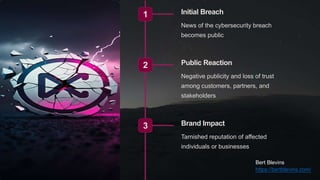
1 Initial Breach
News of the cybersecurity breach
becomes public
2 Public Reaction
Negative publicity and loss of trust
among customers, partners, and
stakeholders
3 Brand Impact
Tarnished reputation of affected
individuals or businesses
Bert Blevins
https://bertblevins.com/
Consequences of Cybersecurity
Breaches: Intellectual Property Theft
1 Loss of Competitive Advantage
Theft of intellectual property through
cyber breaches undermines innovation
and competitiveness in various
industries
2 Economic Impact
Significant financial losses due to stolen
research and development efforts
3 Market Disruption
Competitors gaining unfair advantages
through stolen intellectual property
4 Long-term Consequences
Potential loss of market share and
industry leadership position
Consequences of Cybersecurity
Breaches: Disruption of Services
Healthcare Disruption
Cyber attacks can disrupt
critical healthcare services,
potentially endangering
patient lives
Transportation Chaos
Breaches in transportation
systems can lead to delays,
accidents, and widespread
inconvenience
Utility Outages
Attacks on utility networks
can cause power outages
and disrupt essential
services
Bert Blevins
https://bertblevins.com/
Prevention Measures: Network
Security
Firewalls
Deploying firewalls to monitor and control
incoming and outgoing network traffic
Intrusion Detection Systems
Implementing systems to identify and respond
to suspicious network activities
Encryption Mechanisms
Using encryption to protect data transmitted
over networks
Network Defenses
Fortifying network defenses against
unauthorized access and data breaches
Bert Blevins
https://bertblevins.com/
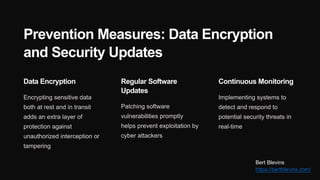
Prevention Measures: Data Encryption
and Security Updates
Data Encryption
Encrypting sensitive data
both at rest and in transit
adds an extra layer of
protection against
unauthorized interception or
tampering
Regular Software
Updates
Patching software
vulnerabilities promptly
helps prevent exploitation by
cyber attackers
Continuous Monitoring
Implementing systems to
detect and respond to
potential security threats in
real-time
Bert Blevins
https://bertblevins.com/
About the Presenter
Phone
832-281-0330
Email
info@incgpt.com
LinkedIn
https://www.linkedin.com
/in/bertblevins/
Qualifications
Bachelor's Degree in
Advertising, Master of
Business Administration
Bert Blevins is a passionate and experienced professional who is constantly seeking knowledge and professional
development. With a diverse educational background and numerous certifications, Bert is dedicated to making a
positive impact in the field of server security and privilege management.
Bert Blevins
https://bertblevins.com/

Privileged Access Management Best Practices

  • 1.
    Privileged Access Management (PAM):Understanding Cybersecurity Breaches: Causes, Consequences, and Prevention Cybersecurity breaches are becoming a more common hazard to people, companies, and governments in today's interconnected digital world. These hacks not only jeopardize private information but also erode confidence in internet services and systems. Protecting against these ubiquitous risks requires an understanding of the causes, effects, and preventative strategies of cybersecurity breaches. Bert Blevins https://bertblevins.com/ 02.07.2024
  • 2.
    What are Cybersecurity Breaches? Cybersecuritybreaches refer to unauthorized access, manipulation, or destruction of digital information or systems. These breaches can occur through various means, including malware, phishing attacks, insider threats, and vulnerabilities in software or hardware. Once a breach occurs, cybercriminals can exploit the compromised data for financial gain, espionage, or sabotage. Bert Blevins https://bertblevins.com/
  • 3.
    1 Malware Malicious softwaredesigned to infiltrate and damage computer systems 2 Phishing Attacks Deceptive attempts to obtain sensitive information by posing as a trustworthy entity 3 Insider Threats Security risks originating from within the organization 4 Software Vulnerabilities Weaknesses in software that can be exploited by attackers
  • 4.
    Causes of Cybersecurity Breaches: Software andHardware Vulnerabilities Software Bugs Unintended errors in software code that can create security loopholes Programming Errors Mistakes made during software development that lead to security weaknesses Bert Blevins https://bertblevins.com/
  • 5.
    Outdated Hardware Old orunsupported hardware that may lack necessary security features Exploitation Cybercriminals taking advantage of these vulnerabilities to gain unauthorized access
  • 6.
    Causes of Cybersecurity Breaches: Phishing Attacks 1Deceptive Communication Phishing emails, messages, or websites are crafted to appear legitimate and trustworthy 2 User Manipulation Attackers use social engineering tactics to trick users into revealing sensitive information
  • 7.
    3 Credential Theft Usersare deceived into providing login credentials or financial details 4 Data Compromise Obtained information is used to gain unauthorized access to systems or accounts Bert Blevins https://bertblevins.com/
  • 8.
    Causes of CybersecurityBreaches: Insider Threats Intentional Threats Employees or contractors deliberately compromising data security for personal gain or malicious intent Accidental Threats Unintentional actions by insiders that lead to data breaches or security vulnerabilities Privileged Access Insiders with high-level access to sensitive information pose a significant risk if their credentials are compromised Bert Blevins https://bertblevins.com/
  • 9.
    Causes of CybersecurityBreaches: Weak Passwords Insecure Passwords Easily guessable or commonly used passwords that provide minimal protection Default Credentials Failure to change default usernames and passwords on devices or software Password Reuse Using the same password across multiple accounts, increasing vulnerability Lack of Complexity Passwords that don't meet minimum complexity requirements, making them easier to crack
  • 10.
    Causes of Cybersecurity Breaches: Lackof Security Awareness Ignorance Lack of knowledge about cybersecurity risks and best practices Negligence Careless behavior regarding security protocols and procedures
  • 11.
    Inadequate Training Insufficient educationon cybersecurity for individuals and organizations Increased Vulnerability Higher risk of falling victim to cyber attacks due to lack of awareness Bert Blevins https://bertblevins.com/
  • 12.
    Consequences of Cybersecurity Breaches:Financial Loss Direct Theft Organizations incur significant financial losses due to theft of funds Legal Fees Costs associated with legal proceedings and settlements following a breach Repair Costs Expenses related to repairing the damage caused by breaches Long-term Impact Ongoing financial repercussions due to loss of business and recovery efforts Bert Blevins https://bertblevins.com/
  • 13.
    1 Initial Breach Newsof the cybersecurity breach becomes public 2 Public Reaction Negative publicity and loss of trust among customers, partners, and stakeholders 3 Brand Impact Tarnished reputation of affected individuals or businesses Bert Blevins https://bertblevins.com/
  • 14.
    Consequences of Cybersecurity Breaches:Intellectual Property Theft 1 Loss of Competitive Advantage Theft of intellectual property through cyber breaches undermines innovation and competitiveness in various industries 2 Economic Impact Significant financial losses due to stolen research and development efforts 3 Market Disruption Competitors gaining unfair advantages through stolen intellectual property 4 Long-term Consequences Potential loss of market share and industry leadership position
  • 15.
    Consequences of Cybersecurity Breaches:Disruption of Services Healthcare Disruption Cyber attacks can disrupt critical healthcare services, potentially endangering patient lives Transportation Chaos Breaches in transportation systems can lead to delays, accidents, and widespread inconvenience Utility Outages Attacks on utility networks can cause power outages and disrupt essential services Bert Blevins https://bertblevins.com/
  • 16.
    Prevention Measures: Network Security Firewalls Deployingfirewalls to monitor and control incoming and outgoing network traffic Intrusion Detection Systems Implementing systems to identify and respond to suspicious network activities Encryption Mechanisms Using encryption to protect data transmitted over networks Network Defenses Fortifying network defenses against unauthorized access and data breaches Bert Blevins https://bertblevins.com/
  • 17.
    Prevention Measures: DataEncryption and Security Updates Data Encryption Encrypting sensitive data both at rest and in transit adds an extra layer of protection against unauthorized interception or tampering Regular Software Updates Patching software vulnerabilities promptly helps prevent exploitation by cyber attackers Continuous Monitoring Implementing systems to detect and respond to potential security threats in real-time Bert Blevins https://bertblevins.com/
  • 18.
    About the Presenter Phone 832-281-0330 Email info@incgpt.com LinkedIn https://www.linkedin.com /in/bertblevins/ Qualifications Bachelor'sDegree in Advertising, Master of Business Administration Bert Blevins is a passionate and experienced professional who is constantly seeking knowledge and professional development. With a diverse educational background and numerous certifications, Bert is dedicated to making a positive impact in the field of server security and privilege management. Bert Blevins https://bertblevins.com/