CONTROVERSIAL
MARKETING
By: Ketan Rohatgi
Khushi Jain
Kunal
Mahima Maurya
Manik Pulyani
Netra Aggarwal
INTRODUCTION
Controversial marketing refers to marketing
strategies or campaigns that deliberately stir up
debate, provoke strong emotional responses, or
challenge societal norms. While these campaigns
often garner significant attention and generate buzz,
they can also backfire if they offend or alienate
audiences. The goal is often to create a memorable
impression, but the risk lies in the potential
backlash.
Why it used?
Marketing strategies that generate attention by
addressing provocative, sensitive, or polarizing
topics.
o To create buzz,
o Enhance Brand Visibility,
o Align With A Specific Cultural Or Social Message.
4
RISK INCLUDE
 Potential Backlash
 Brand Damage
 Loss Of Customer Loyalty
 Negative Media Coverage
5
KEY CHARACTERISTICS
• Provocative Messaging: Campaigns often involve
edgy or shocking content.
• Social Commentary: Engages with current social
issues, challenging the status quo.
• Emotional Appeal: Aims to evoke strong emotions,
whether positive or negative.
• Virality: Controversial campaigns are designed to
be talked about and shared widely, often on social
media.
6
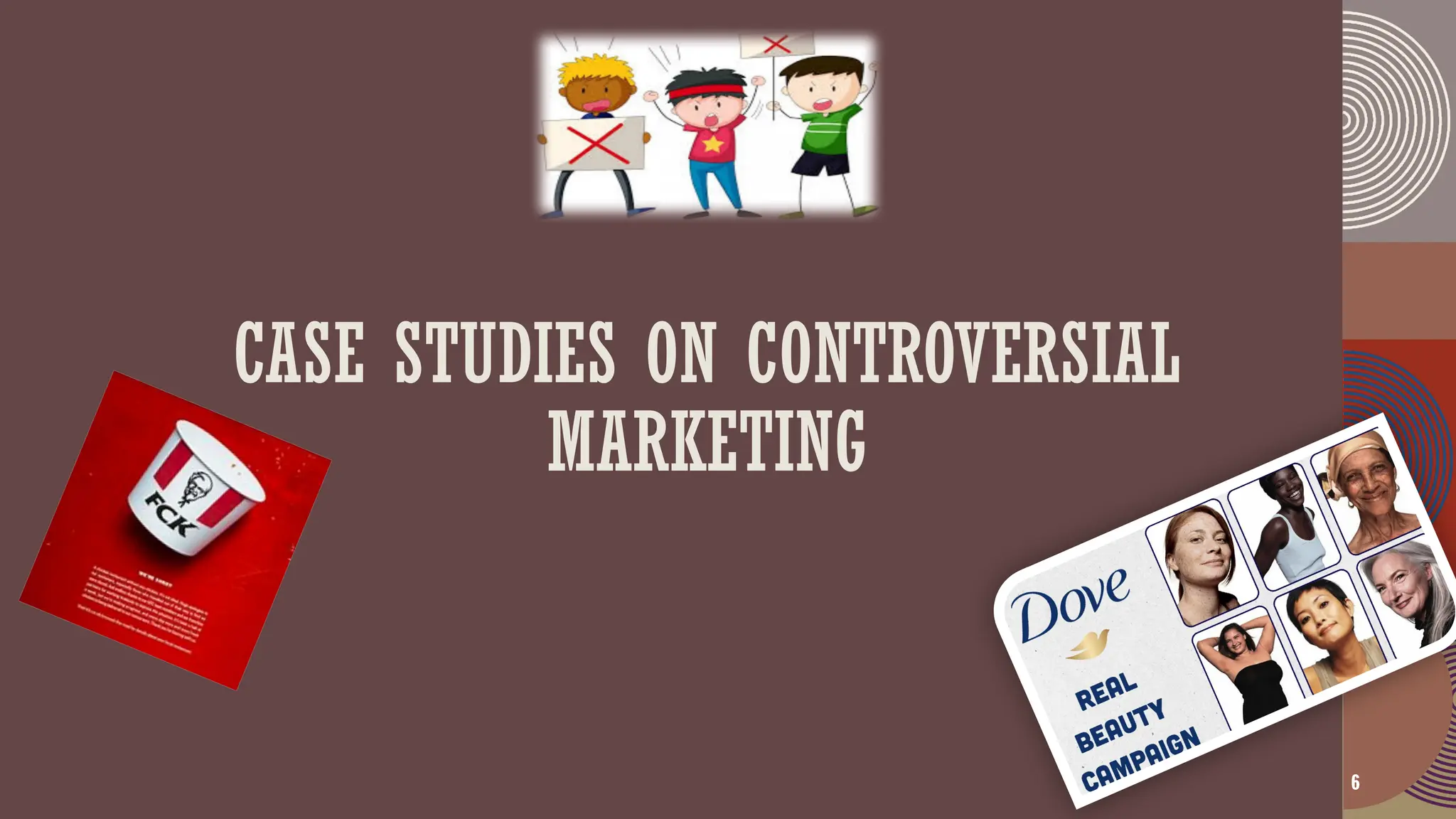
CASE STUDIES ON CONTROVERSIAL
MARKETING
7
H&M - "COOLEST MONKEY IN THE JUNGLE"
HOODIE
In 2018, H&M released a promotional image featuring a black child wearing a
hoodie with the slogan “Coolest Monkey in the Jungle.” The image sparked
outrage and was accused of being racially insensitive.
Controversy: The campaign was heavily criticized for perpetuating racist
stereotypes. Many celebrities and influencers condemned H&M, leading to calls
for boycotts.
Apology: H&M issued a public apology, removed the product from stores, and
promised to improve their internal practices regarding cultural sensitivity.
Impact: The controversy significantly damaged H&M's reputation, leading to a
loss of trust among consumers, particularly in the African American community.
8
​
KFC - "FCK" CAMPAIGN
In 2018, KFC faced a supply chain issue in the UK, leading to a shortage of
chicken. In response, they ran a bold ad showing a KFC bucket with the
letters “FCK” instead of “KFC,” implying an apology.
Positive Reception: The campaign was praised for its humorous and
honest approach to a crisis, turning a potential disaster into a clever
marketing moment.
Criticism: Some found the play on words inappropriate and
unprofessional, especially for a family-friendly brand.
Impact: The campaign was widely regarded as a masterclass in crisis
management and brand communication, with KFC recovering quickly from
the incident.
9
DOVE - "REAL BEAUTY" CAMPAIGN
Launched in 2004, Dove’s “Real Beauty” campaign aimed to
celebrate diverse body types, ages, and ethnicities, challenging
traditional beauty standards.
Positive Reception: Praised for promoting self-esteem and body
positivity among women.
Criticism: Some accused Dove of exploiting social issues for
profit. There was also controversy over certain ads that
appeared to suggest that lighter skin was better.
Impact: The campaign successfully redefined beauty in the
media, leading to significant brand growth. However, it also
highlighted the fine line between empowering messages and
perceived exploitation.
10
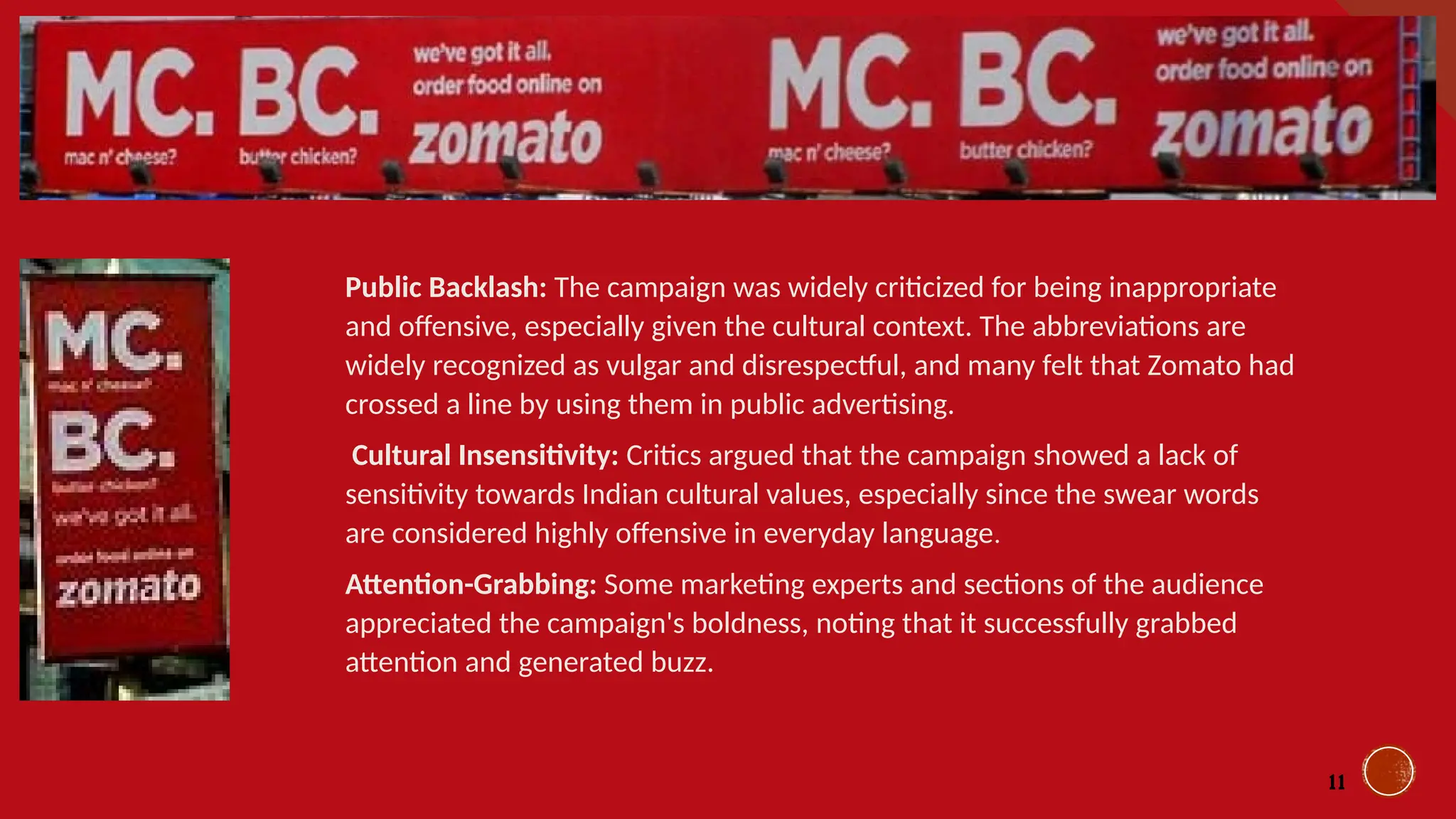
ZOMATO "MC BC" CAMPAIGN
​
In 2017, Zomato, the popular Indian food delivery app, released an outdoor advertisement
that featured the words "MC" and "BC." These abbreviations are commonly known in India as
acronyms for Hindi swear words, though Zomato claimed they stood for "Mac n' Cheese" and
"Butter Chicken."
Objective: The campaign was intended to be humorous and catchy, aiming to grab the
attention of passers-by with a playful take on popular food items.
11
Public Backlash: The campaign was widely criticized for being inappropriate
and offensive, especially given the cultural context. The abbreviations are
widely recognized as vulgar and disrespectful, and many felt that Zomato had
crossed a line by using them in public advertising.
Cultural Insensitivity: Critics argued that the campaign showed a lack of
sensitivity towards Indian cultural values, especially since the swear words
are considered highly offensive in everyday language.
Attention-Grabbing: Some marketing experts and sections of the audience
appreciated the campaign's boldness, noting that it successfully grabbed
attention and generated buzz.
12
Impact
Apology and Response: In response to the backlash, Zomato issued a public
apology and took down the ads. The company stated that they did not intend
to offend anyone and that the campaign was meant to be a light-hearted
take on popular food items.
Brand Image: While the campaign did succeed in creating a buzz, it also
highlighted the risks associated with controversial marketing. The backlash
demonstrated how a brand can quickly find itself in hot water if it fails to
consider the broader cultural context of its messaging.
13
Key Learnings
Audience Sensitivity: Understanding and respecting the cultural and social context of
your audience is crucial.
Crisis Management: Brands must be prepared to respond quickly and effectively if a
campaign sparks backlash.
Balance Between Boldness and Sensitivity: While controversial campaigns can be
powerful, they must be carefully crafted to avoid crossing the line into insensitivity or
offense.
Long-Term Impact: Controversial marketing can have lasting effects on a brand’s
reputation, for better or worse.
14
CONCLUSION
Brands should carefully weigh the potential benefits and
drawbacks of such strategies, ensuring that their campaigns
align with their core values and audience expectations

Principles of controversial marketing ppt.

  • 1.
    CONTROVERSIAL MARKETING By: Ketan Rohatgi KhushiJain Kunal Mahima Maurya Manik Pulyani Netra Aggarwal
  • 2.
    INTRODUCTION Controversial marketing refersto marketing strategies or campaigns that deliberately stir up debate, provoke strong emotional responses, or challenge societal norms. While these campaigns often garner significant attention and generate buzz, they can also backfire if they offend or alienate audiences. The goal is often to create a memorable impression, but the risk lies in the potential backlash.
  • 3.
    Why it used? Marketingstrategies that generate attention by addressing provocative, sensitive, or polarizing topics. o To create buzz, o Enhance Brand Visibility, o Align With A Specific Cultural Or Social Message.
  • 4.
    4 RISK INCLUDE  PotentialBacklash  Brand Damage  Loss Of Customer Loyalty  Negative Media Coverage
  • 5.
    5 KEY CHARACTERISTICS • ProvocativeMessaging: Campaigns often involve edgy or shocking content. • Social Commentary: Engages with current social issues, challenging the status quo. • Emotional Appeal: Aims to evoke strong emotions, whether positive or negative. • Virality: Controversial campaigns are designed to be talked about and shared widely, often on social media.
  • 6.
    6 CASE STUDIES ONCONTROVERSIAL MARKETING
  • 7.
    7 H&M - "COOLESTMONKEY IN THE JUNGLE" HOODIE In 2018, H&M released a promotional image featuring a black child wearing a hoodie with the slogan “Coolest Monkey in the Jungle.” The image sparked outrage and was accused of being racially insensitive. Controversy: The campaign was heavily criticized for perpetuating racist stereotypes. Many celebrities and influencers condemned H&M, leading to calls for boycotts. Apology: H&M issued a public apology, removed the product from stores, and promised to improve their internal practices regarding cultural sensitivity. Impact: The controversy significantly damaged H&M's reputation, leading to a loss of trust among consumers, particularly in the African American community.
  • 8.
    8 ​ KFC - "FCK"CAMPAIGN In 2018, KFC faced a supply chain issue in the UK, leading to a shortage of chicken. In response, they ran a bold ad showing a KFC bucket with the letters “FCK” instead of “KFC,” implying an apology. Positive Reception: The campaign was praised for its humorous and honest approach to a crisis, turning a potential disaster into a clever marketing moment. Criticism: Some found the play on words inappropriate and unprofessional, especially for a family-friendly brand. Impact: The campaign was widely regarded as a masterclass in crisis management and brand communication, with KFC recovering quickly from the incident.
  • 9.
    9 DOVE - "REALBEAUTY" CAMPAIGN Launched in 2004, Dove’s “Real Beauty” campaign aimed to celebrate diverse body types, ages, and ethnicities, challenging traditional beauty standards. Positive Reception: Praised for promoting self-esteem and body positivity among women. Criticism: Some accused Dove of exploiting social issues for profit. There was also controversy over certain ads that appeared to suggest that lighter skin was better. Impact: The campaign successfully redefined beauty in the media, leading to significant brand growth. However, it also highlighted the fine line between empowering messages and perceived exploitation.
  • 10.
    10 ZOMATO "MC BC"CAMPAIGN ​ In 2017, Zomato, the popular Indian food delivery app, released an outdoor advertisement that featured the words "MC" and "BC." These abbreviations are commonly known in India as acronyms for Hindi swear words, though Zomato claimed they stood for "Mac n' Cheese" and "Butter Chicken." Objective: The campaign was intended to be humorous and catchy, aiming to grab the attention of passers-by with a playful take on popular food items.
  • 11.
    11 Public Backlash: Thecampaign was widely criticized for being inappropriate and offensive, especially given the cultural context. The abbreviations are widely recognized as vulgar and disrespectful, and many felt that Zomato had crossed a line by using them in public advertising. Cultural Insensitivity: Critics argued that the campaign showed a lack of sensitivity towards Indian cultural values, especially since the swear words are considered highly offensive in everyday language. Attention-Grabbing: Some marketing experts and sections of the audience appreciated the campaign's boldness, noting that it successfully grabbed attention and generated buzz.
  • 12.
    12 Impact Apology and Response:In response to the backlash, Zomato issued a public apology and took down the ads. The company stated that they did not intend to offend anyone and that the campaign was meant to be a light-hearted take on popular food items. Brand Image: While the campaign did succeed in creating a buzz, it also highlighted the risks associated with controversial marketing. The backlash demonstrated how a brand can quickly find itself in hot water if it fails to consider the broader cultural context of its messaging.
  • 13.
    13 Key Learnings Audience Sensitivity:Understanding and respecting the cultural and social context of your audience is crucial. Crisis Management: Brands must be prepared to respond quickly and effectively if a campaign sparks backlash. Balance Between Boldness and Sensitivity: While controversial campaigns can be powerful, they must be carefully crafted to avoid crossing the line into insensitivity or offense. Long-Term Impact: Controversial marketing can have lasting effects on a brand’s reputation, for better or worse.
  • 14.
    14 CONCLUSION Brands should carefullyweigh the potential benefits and drawbacks of such strategies, ensuring that their campaigns align with their core values and audience expectations