Before « 2000 », it was great !


•   Artists could become « Stars » (one-time-wonders sometimes…)
•   Music was sold on various physical supports (LPs, tapes, CDs…)
•   Radio, TV & HardWare pushed (renewed) music sales
•   Entertainment was « simplified »: not many choices…
•   Consumers had (enough) money to buy music, go to concerts
    when available in their area…

• A few Labels (majors) and some Indies « ruled the world »
• Most artists made a living mainly through sales of recorded music
  and partly through touring…
But…« A few » new technologies


changed the rules of the game…
« Rules » as of today
•   Labels push some « bankable » artists and some marketing offers
•   Labels (Majors) see decline: sales, revenue, income…
•   Less: artistic development, new artists… reputation…
•   But: more and more music available everyday!

• Consumers have many (more) choices to spend their money:
    •TV, Mobile services, Web, video games…

• Consumers pull artists they like and evaluate many more
• Artists can connect directly to their fans

• Many artists have no more contracts, or only very short-term

• Most artists don’t have knowledge, understanding, money to
  « fight » alone (be visible)… and then tend to feel « so lonely »
Fans
                    Markets & Sells


                             Creates
A cc
     es s   Music


                          Artist/group

People

                    Ideally…
Fans                Markets & Sells


                           Label
                            Creates


A cc                     Artist/group
     es s   Music


People

                       Usually…
Which means:


         Messy…?
I had a dream…
             X
     oups… idea*…


* With the help of many blogs, papers, meetings, conferences…
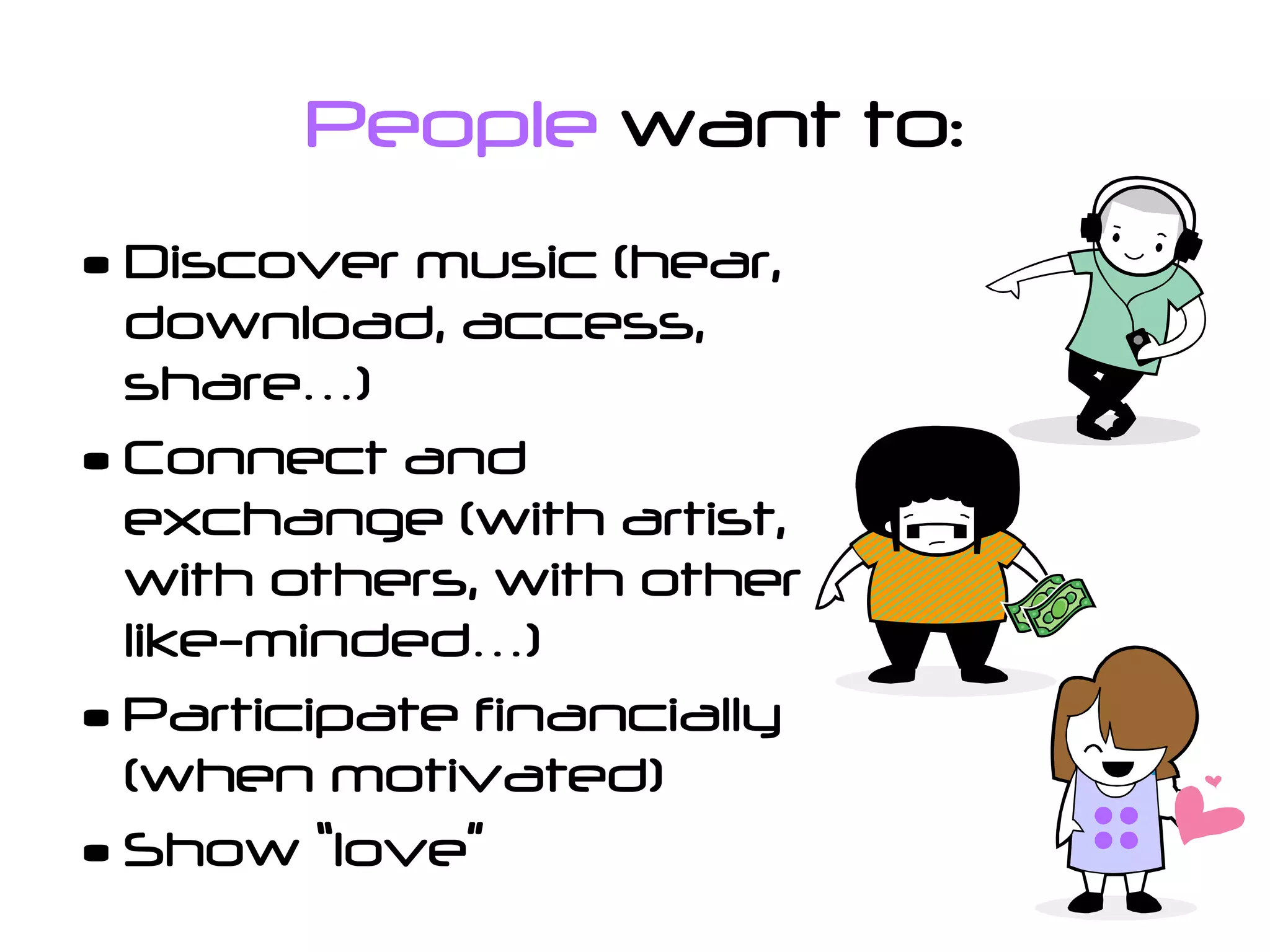
People want to:
• Discover music (hear,
  download, access,
  share…)
• Connect and
  exchange (with artist,
  with others, with other
  like-minded…)
• Participate financially
  (when motivated)
• Show “love”
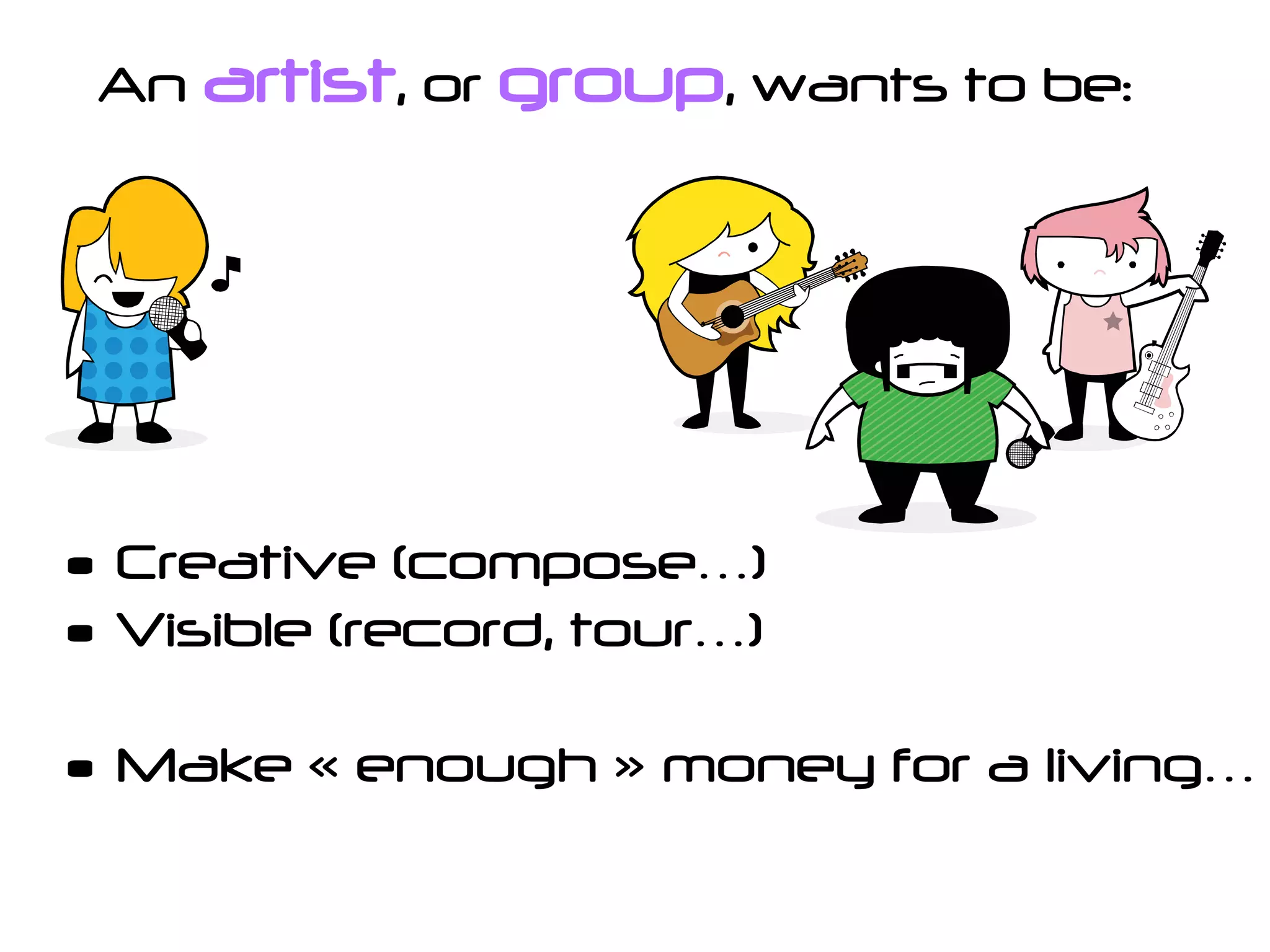
An artist, or group, wants to be:


• Creative (compose…)
• Visible (record, tour…)

• Make « enough » money for a living…
« Label » wants to:
• Manage and develop:
  – artist, music, business…
• Market:
  – artist, music…
• Sell:
  – tours, goods, “content”…
Label vs artist/group vs people/fans

•   Create        •   The artist is @ the center
•   Connect       •   The artist is the Brand
•   Participate   •   The artist needs « empowerment »
•   Manage        •   The artist has to be « on stage »
•   Exchange
•   Develop       • The artist is the creative force
•   Sell              – To make « content » live
                      – To generate new « content »
                      – To drive relationship with people/fans

                  • The label is the backoffice
                      – Supports the artist and his environment
                      – Operates services around artist’s needs
Music Media Services
    Management                Marketing
    Artistic


                                           Ca
    development
                              Connection


                                              sua
                                                 l Fa
                                                     ns
                   artist


                                             r Fans
                                                a
                                           Regul
    Touring                       Sales

                  True Fans
$$$ ?!
• Artist is self-produced                • MMS
   – Owns master(s)                          – Evaluates needs
   – Signs « on-demand » contract            – Is a contractor and gets paid
     & chooses services                        for services it provides
   – Agrees to engage with fans              – Is responsible for quality
• Artist needs a producer
   – Considered a startup =>             • MMS
     business plan for funding               – Evaluates needs and funding,
   – Signs 360° deal with MMS                  makes business plan
     with time limit                         – Manages 360° deal over the
   – Gets part* of net margin on               defined period
     global income                           – Is responsible for accounting
   – Gets its master(s) back when            – Gets other part* of net margin
     costs fully covered                       on global income


*Depending on needs/costs/funding, split can range from 30/70 to 50/50 to 70/30
Why everything’s in-house ?
• To avoid multiple management teams
• To consolidate incomes and bills
• To limit/avoid middlemen

• To allow a global vision of artist’s positioning
• To apply quick strategic changes when needed

• In-house is control, but doesn’t exclude
  outsourcing

Prez Ng

  • 1.
    Before « 2000», it was great ! • Artists could become « Stars » (one-time-wonders sometimes…) • Music was sold on various physical supports (LPs, tapes, CDs…) • Radio, TV & HardWare pushed (renewed) music sales • Entertainment was « simplified »: not many choices… • Consumers had (enough) money to buy music, go to concerts when available in their area… • A few Labels (majors) and some Indies « ruled the world » • Most artists made a living mainly through sales of recorded music and partly through touring…
  • 2.
    But…« A few» new technologies changed the rules of the game…
  • 3.
    « Rules »as of today • Labels push some « bankable » artists and some marketing offers • Labels (Majors) see decline: sales, revenue, income… • Less: artistic development, new artists… reputation… • But: more and more music available everyday! • Consumers have many (more) choices to spend their money: •TV, Mobile services, Web, video games… • Consumers pull artists they like and evaluate many more • Artists can connect directly to their fans • Many artists have no more contracts, or only very short-term • Most artists don’t have knowledge, understanding, money to « fight » alone (be visible)… and then tend to feel « so lonely »
  • 4.
    Fans Markets & Sells Creates A cc es s Music Artist/group People Ideally…
  • 5.
    Fans Markets & Sells Label Creates A cc Artist/group es s Music People Usually…
  • 6.
    Which means: Messy…?
  • 7.
    I had adream… X oups… idea*… * With the help of many blogs, papers, meetings, conferences…
  • 8.
    People want to: •Discover music (hear, download, access, share…) • Connect and exchange (with artist, with others, with other like-minded…) • Participate financially (when motivated) • Show “love”
  • 9.
    An artist, orgroup, wants to be: • Creative (compose…) • Visible (record, tour…) • Make « enough » money for a living…
  • 10.
    « Label »wants to: • Manage and develop: – artist, music, business… • Market: – artist, music… • Sell: – tours, goods, “content”…
  • 11.
    Label vs artist/groupvs people/fans • Create • The artist is @ the center • Connect • The artist is the Brand • Participate • The artist needs « empowerment » • Manage • The artist has to be « on stage » • Exchange • Develop • The artist is the creative force • Sell – To make « content » live – To generate new « content » – To drive relationship with people/fans • The label is the backoffice – Supports the artist and his environment – Operates services around artist’s needs
  • 12.
    Music Media Services Management Marketing Artistic Ca development Connection sua l Fa ns artist r Fans a Regul Touring Sales True Fans
  • 13.
    $$$ ?! • Artistis self-produced • MMS – Owns master(s) – Evaluates needs – Signs « on-demand » contract – Is a contractor and gets paid & chooses services for services it provides – Agrees to engage with fans – Is responsible for quality • Artist needs a producer – Considered a startup => • MMS business plan for funding – Evaluates needs and funding, – Signs 360° deal with MMS makes business plan with time limit – Manages 360° deal over the – Gets part* of net margin on defined period global income – Is responsible for accounting – Gets its master(s) back when – Gets other part* of net margin costs fully covered on global income *Depending on needs/costs/funding, split can range from 30/70 to 50/50 to 70/30
  • 14.
    Why everything’s in-house? • To avoid multiple management teams • To consolidate incomes and bills • To limit/avoid middlemen • To allow a global vision of artist’s positioning • To apply quick strategic changes when needed • In-house is control, but doesn’t exclude outsourcing