Recording Contracts
•   Overview  Business percent by label group
•   Do you need a label deal?
•   Some basic royalty computations
•   The 360 Deal
Recording Contracts
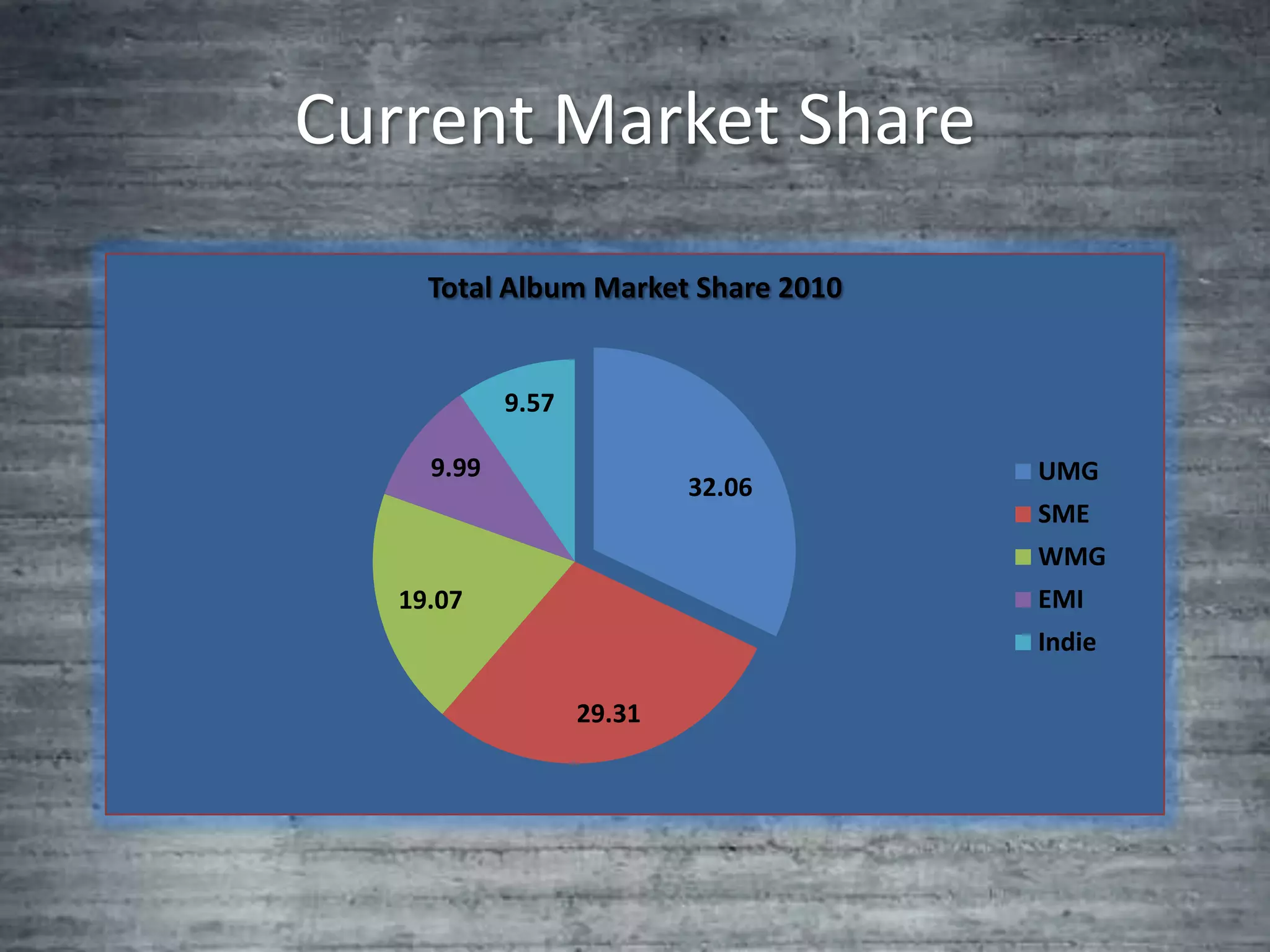
Current Market Share
     Total Album Market Share 2010


            9.57

     9.99                            UMG
                           32.06
                                     SME
                                     WMG
   19.07                             EMI
                                     Indie

                   29.31
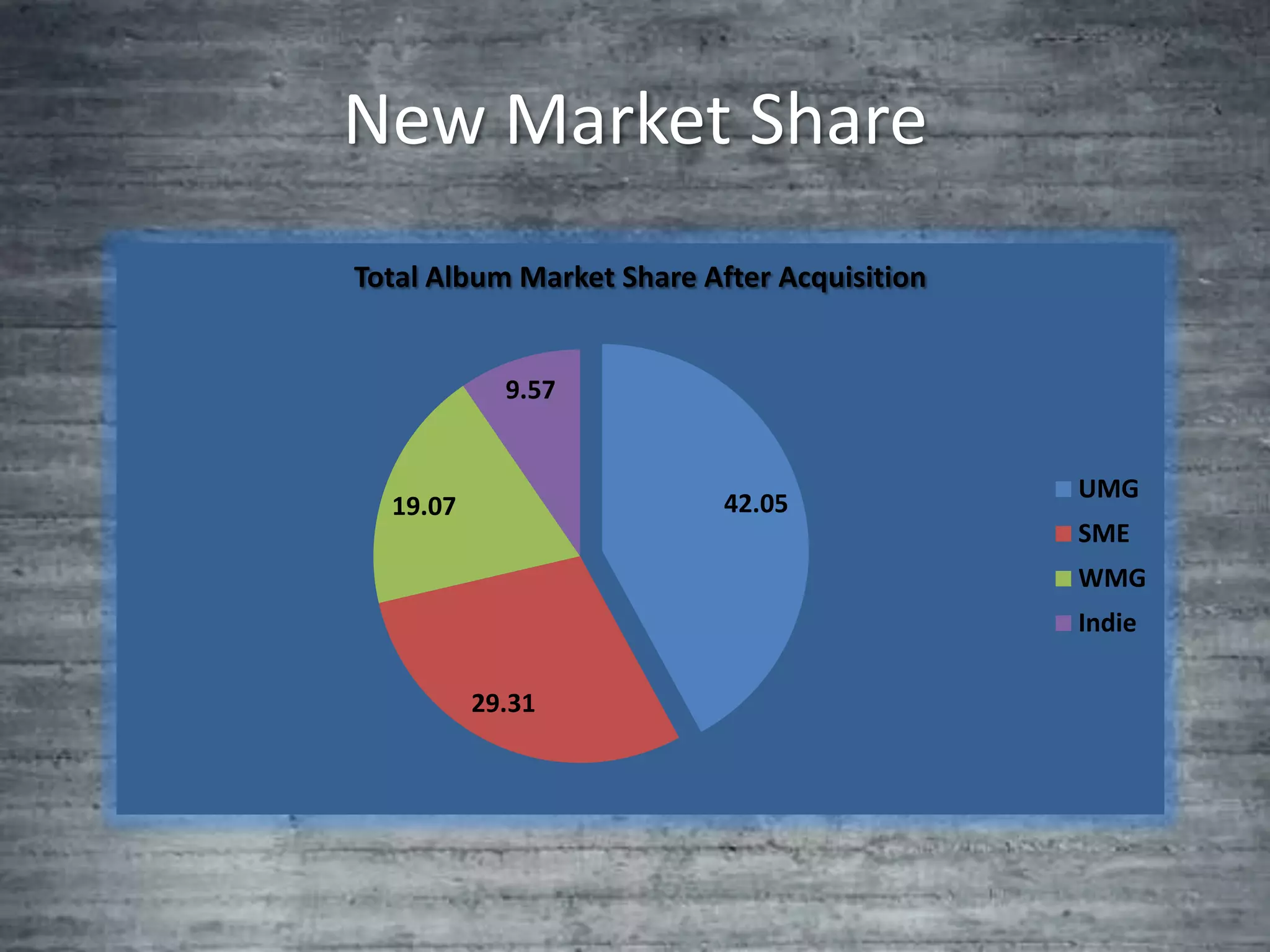
New Market Share
Total Album Market Share After Acquisition


            9.57


                                             UMG
  19.07                    42.05
                                             SME
                                             WMG
                                             Indie

          29.31
Do You Need A Record Deal?
Subjective -> Depends on your ultimate
 goal? Where do you want to be in five
                years?


  Image by Jean Scheijer cc
Why Sign With A Major Label?

• Funding
Why Sign With a Major Label?

• Funding
• Marketing Expertise


•   Image by Celal Teber cc
Why Sign With a Major Label?
•        Funding
•        Marketing Expertise
•        Radio Promotion Clout


•   Image by Andre Habermann cc
Why Sign With a Major Label?
•   Funding
•   Marketing Expertise
•   Radio Promotion Clout
•   Distribution  Domestic


    Image by Abby M. cc
Why Sign With a Major Label?

            •          Funding
            •          Marketing Expertise
            •          Radio Promotion Clout
            •          Distribution  Global


            image by ilco cc
Global Presence -> Majors are
     globally integrated
           Image by ilco CC
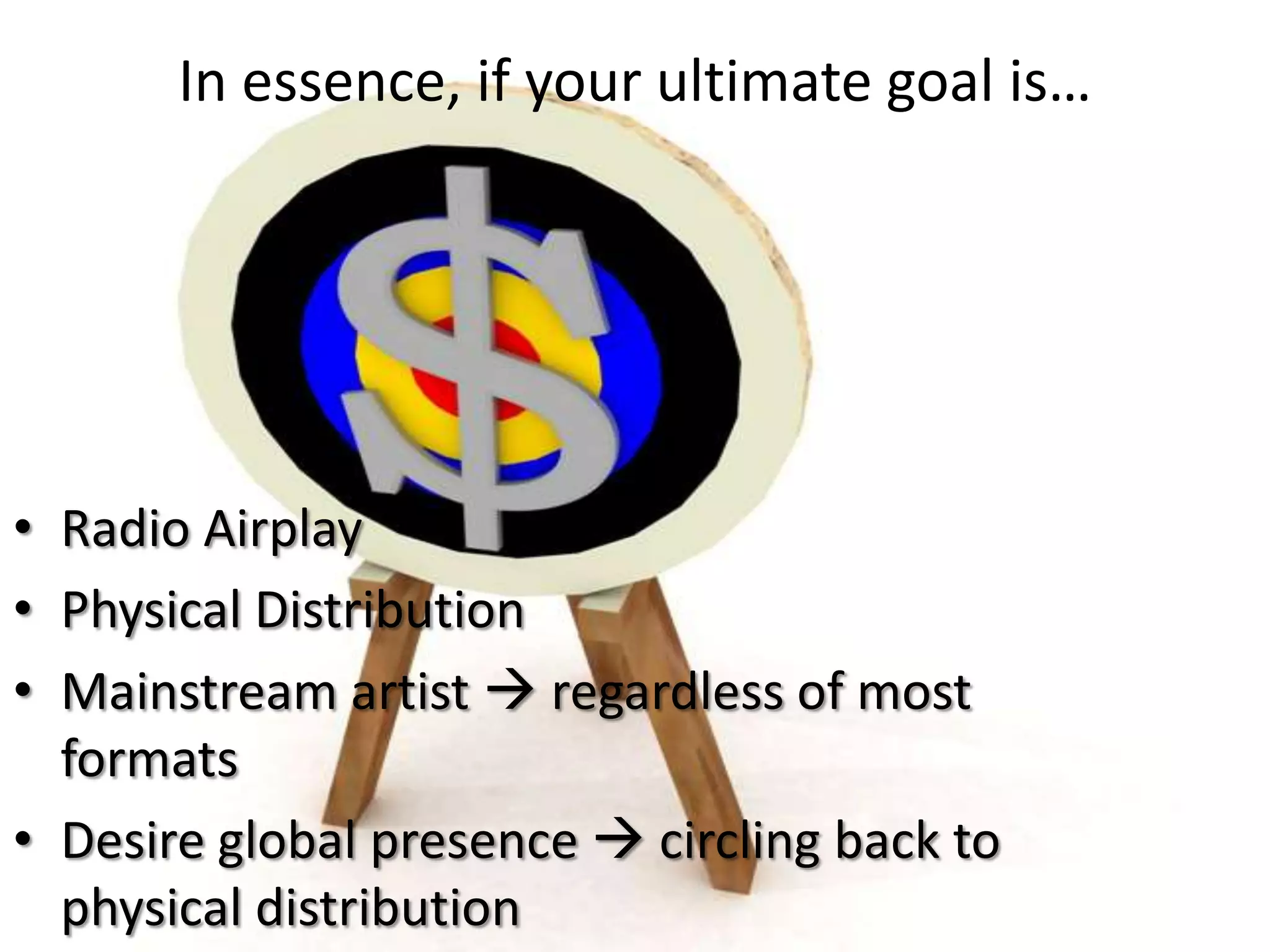
In essence, if your ultimate goal is…


• Radio Airplay
• Physical Distribution
• Mainstream artist  regardless of most
  formats
• Desire global presence  circling back to
  physical distribution
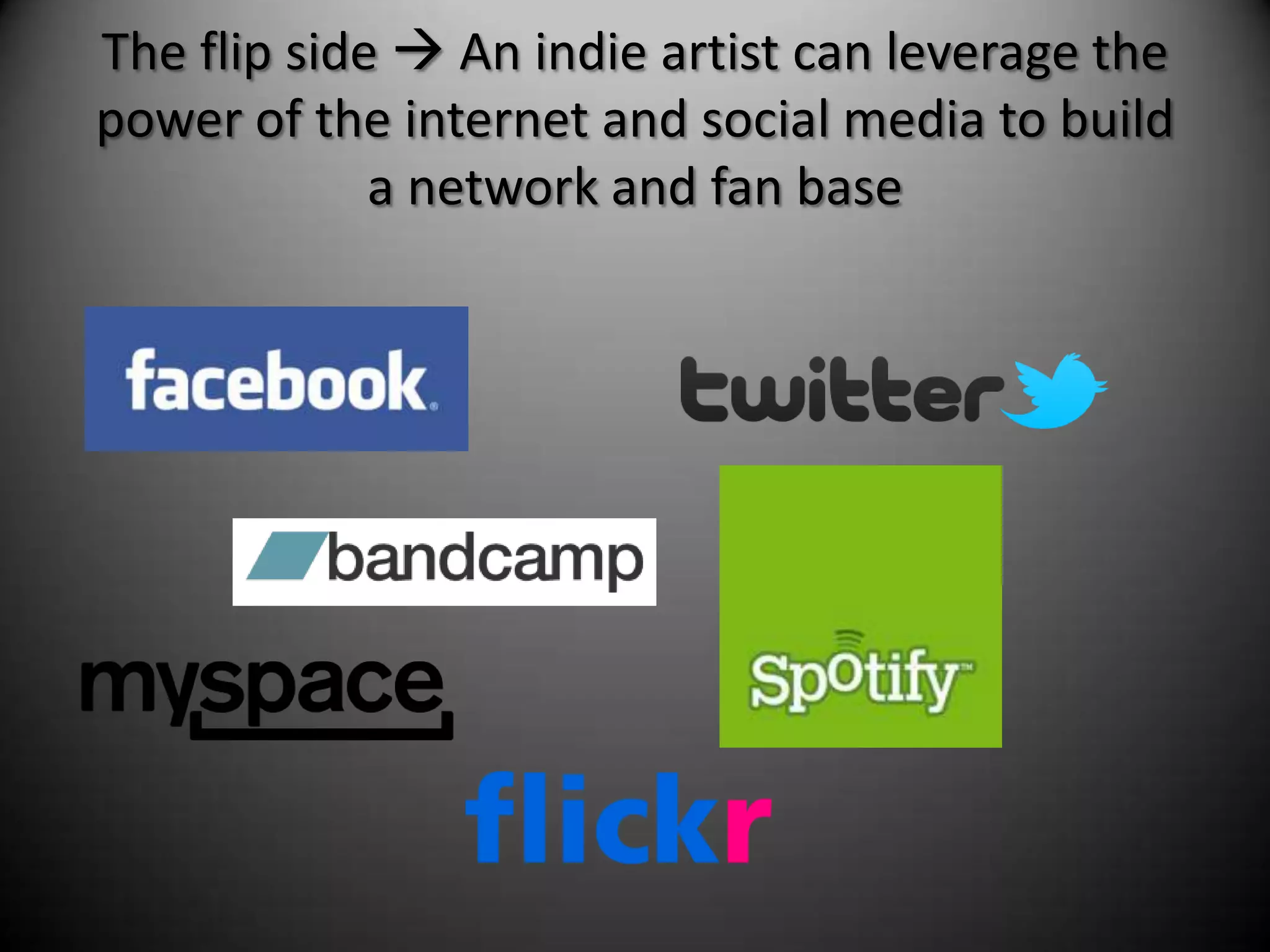
The flip side  An indie artist can leverage the
power of the internet and social media to build
             a network and fan base
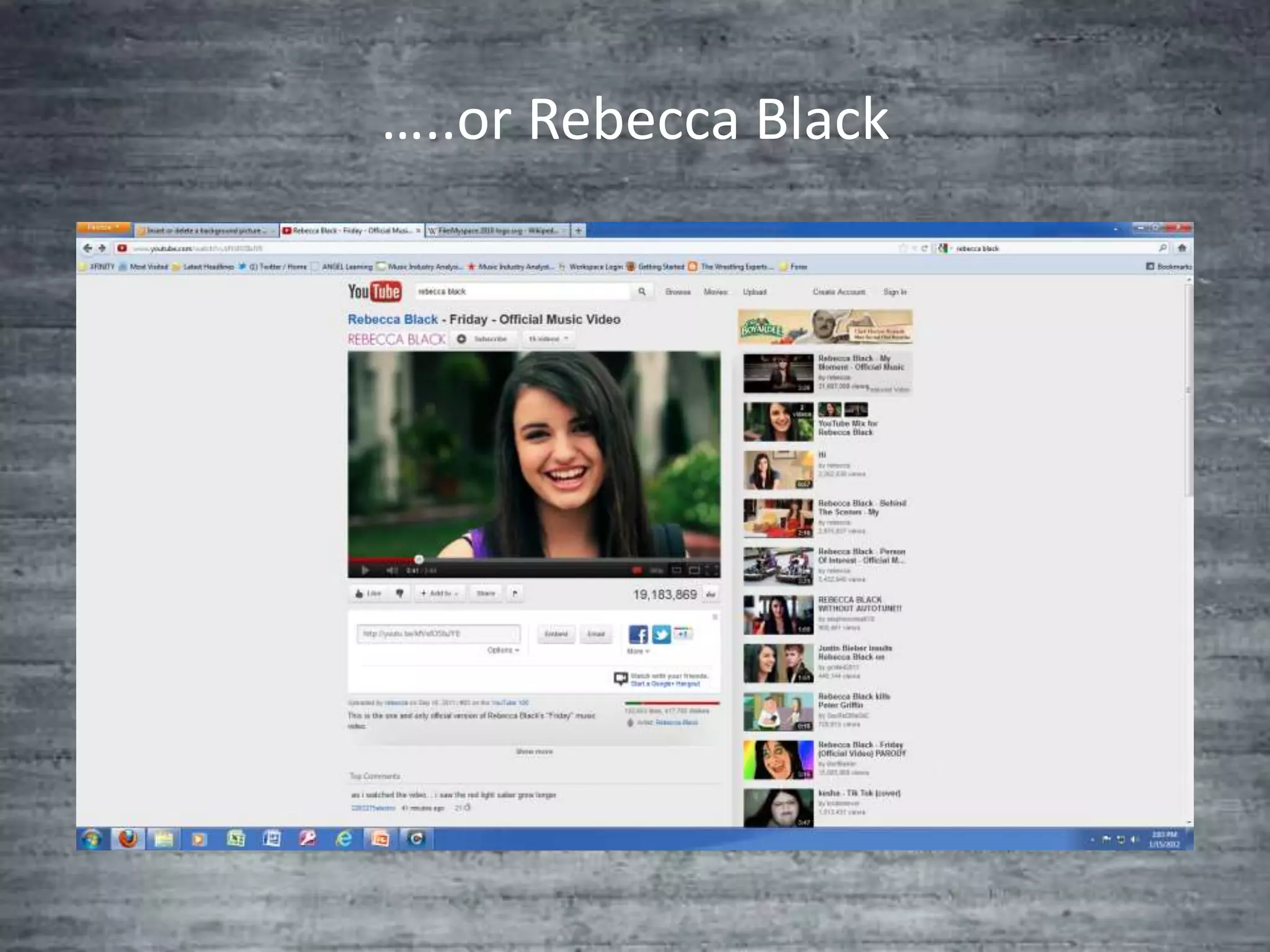
As an example…..Adele
…..or Rebecca Black
Engagement with your social network = viral
                           promotion


Image by Hilde Vanstraelen cc
Assumption  Traditional Record Royalty
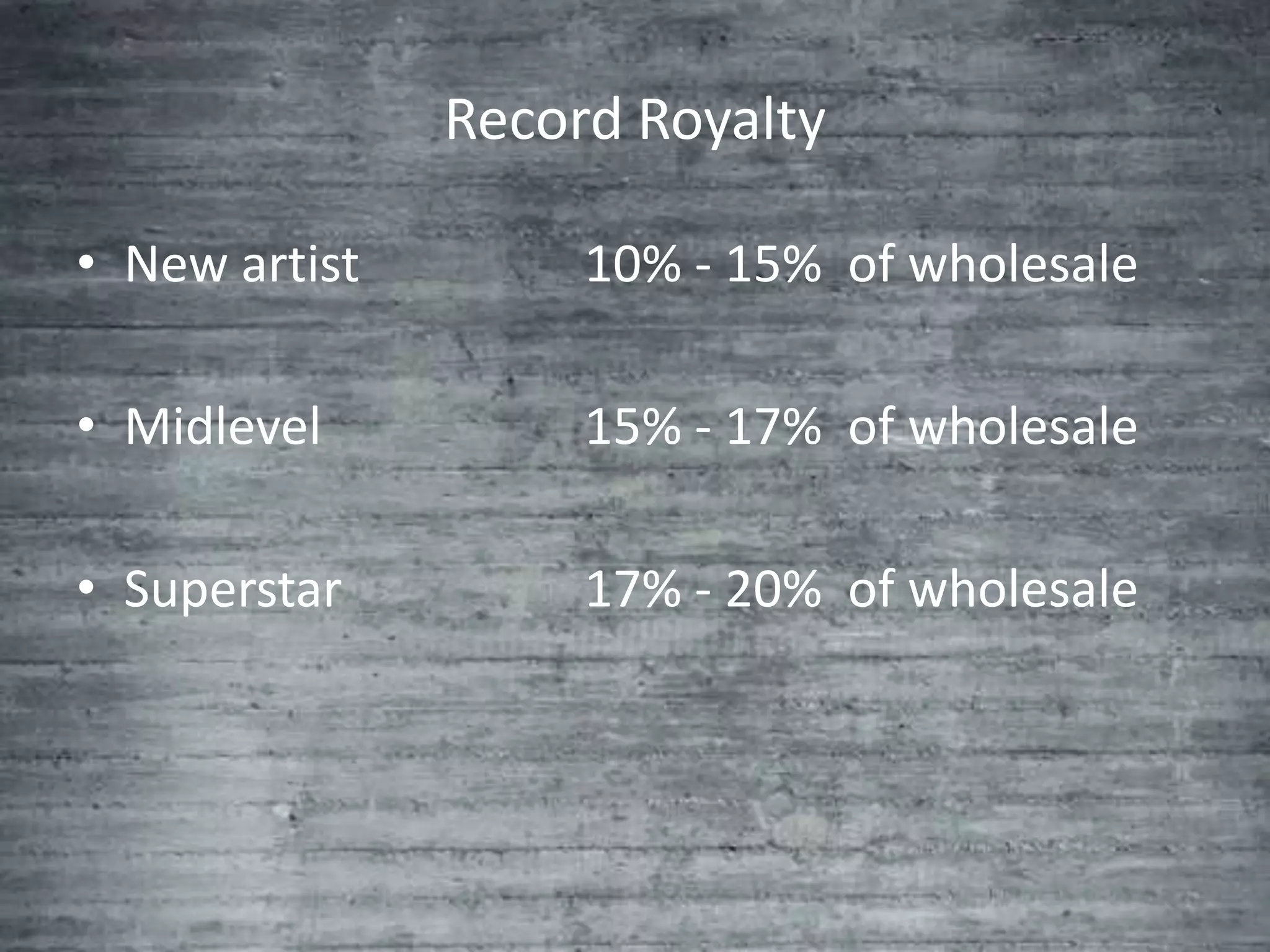
Record Royalty

• New artist        10% - 15% of wholesale

• Midlevel          15% - 17% of wholesale

• Superstar         17% - 20% of wholesale
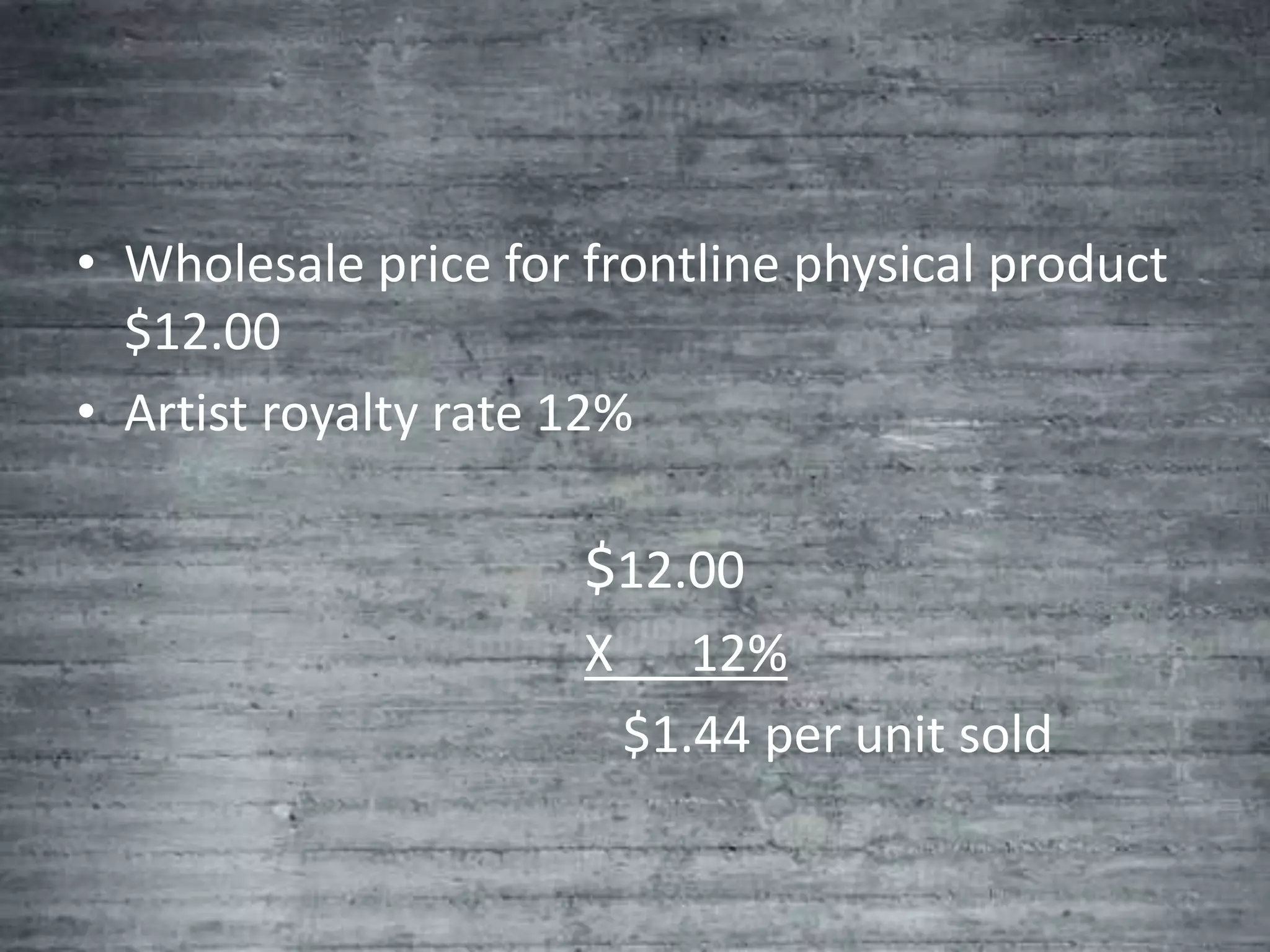
• Wholesale price for frontline physical product
  $12.00
• Artist royalty rate 12%

                      $12.00
                      X      12%
                          $1.44 per unit sold
Escalation Clause  always include in your
                 contract
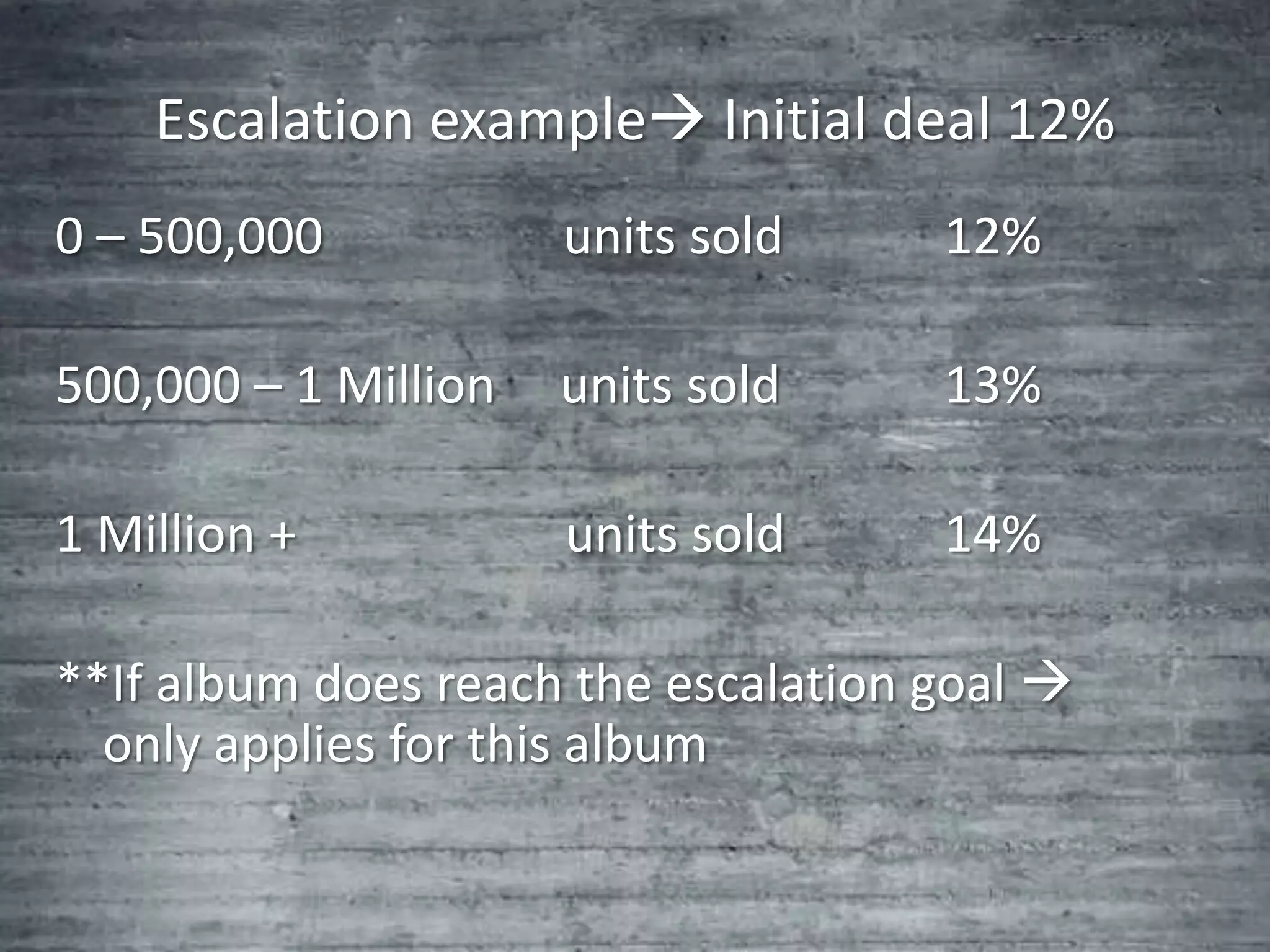
Escalation example Initial deal 12%
0 – 500,000           units sold     12%

500,000 – 1 Million   units sold     13%

1 Million +           units sold     14%

**If album does reach the escalation goal 
  only applies for this album
What about digital royalties?


 Image by Abby M cc
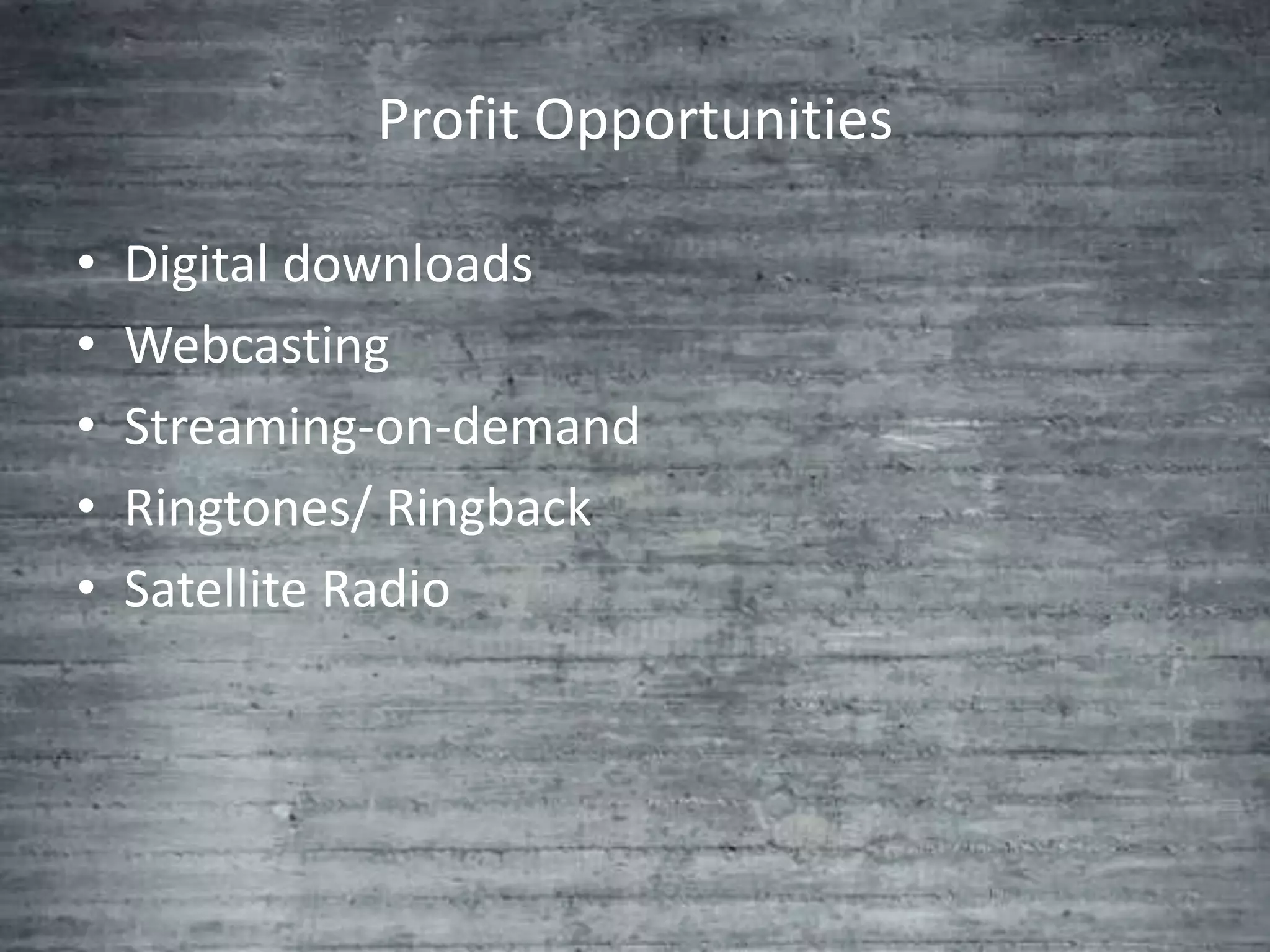
Profit Opportunities

•   Digital downloads
•   Webcasting
•   Streaming-on-demand
•   Ringtones/ Ringback
•   Satellite Radio
iTunes Download

iTunes price                     .99 cents
Wholesale to iTunes              .70 cents
Artist royalty                   12%

                       .70
                      X 12%
                       8.4 cents per download to
                       artist
Ringtones

• Cost to consumer           $2.00
• Label receives             $1.00
• Artist royalty              12%
                 $1.00
                 X 12%
                    .12 cents per
                    download
Webcasting & Satellite Radio

• Licensed master
• Royalty distribution rate set by the
  government
• Collected by Sound Exchange
     • 50% to labels
     • 45% to artist
     • 5% to American Federation of Musicians
Why did the 360 deal
develop? the 360
deal develop


     360 Deal Points
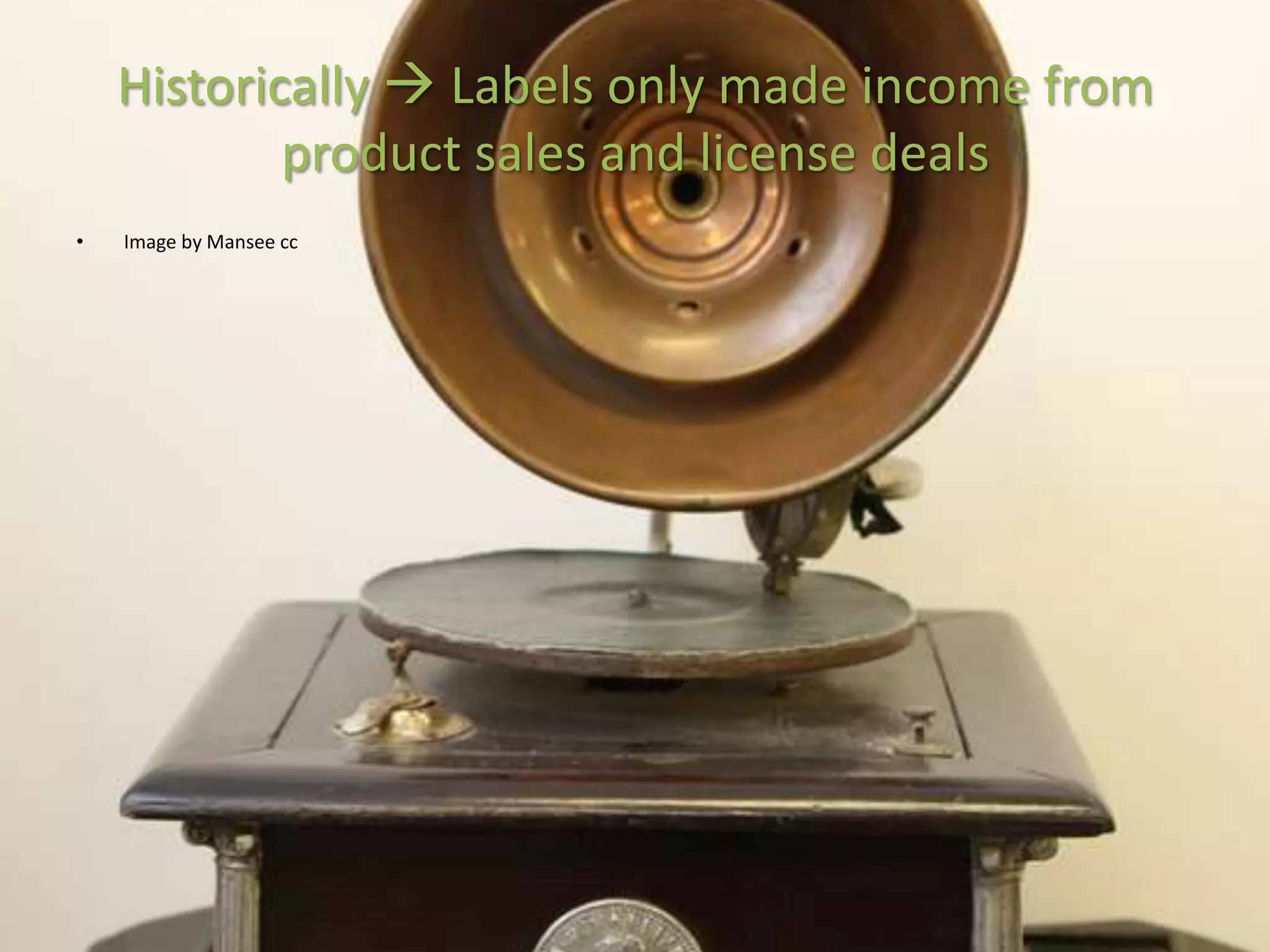
Historically  Labels only made income from
            product sales and license deals
•   Image by Mansee cc
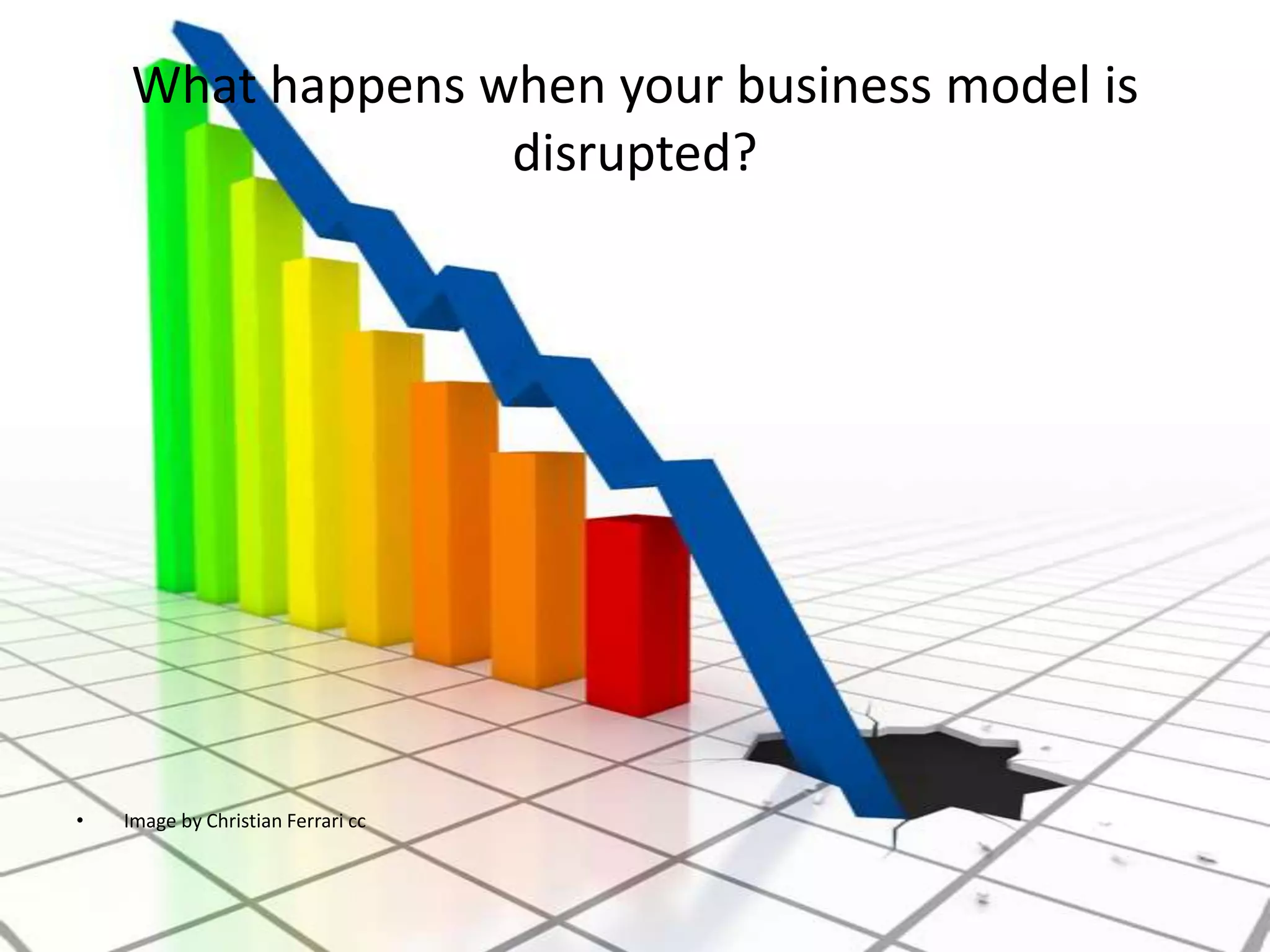
What happens when your business model is
                  disrupted?


•   Image by Christian Ferrari cc
Two choices

• Go out of business

• Adapt
The 360 deal is the record label solution

• If you lose close to 50% of total revenue in ten
  years while the cost of doing business is
  increasing….
• No choice but to look for alternative revenue
  streams
Record label revenue


• Music sales  physical, digital, licensing and
  any future delivery forms
Artist income sources

•   Record royalty
•   Mechanical royalty
•   Performance royalty
•   Synchronization royalty
•   Merchandise
•   Ticket sales
•   Publishing
•   Sponsorships
The 360 deal is a record contract within a record
                     contract


• In reality it is a revenue sharing model
360 deal points

• Label receives between 10% to 35%  from
  all non-record sources
• Always net income
• Sources include:
     • Ticket sales
     • Publishing
     • Sponsorships
     • Merchandise
Good news for the artist  this is a passive deal


• You have the right to sign with any support
  company you desire, i.e. publishing company
• Usually……
The label could “recommend” their publishing
                       company
Image by Bob Smith cc
360 Deal Variations

• 50 / 50 equity deal
     • Aggregate all label and artist expenses
     • Aggregate all label and artist profits
     • The difference is the net profit
     • Net profit is split 50/50
360 Deal Variations

• 360 on steroids
     • Superstar deals
     • Madonna
     • Jay-Z
     • Signed with Live Nation  received
       multi-million dollar advances
Is the 360 Profitable?

• Potentially, but over time
• New artist income (on average) is minimal the
  first few years
• The 360 becomes profitable when the artist
  becomes profitable
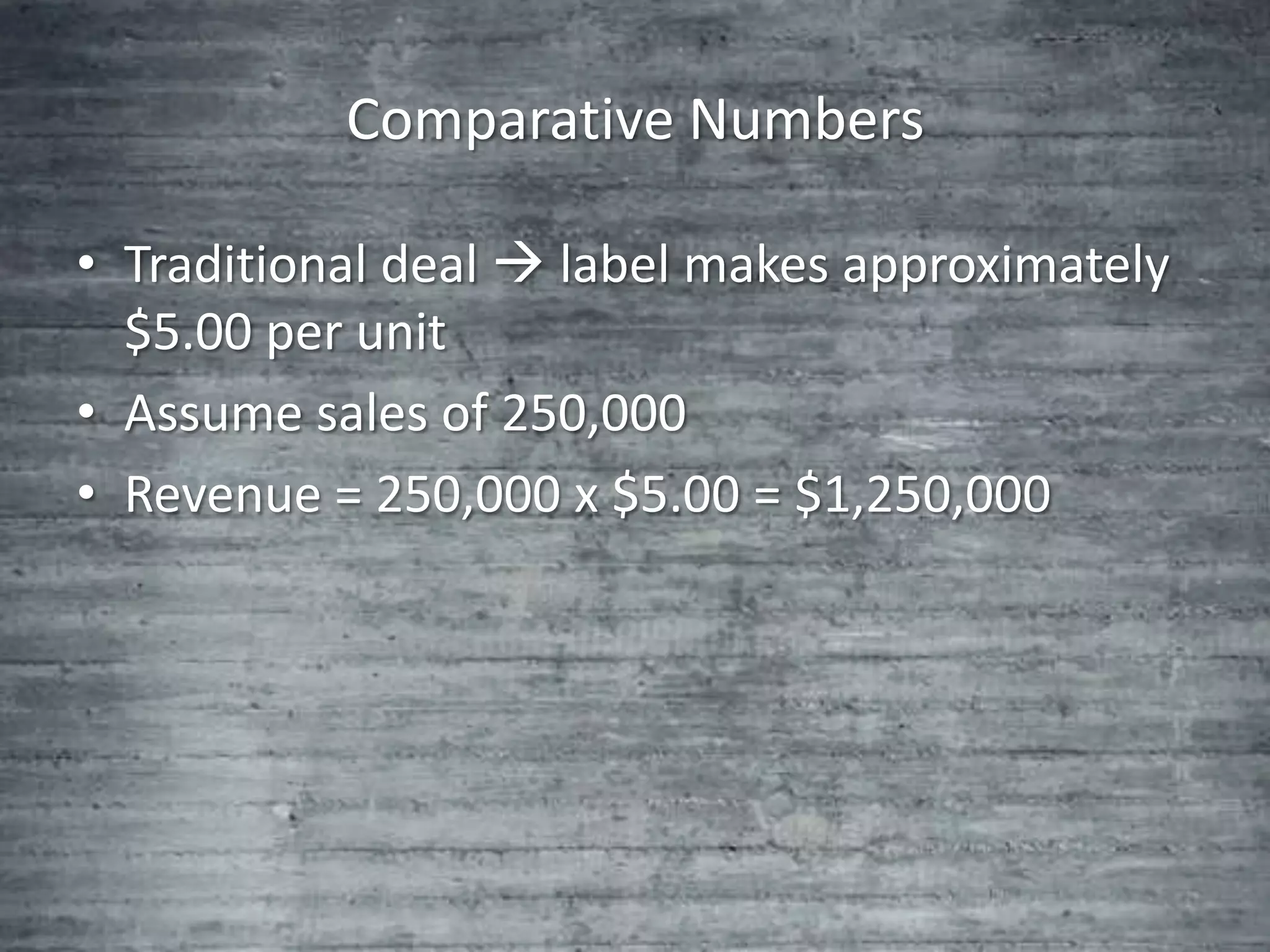
Comparative Numbers

• Traditional deal  label makes approximately
  $5.00 per unit
• Assume sales of 250,000
• Revenue = 250,000 x $5.00 = $1,250,000
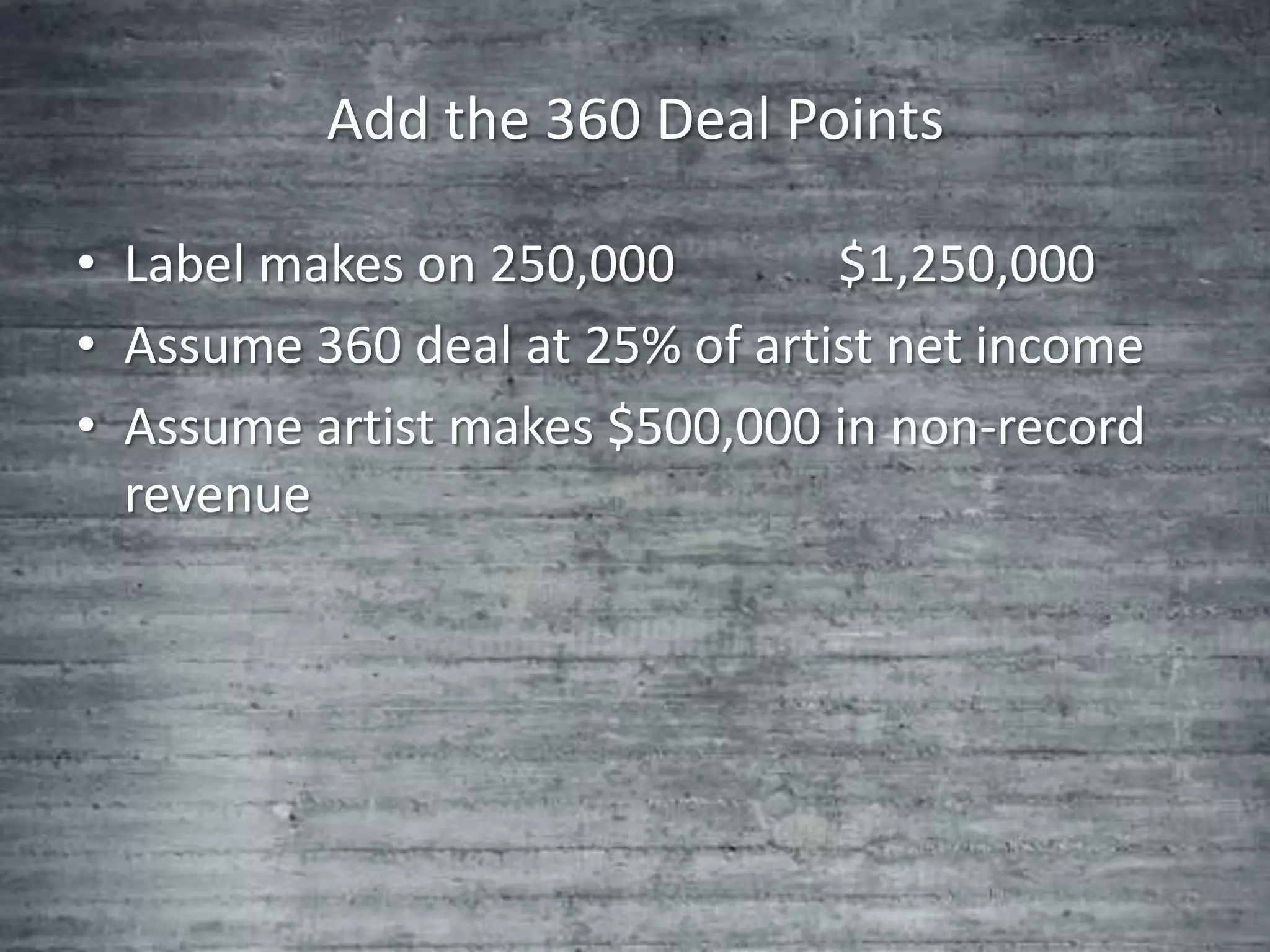
Add the 360 Deal Points

• Label makes on 250,000        $1,250,000
• Assume 360 deal at 25% of artist net income
• Assume artist makes $500,000 in non-record
  revenue
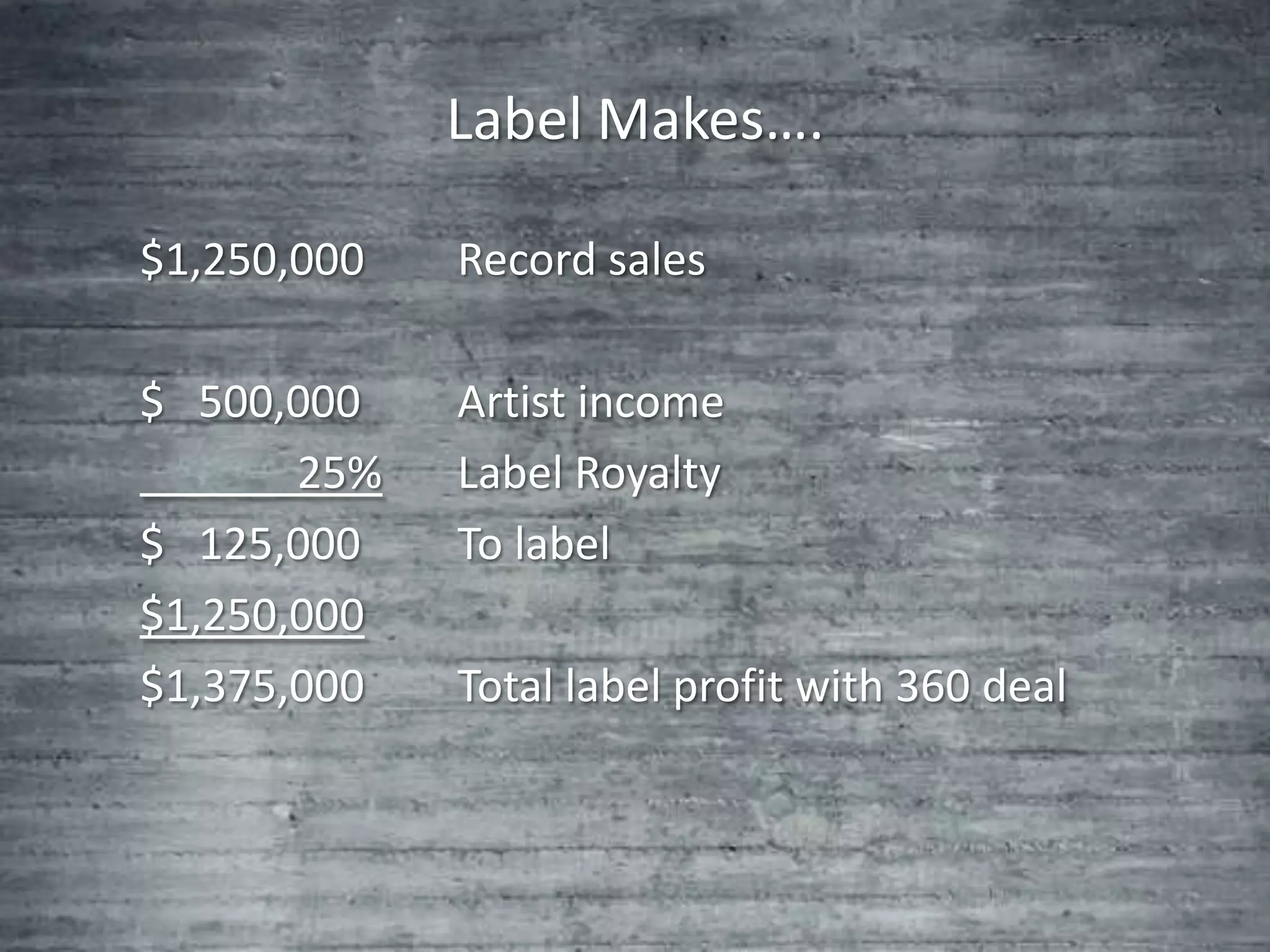
Label Makes….

$1,250,000   Record sales

$ 500,000    Artist income
       25%   Label Royalty
$ 125,000    To label
$1,250,000
$1,375,000   Total label profit with 360 deal
Leave you with this thought…


• Success is what you believe it to be  not
  what someone else believes!

• We are very fortunate to be involved in music
  in whatever capacity

• Dreams can start at any age!
•   Image by Leslie Watts


                            •   Image by Leslie Watts

Lecture Notes Record Contracts

  • 1.
    Recording Contracts • Overview  Business percent by label group • Do you need a label deal? • Some basic royalty computations • The 360 Deal
  • 2.
  • 3.
    Current Market Share Total Album Market Share 2010 9.57 9.99 UMG 32.06 SME WMG 19.07 EMI Indie 29.31
  • 4.
    New Market Share TotalAlbum Market Share After Acquisition 9.57 UMG 19.07 42.05 SME WMG Indie 29.31
  • 5.
    Do You NeedA Record Deal?
  • 6.
    Subjective -> Dependson your ultimate goal? Where do you want to be in five years? Image by Jean Scheijer cc
  • 7.
    Why Sign WithA Major Label? • Funding
  • 8.
    Why Sign Witha Major Label? • Funding • Marketing Expertise • Image by Celal Teber cc
  • 9.
    Why Sign Witha Major Label? • Funding • Marketing Expertise • Radio Promotion Clout • Image by Andre Habermann cc
  • 10.
    Why Sign Witha Major Label? • Funding • Marketing Expertise • Radio Promotion Clout • Distribution  Domestic Image by Abby M. cc
  • 11.
    Why Sign Witha Major Label? • Funding • Marketing Expertise • Radio Promotion Clout • Distribution  Global image by ilco cc
  • 12.
    Global Presence ->Majors are globally integrated Image by ilco CC
  • 13.
    In essence, ifyour ultimate goal is… • Radio Airplay • Physical Distribution • Mainstream artist  regardless of most formats • Desire global presence  circling back to physical distribution
  • 14.
    The flip side An indie artist can leverage the power of the internet and social media to build a network and fan base
  • 15.
  • 16.
  • 17.
    Engagement with yoursocial network = viral promotion Image by Hilde Vanstraelen cc
  • 18.
  • 19.
    Record Royalty • Newartist 10% - 15% of wholesale • Midlevel 15% - 17% of wholesale • Superstar 17% - 20% of wholesale
  • 20.
    • Wholesale pricefor frontline physical product $12.00 • Artist royalty rate 12% $12.00 X 12% $1.44 per unit sold
  • 21.
    Escalation Clause always include in your contract
  • 22.
    Escalation example Initialdeal 12% 0 – 500,000 units sold 12% 500,000 – 1 Million units sold 13% 1 Million + units sold 14% **If album does reach the escalation goal  only applies for this album
  • 23.
    What about digitalroyalties? Image by Abby M cc
  • 24.
    Profit Opportunities • Digital downloads • Webcasting • Streaming-on-demand • Ringtones/ Ringback • Satellite Radio
  • 25.
    iTunes Download iTunes price .99 cents Wholesale to iTunes .70 cents Artist royalty 12% .70 X 12% 8.4 cents per download to artist
  • 26.
    Ringtones • Cost toconsumer $2.00 • Label receives $1.00 • Artist royalty 12% $1.00 X 12% .12 cents per download
  • 27.
    Webcasting & SatelliteRadio • Licensed master • Royalty distribution rate set by the government • Collected by Sound Exchange • 50% to labels • 45% to artist • 5% to American Federation of Musicians
  • 28.
    Why did the360 deal develop? the 360 deal develop 360 Deal Points
  • 29.
    Historically  Labelsonly made income from product sales and license deals • Image by Mansee cc
  • 30.
    What happens whenyour business model is disrupted? • Image by Christian Ferrari cc
  • 31.
    Two choices • Goout of business • Adapt
  • 32.
    The 360 dealis the record label solution • If you lose close to 50% of total revenue in ten years while the cost of doing business is increasing…. • No choice but to look for alternative revenue streams
  • 33.
    Record label revenue •Music sales  physical, digital, licensing and any future delivery forms
  • 34.
    Artist income sources • Record royalty • Mechanical royalty • Performance royalty • Synchronization royalty • Merchandise • Ticket sales • Publishing • Sponsorships
  • 35.
    The 360 dealis a record contract within a record contract • In reality it is a revenue sharing model
  • 36.
    360 deal points •Label receives between 10% to 35%  from all non-record sources • Always net income • Sources include: • Ticket sales • Publishing • Sponsorships • Merchandise
  • 37.
    Good news forthe artist  this is a passive deal • You have the right to sign with any support company you desire, i.e. publishing company • Usually……
  • 38.
    The label could“recommend” their publishing company Image by Bob Smith cc
  • 39.
    360 Deal Variations •50 / 50 equity deal • Aggregate all label and artist expenses • Aggregate all label and artist profits • The difference is the net profit • Net profit is split 50/50
  • 40.
    360 Deal Variations •360 on steroids • Superstar deals • Madonna • Jay-Z • Signed with Live Nation  received multi-million dollar advances
  • 41.
    Is the 360Profitable? • Potentially, but over time • New artist income (on average) is minimal the first few years • The 360 becomes profitable when the artist becomes profitable
  • 42.
    Comparative Numbers • Traditionaldeal  label makes approximately $5.00 per unit • Assume sales of 250,000 • Revenue = 250,000 x $5.00 = $1,250,000
  • 43.
    Add the 360Deal Points • Label makes on 250,000 $1,250,000 • Assume 360 deal at 25% of artist net income • Assume artist makes $500,000 in non-record revenue
  • 44.
    Label Makes…. $1,250,000 Record sales $ 500,000 Artist income 25% Label Royalty $ 125,000 To label $1,250,000 $1,375,000 Total label profit with 360 deal
  • 45.
    Leave you withthis thought… • Success is what you believe it to be  not what someone else believes! • We are very fortunate to be involved in music in whatever capacity • Dreams can start at any age!
  • 46.
    Image by Leslie Watts • Image by Leslie Watts