Presentation
Group no----03
Ali Hassan—06
Hussnain– 12
Hamza – 25
Kamran– 117
Saad – 126
Sohaib – 131
Hafeez--135
Preparing for an interview:
• Preparing for an interview primarily means taking
time to thoughtfully consider your goals and
qualifications relative to the position and
employer.
• To accomplish this, you should perform research
on the company and carefully review the job
description to understand why you would be a
good fit.
• Let’s look at the steps to preparing for an
interview.
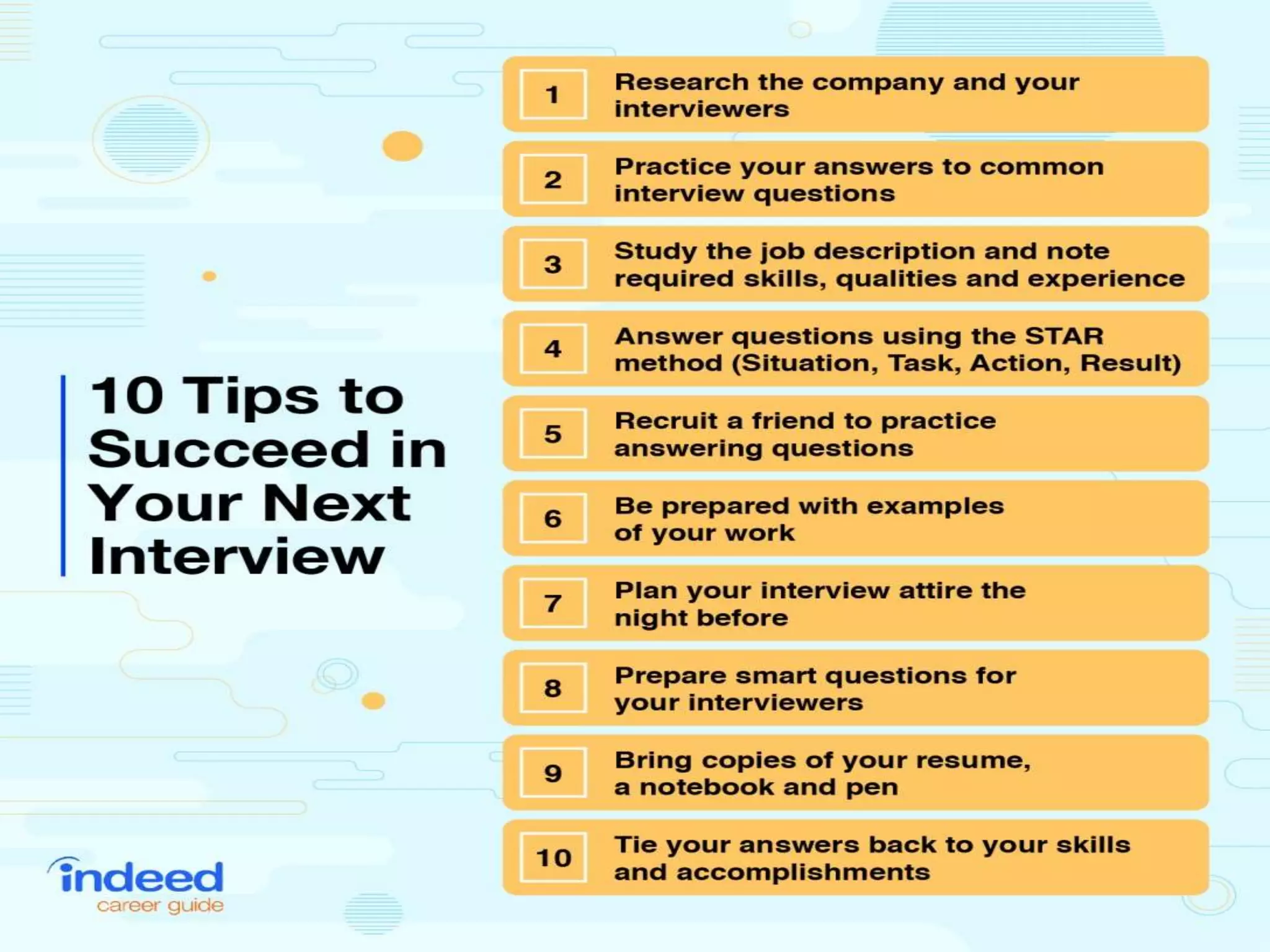
Research the company:
• Gather information about the company's history,
products, services, culture, and recent news.
• Understand their mission, values, and goals to
show your genuine interest during the interview.
• Researching the company you’re applying to is an
important part of preparing for an interview.
• Not only will it help provide context for your
interview conversations, but it will also help you
when preparing thoughtful questions for your
interviewers.
Practice common interview questions
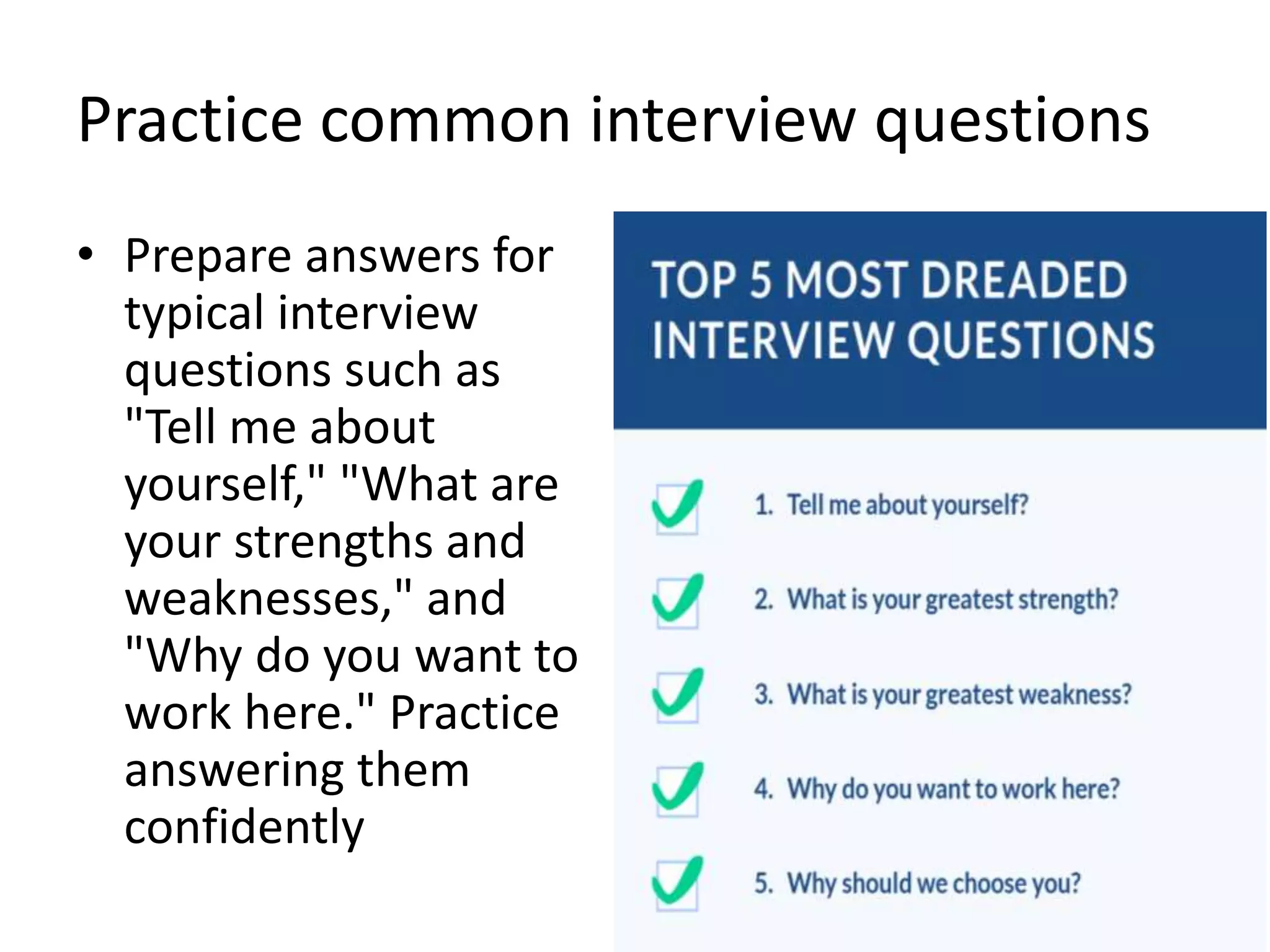
• Prepare answers for
typical interview
questions such as
"Tell me about
yourself," "What are
your strengths and
weaknesses," and
"Why do you want to
work here." Practice
answering them
confidently
Study the job description:
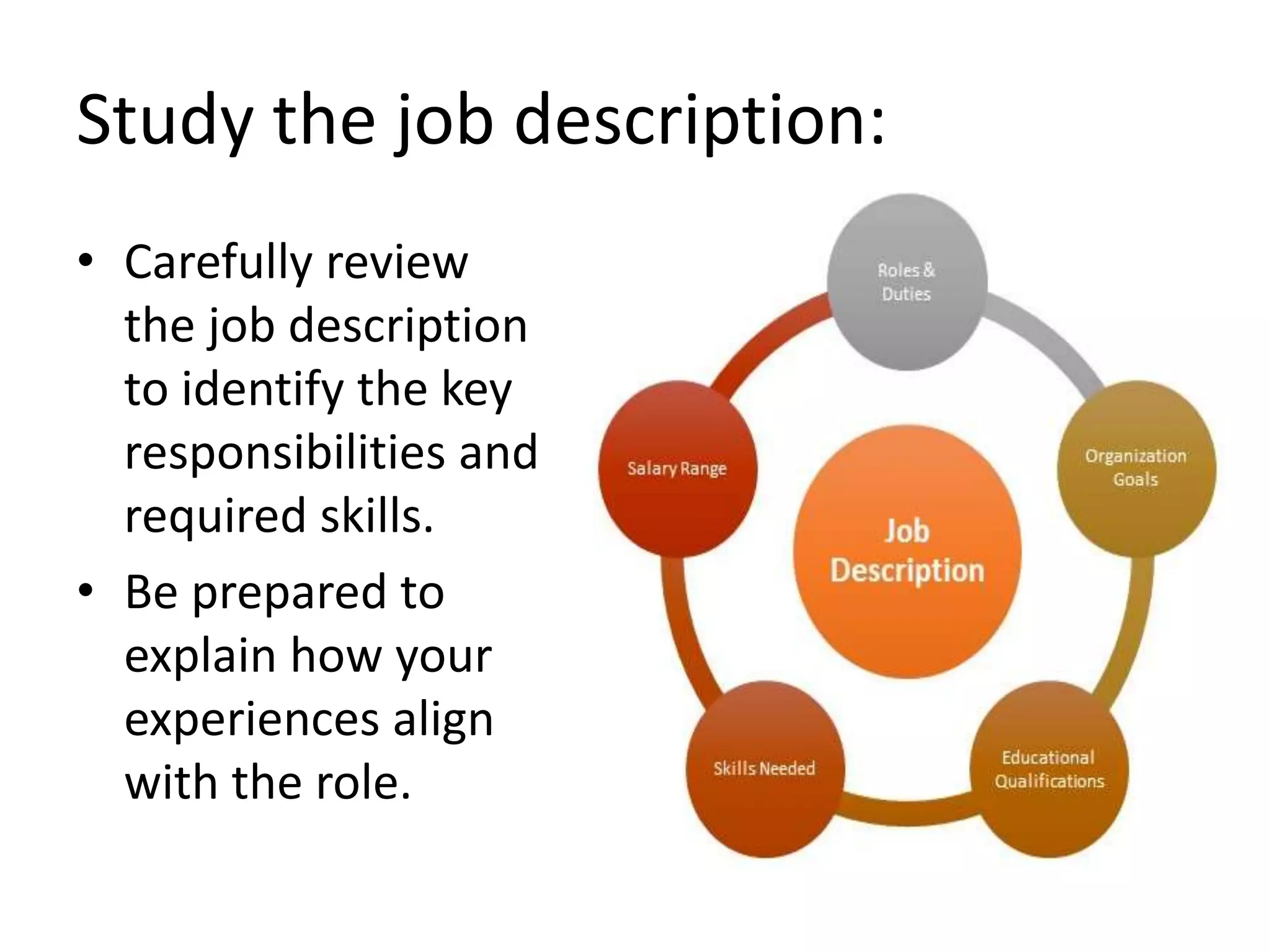
• Carefully review
the job description
to identify the key
responsibilities and
required skills.
• Be prepared to
explain how your
experiences align
with the role.
Answer questions using (STAR) method
• Prepare specific
examples of your
achievements and
how you contributed
in your previous
roles.
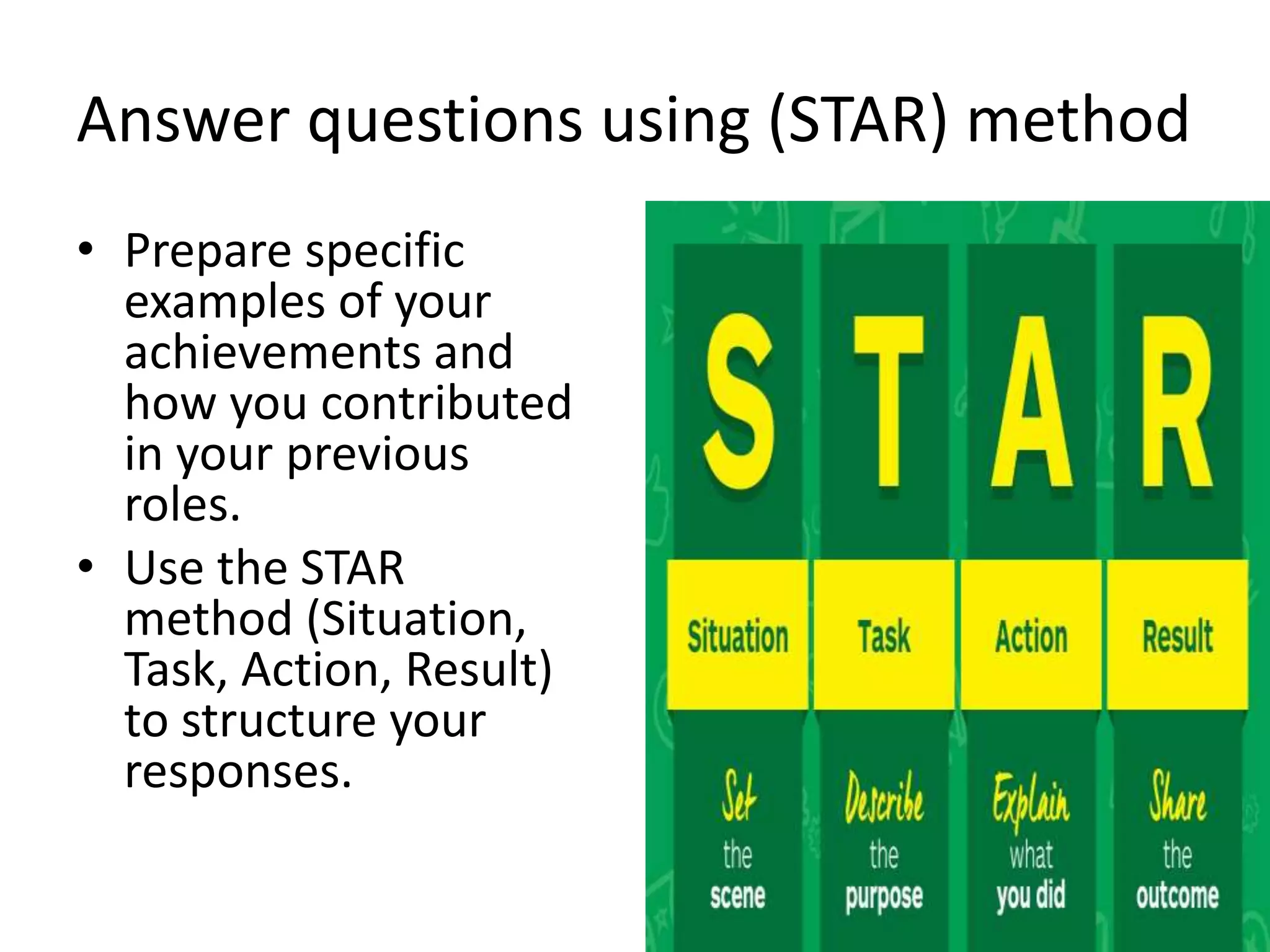
• Use the STAR
method (Situation,
Task, Action, Result)
to structure your
responses.
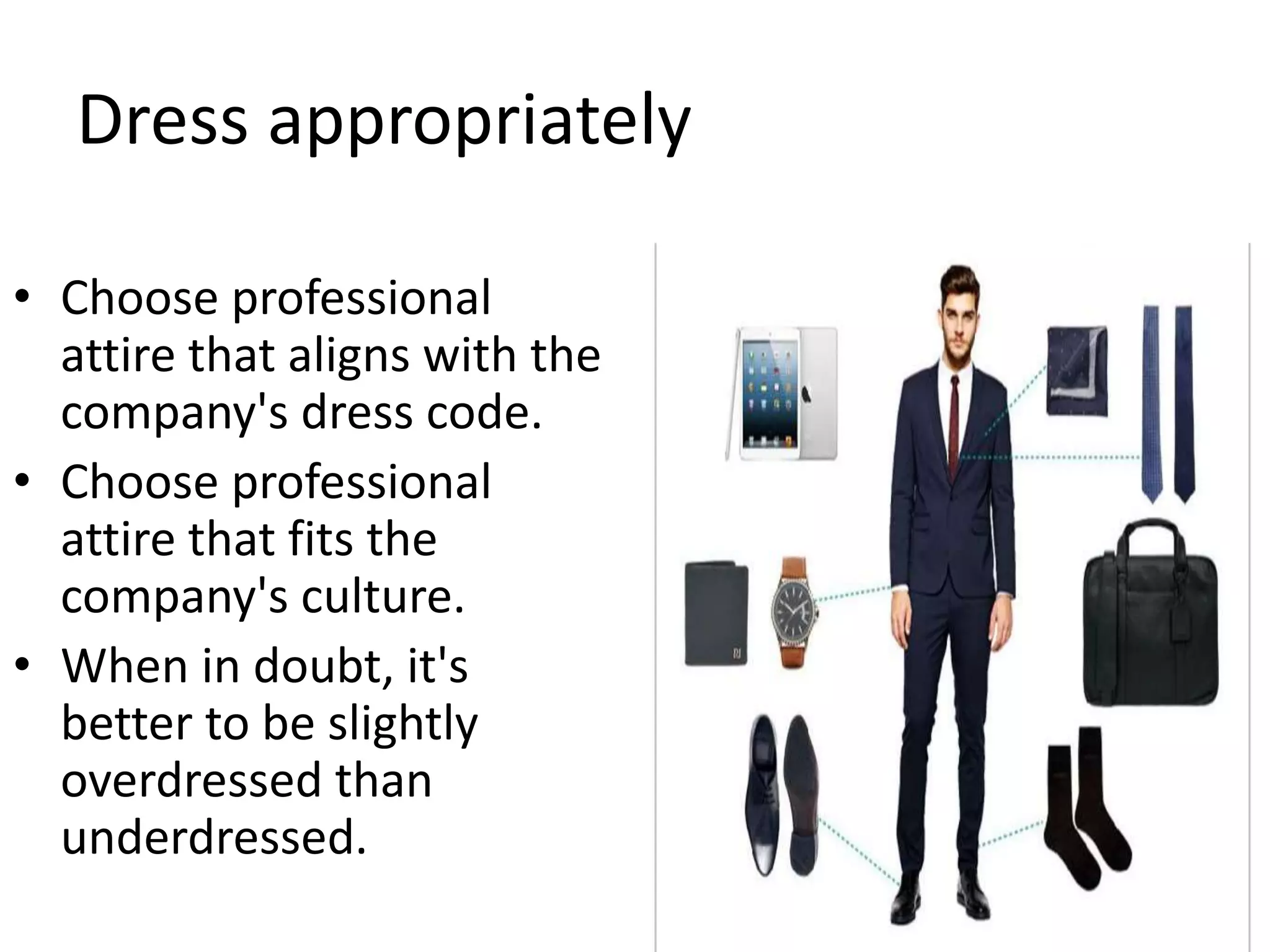
Dress appropriately
• Choose professional
attire that aligns with the
company's dress code.
• Choose professional
attire that fits the
company's culture.
• When in doubt, it's
better to be slightly
overdressed than
underdressed.
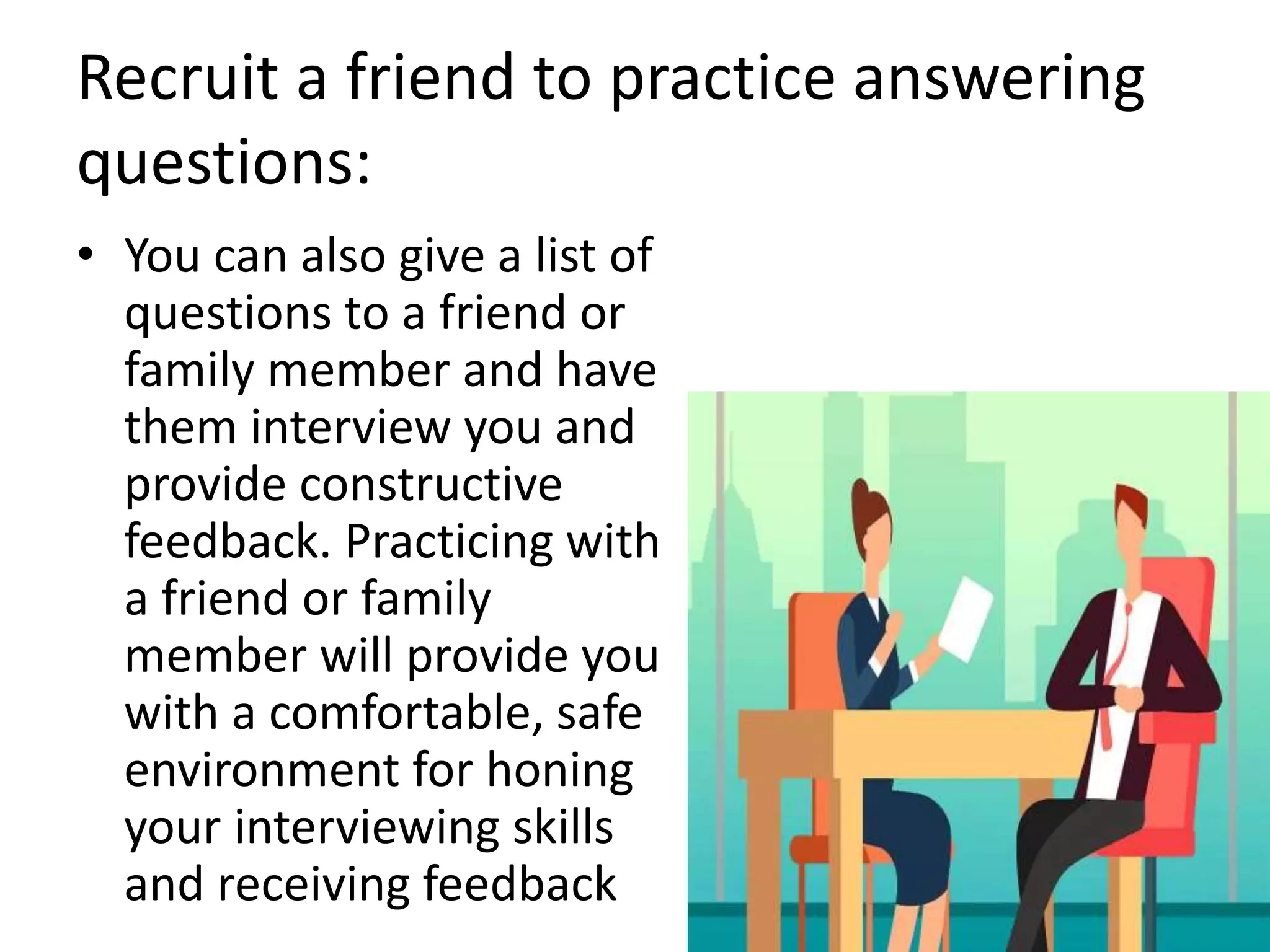
Recruit a friend to practice answering
questions:
• You can also give a list of
questions to a friend or
family member and have
them interview you and
provide constructive
feedback. Practicing with
a friend or family
member will provide you
with a comfortable, safe
environment for honing
your interviewing skills
and receiving feedback
Bring copy of resume:
• Bringing your resume
to a job interview is a
standard that many
hiring managers
might expect. By
bringing extra copies,
you immediately
show interviewers
you're a person who
prepares for their
responsibilities.
Prepare smart questions for your
interviewer:
• What does “success” mean in
this role? ...
• Am I a good fit for the
company? ...
• What challenges did my
predecessor face? ...
• What was the last person in this
role missing? ...
• Do you have any doubts about
my profile? ...
• Where will this role go in the
future? ...
• What is the company culture
like?
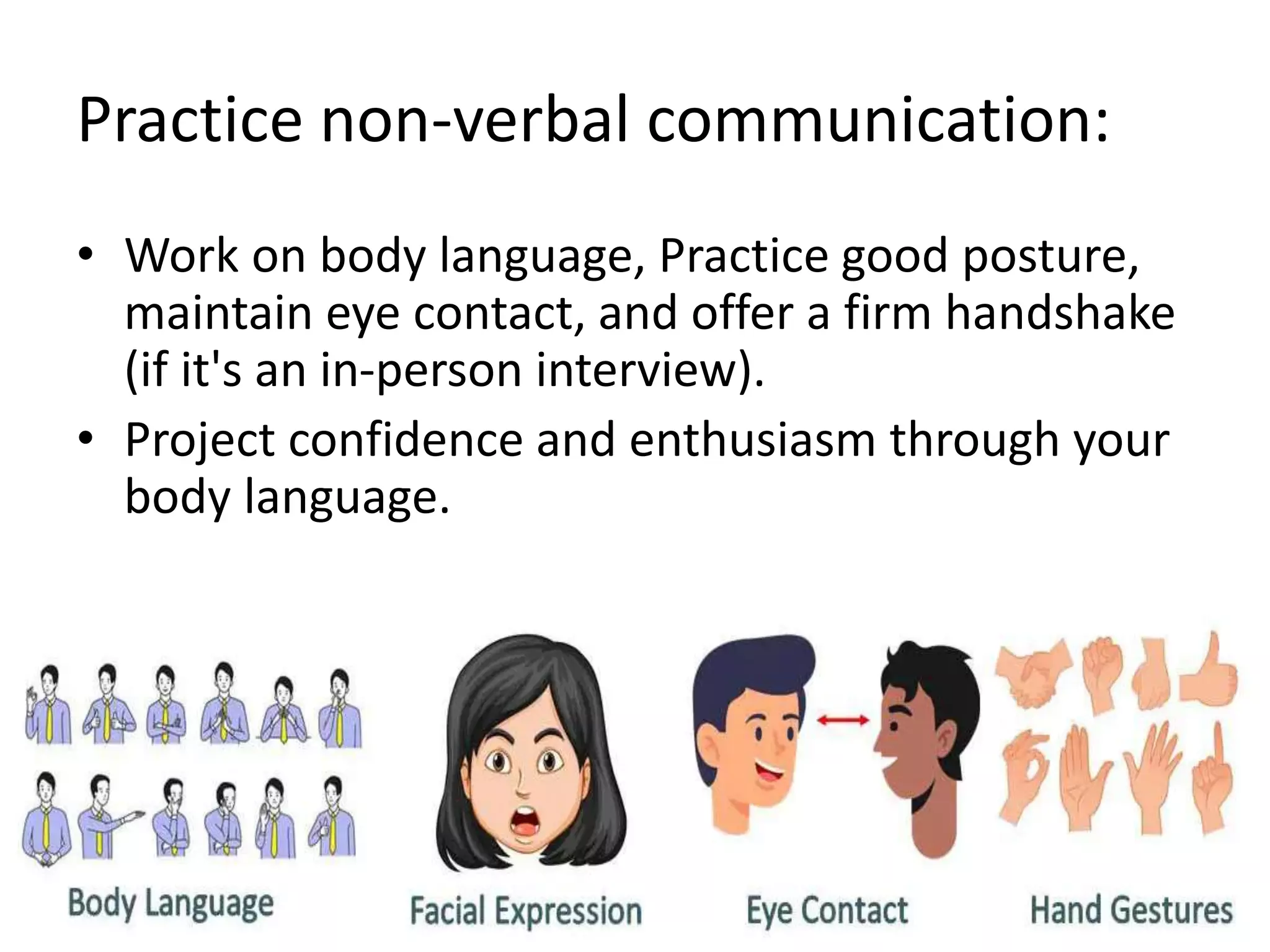
Practice non-verbal communication:
• Work on body language, Practice good posture,
maintain eye contact, and offer a firm handshake
(if it's an in-person interview).
• Project confidence and enthusiasm through your
body language.
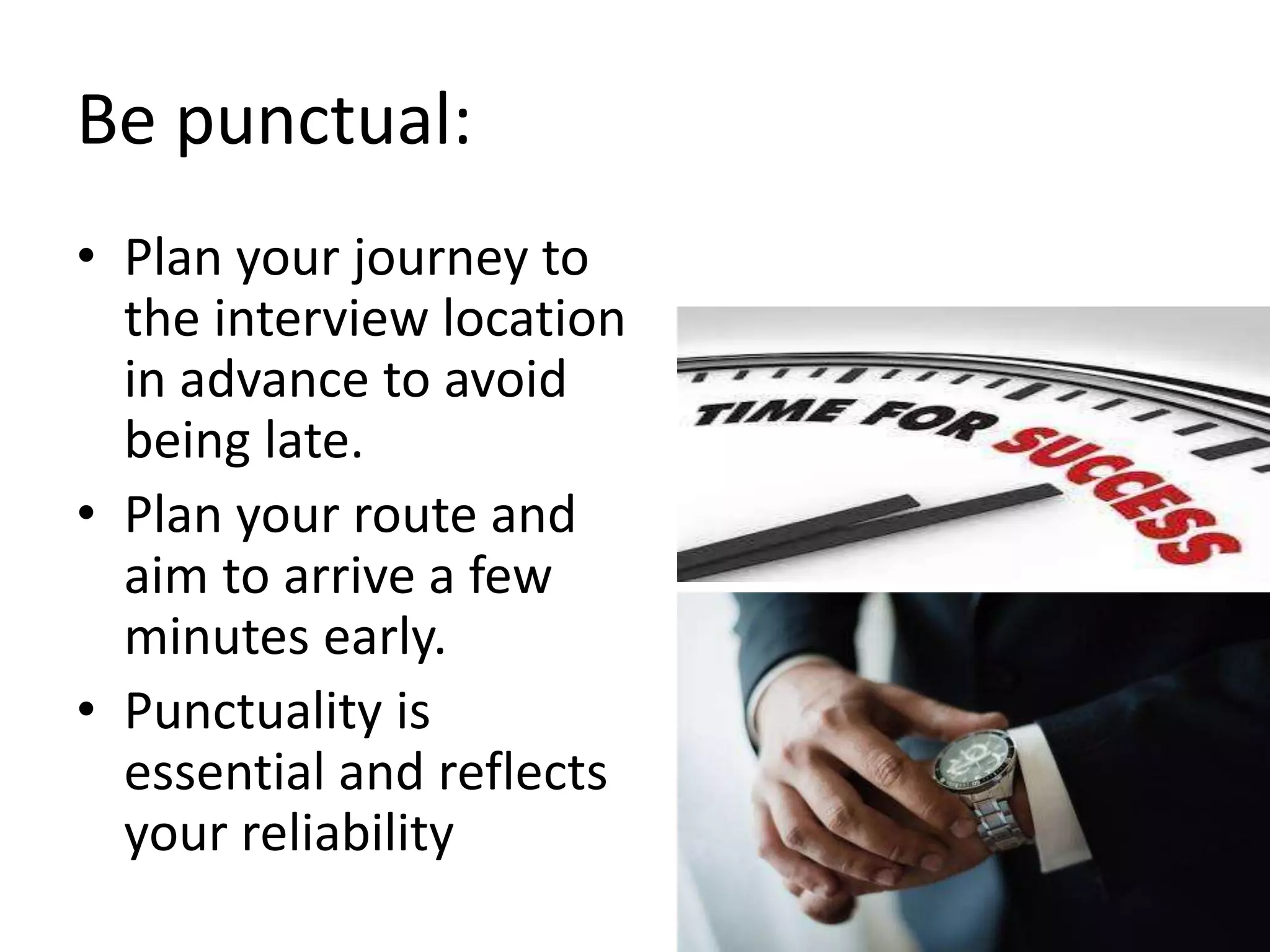
Be punctual:
• Plan your journey to
the interview location
in advance to avoid
being late.
• Plan your route and
aim to arrive a few
minutes early.
• Punctuality is
essential and reflects
your reliability
Research the interviewers:
• If possible, find out
who will be
interviewing you
and research their
roles within the
company.
• This can help you
tailor your answers
to their areas of
expertise
Follow- up:
• After the interview,
send a thank-you
email to the
interviewer, expressing
appreciation for their
time and reiterating
your interest in the
position
•THANK YOU

Presentation.pptx

  • 1.
    Presentation Group no----03 Ali Hassan—06 Hussnain–12 Hamza – 25 Kamran– 117 Saad – 126 Sohaib – 131 Hafeez--135
  • 3.
    Preparing for aninterview: • Preparing for an interview primarily means taking time to thoughtfully consider your goals and qualifications relative to the position and employer. • To accomplish this, you should perform research on the company and carefully review the job description to understand why you would be a good fit. • Let’s look at the steps to preparing for an interview.
  • 5.
    Research the company: •Gather information about the company's history, products, services, culture, and recent news. • Understand their mission, values, and goals to show your genuine interest during the interview. • Researching the company you’re applying to is an important part of preparing for an interview. • Not only will it help provide context for your interview conversations, but it will also help you when preparing thoughtful questions for your interviewers.
  • 6.
    Practice common interviewquestions • Prepare answers for typical interview questions such as "Tell me about yourself," "What are your strengths and weaknesses," and "Why do you want to work here." Practice answering them confidently
  • 7.
    Study the jobdescription: • Carefully review the job description to identify the key responsibilities and required skills. • Be prepared to explain how your experiences align with the role.
  • 8.
    Answer questions using(STAR) method • Prepare specific examples of your achievements and how you contributed in your previous roles. • Use the STAR method (Situation, Task, Action, Result) to structure your responses.
  • 9.
    Dress appropriately • Chooseprofessional attire that aligns with the company's dress code. • Choose professional attire that fits the company's culture. • When in doubt, it's better to be slightly overdressed than underdressed.
  • 10.
    Recruit a friendto practice answering questions: • You can also give a list of questions to a friend or family member and have them interview you and provide constructive feedback. Practicing with a friend or family member will provide you with a comfortable, safe environment for honing your interviewing skills and receiving feedback
  • 11.
    Bring copy ofresume: • Bringing your resume to a job interview is a standard that many hiring managers might expect. By bringing extra copies, you immediately show interviewers you're a person who prepares for their responsibilities.
  • 12.
    Prepare smart questionsfor your interviewer: • What does “success” mean in this role? ... • Am I a good fit for the company? ... • What challenges did my predecessor face? ... • What was the last person in this role missing? ... • Do you have any doubts about my profile? ... • Where will this role go in the future? ... • What is the company culture like?
  • 13.
    Practice non-verbal communication: •Work on body language, Practice good posture, maintain eye contact, and offer a firm handshake (if it's an in-person interview). • Project confidence and enthusiasm through your body language.
  • 14.
    Be punctual: • Planyour journey to the interview location in advance to avoid being late. • Plan your route and aim to arrive a few minutes early. • Punctuality is essential and reflects your reliability
  • 15.
    Research the interviewers: •If possible, find out who will be interviewing you and research their roles within the company. • This can help you tailor your answers to their areas of expertise
  • 16.
    Follow- up: • Afterthe interview, send a thank-you email to the interviewer, expressing appreciation for their time and reiterating your interest in the position
  • 17.