1
CONCEPT CARS AS A DESIGN-LED
FUTURES TECHNIQUE
by
Ricardo Mejia Sarmiento, Erik Jan Hultink, Gert Pasman, and Pieter Jan Stappers
2
CONTENT
1. Futures Studies techniques (situation & complication)
2. The Design-led Futures techniques (opportunity)
3. The study (methods)
4. Our claims (discussion)
5. Take away message
Q&A
3
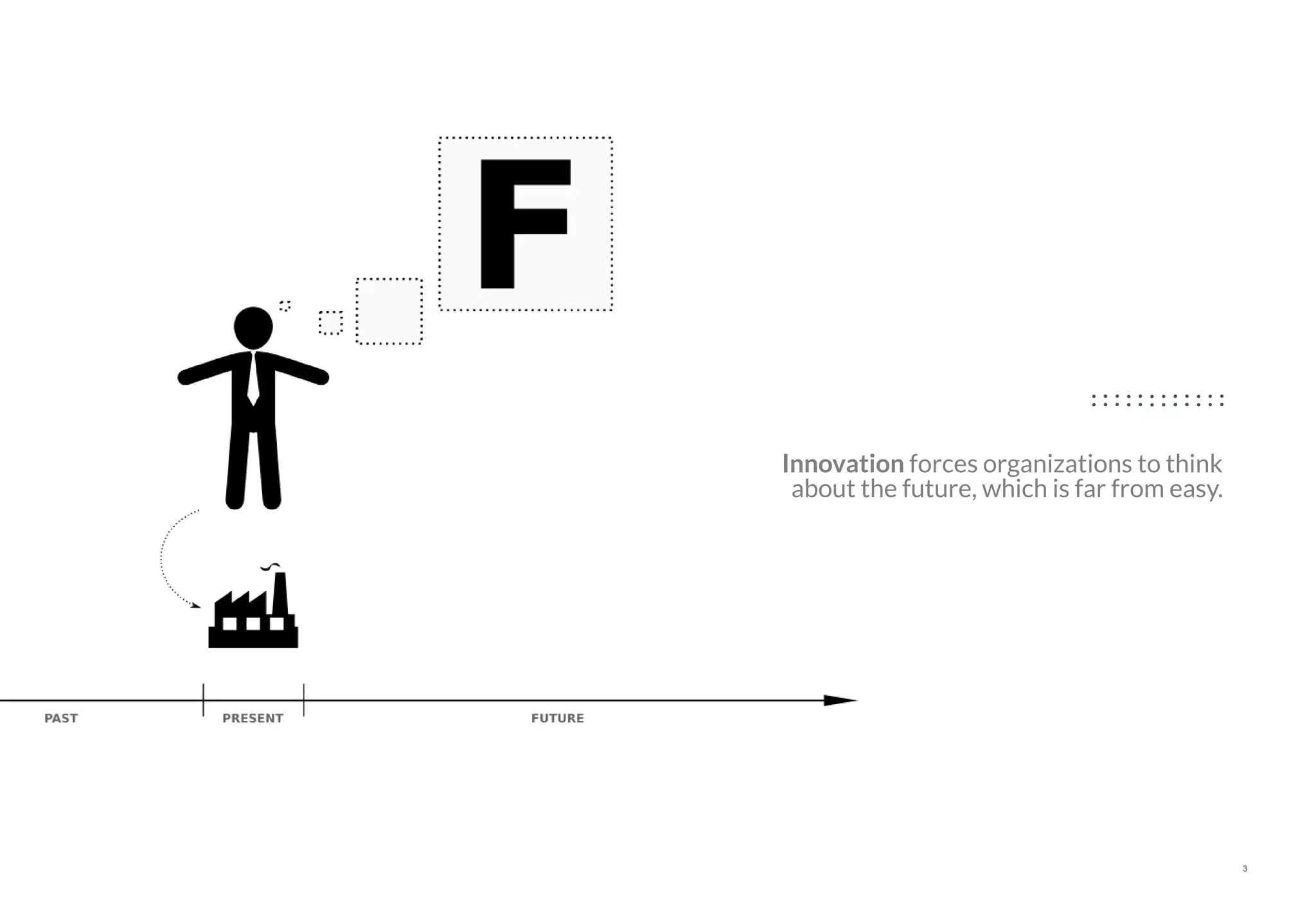
Innovation forces organizations to think
about the future, which is far from easy.
4
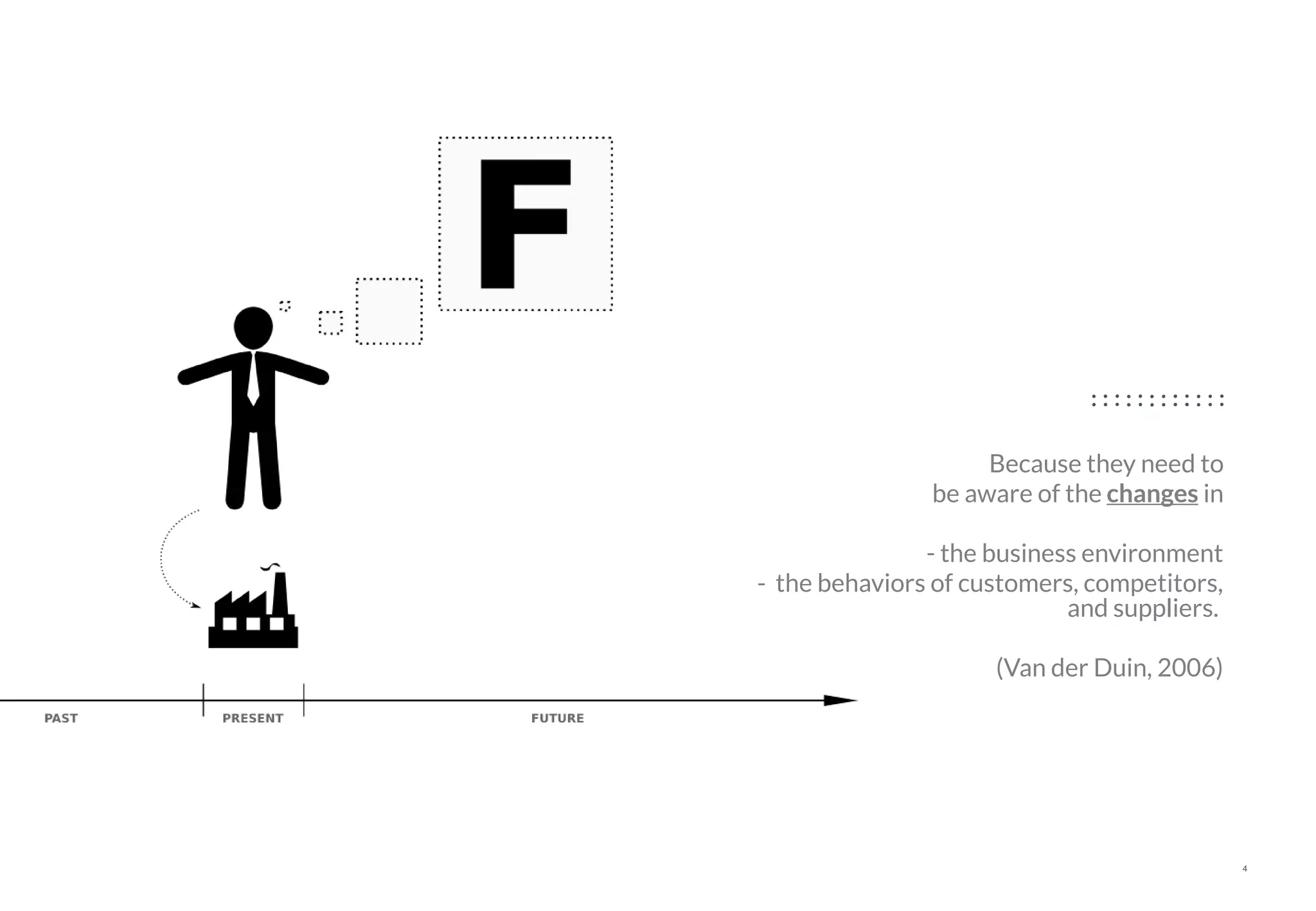
Because they need to
be aware of the changes in
- the business environment
- the behaviors of customers, competitors,
and suppliers.
(Van der Duin, 2006)
5
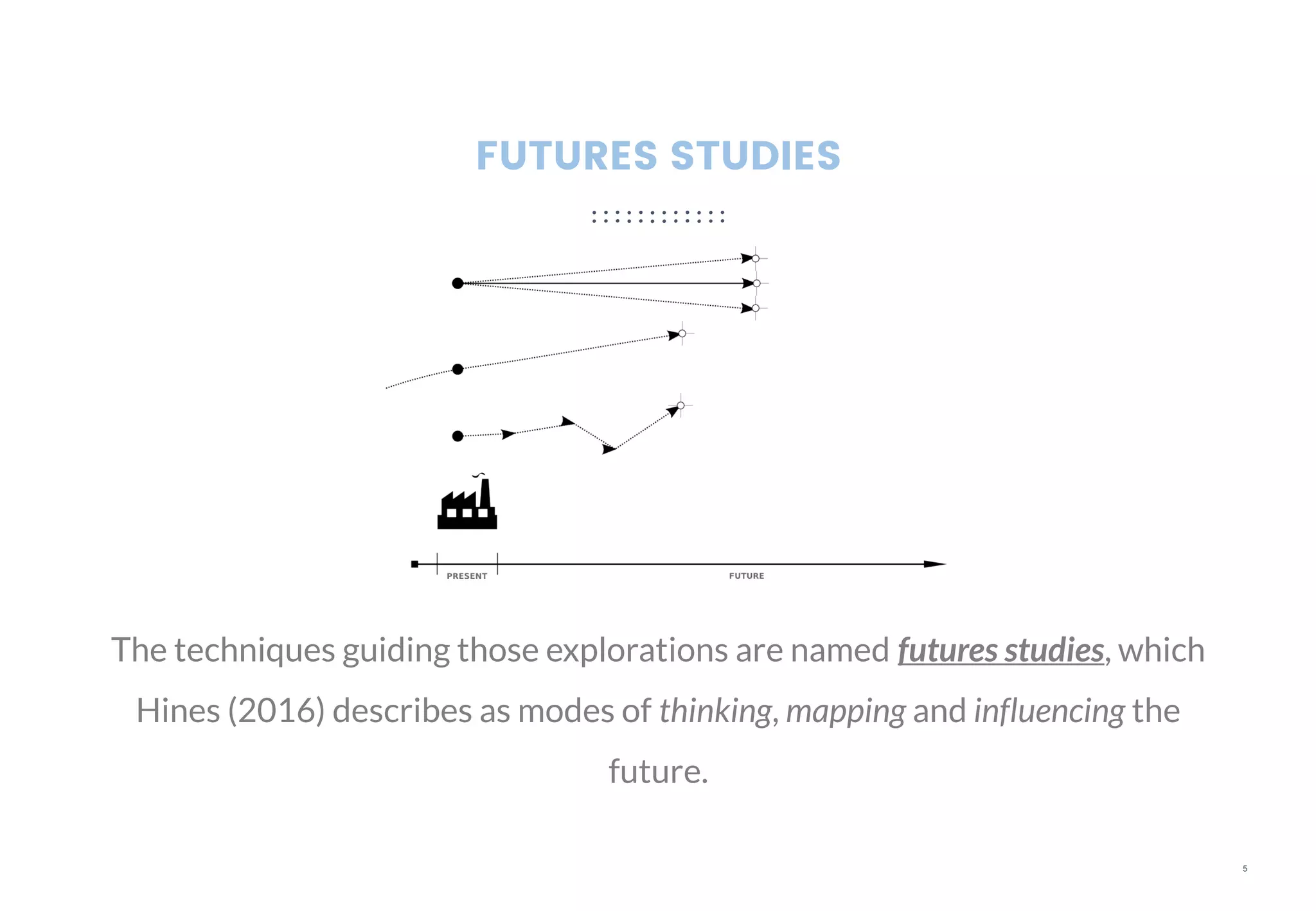
FUTURES STUDIES
The techniques guiding those explorations are named futures studies, which
Hines (2016) describes as modes of thinking, mapping and influencing the
future.
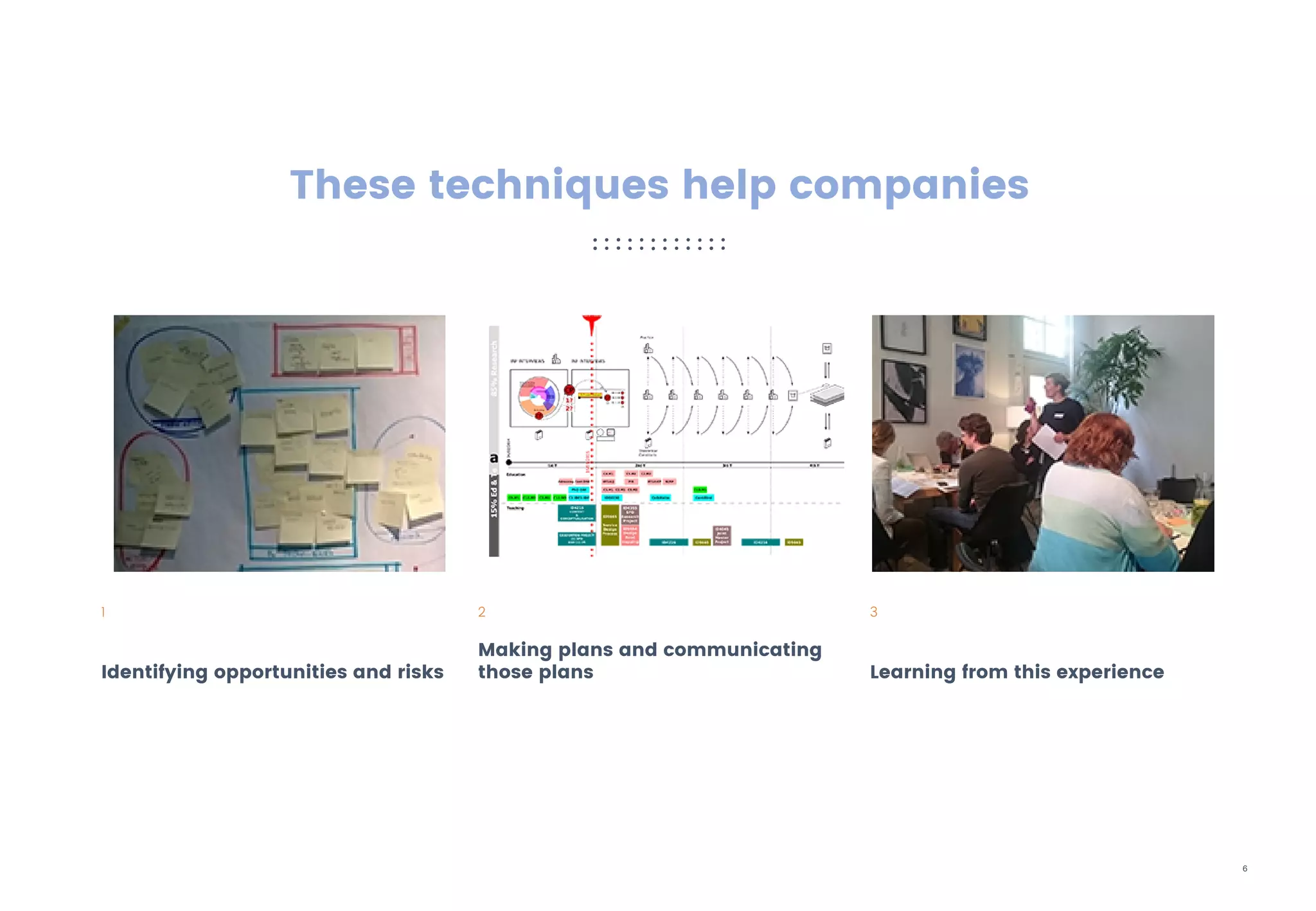
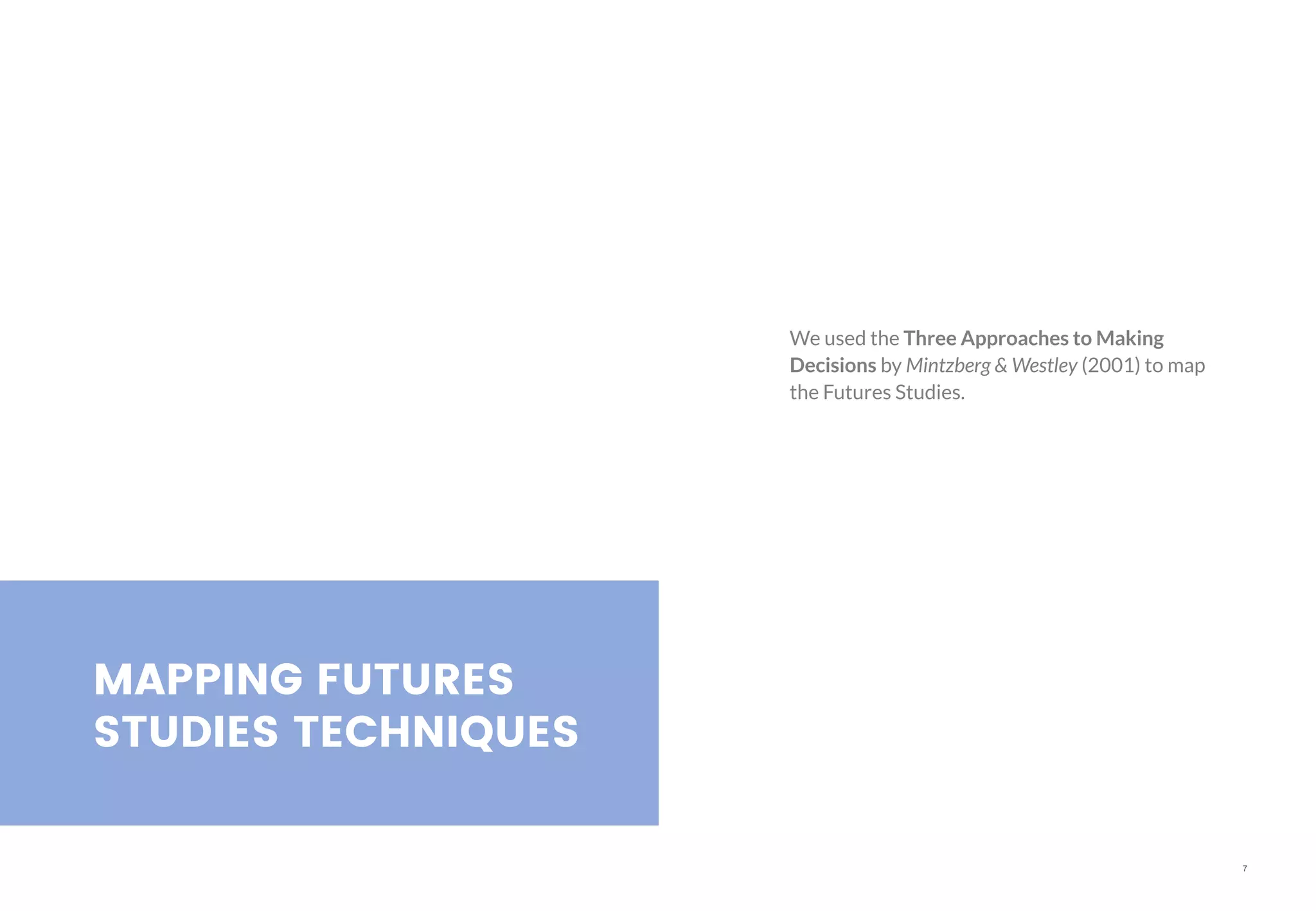
6
2
Making plans and communicating
those plans
3
Learning from this experience
1
Identifying opportunities and risks
These techniques help companies
7
MAPPING FUTURES
STUDIES TECHNIQUES
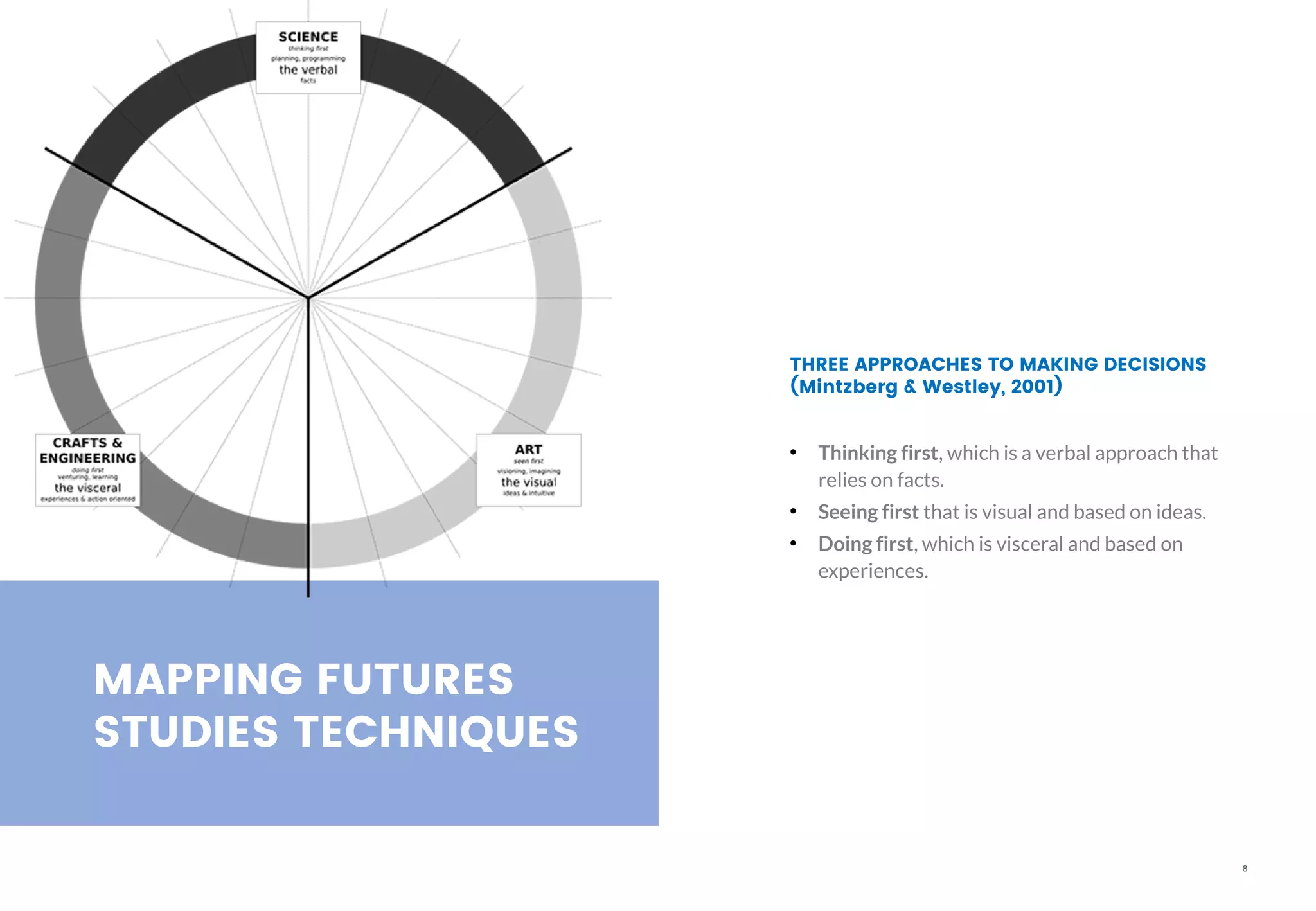
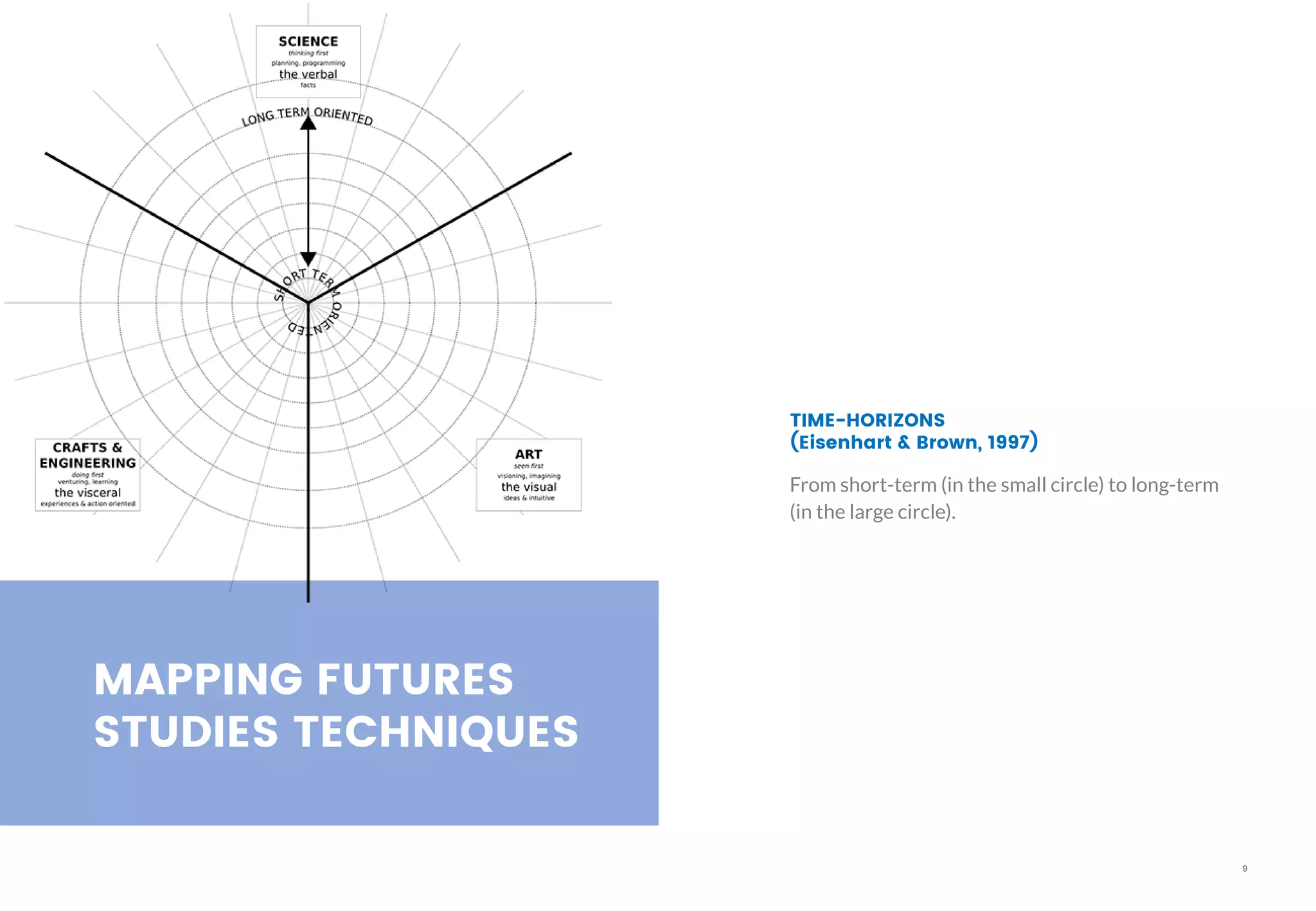
We used the Three Approaches to Making
Decisions by Mintzberg & Westley (2001) to map
the Futures Studies.
8
MAPPING FUTURES
STUDIES TECHNIQUES
●
Thinking first, which is a verbal approach that
relies on facts.
●
Seeing first that is visual and based on ideas.
●
Doing first, which is visceral and based on
experiences.
THREE APPROACHES TO MAKING DECISIONS
(Mintzberg & Westley, 2001)
9
MAPPING FUTURES
STUDIES TECHNIQUES
From short-term (in the small circle) to long-term
(in the large circle).
TIME-HORIZONS
(Eisenhart & Brown, 1997)
10
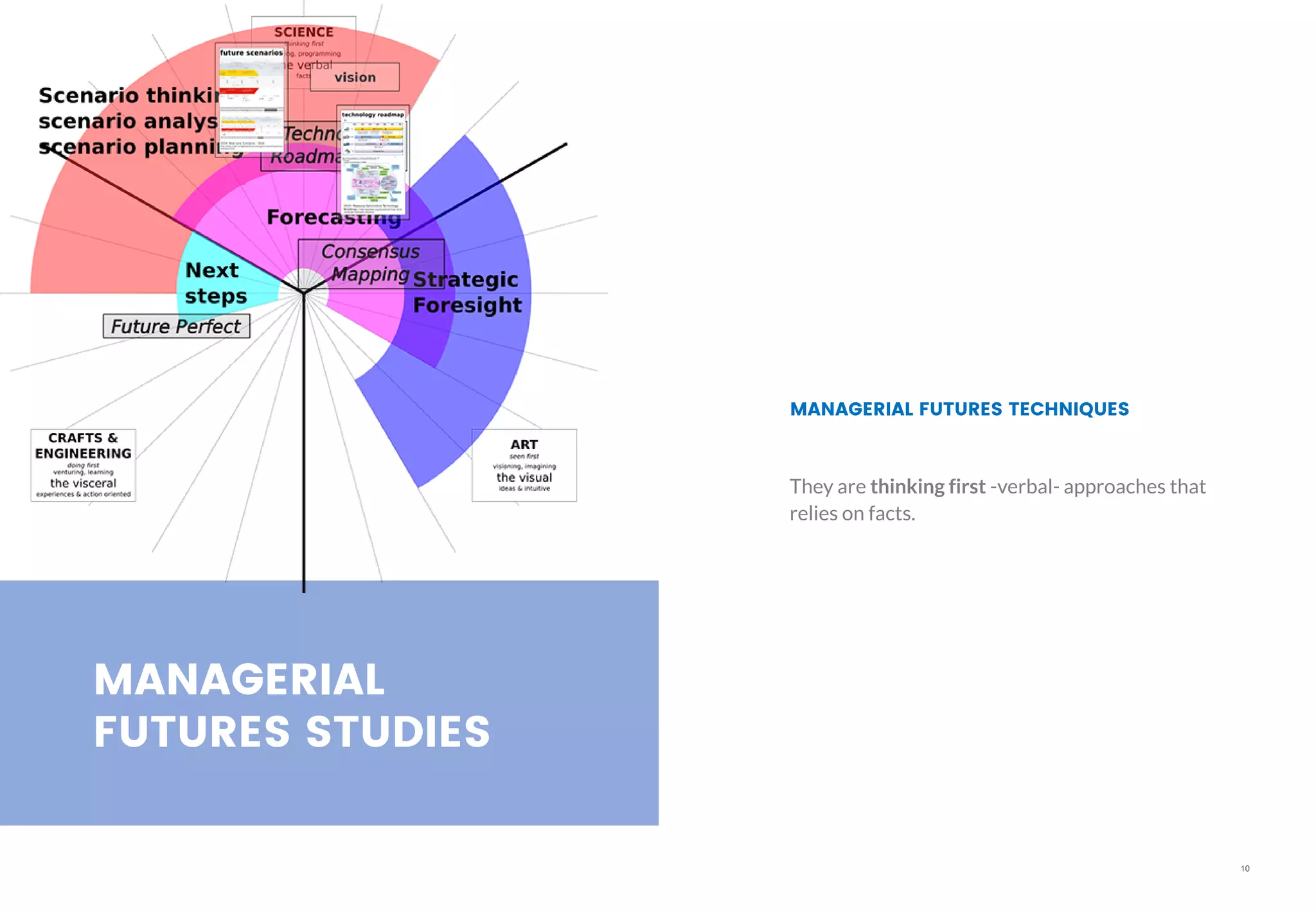
MANAGERIAL
FUTURES STUDIES
They are thinking first -verbal- approaches that
relies on facts.
MANAGERIAL FUTURES TECHNIQUES
11
e.g. TECHNOLOGY
ROADMAPING
Technology road-mapping is “a process to think and
analyze the market, product, and technology conditions [to]
elaborate on a plan” (Simonse, Buijs and Hultink, 2015).
Albright and Kappel (2003)
12
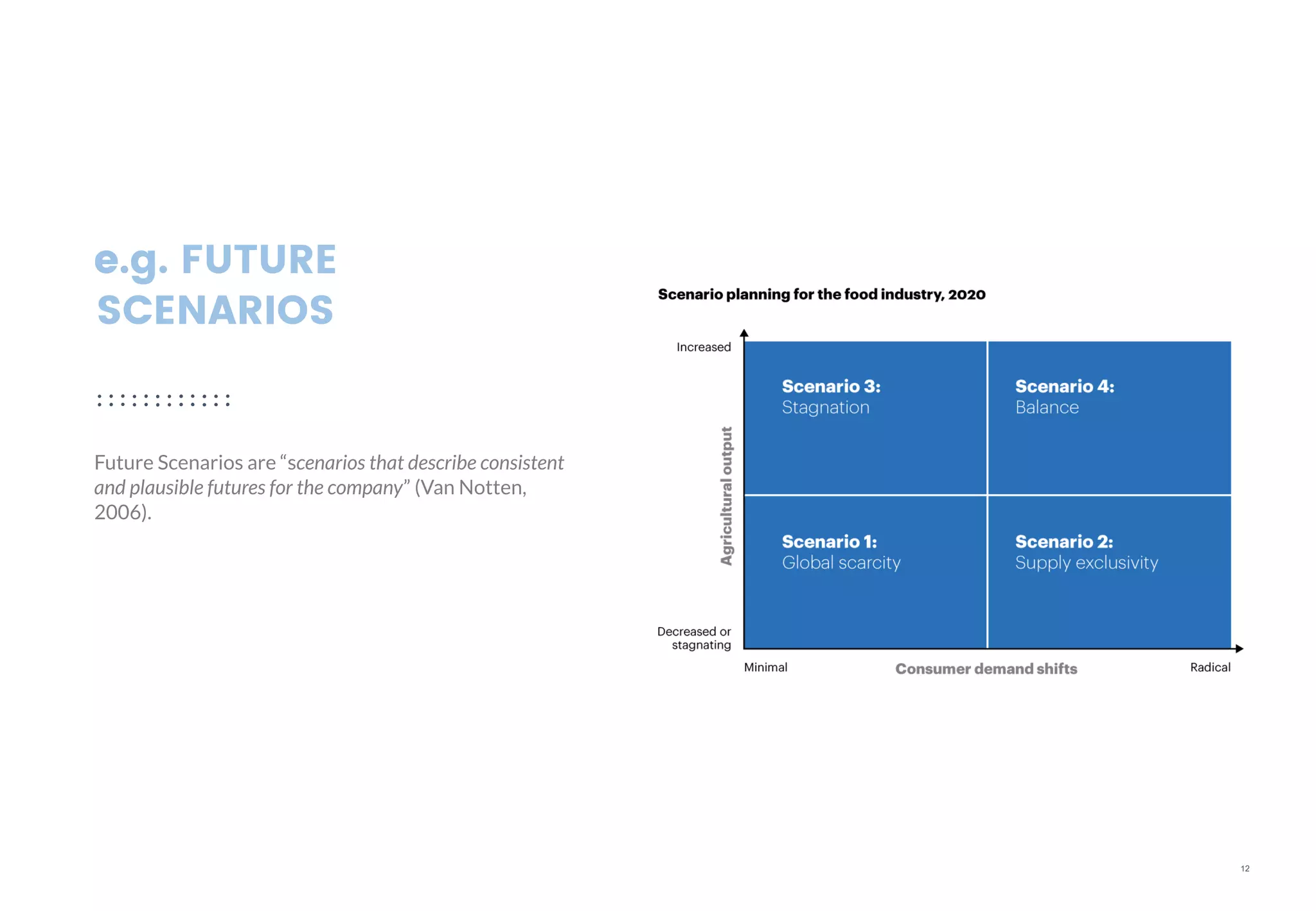
e.g. FUTURE
SCENARIOS
Future Scenarios are “scenarios that describe consistent
and plausible futures for the company” (Van Notten,
2006).
13
However, managerial
techniques have some limitations
- Top-down processes
- Involve only top-managers
- Resource and time-consuming
- Complex and abstract outcomes
- Difficult to communicate and
implement
14
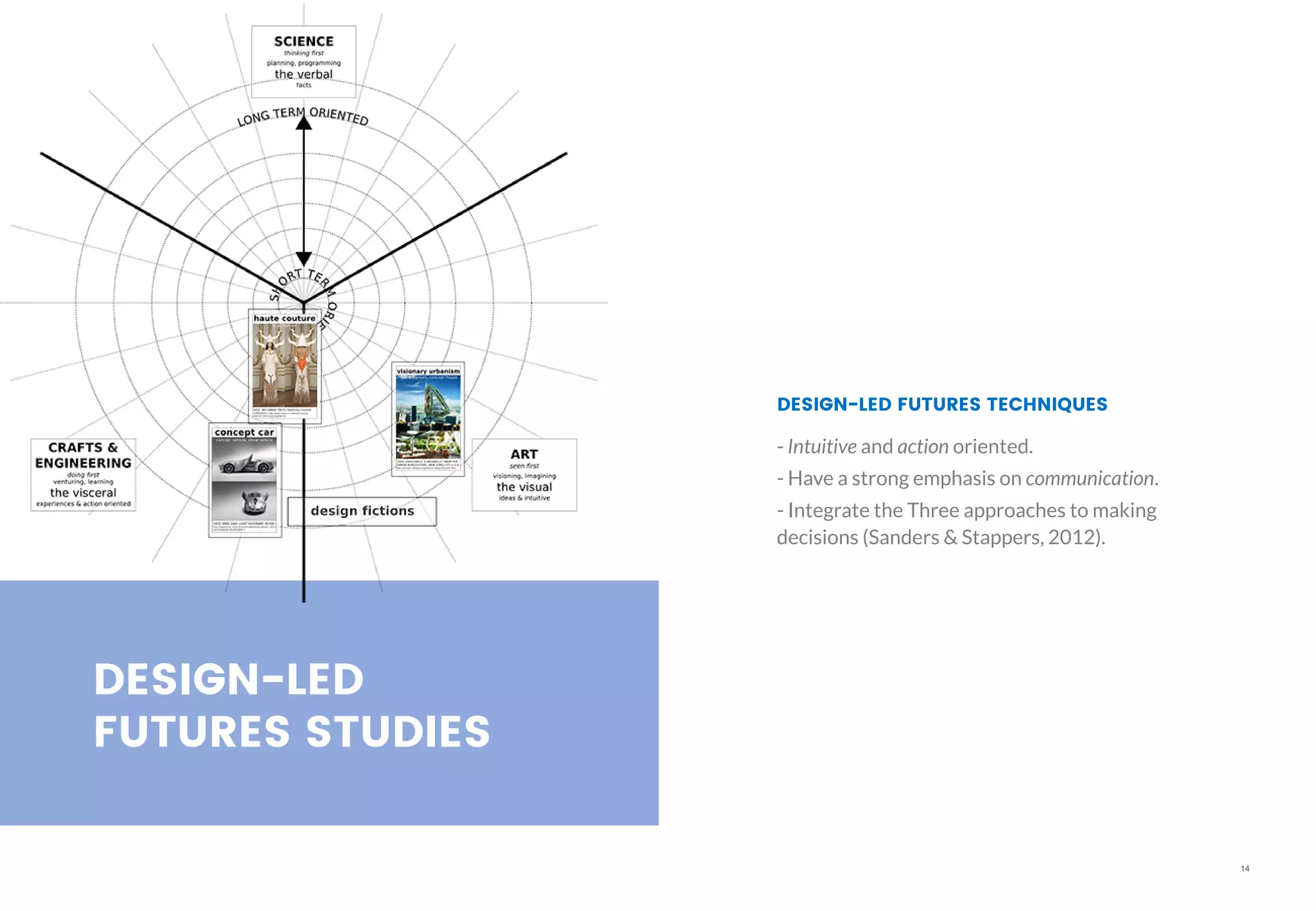
DESIGN-LED
FUTURES STUDIES
- Intuitive and action oriented.
- Have a strong emphasis on communication.
- Integrate the Three approaches to making
decisions (Sanders & Stappers, 2012).
DESIGN-LED FUTURES TECHNIQUES
15
e.g. DESIGN
FICTIONS
Design Fictions is a technique to develop “micro futures-
studies [that focus] on the everyday life, its short-term
evolutions, and the standard objects or services that might
fill these possible futures” (Girardin, 2015)
Superflux (2014)
16
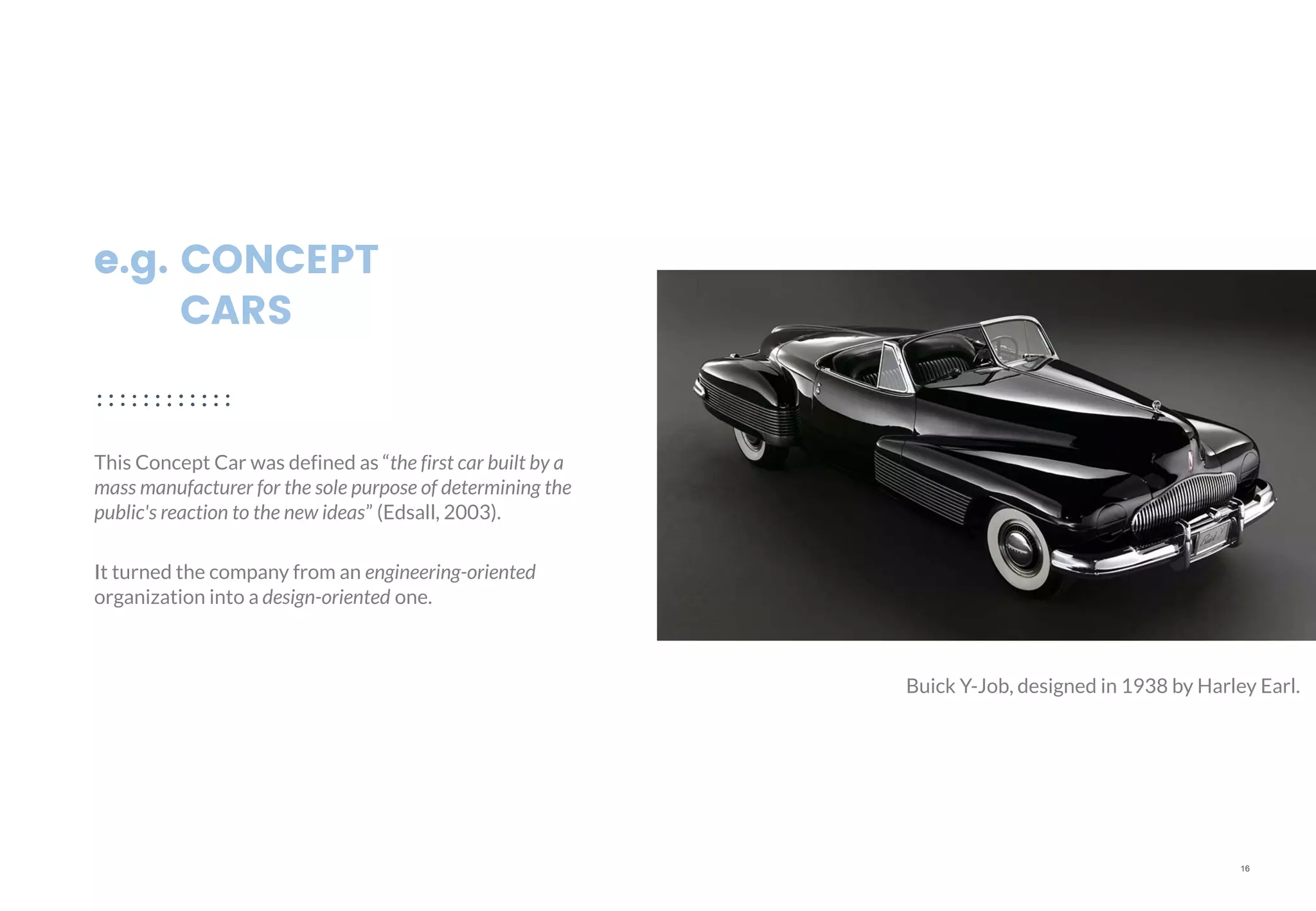
e.g. CONCEPT
CARS
This Concept Car was defined as “the first car built by a
mass manufacturer for the sole purpose of determining the
public's reaction to the new ideas” (Edsall, 2003).
It turned the company from an engineering-oriented
organization into a design-oriented one.
Buick Y-Job, designed in 1938 by Harley Earl.
17
Although Concept Cars are broadly recognized
as an interesting phenomenon, little academic
work has been conducted on them.
Innovation Management &
Futures Studies
18
CONCEPT CARS AS
BRANDING EXERCISES
- Concept Cars create a brand identity within the
company, and outside they enhance the brand
image (Roscam Abbing, 2010).
- Concept Cars present and visualize the
company’s visions of future design and technology
trends (Backman and Börjesson, 2006).
- Concept Cars establish coherent and unified
design outputs of the different ideas and products
lines (Evans, 2011).
19
CONCEPT CARS, THE
DESIGN PROCESS
- The process of designing a Concept Car is much
shorter that a commercial car (Berlitz and Huhn,
2005).
- It focuses on communication. The company
presents the Concept Car at a motor show to the
media: newspapers, TV, and radio (Lv & Lu, 2012),
experts and customers (Berlitz & Huhn, 2005),
and the general public.
20
This paper aims to add to the literature on
Innovation Management by uncovering the
key features that distinguish Concept Cars as
a futures technique.
21
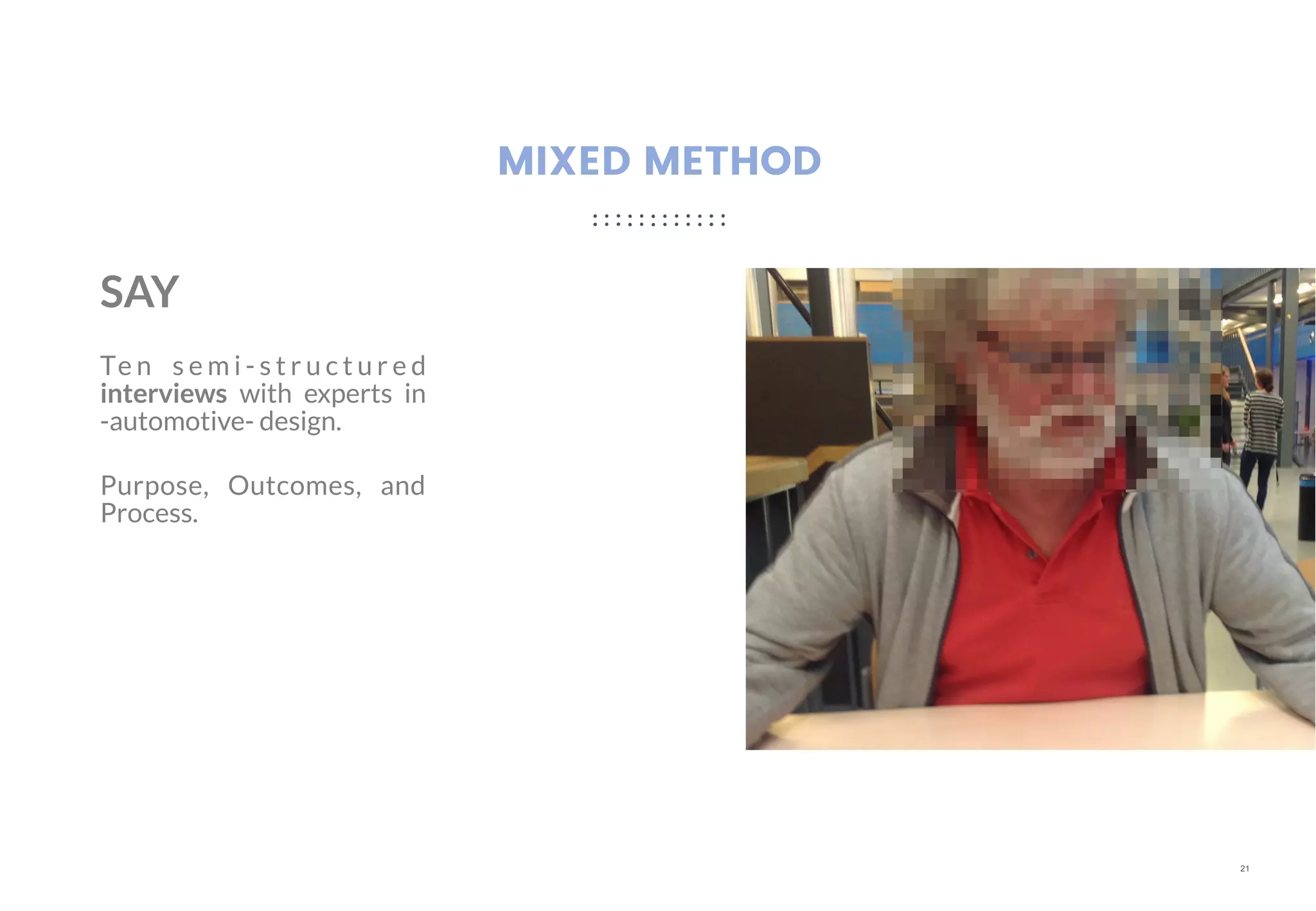
SAY
Te n s e m i - s t r u c t u r e d
interviews with experts in
-automotive- design.
Purpose, Outcomes, and
Process.
MIXED METHOD
22Page
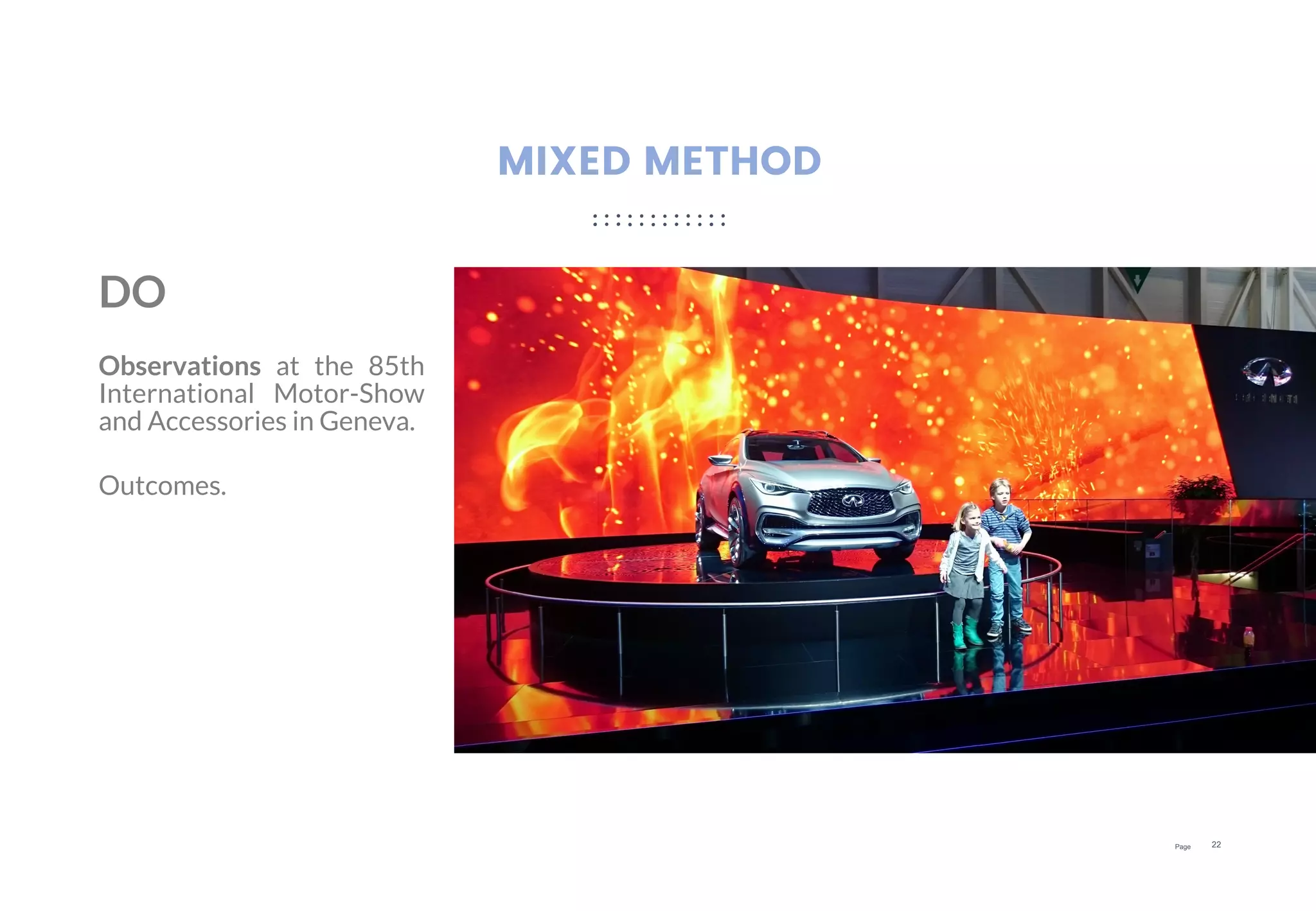
DO
Observations at the 85th
International Motor-Show
and Accessories in Geneva.
Outcomes.
MIXED METHOD
23
MIXED METHOD
MAKE
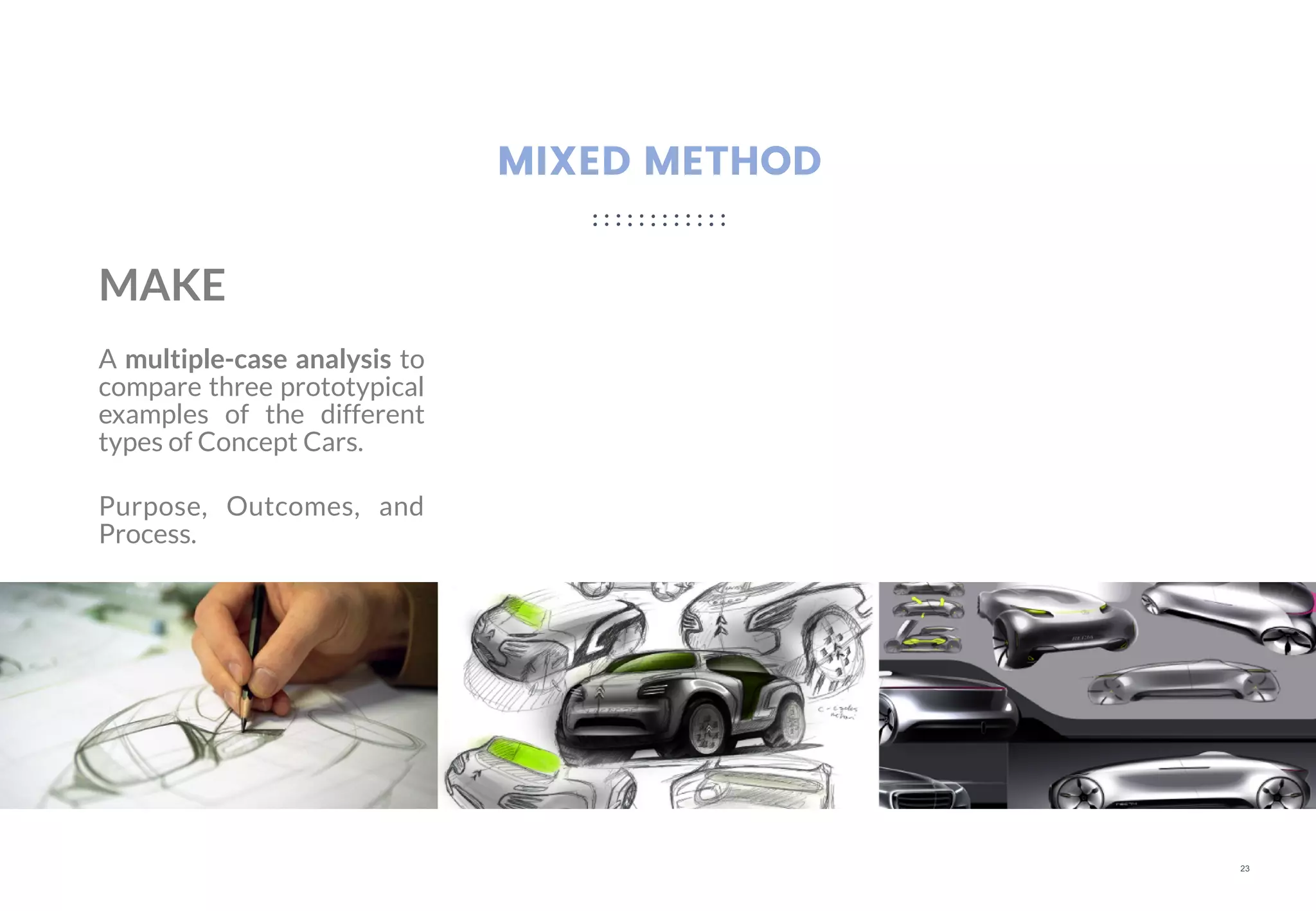
A multiple-case analysis to
compare three prototypical
examples of the different
types of Concept Cars.
Purpose, Outcomes, and
Process.
24
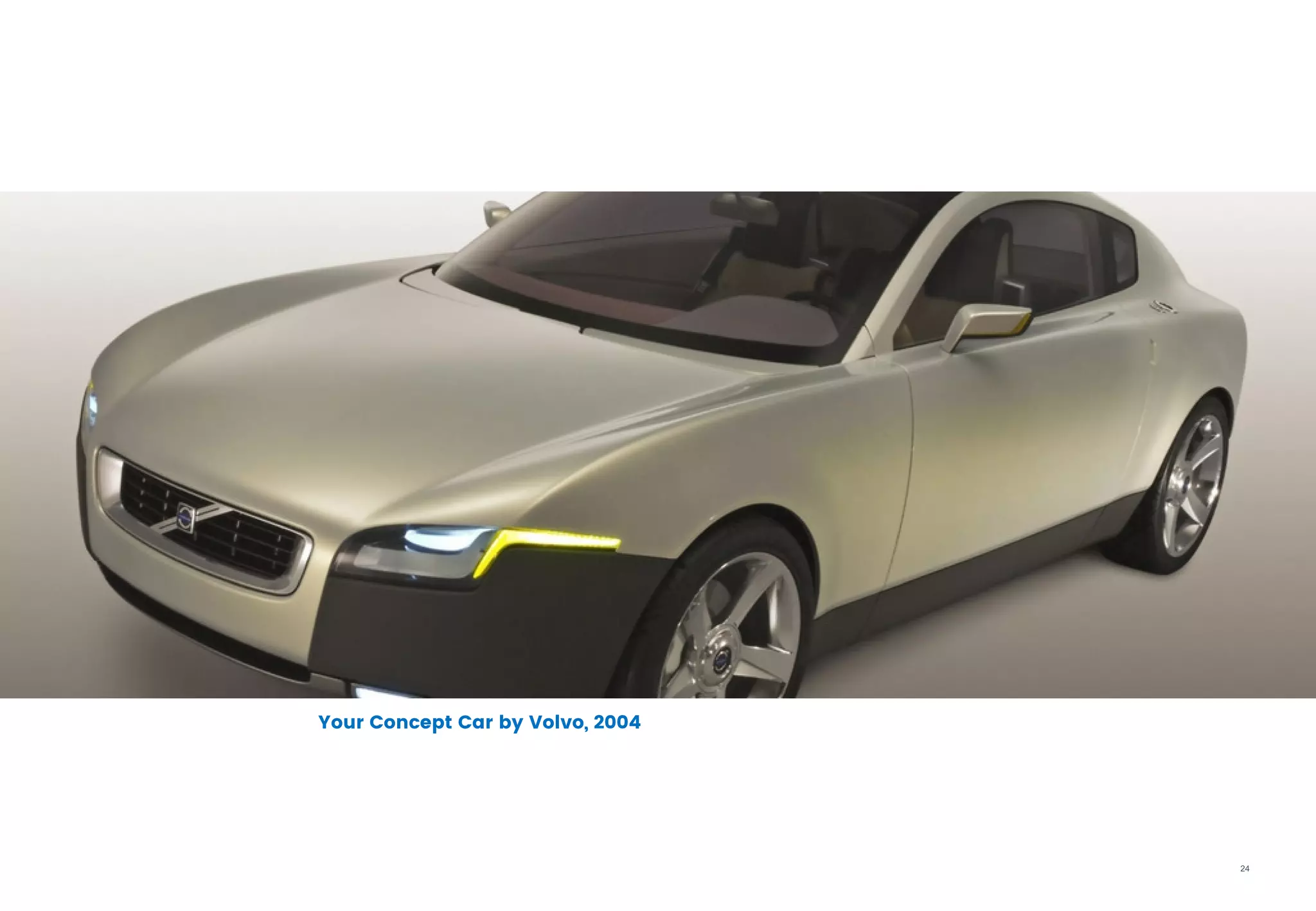
Your Concept Car by Volvo, 2004
25
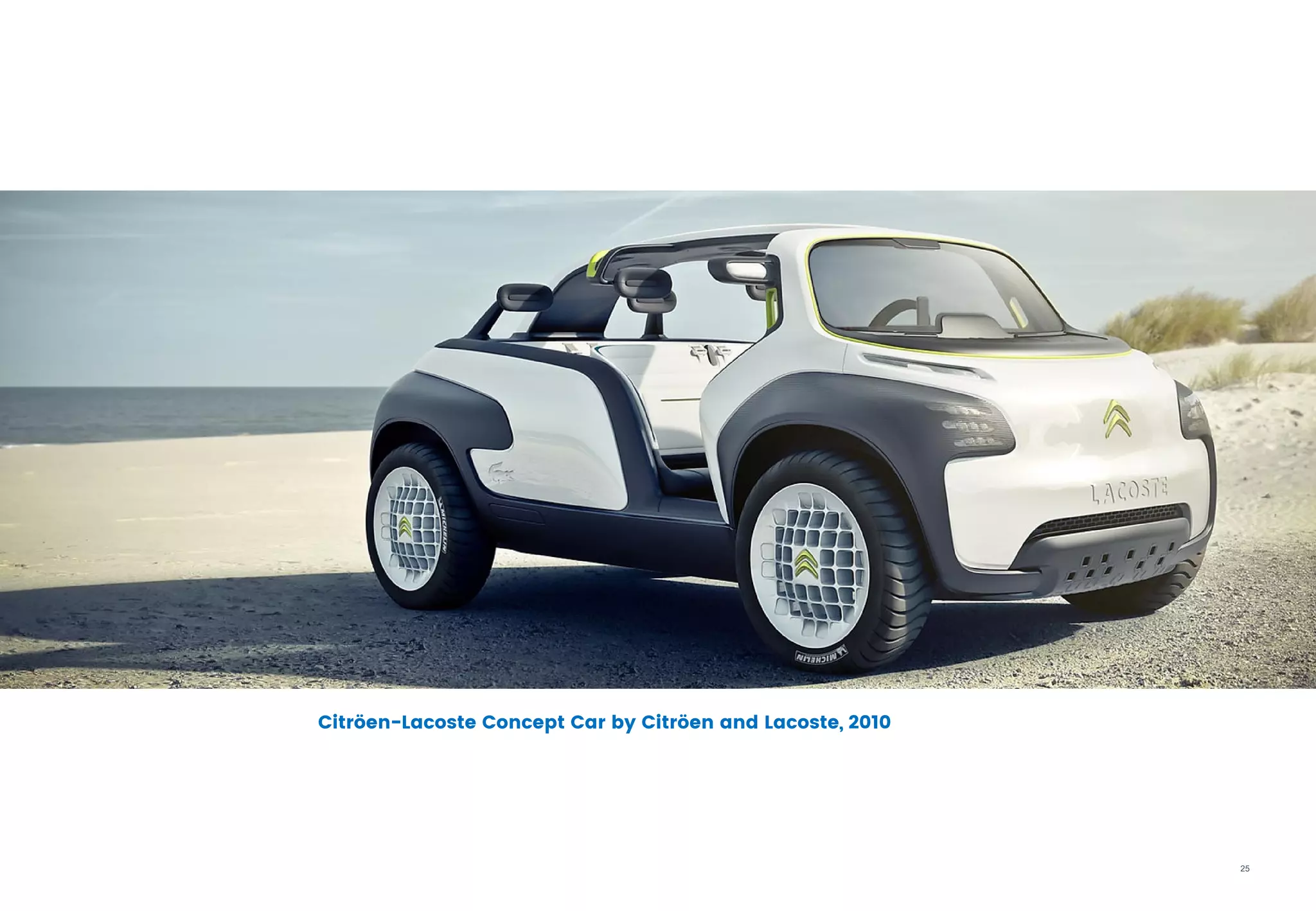
Citröen-Lacoste Concept Car by Citröen and Lacoste, 2010
26
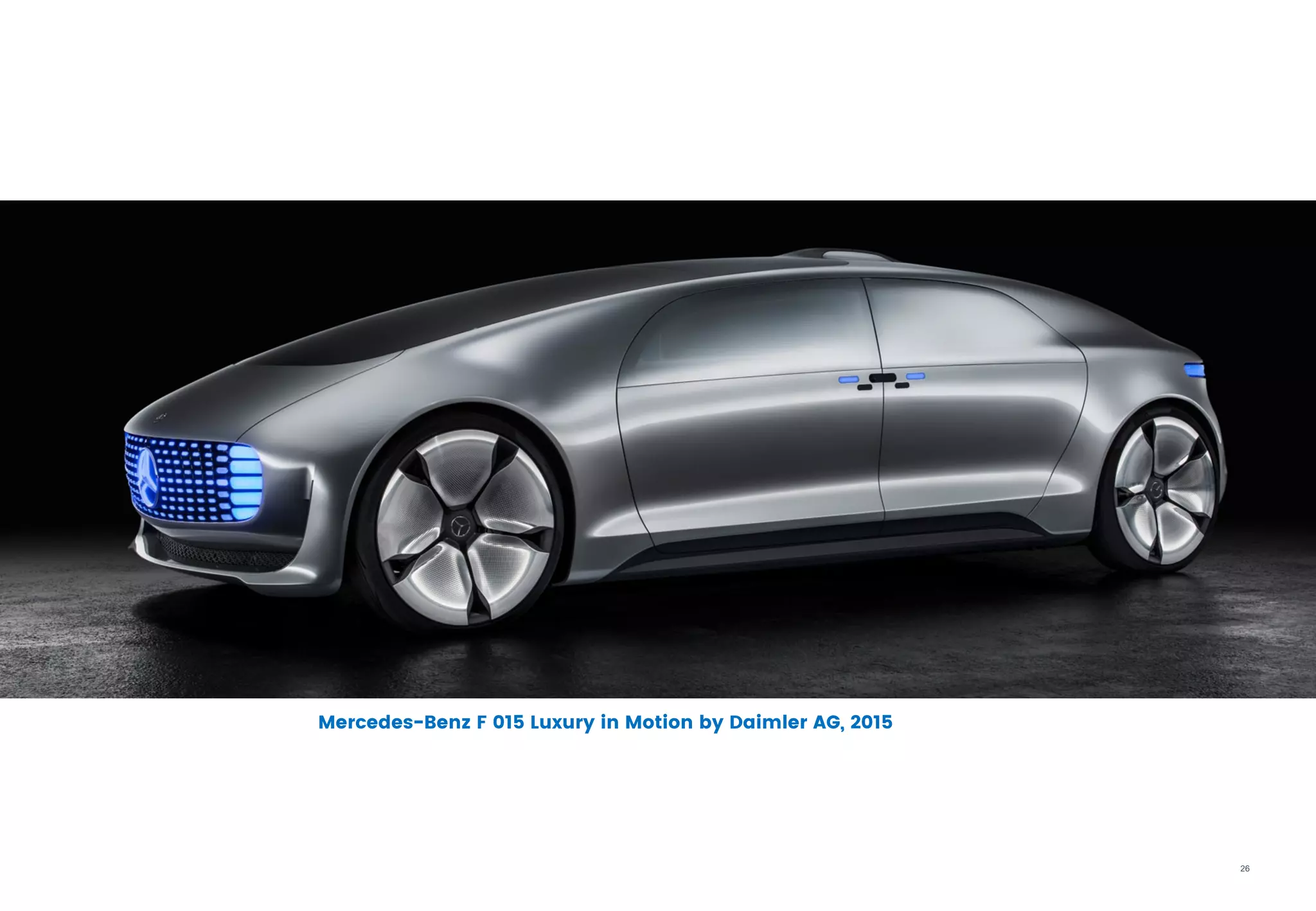
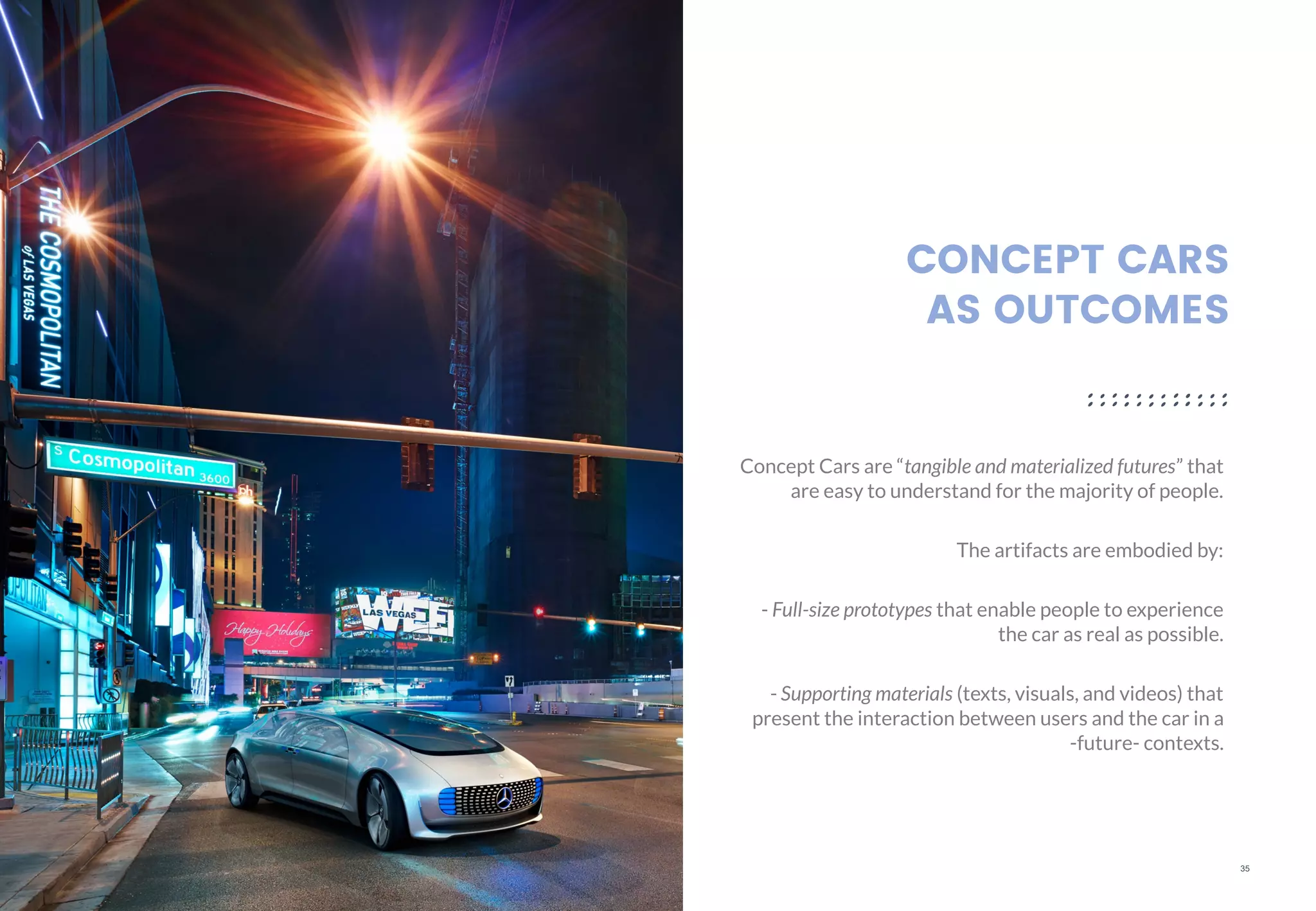
Mercedes-Benz F 015 Luxury in Motion by Daimler AG, 2015
27
DISCUSSION
More than beautiful show cars, Concept Cars are used to study, map, and envision -an
image of- the future.
This vision moves from the future back to the present and supports companies* in
making decisions and mapping innovation.
* Automotive manufacturers
Suppliers
Car design agencies
28
DISCUSSION
Managerial futures techniques are confidential maps for the future of innovation,
which follow a thinking-first process and end in abstract outcome that targets
specialized audience…
&
Concept Cars
focus on (1) innovation and communication,
following (2) a design-led process
and ending in (3) an open, striking and experienceable outcome.
29
INNOVATION
Concept Cars increase the innovation capabilities:
- Companies foresee the future exploring a plausible
and preferable future.
- Companies experiment with technologies and explore
design languages.
COMMUNICATION
- Companies share a concrete image of the future that is
easy to understand for a broad audience*.
- Stimulates conversations that generate ideas about
the company’s future at different levels**.
- Different people, inside and outside the company,
align their agendas.
*Internal (workers, & suppliers) &
External (media & general public).
**Company’s strategy, its products, etc.
Concept Cars focus on innovation & communication
30
A hands-on technique that embrace thinking, seeing, and
doing approaches to making decisions.
- [Research] Designers investigate and analyze context
factors.
- [Visual synthesis] Designers make sketches and
illustrations to produce ideas about the concept and the
context.
- [Prototyping] Designers make prototypes at different
scales and resolutions, sharing the idea with others.
- [Storytelling] Designers create a narrative to
communicate the artifact through videos and other
materials.
All these activities are necessary to experiment
simultaneously with technology and styling.
Concept Cars follow a design-led process
31
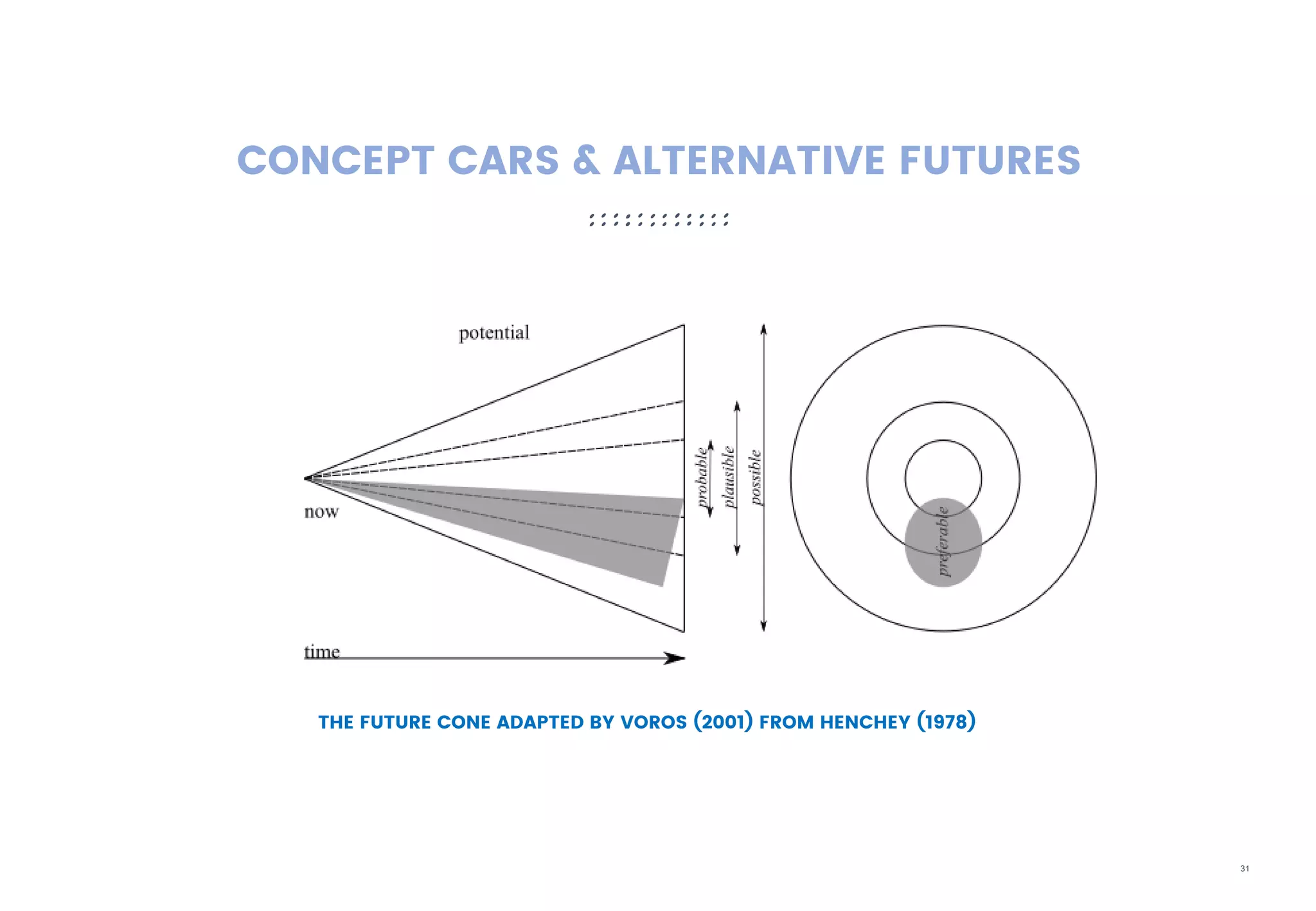
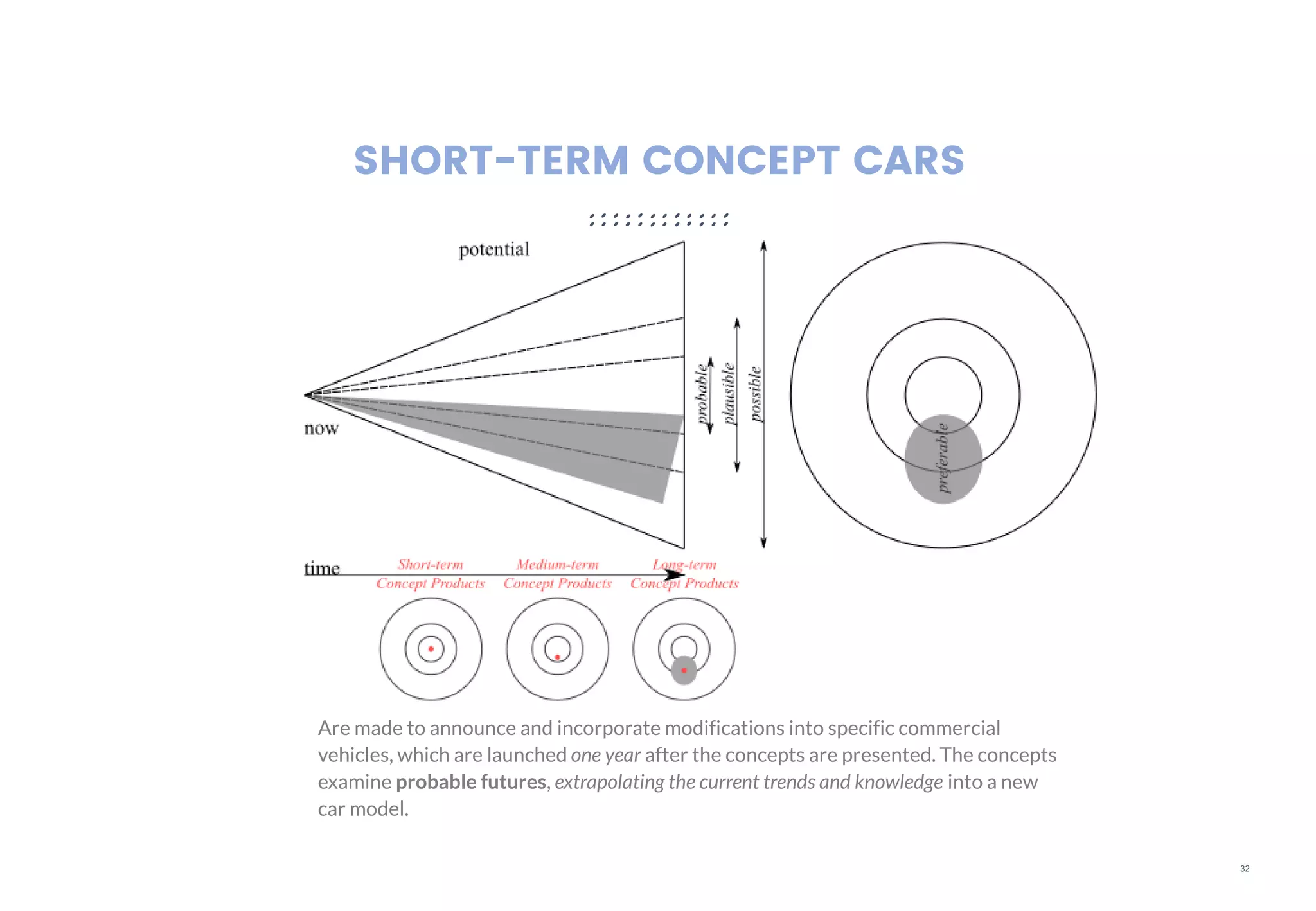
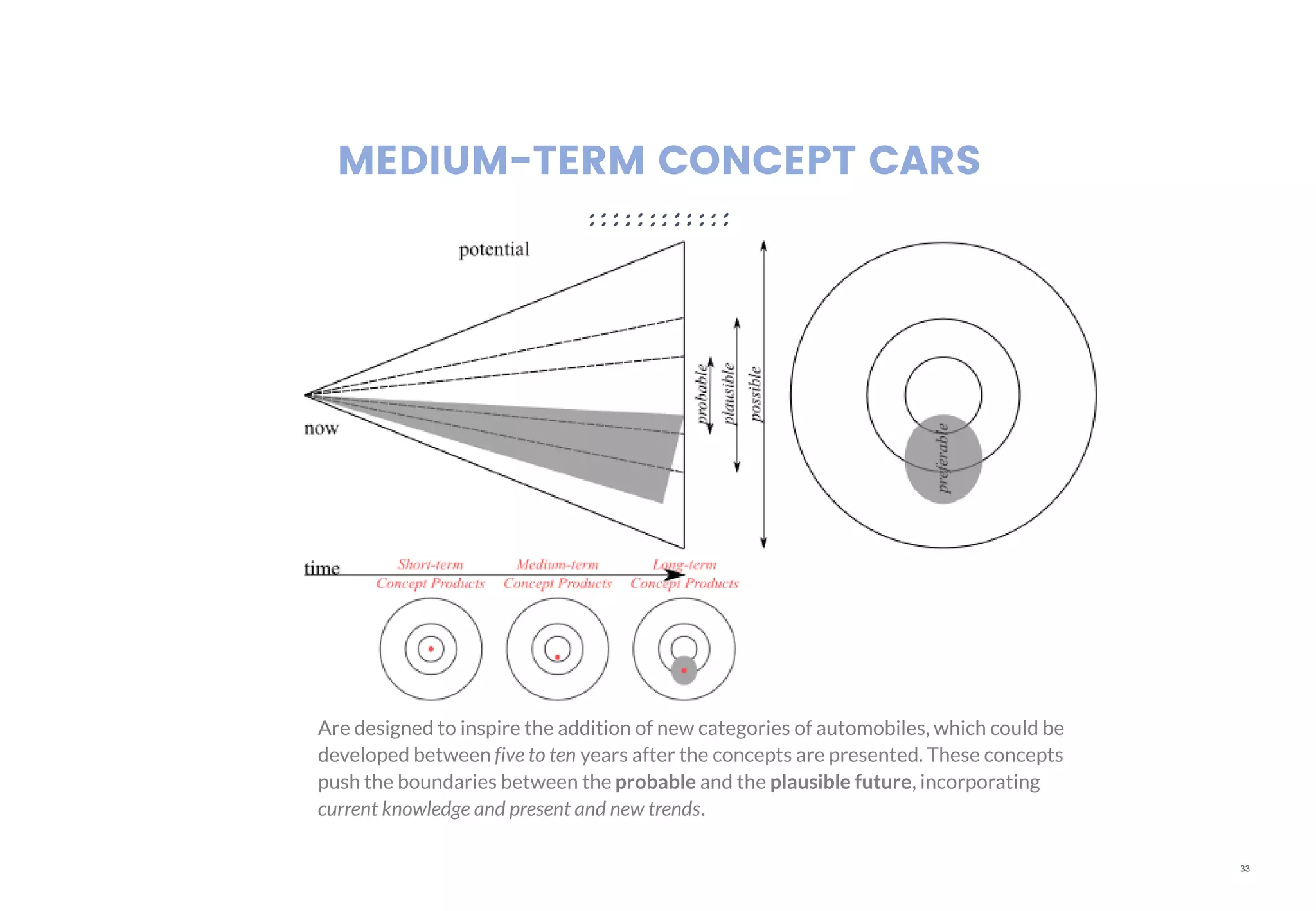
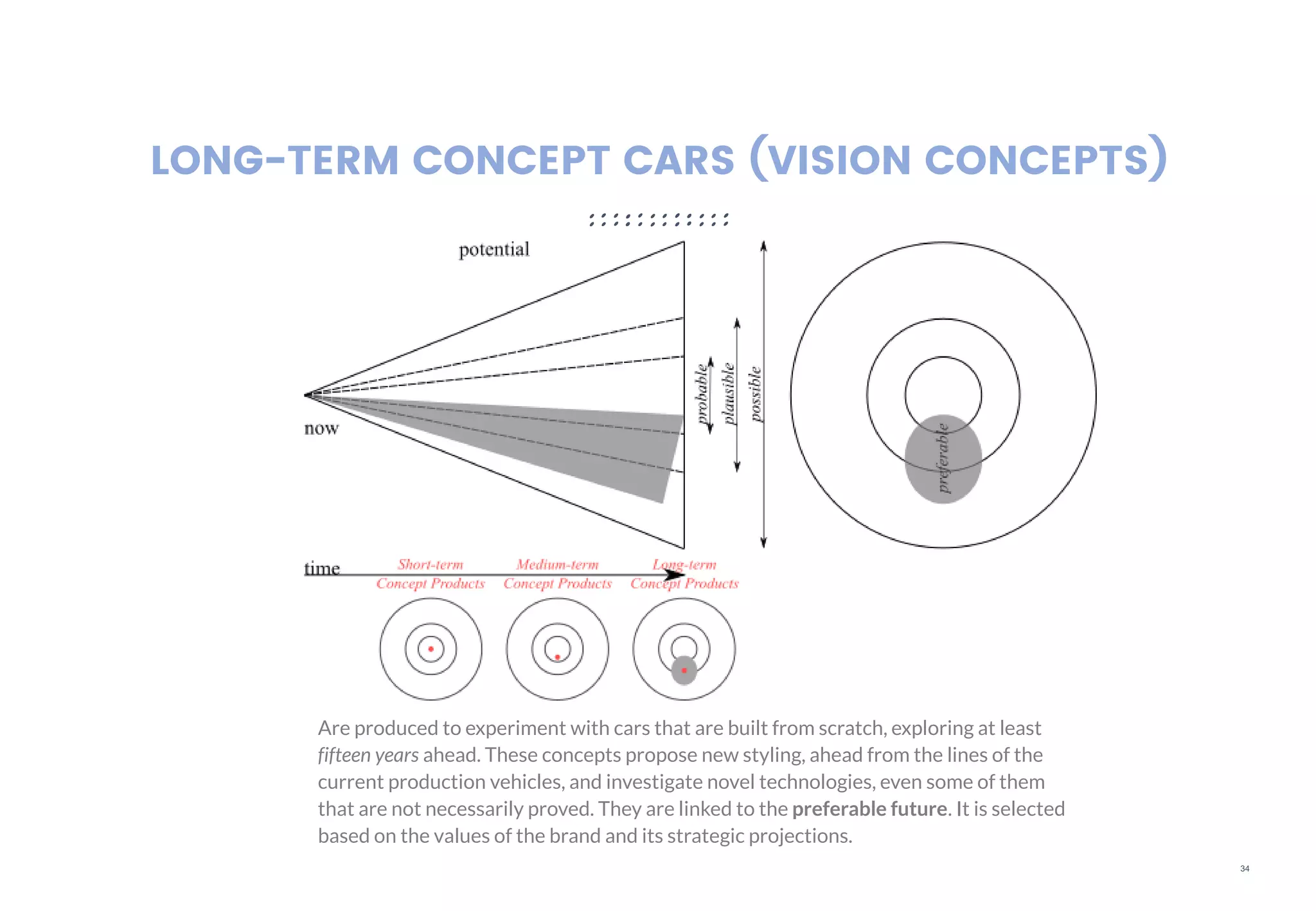
CONCEPT CARS & ALTERNATIVE FUTURES
THE FUTURE CONE ADAPTED BY VOROS (2001) FROM HENCHEY (1978)
32
SHORT-TERM CONCEPT CARS
Are made to announce and incorporate modifications into specific commercial
vehicles, which are launched one year after the concepts are presented. The concepts
examine probable futures, extrapolating the current trends and knowledge into a new
car model.
33
MEDIUM-TERM CONCEPT CARS
Are designed to inspire the addition of new categories of automobiles, which could be
developed between five to ten years after the concepts are presented. These concepts
push the boundaries between the probable and the plausible future, incorporating
current knowledge and present and new trends.
34
LONG-TERM CONCEPT CARS (VISION CONCEPTS)
Are produced to experiment with cars that are built from scratch, exploring at least
fifteen years ahead. These concepts propose new styling, ahead from the lines of the
current production vehicles, and investigate novel technologies, even some of them
that are not necessarily proved. They are linked to the preferable future. It is selected
based on the values of the brand and its strategic projections.
35
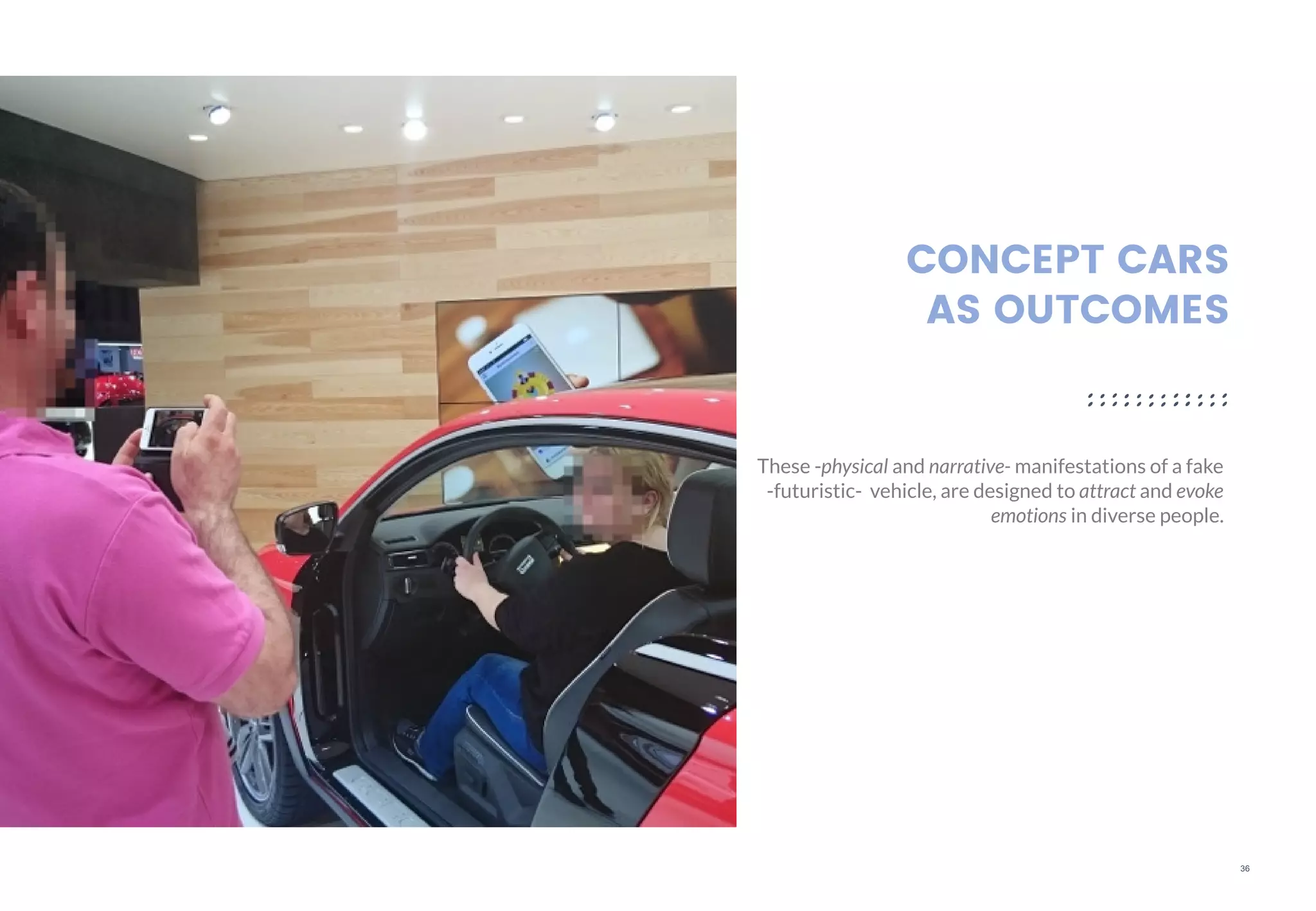
CONCEPT CARS
AS OUTCOMES
Concept Cars are “tangible and materialized futures” that
are easy to understand for the majority of people.
The artifacts are embodied by:
- Full-size prototypes that enable people to experience
the car as real as possible.
- Supporting materials (texts, visuals, and videos) that
present the interaction between users and the car in a
-future- contexts.
36
CONCEPT CARS
AS OUTCOMES
These -physical and narrative- manifestations of a fake
-futuristic- vehicle, are designed to attract and evoke
emotions in diverse people.
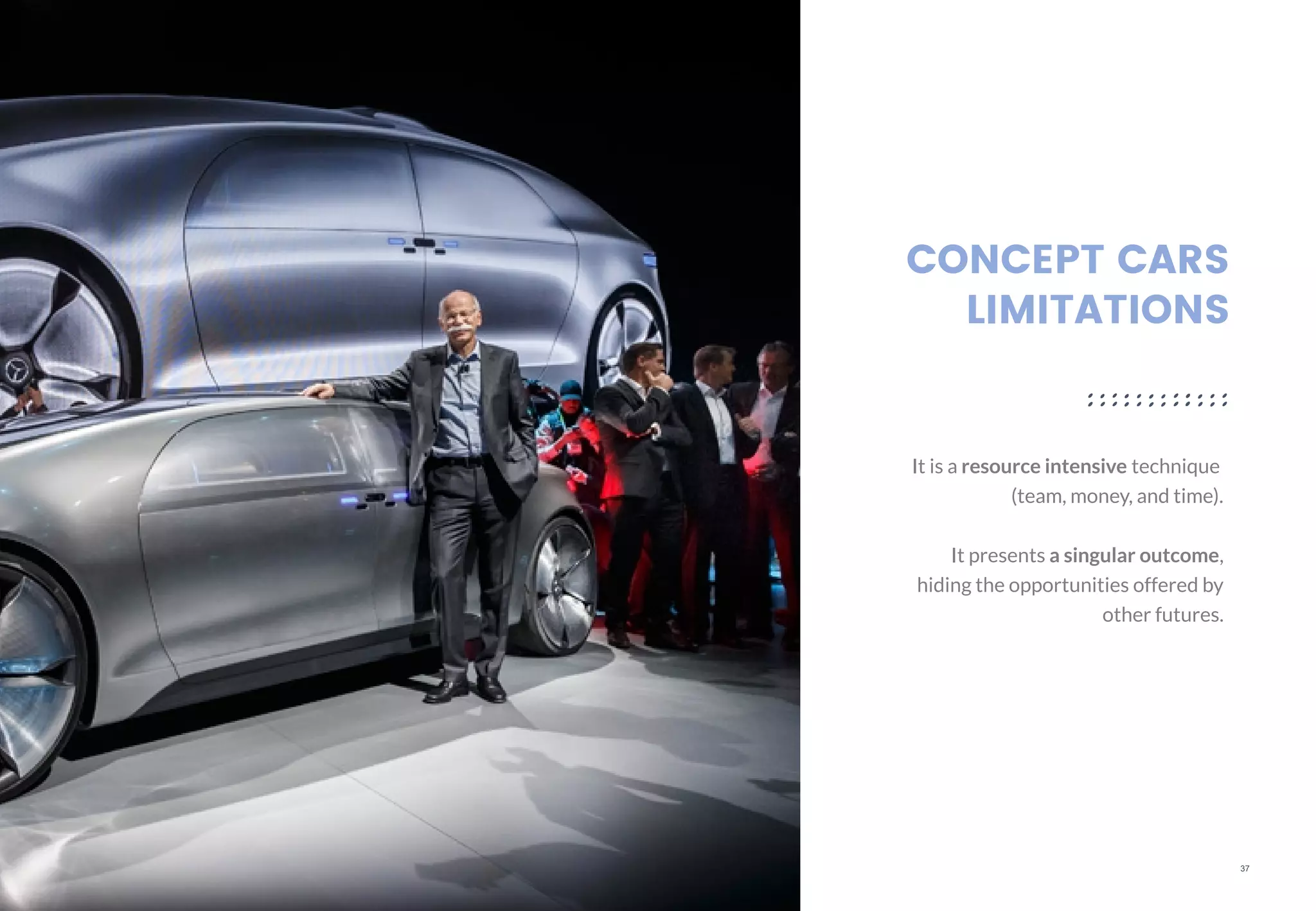
37
CONCEPT CARS
LIMITATIONS
It is a resource intensive technique
(team, money, and time).
It presents a singular outcome,
hiding the opportunities offered by
other futures.
38
TAKE AWAY MESSAGE
Innovation managers can use
Concept Cars as an alternative futures technique or as a ‘vehicle’ to complement other futures method.
Concept Cars can strengthen the innovation in diverse companies regardless of whether they are in other
branches of the industry or whether they are in B2B or B2C businesses.
-----
- It is a design-led futures technique that incorporate visual synthesis, prototyping, and storytelling.
- It ends in a concrete artifact presented as a tangible future through physical and narrative manifestations.
39
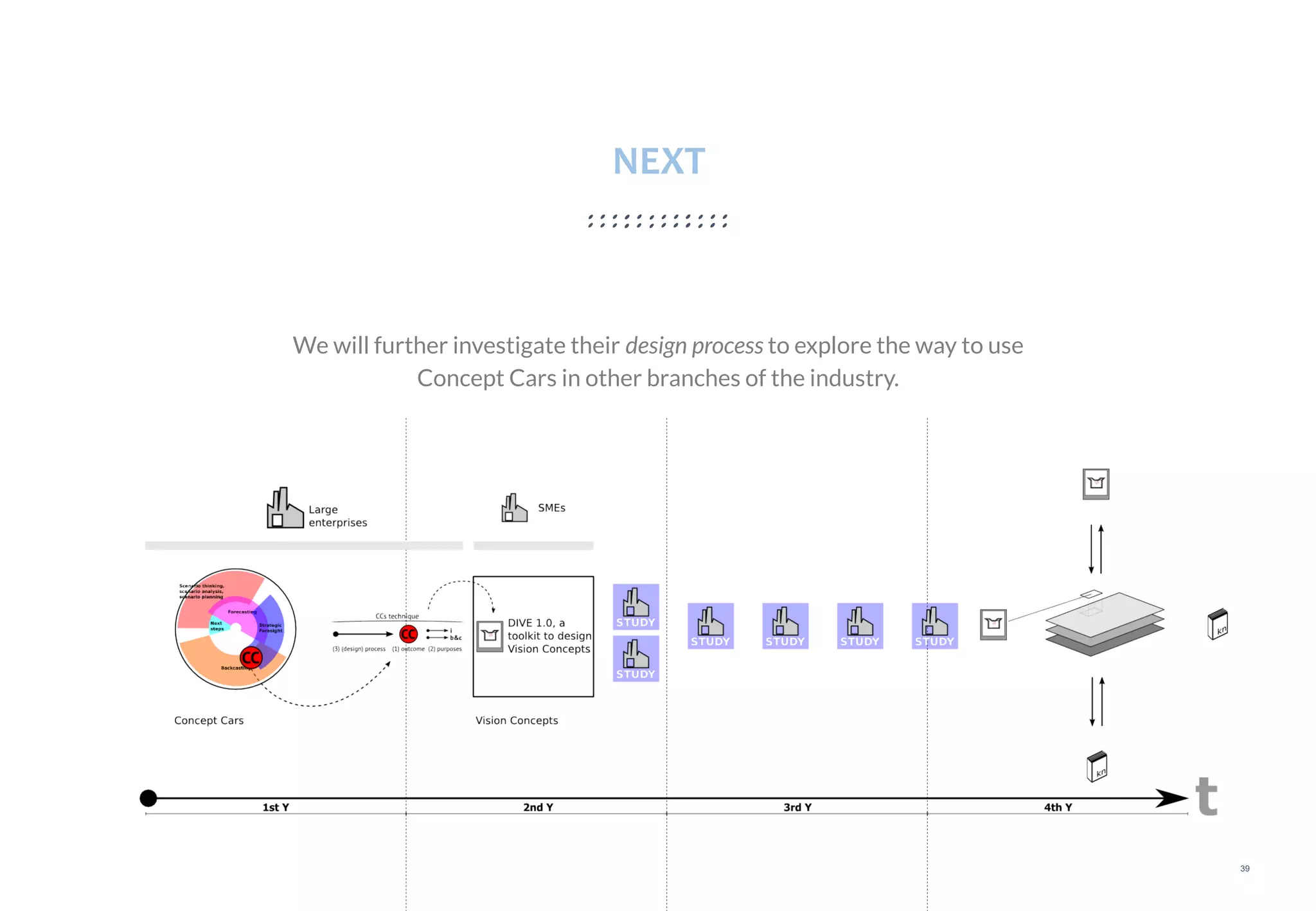
NEXT
We will further investigate their design process to explore the way to use
Concept Cars in other branches of the industry.
40
THANKS
Ricardo Mejia Sarmiento
www.pktweb.com
J.R.MejiaSarmiento@tudelft.nl

Presentation Concept Cars as a design-led futures technique

  • 1.
    1 CONCEPT CARS ASA DESIGN-LED FUTURES TECHNIQUE by Ricardo Mejia Sarmiento, Erik Jan Hultink, Gert Pasman, and Pieter Jan Stappers
  • 2.
    2 CONTENT 1. Futures Studiestechniques (situation & complication) 2. The Design-led Futures techniques (opportunity) 3. The study (methods) 4. Our claims (discussion) 5. Take away message Q&A
  • 3.
    3 Innovation forces organizationsto think about the future, which is far from easy.
  • 4.
    4 Because they needto be aware of the changes in - the business environment - the behaviors of customers, competitors, and suppliers. (Van der Duin, 2006)
  • 5.
    5 FUTURES STUDIES The techniquesguiding those explorations are named futures studies, which Hines (2016) describes as modes of thinking, mapping and influencing the future.
  • 6.
    6 2 Making plans andcommunicating those plans 3 Learning from this experience 1 Identifying opportunities and risks These techniques help companies
  • 7.
    7 MAPPING FUTURES STUDIES TECHNIQUES Weused the Three Approaches to Making Decisions by Mintzberg & Westley (2001) to map the Futures Studies.
  • 8.
    8 MAPPING FUTURES STUDIES TECHNIQUES ● Thinkingfirst, which is a verbal approach that relies on facts. ● Seeing first that is visual and based on ideas. ● Doing first, which is visceral and based on experiences. THREE APPROACHES TO MAKING DECISIONS (Mintzberg & Westley, 2001)
  • 9.
    9 MAPPING FUTURES STUDIES TECHNIQUES Fromshort-term (in the small circle) to long-term (in the large circle). TIME-HORIZONS (Eisenhart & Brown, 1997)
  • 10.
    10 MANAGERIAL FUTURES STUDIES They arethinking first -verbal- approaches that relies on facts. MANAGERIAL FUTURES TECHNIQUES
  • 11.
    11 e.g. TECHNOLOGY ROADMAPING Technology road-mappingis “a process to think and analyze the market, product, and technology conditions [to] elaborate on a plan” (Simonse, Buijs and Hultink, 2015). Albright and Kappel (2003)
  • 12.
    12 e.g. FUTURE SCENARIOS Future Scenariosare “scenarios that describe consistent and plausible futures for the company” (Van Notten, 2006).
  • 13.
    13 However, managerial techniques havesome limitations - Top-down processes - Involve only top-managers - Resource and time-consuming - Complex and abstract outcomes - Difficult to communicate and implement
  • 14.
    14 DESIGN-LED FUTURES STUDIES - Intuitiveand action oriented. - Have a strong emphasis on communication. - Integrate the Three approaches to making decisions (Sanders & Stappers, 2012). DESIGN-LED FUTURES TECHNIQUES
  • 15.
    15 e.g. DESIGN FICTIONS Design Fictionsis a technique to develop “micro futures- studies [that focus] on the everyday life, its short-term evolutions, and the standard objects or services that might fill these possible futures” (Girardin, 2015) Superflux (2014)
  • 16.
    16 e.g. CONCEPT CARS This ConceptCar was defined as “the first car built by a mass manufacturer for the sole purpose of determining the public's reaction to the new ideas” (Edsall, 2003). It turned the company from an engineering-oriented organization into a design-oriented one. Buick Y-Job, designed in 1938 by Harley Earl.
  • 17.
    17 Although Concept Carsare broadly recognized as an interesting phenomenon, little academic work has been conducted on them. Innovation Management & Futures Studies
  • 18.
    18 CONCEPT CARS AS BRANDINGEXERCISES - Concept Cars create a brand identity within the company, and outside they enhance the brand image (Roscam Abbing, 2010). - Concept Cars present and visualize the company’s visions of future design and technology trends (Backman and Börjesson, 2006). - Concept Cars establish coherent and unified design outputs of the different ideas and products lines (Evans, 2011).
  • 19.
    19 CONCEPT CARS, THE DESIGNPROCESS - The process of designing a Concept Car is much shorter that a commercial car (Berlitz and Huhn, 2005). - It focuses on communication. The company presents the Concept Car at a motor show to the media: newspapers, TV, and radio (Lv & Lu, 2012), experts and customers (Berlitz & Huhn, 2005), and the general public.
  • 20.
    20 This paper aimsto add to the literature on Innovation Management by uncovering the key features that distinguish Concept Cars as a futures technique.
  • 21.
    21 SAY Te n se m i - s t r u c t u r e d interviews with experts in -automotive- design. Purpose, Outcomes, and Process. MIXED METHOD
  • 22.
    22Page DO Observations at the85th International Motor-Show and Accessories in Geneva. Outcomes. MIXED METHOD
  • 23.
    23 MIXED METHOD MAKE A multiple-caseanalysis to compare three prototypical examples of the different types of Concept Cars. Purpose, Outcomes, and Process.
  • 24.
    24 Your Concept Carby Volvo, 2004
  • 25.
    25 Citröen-Lacoste Concept Carby Citröen and Lacoste, 2010
  • 26.
    26 Mercedes-Benz F 015Luxury in Motion by Daimler AG, 2015
  • 27.
    27 DISCUSSION More than beautifulshow cars, Concept Cars are used to study, map, and envision -an image of- the future. This vision moves from the future back to the present and supports companies* in making decisions and mapping innovation. * Automotive manufacturers Suppliers Car design agencies
  • 28.
    28 DISCUSSION Managerial futures techniquesare confidential maps for the future of innovation, which follow a thinking-first process and end in abstract outcome that targets specialized audience… & Concept Cars focus on (1) innovation and communication, following (2) a design-led process and ending in (3) an open, striking and experienceable outcome.
  • 29.
    29 INNOVATION Concept Cars increasethe innovation capabilities: - Companies foresee the future exploring a plausible and preferable future. - Companies experiment with technologies and explore design languages. COMMUNICATION - Companies share a concrete image of the future that is easy to understand for a broad audience*. - Stimulates conversations that generate ideas about the company’s future at different levels**. - Different people, inside and outside the company, align their agendas. *Internal (workers, & suppliers) & External (media & general public). **Company’s strategy, its products, etc. Concept Cars focus on innovation & communication
  • 30.
    30 A hands-on techniquethat embrace thinking, seeing, and doing approaches to making decisions. - [Research] Designers investigate and analyze context factors. - [Visual synthesis] Designers make sketches and illustrations to produce ideas about the concept and the context. - [Prototyping] Designers make prototypes at different scales and resolutions, sharing the idea with others. - [Storytelling] Designers create a narrative to communicate the artifact through videos and other materials. All these activities are necessary to experiment simultaneously with technology and styling. Concept Cars follow a design-led process
  • 31.
    31 CONCEPT CARS &ALTERNATIVE FUTURES THE FUTURE CONE ADAPTED BY VOROS (2001) FROM HENCHEY (1978)
  • 32.
    32 SHORT-TERM CONCEPT CARS Aremade to announce and incorporate modifications into specific commercial vehicles, which are launched one year after the concepts are presented. The concepts examine probable futures, extrapolating the current trends and knowledge into a new car model.
  • 33.
    33 MEDIUM-TERM CONCEPT CARS Aredesigned to inspire the addition of new categories of automobiles, which could be developed between five to ten years after the concepts are presented. These concepts push the boundaries between the probable and the plausible future, incorporating current knowledge and present and new trends.
  • 34.
    34 LONG-TERM CONCEPT CARS(VISION CONCEPTS) Are produced to experiment with cars that are built from scratch, exploring at least fifteen years ahead. These concepts propose new styling, ahead from the lines of the current production vehicles, and investigate novel technologies, even some of them that are not necessarily proved. They are linked to the preferable future. It is selected based on the values of the brand and its strategic projections.
  • 35.
    35 CONCEPT CARS AS OUTCOMES ConceptCars are “tangible and materialized futures” that are easy to understand for the majority of people. The artifacts are embodied by: - Full-size prototypes that enable people to experience the car as real as possible. - Supporting materials (texts, visuals, and videos) that present the interaction between users and the car in a -future- contexts.
  • 36.
    36 CONCEPT CARS AS OUTCOMES These-physical and narrative- manifestations of a fake -futuristic- vehicle, are designed to attract and evoke emotions in diverse people.
  • 37.
    37 CONCEPT CARS LIMITATIONS It isa resource intensive technique (team, money, and time). It presents a singular outcome, hiding the opportunities offered by other futures.
  • 38.
    38 TAKE AWAY MESSAGE Innovationmanagers can use Concept Cars as an alternative futures technique or as a ‘vehicle’ to complement other futures method. Concept Cars can strengthen the innovation in diverse companies regardless of whether they are in other branches of the industry or whether they are in B2B or B2C businesses. ----- - It is a design-led futures technique that incorporate visual synthesis, prototyping, and storytelling. - It ends in a concrete artifact presented as a tangible future through physical and narrative manifestations.
  • 39.
    39 NEXT We will furtherinvestigate their design process to explore the way to use Concept Cars in other branches of the industry.
  • 40.