HOMO ERECTUS
JAVANENSIS (JAVA MAN)
PRESENT BY:
SUNGA JASON C.
JAVA MAN (HOMO ERECTUS ERECTUS, FORMERLY
ALSO ANTHROPOPITHECUS ERECTUS AND
PITHECANTHROPUS ERECTUS
• - is an early human discovered in 1891 and 1892 on the island
of Java (Dutch East Indies,now part of Indonesia
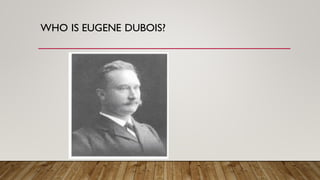
WHO IS EUGENE DUBOIS?
- MARIE EUGENE FRANCOIS THOMAS
DUBOIS (BORN JANUARY 28,1858,
EISDEN, NETHERLANDS – DIED
DECEMBER 16,1940,DE BEDLAER)
Dutch anatomist and geologist who
discovered the remains of Java man, the
first know fossil of Homo Erectus
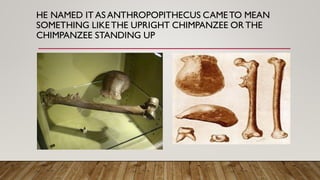
HE NAMED IT AS ANTHROPOPITHECUS CAMETO MEAN
SOMETHING LIKETHE UPRIGHT CHIMPANZEE OR THE
CHIMPANZEE STANDING UP
IN THE MID 1930,TROUGH THE SYSTEMATIC
EFFORTS OF G. H. R KOENIGSWALD, OTHER FOSSIL
REMAINS OF THE JAVA MAN WERE RECOVERED,
REINFORCING AND VALIDATING DUBOIS
FINDINGS
THE BRAIN CAPACITY OF THE JAVA MAN IS PLACED
APPROXIMATELY BETWEEN 775-975 CC.
INCIDENTALLY,THE BRAIN CAPACITY OF MODERN
HUMANS IS 1,500 CC FOR THE MALE AND 1,450 CC
FOR THE FEMALE
A stone flake industry called
“ Patijitan” is known to exist
on the upper portions of
theTrinil beds in Java
• In addition,there were no indications that they
were good hunter
•They lived in the open, they had not mastered
the use of fire
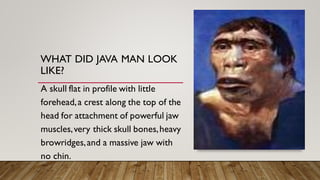
WHAT DID JAVA MAN LOOK
LIKE?
A skull flat in profile with little
forehead,a crest along the top of the
head for attachment of powerful jaw
muscles,very thick skull bones,heavy
browridges,and a massive jaw with
no chin.
Java Man was about 173 cm (5 ft 8 in) tall and his
thighbones show that he walked erect like modern
humans.
The femur is thicker than that of a modern human,
indicating he was engaging in a lot of running.
The end…
ThankYou!

Presentation (5).pdf HOMO ERECTUS JAVANENSIS

  • 1.
    HOMO ERECTUS JAVANENSIS (JAVAMAN) PRESENT BY: SUNGA JASON C.
  • 2.
    JAVA MAN (HOMOERECTUS ERECTUS, FORMERLY ALSO ANTHROPOPITHECUS ERECTUS AND PITHECANTHROPUS ERECTUS • - is an early human discovered in 1891 and 1892 on the island of Java (Dutch East Indies,now part of Indonesia
  • 3.
  • 4.
    - MARIE EUGENEFRANCOIS THOMAS DUBOIS (BORN JANUARY 28,1858, EISDEN, NETHERLANDS – DIED DECEMBER 16,1940,DE BEDLAER) Dutch anatomist and geologist who discovered the remains of Java man, the first know fossil of Homo Erectus
  • 5.
    HE NAMED ITAS ANTHROPOPITHECUS CAMETO MEAN SOMETHING LIKETHE UPRIGHT CHIMPANZEE OR THE CHIMPANZEE STANDING UP
  • 6.
    IN THE MID1930,TROUGH THE SYSTEMATIC EFFORTS OF G. H. R KOENIGSWALD, OTHER FOSSIL REMAINS OF THE JAVA MAN WERE RECOVERED, REINFORCING AND VALIDATING DUBOIS FINDINGS
  • 7.
    THE BRAIN CAPACITYOF THE JAVA MAN IS PLACED APPROXIMATELY BETWEEN 775-975 CC. INCIDENTALLY,THE BRAIN CAPACITY OF MODERN HUMANS IS 1,500 CC FOR THE MALE AND 1,450 CC FOR THE FEMALE
  • 8.
    A stone flakeindustry called “ Patijitan” is known to exist on the upper portions of theTrinil beds in Java
  • 9.
    • In addition,therewere no indications that they were good hunter •They lived in the open, they had not mastered the use of fire
  • 10.
    WHAT DID JAVAMAN LOOK LIKE? A skull flat in profile with little forehead,a crest along the top of the head for attachment of powerful jaw muscles,very thick skull bones,heavy browridges,and a massive jaw with no chin.
  • 11.
    Java Man wasabout 173 cm (5 ft 8 in) tall and his thighbones show that he walked erect like modern humans. The femur is thicker than that of a modern human, indicating he was engaging in a lot of running.
  • 12.