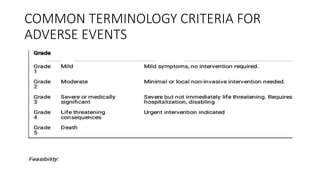
COMMON TERMINOLOGY CRITERIA FOR
ADVERSE EVENTS
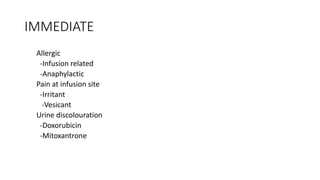
IMMEDIATE
Allergic
-Infusion related
-Anaphylactic
Pain at infusion site
-Irritant
-Vesicant
Urine discolouration
-Doxorubicin
-Mitoxantrone
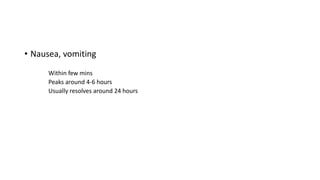
• Nausea, vomiting
Within few mins
Peaks around 4-6 hours
Usually resolves around 24 hours
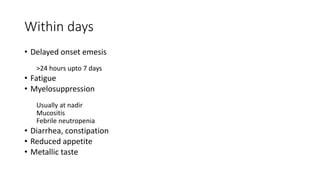
Within days
• Delayed onset emesis
>24 hours upto 7 days
• Fatigue
• Myelosuppression
Usually at nadir
Mucositis
Febrile neutropenia
• Diarrhea, constipation
• Reduced appetite
• Metallic taste
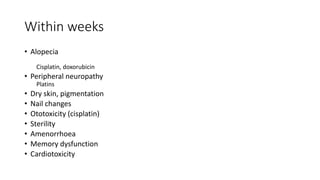
Within weeks
• Alopecia
Cisplatin, doxorubicin
• Peripheral neuropathy
Platins
• Dry skin, pigmentation
• Nail changes
• Ototoxicity (cisplatin)
• Sterility
• Amenorrhoea
• Memory dysfunction
• Cardiotoxicity
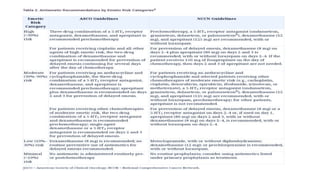
EMETOGENIC CHEMOTHERAPY
GRADING OF NEUTROPENIA
• Grade 1- ANC >1500
• Grade 2-ANC 1000-1500
• Grade 3-ANC 500- 1000
• Grade 4- ANC < 500
NCCN RISK GROUP FOR Febrile neutropenia
• Low risk grp - < 10 %
• no any symptoms/ comorbidity
• No need of prophylaxis
• INTERMEDIATE RISK GRP – 10-20 %
• Prior Radiation therapy/chemotherapy
• Persistent neutropenia
• Tumor affecting BM
• Recent sx /open wound
• Liver failure
• Kidney failure
• Agr 65 or more and receiving chemotherapy
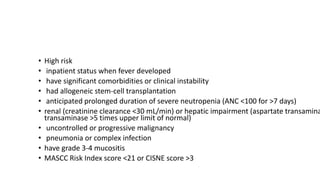
• High risk
• inpatient status when fever developed
• have significant comorbidities or clinical instability
• had allogeneic stem-cell transplantation
• anticipated prolonged duration of severe neutropenia (ANC <100 for >7 days)
• renal (creatinine clearance <30 mL/min) or hepatic impairment (aspartate transamina
transaminase >5 times upper limit of normal)
• uncontrolled or progressive malignancy
• pneumonia or complex infection
• have grade 3-4 mucositis
• MASCC Risk Index score <21 or CISNE score >3
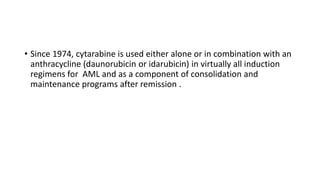
• Since 1974, cytarabine is used either alone or in combination with an
anthracycline (daunorubicin or idarubicin) in virtually all induction
regimens for AML and as a component of consolidation and
maintenance programs after remission .
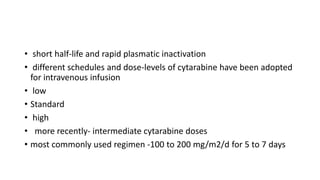
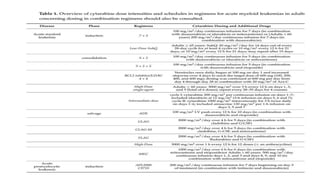
• short half-life and rapid plasmatic inactivation
• different schedules and dose-levels of cytarabine have been adopted
for intravenous infusion
• low
• Standard
• high
• more recently- intermediate cytarabine doses
• most commonly used regimen -100 to 200 mg/m2/d for 5 to 7 days
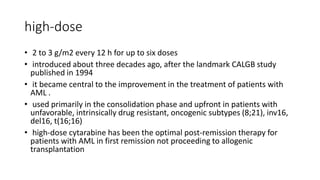
high-dose
• 2 to 3 g/m2 every 12 h for up to six doses
• introduced about three decades ago, after the landmark CALGB study
published in 1994
• it became central to the improvement in the treatment of patients with
AML .
• used primarily in the consolidation phase and upfront in patients with
unfavorable, intrinsically drug resistant, oncogenic subtypes (8;21), inv16,
del16, t(16;16)
• high-dose cytarabine has been the optimal post-remission therapy for
patients with AML in first remission not proceeding to allogenic
transplantation
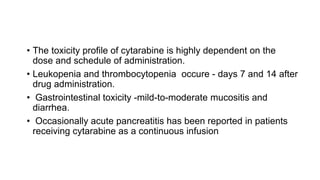
• The toxicity profile of cytarabine is highly dependent on the
dose and schedule of administration.
• Leukopenia and thrombocytopenia occure - days 7 and 14 after
drug administration.
• Gastrointestinal toxicity -mild-to-moderate mucositis and
diarrhea.
• Occasionally acute pancreatitis has been reported in patients
receiving cytarabine as a continuous infusion
Cytarabine syndrome
• occur within 12 h after the start of drug infusion
• with the onset of fever, myalgia, joint and bone pain, maculopapular
rash, keratoconjunctivitis, and occasional chest pain
• most likely represents an allergic reaction to cytarabine
• patients usually develop symptoms months after the first dose,
• corticosteroids
• resolve within 24 h when cytarabine is discontinued
high dose cytarabine
• 2 to 3 g/m2 with each dose
• common major side effects
1. biphasic pancytopenia
2. central nervous system toxicity,
3. skin eruptions
4. hyperbilirubinemia in > 10% of patients
5. infection
6. seizures
Acute cerebellar toxicity
• dysarthria with truncal and gait ataxia
• cerebral syndrome - encephalopathy, psychosis, seizures, and
coma.
• widespread loss of Purkinje cells in the cerebellum .
• begins with somnolence and occasionally an encephalopathy
• develops two to five days after beginning treatment
• may also be delayed, occurring up to 3–8 days after treatment has
begun.
• severe cerebellar toxicity - treatment discontinuation
neurotoxicity
• peripheral neuropathies resembling GBS , brachial plexopathy, lateral
rectus palsy, optic neuropathy, or an extrapyramidal syndrome
• Risk factor-
• cumulative cytarabine dose,
• prior CNS disease
• renal impairment
• high-dose therapy (>18 g/m2 per cycle)
• age >50 years
• fatal cardiomyopathy - combination with cyclophosphamide
• Anaphylaxis -acute cardiopulmonary arrest
• GI toxicity -bowel necrosis and esophagus ulceration
Cytarabine lung
• Subacute respiratory failure
• Diffuse changes on chest radiographs
• Dx of exclusion
Occular toxicity
• excessive tearing, photophobia, burning ocular pain and blurred
vision
• o/e
• conjunctival injection
• central punctate corneal opacities with subepithelial granular
deposits
• decreased visual acuity
HMAs
• MOA – hypomethylation of DNA
• Drugs
Azacytidine
Dacitabine
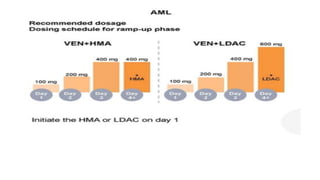
• Azacytidine 75 mg/m2 × 7 days
• Dacitabine 20 mg /m2 × 5 days
• Started with veneticlax on day 1
• 28-day cycles
Common side effects
• bone marrow suppression
• nausea, vomiting, diarrhea, stomatitis
• Bruising
• abdominal pain
• myalgias
• headache, dizziness, fatigue
• fever, rash and pruritus.

Uncommon but potentially severe adverse
events
• severe myelosuppression
• febrile neutropenia
• Pneumonitis
• sepsis
• tumor-lysis syndrome
• embryo-fetal toxicity.

venetoclax
• BCL2 inhibitor
• BCL-2 overexpression has been implicated in survival of AML cells
and treatment resistance
• combination with AZA/ DAC) or low-dose cytarabine (LDAC) for
the treatment of newly diagnosed AML in older patients (≥ 75 years)
or in those with comorbidities precluding the use of intensive
induction chemotherapy (DiNardo et al., 2020; Wei et al., 2020).
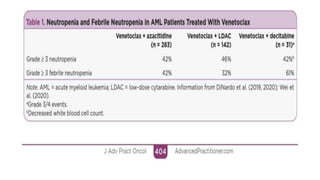
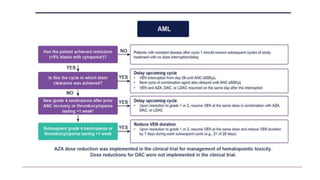
Neutropenia
• In the case of grade 3 neutropenia with infection/fever or grade 4
neutropenia at first occurrence, venetoclax interruption is
recommended until return to grade 1 or baseline level, followed by
administration of venetoclax at its pre-interruption dose.
• For second/subsequent occurrences, venetoclax should be
interrupted and subsequently resumed following dose-reduction
guidelines
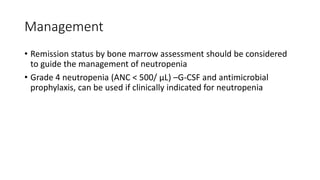
Management
• Remission status by bone marrow assessment should be considered
to guide the management of neutropenia
• Grade 4 neutropenia (ANC < 500/ µL) –G-CSF and antimicrobial
prophylaxis, can be used if clinically indicated for neutropenia
NAUSEA AND VOMITTING
• Gastrointestinal disorders are the prominent class of AES - venetoclax
as a single agent or in combination studies.
• Antiematics
• metoclopramide
• Prochlorperazin
• dolasetron
• granisetron
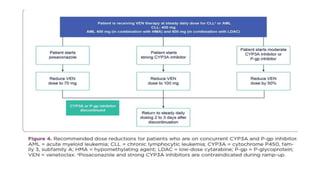
Drug interactions
Presentation (5).details description in chemotherapy

Presentation (5).details description in chemotherapy

  • 2.
    COMMON TERMINOLOGY CRITERIAFOR ADVERSE EVENTS
  • 3.
    IMMEDIATE Allergic -Infusion related -Anaphylactic Pain atinfusion site -Irritant -Vesicant Urine discolouration -Doxorubicin -Mitoxantrone
  • 4.
    • Nausea, vomiting Withinfew mins Peaks around 4-6 hours Usually resolves around 24 hours
  • 5.
    Within days • Delayedonset emesis >24 hours upto 7 days • Fatigue • Myelosuppression Usually at nadir Mucositis Febrile neutropenia • Diarrhea, constipation • Reduced appetite • Metallic taste
  • 6.
    Within weeks • Alopecia Cisplatin,doxorubicin • Peripheral neuropathy Platins • Dry skin, pigmentation • Nail changes • Ototoxicity (cisplatin) • Sterility • Amenorrhoea • Memory dysfunction • Cardiotoxicity
  • 7.
  • 10.
    GRADING OF NEUTROPENIA •Grade 1- ANC >1500 • Grade 2-ANC 1000-1500 • Grade 3-ANC 500- 1000 • Grade 4- ANC < 500
  • 11.
    NCCN RISK GROUPFOR Febrile neutropenia • Low risk grp - < 10 % • no any symptoms/ comorbidity • No need of prophylaxis • INTERMEDIATE RISK GRP – 10-20 % • Prior Radiation therapy/chemotherapy • Persistent neutropenia • Tumor affecting BM • Recent sx /open wound • Liver failure • Kidney failure • Agr 65 or more and receiving chemotherapy
  • 12.
    • High risk •inpatient status when fever developed • have significant comorbidities or clinical instability • had allogeneic stem-cell transplantation • anticipated prolonged duration of severe neutropenia (ANC <100 for >7 days) • renal (creatinine clearance <30 mL/min) or hepatic impairment (aspartate transamina transaminase >5 times upper limit of normal) • uncontrolled or progressive malignancy • pneumonia or complex infection • have grade 3-4 mucositis • MASCC Risk Index score <21 or CISNE score >3
  • 14.
    • Since 1974,cytarabine is used either alone or in combination with an anthracycline (daunorubicin or idarubicin) in virtually all induction regimens for AML and as a component of consolidation and maintenance programs after remission .
  • 15.
    • short half-lifeand rapid plasmatic inactivation • different schedules and dose-levels of cytarabine have been adopted for intravenous infusion • low • Standard • high • more recently- intermediate cytarabine doses • most commonly used regimen -100 to 200 mg/m2/d for 5 to 7 days
  • 16.
    high-dose • 2 to3 g/m2 every 12 h for up to six doses • introduced about three decades ago, after the landmark CALGB study published in 1994 • it became central to the improvement in the treatment of patients with AML . • used primarily in the consolidation phase and upfront in patients with unfavorable, intrinsically drug resistant, oncogenic subtypes (8;21), inv16, del16, t(16;16) • high-dose cytarabine has been the optimal post-remission therapy for patients with AML in first remission not proceeding to allogenic transplantation
  • 18.
    • The toxicityprofile of cytarabine is highly dependent on the dose and schedule of administration. • Leukopenia and thrombocytopenia occure - days 7 and 14 after drug administration. • Gastrointestinal toxicity -mild-to-moderate mucositis and diarrhea. • Occasionally acute pancreatitis has been reported in patients receiving cytarabine as a continuous infusion
  • 19.
    Cytarabine syndrome • occurwithin 12 h after the start of drug infusion • with the onset of fever, myalgia, joint and bone pain, maculopapular rash, keratoconjunctivitis, and occasional chest pain • most likely represents an allergic reaction to cytarabine • patients usually develop symptoms months after the first dose, • corticosteroids • resolve within 24 h when cytarabine is discontinued
  • 20.
    high dose cytarabine •2 to 3 g/m2 with each dose • common major side effects 1. biphasic pancytopenia 2. central nervous system toxicity, 3. skin eruptions 4. hyperbilirubinemia in > 10% of patients 5. infection 6. seizures
  • 21.
    Acute cerebellar toxicity •dysarthria with truncal and gait ataxia • cerebral syndrome - encephalopathy, psychosis, seizures, and coma. • widespread loss of Purkinje cells in the cerebellum . • begins with somnolence and occasionally an encephalopathy • develops two to five days after beginning treatment • may also be delayed, occurring up to 3–8 days after treatment has begun. • severe cerebellar toxicity - treatment discontinuation
  • 22.
    neurotoxicity • peripheral neuropathiesresembling GBS , brachial plexopathy, lateral rectus palsy, optic neuropathy, or an extrapyramidal syndrome • Risk factor- • cumulative cytarabine dose, • prior CNS disease • renal impairment • high-dose therapy (>18 g/m2 per cycle) • age >50 years
  • 23.
    • fatal cardiomyopathy- combination with cyclophosphamide • Anaphylaxis -acute cardiopulmonary arrest • GI toxicity -bowel necrosis and esophagus ulceration
  • 24.
    Cytarabine lung • Subacuterespiratory failure • Diffuse changes on chest radiographs • Dx of exclusion
  • 25.
    Occular toxicity • excessivetearing, photophobia, burning ocular pain and blurred vision • o/e • conjunctival injection • central punctate corneal opacities with subepithelial granular deposits • decreased visual acuity
  • 26.
    HMAs • MOA –hypomethylation of DNA • Drugs Azacytidine Dacitabine • Azacytidine 75 mg/m2 × 7 days • Dacitabine 20 mg /m2 × 5 days • Started with veneticlax on day 1 • 28-day cycles
  • 27.
    Common side effects •bone marrow suppression • nausea, vomiting, diarrhea, stomatitis • Bruising • abdominal pain • myalgias • headache, dizziness, fatigue • fever, rash and pruritus.
  • 29.
    Uncommon but potentiallysevere adverse events • severe myelosuppression • febrile neutropenia • Pneumonitis • sepsis • tumor-lysis syndrome • embryo-fetal toxicity.
  • 30.
    venetoclax • BCL2 inhibitor •BCL-2 overexpression has been implicated in survival of AML cells and treatment resistance • combination with AZA/ DAC) or low-dose cytarabine (LDAC) for the treatment of newly diagnosed AML in older patients (≥ 75 years) or in those with comorbidities precluding the use of intensive induction chemotherapy (DiNardo et al., 2020; Wei et al., 2020).
  • 31.
    Neutropenia • In thecase of grade 3 neutropenia with infection/fever or grade 4 neutropenia at first occurrence, venetoclax interruption is recommended until return to grade 1 or baseline level, followed by administration of venetoclax at its pre-interruption dose. • For second/subsequent occurrences, venetoclax should be interrupted and subsequently resumed following dose-reduction guidelines
  • 33.
    Management • Remission statusby bone marrow assessment should be considered to guide the management of neutropenia • Grade 4 neutropenia (ANC < 500/ µL) –G-CSF and antimicrobial prophylaxis, can be used if clinically indicated for neutropenia
  • 35.
    NAUSEA AND VOMITTING •Gastrointestinal disorders are the prominent class of AES - venetoclax as a single agent or in combination studies. • Antiematics • metoclopramide • Prochlorperazin • dolasetron • granisetron
  • 37.