COMPLEMENTOS PARA LA
FORMACIÓN DISCIPLINAR
EN LENGUA INGLESA
Máster en formación del profesorado de Secundaria
Universidad Internacional Isabel I de Castilla
ESL LESSON ON NATURAL
DISASTERS AND CATASTROPHES
Lucía Vega Granados
Target group
• Subject: English as a foreign language
• First year of Bachillerato
• Twenty two students
• Two pupils failed the subject the previous
academic year
• Location: a high school in a small miner town of
Asturias (Spain)
Grammar
• Use of present tenses: descriptions of the
disasters, causes, effects, etc.
• Use of past tenses: narrations about past
natural catastrophes in the world
• Use of conditional tenses: hypothetical
situations to prevent the disasters
Vocabulary
• Specific words about different natural disasters
and catastrophes: hurricane, earthquake, flood,
tsunami, thunderstorm, vulnerability, risk,
damage, wound, etc.
• Expressions: circumstances beyond one's
control, unforseen event, humanitarian
organization, etc.
Skills
• Reading comprehension: the students read
different information about the topic, for example
using the Internet, and summarize and choose
what they consider better
• Listening: the students listen and watch several
videos of real natural disasters to compare the
different situations
Skills
• Writing: the students write in the target
language, English, the final project about the
topic
• Oral interaction: the students present their
conclusions to the rest of the class and answer
their mates' questions
Activity: Jigsaw
• Cooperative exercise
• The class is divided into four or five groups
• Each group works on one natural disaster or
catastrophe
Group 1
• Topic: Earthquakes
• Structure:
• Description
• Causes
• Effects
• Prevention
• Examples
Group 2
• Topic: Hurricanes
• Structure:
• Description
• Causes
• Effects
• Prevention
• Examples
Group 3
• Topic: Floods
• Structure:
• Description
• Causes
• Effects
• Prevention
• Examples
Group 4
• Topic: Snowstorms
• Structure:
• Description
• Causes
• Effects
• Prevention
• Examples
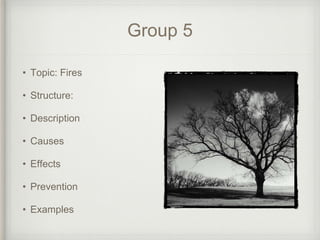
Group 5
• Topic: Fires
• Structure:
• Description
• Causes
• Effects
• Prevention
• Examples
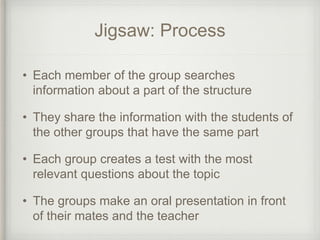
Jigsaw: Process
• Each member of the group searches
information about a part of the structure
• They share the information with the students of
the other groups that have the same part
• Each group creates a test with the most
relevant questions about the topic
• The groups make an oral presentation in front
of their mates and the teacher
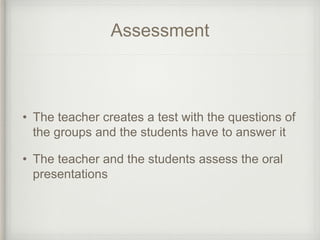
Assessment
• The teacher creates a test with the questions of
the groups and the students have to answer it
• The teacher and the students assess the oral
presentations
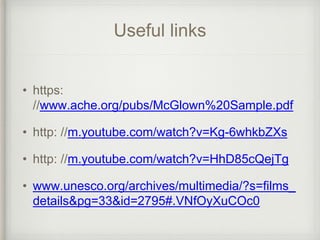
Useful links
• https:
//www.ache.org/pubs/McGlown%20Sample.pdf
• http: //m.youtube.com/watch?v=Kg-6whkbZXs
• http: //m.youtube.com/watch?v=HhD85cQejTg
• www.unesco.org/archives/multimedia/?s=films_
details&pg=33&id=2795#.VNfOyXuCOc0

Presentación complementos

  • 1.
    COMPLEMENTOS PARA LA FORMACIÓNDISCIPLINAR EN LENGUA INGLESA Máster en formación del profesorado de Secundaria Universidad Internacional Isabel I de Castilla
  • 2.
    ESL LESSON ONNATURAL DISASTERS AND CATASTROPHES Lucía Vega Granados
  • 3.
    Target group • Subject:English as a foreign language • First year of Bachillerato • Twenty two students • Two pupils failed the subject the previous academic year • Location: a high school in a small miner town of Asturias (Spain)
  • 4.
    Grammar • Use ofpresent tenses: descriptions of the disasters, causes, effects, etc. • Use of past tenses: narrations about past natural catastrophes in the world • Use of conditional tenses: hypothetical situations to prevent the disasters
  • 5.
    Vocabulary • Specific wordsabout different natural disasters and catastrophes: hurricane, earthquake, flood, tsunami, thunderstorm, vulnerability, risk, damage, wound, etc. • Expressions: circumstances beyond one's control, unforseen event, humanitarian organization, etc.
  • 6.
    Skills • Reading comprehension:the students read different information about the topic, for example using the Internet, and summarize and choose what they consider better • Listening: the students listen and watch several videos of real natural disasters to compare the different situations
  • 7.
    Skills • Writing: thestudents write in the target language, English, the final project about the topic • Oral interaction: the students present their conclusions to the rest of the class and answer their mates' questions
  • 8.
    Activity: Jigsaw • Cooperativeexercise • The class is divided into four or five groups • Each group works on one natural disaster or catastrophe
  • 9.
    Group 1 • Topic:Earthquakes • Structure: • Description • Causes • Effects • Prevention • Examples
  • 10.
    Group 2 • Topic:Hurricanes • Structure: • Description • Causes • Effects • Prevention • Examples
  • 11.
    Group 3 • Topic:Floods • Structure: • Description • Causes • Effects • Prevention • Examples
  • 12.
    Group 4 • Topic:Snowstorms • Structure: • Description • Causes • Effects • Prevention • Examples
  • 13.
    Group 5 • Topic:Fires • Structure: • Description • Causes • Effects • Prevention • Examples
  • 14.
    Jigsaw: Process • Eachmember of the group searches information about a part of the structure • They share the information with the students of the other groups that have the same part • Each group creates a test with the most relevant questions about the topic • The groups make an oral presentation in front of their mates and the teacher
  • 15.
    Assessment • The teachercreates a test with the questions of the groups and the students have to answer it • The teacher and the students assess the oral presentations
  • 16.
    Useful links • https: //www.ache.org/pubs/McGlown%20Sample.pdf •http: //m.youtube.com/watch?v=Kg-6whkbZXs • http: //m.youtube.com/watch?v=HhD85cQejTg • www.unesco.org/archives/multimedia/?s=films_ details&pg=33&id=2795#.VNfOyXuCOc0