39
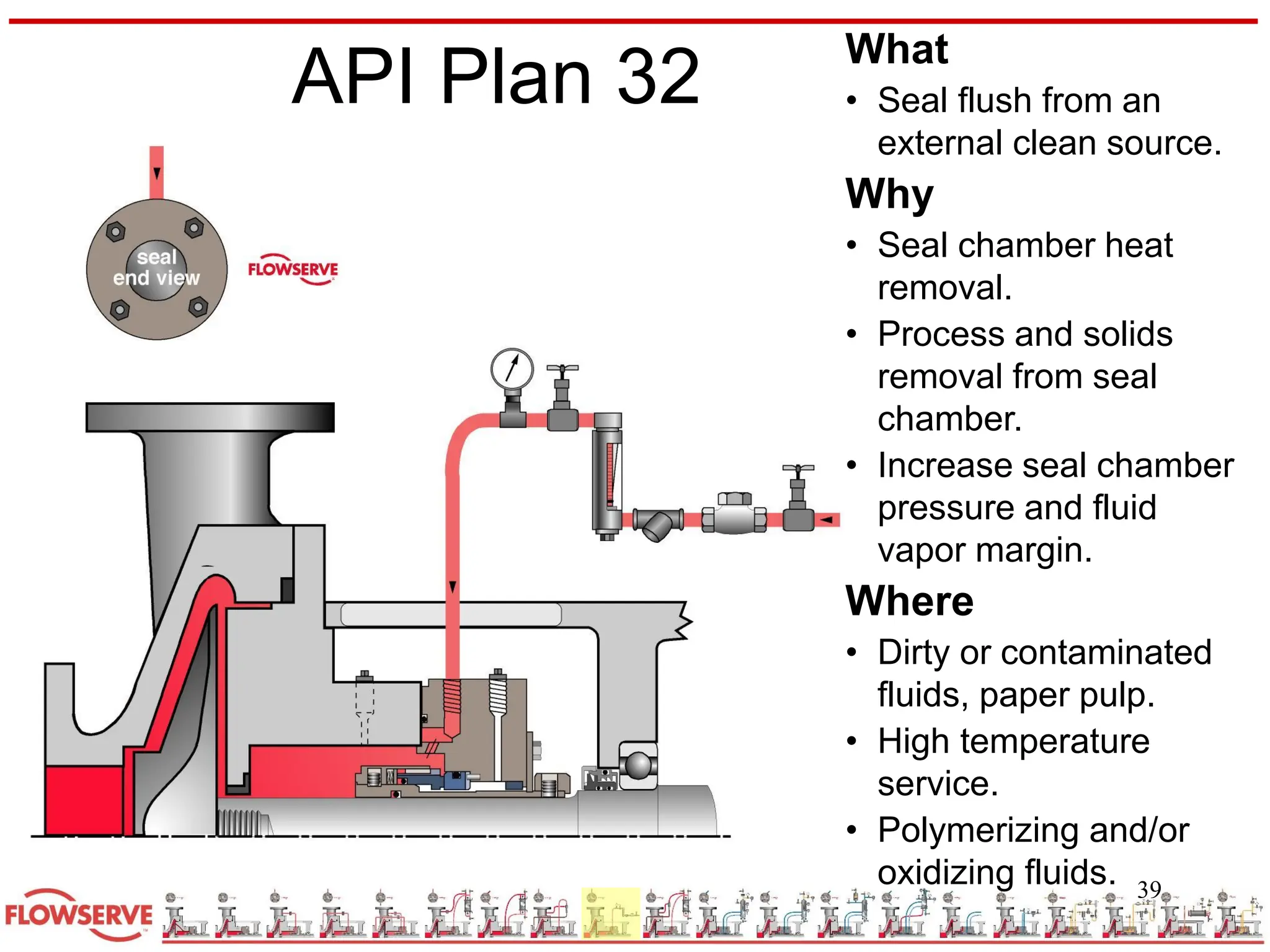
API Plan 32
What
• Seal flush from an
external clean source.
Why
• Seal chamber heat
removal.
• Process and solids
removal from seal
chamber.
• Increase seal chamber
pressure and fluid
vapor margin.
Where
• Dirty or contaminated
fluids, paper pulp.
• High temperature
service.
• Polymerizing and/or
oxidizing fluids.
40
API Plan 32 Preventive
Maintenance
• Use throat bushing
sized to hold pressure
or maintain flow
velocity.
• To restrict dirty process
fluid, regulate injection
flow rate.
• To increase fluid vapor
margin, regulate
injection pressure.
• Injection fluid must be
compatible with
process fluid.
• Regularly monitor
control system for
closed valves or signs
of plugging.
41
Plan 41
What
• Seal flush from pump
discharge through
cyclone separator and
cooler.
• Combination of Plan 21
and Plan 31.
Why
• Seal cooling.
• Solids removal from flush
and seal chamber.
42
Plan 41
Where
• High temperature
service, typically less
than 350 ºF (177 ºC).
• Dirty or contaminated
fluids, water with sand or
pipe slag.
• Non-polymerizing fluids.

Present - Mechanical Seal9.pdf

  • 1.
    39 API Plan 32 What •Seal flush from an external clean source. Why • Seal chamber heat removal. • Process and solids removal from seal chamber. • Increase seal chamber pressure and fluid vapor margin. Where • Dirty or contaminated fluids, paper pulp. • High temperature service. • Polymerizing and/or oxidizing fluids.
  • 2.
    40 API Plan 32Preventive Maintenance • Use throat bushing sized to hold pressure or maintain flow velocity. • To restrict dirty process fluid, regulate injection flow rate. • To increase fluid vapor margin, regulate injection pressure. • Injection fluid must be compatible with process fluid. • Regularly monitor control system for closed valves or signs of plugging.
  • 3.
    41 Plan 41 What • Sealflush from pump discharge through cyclone separator and cooler. • Combination of Plan 21 and Plan 31. Why • Seal cooling. • Solids removal from flush and seal chamber.
  • 4.
    42 Plan 41 Where • Hightemperature service, typically less than 350 ºF (177 ºC). • Dirty or contaminated fluids, water with sand or pipe slag. • Non-polymerizing fluids.